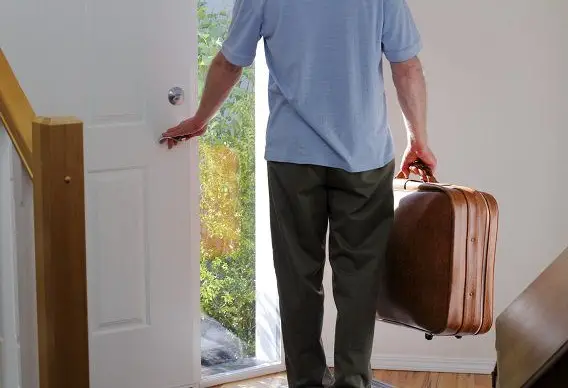
The Woman Who Had Everything
The morning started the way most mornings did in our corner of Massachusetts—coffee brewing, NPR murmuring from the kitchen radio, the neighbors backing their sensible Subarus out of driveways lined with the kind of tidy shrubs that required exactly the right amount of New England restraint. Outside my window, maple trees were just beginning their slow transition toward autumn, their leaves still holding onto summer green but threatening the spectacular display of color that would come in a few weeks.
I was washing breakfast dishes when Marcus came downstairs. My son. Forty-two years old, successful in the way that modern Americans measure success—good job in finance, beautiful wife, expensive gym membership he actually used. He poured himself coffee from the pot I’d made, added the expensive oat milk he and Isabelle preferred, and leaned against the counter scrolling through his phone.
“Mom,” he said, not looking up from the screen. “Isabelle and I have been talking.”
I continued rinsing the plate in my hands, watching the soap suds swirl down the drain. Something in his tone made me move more slowly, more carefully, the way you do when you sense a shift in the atmosphere.
“We’ve been thinking that maybe, you know, it might be time for you to consider finding your own place.”
The plate I was holding didn’t break because I set it down very gently in the dish rack. The kitchen went quiet except for the clock above the stove—an old brass thing that had belonged to my mother—ticking out the seconds with mechanical indifference.
“My own place,” I repeated, my voice neutral.
“Yeah. I mean, don’t get me wrong, we love having you here, but Isabelle and I are thinking about starting a family, and we’ll need the space. Plus, you know, it might be good for you to have your own space too. Your own life. You’re still young enough to enjoy your independence.”
They say New England houses hold onto things—sounds, smells, memories. The screen door that thumped just so when it closed. The particular creak of the third stair. The ghost of Red Sox games past drifting from old radios. My house held onto me. I’d lived here for fifty years. I’d brought Marcus home from the hospital to this house. I’d nursed my husband through his final illness in the bedroom upstairs. I’d painted every wall, refinished every floor, tended every inch of the garden that wrapped around the property like a living memory.
But apparently, it was time for me to find my own place.
I folded the dish towel—blue and white checked, from the set I’d bought at the farm stand last summer—and draped it over the oven handle. I watered the basil plant on the windowsill, watching the soil darken as it absorbed the moisture. Through the window, I could see my brass mailbox catching the morning sun, the name “Geneva Walsh” engraved on its face in elegant script, turning into a little square of gold in the slanted light.
“You’ve given this a lot of thought,” I said. It wasn’t a question.
“Well, yeah. I mean, we’ve been talking about it for a while. Isabelle’s been looking at nursery furniture online, and we both agree that the guest room upstairs would be perfect once we renovate it. We’d need to knock out that wall to make it bigger, add an ensuite bathroom, maybe put in skylights…”
He was talking about my sewing room. The room where I’d made his Halloween costumes when he was little. Where I’d quilted blankets for every major milestone in his life. Where I still retreated when I needed to think, surrounded by fabric and thread and the quiet hum of my grandmother’s Singer machine.
“I see,” I said.
Isabelle appeared then, floating into the kitchen in her designer athletic wear—leggings that probably cost more than my weekly grocery budget, a sports bra that looked like it belonged in a fashion magazine rather than an actual gym. She was beautiful in that careful, curated way that required significant time and money to maintain. Her hair was pulled back in a sleek ponytail. Her skin glowed with the kind of dewiness that came from expensive serums and regular facials.
“Geneva, hi!” She smiled at me with bright white teeth. “Sorry, what’s the Wi-Fi password again? I need to upload my workout video.”
I pointed to the small card I’d taped above the router months ago, when they’d first moved in “temporarily” while they looked for a house of their own. That had been three years ago.
“Oh, right! Thanks!” She tapped at her phone, her manicured nails clicking against the screen. “Marcus and I are doing a couples’ fitness challenge. Have you seen our Instagram? We’re crushing it.”
Marcus came back downstairs a few minutes later, dressed for work in a pressed shirt and slacks, wearing a watch I knew cost more than my car. He grabbed his briefcase—leather, monogrammed, a gift from Isabelle’s parents—and kissed his wife on the cheek.
“Don’t forget we have dinner with the Hendersons tonight,” Isabelle reminded him. “Seven o’clock at that new fusion place in Boston.”
“Got it.” He glanced at me, briefly, guiltily. “So, Mom, about what we talked about… you’ll think about it, right? Maybe start looking at some apartments? There are some nice senior communities not too far from here. One-bedrooms, very affordable, lots of activities…”
Senior communities. I was sixty-eight years old, not ancient. I still worked part-time at the library. I still tended my garden. I still drove, cooked, managed my own life with perfect competence.
But apparently, I belonged in a senior community now. In someone else’s building. In my own place.
“I’ll think about it,” I said.
“Great! Thanks, Mom. You’re the best.” He kissed my cheek—quick, perfunctory—and headed out the door.
Isabelle remained in the kitchen, making herself a smoothie with ingredients from the special shelf in the refrigerator that she’d claimed for her organic produce. “It really will be better for everyone,” she said, not looking at me. “You’ll have your own space to decorate however you want. No more having to tiptoe around our schedule. And we’ll have room to really make this house work for us.”
Our house. She’d said “our house” as if it belonged to them. As if the fifty years I’d lived here, the lifetime of memories embedded in every corner, meant nothing. As if I were a guest who’d overstayed her welcome.
I smiled. The kind of smile mothers learn to use when they’ve already made a decision and are simply waiting for the right moment to reveal it.
After Isabelle left for her Pilates class, I went upstairs to the master bedroom—my bedroom, though Marcus and Isabelle had been making pointed comments lately about how they’d love to move into the larger room with the better light and the en-suite bathroom. I opened the cedar-lined closet that still smelled faintly of my late husband Robert’s aftershave, even after all these years.
On the top shelf, behind boxes of old photos and Robert’s military medals, sat a slim blue folder.
I pulled it down and carried it to the bed, sitting on the quilt my mother had made as a wedding gift forty-five years ago. The folder was from a law firm in Boston—Whitmore & Associates, one of the most prestigious firms in Back Bay. I opened it and pulled out the documents inside, documents I hadn’t looked at in months but which I knew by heart.
Property deed. Trust documentation. Investment portfolios. And photographs—glossy, professional photographs of a waterfront residence in Monte Carlo, Monaco.
The house was extraordinary—white stone walls, floor-to-ceiling windows overlooking the Mediterranean, terraces with gardens that cascaded down toward the sea. Six bedrooms, each with its own bathroom. A chef’s kitchen. A library with leather-bound books and a fireplace. A wine cellar. A private elevator. Staff quarters.
Two hundred million dollars.
That’s what Robert’s invention had been worth when the patents finally sold last year, seven years after his death. My quiet, brilliant husband who’d spent thirty years working in his basement workshop, tinkering with automotive technology that everyone said would never work. Until it did. Until every major car manufacturer in the world wanted it. Until the bidding war began.
I’d been living modestly on his pension and my own small savings when the first lawyer called. I’d thought it was a scam. Then the second lawyer called. Then the third. Then I’d had to hire my own lawyer just to make sense of what was happening.
The money had arrived in my account like a thunderbolt—more money than I could comprehend, more money than I knew what to do with. The lawyers had suggested investments, diversification, tax strategies. I’d nodded along, signing papers, trying to understand a world I’d never imagined entering.
And then, almost as a joke, almost as a fantasy, I’d asked about property in Monaco. I’d always wanted to see Monaco. Robert and I had talked about going someday, after he retired, after we had time.
The lawyer hadn’t blinked. Within three months, I owned one of the most prestigious addresses on the French Riviera.
I hadn’t told Marcus about any of it. I’d meant to—of course I’d meant to. But the timing had never seemed right. He’d been busy with work. Then he’d gotten engaged to Isabelle. Then the wedding. Then they’d needed a place to stay “just temporarily” while they house-hunted. Then the temporary stay had become permanent, and suddenly I was living in my own house as a guest, watching them make plans for my sewing room, listening to them talk about renovations they wanted to make to accommodate their future children.
And now they wanted me to find my own place.
I slid the folder into my handbag—Italian leather, a gift to myself from a boutique in Boston, one of the few extravagances I’d allowed myself since the money arrived. The leather gave a soft, satisfied sound as I closed the clasp.
I went back downstairs and made myself a cup of tea. I sat at the kitchen table—the same table where Marcus had done his homework as a child, where Robert and I had played cards on weekend evenings, where I’d sat alone so many nights after Robert died, wondering how I’d fill all those empty hours.
The house was quiet around me. Just the clock ticking. The refrigerator humming. The distant sound of a neighbor’s lawnmower. Normal sounds. American sounds. The background noise of a comfortable, middle-class life in a comfortable, middle-class town.
I pulled out my phone and made a call.
“Whitmore & Associates, how may I direct your call?”
“James Whitmore, please. Tell him Geneva Walsh is calling.”
James answered within seconds. “Mrs. Walsh! Wonderful to hear from you. How are you managing?”
“I’m well, James. I need you to do something for me.”
“Of course. What do you need?”
“I need you to list this house. The Massachusetts property. I want it sold as quickly as possible.”
There was a brief pause. “The family home? Are you certain?”
“I’m certain. Market price. No negotiations. First serious offer gets it.”
“And the proceeds?”
“Standard investment accounts. You know what to do.”
“I do. And may I ask… will you be relocating to the Monaco property?”
“I am.”
“Wonderful! When would you like to make the transition?”
“Immediately. I’d like you to arrange the sale to close within thirty days if possible. I’ll need movers, international shipping for my personal items, and airline tickets. First class.”
“Consider it done, Mrs. Walsh. I’ll have preliminary paperwork to you by tomorrow morning.”
“Thank you, James.”
I hung up and finished my tea. Then I went to the garden and cut flowers—zinnias and cosmos and the last of the summer roses. I arranged them in a vase and set them on the kitchen table. A small beauty to mark the end of an era.
By the time Marcus came home that evening, I’d already begun the quiet work of sorting through fifty years of accumulated life. What would go to Monaco. What would go to storage. What would be donated or discarded.
He found me in the attic, going through boxes of his childhood things—old report cards, art projects, soccer trophies.
“Mom? What are you doing?”
“Organizing,” I said. “You’re right. It is time.”
Relief flooded his face. “Really? That’s great! That’s really great. Isabelle will be so happy. We can help you look at apartments this weekend if you want—”
“That won’t be necessary. I’ve already made arrangements.”
“Oh! Wow, that was fast. Where did you find? One of those senior places I mentioned?”
“Not exactly.”
Something in my tone made him pause. “What do you mean?”
“I mean I’ve found my own place. You were right that I need my own space.”
“That’s great, Mom. Really. Where is it?”
“Monaco.”
He laughed. “Monaco? Like the country Monaco?”
“Yes.”
“Mom, that’s a fun vacation idea, but I meant something local—”
“I’m not talking about a vacation, Marcus. I’m talking about my home. My new home. In Monaco.”
The smile faded from his face. “I don’t understand.”
“Your father’s patents sold. Last year. For a considerable sum.”
“Patents? What patents?”
“The automotive technology he’d been developing for thirty years. The technology everyone said was worthless. It sold for two hundred million dollars.”
The attic went very quiet. I could hear Marcus breathing, could see him trying to process what I’d just said.
“Two hundred… million?”
“Yes.”
“And you didn’t tell me?”
“I’m telling you now.”
“But… but why didn’t you… why have you been living like this? In this old house, working at the library—”
“Because I like this old house. I liked working at the library. I liked my life exactly as it was. Until you decided it was time for me to find my own place.”
He stared at me, his mouth opening and closing like a fish. “Mom, I didn’t mean—”
“I know what you meant. And you’re right. It is time. So I’ve arranged to sell this house. It should close within thirty days. I’ll be moving to my property in Monaco immediately after.”
“Sell this house? Mom, no, wait, you can’t—this is our family home!”
“Yes. My family home. Which I’m selling.”
“But where will we live?”
I looked at him—this man who’d once been my baby boy, who I’d loved more than my own life—and I felt something shift inside me. Not anger exactly. Something colder and clearer.
“I suppose you’ll need to find your own place,” I said.
I left him standing in the attic and went back downstairs. The certified mail I’d arranged arrived that afternoon, right on schedule. Marcus signed for it at the front door, still looking dazed from our conversation. He tore open the envelope at the kitchen counter—the same counter where he’d once struggled with long division while I stood beside him, patient and encouraging.
He read the first line and the color left his face. Second line—his hands began to shake. Third line—he looked at me like the ground had shifted beneath his feet.
“Mom… what is this?”
“It’s a thirty-day notice to vacate the property. Standard procedure when a house is being sold.”
“You’re evicting us?”
“I’m informing you that the house has been sold and you’ll need to make other arrangements.”
Isabelle appeared then, drawn by the commotion. “What’s going on?”
Marcus handed her the letter without speaking. She read it, and I watched her face go through the same progression of emotions—confusion, disbelief, shock, and finally, anger.
“You can’t do this!” she said, her voice rising. “We live here! We have rights!”
“You live here as my guests,” I said calmly. “Guests who just asked me to leave my own home. I’m simply granting your wish. You wanted me to find my own place. I have. Now you’ll need to do the same.”
“But we don’t have anywhere to go!”
“Then I suggest you start looking. You have thirty days. That’s more time than you gave me.”
Marcus found his voice finally. “Mom, please. I’m sorry. I didn’t think—we didn’t mean—”
“It’s late,” I said, cutting him off. And I meant it in more ways than one. Too late to take back the words. Too late to undo the casual cruelty of asking your mother to leave her home of fifty years so you could convert her sewing room into a nursery. Too late to pretend you valued her presence when you’d made it clear she was simply in the way.
Over the next few weeks, the house transformed around us. Professional movers arrived and began carefully packing my belongings—the things that mattered, the things that held memories. My mother’s quilts. Robert’s books. The photographs and letters and small treasures that had accumulated over a lifetime.
Marcus and Isabelle watched in silent shock as their temporary housing arrangement revealed itself for what it had always been—my generosity, which they’d taken for granted.
“Where are you going to stay?” I asked them one morning, watching as movers wrapped my grandmother’s china in protective paper.
“We found an apartment,” Marcus said quietly. “In Somerville. It’s small. Expensive. We’ll have to… adjust our budget.”
“That must be difficult,” I said, not unkindly.
“Mom, please. Can’t we talk about this? Can’t we work something out?”
“What would you like to work out?”
“You could… I don’t know, let us buy the house from you? We could get a mortgage, make payments—”
“The house sold for $890,000. Can you afford that?”
His silence was answer enough.
“I didn’t think so.”
“Then what about Monaco? Could we… could we come visit?”
I considered this. “Perhaps. Someday. When you’ve learned to value the people who love you before they’re gone.”
The week before I left, I held a small gathering. Not a party—I didn’t feel festive. Just tea with the neighbors who’d been kind to me over the years, the library staff who’d become friends, the garden club members who’d shared cuttings and advice.
They were shocked when I told them where I was going.
“Monaco! Geneva, how wonderful!”
“Will you come back to visit?”
“You must send pictures!”
I promised I would. I meant it. These people had been good to me. They deserved better than a quiet disappearance.
Marcus and Isabelle didn’t attend. They were busy packing their own belongings, preparing for their move to the small Somerville apartment that was all they could afford without my subsidized housing.
On my last night in the house, I walked through each room alone. I touched the walls Robert had painted. I stood in the kitchen where I’d cooked thousands of meals. I sat in the living room where we’d celebrated Christmases and birthdays and ordinary Tuesday evenings that had seemed unremarkable at the time but now glowed in memory with the light of something precious and irretrievable.
Marcus found me there, sitting in the growing darkness.
“Mom?”
“Yes?”
“I’m sorry. I really am. I was selfish. We were selfish. We took you for granted, and that was wrong.”
“Yes, it was.”
“Is there anything I can do? Anything that would make you change your mind?”
“About Monaco?”
“About… everything.”
I looked at my son—this man I’d raised, who’d somehow learned to value things more than people, to take generosity for granted, to forget that everyone, even mothers, have limits.
“No,” I said gently. “I don’t think so. This isn’t a punishment, Marcus. It’s simply a choice. I’m choosing myself. My own life. My own happiness. The same way you chose when you asked me to leave.”
“I didn’t mean it like that.”
“Perhaps not. But intent matters less than impact. You made me feel unwelcome in my own home. Now I’m finding a home where I’m welcome. Where I’m valued. Even if that home only contains me.”
He was crying now, silently, tears running down his face in the dim light. “I love you, Mom.”
“I know you do. And I love you. But love isn’t enough if it’s not accompanied by respect. By consideration. By the basic courtesy of treating someone like they matter.”
I stood and walked past him, up the stairs for the last time, to sleep one final night in the bedroom I’d shared with Robert, surrounded by boxes and the ghosts of fifty years.
The next morning, a car arrived—sleek, black, professional. The driver loaded my luggage while Marcus and Isabelle stood on the front porch, watching. Other neighbors had gathered too, drawn by the unusual sight of a moving day that looked more like a departure for somewhere glamorous than a downsizing to a senior apartment.
I hugged a few of them. Promised to email. Waved to Mr. Peterson from across the street, who’d lived there as long as I had and who understood, I thought, what it meant to leave a place that had held your whole life.
Then I turned to Marcus and Isabelle.
“The new owners take possession next week,” I said. “Make sure you’re out by then.”
“We will,” Marcus said. He stepped forward, awkward, unsure. “Mom, can I… can we hug?”
I let him embrace me. I hugged him back, feeling the complicated mix of love and disappointment that comes from watching your child fail to be the person you’d hoped they’d become.
“Take care of yourself,” I said. “Both of you.”
“You too, Mom. Enjoy Monaco. You deserve it.”
I got into the car and didn’t look back as we pulled away from the curb. In the rearview mirror, I could see Marcus standing in the driveway of a house that was no longer mine, no longer his, already becoming a memory that would fade like all memories do, sharp at first and then softer, until one day it would just be a story I told: I used to live in Massachusetts. I had a house there once. I had a son who lived with me. Until I didn’t.
The flight to Monaco was smooth, comfortable in the way that first-class travel is comfortable—attentive service, good food, enough space to stretch out and sleep. I watched movies. I read. I looked out the window at clouds and ocean and eventually the European coastline emerging from the blue.
The house in Monaco was even more beautiful than the photographs suggested. The lawyer had arranged for staff—a housekeeper, a gardener, a chef who came three days a week. They welcomed me with quiet efficiency, showing me through rooms filled with light and air and views that stretched forever across the Mediterranean.
I stood on the terrace that first evening, watching the sun set over the water, turning the sky shades of orange and pink and purple that seemed almost artificial in their intensity. Below me, the city glittered with wealth and beauty. Yachts bobbed in the harbor. Somewhere, people were dining at restaurants where a single meal cost more than I used to spend on groceries in a month.
My phone buzzed. A text from Marcus: “I hope you made it safely. The house feels empty without you.”
I looked at the message for a long time before responding: “I made it. Thank you for checking.”
I didn’t say more. There wasn’t more to say. Not yet. Maybe someday. Maybe when enough time had passed. Maybe when he’d learned the lessons that only consequence can teach.
But for now, I was here. In my own place. My own life. My own gorgeous, sunlit, impossibly expensive new beginning.
I’d spent fifty years being a wife, a mother, a caretaker, a supporter of other people’s dreams and ambitions. I’d done it gladly. I’d done it with love. But I’d also, somewhere along the way, forgotten to be Geneva. Just Geneva. Not Geneva the wife or Geneva the mother or Geneva the grandmother-in-waiting. Just me.
Monaco didn’t care about any of that. Monaco didn’t know I’d raised a son who’d asked me to leave my own home. Monaco didn’t judge me for my choices or my failures or my complicated feelings about family and loyalty and love.
Monaco just offered me sunshine and sea air and the possibility of reinvention.
I poured myself a glass of wine—something expensive and French that the chef had recommended—and sat on the terrace as the sky darkened and the stars began to appear.
In Massachusetts, autumn was probably arriving in earnest now. The leaves would be turning, painting the streets in reds and golds and oranges. The air would be crisp. People would be wearing sweaters and drinking cider and preparing for the long New England winter.
I didn’t miss it. Not yet. Maybe I never would.
The wine was excellent. The view was extraordinary. The air smelled of jasmine and salt.
And I was alone, but not lonely. Free, but not lost.
For the first time in fifty years, my life belonged entirely to me. No one to cook for but myself. No one to clean for but myself. No one to worry about but myself.
It felt, I discovered, absolutely wonderful.
My phone buzzed again. Another message from Marcus: “Isabelle wanted me to tell you she’s sorry too. We both are. We really messed up.”
I typed back: “Yes, you did. But you’ll survive. People do.”
“Will you ever forgive us?”
I looked out at the Mediterranean, at the lights dancing on the water, at the vast and beautiful world that had been here all along, waiting for me to claim it.
“I already have,” I wrote. “But forgiveness doesn’t mean forgetting. And it doesn’t mean going back to how things were. It means accepting what happened and moving forward. Which is exactly what I’m doing.”
“By yourself?”
“For now, yes. But who knows? Maybe I’ll make friends here. Maybe I’ll fall in love again. Maybe I’ll write a book or learn to paint or take up sailing. Maybe I’ll do nothing at all except sit on this terrace and watch the sunset every evening. The point is, it’s my choice now. My life. My own place.”
I hit send and set the phone down.
The stars were out in full force now, bright and clear in a way they never were in Massachusetts. A light breeze came off the water, warm and fragrant. In the distance, I could hear music—someone was having a party somewhere, laughter and voices carrying across the night.
Tomorrow, I’d explore the town. I’d walk along the harbor. I’d visit the gardens. I’d introduce myself to the neighbors, if there were neighbors in a place like this. I’d begin the work of building a new life in this unlikely place.
But tonight, I just sat with my wine and my view and my hard-won peace.
Somewhere in Massachusetts, my son was probably sitting in his small Somerville apartment, surrounded by boxes, wondering how everything had changed so quickly. How his mother—reliable, predictable, always-available Geneva—had transformed into someone who could sell a family home, move to Monaco, and not look back.
I hoped he was learning something. I hoped he was growing.
But mostly, I hoped he was beginning to understand what I’d only recently discovered: that everyone, no matter how much they love you, has a limit to what they’ll tolerate. And that sometimes, the kindest thing you can do for someone is to let them experience the natural consequences of their choices.
The wine bottle was empty. The stars wheeled overhead in their ancient patterns. The sea whispered against the shore far below.
I stood, stretched, and walked inside my two-hundred-million-dollar house. My house. My home. My own place, finally, after all these years.
And I’d never felt more free.
THE END

Adrian Hawthorne is a celebrated author and dedicated archivist who finds inspiration in the hidden stories of the past. Educated at Oxford, he now works at the National Archives, where preserving history fuels his evocative writing. Balancing archival precision with creative storytelling, Adrian founded the Hawthorne Institute of Literary Arts to mentor emerging writers and honor the timeless art of narrative.