My Father’s Unexpected Response
My father asked in surprise, “Sweetheart, why did you come by taxi? Where’s the Mercedes your mom and I gave you for your birthday?” Before I could answer, my husband smiled and said, “That car belongs to my mother-in-law now!” My father went silent for a moment, thinking deeply… And what he did next made me truly proud of him.
When Emily and her husband, Daniel, arrived at her parents’ home that Saturday evening, she already sensed trouble brewing. The moment she stepped out of the taxi, her father, Richard Hayes, raised an eyebrow so high it nearly disappeared into his silver hair.
The taxi pulled away from the curb, its red taillights disappearing around the corner of Maple Street, leaving Emily and Daniel standing in the driveway of the pristine colonial house where Emily had grown up. The autumn air carried the scent of her mother’s chrysanthemums, and the porch light cast familiar shadows across the walkway she’d traveled countless times as a child.
“Sweetheart,” her father exclaimed, stepping out from the front door where he’d been waiting, genuinely baffled. “Why did you come by taxi? Where’s the Mercedes your mom and I gave you for your birthday?”
Emily opened her mouth, ready to explain the long, uncomfortable story she had rehearsed in her head during the entire twenty-minute ride over. She’d practiced the words, tried different approaches, even written notes on her phone that she’d deleted three times. But before she could utter a single word, Daniel placed a gentle hand on her shoulder and answered with an almost casual confidence.
“That car,” he said with a warm smile that didn’t quite reach his eyes, “belongs to my mother-in-law now.”
Emily’s heart sank. That wasn’t how she’d wanted to break the news. Not like this—not standing in her parents’ driveway with no context, no explanation, just a blunt statement that made her sound either crazy or incredibly irresponsible.
Her father froze. His hand, halfway toward taking Emily’s purse as he always did when she visited, slowly dropped to his side. He blinked once, twice, as if trying to determine whether this was a joke or a confession of insanity. Richard Hayes was a man who measured his words carefully, who thought before he spoke, who rarely showed surprise. But right now, his face was a canvas of confusion.
Emily’s mother, Linda, who had just stepped out of the kitchen wiping her hands on the floral apron she’d worn for as long as Emily could remember, stopped in her tracks. “I’m sorry—what?” she whispered, her voice barely audible over the evening crickets.
Emily felt heat rise to her face, spreading from her neck to her cheeks. She hadn’t wanted things to come out this way. The truth was simple, but the circumstances were complicated: she had given the Mercedes—the beautiful silver C-Class with the red bow her parents had surprised her with on her thirty-second birthday just four months ago—to Daniel’s mother, Margaret, after discovering she’d been struggling financially but was too proud to ask for help.
Emily had wanted to tell her parents gently, with context, over coffee at the kitchen table where they’d had so many important conversations over the years. She’d wanted to explain how she’d noticed Margaret’s 1998 Honda Civic breaking down repeatedly, how the repair bills were eating through her fixed income, how the older woman had been taking the bus to her part-time job at the library in the rain because she was too embarrassed to ask her son for help.
But not like this. Not blurted out in their driveway like some impulsive decision made without thought or care.
Richard folded his arms across his chest, the faint disappointment in his eyes stinging more than any raised voice could have. He looked at Daniel, then at Emily, then toward the street as if searching for answers in the quiet suburban evening. The disappointment wasn’t anger—Richard Hayes rarely got angry—but something worse. It was the look of a father trying to understand why his daughter hadn’t trusted him enough to talk to him first.
For a long moment, no one spoke. Even the breeze seemed to pause, the leaves on the old oak tree in the front yard hanging motionless.
Then Richard inhaled deeply, straightened his posture in that way he did when making a decision, and said, “Alright. Come inside. Both of you.”
But instead of heading toward the house as expected, he turned abruptly and walked back to the garage. His steps were firm, deliberate—too deliberate. Emily exchanged a worried glance with Daniel, whose confident smile had faded into concern.
“Maybe I shouldn’t have said it like that,” Daniel muttered.
“You think?” Emily whispered back, anxiety knotting in her stomach.
Whatever Richard was about to do, she knew it was going to change the tone of the entire night. Her father was a man of action, not words. When he was happy, he showed it through gestures. When he was upset, he showed it the same way. And right now, she had no idea which direction this was going.
Linda stood on the porch, still frozen, her eyes moving between her husband’s retreating figure and her daughter’s worried face. “Emily, sweetheart, maybe you should explain—”
“He’s not going to listen right now, Mom,” Emily said quietly. “You know how he gets when he’s processing.”
“But the Mercedes was expensive—”
“I know, Mom. I know.”
They heard the clinking of metal from inside the garage, cabinet doors opening, drawers sliding, the sound of Richard moving through his meticulously organized workspace. Then came the unmistakable beep of a car being unlocked.
“Oh no,” Emily whispered. “He’s upset.”
Daniel shook his head gently, squeezing her hand. “He’s thinking. Give him a moment. Your dad is reasonable. He’ll understand once you explain.”
“You don’t know my father when he thinks someone’s made a rash decision without consulting him,” Emily said, her voice tight. “He’s going to lecture us about financial responsibility, about consulting family before making major decisions, about—”
A moment later, the garage door rolled up with a mechanical whir. Richard stepped out, keys dangling from his finger, his expression calm yet impossibly focused. Behind him sat his meticulously kept 2019 Lexus sedan—the one he’d bought after years of saving, the one he washed every Sunday morning, the one he treated almost like a second child. The charcoal gray paint gleamed even in the dim evening light.
“Emily,” he said, his voice level and controlled, “come here.”
She approached slowly, heart pounding against her ribs. This was it. The lecture was coming. The disappointment. The questions about why she hadn’t asked them for help if Daniel’s mother needed a car, why she hadn’t at least discussed it with them first.
He held out the keys, the Lexus emblem catching the light. “Take my car.”
Emily stared at the keys, then at her father, then back at the keys. “What? Dad, no. You love this car—”
“I do,” he admitted, his voice softening. “But I love you more. And if you gave away your Mercedes for the right reasons, then clearly you need a car more than I do.”
The words hit Emily like a physical force. She shook her head, tears forming despite her best efforts to hold them back. “Dad, I didn’t want to burden you. I just… I wanted to help someone who needed it. Margaret’s car was literally falling apart. She couldn’t afford repairs. She was taking the bus in the rain. I couldn’t just—”
Her voice broke. Daniel stepped forward, placing a supportive hand on her back.
Richard placed a firm hand on Emily’s shoulder, his grip gentle but grounding. “And that makes me proud. You acted with compassion. That’s worth more than any car I’ve ever owned.”
Linda finally spoke up, stepping closer with gentle eyes that glistened with emotion. “Sweetheart, we raised you to care about others. We’re not angry. We just needed to understand. You could have told us. We would have helped.”
Daniel added quietly, his voice thick with gratitude, “She didn’t want anyone to feel guilty. Not me, not you, not my mom. Margaret was so embarrassed that she was struggling. Emily found out by accident when I mentioned my mom had missed a doctor’s appointment because her car died again. Emily just… took action.”
Richard nodded slowly, processing this information in the careful way he processed everything. “I get it now. Truly.”
He took a deep breath, his chest rising and falling. “But next time—don’t carry something like this alone. Family is supposed to help family. That’s what we’re here for.”
Emily finally let out the breath she didn’t realize she’d been holding. Relief washed through her like cool water on a hot day. Her father understood. He wasn’t angry. He was proud.
But Richard wasn’t finished.
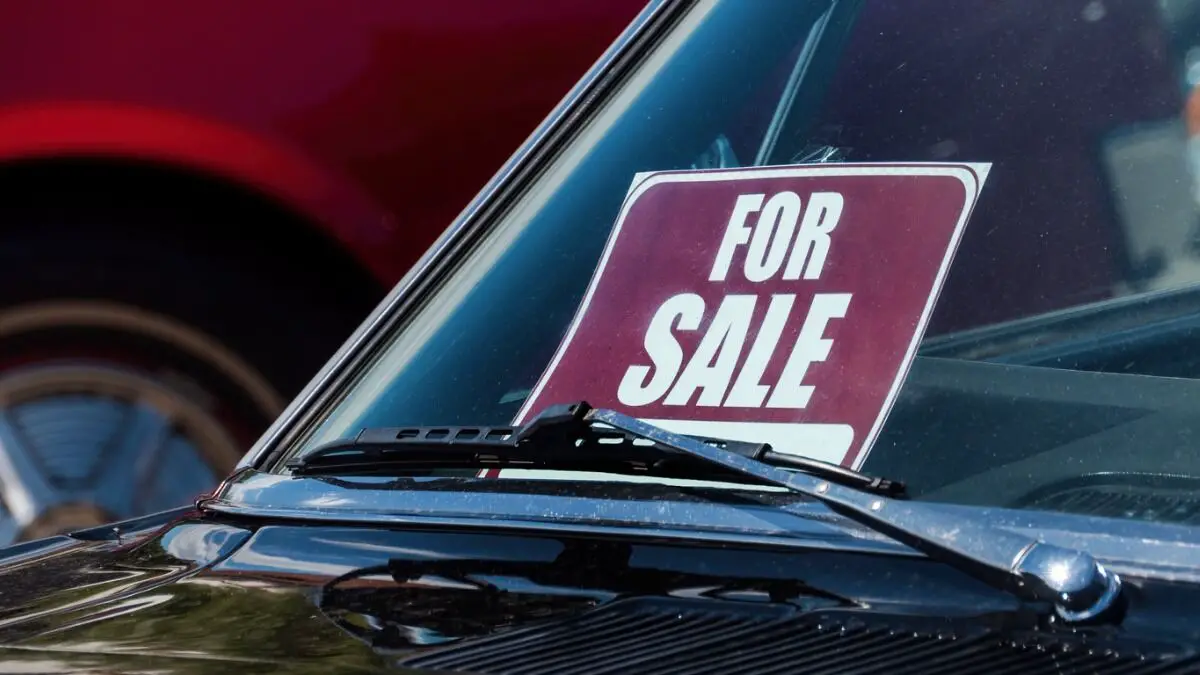
He walked over to a metal shelf in the garage where he kept his tools organized with military precision, pulled down a dusty old sign that Emily recognized from years ago when they’d sold their old van, and wiped it clean with his handkerchief. The cardboard sign read in faded marker: “FOR SALE.”
He slapped it onto the hood of his Lexus with a decisive thwack.
“Dad, what are you doing?” Emily gasped, stepping forward.
“I’m selling my car,” he declared, his voice carrying that tone of absolute certainty she’d heard countless times growing up—the tone that meant his mind was made up and there was no changing it. “And I’m going to buy something bigger. Something we can all share. Something that’s not just mine but supports the whole family.”
Emily stared at him, overwhelmed. She had expected anger, lectures, maybe even disappointment… not this. Not generosity that mirrored her own actions back at her. Not a father who saw her compassion and raised it.
Linda was crying now, soft tears rolling down her cheeks as she smiled. “Richard, are you sure?”
“Completely,” he said. “I’ve been thinking about this for a while anyway. We’re getting older. Family gatherings are getting bigger. We need something practical.”
Her father was building something new. Something that would redefine their family in ways she hadn’t imagined.
The evening had taken a turn Emily never could have predicted. What started as anxiety and apprehension had transformed into something profound—a moment that would reshape how she understood her parents, her marriage, and what it meant to be part of a family.
They moved inside, finally, though the “FOR SALE” sign remained proudly displayed on the Lexus like a banner of intent. Linda had prepared pot roast, Richard’s favorite, and the smell filled the house with warmth and comfort. But before they could sit down to eat, Richard insisted on calling his brother, Tom, who ran a used car dealership across town.
“Tom, it’s Richard. Yeah, I know it’s Saturday. Listen, I need you to help me find something. A minivan. Yes, you heard me right. A minivan. The best one you can find.”
Emily sat at the kitchen table, listening to her father’s half of the conversation, still trying to process what was happening. Daniel sat beside her, equally stunned.
“A minivan?” Daniel whispered. “Your dad drove sports cars his whole life. He once told me minivans were where dreams went to die.”
“I know,” Emily whispered back. “I have no idea what’s happening right now.”
Linda was setting the table, humming to herself with a smile that suggested she knew something they didn’t. “Your father,” she said, placing a bowl of mashed potatoes on the table, “has been talking about family a lot lately. Ever since you got married, actually. He’s been reflecting.”
“Reflecting on what?” Emily asked.
“On what matters,” Linda said simply. “On legacy. On being present. On making sure family stays connected even as it grows.”
Richard returned from his phone call, looking satisfied. “Tom’s got a 2020 Honda Odyssey. Low mileage, excellent condition. He’s holding it for me until Monday.”
“Dad, you’re really doing this,” Emily said, still disbelieving.
“I am,” he confirmed, sitting down at the head of the table. “Now, let’s eat, and you can tell me more about Margaret and why you felt you couldn’t come to us for help.”
Over dinner, the full story came out. Emily explained how she’d noticed Margaret struggling months ago, how the older woman had been skipping meals to afford her medications, how the car breakdowns had cost her shifts at the library because she couldn’t get to work reliably.
“She raised Daniel by herself after his father left,” Emily said, her voice thick with emotion. “She worked two jobs to put him through college. She never asked for anything. When I found out she’d been taking the bus in a thunderstorm because her car was dead again, I just… I couldn’t stand it.”
Daniel added, “I didn’t even know how bad things were. Mom hid it from me. She didn’t want me to worry. Emily figured it out from small comments, from things my mom wasn’t saying.”
“So you gave her your car,” Richard said, not as a question but as a statement of fact.
“I did,” Emily confirmed. “I know it was expensive. I know you and Mom worked hard to give me that gift. But I have a job, I have Daniel, I have options. Margaret had none. And she deserved better than what she was getting.”
Richard was quiet for a long moment, chewing thoughtfully. Then he set down his fork. “You know what I see when I look at you right now?”
“A daughter who gave away an expensive gift without asking?” Emily said, half-joking but half-serious.
“No,” Richard said. “I see a woman who understands that things are just things, but people matter. I see someone who saw a need and met it, even when it cost her something valuable. I see the daughter your mother and I always hoped we’d raise.”
Emily’s eyes filled with tears for the second time that evening.
“But,” Richard continued, his tone becoming firmer, “I also see a daughter who didn’t trust her parents enough to ask for help. Who thought she had to sacrifice alone.”
“I didn’t want you to feel obligated—”
“Emily,” Linda interrupted gently, “that’s what family does. We help each other. You helped Margaret because she needed it. We would have helped both of you if you’d asked.”
“I know that now,” Emily admitted. “I just… I wanted to handle it myself. I’m an adult. I have my own life. I didn’t want to run to my parents every time there was a problem.”
Richard smiled. “Being an adult doesn’t mean doing everything alone. It means knowing when to ask for help and when to offer it. You’re excellent at the latter. We’re working on the former.”
The conversation continued long into the evening, moving from the Mercedes to broader topics—family, responsibility, generosity, pride. They talked about Margaret, about Daniel’s childhood, about the ways people hide their struggles behind pride.
“My mother was the same way,” Linda shared. “After my father died, she refused help for years. She’d rather struggle than admit she needed anyone. It took me months to convince her to move in with us when she got sick.”
“It’s a generational thing,” Richard added. “People like Margaret, like Linda’s mother, they grew up believing asking for help was weakness. They don’t understand that accepting help is actually a gift you give to the person offering—it lets them show love.”
Daniel nodded thoughtfully. “Mom cried when Emily gave her the keys. Not just because of the car, but because someone saw her struggle and cared enough to do something about it.”
“Where is Margaret now?” Linda asked.
“At home,” Daniel said. “She wanted to come tonight, to thank you both for raising such an incredible daughter, but Emily told her to wait. We wanted to explain first.”
“Invite her to dinner next weekend,” Richard said immediately. “I want to meet the woman who raised such a good man and inspired such generosity in my daughter.”
The evening wound down with coffee and pie, with laughter and stories, with a sense of resolution that felt both surprising and inevitable. When Emily and Daniel finally called another taxi to take them home—Daniel’s truck was in the shop, which was why they’d taken a taxi in the first place—Richard walked them to the curb.
“Dad,” Emily said, hugging him tightly, “thank you. For understanding. For not being angry.”
“Thank you,” he replied, “for reminding me what’s important.”
As the taxi pulled away, Emily watched through the rear window as her father stood in the driveway, the “FOR SALE” sign visible on his Lexus in the garage behind him, his arm around her mother’s waist. They looked like a team, united in purpose, proud of their daughter.
“Your dad is pretty amazing,” Daniel said.
“He really is,” Emily agreed.
Monday morning arrived with Richard’s characteristic efficiency. He was at Tom’s dealership when it opened at eight, Linda beside him, ready to inspect the Honda Odyssey with the thoroughness of a military inspection.
The minivan was everything Tom had promised—pristine interior, well-maintained engine, all the features Richard hadn’t known he wanted until Tom started demonstrating them. Sliding doors that opened with the push of a button. Three rows of seating. Storage compartments everywhere. A entertainment system for long drives.
“It’s perfect for family road trips,” Tom said, grinning. “You planning on filling this thing up?”
“Eventually,” Richard said, running his hand along the dashboard. “Emily and Daniel might have kids someday. Linda’s sister visits with her grandchildren. We host Thanksgiving. I want space for everyone.”
Linda was already imagining possibilities. “We could drive to the lake house without everyone cramped in separate cars. We could help Emily and Daniel move if they need it. We could—”
“We could be useful,” Richard finished. “That’s the point.”
By Tuesday, Richard had sold the Lexus to a young professional who appreciated its pristine condition and was willing to pay Richard’s asking price. The transaction was smooth, final, and surprisingly painless.
“No regrets?” Linda asked that evening as they stood in the garage, looking at the empty space where the Lexus had been.
“None,” Richard said. “That car represented a phase of my life. This next one represents something better.”
On Saturday, exactly one week after the taxi incident, Emily and Daniel arrived for dinner again. This time, they came in Daniel’s newly-repaired truck. And this time, Margaret was with them.
Emily had warned her mother-in-law about what to expect, but Margaret was still nervous, clutching a homemade apple pie like a shield as they walked to the door.
“They’re not going to judge you,” Emily assured her.
“They gave you a Mercedes, and you gave it to me,” Margaret said, her voice shaking slightly. “They have every right to think I’m taking advantage of their daughter.”
“They don’t think that at all,” Daniel said firmly.
The door opened before they could knock. Richard stood there in casual clothes, smiling warmly. “Margaret, I presume. Please, come in. We’ve been looking forward to meeting you.”
What followed was one of the most unexpectedly wonderful evenings Emily could remember. Margaret and Linda bonded immediately over their shared love of gardening. Richard and Margaret discovered they’d both grown up in the same neighborhood, decades apart, and knew many of the same landmarks.
Over dinner, Margaret finally found the courage to address the elephant in the room. “Mr. and Mrs. Hayes, I need to thank you and apologize. The Mercedes—”
“Is exactly where it should be,” Richard interrupted gently. “Emily told us about your situation. About your car troubles. About your pride.”
Margaret flushed. “I should have asked my son for help.”
“Pride makes us do foolish things,” Linda said. “But it also makes us strong. You raised a wonderful man by yourself. That takes incredible strength.”
“The car is just a thing,” Richard added. “What matters is that you’re safe now. That you can get to work. That you don’t have to choose between car repairs and medication.”
Margaret’s eyes filled with tears. “I’ve never met people like you.”
“People like us?” Richard asked.
“People who understand,” Margaret said simply.
After dinner, Richard asked everyone to come to the garage. “I want to show you something.”
He dramatically pressed the garage door opener. As it rose, it revealed the gleaming silver Honda Odyssey, adorned with a large red bow that Linda had clearly spent considerable time arranging.
“What is this?” Emily asked, confused.
“This,” Richard announced, “is the family car. It belongs to all of us. Emily, Daniel, Margaret, me, Linda—anyone who needs it can use it. We’ll keep a shared calendar. We’ll maintain it together. It’s not mine. It’s ours.”
Emily stared at her father, completely undone by his generosity. “Dad, you can’t give us your car—”
“I’m not giving it to you. I’m sharing it with you. There’s a difference.”
Margaret was crying openly now. “This is too much. You don’t even know me.”
“We know you raised the man our daughter married,” Linda said, wrapping an arm around Margaret’s shoulders. “We know you’re struggling but too proud to ask for help. We know our daughter saw you as worth sacrificing for. That’s enough for us.”
Daniel cleared his throat, his voice thick. “Mr. Hayes, I don’t know what to say.”
“Say you’ll come to Sunday dinners,” Richard replied. “Say you’ll let us be part of your lives. Say you’ll stop thinking of yourselves as alone in this world.”
That night marked a turning point for all of them. The boundaries between families blurred. Margaret started joining them for Sunday dinners, eventually bringing dishes from her own kitchen. Linda and Margaret took a gardening class together at the community center. Richard helped Daniel with home repairs on the weekends.
The Honda Odyssey became a symbol of their interconnected lives. They used it for family outings to the lake, for helping Margaret move to a better apartment, for trips to visit Linda’s sister in Boston. The shared calendar on their phones kept them coordinated, and the car was always clean because everyone took responsibility for it.
Three months after the taxi incident, Emily and Daniel hosted Thanksgiving at their apartment. It was small, cramped, but filled with love. As they crowded around a table barely big enough for six people, Richard stood to make a toast.
“Three months ago,” he began, “my daughter came to our house in a taxi. I was confused, maybe even a little hurt. But what I’ve learned since then has changed how I see family, generosity, and what really matters.”
He looked at Emily. “You taught me that giving isn’t about asking permission. It’s about seeing a need and meeting it, even when it costs you something precious.”
He looked at Margaret. “You taught me that accepting help with grace is harder than giving it, but just as important.”
He looked at Daniel. “You taught me that family isn’t just blood. It’s choice. It’s commitment. It’s showing up.”
He raised his glass. “To Emily, who gave away a Mercedes and gained a family. To Margaret, who let us love her. To Daniel, who raised our daughter’s standards for what a partner should be. And to Linda, who’s been telling me for thirty years that things don’t matter—only people do. I’m sorry it took me this long to really understand.”
“To family,” Linda added, her voice soft but certain.
“To family,” they echoed, glasses clinking.
After dinner, as they loaded the Honda Odyssey with leftovers and dishes, Emily pulled her father aside.
“Dad, I need to tell you something.”
“What’s that, sweetheart?”
“I’m pregnant.”
Richard’s face transformed, joy spreading across his features like sunrise. “Emily, that’s wonderful! Does Daniel know?”
“I’m telling him tonight. But I wanted you to know first because… well, because you’re going to be a grandfather. And that minivan you bought? It’s going to get a lot of use.”
Richard pulled her into a hug, holding her tight. “I can’t wait. Your mother is going to be thrilled.”
“There’s something else,” Emily said, pulling back. “Daniel and I have been talking. We want to name the baby Richard if it’s a boy. After you. Because you showed us what it means to put family first, to choose generosity over pride, to build something bigger than ourselves.”
Richard’s eyes filled with tears—something Emily had seen maybe twice in her entire life. “I’d be honored.”
That night, as Richard and Linda drove home in the Honda Odyssey, Linda reached over and squeezed his hand.
“You did good,” she said.
“We did good,” he corrected. “We raised a daughter who sees the world clearly, who acts with compassion, who knows what matters.”
“The Mercedes was a good gift,” Linda reflected.
“It was,” Richard agreed. “But what Emily did with it was better. She turned our gift into something that helped someone who needed it. That’s not irresponsible. That’s multiplication.”
Six months later, Richard was at the hospital when his grandson was born. Little Richard Daniel Hayes came into the world with his grandfather’s name and his mother’s generous heart. Margaret was there too, knitting a blanket in the waiting room, part of the family now in every way that mattered.
As Richard held his grandson for the first time, looking into tiny eyes that hadn’t yet learned to focus, he thought about the Mercedes. About the taxi. About the “FOR SALE” sign on his Lexus. About the Honda Odyssey that had carried his expanding family through countless adventures in just six months.
He thought about how close he’d come to reacting with anger instead of understanding, how easy it would have been to lecture Emily about responsibility instead of recognizing her compassion.
And he thanked whatever instinct had made him pause, think, and choose to match his daughter’s generosity instead of criticizing it.
“What are you thinking about?” Linda asked, leaning against his shoulder to look at their grandson.
“About how one taxi ride changed everything,” Richard said. “About how sometimes the best response to sacrifice is more sacrifice. About how family isn’t about keeping score—it’s about giving more than you thought you could.”
“And about minivans?” Linda teased.
Richard laughed. “And about minivans. Never thought I’d love one, but here we are.”
Emily, exhausted but radiant in her hospital bed, watched her parents with her son. “Dad, thank you. For everything. For understanding. For the car. For showing me that generosity grows when it’s met with more generosity.”
“Thank you,” Richard replied, “for teaching your old dad that things are just things, but family—family is everything.”
Little Richard yawned, his tiny hand wrapping around his grandfather’s finger with surprising strength. And in that moment, surrounded by the family they’d built through choice and compassion and countless small acts of love, Richard Hayes understood that selling his Lexus and buying a minivan wasn’t a sacrifice at all.
It was an investment. The best one he’d ever made.
And it all started with a daughter who came home in a taxi, a Mercedes given in love, and a father who chose to respond with his heart instead of his pride.

Lila Hart is a dedicated Digital Archivist and Research Specialist with a keen eye for preserving and curating meaningful content. At TheArchivists, she specializes in organizing and managing digital archives, ensuring that valuable stories and historical moments are accessible for generations to come.
Lila earned her degree in History and Archival Studies from the University of Edinburgh, where she cultivated her passion for documenting the past and preserving cultural heritage. Her expertise lies in combining traditional archival techniques with modern digital tools, allowing her to create comprehensive and engaging collections that resonate with audiences worldwide.
At TheArchivists, Lila is known for her meticulous attention to detail and her ability to uncover hidden gems within extensive archives. Her work is praised for its depth, authenticity, and contribution to the preservation of knowledge in the digital age.
Driven by a commitment to preserving stories that matter, Lila is passionate about exploring the intersection of history and technology. Her goal is to ensure that every piece of content she handles reflects the richness of human experiences and remains a source of inspiration for years to come.