The Gift That Changed Everything
I zipped up my black evening gown for tonight’s company gala while Henry’s phone buzzed with messages on our dresser. The vintage Omega watch sat wrapped beside it—my anniversary gift, twenty-five thousand dollars for a man who once mentioned admiring Swiss craftsmanship. I had spent weeks researching the perfect timepiece, comparing models and auction houses, wanting to mark six years of marriage with something meaningful.
The phone lit up again. Then again. Henry was in the shower, humming something cheerful and oblivious. I told myself not to look. Privacy matters in marriage, trust is sacred, boundaries are important.
But the notifications kept coming, and one appeared on the lock screen long enough for me to read it.
The proposal will happen during your keynote speech. Isabella’s emotional breakdown will justify the ownership restructuring we discussed.
The sender: Kristen Blackwood.
My hands froze on the zipper of my dress. I picked up Henry’s phone, my heart hammering so hard I could hear it in my ears. No password—he’d always claimed he had nothing to hide. I opened the message thread and began reading six months of carefully coordinated deception.
The messages painted a clinical picture of manipulation. Kristen and Henry discussing the “Isabella problem.” Kristen suggesting a public proposal would create the emotional narrative they needed to justify taking control of Nexus Dynamics, the company I had built with my Harvard Law degree and coding expertise. Henry agreeing that my “emotional instability” following such humiliation would provide grounds for restructuring ownership.
They had choreographed my destruction like directors planning a scene.
I sat down on the edge of our bed, phone trembling in my hands, reading message after message that reduced our marriage to a business transaction. Kristen wrote with the clinical precision of a surgeon: Isabella’s reaction will be documented by three hundred witnesses. Her emotional collapse becomes our justification.
Henry responded with enthusiasm: She’ll never see it coming. Six years of playing supportive wife has made her soft.
The vintage Omega watch mocked me from its velvet box. While I’d been selecting the perfect gift to celebrate our partnership, my husband had been planning my corporate execution with a woman who viewed our marriage as nothing more than a business obstacle requiring elimination.
I replaced Henry’s phone exactly where I’d found it and stood up. The shower was still running. I had perhaps five minutes before he emerged, cheerful and oblivious, ready to perform the role of devoted husband one final time before destroying me in front of Boston’s tech elite.
My reflection in our bedroom mirror showed a woman I barely recognized. Isabella Martinez, Harvard Law graduate turned computer scientist, brilliant enough to build a $310 million company but naive enough to miss the signs of systematic exploitation happening in her own marriage.
I thought about my grandmother, Elena Santos, who had worked three jobs to build a small technology consulting firm in the 1980s. She’d left me her life savings with a handwritten note in Spanish: Para mi nieta—build something that matters, and never let anyone take credit for your work.
I’d honored her financial legacy but violated her most important lesson. I’d let Henry become the face of innovations I created, the spokesman for breakthroughs I designed during eighteen-hour coding marathons while he managed “strategic partnerships” at exclusive conferences.
The water shut off in the bathroom. I moved to my closet, mind racing through calculations. I owned sixty-seven percent of Nexus Dynamics. Henry owned thirty-three. The incorporation papers I’d drafted using my legal expertise established unbreakable ownership rights. Patent filings detailed every innovation generating our wealth, each bearing my name as primary inventor.
I had built this company with my grandmother’s inheritance and my own brilliance. Henry had built his reputation on my work.
And tonight, he planned to take everything.
“Isabella, have you seen my cufflinks?” Henry called from the bathroom.
I retrieved the platinum cufflinks from his jewelry box, my hands steady despite the earthquake happening inside my chest. The cufflinks bore the Nexus Dynamics logo—a symbol I’d designed during our startup phase when partnership meant equality rather than elaborate performance art.
“Here,” I said, handing them to him.
Henry stood at the sink in his tuxedo pants and undershirt, his reflection in the mirror showing a man who believed his secrets were safe. He was handsome in that practiced way some men cultivate—the kind of good looks that came from expensive haircuts, personal trainers, and the confidence of someone who’d never been told no.
“You look beautiful,” he said, fastening the cufflinks without really looking at me. The compliment was automatic, meaningless.
“Thank you.” I watched him adjust his bow tie with the focused attention of someone preparing for performance. “Are you nervous about your keynote?”
“A little.” He smiled at his reflection. “But Kristen says the presentation will be memorable.”
The name landed like a slap. Kristen Blackwood, Boston’s most ruthless venture capitalist, the woman currently orchestrating my destruction via text message.
“I’m sure it will be,” I said.
Our Back Bay penthouse reflected six years of carefully curated success. Floor-to-ceiling windows framed Boston Harbor. Italian leather sofas. Original artwork costing more than most people’s annual salaries. Every piece told the story of Nexus Dynamics’ meteoric rise from startup to tech powerhouse.
What the elegant surroundings didn’t convey was the mathematical truth hidden in our home safe: I owned the majority of this company. I had created the algorithms that generated every dollar of our wealth. I had filed the patents, written the code, designed the systems that made Nexus Dynamics valuable.
Henry had been the face. The spokesman. The charming entrepreneur who could work a room and close deals while barely understanding the technology he was selling.
I’d told myself that was partnership. He handled the business side; I handled the technical side. We were a team.
But teams don’t systematically erase one partner’s contributions. Teams don’t plan public humiliation as corporate strategy.
“Ready?” Henry asked, extending his arm like a gentleman.
I picked up my clutch, the vintage Omega watch heavy inside it. “Ready.”
The limousine ride to the Meridian Grand Hotel felt surreal. Henry chatted about investor expectations and networking opportunities, his excitement genuine as he anticipated professional validation. His phone buzzed periodically—messages from Kristen, I assumed, coordinating the final details of my destruction.
I stared out the tinted windows at Boston’s lights, my mind working through scenarios. I could confront him now, in private. I could refuse to attend the gala. I could call my lawyer, my board members, anyone who might help me stop what was about to happen.
But something held me back. Maybe it was the scientist in me, needing to see the experiment run its course. Maybe it was the lawyer, understanding that the best evidence comes from letting people reveal themselves completely.
Or maybe I just needed to witness the full scope of their betrayal before I could believe it was real.
The Meridian Grand Hotel blazed with light, photographers positioned to capture arrivals for tomorrow’s business publications. Henry straightened his bow tie one final time as our driver opened the door.
“Remember to smile,” he said.
I smiled. I had been smiling through my own erasure for six years. What was one more night?
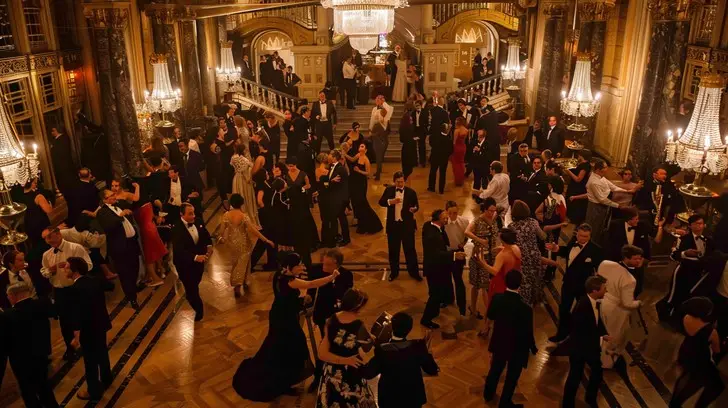
The ballroom was spectacular. Crystal chandeliers, marble floors, three hundred of Boston’s most influential business leaders in designer evening wear. Waiters circulated with champagne and canapés. This was the world Henry loved—the performance, the networking, the visible markers of success.
“Isabella, you look stunning!” Margaret Chin, one of our board members, air-kissed both my cheeks. Her compliment felt like punctuation rather than observation, her attention already shifting to scan the room for more important people to greet.
I’d become invisible in my own success story, I realized. People saw “Henry’s wife” rather than “Isabella Martinez, founder and majority owner of Nexus Dynamics.”
“There’s Kristen,” Henry said, his voice warm.
Kristen Blackwood commanded attention from the moment she entered. Tall, blonde, expensive in a way that suggested old money and new ruthlessness. She moved through the crowd like a shark, people parting to let her pass.
She caught Henry’s eye and smiled.
My stomach turned.
Dinner proceeded with military precision. I sat beside Henry at the head table with perfect views of the stage where keynote speeches would celebrate another year of Nexus Dynamics growth. The food was excellent—I couldn’t taste any of it. Conversations swirled around me—I couldn’t focus on words.
Henry’s phone buzzed throughout dinner. Each notification made my chest tighten.
“Ladies and gentlemen,” the master of ceremonies announced, “please join me in welcoming Kristen Blackwood.”
Applause greeted her appearance. Kristen took the podium with practiced confidence.
“Tonight we celebrate not just financial success,” she began, “but the personal relationships that make transformative partnerships possible.”
The energy in the room shifted. People leaned forward, sensing something unusual about to happen.
Kristen stepped away from the podium. She walked to the center of the stage. And then she dropped to one knee.
“Henry Martinez,” she said, her voice carrying clearly through wireless microphones. “Will you leave your poor, powerless wife and marry me?”
The room exploded. Gasps. Laughter. Three hundred phones emerging simultaneously to capture the moment. Photographers rushing forward, cameras flashing like lightning.
I sat frozen, the words hitting me like physical blows. Poor, powerless wife. A public branding designed to justify whatever corporate restructuring would follow. Character assassination as business strategy.
Henry stood. He walked toward the stage like a man in a dream. Or a carefully rehearsed performance.
“Yes,” he said.
The word echoed off marble walls. Final. Irreversible.
The applause that followed sounded like artillery fire. Three hundred guests celebrating my systematic destruction, their laughter and cheers filling a space that suddenly felt like a coliseum designed for gladiatorial combat.
Henry embraced Kristen on stage. Cameras flashed around them, documenting the moment my marriage officially became performance art.
The crowd expected tears. They expected a dramatic confrontation, an emotional collapse that would provide additional entertainment value.
I chose something far more dangerous: dignified silence.
I stood. Picked up my clutch, the Omega watch heavy inside it. Walked toward the exit with measured, deliberate steps.
Conversations halted around me. People strained to witness the breakdown they’d been promised.
But I didn’t break. I didn’t cry. I didn’t scream.
I simply left.
Behind me, the celebration continued, growing louder as Henry and Kristen accepted congratulations from people who had just witnessed a corporate acquisition disguised as romance.
They had no idea what was about to happen.
The penthouse elevator ascended through thirty floors of silence. Boston’s lights spread beneath me through glass walls, millions of illuminated windows representing lives continuing their normal patterns while mine underwent complete reconstruction.
Our front door closed behind me with finality. The space felt different now—no longer a home, but operational headquarters for systematic dismantling of everything Henry thought he controlled.
I went straight to our bedroom. To the wall safe hidden behind our wedding photograph.
My fingers entered the combination—dates that mattered more than our anniversary. The safe opened, revealing six years of careful documentation.
Incorporation papers spread across our dining table like evidence in a trial. Each document bore my name as primary founder while Henry’s appeared only as minority stakeholder. The language I’d drafted using Harvard Law expertise created an unbreakable foundation of ownership rights.
Patent filings detailed every innovation that generated our wealth. Each bore my name as primary inventor alongside technical descriptions proving I alone possessed the expertise to create breakthrough algorithms.
Bank records showed my grandmother’s inheritance as initial funding—the capital that transformed Henry’s ambitious ideas into operational reality.
I owned sixty-seven percent of Nexus Dynamics.
These weren’t just papers. They were weapons.
My laptop connected to Nexus Dynamics’ financial systems. I had designed the security architecture during our early startup days, built every safeguard to protect our company from external threats.
Now those same safeguards would protect me from internal betrayal.
Financial records displayed with spreadsheet precision. Twenty-seven million dollars in personal expenses appeared in detailed transaction logs. European investor tours. Caribbean “strategy retreats.” Manhattan networking events that cost more than most companies’ annual budgets.
Henry had treated corporate funds as his personal checking account while I worked eighteen-hour days to generate the revenue funding his lifestyle.
Every receipt told a story of a man who had confused access with ownership.
My fingers moved across the keyboard with surgical precision. The shutdown began.
Travel bookings disappeared from reservation systems as corporate cards lost authorization. The European investor tour Henry had planned with Kristen evaporated into digital nothingness. Hotel reservations, private jet charters, restaurant bookings—all canceled.
Corporate cards declined across multiple merchant systems. I revoked authorization for personal expenses that had masqueraded as business development.
The operational freeze locked twenty-seven million dollars behind protocols requiring my personal approval. Each keystroke represented justice served with mathematical precision.
My phone began buzzing almost immediately. Vendors. Employees. Business partners discovering Nexus Dynamics had suddenly become unavailable for financial transactions.
I silenced the device.
The document I drafted represented everything I’d learned during years of building companies and protecting intellectual property. Each clause was designed to systematically dismantle the life Henry had built on my work.
Immediate resignation as CEO.
Permanent ban on Kristen’s involvement with Nexus Dynamics.
Twenty-seven million dollar structured repayment plan over four years.
Public acknowledgment of my true role as founder.
Comprehensive confidentiality clause preventing him from writing memoirs, giving interviews, or speaking at conferences about experiences he’d never lived.
The envelope sat sealed on our coffee table, containing proof that actions have consequences.
I changed into comfortable clothes. Made tea. Sat by the windows overlooking Boston Harbor, watching the city that had witnessed my humiliation continue its indifferent existence.
My phone showed twenty-seven missed calls by midnight. Henry. Kristen. Board members. Investors.
I didn’t answer any of them.
At 11:45, desperate knocking echoed through the penthouse.
I opened the door to find Henry transformed from tech royalty to emotional wreckage. His designer suit was rumpled. His confident demeanor replaced by wild desperation.
“You can’t destroy us like this,” he whispered.
The delusion embedded in his words was almost impressive. There was no us to destroy. There hadn’t been genuine partnership for years.
“Come in,” I said.
He stumbled through the doorway like a man entering his own tomb. “Isabella, you have to understand. Kristen’s proposal wasn’t what it seemed. It was a test—a way to make you fight for our marriage. She said you’d become too comfortable.”
I watched him pace our living room, constructing elaborate justifications for systematic humiliation.
“Henry,” I said, my voice steady. “You spent twenty-seven million dollars of my money. The math is not complicated.”
I spread the documentation across the coffee table. Receipts. Authorizations. Every piece of evidence showing corporate funds treated as personal checking accounts.
“That was our money,” he protested. “Joint assets from our shared success.”
I pulled out the incorporation papers. “I own sixty-seven percent of Nexus Dynamics. You own thirty-three percent. These papers bear my name as primary founder.”
Patent filings proved every innovation generating our wealth came from my expertise. Bank records showed my grandmother’s inheritance as initial funding.
“The company belongs to both of us,” Henry insisted, though his protests crumbled against documentary evidence.
“Shared sacrifice?” I asked. “You built a reputation on innovations you cannot debug. You gave keynote speeches about algorithms you don’t understand. You accepted awards for breakthroughs you didn’t create.”
His face crumpled as understanding finally penetrated his elaborate justifications.
I handed him the envelope containing his surrender terms. “You have twenty-four hours to respond.”
He read through the document, hands trembling. Each clause represented another piece of his carefully constructed identity crumbling.
“You can’t be serious about these terms.”
“Every clause reflects the mathematical reality of ownership and contribution,” I replied. “Sign the documents or face court action that will make tonight’s financial freeze seem generous.”
Henry’s hands shook as he signed each page. The resignation stripped away titles that had provided the platform for accepting credit he’d never earned. The repayment ensured accountability for every personal expense. The public acknowledgment would correct the historical record.
The confidentiality clause was perhaps most devastating—preventing him from monetizing stories about innovations he didn’t create.
As he completed the final signature, the transformation was complete. From celebrated entrepreneur to minority stakeholder in a company he’d never actually controlled.
The signed papers lay scattered across our coffee table like remnants of Henry’s former identity.
He left without another word.
The emergency board meeting convened at eight the following morning. Ten board members arranged themselves around the mahogany conference table with expressions ranging from confusion to carefully concealed panic.
I entered with a manila folder containing the complete restructuring of Nexus Dynamics.
“Good morning,” I said, settling into the chair at the head of the table that had always belonged to me by right of majority ownership. “We have significant changes to discuss.”
Margaret Chin spoke first, her tone careful. “Isabella, we understand there have been developments following last night’s gala. Henry mentioned urgent matters but was unclear about specifics.”
“Henry Martinez has submitted his immediate resignation as CEO,” I announced. “Effective immediately, I am assuming sole control of all company operations.”
Silence followed, heavy with implications.
“Furthermore, Kristen Blackwood and all entities associated with her investment group are permanently banned from any involvement with Nexus Dynamics.”
I distributed copies of incorporation papers, patent filings, and financial records. “The documents you’re reviewing establish that I own sixty-seven percent of Nexus Dynamics. Every innovation generating our revenue bears my name as primary inventor. All initial funding came from my personal resources.”
The revelation transformed the atmosphere as sophisticated investors realized they’d fundamentally misunderstood the company they’d been advising.
“Henry will be making a public statement to correct the historical record,” I announced, producing the confession he’d signed hours earlier.
Board members listened in fascination and horror as the recorded statement played:
“I acknowledge that Isabella Martinez is the true founder and majority owner of Nexus Dynamics. She developed our core algorithms, filed our patents, and made the strategic decisions that built this company. I served as public representative while she provided the technical expertise and innovative vision that generated our success.”
The confession continued, each paragraph dismantling years of carefully constructed narrative.
“The technical innovations credited to our leadership team were designed and implemented by Isabella Martinez during eighteen-hour development cycles while I managed external relationships. Her contributions to artificial intelligence and machine learning represent genuine breakthrough achievements that I had the privilege of presenting to business audiences.”
As sole CEO, my first executive decisions prioritized substance over style. I restructured development priorities to focus on breakthrough applications rather than public relations opportunities.
“Your technical expertise will guide our strategic direction,” I announced to engineering teams who’d been marginalized while Henry chased magazine covers. “Rather than being subordinated to networking considerations.”
The office transformed within hours. Engineers who’d presented complex ideas to someone who could only smile and nod suddenly found themselves working with leadership that could debug code, optimize algorithms, and contribute meaningfully.
Sarah Kim, my former assistant with one of the most brilliant minds in machine learning, accepted promotion to chief technology officer with enthusiasm that had been suppressed for years.
The board meeting concluded with unanimous approval of the leadership transition.
Nine months later, I stood in a completely different kitchen, brewing coffee in my Cambridge townhouse. The space represented everything the Back Bay penthouse had not: comfort over appearances, functionality over staged luxury.
Morning light filtered through windows I could actually open. The coffee maker was a modest German model that produced excellent results without requiring pretentious explanations.
My MIT visiting professorship connected me with graduate students whose genuine curiosity reminded me why I’d fallen in love with programming before it became entangled with patents and profit margins.
“Professor Martinez, your approach to neural network optimization has opened entirely new research directions,” said David Lou, a doctoral candidate whose dissertation would revolutionize diagnostic imaging through artificial intelligence.
His enthusiasm for technical excellence represented everything I’d hoped to find in collaboration.
Quantum Labs, my new venture with Dr. Sarah Kim, represented everything Henry’s version of Nexus Dynamics had never been: innovation over networking, solutions over reputation-chasing.
The fifty-million-dollar investment I made generated returns measured in human impact—funding research that would revolutionize medical diagnosis rather than producing quarterly slides designed to impress people who never understood the technology.
“The distributed computing framework we developed will reduce diagnostic imaging processing time from hours to minutes,” Sarah explained during a quarterly review. “Three hospitals are already reporting improved outcomes through faster identification of critical conditions.”
Henry’s handwritten letter arrived on a Tuesday morning. Portland Community College, where he now taught entrepreneurship, provided modest compensation reflecting his actual contributions rather than borrowed glory.
“I realize now you tried to teach me the difference between being important and being authentic,” he wrote. “I apologize that it took losing everything to finally understand what you meant about genuine achievement versus performance.”
His reduced circumstances were natural consequences of building a career on borrowed innovation.
The twenty-seven million dollar repayment plan progressed according to schedule, each monthly payment representing accountability.
Kristen’s situation provided its own lesson as she explained to limited partners how her acquisition strategy backfired when she failed to research actual ownership structures before orchestrating public humiliation.
“The Martinez acquisition demonstrates the importance of comprehensive ownership research before implementing partnership strategies,” she wrote in a carefully worded statement to investors.
Standing in my honest kitchen, I understood the best revenge had never been about destroying others. It was about living authentically on my terms, building meaningful things with people who cared about outcomes rather than appearances.
The vintage Omega watch still sat unopened on my counter, a twenty-five-thousand-dollar reminder of the last gesture I made as someone else’s supporting character before choosing to write my own script.
Henry and Kristen faced consequences reflecting their choices, but my victory wasn’t their punishment. It was my reconstruction of a life based on authentic achievement.
The mathematics had worked perfectly: actions plus consequences equals justice, served with the precision that only comes from understanding the person who builds the system gets to decide how it operates.
My grandmother’s inheritance had funded authentic innovation rather than borrowed glory, honoring her memory through breakthroughs that solved real problems.
Elena Santos would have been proud to see her granddaughter finally claiming credit for work that represented genuine contribution to human knowledge.
Coffee tasted better when brewed with equipment purchased through honest earnings. Each morning represented another day of living authentically rather than performing roles designed to make other people successful through my invisible contributions.
I thought about that night at the gala sometimes. The moment Henry said yes to Kristen’s proposal while three hundred people watched and cheered. The walk to the exit while cameras flashed around me.
I’d left that ballroom as one person and returned home as someone completely different.
The woman who entered that gala had been willing to make herself small to support someone else’s success. The woman who walked out understood that partnership requires recognition, not systematic erasure.
The gift that changed everything wasn’t the Omega watch. It was Henry’s phone lighting up with messages that revealed six months of coordinated deception.
Sometimes the universe gives you exactly the information you need at exactly the right moment.
I’d spent six years building something meaningful while someone else took credit. I’d honored my grandmother’s financial legacy while violating her most important lesson about never letting anyone claim your work.
But I’d finally learned.
The best revenge, I’d discovered, wasn’t destroying the people who tried to destroy you. It was reclaiming your own story, owning your achievements, and building something authentic with people who valued substance over performance.
My Cambridge townhouse was smaller than the Back Bay penthouse. My MIT professorship paid less than Nexus Dynamics had generated. My new company was still finding its footing in competitive markets.
But every morning, I woke up in a space that belonged to me. I worked with people who knew exactly who created the innovations we were celebrating. I taught students who would cite my name in their dissertations and papers.
I was finally visible in my own success story.
And that, I’d learned, was worth more than any amount of money, any number of magazine profiles, or any carefully curated image of perfect partnership.
I’d built something that mattered. I’d done it with my own mind, my own hands, my own endless hours of work.
And this time, everyone knew it.
The vintage Omega watch remained in its box, unopened and untouched. Some gifts are worth more as reminders than as gestures—proof of how far you’ve come, how much you’ve learned, and how completely you’ve transformed.
I didn’t need to wear a watch to know what time it was.
It was time to be myself, finally and completely, without apology or diminishment.
And that was the best gift I’d ever given myself.

Sophia Rivers is an experienced News Content Editor with a sharp eye for detail and a passion for delivering accurate and engaging news stories. At TheArchivists, she specializes in curating, editing, and presenting news content that informs and resonates with a global audience.
Sophia holds a degree in Journalism from the University of Toronto, where she developed her skills in news reporting, media ethics, and digital journalism. Her expertise lies in identifying key stories, crafting compelling narratives, and ensuring journalistic integrity in every piece she edits.
Known for her precision and dedication to the truth, Sophia thrives in the fast-paced world of news editing. At TheArchivists, she focuses on producing high-quality news content that keeps readers informed while maintaining a balanced and insightful perspective.
With a commitment to delivering impactful journalism, Sophia is passionate about bringing clarity to complex issues and amplifying voices that matter. Her work reflects her belief in the power of news to shape conversations and inspire change.