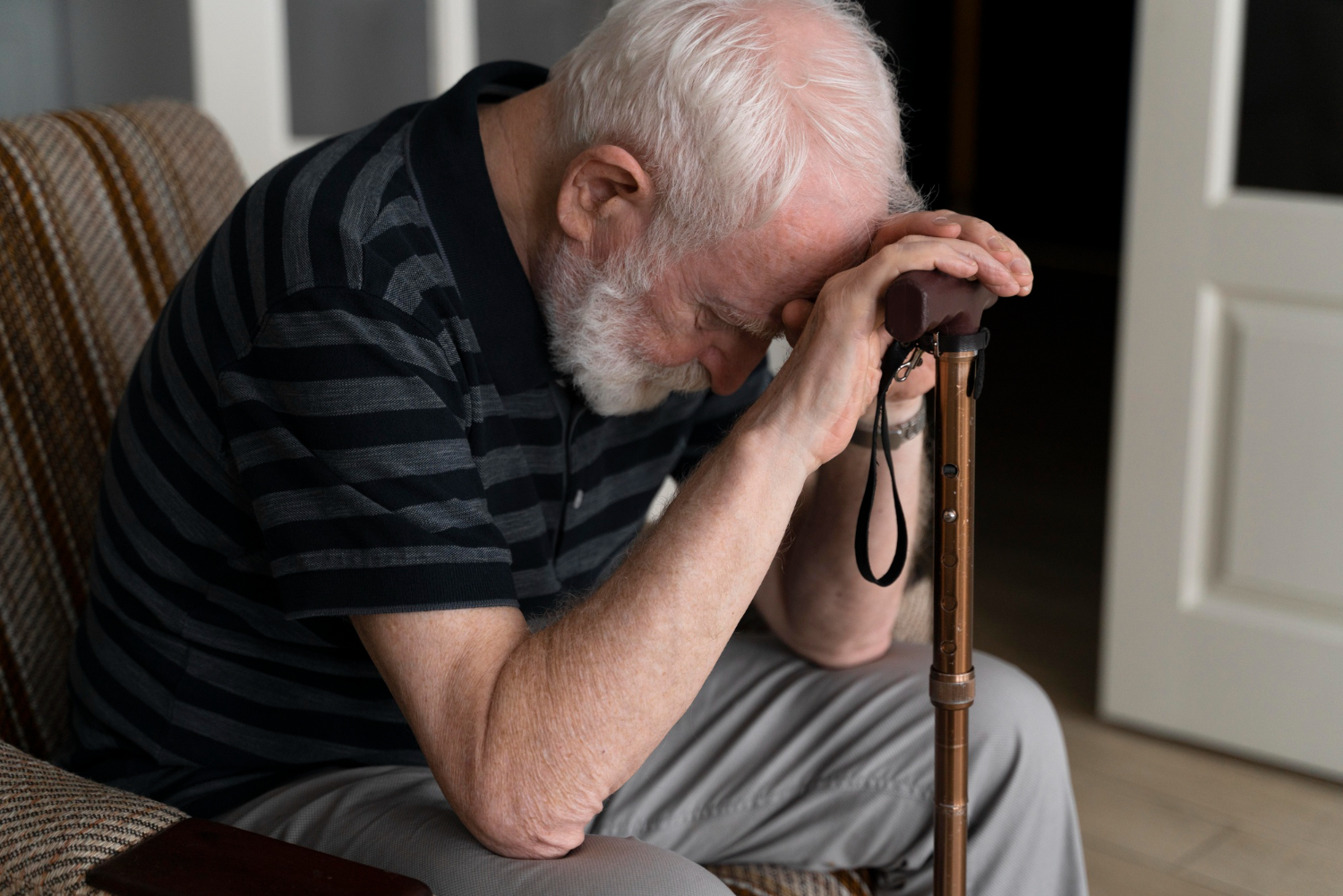
At seventy-eight years old, I’d learned that loneliness has a particular weight—not heavy like grief, but persistent like a low-grade fever that never quite breaks. It had been two years since Margaret died, and in that time, the house we’d filled with forty-three years of marriage had grown so quiet I could hear the refrigerator humming from the bedroom, could track the settling of old floorboards like a language only I understood.
But today was going to be different. Today, I was going to bring my family back together.
I woke before dawn, which wasn’t unusual. Sleep had become elusive since Margaret passed, my body operating on some outdated schedule that still expected her warm presence beside me. I sat on the edge of our bed—my bed now, I kept having to remind myself—and placed my hand on the framed photograph on the nightstand.
“Big day today, Maggie,” I said to her smiling face, the one captured at our fortieth anniversary party. “I’m going to get them all here. Sarah, Michael, the grandkids. Just like you used to do. I’ve been practicing.”
The silence that answered felt heavier than usual.
I shuffled to the kitchen in my slippers, the morning light just beginning to filter through the curtains Margaret had sewn herself. Everything in this house still carried her fingerprints—the carefully organized spice rack, the ceramic rooster she’d insisted on buying at that antique shop in Vermont, the small collection of cookbooks with her notes scribbled in the margins.
I pulled out her favorite, the one with the worn spine and grease-stained pages, and opened it to the holiday section. Taped to the inside cover was her master list, written in her careful cursive: “Patterson Family Holiday Dinner – Battle Plan.” She’d always called it that, approaching these gatherings with the strategic intensity of a general marshaling troops.
Reading her handwriting made my throat tight, but I pushed through the emotion. This was what she would have wanted—the family together, the house alive with voices and laughter, the table groaning under the weight of too much food.
I started with the potatoes. Margaret’s famous garlic mashed potatoes that Sarah and Michael used to fight over as children, each claiming the other got a bigger serving. I must have peeled twenty pounds of russets, my arthritic hands moving slowly but steadily, remembering the rhythm of this work from decades of holidays.
But before I could get too deep into cooking, there was something else I needed to do. Something Margaret had always handled with such grace and persistence that I’d never fully appreciated the skill involved.
I sat down at the kitchen table with the phone, the same harvest-gold rotary model we’d had since 1982. Margaret had refused to replace it even when the grandkids teased her about it. “If it still works, why fix it?” she’d say.
I dialed Sarah first, my daughter. Forty-five years old now, a partner at a prestigious law firm downtown, always busy, always apologizing for being busy.
“Hi, honey,” I said when she answered, trying to inject the right amount of cheer into my voice without sounding desperate. “Just calling to remind you about dinner today. I’m making all your favorites—the potatoes, the green bean casserole, even that cranberry thing you love.”
“Oh, Dad.” There was a pause, and I could hear the clicking of her keyboard in the background. “Is that today?”
My heart sank a little, but I rallied. “We talked about it two weeks ago, sweetie. I’ve got everything ready. Don’t be late—I’m not running a restaurant here, but I am judging.”
That got a laugh. Small, but genuine. “You sound just like Mom.”
The words hit me harder than I expected. For a moment, I couldn’t speak, overwhelmed by the sudden flood of memories—Margaret on the phone with Sarah, teasing and cajoling, somehow always managing to get our daughter to show up despite her demanding schedule.
“That’s because she trained me well,” I managed finally. “So I’ll see you at six?”
“I’ll try, Dad. I really will. I’ve got this deposition prep, but I’ll do my best.”
Try. Not “yes” or “I’ll be there.” Just “try.”
Next, I called Michael, my eldest. Fifty years old, working in corporate finance, married with three kids who seemed to grow taller every time I saw them.
“Mike, it’s your father. Family dinner tonight, remember? I made those potatoes you and your sister used to fight over.”
“You always took her side in those fights,” he said, but I could hear the smile in his voice.
“Because you cheated. You’d sneak extra servings while I was carving the turkey. Don’t think I didn’t notice.” I let my own smile show in my voice. “If you don’t show up tonight, I’ll eat them all myself and enjoy every bite.”
He chuckled. “We’ll try to make it, Dad. The kids have been crazy busy with school stuff, and Jennifer’s not feeling great, but we’ll do our best.”
There was that word again. Try.
Finally, I called the grandkids directly—Emma and Jake, Michael’s two oldest children. Emma was twenty-two, finishing her master’s degree in environmental science. Jake was nineteen, in his sophomore year of college, studying something with computers that I didn’t fully understand.
I put the phone on speaker and immediately heard music blasting in the background, voices talking over each other.
“Grandpa!” Emma shouted over the noise. “What’s up?”
“Just wondering if you two cool kids have room in your busy schedules for your old grandfather. I’m hosting a proper family dinner tonight, and I’ve got real dessert. That chocolate cake you used to beg for.”
“Oh man, Grandpa, I forgot that was today,” Jake said. “I’ve got this study group thing—”
“And I’m supposed to meet some friends,” Emma added.
“Maybe we could come by later?” Jake suggested. “Like, after dinner?”
I closed my eyes, suddenly exhausted. “That would defeat the purpose of a dinner, wouldn’t it?”
“Okay, okay,” Emma said. “We’ll try to rearrange some stuff. Maybe we can make it work.”
Maybe. Try. The words everyone uses when they mean “probably not.”
But I thanked them anyway, told them I loved them, and hung up with a forced cheerfulness I didn’t feel.
I stood in the kitchen for a long moment, looking at the ingredients spread across the counter, and wondered if I was being foolish. Margaret had made this look effortless, but she’d had a gift for it—a way of making people want to show up, of making them feel that being anywhere else would mean missing something important.
I didn’t have that gift. I just had her recipes and the hope that food could accomplish what my words apparently couldn’t.
I turned on the radio to fill the silence. An oldies station was playing Bing Crosby, and I found myself humming along without realizing it—the same unconscious habit Margaret had had. The sound of her voice, slightly off-key but full of joy, echoed in my memory so vividly I turned around, half-expecting to see her standing by the stove.
But the kitchen was empty except for me.
I threw myself into the cooking with something close to desperation. The turkey went into the oven. The green beans were trimmed and waiting. I was halfway through making the dinner rolls when I realized I was short on flour.
“How does a man run out of flour on the day he needs it most?” I muttered to myself, already reaching for my coat.
I crossed the street to Linda’s house. Linda Matthews had lived there for twenty years, had watched my children grow up, had brought over enough casseroles after Margaret’s funeral to fill our freezer twice over. She was one of those rare neighbors who’d become genuine friends, the kind who knew when to check in and when to give space.
She opened the door before I could knock, a knowing smile on her face. “Well, look at you all dressed up. What’s the occasion?”
“Big dinner tonight,” I said, trying to sound confident. “Whole family’s coming over. But I made a rookie mistake and ran out of flour. You wouldn’t happen to have a cup or two to spare?”
Her face lit up. “About time that house of yours had some life in it again! It’s been too quiet over there. Come in, come in.”
I followed her to her kitchen while she rummaged in her pantry. “When’s the last time you had all the kids together?”
The question stung more than it should have. “Thanksgiving. Two years ago. Before Margaret…” I didn’t finish the sentence.
Linda turned to face me, holding a large bag of flour. “They don’t know what they’re missing. That house used to be the heart of this whole street. Every holiday, every birthday, always something going on. Margaret had a gift for bringing people together.”
“I’m trying to do the same,” I said quietly. “Though I’m not sure I have her touch.”
She pressed the flour into my hands and squeezed my shoulder. “You’ve got more of her in you than you think, Arthur. She’d be proud of you for trying.”
I walked back home with the flour, Linda’s words warming me against the November chill. The afternoon sun was already starting its descent—days got so short this time of year. I still had hours of cooking ahead of me.
The bread rolls came out perfect, golden brown and smelling like every holiday memory I’d ever had. I was arranging them in Margaret’s good basket—the one we only used for special occasions—when my phone chimed.
A text message from Sarah: “DAD, I’M SO SORRY. WORK RAN LATE. THIS DEPOSITION IS A NIGHTMARE. I DON’T THINK I CAN MAKE DINNER.”
I stared at the screen, my chest tightening. I typed a response: “I’ve been cooking all day.” Then deleted it. Tried again: “Please try to come, even if you’re late.” Deleted that too. Finally settled on: “I’ll keep a plate warm for you.”
Her response came immediately: “Thanks for understanding, Dad. Love you.”
Understanding. As if I had a choice.
I turned my attention back to the potatoes, mashing them with more force than necessary. The phone rang just as I was adding the final pat of butter.
“Hey, Dad.” Michael’s voice, apologetic before he’d even said the words. “So, Jennifer’s got this migraine, and the kids are exhausted from school. We’re not going to make it tonight. I’m really sorry.”
“It’s fine,” I said, though my voice sounded hollow even to my own ears. “Next time.”
“Maybe next weekend? We could do a rain check?”
“Sure. Next weekend.”
But we both knew next weekend would bring its own excuses, its own conflicts, its own reasons why getting together would be too complicated.
I hung up and looked at the dining room table I’d set that morning. Margaret’s good china, the serving dishes we’d received as wedding gifts, the cloth napkins she’d embroidered with our initials. Eight place settings for a dinner that apparently nobody was coming to.
My phone chimed again. This time a group text from the grandkids: “Hey Grandpa! So sorry but we totally forgot we have this thing tonight. School project. We’ll FaceTime you later though! Promise!”
I set the phone down carefully, afraid that if I held it any longer I might throw it across the room. The sun had fully set now, and the house was dark except for the kitchen light. I stood there looking at the feast I’d spent all day preparing—enough food to feed eight people, made with love and desperate hope, sitting cold and untouched on the counter.
A laugh escaped me, brittle and hollow. “Who needs family anyway, right, Maggie?”
I reached for a dish towel to start clearing the table, to put away the food nobody would eat, when someone knocked on the door. Not a gentle, neighborly knock. This was authoritative, demanding, the kind of knock that makes your heart rate spike.
I opened the door to find two police officers on my front porch, their expressions serious and official.
“Arthur Patterson?” the older one asked.
“Yes?”
“You’re under arrest. Turn around and put your hands behind your back.”
The words didn’t make sense. I stood there, frozen, my mind struggling to process what was happening. “There must be some mistake—”
“Turn around, sir.”
I felt the cold metal of handcuffs clicking around my wrists as they read me my Miranda rights. The words washed over me like a foreign language I couldn’t quite translate. Through the doorway, I could see the dining room table, still set for the family dinner that nobody had come to.
“May I ask what I’m being arrested for?” My voice came out smaller than I intended, like a child asking why he’s being punished.
“Aggravated assault. 1992.”
“That’s impossible. I was teaching high school English in 1992. In Ohio. I’ve never even been to—”
“You can explain it to the detectives, sir. Let’s go.”
As they walked me to the patrol car, I saw Linda across the street, standing in her doorway with one hand covering her mouth, her eyes wide with shock. Our eyes met, and I saw the horror and confusion in her expression.
But what hurt more than the handcuffs or the accusations or even the embarrassment of being arrested was the thought that flashed through my mind: At least Linda can’t see inside my house. Can’t see the empty chairs and the untouched food. Can’t see how completely my family had abandoned me.
Being arrested for a crime I didn’t commit suddenly seemed like a smaller humiliation than having your neighbors witness the fact that your own children couldn’t be bothered to show up for dinner.
The police station was exactly like you’d see on television—harsh fluorescent lights, linoleum floors, the smell of burnt coffee and industrial cleaner. They took my coat, my wallet, my watch. Led me to a small interrogation room with a metal table and uncomfortable chairs.
Two detectives came in—one older, probably close to my age, with tired eyes and gray stubble; the other younger, maybe forty, with the kind of intensity that suggested he still believed he could solve every case.
“Mr. Patterson,” the older detective began, opening a file folder. “Do you know why you’re here?”
“You said aggravated assault. But I’m telling you, there’s been a mistake. I’ve never assaulted anyone in my life.”
“Can you tell us where you were on October 15th, 1992?”
I had to think for a moment, reaching back through decades of memories. “I was teaching. Fall semester at Riverside High School in Columbus, Ohio. I taught English there for thirty-two years.”
The younger detective leaned forward. “You’re saying you weren’t in Milwaukee, Wisconsin that week?”
“I’m saying I’ve never been to Milwaukee in my entire life.”
The older detective slid a piece of paper across the table. “We have a plane manifest with your name on it. Flight from Columbus to Milwaukee on October 14th, 1992.”
I stared at the document. There was indeed a name—Arthur Patterson—but the birthdate was wrong, and the middle initial was different.
“That’s not me. My middle name is James. That manifest says Arthur R. Patterson.”
“We also have an eyewitness,” the younger detective continued, ignoring my observation. “Putting someone matching your description at the scene of the assault.”
“Did this witness mention the chalk dust?” I asked, surprising myself with the sharpness in my voice. “Because I spent that entire October grading essays about The Great Gatsby. I can probably still tell you which students turned in their papers late.”
The detectives exchanged glances. The younger one left the room.
I sat there for what felt like hours but was probably closer to forty-five minutes, answering the same questions over and over. Where did you live in 1992? Can you provide proof you were in Ohio? Do you have any connection to Milwaukee? Have you ever been arrested before?
The answer to every question painted the same picture: I was a retired high school English teacher who’d spent his entire adult life in the same small Ohio town, teaching teenagers about literature and grammar, coming home to Margaret and our children every night. I’d never been in trouble, never even gotten a speeding ticket.
When the younger detective returned, he was carrying a thicker file. He spread out documents across the table—my employment records from Riverside High, time cards, even a photocopy of the school newsletter from October 1992 that mentioned me chaperoning the homecoming dance.
“Mr. Patterson,” the older detective said finally, and his tone had shifted from interrogative to apologetic. “It appears there’s been a case of mistaken identity. The Arthur R. Patterson we’re looking for is sixty-two years old, has a completely different work history, and—” he glanced at the photo in his file, “—frankly doesn’t look much like you beyond being roughly the same age and race.”
“So I can go?”
“We need to process the paperwork, but yes. We apologize for the inconvenience.”
Inconvenience. As if being handcuffed and arrested on the one night I’d tried to bring my family together was merely an inconvenience.
They brought me to the front desk to collect my belongings. I was signing the release form when the station doors burst open with such force they slammed against the walls.
“Who arrested Arthur Patterson?” a young man’s voice rang out, full of righteous anger.
I looked up to see Daniel Matthews, Linda’s son, striding toward the desk with the kind of confidence that comes from being a criminal defense attorney. Behind him, like some kind of small-town militia, came a stream of people I recognized.
Linda herself, her face flushed with determination. Pastor Williams from First Methodist, still wearing his collar. Mrs. Kim, the elderly Korean woman I drove to her doctor’s appointments every Tuesday. Tom from the hardware store where I bought supplies for the little home repairs I could still manage. The Hendersons from two houses down. Rita Sanchez, who ran the library where I volunteered once a week.
More people kept coming, filling the small lobby of the police station with a wall of familiar faces.
“What’s going on here?” the desk sergeant asked, clearly overwhelmed.
“I want to know who arrested this man,” Daniel repeated, pointing at me. “Because I know Arthur Patterson, and I guarantee you’ve got the wrong person.”
“We’ve already determined it was mistaken identity,” the sergeant said. “Mr. Patterson is being released.”
But Daniel wasn’t satisfied. “Mistaken identity? How does that even happen? Did you run any verification before you arrested a seventy-eight-year-old retired teacher?”
The voices rose in a chorus of defense and accusation. Pastor Williams spoke about my character, about the years I’d volunteered with the church’s literacy program. Mrs. Kim, in her heavily accented English, explained how I’d never missed a single one of her medical appointments in three years, how I’d helped her navigate Medicare paperwork and insurance claims. Tom mentioned the time I’d spent an entire Saturday helping him organize a fundraiser for the youth baseball league.
They told stories I’d forgotten about myself, moments of kindness that had seemed insignificant at the time but had clearly mattered to them. I stood there, my belongings clutched in my hands, overwhelmed by this outpouring of support from people who owed me nothing.
These were my neighbors, my community. Not family, but people who’d shown up on a random Tuesday night because they’d heard I was in trouble. People who believed in my innocence not because they knew the details of the case, but because they knew me.
The desk sergeant raised his hands over the commotion. “All right, everyone, please. Mr. Patterson is free to go. We’ve verified his alibi, and he’s being released. This was an unfortunate case of two men with very similar names.”
The group erupted in a cheer that felt wildly disproportionate to the situation, but I found myself smiling anyway, my eyes stinging with tears I refused to let fall.
We walked out together into the cold November night, and that’s when I saw them.
Sarah, Michael, Emma, and Jake were standing in the parking lot next to Sarah’s BMW. My daughter rushed over, her heels clicking on the pavement.
“Dad! Oh my God, are you okay? We got this call saying you’d been arrested—what happened?”
“Mistaken identity,” I said, suddenly very tired. “Wrong Arthur Patterson. It’s all sorted out.”
Michael pulled me into a hug, and I could feel him trembling. “Jesus, Dad. We thought—we didn’t know what to think.”
Emma had tears streaming down her face. “Grandpa, we were so scared.”
I looked at my family—the people who hadn’t shown up for dinner but had apparently raced to the police station the moment they heard I was in trouble. The contradiction didn’t escape me.
“Well,” I said, trying to inject some levity into the moment, “since you’re all here anyway, we could still do dinner. The food’s probably still good.”
The words had barely left my mouth when Michael’s expression hardened. “Are you serious?”
Sarah stepped back, her eyes narrowing. “Dad, did you… did you stage this?”
“What?”
“Did you fake an arrest to guilt us into coming to dinner?” Michael’s voice was rising. “Because that would be incredibly manipulative.”
I felt like I’d been punched in the stomach. “You think I… that I orchestrated getting arrested to trick you into showing up?”
“It seems awfully convenient,” Sarah said quietly. “We all get here right when you’re being released. After spending all day telling us how important this dinner was.”
Jake and Emma were looking at the ground, clearly uncomfortable but not contradicting their parents.
I looked at my children—really looked at them—and saw something I’d been avoiding for two years. They didn’t just miss their mother. They resented me for not being her, for not being able to fill the void she’d left, for having the audacity to still be here when she was gone.
“I don’t need to force anyone to have dinner with me,” I said, my voice steady despite the tears I could feel building behind my eyes. “And if that’s what it would take to get you all in the same room, then I don’t want you there.”
I turned away from them and walked toward Linda’s car. She was standing beside it, keys in hand, clearly having anticipated that I’d need a ride.
The tears came before we’d even left the parking lot, hot and fast and full of a grief that went deeper than the evening’s events. I cried for Margaret, who would have known how to fix this. I cried for the family we used to be, before death and time and distance had fractured us into strangers who shared DNA but little else. I cried for the untouched food waiting at home, for the empty chairs, for the realization that you can’t force people to care no matter how perfect the mashed potatoes are.
Linda drove in silence, one hand reaching over to squeeze mine.
When we pulled into my driveway, I was surprised to see more cars lining the street. Through my kitchen window, I could see lights on and movement.
“What…?”
“I called a few people while we were waiting at the station,” Linda said gently. “Told them you’d probably need some company tonight. Hope you don’t mind.”
I walked into my house to find it transformed. Pastor Williams was reheating the food I’d left on the counter. Mrs. Kim was setting out plates. Tom was carving the turkey with the kind of concentration usually reserved for delicate surgery. The Hendersons were pouring drinks. Rita had somehow procured a fresh bouquet of flowers for the centerpiece.
“We figured the food shouldn’t go to waste,” Daniel said, appearing at my elbow with a warm smile. “And you shouldn’t eat alone tonight. Not after everything.”
I stood in the doorway of my own kitchen, watching these relative strangers—these neighbors who’d become something more—filling my house with exactly the warmth and life I’d been trying to manufacture all day.
“I don’t know what to say,” I managed.
“Say you’ll join us,” Linda said, pulling out my chair at the head of the table. “Margaret’s seat is for her. This one’s yours.”
We sat down to dinner—all eight chairs filled, not with the family I’d called, but with the community that had shown up when it mattered. Pastor Williams said grace, and his words about unexpected blessings and the family we choose rather than the family we’re born into made several people reach for their napkins to dab at their eyes.
The food, reheated and served with far less ceremony than I’d planned, tasted better than anything I’d eaten in the two years since Margaret died. Not because the recipes were perfect—though they were—but because the table was full of people who wanted to be there, who chose to spend their Tuesday evening with a lonely widower rather than anywhere else.
Tom told a story about the time Margaret had organized a neighborhood yard sale and somehow convinced everyone on the block to participate, raising enough money to renovate the playground at the local elementary school. Mrs. Kim shared how Margaret had spent weeks teaching her to make American holiday dishes so she could host her own Thanksgiving. Story after story, my wife came alive again in their memories, and I realized that her legacy wasn’t just in our children or grandchildren—it was in this community she’d nurtured and cared for.
Around nine o’clock, there was a knock at the door. I opened it to find Sarah standing there alone, her mascara slightly smudged, her professional composure cracked.
“I’m sorry,” she said simply. “For everything. For not coming to dinner. For accusing you. For—” her voice broke, “—for not being there the way I should have been since Mom died.”
I pulled her into a hug, and she collapsed against me the way she used to when she was little and the world had been too much.
“I miss her so much, Dad,” she sobbed. “And I don’t know how to do this without her. I don’t know how to be a family when she’s not here to hold us together.”
“I know, sweetheart. I don’t know how to do it either. That’s why I needed you all here tonight—to try to figure it out together.”
She pulled back, wiping her eyes. “Can I come in? I know I don’t deserve—”
“There’s always room at my table for you,” I said, stepping aside.
She walked into the dining room and stopped, taking in the scene of neighbors and friends laughing and eating. Her eyes met mine with a question.
“The family I chose showed up,” I said quietly. “And there’s plenty of food left if you’d like to join us.”
She nodded, tears starting fresh. “I’d like that.”
We made room for her at the table, and she fit in more naturally than I’d expected, listening to the stories about her mother, adding a few of her own. By the time Pastor Williams brought out the chocolate cake I’d made—Margaret’s recipe, perfectly moist and rich—Sarah was laughing at Tom’s impression of Margaret haggling at the farmers market.
As the evening wound down and people began to leave, each one stopped to hug me, to thank me for a wonderful meal, to tell me they’d see me soon. Linda was the last to go, and she squeezed my hand at the door.
“Your family showed up tonight, Arthur. Maybe not the one you expected, but the one you needed.”
After everyone left, Sarah helped me clean up, and we worked in comfortable silence for a while before she spoke.
“Mom used to say that family isn’t just about blood. It’s about who shows up.”
“She was a wise woman.”
“She’d be proud of what you did tonight. Bringing everyone together, even if it didn’t happen the way you planned.”
“She’d be disappointed that you and your brother didn’t come when I asked.”
Sarah flinched but didn’t argue. “You’re right. We got so caught up in our lives that we forgot what matters. I forgot.”
“I’m not trying to replace your mother,” I said, the words I’d been holding back for two years finally emerging. “I can’t. But I’m still here, and I’m still your father, and I still want to know my grandchildren, and I still need to feel like I matter to someone besides the people I drive to doctor’s appointments.”
“You do matter, Dad. We just… we got lost. Michael and I. After Mom died, it was easier to stay away than to come back and feel her absence in every room. But that wasn’t fair to you.”
We finished the dishes together, and when Sarah left, she hugged me tight and promised she’d be back next week. Just the two of us, she said. Dinner and conversation and starting to rebuild what had been broken.
I believed her.
That night, I sat in Margaret’s chair and looked at the photos covering our walls—forty-three years of marriage, of children growing up, of holidays and vacations and ordinary moments that had seemed unremarkable at the time but now felt precious beyond measure.
“We did good, Maggie,” I said to her picture. “Maybe not perfect, but good. And tonight, even though it didn’t go as planned, I think you would have been proud.”
The house was quiet again, but it didn’t feel quite as empty. Because I’d learned something important: family isn’t defined by who you’re related to, but by who shows up when you need them. And sometimes the people who show up are the ones you least expect.
The Thanksgiving after that strange Tuesday, I hosted dinner again. Sarah came with a new commitment to being present. Michael came with an apology and a promise to do better. The grandkids came because their parents told them how close they’d come to losing me entirely.
But I also invited Linda and Daniel, Pastor Williams, Mrs. Kim, Tom, and all the others who’d shown up at the police station that night. We needed two tables to fit everyone, and the noise was glorious—laughter and conversation and the sound of a house full of life.
Margaret would have loved it.
And in the end, isn’t that what matters? Not the perfect family dinner from a nostalgic past, but the messy, complicated, beautiful reality of the family we build from the people who choose to love us, to show up for us, to sit at our table not because they have to, but because they want to.
That Tuesday night when nobody came to dinner taught me that sometimes the greatest gifts arrive in the most unexpected packages—even if that package is a mistaken arrest, a community uprising, and a table full of neighbors who became family when my actual family forgot how.
And every year since, when I make Margaret’s famous mashed potatoes, I make enough for twenty. Because you never know who might show up, and in my experience, the people worth having at your table are the ones who come when you need them most, not just when it’s convenient.
Family, I’ve learned, isn’t about DNA. It’s about showing up. And on the night I needed it most, the right family did.

Sophia Rivers is an experienced News Content Editor with a sharp eye for detail and a passion for delivering accurate and engaging news stories. At TheArchivists, she specializes in curating, editing, and presenting news content that informs and resonates with a global audience.
Sophia holds a degree in Journalism from the University of Toronto, where she developed her skills in news reporting, media ethics, and digital journalism. Her expertise lies in identifying key stories, crafting compelling narratives, and ensuring journalistic integrity in every piece she edits.
Known for her precision and dedication to the truth, Sophia thrives in the fast-paced world of news editing. At TheArchivists, she focuses on producing high-quality news content that keeps readers informed while maintaining a balanced and insightful perspective.
With a commitment to delivering impactful journalism, Sophia is passionate about bringing clarity to complex issues and amplifying voices that matter. Her work reflects her belief in the power of news to shape conversations and inspire change.