The Black Card
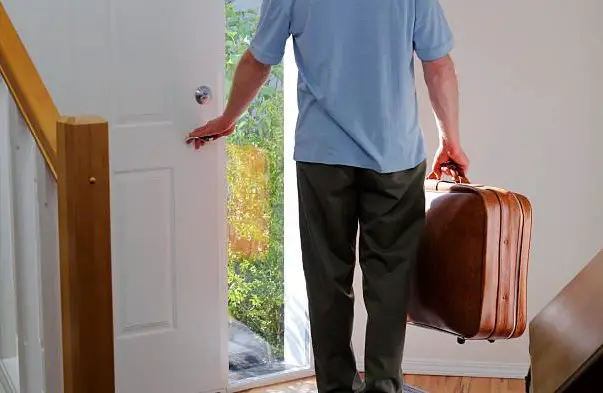
My husband told me he was going on a business trip. Fifteen days, he said. Something about land deals and foreign partners. He kissed my forehead, wheeled his suitcase out the door, and told me not to contact him. Three days later, my phone lit up with a charge that changed everything—and by the time he realized what I’d done, it was already too late.
My name is Ava Reed, though for the past ten years, most people have known me as Mrs. Ethan Cole. There was a time when I introduced myself differently—back when I ran my own landscape architecture firm, Reed Landscapes, and spent my days elbow-deep in soil samples and blueprint revisions. I built that business from nothing, one garden at a time, one satisfied client leading to another. I loved the work. The way a bare plot of land could transform into something living and deliberate. The satisfaction of watching a vision take root.
Then I met Ethan at a charity gala where I’d been hired to consult on their rooftop garden project. He was charming in that effortless way that comes from old money and Ivy League confidence. Dark suit, easy smile, the kind of man who made you feel like you were the only person in the room even when you knew you weren’t. He told me he worked in commercial real estate development, that he admired people who “created beauty in the world.” Three months later, he proposed on the same rooftop I’d designed, and I said yes without hesitation.
The brownstone came shortly after the wedding. A historic four-story in the West Village that Ethan had inherited from his uncle—elegant, sprawling, and, according to him, “too much house for one person to manage.” So I moved in, and slowly, almost imperceptibly, my life began to reorganize itself around his. First it was just taking on more of the household management because he worked such long hours. Then it was scaling back my client meetings because someone needed to be home for deliveries, for contractors, for the endless parade of maintenance that a house like that demanded.
“I need someone to hold down the fort,” Ethan would say, squeezing my shoulder as he left for another breakfast meeting, another site visit, another late night at the office. And I told myself this was temporary. This was what partnership looked like. This was me being supportive while he built something bigger for both of us.
My business didn’t die overnight. It faded. Clients grew tired of rescheduling. My assistant moved on to another firm. Projects I would have fought for slipped through my fingers because I was picking out tile samples for our bathroom renovation or planning a dinner party for Ethan’s colleagues. Before I realized what was happening, Reed Landscapes existed only as a dormant LLC and a website I kept meaning to update.
But I still had the garden. The brownstone’s back garden became my sanctuary—a narrow strip of city paradise that I cultivated with obsessive care. I planted climbing hydrangeas along the brick wall, installed a Japanese maple that created dappled shade over a stone bench, arranged orchids and ferns in terracotta pots across the bluestone patio. Every morning I was out there with my coffee, checking on new growth, deadheading spent blooms, lost in the quiet ritual of tending something beautiful.
Ethan rarely came outside. “That’s your domain,” he’d say, as if my entire world had been reduced to three hundred square feet of greenery.
Ten years. A decade of marriage that had somehow transformed from romantic dinners and weekend getaways into something far more mundane. Our conversations devolved into logistics—did you call the plumber, what time is your mother arriving, can you pick up my dry cleaning. The dinners I used to cook with care were replaced by takeout containers while he scrolled through his laptop. The trips we’d planned to Italy, to Japan, to anywhere, never materialized because he was always in the middle of some crucial deal that couldn’t wait.
I told myself this was normal. This was what marriage looked like after the honeymoon phase faded. Everyone said the first decade was the hardest. I just needed to be patient, to keep showing up, to remember the man I’d fallen in love with.
Then came the trip.
It was a Tuesday evening in late September when Ethan came home earlier than usual, his face flushed with what I initially mistook for excitement. He found me in the kitchen, where I was preparing a simple pasta dish—one of the few meals I still bothered to cook from scratch.
“I need to talk to you about something,” he said, loosening his tie.
I turned down the heat on the stove. “What’s going on?”
“I have to go away for a couple weeks. Business trip. Big opportunity in the Hamptons—resort development deal. There’s a geological survey component, some foreign investors involved. Very hush-hush at this stage.”
Fifteen days felt like a long time, but it wasn’t unprecedented. “When do you leave?”
“Thursday morning.” He opened the refrigerator, grabbed a beer, took a long drink. “Here’s the thing, though. The foreign partners are very particular about security and discretion. They’ve requested that everyone involved keep communication to an absolute minimum. No calls, no texts, nothing that could potentially leak information about the deal.”
I stared at him. “You’re asking me not to contact you for two weeks?”
“It’s just a precaution. I’ll still have my phone, but it needs to stay off most of the time. If there’s a real emergency, you can call my office and they’ll relay a message.” He said it so casually, as if he were describing a minor inconvenience rather than asking me to accept two weeks of complete silence.
Something felt wrong. A instinct, a whisper in the back of my mind that I immediately tried to rationalize away. Ethan had worked on confidential deals before. International partners could be demanding. It wasn’t impossible that this was legitimate.
“Okay,” I heard myself say. “I guess I’ll just hold down the fort.”
He smiled, relieved, and kissed the top of my head. “You’re the best. I don’t know what I’d do without you.”
Thursday morning arrived with unseasonable warmth. I woke early and made Ethan his coffee the way he liked it—dark roast, splash of cream, no sugar. He showered, dressed in a charcoal suit I’d picked up from the dry cleaner the day before, and methodically packed his carry-on with the precision of someone who traveled frequently. Dress shirts, toiletries, his good watch, the cologne I’d given him for Christmas.
I stood at the door as he prepared to leave, and he pulled me into a brief embrace. His cologne—cedar and bergamot—enveloped me. He kissed my forehead, a gesture that had once felt affectionate but now seemed almost perfunctory.
“Take care of the place,” he said. “And don’t worry if you don’t hear from me.”
“I won’t,” I lied.
The door closed behind him. His footsteps faded down the brownstone’s front steps. I listened to the sound of his roller bag clacking against the sidewalk, growing fainter and fainter, until there was nothing but the ambient hum of the city.
I stood in that hallway for a long moment, surrounded by the life we’d built—the antique console table, the Persian runner, the framed photographs of us at various happy moments that now felt like evidence from a crime scene. The silence in the house wasn’t peaceful. It was cavernous. Expectant.
For the first two days, I tried to maintain my usual routine. I worked in the garden, reorganized the kitchen pantry, started reading a novel I’d been meaning to get to for months. I didn’t miss Ethan exactly—we’d grown so accustomed to existing in parallel that his physical absence didn’t change much. But the prohibition on contact nagged at me. Every time I thought about texting him something mundane, I felt like a child who’d been told not to touch something, which only made me want to reach out more.
On the third day, I was on the back patio in the late afternoon, wearing my gardening gloves and wiping dust from the leaves of my phalaenopsis orchids. The September light was golden and warm, filtering through the Japanese maple in a way that made everything look softer, more forgiving. I was lost in the meditative rhythm of the work when my phone chimed.
Once. Twice. Three times in rapid succession.
I pulled off my gloves and picked up the phone from the wrought-iron table. Bank alerts. Three of them. My heart rate picked up as I opened the first notification.
BLACK CARD TRANSACTION – $4,000.00 MERCHANT: ARYA RESTAURANT LOCATION: UPPER EAST SIDE, MANHATTAN DATE/TIME: TODAY, 6:47 PM
I read it twice, certain I’d misunderstood. Then I checked the second and third alerts—a charge at a five-star hotel, another at a high-end boutique. All in Manhattan. All on the black card that was linked to our joint account, the secondary card I’d reluctantly added to my own banking profile years ago when Ethan insisted we “streamline our finances.”
Arya Restaurant. The name detonated something in my memory. Our tenth wedding anniversary, six months ago. I’d made a reservation at Arya, excited to finally go to the celebrated establishment I’d been reading about for years. I’d even bought a new dress. When I told Ethan about it over breakfast, he didn’t even look up from his phone.
“Cancel it,” he’d said. “That place is for people who have nothing better to do with their money. We’ll order in from that Italian place you like.”
We’d spent our anniversary eating mediocre pasta on the couch while he answered emails.
And now he was at Arya. While supposedly on a top-secret business trip in the Hamptons. While supposedly keeping his phone off for security reasons. Spending four thousand dollars on a single dinner.
My hands went cold despite the warm evening air. The phone felt heavy, alien. I stood there for a moment, orchids forgotten, trying to construct a rational explanation. Maybe it was fraud. Maybe someone had stolen the card information. Maybe—
But I knew. Some part of me had known for a while, I realized. All those late nights at the office. The way he’d stopped touching me beyond those perfunctory kisses. The distance that had grown between us so gradually I’d barely noticed we were now strangers living in the same house.
I went inside, set the phone on the kitchen counter, and poured myself a glass of water with shaking hands. I drank it slowly, deliberately, trying to calm the riot in my chest. Then I did the only thing that made sense: I called Chloe.
Chloe Huang had been my best friend since college, when we’d bonded over late-night study sessions and a shared contempt for pretentious graduate students. While I’d gone into landscape architecture, she’d become a corporate lawyer—the kind who wore power suits like armor and had a reputation for demolishing opposing counsel with surgical precision. She’d never particularly liked Ethan. “Too smooth,” she’d said after meeting him. “Like a car salesman, but with better suits.”
She answered on the second ring. “Ava? What’s wrong?”
I told her everything. The sudden trip, the no-contact rule, the charges. My voice stayed remarkably steady throughout the recitation, as if I were describing someone else’s life.
When I finished, there was a beat of silence. Then Chloe’s voice dropped into what I called her “lawyer tone”—calm, controlled, deadly serious.
“Send me the card information. Send me a recent photo of Ethan. Give me one hour.”
“Chloe, what are you—”
“One hour. Don’t do anything else. Don’t call the bank yet, don’t call him, don’t touch anything. Just wait.”
She hung up before I could argue.
I sent her what she needed, then sat at the kitchen table and waited. The sun set. The brownstone grew dark around me. I didn’t turn on the lights. I sat in the gathering shadows and felt the architecture of my entire life beginning to crumble.
An hour and seventeen minutes later, my phone buzzed. Not a text. A video file from Chloe with a message: “I’m sorry. Call me after you watch this.”
My finger hovered over the play button for a long moment. I knew that once I watched it, there would be no going back. Whatever illusion I’d been maintaining about my marriage would be permanently shattered. But what was the alternative? Ignorance? Pretending?
I pressed play.
The video was short—only thirty seconds—but it was enough. The footage was slightly grainy, clearly recorded discreetly from across the room, but the subjects were unmistakable. Ethan sat at a corner table in what was obviously Arya, judging by the elegant décor and romantic lighting. He wore the same charcoal suit I’d watched him pack three days ago. Candlelight flickered across his face as he smiled at the woman sitting across from him.
Charlotte. The intern from his office. I’d met her exactly once, several months ago when I’d surprised Ethan with lunch. She couldn’t have been more than twenty-five—glossy dark hair, bright eyes, the kind of effortless beauty that comes from being young and unencumbered. She wore a wine-colored slip dress that probably cost more than my monthly grocery budget.
In the video, Ethan cut into what looked like lobster and reached across the table to place a piece on Charlotte’s plate. She laughed at something he said, leaning forward in a way that made her intentions unmistakable. Then she reached across with her napkin and wiped a dot of sauce from the corner of his mouth. But she didn’t pull away. Her finger lingered. And Ethan caught her hand and kissed it.
Not a quick peck. A real kiss. Tender. Intimate. The gesture of someone who’d done it before, would do it again.
The video ended.
I watched it three more times, looking for some detail that would make it less damning. But each viewing only confirmed what I already knew. This wasn’t a business dinner that had gotten inappropriate. This wasn’t a drunken mistake. This was a relationship. Planned dinners, inside jokes, comfortable physical intimacy. How long had it been going on? Months? Longer?
The phone rang. Chloe.
“I’m sorry,” she said immediately. “I have a friend who works security at Arya. I called in a favor. She pulled the footage from tonight and sent it to me.”
“How did you know to look there?” My voice sounded strange—distant and hollow.
“Because men like Ethan are predictable. He told you Arya was too expensive, too frivolous, but what he really meant was he didn’t want to waste it on you. He was saving it for someone he was trying to impress.”
The cruelty of that observation landed like a physical blow. “I ironed that suit.”
“I know, honey. I know.” Chloe’s voice softened. “Listen to me carefully. You have two choices right now. You can wait for him to come home and confront him, let him cry and apologize and promise it’ll never happen again, and go through months of couples therapy that won’t work. Or you can do something different.”
“What do you mean?”
“I mean you can take control of this situation before he even knows what’s happening. You can protect yourself—financially, legally, emotionally. But you have to act now, while he’s still away, while he still thinks you’re sitting at home watering your plants like a good wife.”
Something hard and cold crystallized in my chest. “Tell me what to do.”
“I need you to say it clearly. Do you want me to help you as your lawyer?”
“Yes.”
“Okay. First, we freeze everything.”
Under Chloe’s methodical guidance, I called my VIP banking representative—a woman named Sandra who’d helped me set up accounts years ago. It was after hours, but Sandra’s personal cell was reserved for emergencies, and this qualified.
“Sandra, this is Ava Cole,” I said, proud of how steady my voice sounded. “I need to report suspected fraud and misuse of marital assets on the black card account.”
“Oh my. Yes, of course. Can you describe what’s happened?”
I explained that my husband was supposedly on a business trip but that his card was being used for personal expenses in Manhattan—large charges at restaurants and hotels that didn’t align with his stated location or purpose. I didn’t mention infidelity. I didn’t need to. Banks cared about fraud and liability, not marital drama.
“I need that card canceled immediately,” I continued. “And I need our joint accounts flagged and frozen pending investigation.”
“I understand completely. Let me take care of this right now.”
Within fifteen minutes, it was done. Ethan’s black card—the one he used for everything, the one that symbolized his financial freedom and success—was nothing more than a useless piece of metal. Our joint accounts were locked. He could still access his personal accounts, but those wouldn’t help him if he’d been planning to fund the rest of his romantic getaway on our shared money.
“Thank you, Sandra.”
“Of course, Mrs. Cole. I’m sorry you’re dealing with this.”
I hung up and immediately called Chloe back. “It’s done.”
“Good. Now we move on the house.”
“The house?”
“The brownstone is a marital asset, right? Joint ownership?”
“Yes, but—”
“Then we need to protect your interest. In New York, you can’t just sell marital property without both spouses’ consent, but you can start the process. And more importantly, you can control the narrative. If Ethan comes back to find you’ve already consulted with a realtor, already had the house assessed, he’ll know you’re serious. It changes the power dynamic entirely.”
“Chloe, I don’t know if I’m ready to—”
“You don’t have to actually sell it. But you need to show him you’re capable of it. You need him to understand that you’re not going to sit around and wait for him to decide what happens next.”
She was right. I knew she was right. For ten years I’d been reactive, accommodating, endlessly flexible. I’d bent myself into whatever shape Ethan needed, and he’d taken that flexibility and used it to make room for someone else.
“Okay,” I said. “Set it up.”
The next morning, I met with a real estate agent Chloe recommended—a sharp woman named Margaret who specialized in high-value Manhattan properties. We walked through the brownstone as I pointed out recent renovations, the updated kitchen, the historic details that made it desirable. Margaret took notes, nodding, asking questions about square footage and property taxes.
“This will move quickly,” she said. “Properties like this in the West Village don’t stay on the market long. I already have several clients who might be interested. If you’re serious about selling, I could have offers within the week.”
“I’m serious.”
And I was. Standing in the house I’d maintained and decorated and poured my energy into while my marriage disintegrated around me, I felt nothing but a cold determination to take back control of my life. This wasn’t my home. It was a museum to a relationship that had been dying for years.
By the time Margaret left, she’d already sent the listing to three potential buyers, all cash offers, all ready to move quickly.
I spent the rest of that day in a strange, mechanical state. I went through Ethan’s home office, photographing relevant documents. I backed up files from our shared computer. I gathered receipts, credit card statements, anything that might be useful. Chloe had told me to document everything, and I did.
In the back of Ethan’s desk drawer, underneath old business cards and tangled charging cables, I found a jewelry box I didn’t recognize. Inside was a delicate gold necklace with a small diamond pendant—tasteful, expensive, not something Ethan would buy for himself. There was a receipt tucked beneath it: purchased six weeks ago, around the time of Charlotte’s birthday based on the intern directory I remembered seeing in his office once.
I took a photo of the receipt and put everything back exactly as I’d found it.
By evening, I’d created a methodical dossier of my marriage’s collapse. It wasn’t angry or emotional. It was just evidence. Facts. A paper trail that told the story more clearly than my feelings ever could.
I turned off my phone after that. I didn’t want to see his calls or messages yet. I wasn’t ready to engage. Instead, I sat in the garden as dusk fell, watching the fairy lights I’d strung through the Japanese maple begin to glow. The orchids needed watering. The hydrangeas needed deadheading. But I just sat there, feeling the enormous weight of the future pressing down on me.
Tomorrow, everything would change. But tonight, I could sit in this garden I’d created and mourn the life I’d thought I was building.
I left my phone off for almost twenty-four hours. It was a small rebellion, a tiny reclamation of my own time and attention. When I finally powered it on the next evening, it nearly vibrated itself off the kitchen table.
Sixty-six missed calls. All from “My Husband.” Not from his supposed dead phone in the Hamptons. All from the past twelve hours, once his card stopped working.
There were text messages too, escalating in tone from confused to frustrated to angry:
Why isn’t my card working?
Ava, I need you to call the bank. There’s some mistake.
This is ridiculous. Call me immediately.
Why are you ignoring me? This isn’t funny.
AVA. ANSWER YOUR PHONE.
And finally, a voicemail. I pressed play and held the phone slightly away from my ear as Ethan’s voice exploded through the speaker—furious, panicked, with not a single trace of shame or self-reflection:
“Ava, what did you do? Why did you suddenly cancel the card? How am I supposed to get back to the States? I’m stuck here, do you understand? I have no access to money, no way to pay for my hotel, nothing. This is insane. You need to fix this. Call the bank right now and fix this. I don’t know what you think you’re doing, but this is not acceptable. Call me back. NOW.”
I listened to it twice. The entitlement in his voice was almost impressive. Even caught, even exposed, his first instinct was to demand that I solve his problem. Not to apologize. Not to explain. Just to blame me for the consequences of his own choices.
I opened my photos and changed my profile picture—the one Ethan would see when I called him back. For years it had been a photo from our fifth anniversary: both of us smiling, pressed close together, looking happy. I replaced it with a recent photo Chloe had taken of me in the garden, standing next to a blooming orchid, alone.
Then I pressed his name in my contacts.
He answered on the first ring, already mid-sentence. “Ava, you—”
“Yes,” I said, in the calmest voice I’d ever heard come out of my mouth. “We’ll talk about how you’re getting home. But first, you’re going to explain to me why my money paid for Arya, a five-star hotel, and a twenty-year-old intern’s vacation while you were on your ‘top secret Hamptons survey.'”
Silence. Complete, absolute silence.
“I have the video, Ethan. The footage from the restaurant. I’ve seen you feed her lobster and kiss her hand. I’ve documented the charges. I’ve talked to a lawyer. Your card is canceled. Our accounts are frozen. The house is on the market. So before we discuss anything else, you’re going to tell me the truth.”
“Ava, I can explain—”
“Don’t insult me. I don’t want your explanations. I want you to admit what you did.”
Another silence, longer this time. When he spoke again, his voice had changed—smaller, defensive. “It’s not what you think. Charlotte and I, we’re just—it’s complicated. You don’t understand the pressure I’ve been under. You’re always in your garden, in your own world, and I needed—”
“You needed to take my money and spend it on another woman while lying to my face?”
“It’s not like that—”
“Then what is it like?”
I could hear him breathing, hear the panic beneath his attempts at composure. Behind him, muffled and distant, I heard a female voice: “Ethan? What’s happening?”
“Is she there right now?” I asked.
“Ava, please, just listen—”
“I am listening. I’ve been listening for ten years. I listened while you convinced me to give up my business. I listened while you told me Arya was too expensive for us. I listened while you scheduled a fake business trip so you could play house with your intern. What I’m done doing is believing you.”
“What do you want from me?” His voice cracked slightly. “What do you want me to say?”
“I want you to understand that this is over. Not because I’m angry—though I am. Not because I’m hurt—though I am. But because you made a choice. You chose to lie. You chose to betray me. You chose to treat our marriage like it was disposable. So now I’m making a choice too.”
“Ava, don’t do this. We can fix this. I’ll end things with Charlotte right now, I’ll come home, we’ll go to therapy—”
“No.”
That single word hung in the air between us, across miles of distance and years of disappointment.
“The house will sell within the week,” I continued. “You’ll get your share, minus what I calculate you owe me for the funds you misused. Chloe is drawing up the divorce papers. You can have your assistant send over contact information for your lawyer. This isn’t a negotiation.”
“You can’t just—you can’t do this!”
“I can. I am. As for how you’re getting home from wherever you actually are, that’s not my problem anymore. Call Charlotte. Call your office. Call your mother. But don’t call me again unless it’s through your lawyer.”
“Ava, please—”
I hung up.
My hands were shaking, but not from fear. From adrenaline. From relief. From the overwhelming sensation of finally, finally taking up space in my own life.
The phone rang again immediately. I declined the call and blocked his number. Then I sat at the kitchen table and let myself cry—not the broken, desperate crying I’d expected, but something cleaner. Something that felt like release.
Chloe called an hour later. “How are you?”
“I don’t know,” I said honestly. “I think I’m okay?”
“You did the right thing.”
“Did I? I just blew up my entire life.”
“No,” Chloe said firmly. “He blew up your life. You’re just refusing to stand in the rubble pretending it’s still a house.”
Over the following week, everything moved with surreal speed. The house sold for more than asking price—a tech executive who wanted to close quickly, who saw the garden and the original moldings and didn’t even haggle. Margaret handled everything with ruthless efficiency. Movers came and packed up my things while leaving Ethan’s belongings in neat boxes in what had been his office. I took my orchids, my gardening tools, the Japanese maple in a specialized container, and very little else.
Chloe found me a small but beautiful apartment in Brooklyn with a terrace that got afternoon sun. I could see the skyline from the bedroom window. I could breathe.
Ethan returned from his trip three days after our phone call. He came to the brownstone—which no longer belonged to either of us—and found his belongings boxed and his key no longer working. He called, texted, showed up at Chloe’s office demanding to see me. She had security escort him out.
The divorce proceedings were remarkably straightforward. Once presented with the evidence—the receipts, the video, the documented lies—Ethan’s lawyer advised him to settle quietly rather than drag things out. Charlotte, apparently, had disappeared from his life the moment things got complicated. Turned out she wasn’t interested in a messy divorce and a man without access to his black card.
Six months after that September evening when I’d watched my phone light up with bank alerts, I stood on my new terrace in Brooklyn arranging orchids in their pots, my hands in familiar soil, the spring sun warm on my shoulders. The Japanese maple was budding. The hydrangeas I’d transplanted were settling into their new containers. It wasn’t the brownstone garden, but it was mine in a way that space had never been.
My phone rang. Not Ethan—that line of communication had been severed months ago. It was Marcus Chen, an old colleague from my Reed Landscapes days. He’d seen that I’d updated my dormant website, that I was taking clients again.
“Ava,” he said, “I have a project that’s perfect for you. Rooftop garden in Tribeca, client with a serious budget and a trust in your vision. Are you interested?”
I looked out at my terrace, at the small ecosystem I was rebuilding, at the view of the city that felt like a promise rather than a prison.
“Yes,” I said. “Send me the details.”
After I hung up, I poured myself a glass of wine and sat on my terrace as the sun set over Manhattan. Somewhere in the city, Ethan was living in a rental apartment, his reputation damaged, his relationship with Charlotte in ruins, trying to figure out how his carefully constructed life had collapsed so quickly. I didn’t feel sorry for him. I didn’t hate him either. He’d become a stranger years ago; the divorce had just made it official.
What I felt, sitting there among my plants as the light faded and the city sparkled to life below me, was something I hadn’t experienced in years: possibility.
My name is Ava Reed. I’m a landscape architect. I’m rebuilding my business and my life, one deliberate choice at a time. And every morning when I wake up in my Brooklyn apartment and see the orchids blooming on my terrace, I’m reminded that beautiful things can grow even after everything else has been torn down.
You just have to be willing to start over.
THE END

Sophia Rivers is an experienced News Content Editor with a sharp eye for detail and a passion for delivering accurate and engaging news stories. At TheArchivists, she specializes in curating, editing, and presenting news content that informs and resonates with a global audience.
Sophia holds a degree in Journalism from the University of Toronto, where she developed her skills in news reporting, media ethics, and digital journalism. Her expertise lies in identifying key stories, crafting compelling narratives, and ensuring journalistic integrity in every piece she edits.
Known for her precision and dedication to the truth, Sophia thrives in the fast-paced world of news editing. At TheArchivists, she focuses on producing high-quality news content that keeps readers informed while maintaining a balanced and insightful perspective.
With a commitment to delivering impactful journalism, Sophia is passionate about bringing clarity to complex issues and amplifying voices that matter. Her work reflects her belief in the power of news to shape conversations and inspire change.