The highway stretched out before me like a promise I wasn’t sure I wanted to keep. Four hours from Chicago to the house I’d grown up in, the same route I’d driven a hundred times before, but this time felt different. The rental car smelled of synthetic pine from the air freshener swinging beneath the rearview mirror, a cheap approximation of the real thing. Outside, Illinois farmland gave way to the familiar rolling hills of home, white with early December snow that clung to fence posts and gathered in the shadows of bare trees.
I’d left work early on Christmas Eve, my desk still cluttered with project files that could wait until the new year. The office had been nearly empty anyway, just a skeleton crew of people with nowhere else to be or nothing else to prove. I’d been one of them for years, volunteering for holiday shifts, taking on extra projects, building a career that looked impressive on paper and felt hollow in practice. But this year was supposed to be different. This year, I was going home.
The passenger seat held evidence of my optimism: a homemade apple pie that had taken three tries to get right, the crust finally achieving that golden-brown perfection my grandmother used to manage effortlessly. Beside it, gifts wrapped in glossy red paper with white ribbon, chosen with the kind of care that comes from wanting to prove something. I’d spent weeks selecting them—a cashmere scarf for my mother in the exact shade of blue she’d once mentioned liking, a leather wallet for my brother engraved with his initials, presents that said I’m still part of this family, I still belong here, please let me belong here.
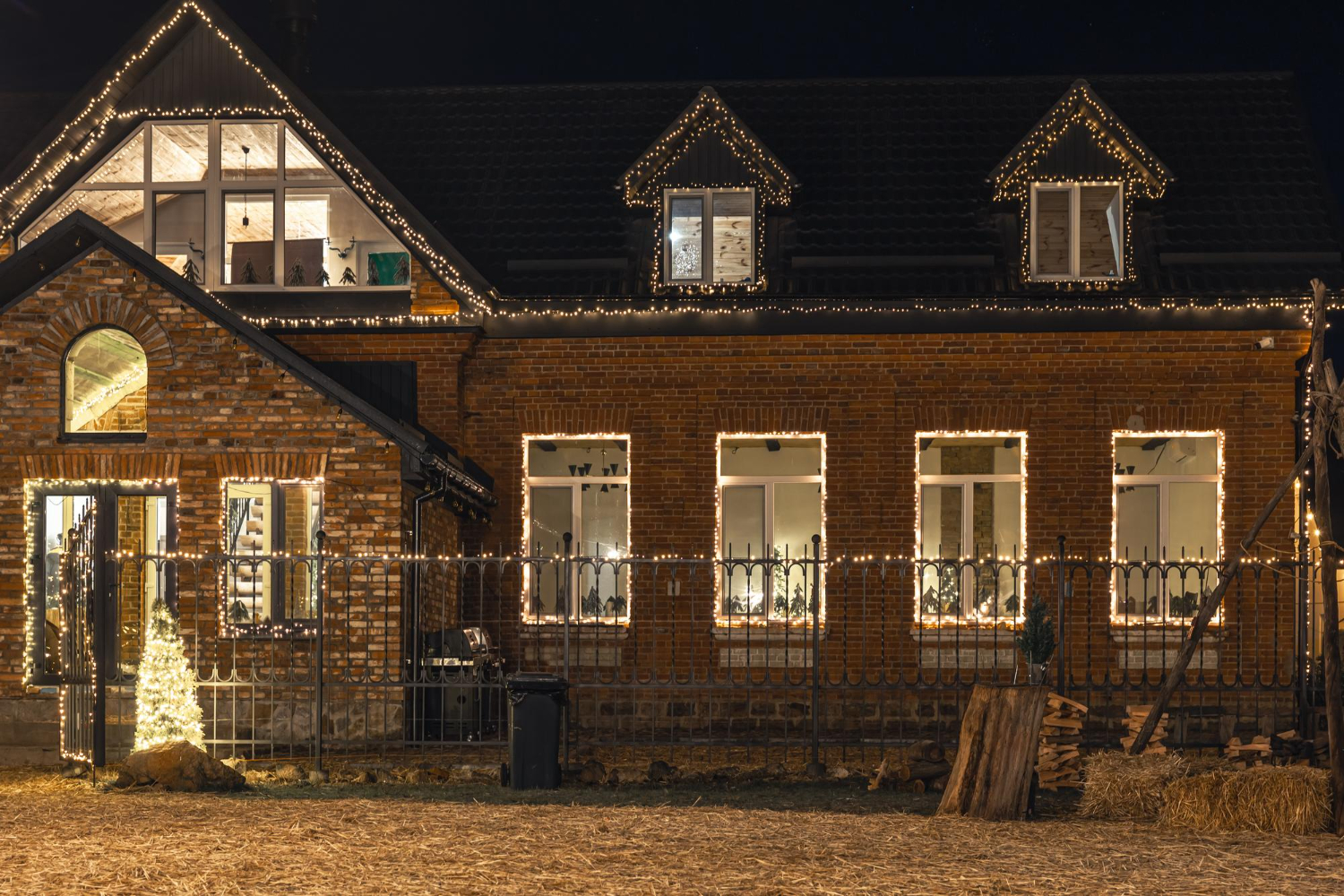
The GPS announced my arrival with cheerful confidence, and there it was: 412 Maple Street, the split-level ranch with the sagging gutter I’d always meant to fix and never had. Someone had strung lights along the porch railing, the multicolored kind that flashed in sequence, a garish rainbow against the winter twilight. A small American flag, faded from too many seasons, was pinned beside the front door. Frost sparkled on the concrete steps like scattered diamonds.
I gathered my offerings and approached, my breath forming clouds in the December air. The porch creaked under my weight, the same familiar groan it had made when I was sixteen and sneaking in past curfew. Through the window, I could see the warm glow of the living room, hear the muffled sound of television laughter and conversation. My family was inside, celebrating without me, waiting for me, I’d thought.
The door was ajar, just a few inches, enough to let the warmth escape and the cold creep in. I knocked anyway, a courtesy, and heard footsteps approaching. My mother appeared in the gap, her face backlit by the Christmas tree lights behind her, and for a moment, I felt like a child again, hopeful and naive.
“Sorry,” she said, her voice flat, almost rehearsed. “I think you’ve got the wrong house.”
The words hit me like a physical blow. I stood there, arms full of pie and presents, my mouth opening and closing without sound. Behind her, I could see my brother on the couch, his wife beside him, both of them pointedly not looking in my direction. The television played some cheerful holiday special, artificial joy piped into a room full of real rejection.
“Mom, it’s me,” I managed, but she was already closing the door, slowly, deliberately, her eyes never quite meeting mine.
I backed away, my hands trembling, nearly dropping the pie. The Christmas lights seemed to mock me now, their cheerful blinking at odds with the ice forming in my chest. I made it to the car somehow, set the pie and presents in the backseat where they couldn’t reproach me with their optimism, and sat in the driver’s seat with my hands on the wheel and nowhere to go.
My phone rang. My brother’s name flashed on the screen, and some desperate part of me thought maybe this was the apology, the misunderstanding cleared up, the invitation back in. I answered on the second ring.
“Look, don’t be upset,” he said, his voice carrying that particular tone of false sympathy he’d perfected over the years. “But you know we can’t let you in. It’s just… it’s complicated, okay?”
“I understand,” I heard myself say, though I didn’t, not really, not yet.
There was a pause, the sound of movement, and then I realized he hadn’t hung up. His voice came through, distant now, talking to someone else in the room: “He still thinks paying rent is an automatic invitation. Can you believe that?”
Laughter. My mother’s voice, amused: “Well, the money’s stopped now anyway, hasn’t it?”
My brother again: “Yeah, he’ll figure it out. Give it a day or two and he’ll turn everything back on. He always does.”
The call ended. I sat in the rental car, the engine running, heat blasting, while something fundamental cracked open inside me. Not my heart—that had been breaking slowly for years. This was different. This was clarity, cold and sharp as the winter air outside.
I pulled up my banking app with shaking fingers and started scrolling. The history read like a ledger of my own desperation: automatic utility payments dating back three years, rent transfers every month since my divorce settlement came through, one-time emergencies that had become a permanent budget line. Gas cards, grocery cards, insurance payments, phone bills. I’d moved to Chicago five years ago, climbed the corporate ladder one seventy-hour week at a time, sent money home because I believed that helping meant belonging, that financial support could purchase the family connection that seemed to come so naturally to everyone else.
The numbers blurred together. Twelve months of detailed transactions that told a story I’d been too willfully blind to read. The “emergency” rent payment in July had been made the same week my brother posted vacation photos from Cancun. The “we can’t afford utilities” crisis in September coincided with my mother’s spa weekend. The “completely broke” text in October came three days after they’d purchased new patio furniture that I’d seen in the background of a Facebook photo, tagged with #blessed and #grateful.
Birthdays had become Venmo requests. Family conversations had devolved into itemized lists of needs. Every text message was a transaction, every phone call a pitch. My brother’s words from last Christmas echoed in my memory: “You’re a responsible person, that’s why we count on you.” I’d taken it as a compliment then. Now I heard it for what it was—a job description for a role I’d never applied for but had somehow been assigned.
The divorce had made me useful. Before Sarah left, before the lawyers and the division of assets and the strange loneliness of a too-large apartment, I’d been just another family member, present but not essential. But after the settlement, when I’d foolishly mentioned the amount in a moment of vulnerability, everything changed. Suddenly I was needed, relied upon, indispensable. I’d mistaken that for love.
I sat in the car for an hour, maybe more, while the sun set completely and the temperature dropped. Then I opened my laptop, connected to my phone’s hotspot, and began systematically dismantling the financial architecture I’d built to support people who had just locked me out in the cold.
Automatic rent payment to their landlord: canceled. I drafted an email—professional, brief, devastating: “Effective immediately, tenants will be responsible for direct payment. Please update your records accordingly.”
Utility card with my name attached to their address: deleted from the account, all automatic payments stopped.
Grocery card: blocked.
Gas card: closed entirely.
Phone bill family plan: removed two lines, effective immediately.
Insurance policy: contacted the company, had myself removed as the payer.
Every financial thread I’d woven to bind us together, I carefully cut. It took two hours, numerous confirmation codes, several “are you sure?” prompts from customer service representatives. Yes, I was sure. For the first time in years, I was absolutely certain.
My last action was a text message to the family group chat, the one where my contributions were always met with thumbs-up emojis and requests, never conversation:
“Financial support ends today. Do not contact me for money. If necessary, communicate via email only. I need space.”
Then I did something I’d never had the courage to do before: I blocked both numbers.
I drove back to Chicago through the darkness, the pie and presents still in the backseat, evidence of a Christmas that never happened. The highway was nearly empty, just me and the occasional truck, red taillights disappearing into the distance. I stopped at a rest area around ten, bought terrible coffee from a vending machine, and sat at a cold metal table watching other travelers come and go. Families heading to celebrations, couples on road trips, people with places to be and people who wanted them there.
I got back to my apartment around midnight, three hours later than planned, and fell asleep on the couch still wearing my coat, too exhausted for the effort of undressing, of pretending this was a normal night, a normal Christmas.
The calls started at 1:07 a.m. My phone, sitting on the coffee table, lit up the dark room like a distress beacon. The vibrations rattled against the wood, each call distinct and desperate. I watched from the couch as the numbers climbed: five calls, ten, twenty. Voice messages accumulated like snow, each notification a small avalanche of guilt and anger and manipulation.
By dawn, the counter read sixty-one missed calls.
I made coffee as the winter sun struggled over the Chicago skyline, weak light filtering through my apartment windows. The phone continued its symphony of demands, buzzing and ringing and chiming, a greatest hits of family dysfunction. I didn’t touch it. Instead, I stood at the window with my mug, watching the city wake up, and felt something I hadn’t experienced in years: silence. Not the absence of sound—cars still honked below, neighbors’ footsteps echoed in the hallway above—but an internal quiet, a cessation of the constant anxiety about what they needed, what they expected, how much it would cost to keep them satisfied this time.
At 8:12 a.m., curiosity got the better of me. I checked the messages, one hand hovering over the block button in case I needed to retreat back into my hard-won peace.
Mom’s text: “We didn’t mean to hurt you—you know how family is. But this is too much. How could you do this to us? Especially at Christmas?”
My brother, one minute later: “You’re ruining everything. Mom’s crying. This is so typical of you, making everything about yourself. We NEED that money. You’re being selfish.”
More messages followed, a cascade of accusations and justifications, guilt trips wrapped in holiday paper. Each one assumed the same fundamental truth: that I would cave, that I always caved, that my boundaries were negotiable and my limits theoretical.
They didn’t know I’d changed. They didn’t know that the man who showed up on their porch with pie and presents had died somewhere between “wrong house” and “automatic invitation,” and what remained was someone who no longer equated money with love, support with obligation, family with financial servitude.
I drew the blinds, blocking out the weak winter sun, and sat at my kitchen table with fresh coffee and a notebook I’d bought months ago but never used. The first page was blank, intimidating, full of possibility. I wrote a list, not of things to do, but of things to stop doing:
Stop answering calls from people who only call when they need something.
Stop feeling guilty for having boundaries.
Stop believing that love requires bankruptcy.
Stop waiting for an apology that will never come.
Stop trying to buy belonging.
The list grew, each item a small rebellion against years of conditioning. When I finished, I felt lighter, unmoored in a way that was both terrifying and exhilarating.
I’d been seeing a therapist sporadically, whenever work allowed, which meant every few months with long gaps in between. I pulled up the patient portal and scheduled a standing appointment—every Tuesday at six, no exceptions, already blocked in my work calendar. If my family had taught me anything, it was that you make time for what matters.
The camera I’d been researching for months—a beautiful Nikon with interchangeable lenses that I’d bookmarked and returned to and convinced myself I didn’t deserve—went into my shopping cart. I checked out before I could second-guess the expense, could hear my brother’s voice asking why I had money for toys but not for their rent.
Late afternoon, I looked up volunteer opportunities. The idea had been circling for weeks, a vague notion that maybe connection could be found in service rather than purchase. Downtown, at a community center I’d driven past a hundred times, they needed help serving Christmas dinner to people experiencing homelessness. I signed up for the evening shift, five to nine, and felt a flutter of something that might have been hope or might have been fear.
I arrived at six, uncertain and overdressed in a button-down shirt when everyone else wore jeans and practical shoes. The organizer, a woman named Margaret with silver hair and capable hands, put me on serving duty without preamble. “Mashed potatoes,” she said, handing me a massive serving spoon. “Big scoops, everyone’s hungry.”
The line formed quickly—men and women and children, people in threadbare coats and borrowed gloves, people who’d fallen through the cracks and people who were barely hanging on. I stood at my station, spooning potatoes onto plates, and something remarkable happened: they talked to me.
Not about money. Not about what I could do for them beyond the potatoes I was already providing. They talked about the weather, about hoping for snow, about the high school basketball team’s winning streak. An older man named Jerome told me about his daughter who was a nurse in Texas. A young mother named Tasha showed me a photo of her son’s first Christmas pageant costume. A teenager with cautious eyes and careful movements thanked me three times for the food, like gratitude was a limited resource he couldn’t afford to run out of.
They asked my name. Not my bank account, not my salary, not what I could afford to give. Just my name.
“Daniel,” I said, over and over, the word feeling new in my mouth.
“Merry Christmas, Daniel.”
“Thank you, Daniel.”
“God bless you, Daniel.”
My name, without strings attached. My presence, without a price tag.
I stayed until closing, helping wash dishes in the industrial kitchen, the hot water turning my hands red, the ordinary work feeling sacred somehow. Margaret found me as I was hanging up my apron.
“You did good today,” she said simply. “We could use you again if you’re interested. Second Tuesday of every month, we do a community dinner.”
“I’ll be here,” I said, and meant it.
I drove home through the decorated streets, past houses full of families celebrating traditions I’d once thought I was part of. My phone was still silent, the calls having finally stopped around noon when they realized I wasn’t going to respond. In the morning, there would be emails, I was sure—more sophisticated guilt trips, carefully worded manipulations designed to bypass the boundaries I’d established. But tonight, there was just the quiet car, the city lights, and the strange sensation of moving forward instead of being pulled backward.
My apartment felt different when I returned. Not empty—it had always been empty. But peaceful. I unpacked the pie and the presents from the rental car, these artifacts of rejected hope, and sat with them on my couch. The pie had survived its journey, the crust still intact, the smell of apples and cinnamon filling the small space. I cut a large slice, ate it slowly with my hands like a child, and let myself feel the loss of what I’d wanted and the relief of what I’d escaped.
The presents I wrapped differently—brown paper and twine this time, practical and honest. I looked up the address for the community center, printed shipping labels, and wrote a simple card: “For whoever needs them most. Merry Christmas from Daniel.”
The scarf, the wallet, and everything I’d chosen to prove my belonging went into a box addressed to strangers who might appreciate the gesture without calculating its value.
The next morning, I woke to sun streaming through my bedroom window, no alarm, no crisis, no urgent requests for money I’d worked hard to earn and harder to keep. I made breakfast—real breakfast, eggs and toast and the bacon I usually skipped because it felt indulgent. I ate slowly, tasting everything, present in my own life for what felt like the first time in years.
My first therapy appointment was scheduled for the following Tuesday. The volunteer shift was marked on my calendar. The camera would arrive in three days. I had plans now, the kind that belonged only to me, that couldn’t be canceled or redirected or repurposed to serve someone else’s needs.
There would be hard days ahead, I knew. Moments when I doubted myself, when the old conditioning kicked in and whispered that I was selfish, that family meant sacrifice, that love required self-destruction. There would be emails I’d have to delete unread, voice messages I’d have to let expire, guilt that would arrive like clockwork and demand to be paid like any other bill.
But there would also be Tuesday dinners at the community center, learning people’s names and stories without expecting anything in return. There would be photographs taken with my new camera, capturing beauty that existed independent of my ability to purchase it. There would be therapy sessions where I slowly unraveled the tangled beliefs about worth and family and obligation.
And there would be silence—that precious, hard-won silence that comes from finally understanding the difference between loneliness and solitude, between being used and being loved, between buying affection and earning respect.
I’d spent years trying to purchase belonging, convinced that if I just gave enough, did enough, paid enough, I would finally be enough. But belonging can’t be bought, I understood now. It can only be found in spaces where your presence matters more than your presents, where your name is enough without a dollar sign attached.
The pie was gone by New Year’s Eve. I ate the last slice at midnight, alone in my apartment, while fireworks burst over the lake and the city celebrated the end of one year and the beginning of another. It tasted like apples and cinnamon and something else, something I hadn’t experienced in years but recognized immediately: freedom.
My phone stayed silent. I’d started a new family group chat—just me—where I sent messages to myself about small victories and difficult days, creating the supportive presence I’d always wanted and finally learned to provide. The emails did come, as predicted, each one a masterclass in manipulation that I read once and archived, neither responding nor letting them hook into my guilt.
In February, I got a call from an unknown number. Against my better judgment, I answered. It was my mother’s voice, smaller than I remembered, less certain.
“The rent’s due,” she said. No greeting, no apology, no acknowledgment of the months of silence. Just a problem that I was supposed to solve.
“I know,” I said. “I hope you can figure it out.”
“Daniel, please. Don’t be this way. We’re family.”
And maybe that was the moment everything crystallized, all the therapy sessions and volunteer shifts and quiet mornings distilled into perfect clarity.
“No,” I said gently, firmly, with all the love and boundaries I’d finally learned to hold simultaneously. “We were related. But family—real family—doesn’t lock you out in the cold. Real family doesn’t measure your worth by your bank account. I’m done paying rent to live in a house where I was never really welcome.”
I hung up before she could respond, before the old patterns could reassert themselves, before I could be convinced that belonging was something I needed to earn rather than something I deserved simply by existing.
Spring came to Chicago with the slow determination of all Midwestern seasons, ice melting into mud, gray skies giving way to tentative blue. I had a full calendar now—therapy on Tuesdays, volunteer dinners, a photography class at the community college where I was learning to see the world through a lens instead of a budget. I’d made friends, actual friends who knew me as Daniel the person rather than Daniel the ATM, who invited me to dinners where the only thing I needed to bring was myself.
The homemade pie I’d carried to that disastrous Christmas had been an offering at the altar of family obligation, sweet and perfect and ultimately rejected. But I’d learned to make more pies, dozens of them, for people who appreciated the gesture without calculating its cost, who understood that love—real love—is given freely or it isn’t love at all.
I found what I’d been trying to buy with all that loyalty, all that money, all those years of paying for inclusion: belonging. But it came without a receipt, without terms and conditions, without the constant anxiety of wondering when the next payment was due.
It came from showing up at the community center and serving mashed potatoes. It came from therapy sessions where I learned that no was a complete sentence and boundaries were acts of self-respect, not selfishness. It came from quiet mornings in my apartment, drinking coffee and watching the sunrise without dread, without obligation, without the weight of other people’s expectations crushing the air from my lungs.
My brother left one final voice message in March, angry and desperate: “You’ve changed, and not in a good way. You used to care about family.”
He was right about the first part. I had changed. I’d stopped setting myself on fire to keep other people warm. I’d stopped believing that my value was measured in dollars and cents. I’d stopped confusing financial support with emotional connection.
As for caring about family—I’d learned there were different kinds of caring. I could wish them well from a distance. I could hope they figured out how to support themselves. I could even, in my most generous moments, forgive them for teaching me that my money was more important than my presence.
But I couldn’t go back. That door was closed, locked from the inside of my own hard-won self-respect.
The wrong house, my mother had said that Christmas Eve. She’d been more right than she knew. It was the wrong house—for me. I’d spent years trying to belong in a place where my presence was tolerated only as long as it came with a check, where love was transactional and family was a business arrangement I’d never agreed to.
I’d found the right house now. It existed in the community center kitchen where Margaret called me by name, in the Tuesday evening therapy sessions where I slowly untangled years of conditioning, in my apartment where silence meant peace instead of loneliness, in the spaces between obligations where I finally had room to discover who I was when I wasn’t trying to buy my way into someone’s heart.
The sixty-one missed calls became a sort of monument in my memory, a marker between before and after, between the man who stood on that porch with apple pie and false hope and the man I’d become in the aftermath of rejection. Not harder, not colder, not bitter—but clearer, more honest, more willing to invest in relationships that invested back.
I never did find out if they managed to pay the rent. I never learned whether they blamed me or themselves or simply moved on to the next person willing to confuse obligation with love. It didn’t matter. Their story continued without me, as mine continued without them.
And mine, I discovered with something close to joy, was just beginning.

Adrian Hawthorne is a celebrated author and dedicated archivist who finds inspiration in the hidden stories of the past. Educated at Oxford, he now works at the National Archives, where preserving history fuels his evocative writing. Balancing archival precision with creative storytelling, Adrian founded the Hawthorne Institute of Literary Arts to mentor emerging writers and honor the timeless art of narrative.