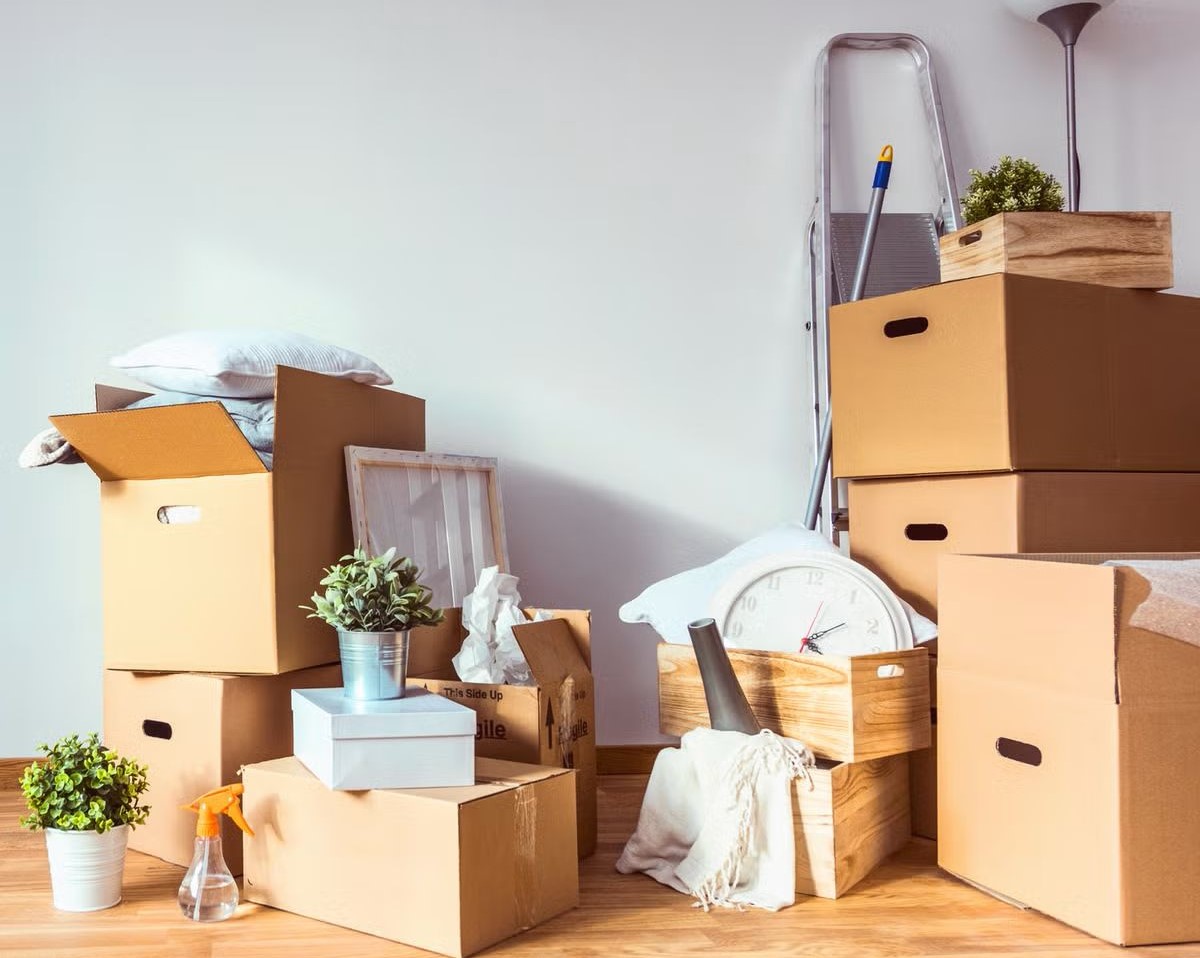
“Your sister’s moving in. We already packed her stuff.”
My mother said it from my front door like she was giving a weather report—casual, matter-of-fact, as if she were commenting on the temperature or mentioning she’d picked up milk at the store. Not like she was announcing a hostile takeover of my life.
Behind her stood my parents, my brother, and my golden-child sister, all holding boxes and bags and the kind of entitled expectation that comes from a lifetime of getting exactly what they want. They were ready to invade my brand-new Minneapolis penthouse like it was theirs, like the deed had their names on it instead of just mine.
I was still in my pajamas—soft cotton ones I’d bought myself as a small luxury after years of sleeping in whatever was cheapest—coffee mug in hand, standing on the marble flooring I’d worked a decade to afford. The morning sun was streaming through the floor-to-ceiling windows, casting long shadows across furniture I’d carefully selected, art I’d saved up for, a space I’d designed to finally, finally feel like mine.
I’m Eden. I’m 29. I’m a senior logistics coordinator for a major shipping company based in Minneapolis, managing supply chains and distribution networks across the Midwest. It’s the kind of job that sounds impressive at dinner parties but requires the kind of relentless problem-solving that leaves you mentally exhausted by Thursday.
I’ve worked since I was sixteen—started at a grocery store, moved to retail, took on catering gigs on weekends. Two jobs all through college while carrying a full course load. No one co-signed my loans. No one helped with rent. No one paid for my car when it broke down sophomore year, leaving me to either fix it or figure out how to get to work and class via a bus system that didn’t quite reach campus.
I was the “she’ll figure it out, she always does” kid. The dependable one. The one who didn’t need help because I’d somehow learned not to ask for it, learned that asking was met with sighs and lectures about responsibility while my siblings got checks and sympathy.
My sister Brianna? She’s 26 and has never paid a bill on time in her entire life. Not once. Not because she can’t understand due dates, but because she’s never had to face consequences. Three apartments. Three evictions. A trail of half-finished jobs she quit when they got “boring” or “stressful,” and ex-boyfriends who eventually realized they’d been dating a dependent rather than a partner.
Every time she fell—and she fell often, spectacularly, with the confidence of someone who knew the net would appear—my parents swooped in with money, spare rooms, and an endless supply of excuses. “She’s going through a hard time.” “She’s still figuring things out.” “She’s more sensitive than you, Eden. You’re strong. You can handle things.”
This time, their solution was elegantly simple: drop her on my doorstep and let me handle it.
“You’ve got all this space,” my mom said, sweeping her hand over my open-concept living room, my carefully curated space, as if square footage was a communal resource rather than something I’d earned. “It’s selfish not to share.”
The word hit me like it always did—selfish. The weapon they’d been wielding since I was old enough to have anything they wanted to claim. Selfish for going to the college I chose instead of staying local. Selfish for taking a job in Minneapolis instead of staying in our small Wisconsin hometown. Selfish for buying a place I could actually afford instead of a house with extra bedrooms for emergencies that would inevitably become my responsibility.
Austin, my 32-year-old brother who still lives in their basement—rent-free, of course, because he’s “saving up” for something that never quite materializes—let his eyes crawl over my furniture with the kind of resentment that comes from comparing someone else’s earned success to your own chosen stagnation.
“Must be nice,” he sneered, running his hand along my leather couch, the one I’d saved for months to buy. “You really spent all this on yourself?”
The judgment dripped from every word. As if spending my money on my life was somehow morally inferior to spending it on them.
I swallowed hard, that familiar guilt rising in my throat like bile. This is what they do. This is what they’ve always done. Make you feel like the bad guy for surviving, for building something, for refusing to burn yourself out just to keep them comfortable in their dysfunction.
“Bri will take the second bedroom,” my mom continued, already moving down the hall like she owned the deed, like she’d paid the down payment, like she’d spent years working her way up from entry-level coordinator to senior management. “We’ll start with the big dresser by the window—it’ll be perfect for her clothes. Austin, you grab that box. Eden, you can help your sister unpack later.”
Not a question. Not a request. A command, delivered with the absolute certainty that I would comply because I always had before.
They reached the door at the end of the hallway—the door that used to lead to the guest wing, a spacious bedroom and en-suite bathroom that the realtor had called “perfect for visitors or a home office.”
My mother twisted the handle with practiced confidence and flung the door open.
And froze.
Because there was no second bedroom.
There was just… wall.
A clean, freshly painted, professionally installed wall where the guest wing used to be. Smooth drywall, perfectly taped and finished, painted the same soft gray as the hallway. No door. No windows. No access. Just a seam where a contractor had quietly, efficiently sealed it shut last week while my family was busy ignoring my texts about boundaries and my repeated statements that no, Brianna could not move in.
The silence was spectacular.
“What is this?” my mother hissed, her voice low and dangerous in the way it got when she was trying not to make a scene but absolutely was making a scene. “Where is the bedroom?”
I took another slow sip of coffee, letting the moment stretch out, savoring it in a way I probably shouldn’t have but absolutely did.
“That’s my private studio,” I said calmly, as if this were the most natural thing in the world. “I had the entire guest wing sealed off. I work from home three days a week. I needed an office space. And I needed privacy.”
“You did this on purpose,” she snapped, and I watched her face cycle through confusion, realization, and fury in rapid succession. “You built a WALL to keep your own sister out.”
“I built a wall to keep my life from being swallowed,” I said, and my voice was steadier than I’d expected it to be. Years of therapy, probably. Years of practicing boundaries with a professional who kept telling me that protecting yourself isn’t cruelty. “What you do with your other children is your business. My square footage is not your emergency plan.”
Austin scoffed, dropping the box he’d been holding with a thud that probably damaged whatever was inside. “You’ve changed. Money’s gone to your head.”
I looked at him—really looked at him—at his faded t-shirt, his defensive posture, the way he’d spent years resenting everyone else’s success instead of building his own. Then at my parents, who’d enabled every bad decision, every failure to launch, every crisis that became someone else’s responsibility. At my sister, clutching her boxes like a shield, tears already forming because crying had always worked before.
“No,” I said, and I felt something click into place inside me, something settling into certainty. “I didn’t change. I just stopped letting you treat me like a spare room with a pulse.”
The words hung in the air like smoke.
My mother’s face went red. “How dare you—after everything we’ve done for you—”
“What, exactly, have you done for me?” The question came out sharper than I intended, but I didn’t take it back. “You gave me a childhood, which is the legal minimum. You fed me and housed me, which was your responsibility. You didn’t pay for college. You didn’t help with my car. You didn’t co-sign my apartment lease when I was terrified I wouldn’t qualify on my own. You didn’t celebrate my promotion or ask how I was doing during the hardest year of my life. What you did do was expect me to show up when you needed money, space, or someone to clean up messes you’d enabled.”
“You’re being dramatic,” my father said, speaking for the first time, his voice tired in that way that meant he didn’t want to deal with this, wanted it all to go back to the way it was when I just quietly complied.
“I’m being honest,” I corrected. “There’s a difference.”
They called me selfish. Dramatic. Ungrateful. Cold. Heartless. My mother stormed out with a parting shot about me being “dead to the family,” delivered with the kind of finality that was supposed to make me panic, make me apologize, make me tear down the wall and welcome chaos back into my carefully constructed peace.
Austin muttered something about karma. My father just looked defeated, like he couldn’t understand how we’d gotten here, conveniently forgetting every conversation where I’d tried to set boundaries that were immediately trampled.
Brianna was the last to leave, standing in my doorway with her mascara running, her boxes abandoned in the hallway.
“I thought you loved me,” she said, and her voice was small, wounded, the voice of someone who’d learned early that helplessness was currency.
“I do love you,” I said, and I meant it. “But love doesn’t mean lighting myself on fire to keep you warm. It doesn’t mean sacrificing my stability for your comfort. You’re twenty-six. You’re not a child. And you’ll never learn to stand if people keep catching you before you fall.”
She left without responding, and I closed the door behind them all, locking it with a soft click that felt like exhaling after holding your breath underwater.
I thought that was the end of it.
I was wrong.
The texts started immediately. Guilt trips from my mother about family obligations and how she “didn’t raise me to be this way.” Angry messages from Austin calling me everything from stuck-up to a traitor. Brianna sent crying selfies with captions about being homeless and abandoned, conveniently not mentioning that our parents had, in fact, taken her back in, just like they always did.
I blocked numbers. Then they called from friends’ phones, from work phones, from numbers I didn’t recognize. I blocked those too.
They showed up at my building once. The doorman—bless him—told them I’d moved. They tried to get my address from my employer. HR shut that down fast, especially after I explained the situation and showed them some of the more unhinged messages.
The guilt was crushing at first. I’d lie awake at night wondering if I was the villain in this story, if I’d gone too far, if a wall—an actual, literal wall—was too dramatic a boundary. My therapist kept asking me the same question: “If a friend told you this story, what would you tell them?”
I’d tell them they did the right thing. That you can’t help people who don’t want to help themselves. That enabling isn’t love.
So I poured myself into work. Threw myself into a massive Midwest expansion project that required eighty-hour weeks and constant travel. I coordinated the opening of three new distribution centers, managed the logistics for a supply chain overhaul, proved myself indispensable in ways that came with a promotion, a raise, and a corner office I’d earned through competence rather than connections.
And for the first time in my life, I came home to an apartment that stayed exactly the way I left it. No one going through my mail. No one eating my food. No one using my bathroom without replacing the toilet paper. No one filling my space with their chaos.
I slept better. I breathed easier. I stopped having stress dreams about drowning.
Six months passed. Then eight. I started dating—actually dating, not the exhausted after-work drinks I used to squeeze in between family crises. I took a pottery class. I joined a book club. I did things that had nothing to do with being productive or useful or solving someone else’s problems.
I built a life that felt like mine.
Then came the day my brother called from a new, unfamiliar number. I almost didn’t answer—I’d gotten good at ignoring unknown calls—but something made me pick up.
“Eden.” His voice was different. Quieter. Missing the usual sneer. “It’s Austin. Don’t hang up. Please.”
“What do you want?” I kept my voice flat, giving nothing.
“Mom and Dad are in trouble,” he said. “Like, real trouble. Six figures of debt. Credit cards, personal loans, second mortgage. They’re about to lose the house. They’re going to ask you to fix it. I just… I thought you deserved a heads-up.”
The line went quiet. I could hear him breathing, waiting for my response.
“Why are you telling me this?” I asked.
He laughed, bitter and short. “Because I’m living in their basement and I finally understand what you were trying to say. About enabling. About consequences. They did to Brianna what they’ve been doing to me—taught us we never have to face reality because someone will always save us. And now they’re drowning in debt from saving her from her own mistakes, and they’re going to try to pull you under with them.”
“Are you asking me to help them?”
“No.” The answer came quick, certain. “I’m asking you to remember that wall. Because they’re going to make you feel like you owe them. And you don’t.”
He hung up before I could respond.
Two weeks later, my parents called. Separately, which was calculated—divide and conquer, make me hear the same story twice, wear down my defenses with repetition.
My mother cried. My father used his disappointed voice. They wanted to meet for dinner. To “talk.” To “work things out as a family.”
I agreed to the meeting but insisted on a public place. An Italian chain restaurant near my office, the kind with red vinyl booths and unlimited breadsticks, neutral territory where they couldn’t make too big a scene.
They arrived dressed like they were going to a funeral. Somber clothes, sad faces, the whole performance perfectly choreographed. They sat across from me in the booth, hands wrapped around their waters like they were auditioning for a tragedy, props in their own victim narrative.
The server took our orders. They both ordered the cheapest items on the menu, despite having previously shown no compunction about spending money they didn’t have. Another calculation—look how poor we are, look how we’re suffering.
“We need to talk about something difficult,” my father started, using his serious voice, the one he’d used when I was sixteen and he’d explained they couldn’t help with college costs.
“We’re in some financial trouble,” my mother added, dabbing at her eyes preemptively. “We made some bad decisions. Helped your sister more than we should have. Borrowed against the house. And now…”
“We just need a little help,” my father finished. “Thirty thousand dollars. Maybe forty to be safe. We’ll pay you back. We’re your parents. Family helps family.”
The math hit me immediately—thirty to forty thousand dollars. Nearly a year of their mortgage payments. Probably credit card debt. Probably loans they’d taken out to fund Brianna’s latest disaster or Austin’s continued existence in their basement.
I thought about the wall. The sealed door. The sixteen-hour shifts I’d worked building my career. The student loans I’d paid off aggressively, sacrificing vacations and nice dinners and new clothes. The mornings I’d cried in my car before walking into work like nothing was wrong, before meetings where I had to be sharp and competent and professional while running on four hours of sleep.
I thought about being nineteen and calling them when my car died, asking if they could help with the repair, and being told “we can’t just bail you out every time things get hard” while they were actively paying Brianna’s rent.
I thought about the wall.
I picked up my glass, took a sip of water, set it down carefully on the paper napkin, and looked my father in the eye.
“No.”
The word sat between us like a stone.
They stared at me like I’d spoken another language, like I’d said something incomprehensible that their brains couldn’t process.
“What?” my mother whispered.
“No. I’m not giving you money.”
“You can’t be serious.” My father’s voice rose slightly. “We’re talking about losing our home. We’re your parents—”
“You’d let us drown?” my mother interrupted, and there were real tears now, sliding down her carefully made-up face. “After everything we’ve done for you?”
“What did you do for me?” I asked again, calmer this time. “Specifically. What did you do for me that you didn’t do because you were legally and morally obligated to as parents?”
They sputtered. Listed things: gave you a home, fed you, clothed you, drove you to school. All things that were the baseline requirements of parenthood, not exceptional acts of sacrifice.
“You taught me exactly what to do,” I said, cutting through their protests. “You taught me to survive without a safety net. You taught me that asking for help was weakness, that I needed to figure things out on my own, that I was strong enough to handle anything. I’m just following your example.”
“That’s different—” my mother started.
“How is it different?” I leaned forward. “When I needed help with college, you said no. When I needed help with my car, you said no. When I asked for advice about career decisions or relationship problems or any of the normal things children ask parents for, you were too busy dealing with Brianna’s latest crisis or Austin’s latest excuse. You taught me that I was on my own. So I learned to be on my own. And I got good at it.”
“We made mistakes,” my father admitted, and he looked older suddenly, the weight of consequences finally visible on his face. “But we’re asking for help now. You have the means. You could fix this.”
“I could,” I agreed. “But I won’t. Because giving you thirty thousand dollars doesn’t fix anything. It just delays the inevitable. You’ll spend it, probably bail Brianna out of something else, and be right back here in a year or two asking for more. I’d be enabling the same pattern you’ve been stuck in for decades.”
“So you’re just going to let us lose everything?” My mother’s voice was sharp now, anger breaking through the tears.
“You’re losing everything because of choices you made,” I said. “That’s not my fault. And it’s not my responsibility to fix.”
The server appeared with our food. The timing was almost comical—my parents’ cheap pasta dishes and my chicken parmesan, the most expensive item I’d ordered deliberately, a small act of defiance. We sat in tense silence while she refilled waters and asked if we needed anything else.
When she left, my mother tried a different tactic. “What about Brianna? She’ll end up on the street if we lose the house.”
“Brianna is twenty-six. She can get a job. She can get roommates. She can build a life like I did. Like millions of people do every day.”
“You’ve become so cold,” she said, shaking her head like she didn’t recognize me. “So heartless.”
“No,” I said. “I’ve become boundaried. There’s a difference.”
They left that dinner furious. Didn’t touch their food. Didn’t say goodbye. Just stood up and walked out, leaving me to pay for meals they’d ordered as props in their performance of poverty.
I sat there for a while after they left, eating my chicken parmesan slowly, processing what had happened. The server came by, saw my empty side of the booth, and gave me a sympathetic look.
“Family troubles?” she asked gently.
“Something like that,” I said.
“Good for you for holding your ground,” she said, surprising me. “I’ve been serving tables for fifteen years. I can always tell the difference between people who need help and people who need to learn consequences. Your parents are the second kind.”
I left her a generous tip and went home to my penthouse with its sealed wall and its peaceful silence.
Over the next months, I heard through the grapevine—cousins I rarely talked to, family friends who felt compelled to give me updates—what happened to my parents.
They sold the house. Not for what they’d hoped—the market had softened, and they had to sell quickly—but for enough to pay off most of their debts. They downsized to a two-bedroom apartment in a cheaper neighborhood. My father picked up part-time work. My mother got a job at a department store.
Brianna moved in with a boyfriend, which lasted three months before imploding. Then she got her own studio apartment and, miracle of miracles, kept it for six months. She got a job as a receptionist. Nothing glamorous, but steady. From what I heard, she was actually showing up and doing the work.
Austin finally moved out of the basement. Got a roommate situation, found consistent employment doing IT support. He sent me a text from a new number eight months after the dinner: You were right. I hated you for it. But you were right.
I didn’t respond. Some doors, once closed, don’t need to reopen.
My parents told people I abandoned them. That I had money and refused to help. That I’d turned my back on family when they needed me most. Cousins called to lecture me. Aunts sent concerned messages about honoring thy father and mother. People who had no idea what it was like to be the family’s unpaid support system suddenly had very strong opinions about my choices.
I let them think what they wanted. I stopped trying to explain or justify. The people who mattered—my therapist, my close friends, the colleagues who’d become my chosen family—understood. That was enough.
But here’s what really happened, beneath the narrative my parents were spinning:
I built a wall before they could build a prison. I stopped being the family bailout fund, the emergency contact, the person who sacrificed her own stability to maintain their dysfunction.
I chose my peace over their chaos. I chose my mental health over their expectations. I chose myself, finally, after twenty-nine years of choosing everyone else.
They call it betrayal. They call it abandonment. They call it cold and heartless and selfish—that word again, weapon and accusation.
I call it finally coming home—to myself.
Two years after the wall went up, I got a card in the mail. Plain envelope, my mother’s handwriting. Inside was a simple note:
Your father and I are doing better. Working. Living within our means for the first time in decades. It’s hard, but we’re managing. I still think you could have helped. But I’m starting to understand why you didn’t. I’m not ready to forgive you yet. Maybe someday. Maybe not. But I wanted you to know we survived.
No apology. No acknowledgment of the years they’d taken advantage of me. But it was something. A crack in the wall they’d built around their own accountability.
I didn’t respond. Didn’t need to. The card went in a drawer with other artifacts of my past—report cards they’d never celebrated, graduation announcements they’d missed, pieces of a life they’d never quite seen.
I’m thirty-one now. The penthouse still has its wall. I’ve added to it, actually—converted the sealed-off space into a genuine home office with custom built-ins, a standing desk, and a reading nook where I spend Saturday mornings with coffee and whatever book has caught my attention.
I got promoted again. Director of Logistics Operations, managing teams across five states, making strategic decisions about supply chains and distribution networks. I bought a small cabin up north—nothing fancy, but mine, a place to escape on weekends when the city feels too loud.
I’m dating someone who has healthy boundaries with his own family, who understands that love doesn’t mean unlimited access, who respects that some doors stay closed for good reasons.
Sometimes I still feel guilty. Old programming dies hard. I’ll be happy, truly content, and then feel a whisper of shame for having what others don’t. My therapist says that’s normal, that unlearning codependency is a lifelong process.
But mostly, I feel free.
Free from emergencies that aren’t mine to solve. Free from guilt that isn’t mine to carry. Free from the exhausting performance of being endlessly available, endlessly capable, endlessly willing to sacrifice.
The wall still stands. Smooth and solid and permanent.
And on this side of it, I’ve built something beautiful. Not just a penthouse or a career or a life that looks good on paper.
I’ve built peace. I’ve built boundaries. I’ve built a version of myself that doesn’t apologize for taking up space, for having nice things, for choosing herself.
They say you can’t choose your family. That’s true.
But you can choose how much of yourself you give them.
You can choose what walls to build.
You can choose yourself.
And if that makes me selfish? If that makes me cold?
I’ll take that over drowning any day.
THE END

Lila Hart is a dedicated Digital Archivist and Research Specialist with a keen eye for preserving and curating meaningful content. At TheArchivists, she specializes in organizing and managing digital archives, ensuring that valuable stories and historical moments are accessible for generations to come.
Lila earned her degree in History and Archival Studies from the University of Edinburgh, where she cultivated her passion for documenting the past and preserving cultural heritage. Her expertise lies in combining traditional archival techniques with modern digital tools, allowing her to create comprehensive and engaging collections that resonate with audiences worldwide.
At TheArchivists, Lila is known for her meticulous attention to detail and her ability to uncover hidden gems within extensive archives. Her work is praised for its depth, authenticity, and contribution to the preservation of knowledge in the digital age.
Driven by a commitment to preserving stories that matter, Lila is passionate about exploring the intersection of history and technology. Her goal is to ensure that every piece of content she handles reflects the richness of human experiences and remains a source of inspiration for years to come.