The front door of my parents’ house opened with the same soft creak it had made my entire life, the sound of old hinges that no one ever bothered to oil because “it adds character,” as my mother always said. I stood on the threshold with my rolling suitcase, still smelling like recycled airplane air and the sharp antiseptic scent of the field hospital I’d left behind thirty-six hours ago. My volunteer ID badge hung crooked on my jacket, the laminated photo showing a version of me that felt decades younger than the woman who’d just crossed three time zones to come home.
The living room was warm, almost stifling after months in a climate where heat meant something entirely different. Three people sat in careful positions around my parents’ tastefully decorated space—my mother and father on the sofa, backs straight, hands folded, faces composed in expressions that looked rehearsed. And on the armchair, draped like a queen surveying her conquered territory, sat my older sister Madison with a man beside her who used to be mine.
The Christmas tree in the corner blinked with white lights that seemed to pulse in time with my heartbeat. The air smelled like pine needles and my sister’s expensive perfume—the kind that costs more per ounce than I used to make per hour at my first nursing job.
“Surprise!” Madison’s voice cut through the silence like glass breaking, bright and sharp and deliberately cheerful. She tilted her head, and I saw she was wearing my grandmother’s necklace, the delicate silver piece with the tiny diamond that had been left specifically to me in the will. “We tied the knot last month. Didn’t Mom and Dad tell you?”
My mother’s eyes found the carpet. My father swallowed hard, his Adam’s apple bobbing visibly.
On Madison’s left hand, my engagement ring caught the light. On her feet, the nude Jimmy Choo heels I’d saved for months to buy for my own wedding. And on her lips, the exact shade of rose-pink lipstick I’d always hidden in the back of my makeup drawer because anything I loved, Madison had a way of taking.
I should have felt my heart shatter. I should have felt the floor drop out from under me. Instead, something cold and clear settled in my chest—the same feeling I got in the field hospital when a critical patient came in and there was no time for panic, only precise, calculated action.
Because the man sitting beside my sister, the man she was calling her husband, wasn’t her husband at all. Not legally. Not really.
But she didn’t know that yet.
I set down my suitcase with deliberate care and smiled.
Eight months earlier, I’d been a different person. Naïve isn’t quite the right word, but it’s close. I’d believed in the fundamental goodness of the people I loved. I’d believed that family meant loyalty, that engagement meant commitment, that the promises we made to each other in my parents’ backyard under strung-up fairy lights actually meant something beyond the moment they were spoken.
Ethan had proposed on a Saturday in April, during my father’s birthday barbecue. He’d waited until after we’d sung “Happy Birthday” and my mother had cut the cake—always considerate, always making sure he wasn’t stealing anyone else’s spotlight. He’d taken my hand, gone down on one knee in the grass that my father mowed every Sunday, and produced a modest but beautiful ring.
“Emily Carter, you’re the best person I know,” he’d said, his voice shaking slightly. “You make me want to be better. Will you marry me?”
I’d said yes while my family clapped and my mother cried happy tears and Madison, leaning against the porch railing with a glass of wine, had smiled and raised her glass in a toast that seemed genuine at the time.
“To Emily and Ethan,” she’d said. “May you have everything you deserve.”
At the time, I’d thought it was a blessing. Looking back, I realize it was a prediction.
Ethan was a junior analyst at a mid-sized financial services firm, the kind of job that sounds impressive but pays just enough to make you feel like you should be grateful. He was kind in that quiet, unassuming way—he remembered to ask about my patients, he brought me coffee during my double shifts, he’d sit with me while I studied for certification exams and not complain that I was ignoring him.
He was also, I came to understand, fundamentally weak. Not cruel, just… hollow. The kind of person who would take the shape of whatever container he was poured into, who would follow the path of least resistance even if it meant betraying everything he’d claimed to believe in.
Madison was two years older than me, but she’d always acted like the gap was a decade. She’d been the pretty one, the charming one, the one who could walk into a room and make everyone look at her. She’d dated men with expensive cars and designer watches, always trading up, always calculating the social capital of every relationship like an investor analyzing stocks.
When I first introduced them at a Sunday family dinner, she’d barely glanced up from her phone.
“Hey,” she’d said to Ethan, her red manicured nails still flying across the screen.
He’d smiled politely and shaken her hand. At the time, I’d been grateful she hadn’t paid him much attention. Ethan wasn’t her type—he drove a ten-year-old Honda held together with duct tape and optimism, he wore suits from department stores, and his idea of a fancy dinner was the Italian place with the two-for-one pasta special.
I thought that meant she wouldn’t want him.
I was wrong.
The unraveling started slowly, like a thread catching on something sharp. Little things that I noticed but dismissed because I wanted to believe everything was fine.
Ethan started checking his phone compulsively, the way people do when they’re waiting for a message from someone specific. He’d snap it facedown when I walked into the room, then offer explanations that were just detailed enough to sound plausible but vague enough to be meaningless.
“Just work stuff. The new project is killing me.”
“Just a group chat with the guys. They’re planning something stupid.”
“Just news alerts. You know how the market’s been.”
Madison, who’d barely acknowledged my existence for most of our adult lives, suddenly wanted to be involved in my wedding planning.
“What venue did you pick?” she’d ask over coffee at my parents’ house, leaning forward with what looked like sisterly interest. “When’s your flight for that volunteer thing? Six months, right? That’s so long. Are you sure Ethan’s okay with you being gone that long?”
She asked questions about our joint savings account, the one we’d opened to save for the wedding. She asked about the dress I’d ordered. She asked about our apartment lease and our car insurance and our meal planning with a level of detail that should have set off alarms.
But I was busy. I was working fifty-hour weeks at the hospital while preparing to leave for a six-month volunteer stint with Doctors Without Borders. I was coordinating with international health organizations, getting vaccinations, arranging for leave from my job, finalizing wedding plans that kept getting pushed back because, “Let’s wait until you’re home, Em. Let’s have the wedding when you can actually relax and enjoy it.”
I was too distracted to see the trap being built around me.
Until I found the bracelet.
It was a Friday night in late July, the kind of thick, humid evening where the air feels solid. Ethan picked me up from the hospital after a particularly brutal shift—a car accident, three children, one DOA. I was drained, hollowed out, moving on autopilot as I slid into his passenger seat.
Something glinted under the floor mat.
A delicate gold bracelet with “MC” engraved on the clasp. Madison Clark. My sister’s initials.
I picked it up slowly, the metal warm from the trapped heat in the car.
“Hey,” I said, my voice sounding distant to my own ears. “This is Madison’s.”
Ethan’s eyes flicked from the road to the bracelet and back again so fast I might have missed it if I hadn’t been watching him.
“Oh, yeah,” he said, his voice pitched slightly higher than normal. “I gave your mom a ride last week. Madison was with her. Must’ve fallen off.”
“Mom doesn’t wear bracelets,” I said quietly. “She says they get in the way when she cooks.”
The silence that followed was profound. I watched his hands tighten on the steering wheel, knuckles going white.
“Maybe it’s been there for a while,” he said. “I don’t know, Em. You’re exhausted. Can we not do this right now?”
But I did do it. I confronted him that night in his cramped studio apartment that smelled like old takeout and air conditioning that didn’t quite work. I confronted Madison the next morning at my parents’ house, showing her the bracelet across the kitchen counter while my mother made pancakes and pretended not to listen.
Madison had laughed, that particular laugh she’d perfected in high school when she wanted to make someone feel stupid for caring about something.
“Oh my God, you’re seriously freaking out over a bracelet?” She’d flipped her hair over her shoulder. “I probably dropped it when we grabbed coffee that one time. Relax.”
When I brought it to my parents—foolish, desperate hope that they’d see what I was seeing—they’d exchanged glances and sighed in unison.
“Sweetheart, you’ve been under a lot of stress,” my mother had said, her voice dripping with the kind of concern that’s really just dismissal. “Planning a wedding, preparing for this trip overseas, working those terrible hours. Maybe some time away will help you clear your head.”
“You have been snapping at everyone lately,” my father added, not meeting my eyes. “This volunteer work will be good for you.”
That was when I understood. They weren’t oblivious. They were complicit. They were building a narrative where I was the problem—overworked, overstressed, paranoid, difficult. They were laying the groundwork for what came next, creating a story where the betrayal wasn’t really a betrayal because I was already leaving, already checked out, already impossible to deal with.
I stood in my childhood kitchen under the fluorescent light that had always buzzed slightly, looking at the people who were supposed to protect me, and felt something fundamental shift inside me.
I didn’t scream. I didn’t cry. I didn’t throw anything or storm out or make the scene they were probably expecting.
Instead, I smiled and said, “You’re probably right. I think this trip will be exactly what I need.”
Then I went home and made an appointment with a lawyer. Not my lawyer. His.
Ethan’s company offered legal services as part of their benefits package—estate planning, will preparation, financial consulting. He’d shown me the paperwork once, laughing about how grown-up it made him feel to have “professional legal counsel on retainer.”
“Look at this,” he’d said, waving the pamphlet. “Free consultation. I could make a will. Though all I’d leave you is my crushing student debt. Romantic, right?”
He’d signed up immediately. Ethan hated dealing with anything that involved fine print or complex decisions. He preferred someone else to read through the details and just tell him where to sign.
So I scheduled an appointment with his assigned attorney, a woman named Kimberly Davis whose office smelled like leather-bound law books and expensive coffee. I sat across from her in a chair that was designed to make you feel small and explained that I needed to make sure my fiancé was protected while I was abroad.
“He’s not great with financial planning,” I said, which was true. “I want to make sure everything is organized before I leave. He authorized me to discuss his accounts. It should be in your file.”
It was. He’d signed the authorization form months ago without reading it, the same way he signed everything.
Kimberly walked me through the options with professional detachment. Financial proxies. Power of attorney. Emergency signatories. We created structures that sounded protective—and were protective, in a way, just not in the way Ethan understood.
By the time we were done, I had legal authority over his finances while I was abroad. His debts were consolidated and refinanced under his individual status, which meant I was no longer liable for them. And most importantly, any major financial decision he wanted to make required my approval or would trigger an automatic notification to me.
“It’s temporary,” Kimberly assured me. “Standard stuff when one partner is overseas and unreachable.”
I brought the papers home and Ethan signed them while barely glancing at the pages, relieved that someone else was handling the “complicated stuff.”
“You’re amazing, Em,” he’d said, kissing my forehead. “I’d be completely lost without you.”
His phone had buzzed on the counter. He’d glanced at it, smiled slightly, and turned it facedown.
Two weeks later, I flew to a field hospital in a region that doesn’t matter for this story except to say it was hot, dusty, and far enough away that phone calls required planning and internet was unreliable at best.
While I was stitching wounds and teaching mothers about dehydration and sleeping on a cot under mosquito netting, Madison was executing her plan back home.
The photos appeared gradually on social media. Madison in a dress shop, holding up white lace. Madison at a venue, taking selfies with champagne glasses. Ethan in the background of shots, always slightly out of focus, always looking uncomfortable.
My mother’s texts became shorter. “Everything’s fine here. Focus on your work. You’re doing such important things.”
Ethan’s video calls became less frequent. “Sorry, work’s crazy. Maybe next week?”
And then, one night when the satellite connection finally cooperated, I opened Instagram to find Madison’s story.
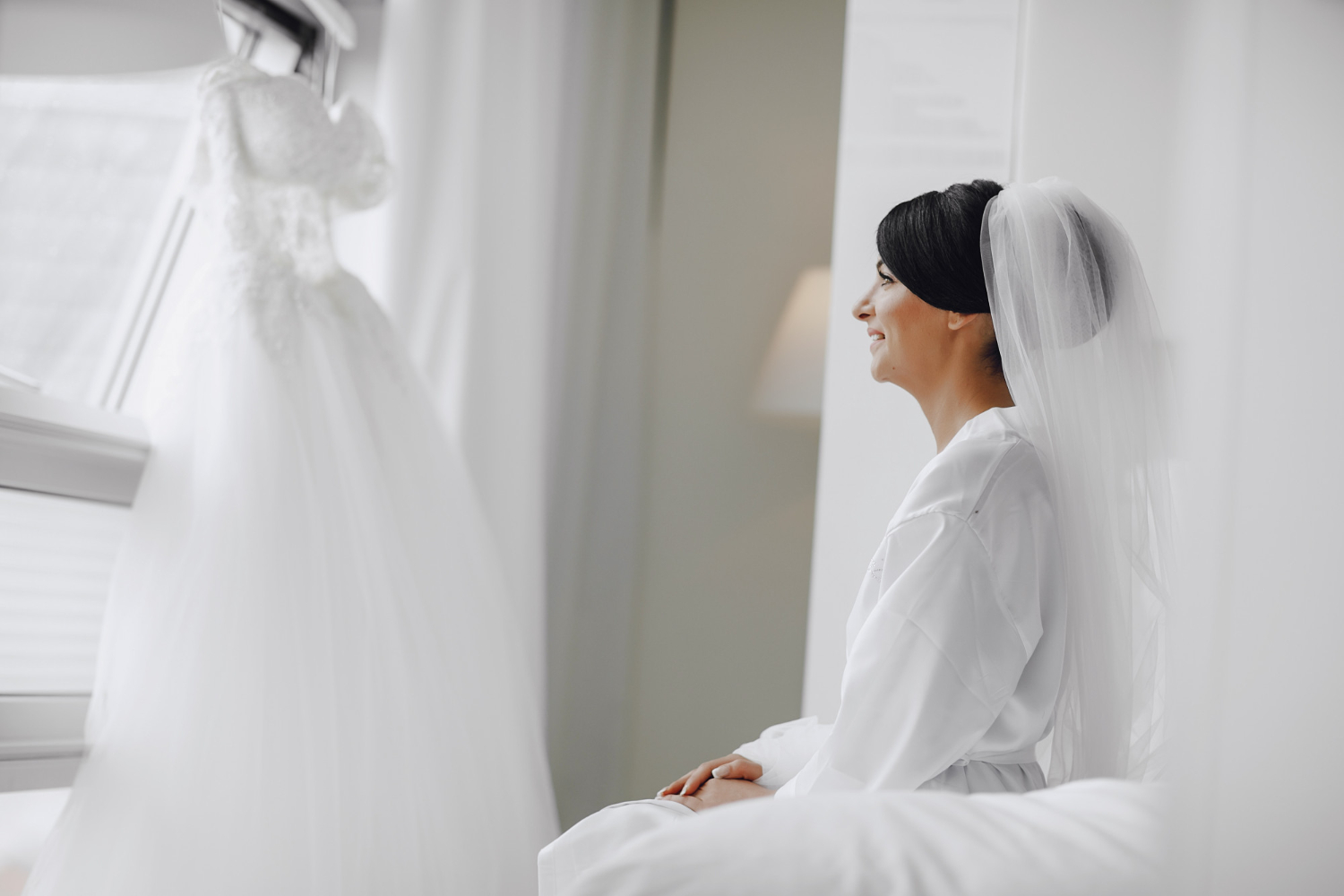
The video was only ten seconds long. A backyard decorated with fairy lights and white folding chairs. My parents standing stiffly in their good clothes. Madison in my wedding dress—the lace bodice I’d tried on six times before I was sure, the A-line skirt that moved like water when I walked, the dress that cost more than I should have spent but that made me feel like someone worth celebrating.
And beside her, Ethan in a suit, holding her hand while someone I didn’t recognize officiated.
The caption: “When you know, you know. ❤️”
I sat in the dark supply closet of the field hospital, my phone screen reflecting in my eyes, and didn’t make a sound. Around me, boxes of gauze and medical tape and antibiotics stacked to the ceiling. Outside, a generator hummed and insects sang their evening songs.
I should have been devastated. And part of me was—the part that had believed in fairy tales and promises and the goodness of people you love.
But another part of me, the part that had been quietly preparing for exactly this, was coldly satisfied.
Because I’d already filed the paperwork.
The annulment documents had been completed two weeks earlier, signed by Ethan during one of his panicked phone calls where he’d confessed that everything felt “wrong” and he’d “made a terrible mistake” and Madison was “pressuring him” about things he didn’t understand. I’d been sympathetic and supportive and suggested he talk to a lawyer to “figure out his options.”
He had. His lawyer—the one provided by his company, the one I’d already established a relationship with—had drawn up the paperwork. Ethan had signed it thinking it was a safety net, a way to undo things if he needed to.
What he didn’t understand was that it wasn’t conditional. It wasn’t a maybe. The annulment was filed three days after their ceremony with all the legal weight of actual documentation.
The marriage license Madison had posted proudly on her Instagram? The signature on it wasn’t quite right. The witness information didn’t quite match. The officiant wasn’t properly registered in our county.
It wasn’t a marriage. It was a performance with props.
And every gift they’d received, every deposit they’d made, every expense they’d charged to Ethan’s accounts—accounts I had legal authority over—was now subject to review and, if necessary, reversal.
I forwarded all the photos to Kimberly with a simple message: “They don’t know yet. Let’s keep it that way until I’m home.”
Her response: “This is going to be interesting.”
I finished my six-month commitment. I saved lives and held hands and learned things about human resilience that you can’t learn in any American hospital. I came home with a different understanding of what mattered and what didn’t.
And I came home with a plan.
Now, standing in my parents’ living room with my suitcase still leaking airport dust onto their carpet, I watched Madison’s smile falter as I sat down on the ottoman across from her.
“So,” she said, trying to regain her momentum. “Aren’t you shocked? Surprised? Upset?”
“I’m impressed,” I said, my voice perfectly calm. “Honestly. You pulled off a wedding in a stolen dress. That takes commitment.”
Ethan shifted uncomfortably, his knee bouncing in that way it did when he was anxious. My mother made a small sound. My father’s face had gone pale.
“Emily—” my mother started.
“I’m not finished,” I said, still calm, still smiling. “I’m impressed by the execution. The timing. The way you convinced everyone this was somehow inevitable. The way you made me the villain of my own life so efficiently.”
I reached into my bag and pulled out a manila folder. The sound of it hitting the coffee table was louder than it should have been in the quiet room.
“What’s that?” Madison asked, but the tremor in her voice said she already knew it wasn’t good.
“Documentation,” I said. “Of everything that happened while I was overseas. Including some things you don’t know about yet.”
Madison’s hand, the one wearing my ring, reached for the folder. Her perfectly manicured nails—the ones I used to watch her get done every two weeks while I was in nursing school working double shifts—fumbled with the clasp.
Inside was everything. The financial proxy documents showing I controlled Ethan’s accounts. The debt consolidation papers that put his name alone on all his liabilities. The notification forms showing I’d been alerted to every major purchase they’d made.
And on top, the annulment papers. Filed. Processed. Finalized.
“You signed this?” Madison’s voice cracked as she looked at Ethan.
He couldn’t meet her eyes. “I didn’t understand what it was. Emily said it was just… she said it was protection. I thought it was something else.”
“It was protection,” I agreed. “Just not for you.”
My mother stood up abruptly. “This can’t be legal. You can’t just manipulate someone into—”
“Into signing legal documents that protect their financial future?” I asked. “Documents his own attorney recommended? Documents that were perfectly transparent about their purpose if anyone had bothered to read them?”
“The wedding—” Madison started.
“Wasn’t legal,” I finished. “The signature on your marriage license doesn’t match Ethan’s actual signature. The officiant wasn’t properly registered. The witness information was incomplete. You had a party, Madison. A very expensive party that you charged to accounts you didn’t have authority to access.”
The silence that followed was absolute.
“And since everything was purchased using funds that required my authorization—authorization I didn’t give—it’s all subject to reversal and repayment.” I pulled out another document. “Including the five-figure deposit you convinced my parents to loan you from their retirement account.”
My father made a choking sound. “The what?”
Madison’s face had gone from smug to pale to blotchy red. “You’re lying. This is fake. You’re just mad because—”
“Because my sister stole my wedding dress and my fiancé and my parents helped her do it?” I asked. “You’re right. I am mad about that. But I’m also right about the legal facts. Call the number at the top of that document. Ask for Kimberly Davis. She’ll walk you through everything.”
I stood up, suddenly exhausted by the weight of the past months.
“I don’t know what you thought was going to happen here,” I said, looking at each of them in turn. “Did you think I’d come home and just accept this? Did you think I’d cry and beg and make it easy for you to feel like the victims? Did you think I was that small?”
My mother’s voice was barely a whisper. “We thought you’d understand. We thought—”
“You thought wrong,” I said. I picked up my suitcase. “I’m going to a hotel. Kimberly will be in touch about next steps. Ethan, you’ll need to speak with her about your financial situation. Madison, you’ll need to speak with her about repayment of the funds you misappropriated. Mom, Dad, you’ll probably want to speak with your own attorney about recovering your retirement money.”
I walked toward the door, then turned back.
“One more thing,” I said. “The dress you wore? I’d like it back. It belonged to our grandmother, and you had no right to it. You can mail it to Kimberly’s office. Along with the necklace, the shoes, and anything else you took while I was gone.”
Madison’s voice was small, broken. “You planned this. All of it.”
“No,” I said. “You planned this. I just made sure there were consequences.”
The hotel room was quiet and anonymous and exactly what I needed. I ordered room service, took a scalding shower, and slept for fourteen hours straight.
When I woke up, my phone had seventeen messages. I ignored most of them. But there was one from Kimberly that made me smile.
“Called the office yet?” it read. “Your sister’s attorney is very upset. This is going to be fun.”
The legal process took four months. Madison tried to fight it, hired an attorney with money she didn’t have, threatened to countersue for “emotional distress” and “fraudulent misrepresentation.”
But the facts were simple and ironclad. The marriage wasn’t legal. The funds were misappropriated. The documentation was clear.
Ethan settled immediately, too paralyzed by shame and fear to fight. He moved to another state, took a job in his company’s midwest office, and I heard through mutual acquaintances that he’d started dating someone who worked in HR and seemed nice.
Madison ended up in payment plans that would take her years to resolve. The vendors who’d catered her party, the venue that had charged her deposit, the photographer who’d captured every moment of her fraudulent wedding—they all wanted their money when the checks bounced.
She took a job at a makeup counter in the mall. Someone from high school spotted her and posted about it on Facebook with a comment that was equal parts surprised and satisfied. The post got shared. People talked.
My parents tried to apologize. Multiple times. Long emails. Tearful phone calls. A letter from my mother that ran to five pages and said “I’m sorry” in seventeen different ways.
I read them all. I even believed they meant it, in their own way.
But meaning it doesn’t undo it. Being sorry doesn’t erase the fact that they chose Madison’s temporary happiness over my permanent well-being. It doesn’t change the fact that they helped orchestrate my betrayal and then tried to gaslight me into accepting it.
We became civil. We saw each other on major holidays. But the easy intimacy, the automatic trust, the assumption that they wanted what was best for me—that was gone forever.
I moved into my own apartment, a small two-bedroom with good light and a balcony where I could grow herbs. I went back to school part-time for a master’s in public health. I kept volunteering, though closer to home now—free clinics, community centers, places where I could make a difference without needing a passport.
I dated eventually, carefully, learning to trust my instincts about people’s intentions. I made new friends, built a chosen family of people who showed up when they said they would and meant what they said.
I learned that betrayal doesn’t always destroy you. Sometimes it rebuilds you into something stronger, something harder to break.
Three years later, I was buying coffee at a shop near my apartment when I saw him. Ethan, looking older and more tired, standing in line ahead of me. He saw me at the same moment.
For a few seconds, we just stared at each other. Then he stepped out of line and walked over.
“Emily,” he said. “I… can we talk? Just for a minute?”
We sat at a table by the window. He bought me a coffee without asking what I wanted—got it wrong, too sweet, but I didn’t correct him.
“I’ve wanted to apologize for years,” he said, his hands wrapped around his cup like he needed the warmth. “For all of it. For being weak and stupid and hurting you.”
“Okay,” I said.
“I know I don’t deserve forgiveness,” he continued. “I know what I did was unforgivable. But I need you to know that I see it now. I see what I threw away. You were the best thing that ever happened to me, and I destroyed it because I was too cowardly to stand up to your sister.”
I sipped my too-sweet coffee and looked at this man who’d once been the person I thought I’d spend my life with.
“Thank you for saying that,” I said finally. “I appreciate it.”
“Is that it?” he asked. “Is that all you have to say?”
“What else is there?” I replied. “You apologized. I heard it. But Ethan, I don’t need your apology to move on. I already moved on. Three years ago, when I realized that I deserved better than someone who would let my own family convince him to betray me.”
He looked down at his cup. “Madison and I aren’t in touch anymore. In case you were wondering.”
“I wasn’t,” I said honestly. “What happened with you two stopped mattering to me a long time ago.”
“You’re different,” he said. “Harder.”
“No,” I corrected. “I’m just not soft in the places that used to make me easy to hurt. There’s a difference.”
We finished our coffee in silence. When we stood to leave, he tried to hug me. I stepped back.
“Take care of yourself, Ethan,” I said.
And I walked out into the bright afternoon, leaving him and all the weight of what we’d been behind me.
Five years after the day I walked into my parents’ living room with dust on my suitcase and justice in my pocket, I got married for real.
His name was Daniel, and he was a teacher who volunteered at the same community clinic I did. He was patient and kind and he’d seen me at my worst—exhausted and frustrated and occasionally crying in the supply closet after a particularly hard day—and he’d stayed.
We got married in a garden with twenty people there, all of them chosen because they’d shown up for us when it mattered. No one from my original family attended. I’d invited my parents, but made it clear there would be no reconciliation performance, no playing happy family for the photos.
They declined.
Madison sent a card—no gift, just a card—that said “Congratulations” in generic script. I threw it away unopened.
The dress I wore was new, purchased with my own money, and it fit perfectly. The shoes were comfortable. The jewelry was mine. Every single element was chosen by me, for me, because I wanted it.
When Daniel and I exchanged vows, I looked into his eyes and meant every word. And when the officiant pronounced us married, the license we signed was real and legal and ours.
At the reception, my best friend gave a toast that made me laugh and cry at the same time.
“To Emily,” she said, raising her glass. “Who taught all of us that justice isn’t revenge, it’s just making sure people face the consequences of their choices. And who taught us that the best way to get over betrayal isn’t to forget it—it’s to build a life so good that the people who hurt you become irrelevant.”
Everyone cheered.
And I looked around at my small, carefully chosen family—the people who’d earned their place in my life—and felt something I hadn’t felt in years.
Peace.
Not because I’d gotten revenge on the people who hurt me. Not because Madison was struggling or because my parents regretted their choices or because Ethan finally understood what he’d lost.
But because I’d taken the worst thing that ever happened to me and transformed it into the foundation of something better. I’d turned betrayal into boundaries, pain into protection, and naivety into wisdom.
I’d learned that family isn’t about blood—it’s about who shows up. It’s about who keeps their promises. It’s about who sees you at your worst and stays anyway.
And I’d learned that the best gift you can give yourself isn’t revenge.
It’s the life you build after the people who hurt you are no longer relevant to it.
That night, after the reception ended and the guests went home and Daniel and I were alone in our hotel room before our honeymoon flight, he asked me something he’d never asked before.
“Do you ever wonder what would have happened if Madison hadn’t stolen your dress? If they hadn’t betrayed you?”
I thought about it for a moment, really thought about it.
“I’d have married the wrong man,” I said finally. “I’d have spent years trying to make a life work with someone who was fundamentally weak. I’d have sacrificed pieces of myself to keep peace with family members who didn’t value me. I’d have been smaller.”
“So in a weird way—”
“In a weird way,” I agreed, “my sister did me the biggest favor of my life. She showed me exactly who everyone was, including myself. And that information was worth every terrible moment.”
He pulled me close. “You’re extraordinary, you know that?”
“I’m ordinary,” I said. “I just decided to stop accepting extraordinary betrayal as normal.”
And that, in the end, was the real lesson. Not that you should become hard or cynical or bitter when people hurt you. But that you should become clear. Clear about who deserves your trust. Clear about what you will and won’t accept. Clear about the fact that protecting yourself isn’t the same as being unforgiving—it’s just being smart.
Madison never paid off all the debt. Last I heard, she’d filed for bankruptcy and moved in with a boyfriend who managed a fast-food franchise. My parents retired and moved to Florida, sending Christmas cards with vague updates about their new life.
I sent cards back with photos of my real wedding, my real marriage, my real life.
Not to hurt them. Not to gloat.
Just to show them what they’d lost when they chose cruelty over character.
And every time I passed a mirror and saw my reflection—older now, laugh lines forming at the corners of my eyes, a wedding ring that meant something—I smiled at the woman looking back at me.
The woman who’d been betrayed by everyone she loved and had decided that wasn’t going to be the end of her story.
It was just the beginning of a better one.

Lila Hart is a dedicated Digital Archivist and Research Specialist with a keen eye for preserving and curating meaningful content. At TheArchivists, she specializes in organizing and managing digital archives, ensuring that valuable stories and historical moments are accessible for generations to come.
Lila earned her degree in History and Archival Studies from the University of Edinburgh, where she cultivated her passion for documenting the past and preserving cultural heritage. Her expertise lies in combining traditional archival techniques with modern digital tools, allowing her to create comprehensive and engaging collections that resonate with audiences worldwide.
At TheArchivists, Lila is known for her meticulous attention to detail and her ability to uncover hidden gems within extensive archives. Her work is praised for its depth, authenticity, and contribution to the preservation of knowledge in the digital age.
Driven by a commitment to preserving stories that matter, Lila is passionate about exploring the intersection of history and technology. Her goal is to ensure that every piece of content she handles reflects the richness of human experiences and remains a source of inspiration for years to come.