The Inheritance They Never Saw Coming
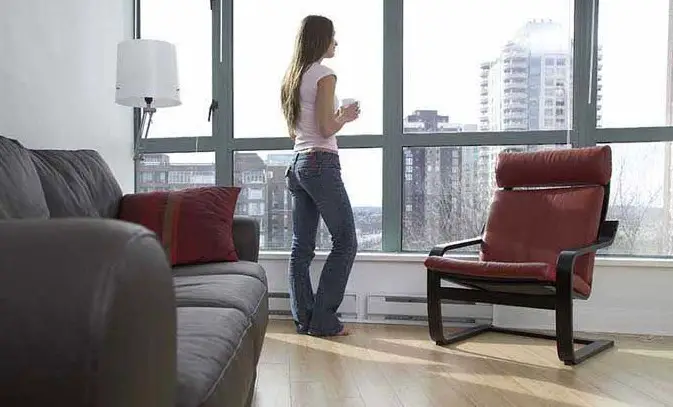
The key turned smoothly in the lock, and I pushed open the door to a place I’d never seen before—a condo that somehow belonged to me, purchased through mechanisms I was only beginning to understand. Warm air drifted out, carrying the smell of fresh paint and new beginnings. Beyond the threshold lay hardwood floors that gleamed in the afternoon light, walls in soft neutral tones, windows that looked out over snow-dusted peaks in the distance.
A place that was mine. Completely, legally, irrevocably mine.
I stepped inside, my cane clicking softly against the wood, and for the first time in three months, I felt something other than pain.
But I’m getting ahead of myself. To understand how I ended up here—standing in this beautiful, empty condo with keys in my hand and my parents’ world about to implode—I need to go back to the beginning.
To the day everything shattered.
Three Months Earlier
The crash happened on a Tuesday.
I remember because I’d been thinking about how mundane Tuesdays were, how nothing important ever seemed to happen on a Tuesday. I was driving back from a consultation meeting in Fort Collins, my laptop bag on the passenger seat, NPR playing softly on the radio. The roads were clear. Traffic was light. I was thinking about stopping for coffee.
And then the truck ran the red light.
I don’t remember the impact itself—my brain has mercifully blocked that part out. What I remember is the aftermath: the acrid smell of deployed airbags, the copper taste of blood in my mouth, the way my left leg was bent at an angle that legs aren’t supposed to bend. The windshield was a spiderweb of cracks, and through it, I could see the truck that had hit me, its driver stumbling out, phone already pressed to his ear.
I tried to move and discovered that moving was a very bad idea. Pain shot through my leg, my ribs, my shoulder. Everything hurt. Everything was wrong.
I fumbled for my phone, my fingers clumsy and shaking. The screen was cracked but functional. I managed to unlock it, managed to pull up my contacts.
I called my parents first.
They lived twenty minutes away, in the house off Highway 87—the big house with the wraparound porch and the oak trees, the house they were always so proud of, the house they’d moved into after Grandpa died.
My father answered on the third ring.
“Hannah? I’m in the middle of something, can this wait?”
“Dad.” My voice came out thready, weak. “I’ve been in an accident. I’m—I need help. I’m on Harmony Road near the—”
“An accident? Are you okay to drive?”
“No, I—Dad, I can’t move my leg. I think it’s broken. There’s blood—”
“Did you call 911?”
“Not yet, I called you first, I—”
“Hannah, call 911. That’s what they’re for. We’re in the middle of showing the rental property to potential tenants. Your mother’s dealing with the paperwork.”
I stared at the phone, not quite processing what I was hearing. “Dad, I’m hurt. I need—”
“Ambulance will be there in a few minutes. Text me later and let me know you’re okay. We’ll come by the hospital when we’re done here.”
The line went dead.
I sat there, phone still pressed to my ear, trying to understand what had just happened. My father had just… hung up. While I was bleeding in a wrecked car on the side of the road.
My hand was shaking so badly I almost dropped the phone when I dialed 911.
The paramedics arrived eight minutes later. They had to cut me out of the car—the door was too crumpled to open. I remember one of them, a young woman with kind eyes, talking to me the entire time, keeping me conscious, telling me I was going to be okay.
I wanted to believe her.
At the hospital, they confirmed what I already knew: compound fracture of the tibia, three broken ribs, dislocated shoulder, concussion, lacerations across my face and arms from the shattered glass. Surgery was scheduled for that night. I’d be in the hospital for at least a week, they said. Physical therapy for months after that.
I gave them my parents’ contact information as my emergency contacts.
And I waited for them to show up.
They didn’t come that night. Or the next day. Or the day after that.
My sister Melissa finally appeared on day four, breezing into my hospital room like she was doing me an enormous favor by gracing me with her presence. She was six months pregnant, one hand resting on her belly in that self-conscious way pregnant women do, her face arranged in an expression of concern that didn’t quite reach her eyes.
“Oh, Hannah,” she said, pulling a chair far enough from the bed that she wouldn’t have to actually touch me. “This is just… it’s so terrible.”
“Where are Mom and Dad?” I asked. My voice was hoarse from the breathing tube they’d used during surgery.
Melissa shifted uncomfortably. “They’re dealing with a lot right now. The rental property thing fell through—those tenants backed out at the last minute. And Mom’s been so stressed about the estate paperwork. You know how complicated Grandpa’s trust is.”
I stared at her. “I’ve been in the hospital for four days, Melissa. I had surgery. I could have died.”
“I know, and it’s awful, really. But you’re okay now, right? I mean, you’re going to be fine.”
“My leg is held together with metal plates and screws. I won’t be able to walk without a cane for months. I can’t work. I can’t drive. I can’t—”
“Hannah, I’m pregnant.” She said it like it explained everything. Like her pregnancy somehow excused our parents’ absence, like her impending motherhood was more important than my actual, physical trauma. “This has been really stressful for me too. Seeing you like this. Knowing you were in an accident. It triggered my anxiety. My doctor says I need to avoid stress for the baby’s sake.”
I felt something cold settle in my chest. “I’m sorry my car accident stressed you out.”
She missed the sarcasm entirely. “Thank you for understanding. Look, I can’t stay long. I have a prenatal appointment. But I wanted to check in. You’re going to be okay, right?”
“Sure,” I said flatly. “I’ll be fine.”
She stood, smoothing her maternity dress. “Good. I’ll tell Mom and Dad you’re doing better. They’ll be so relieved.”
After she left, I lay in the hospital bed, staring at the ceiling, and felt something inside me fundamentally shift.
They weren’t coming. My parents, who had raised me, who had told me family was everything, who had always preached about loyalty and obligation—they weren’t coming because a rental property and estate paperwork were more important than their daughter lying in a hospital bed.
And Melissa, my only sibling, the sister I’d grown up sharing a room with, fighting with, laughing with—she cared more about her prenatal appointment than my shattered leg.
I was completely, utterly alone.
But I wasn’t bitter. Not yet. I was just… tired.
The insurance nightmare began two weeks after I was discharged.
I’d moved into my small apartment—a one-bedroom in a complex near downtown Denver that I could barely afford on my marketing coordinator salary. Climbing the stairs to the second floor took me fifteen minutes with the cane and left me sweating and shaking. My company had been understanding about letting me work from home, but I could tell they were getting impatient. Zoom meetings only went so far. They needed me in the office, they said. They needed me functional.
I was trying. Physical therapy three times a week. Pain medication that made me fuzzy. Sleepless nights because I couldn’t find a comfortable position. My entire life had narrowed to pain management and doctor’s appointments.
And then the other driver’s insurance company called.
“Ms. Reeves? This is Sandra Kowalski from Mountain West Insurance. I’m calling about the accident on October 15th.”
“Yes?” I sat down carefully on my couch, propping my leg up on the coffee table.
“We’ve reviewed the police report and witness statements, and there are some discrepancies we need to address.”
My stomach dropped. “Discrepancies?”
“The police report lists the accident as the fault of our insured, Mr. Patterson. However, Mr. Patterson has provided a statement claiming you ran the red light, not him. He says you were on your phone at the time of impact.”
“That’s not true. I wasn’t on my phone. I was driving through a green light when he—”
“Do you have any proof of that, Ms. Reeves?”
“The police report—”
“Was filed based on preliminary observations. Mr. Patterson is disputing those observations. Without additional evidence, this becomes a he-said-she-said situation, which means we’ll need to split liability. Your insurance will need to cover half of your medical expenses and vehicle damages.”
I felt dizzy. “Half? But he’s the one who hit me. He ran the red light.”
“According to him, you ran the red light. And unfortunately, there were no traffic cameras at that intersection. Unless you have additional evidence—a witness, video footage, something that definitively proves your version of events—we’ll have to proceed with split liability.”
After she hung up, I sat on my couch, staring at nothing, trying to process what had just happened. My medical bills were already astronomical—surgery, hospital stay, ongoing physical therapy. My car was totaled. I’d been using Uber to get to appointments, draining my savings. And now they were telling me I was partially at fault for an accident I didn’t cause?
I wanted to call someone. I wanted to call my parents and explain what was happening and ask for help.
Instead, I opened my laptop and started researching dash cams.
It took three days of searching through my destroyed car’s remains at the impound lot before I found it: a dash cam I’d installed six months ago and completely forgotten about. It was wedged under the front seat, covered in glass and debris, but miraculously intact.
I took it home, charged it, and played back the footage with my heart in my throat.
And there it was. Clear, undeniable proof. The light was green. I entered the intersection. The truck ran the red light at full speed and slammed into my driver’s side door.
I called the insurance company back immediately.
Sandra Kowalski’s tone changed the moment she saw the footage. “Oh. Well. This certainly… yes, this does change things. We’ll need to revise our liability assessment. I’ll get back to you.”
She sounded annoyed. Like I’d inconvenienced her by proving I wasn’t at fault for my own accident.
I sent the footage to my insurance company. To the police department. To my lawyer—a personal injury attorney I’d hired after the insurance company’s first call, maxing out my credit card to afford his retainer.
The police report was amended. The insurance disputes froze. My lawyer started talking about a settlement that might actually cover my medical bills and lost wages.
For the first time since the accident, I felt like I could breathe.
And then the manila envelope arrived.
It was a Thursday morning when I found it in my mailbox—a thick manila envelope with no return address, just my name and address typed on a label. The postmark was local. Denver.
I carried it upstairs slowly, my cane clicking against each step, and set it on my kitchen table. Stared at it for a long moment before opening it.
Inside was a photocopy of a legal document, dozens of pages long, dated fifteen years ago. The header read: “Last Will and Testament and Irrevocable Trust Agreement of Harold Marcus Reeves.”
My grandfather.
I’d been twelve when he died—old enough to remember him, but not old enough to understand the complicated adult business that followed. I remembered the funeral. The will reading that I wasn’t allowed to attend. The arguments between my father and his brother that ended with them not speaking for years. The way my parents suddenly had more money, a bigger house, a better car.
I’d assumed Grandpa had left everything to my dad. That’s what parents did, right? They left their estates to their children.
I started reading.
The document was dense, full of legal language I barely understood. But certain phrases jumped out:
“Primary trustee: Robert James Reeves (my son)”
“Trust assets to be used for the benefit and welfare of the beneficiary”
“Successor beneficiary: Hannah Marie Reeves (granddaughter), upon reaching age 25”
I stopped reading. Read that line again.
Successor beneficiary. Me. Not Melissa. Not both of us. Just me.
I flipped through more pages, my hands shaking, trying to make sense of what I was seeing. There were lists of assets: the house off Highway 87, three parcels of land in Douglas County, a rental property near Chatfield Reservoir, investment accounts, bonds, cash reserves.
All held in trust. With my father as trustee. But with me—specifically me—listed as the beneficiary.
I kept reading.
And then I found the clause that made my blood run cold:
“In the event that the Primary Trustee is found to be negligent, abusive, or acting against the interests of the Successor Beneficiary, full control of the trust shall immediately transfer to said Beneficiary. This transfer shall require no court hearing, no waiting period, and no approval from the Trustee. Proof of neglect, abuse, or actions against the Beneficiary’s welfare shall be determined by submission of documented evidence to the designated Trust Attorney, whose judgment shall be final and binding.”
Below that, a name and address: Adler & Associates, Estate Law, Downtown Denver
I sat at my kitchen table, staring at this document, trying to understand what it meant.
My grandfather had left his estate to me. Not to my father. To me. My father was just supposed to manage it until I turned twenty-five—which had been three years ago. And there was a clause, a fail-safe, that would transfer everything to me immediately if my father acted against my welfare.
My father, who had hung up on me while I was bleeding in a wrecked car.
My father, who hadn’t visited me once in the hospital.
My father, who had prioritized rental property showings over his daughter’s life-threatening injuries.
I picked up my phone with trembling hands and called the number at the bottom of the document.
Adler & Associates occupied a quiet office in a brick building near downtown Denver, the kind of place that radiated old money and discretion. I took an Uber there the next morning, too nervous to wait, my leg throbbing from the cold and the effort of getting dressed in actual clothes instead of sweatpants.
David Adler was in his late fifties, with silver hair and a gentle manner that immediately put me at ease. He offered me tea, helped me settle into a comfortable chair with my leg elevated, and then sat across from me with the photocopied document I’d brought.
He read it slowly, carefully, his expression neutral. Then he read it again.
Finally, he set it down and looked at me.
“Hannah,” he said quietly, “where did you get this?”
“It came in the mail. No return address.”
He nodded slowly, like this made sense somehow. “This is legitimate. The signature, the language, the trust designation—this is your grandfather’s will and trust agreement.”
“Why would someone send it to me anonymously?”
Adler leaned back in his chair. “That’s an interesting question. Someone wanted you to know about this. Someone who knew what it contained and thought you deserved to see it.”
“Who?”
“I don’t know. But let me ask you something: Did your parents ever tell you about this trust?”
“No. I knew Grandpa left my dad the house and some property, but I thought it all belonged to him. I didn’t know my name was anywhere in the will.”
“Your name isn’t just in the will, Hannah. You’re the beneficiary. Your father is the trustee, which means he’s supposed to manage these assets for your benefit, not his own. Everything listed here—the house, the land, the rental property, the accounts—they’re meant for you.”
I felt lightheaded. “But my parents live in that house. They’ve been living there for fifteen years.”
“Living there rent-free, using trust assets to maintain it, treating it as their own—all while the trust clearly states it’s being held for you.” Adler pulled out a legal pad and started making notes. “Tell me about your relationship with your parents.”
So I did. I told him everything. The accident. The phone call where my father hung up on me. The hospital stay where they never visited. Melissa’s brief, stressful appearance. The way they’d completely abandoned me while I was recovering from life-threatening injuries.
Adler’s expression grew darker as I talked.
When I finished, he tapped his pen against the legal pad. “Hannah, this clause—the one about neglect or actions against your welfare—it’s ironclad. Your grandfather clearly didn’t trust your father completely. He put this in as protection for you.”
“Protection from what?”
“From exactly what happened. From your father prioritizing his own interests over yours. From your father treating trust assets like his personal property. From your father abandoning you when you needed him most.”
I swallowed hard. “So what does this mean?”
Adler met my eyes. “It means that dash-cam video you mentioned—the one that proves the accident wasn’t your fault, the one that shows you were seriously injured—that’s documentation of a life-threatening situation. Your parents’ failure to help you, their absence during your hospitalization, their prioritization of rental property over your welfare—that’s documentation of neglect.”
“You’re saying…”
“I’m saying you have grounds to execute the transfer clause. The trust can be transferred to your control immediately. No hearing required. Just documented evidence of neglect submitted to the trust attorney—which would be me, as it happens. Your grandfather and I worked together for twenty years.”
My hands were shaking. “If the trust transfers to me, what happens to my parents?”
“They lose control of everything. The house they’re living in? Technically yours. The land? Yours. The rental property income they’ve been using? Also yours. The trust accounts? Yours. Everything your grandfather left becomes your legal property.”
I felt like I couldn’t breathe. “They’ll hate me.”
“They might,” Adler said gently. “But let me ask you something: How do they feel about you right now?”
The question hit like a physical blow. How did they feel about me? They’d abandoned me. They’d prioritized property showings over my emergency. They’d let their pregnant daughter visit me once in four days while I lay in a hospital bed.
How did they feel about me?
I didn’t think they felt much at all.
“What do I need to do?” I asked quietly.
Adler pulled out a folder. “First, you’ll need to formally retain me as your attorney. Then we’ll gather documentation: the dash-cam footage, hospital records, phone records showing your father hung up on you, any texts or emails demonstrating their neglect. We’ll submit it all according to the trust provisions. And then…”
“Then?”
“Then the trust transfers to you. And your parents will receive notification that they no longer control the assets they’ve been treating as their own for fifteen years.”
“How long will it take?”
“With clear documentation? Two weeks. Maybe three.”
I sat there, my leg throbbing, my hands shaking, staring at this kind man who was offering me the tools to completely upend my parents’ lives.
“I need to think about it,” I said.
“Of course. Take all the time you need.” He stood, handed me his card. “But Hannah? Whatever you decide, you should know something: Your grandfather clearly loved you very much. He built in this protection because he wanted to make sure you were taken care of. Even after he was gone. Even if his own son failed you.”
I took the card, thanked him, and left.
I didn’t think about it for long.
That night, I tried calling my parents one more time. My mother answered.
“Hannah! Honey, how are you?”
“I’m okay, Mom. Still recovering. I’ve been doing physical therapy.”
“That’s wonderful, dear. Listen, I can’t talk long—we’re heading to dinner with the Hendersons. But I’m so glad you’re doing better!”
“Mom, why didn’t you come to the hospital?”
Silence. Then: “Oh, honey, we’ve been so busy. The rental property situation was a nightmare, and the estate paperwork—you know how complicated it all is.”
“I was in the hospital for a week, Mom. I had surgery.”
“I know, and we felt terrible about it, but Melissa visited you, right? She said you were doing fine.”
“I wasn’t fine. I’m still not fine.”
“Well, these things take time to heal. You’re young, you’ll bounce back. Listen, I really do need to go. Richard’s waiting in the car. We’ll come visit soon, I promise!”
She hung up before I could respond.
I sat on my couch, phone in my hand, and felt the last thread of connection to my parents snap.
They weren’t going to visit. They weren’t going to apologize. They weren’t going to acknowledge what they’d done—or rather, what they hadn’t done.
In their minds, I was fine. The accident was over. Life went on.
And their life was built on assets that were never actually theirs.
I called Adler the next morning.
“I want to do it,” I said. “I want to transfer the trust.”
“You’re sure?”
“I’m sure.”
“Alright. Let’s get started.”
The next two weeks were a blur of documentation and paperwork. Adler was thorough, meticulous, gathering every piece of evidence:
The dash-cam footage showing the accident and my injuries.
Hospital records documenting my injuries and week-long stay.
Phone records showing my father’s call lasted less than two minutes before he hung up.
Texts from Melissa talking about how stressful my accident was for her.
Records showing my parents never visited, never called the hospital, never checked on me.
Adler compiled it all into a formal submission to himself as the designated trust attorney, following the exact procedures outlined in my grandfather’s trust document.
“This is airtight,” he told me on day ten. “Your grandfather’s language is clear, and your documentation is comprehensive. Once I officially accept this submission and rule on it, the transfer is immediate and irrevocable.”
“When?”
“End of the week. And Hannah? You’ll need a place to receive the notification documents. Somewhere your parents won’t show up unexpectedly.”
“I have my apartment.”
“Actually,” Adler said slowly, “the trust owns several properties. One of them is a condo in Colorado Springs. It’s been empty for two years—your father was supposed to be maintaining it as a rental property but never bothered. It’s yours now. Would you like to use it?”
A condo. In Colorado Springs. Empty. Waiting.
Mine.
“Yes,” I said. “I’ll take it.”
Adler arranged everything. The property was cleaned, painted, the utilities turned on in my name. A bank account associated with the trust—an account my parents had been “managing” (read: using for personal expenses)—was transferred to my sole control.
The condo was furnished with the basics. Nothing fancy, but clean and new and completely untouched by my family’s dysfunction.
Adler gave me the keys on a Friday afternoon.
“Monday morning,” he said, “I’ll file the ruling and issue the notifications. Your parents will receive documentation informing them that the trust has been transferred to you. They’ll have no legal recourse. It’s done.”
“Will they come looking for me?”
“Probably,” Adler said honestly. “They’ll want answers. They’ll want to negotiate. They may threaten legal action, though they have no grounds. Do not meet them alone. Call me the moment they contact you.”
“I will.”
“One more thing.” He handed me an envelope. “This came with the trust documentation. Your grandfather wrote it years ago, to be delivered to you when you took control of the trust. I think you should read it before Monday.”
I took the envelope, my grandfather’s familiar handwriting spelling out my name across the front.
I saved it. I wanted to read it in the condo, in the space that was truly mine.
I drove to Colorado Springs on Sunday afternoon—well, I hired a driver since I still couldn’t manage long distances with my leg. The condo was in a nice complex near downtown, with mountain views and quiet tree-lined streets.
I walked up to the door slowly, my cane clicking on the pavement, and unlocked it for the first time.
Warm air drifted out. The smell of fresh paint and possibility. Hardwood floors gleamed. Windows let in clear afternoon light. The furniture was simple but comfortable—a couch, a table, a bed. Everything I needed.
Everything that was mine.
I set my bag down and walked through each room slowly, running my hand along walls that my parents had never touched, standing in spaces they’d never occupied.
In the kitchen, I found the envelope Adler had mentioned—the one containing official notification documents that would be sent to my parents tomorrow. I set it aside. I wasn’t ready to look at that yet.
Instead, I pulled out my grandfather’s letter.
I sat on the new couch, in the new condo, in my new life, and I opened it.
My dearest Hannah,
If you’re reading this, it means my son has failed you. I’m sorry, sweetheart. I wish I could say I’m surprised, but I’m not. Your father is my child, and I love him, but I’ve always known his weaknesses.
He’s selfish. He’s short-sighted. He cares more about appearances than substance, more about comfort than character. I watched him grow into a man who takes rather than gives, who prioritizes himself over everyone else, including his own family.
I tried to change him. I tried to teach him better values. But some people don’t change, Hannah. Some people just are who they are.
That’s why I created this trust the way I did. Not to punish your father, but to protect you.
I couldn’t leave everything directly to you—you were too young when I wrote this, and the tax implications would have been complicated. But I could create a structure that would ensure you eventually received what you deserve. And I could build in protections in case your father proved to be exactly the man I feared he was.
If you’re reading this, those protections have been activated. Which means your father abandoned you, neglected you, or acted against your welfare in some significant way. And I’m sorry you had to experience that.
But I’m also proud of you. Because you’re reading this, which means you found the courage to stand up for yourself. To claim what’s rightfully yours. To say “enough.”
That takes strength, sweetheart. Real strength.
Everything in this trust—the house, the land, the properties, the accounts—it’s all yours now. Use it wisely. Use it well. Build a life that brings you joy. And don’t let anyone make you feel guilty for taking what was always meant to be yours.
Your father will be upset. Your mother will probably side with him. They’ll accuse you of being ungrateful, selfish, cruel. They’ll try to make you the villain in a story where they’ve been living off your inheritance for years.
Don’t believe them.
You’re not the villain. You’re the granddaughter I loved more than anything, the bright, kind, brilliant girl who deserves every good thing this world can offer.
This is your fresh start, Hannah. Take it. Run with it. And don’t look back.
I love you. I always have. I always will.
All my love, Grandpa Harold
I sat on the couch, tears streaming down my face, reading my grandfather’s words over and over.
He’d known. Fifteen years ago, he’d known exactly what would happen. He’d known his son would fail me. And he’d built in protection anyway.
He’d loved me enough to plan for the worst.
And now, sitting in this condo, holding this letter, I felt something I hadn’t felt in months:
Hope.
I was about to put the letter away when my phone buzzed in my pocket.
A text from an unknown number: They know. They’re coming.
I frowned, about to dismiss it as spam, when another text came through: It’s Jennifer Adler (David’s daughter). I work at the firm. Your parents called this morning demanding information. They’re on their way to Colorado Springs. Dad says don’t meet them alone.
My blood ran cold.
How did they know I was here? How did they even know about the transfer yet—the notifications weren’t going out until tomorrow morning.
Another text: Someone at the property management company called them. Apparently they listed themselves as emergency contacts for all the trust properties. They know the Colorado Springs condo has been activated.
Of course. Of course they’d found out. Because my father had been treating all these properties as his own for so long, he’d inserted himself into every system, every contact list, every notification.
He knew the condo had been accessed. And he’d put two and two together.
I stood up, my leg protesting, and walked to the window.
And that’s when I saw it: my parents’ SUV pulling into the parking lot.
The same dark blue Explorer they’d been driving for years. The same vehicle they’d been in when they chose a rental property showing over their daughter’s emergency.
They parked directly in front of my building.
My father got out first—tall, still fit for his age, his face set in that expression I knew so well. The one that said he was about to explain why he was right and you were wrong.
My mother followed, looking smaller somehow, older, her face pinched with worry.
They looked up at the building, clearly trying to figure out which unit was mine.
My phone rang. Adler.
“Hannah, are you there? Jennifer just told me—”
“They’re here,” I said quietly, watching my parents through the window. “They’re in the parking lot right now.”
“Do not let them in. Do not meet with them alone. I’m on my way—I can be there in an hour.”
“Okay.”
“Hannah? They have no legal standing. No rights. No claim. Remember that. The trust is yours. They can’t take it back.”
“I know.”
“I’ll be there soon. Don’t open the door.”
He hung up.
I stood at the window, watching my parents approach the building entrance, and I felt something settle inside me. Something solid and unshakeable.
This was my condo. My inheritance. My fresh start.
And they had no power here.
Not anymore.
They knocked on my door three minutes later.
I didn’t answer immediately. I stood behind the door, my hand on the knob, listening to their voices.
“Hannah? Sweetheart, we know you’re in there. We need to talk to you.”
That was my mother. Anxious, placating, desperate.
“Hannah, open the door. We’re not leaving until you talk to us.” My father. Firm, authoritative, used to being obeyed.
I took a breath. Opened the door just wide enough to look at them through the chain lock.
“I can’t talk right now,” I said calmly. “My attorney is on his way. You can speak with him when he arrives.”
My father’s face darkened. “Your attorney? Hannah, what the hell is going on? We got a call saying you accessed the Colorado Springs property. You don’t have authorization to—”
“Actually,” I interrupted, “I do. The property is held in trust, and I’m the beneficiary. As of Friday, I have full access to all trust assets.”
My mother’s face went pale. “What are you talking about? The trust—your father manages the trust. That house, this condo, all of it—”
“Was supposed to be managed for my benefit,” I said. “Grandpa Harold left it to me. Dad was just the trustee. Past tense.”
My father pushed against the door, making the chain rattle. “That’s not how this works. You can’t just take over the trust. There are legal procedures, court hearings—”
“Not according to Grandpa’s trust document. There’s a clause. If the trustee acts against the beneficiary’s welfare, the trust transfers immediately.” I paused. “I think hanging up on your daughter while she’s bleeding in a wrecked car qualifies as acting against her welfare, don’t you?”
The color drained from my father’s face.
My mother made a small, choked sound. “Hannah, honey, that was a misunderstanding. We were busy, we didn’t realize how serious—”
“I was in the hospital for a week, Mom. You didn’t visit once. Not once.”
“We were going to! We just—the rental property—”
“Was more important than your daughter’s life.” My voice was steady now, stronger than I’d heard it in months. “The rental property that, by the way, belongs to the trust. Which means it was never actually yours to manage in the first place.”
My father’s jaw worked. “You have no idea what you’re doing. That trust—those properties—they’ve been supporting us for years. The house we live in, the income we depend on—”
“Income from my inheritance,” I said. “That you’ve been using as your personal bank account for fifteen years.”
“That’s not—we’ve been maintaining everything! Keeping the properties in good condition, managing investments—”
“Except this condo, which has been sitting empty for two years. And the land in Douglas County, which you never developed like Grandpa wanted. And the rental property you’ve been pocketing income from instead of reinvesting it.” I’d done my research. Adler had pulled all the records. “You’ve been treating trust assets like they belong to you. They don’t. They never did.”
My mother started crying. “Hannah, please. You don’t understand. We need those assets. We don’t have anything else. If you take the trust, we’ll lose the house. We’ll lose everything.”
“You lost me first,” I said quietly. “When you hung up while I was bleeding. When you didn’t visit while I was in the hospital. When you chose rental property over your own daughter.”
My father’s face was red now, his hands clenched into fists. “You ungrateful—we raised you! We fed you, clothed you, paid for your education—”
“With Grandpa’s money,” I interrupted. “The

Lila Hart is a dedicated Digital Archivist and Research Specialist with a keen eye for preserving and curating meaningful content. At TheArchivists, she specializes in organizing and managing digital archives, ensuring that valuable stories and historical moments are accessible for generations to come.
Lila earned her degree in History and Archival Studies from the University of Edinburgh, where she cultivated her passion for documenting the past and preserving cultural heritage. Her expertise lies in combining traditional archival techniques with modern digital tools, allowing her to create comprehensive and engaging collections that resonate with audiences worldwide.
At TheArchivists, Lila is known for her meticulous attention to detail and her ability to uncover hidden gems within extensive archives. Her work is praised for its depth, authenticity, and contribution to the preservation of knowledge in the digital age.
Driven by a commitment to preserving stories that matter, Lila is passionate about exploring the intersection of history and technology. Her goal is to ensure that every piece of content she handles reflects the richness of human experiences and remains a source of inspiration for years to come.