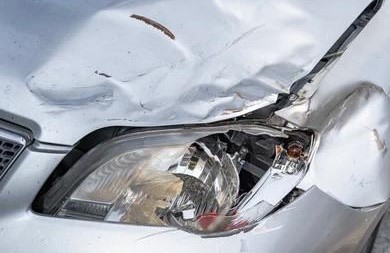
The Silver Car
The porch light clicked on automatically when I opened the door, illuminating two police officers standing in the Oregon drizzle. It was 10:47 PM on a Tuesday, and I was in sweatpants and barefoot, already thinking they had the wrong address.
“Are you Claire Morrison?” the taller officer asked, rain beading on his uniform jacket.
“Yes. What’s this about?”
“We need to speak with you about a vehicle registered to this address. A silver 2024 Honda Civic?”
My stomach dropped. The car that should have been sitting in my driveway. The car I’d just bought for my daughter Lily’s fifteenth birthday two weeks ago—her learner’s permit celebration, the reward for straight A’s and the promise of responsible driving once she got her license.
“What happened?” I asked, my voice steadier than I felt.
“There was a single-vehicle accident about two hours ago near Oakridge Lane. The vehicle struck a tree. We need to speak with Lily Morrison about the incident.”
“Lily?” I repeated, confused. “That’s impossible. She’s been home all evening. She’s asleep.”
The officers exchanged a glance. “Ma’am, we have witness statements that identify your daughter as the driver.”
“That’s not possible,” I said again, more firmly this time. “She’s fifteen. She has a learner’s permit, which means she can only drive with a licensed adult in the vehicle. And she’s been here all night.”
“We still need to speak with her,” the second officer said, not unkindly but inflexible.
I closed my eyes for a moment, trying to process. Then I turned and walked down the hall to Lily’s bedroom, my bare feet silent on the hardwood floors. She was asleep, curled on her side, her hair messy on the pillow, one hand tucked under her cheek—the kind of peaceful sleep you only get when you feel completely safe in your own home.
I sat on the edge of her bed and gently shook her shoulder. “Lily. Sweetie, wake up.”
She stirred, blinking in confusion. “Mom? What time is it?”
“It’s late. But there are some police officers here who need to talk to you.”
That woke her up completely. She sat up fast, her eyes going wide with alarm. “What? Why? What did I do?”
“Nothing,” I said firmly. “But someone had an accident in your car, and they’re saying you were driving.”
“What? That’s crazy. I’ve been here all night. I was doing homework and then watching Netflix and then I went to bed. Mom, I swear—”
“I know, baby. I believe you. But we need to go talk to them.”
Lily pulled on a sweatshirt over her oversized T-shirt and followed me down the hall, instinctively tucking herself behind my arm when she saw the two uniformed officers in our living room. In that moment, she looked less like the confident teenager who’d been so excited about getting her learner’s permit and more like a frightened child trying to understand why adults were using her name in connection with something bad.
The officers were professional but persistent. They asked Lily where she’d been that evening. She told them: home, doing homework, watching TV in her room, going to bed around 9:30. They asked if she’d driven the car at all. She said no, not since Sunday afternoon when I’d taken her to practice in an empty parking lot.
“We have multiple witness statements placing you at the scene,” one officer said. “Can you explain that?”
“I can’t explain it because it’s not true,” Lily said, her voice shaking. “I don’t even have my license yet. I’m not allowed to drive without my mom.”
I interrupted. “Where is the car now?”
“It’s been towed to an impound lot. It sustained significant damage and isn’t drivable.”
“And these witness statements—who gave them?”
The officers wouldn’t provide names, citing the ongoing investigation. But they said there were “several witnesses” and that statements had been taken at the scene. They made it sound definitive, as if a chorus of voices automatically made a story true.
After they left, Lily stood in the middle of the living room looking shell-shocked. “Mom, I didn’t drive the car. I swear I didn’t. Why would people say I did?”
“I don’t know yet, but we’re going to figure it out.” I pulled her into a hug. “Go back to bed. We’ll deal with this in the morning.”
But she didn’t move. Instead, she asked in a small, scared voice: “Did Grandma and Grandpa really say they saw me driving?”
That question hit me like a physical blow, because even at fifteen, Lily already understood the family dynamics that I’d spent years trying to shield her from.
My sister Jenna has always been the family’s exception. The golden child. The one who gets “she’s stressed” and “she didn’t mean it” and infinite second chances, while everyone else gets held to impossible standards. When Jenna makes mistakes, the family rallies to protect her. When anyone else struggles, it’s a moral failing.
I’d spent my whole life watching my parents bend reality to accommodate Jenna’s narrative. But I’d never imagined they’d sacrifice my daughter to do it.
I didn’t sleep that night. I lay in bed running through scenarios, trying to figure out how Lily’s car had ended up wrapped around a tree near my parents’ house—which was a twenty-minute drive from our place—and how my fifteen-year-old daughter, who’d been asleep in her room, had been blamed for it.
The only person who’d had access to Lily’s car keys, besides me, was Jenna. She’d been at our house three days ago, had admired the car excessively, had joked about “borrowing it sometime.” I’d laughed it off, not thinking she was serious.
But Jenna has a history. A DUI two years ago that my parents paid a lawyer to handle quietly. A suspended license she wasn’t supposed to be driving on. A pattern of impulsive decisions and last-minute lies.
By morning, my phone was buzzing with messages that sounded like concern but felt like instructions.
Mom: Claire, we need to talk about what happened last night. Don’t turn this into a big thing.
Dad: The officers said Lily was uncooperative. You need to teach her to respect authority.
Jenna: I can’t believe Lily would be so reckless. She could have killed someone.
I read the messages with a cold, clear fury that made my hands shake. They were already constructing a narrative. Already protecting Jenna by sacrificing Lily. Already expecting me to go along with it because that’s what I’d always done—kept the peace, avoided confrontation, protected my parents’ feelings at the expense of my own.
Not this time.
I didn’t respond to any of the messages. Instead, I went quiet and methodical.
First, I pulled up Lily’s phone activity. Her iPhone showed her location history: home, all evening, no movement. I screenshot everything.
Next, I checked our home security system. We had cameras on the front and back doors. The footage showed Lily coming home from school at 3:47 PM and never leaving. The car was in the driveway at 4:12 PM when I got home from work. At 6:23 PM, the camera captured Jenna pulling up in her beat-up Toyota, walking to our front door, staying for about ten minutes, then leaving. At 6:35 PM, the car was gone from the driveway.
I saved all the footage.
Then I called our neighbor, Mrs. Chen, whose doorbell camera pointed toward our driveway. She was happy to help and sent me the footage from her Ring camera. It showed Jenna leaving our house, getting into Lily’s silver Honda, and driving away at 6:34 PM.
Crystal clear. Timestamped. Irrefutable.
I also pulled Lily’s Netflix viewing history, which showed her watching episodes of a show from 7:15 PM to 9:20 PM. I screenshot that too.
Finally, I called an attorney. Not our family attorney—the one my parents used, the one who’d helped Jenna with her DUI—but a different attorney, recommended by a colleague, who specialized in criminal defense and family law.
His name was David Brennan, and when I explained the situation, he was quiet for a long moment.
“Your family is blaming your minor daughter for an accident your adult sister caused?” he said finally.
“Yes.”
“And they’re doing this to protect your sister from legal consequences?”
“Yes.”
“That’s witness tampering at minimum, possibly insurance fraud, and absolutely parental negligence if they’re trying to pin criminal charges on a child. Bring me everything you have. We’re going to shut this down.”
I spent the next two days gathering every piece of evidence. Phone records. Security footage. Netflix logs. Witness statements from neighbors. A written timeline of Lily’s evening, corroborated by her homework submissions with timestamps on her school portal.
I also did something I’d never done before: I hired a private investigator to look into the accident scene. He found the police report, which listed Jenna as one of the “witnesses” who’d given a statement—a statement in which she claimed to have seen Lily driving erratically shortly before the accident.
My own sister. Throwing my daughter under the bus to save herself.
The investigator also discovered something else: Jenna’s license was still suspended. She wasn’t legally allowed to be driving at all. And the accident had occurred at 8:47 PM, well after she’d taken Lily’s car.
Three days after the accident, David arranged a meeting at his office. He invited everyone involved: me, Lily, Jenna, my parents, and the investigating officer from the sheriff’s department. He called it “an opportunity to review the evidence before the case proceeds.”
Jenna showed up looking annoyed, like this was an inconvenient interruption to her day. My parents wore their practiced “we’re helping” faces—the ones that said they were doing their best to manage a difficult situation, to keep the family together, to make everything right.
They had no idea what was coming.
We gathered in a conference room that smelled like burnt coffee and old carpet. David sat at the head of the table with a thick folder in front of him. The investigating officer sat to his right, looking curious and slightly wary. I sat next to Lily, who was pale and quiet, her hands folded tightly in her lap.
Jenna sat across from us, scrolling through her phone. My parents sat next to her, my mother already preparing to launch into her peacemaking speech.
“Thank you all for coming,” David began. “We’re here because there seems to be some confusion about the events of Tuesday evening. Before this proceeds any further, I think it’s important that everyone sees the actual evidence.”
He opened the folder and pulled out the first document—a printed timeline with screenshots from Lily’s phone.
“This shows Lily’s location data from her iPhone,” David said, sliding it across the table. “As you can see, she was at her home address from 3:47 PM until the following morning. No movement. No trip to Oakridge Lane. No driving anywhere.”
My father leaned in to look at it. My mother’s mouth tightened.
David pulled out the next document. “This is security footage from the Morrison residence showing Lily entering the home at 3:47 PM and not leaving. It also shows this person—” he pointed to a timestamp at 6:34 PM, “—taking the vehicle from the driveway.”
He turned the paper so everyone could see the still image from the camera. Jenna, clear as day, getting into Lily’s car.
Jenna’s fingers stopped mid-scroll on her phone. “That’s not—I was just moving it. Claire asked me to move it.”
“No,” I said quietly. “I didn’t.”
David pulled out another document. “This is footage from a neighbor’s doorbell camera, showing the same individual taking the vehicle at 6:34 PM. The accident occurred at 8:47 PM, approximately two hours later.”
He looked directly at Jenna. “Ms. Morrison, were you driving this vehicle on the evening of Tuesday, December 12th?”
Jenna looked at my parents. My mother started to speak, but David held up his hand.
“Before anyone answers, I should inform you that this is now officially part of a legal proceeding. Lying at this point constitutes perjury and obstruction of justice. The investigator has all of this evidence, and filing a false police report is a crime. So I’ll ask again: Ms. Morrison, were you driving the vehicle that crashed on Oakridge Lane?”
The room went completely silent. You could hear the clock on the wall ticking, could hear someone’s phone buzzing in their pocket, could hear Jenna’s breathing getting faster.
“I… I borrowed it,” she finally said. “I didn’t think it would be a big deal. I was just going to use it for a few hours.”
“On a suspended license?” David asked.
Jenna’s face went red. “That’s not—how did you—”
“Public record,” David said. “Your license was suspended following a DUI conviction twenty-two months ago and hasn’t been reinstated. Which means you were driving illegally, in a vehicle you took without permission, and when you crashed it, you blamed a fifteen-year-old child to avoid consequences. Is that accurate?”
“I didn’t mean for any of this to happen,” Jenna said, and now she was crying. “I just panicked. I didn’t know what to do.”
“So you told the police that your teenage niece was driving?” David’s voice was cold. “And you—” he turned to my parents, “—corroborated that story?”
My father’s face was ashen. “We didn’t know the whole story. Jenna said—”
“Jenna said what?” I interrupted, speaking for the first time since we’d sat down. “What did she tell you that made you think it was okay to blame my daughter?”
“She said you’d given her permission to use the car,” my mother said weakly. “She said Lily had been joyriding and crashed it, and she was trying to protect her.”
“And you believed that?” My voice was shaking now, all the years of swallowed anger finally breaking through. “You believed that I would let my fifteen-year-old daughter, who has a learner’s permit, drive around unsupervised? You believed that she would steal her own car and crash it? That made sense to you?”
“We were trying to do what was best for the family,” my father said.
“No,” I said. “You were doing what was best for Jenna. Like you always do. Like you’ve always done. And this time, you were willing to sacrifice Lily to do it.”
Lily’s hand found mine under the table and squeezed tight.
The investigating officer had been quiet through all of this, but now he spoke up. “Ms. Morrison—the older Ms. Morrison—I’m going to need you to come with me to provide a formal statement. Based on this evidence, the initial report will be amended, and there will likely be charges filed for filing a false report, driving on a suspended license, and possibly insurance fraud.”
Jenna looked at my parents, panicked. “Dad—”
“You did this to yourself,” I said, cutting her off. “You stole my daughter’s car, crashed it, and tried to frame her for it. And Mom and Dad helped you. So no, I’m not going to feel sorry for you. I’m not going to ‘keep this in the family’ or ‘not make a big deal’ out of it. You committed crimes, and you were willing to let my child take the fall.”
My mother was crying now. “Claire, please. She’s your sister. We’re family.”
“And Lily is my daughter,” I said. “She’s also family. But apparently that only matters when it’s convenient for you.”
David started packing up his folder. “The evidence has been submitted to the prosecutor’s office. Ms. Morrison—the older one—I’d suggest you retain your own attorney. This case will be moving forward.”
As everyone filed out of the conference room, my mother tried to approach me. “Claire, we need to talk about this. We can work this out.”
“There’s nothing to work out,” I said. “You made your choice when you decided to protect Jenna at Lily’s expense. That’s not something I’m going to forgive or forget.”
“You’re going to destroy this family over a car accident?”
“No, Mom. You destroyed this family when you tried to frame my fifteen-year-old daughter for a crime she didn’t commit. I’m just refusing to pretend it didn’t happen.”
In the parking lot, Lily and I sat in my car for a moment before I started the engine.
“Are you okay?” I asked her.
She nodded, but tears were running down her face. “I thought Grandma and Grandpa loved me.”
“They do,” I said, though the words felt hollow. “But they love Jenna more. They always have. And I’m sorry that you had to see it this way. I’m sorry I didn’t protect you from this sooner.”
“You did protect me,” Lily said. “You got all that evidence. You hired a lawyer. You didn’t let them blame me.”
“Of course I didn’t,” I said, pulling her into a hug. “You’re my daughter. I will always protect you. Always.”
The legal proceedings took four months. Jenna was charged with filing a false police report, driving on a suspended license, and insurance fraud. She pleaded guilty to lesser charges and received probation, community service, and a hefty fine. Her license suspension was extended by another two years.
My parents paid her legal fees, as expected. They also tried, multiple times, to contact me and convince me to “let this go.” To “move past it.” To “remember that we’re family.”
I blocked their numbers.
Lily’s car was totaled. The insurance company paid out, and I bought her a new car—this time with her name on the title and comprehensive coverage that would protect her even if someone else took it without permission.
Six months after the accident, on a quiet Sunday morning, Lily came into the kitchen where I was making coffee.
“Mom?” she said. “Do you think Grandma and Grandpa will ever apologize?”
I thought about it carefully before answering. “I don’t know, sweetie. Maybe someday. But whether they do or not doesn’t change what happened. And it doesn’t change what we learned.”
“What did we learn?”
“That family isn’t just about blood,” I said. “It’s about who shows up for you. Who protects you. Who tells the truth even when it’s hard. And sometimes, the people who share your DNA don’t meet that standard.”
“Are you sad?” she asked. “About Grandma and Grandpa?”
“Yes,” I admitted. “I’m sad that they chose to protect Jenna instead of doing the right thing. I’m sad that they damaged our relationship in a way that’s going to be very hard to repair. But I’m not sorry I stood up for you. I’d do it again in a heartbeat.”
Lily hugged me, and we stood there in the morning light, and I thought about all the times I’d smoothed things over with my parents, all the times I’d accepted Jenna’s behavior because it was easier than confronting it, all the years I’d prioritized family peace over truth.
This time had been different. This time, they’d gone after my child. And that was a line I would never let anyone cross.
A year later, my parents sent a Christmas card. Not to me—to Lily. Inside was a note that said they missed her, that they hoped we could talk someday, that they were sorry for “the misunderstanding.”
Not “we’re sorry we tried to frame you for a crime.” Just “the misunderstanding.”
Lily showed me the card, waiting to see what I’d say.
“It’s up to you,” I told her. “If you want to respond, that’s your choice. If you want to see them, we can arrange that. But I want you to understand that an apology that doesn’t acknowledge what they actually did wrong isn’t a real apology. It’s just words designed to make them feel better.”
“What would a real apology sound like?” she asked.
“It would say: ‘We were wrong to believe Jenna over you. We were wrong to support a lie that could have destroyed your future. We were wrong to prioritize protecting your aunt over protecting you. We’re sorry, and we understand if you can’t trust us the same way anymore.'”
Lily thought about it for a long time. Then she took the card and put it in a drawer.
“Maybe someday,” she said. “But not yet.”
“That’s fair,” I said.
She got her driver’s license on her sixteenth birthday. I took her to the DMV and watched her take the test, and when she came out with her temporary license and a huge smile, I felt a fierce pride that had nothing to do with driving and everything to do with resilience.
Because my daughter had been blamed for something she didn’t do, had watched her own family turn against her, had stood in a conference room while evidence proved her innocence—and she’d come through it stronger.
She knew now that the truth matters. That evidence matters. That standing up for yourself matters, even when it costs you relationships you thought were permanent.
And she knew, beyond any doubt, that her mother would always choose her. Always protect her. Always believe her.
Even when the rest of the family wouldn’t.
Especially then.
THE END

Ethan Blake is a skilled Creative Content Specialist with a talent for crafting engaging and thought-provoking narratives. With a strong background in storytelling and digital content creation, Ethan brings a unique perspective to his role at TheArchivists, where he curates and produces captivating content for a global audience.
Ethan holds a degree in Communications from Zurich University, where he developed his expertise in storytelling, media strategy, and audience engagement. Known for his ability to blend creativity with analytical precision, he excels at creating content that not only entertains but also connects deeply with readers.
At TheArchivists, Ethan specializes in uncovering compelling stories that reflect a wide range of human experiences. His work is celebrated for its authenticity, creativity, and ability to spark meaningful conversations, earning him recognition among peers and readers alike.
Passionate about the art of storytelling, Ethan enjoys exploring themes of culture, history, and personal growth, aiming to inspire and inform with every piece he creates. Dedicated to making a lasting impact, Ethan continues to push boundaries in the ever-evolving world of digital content.