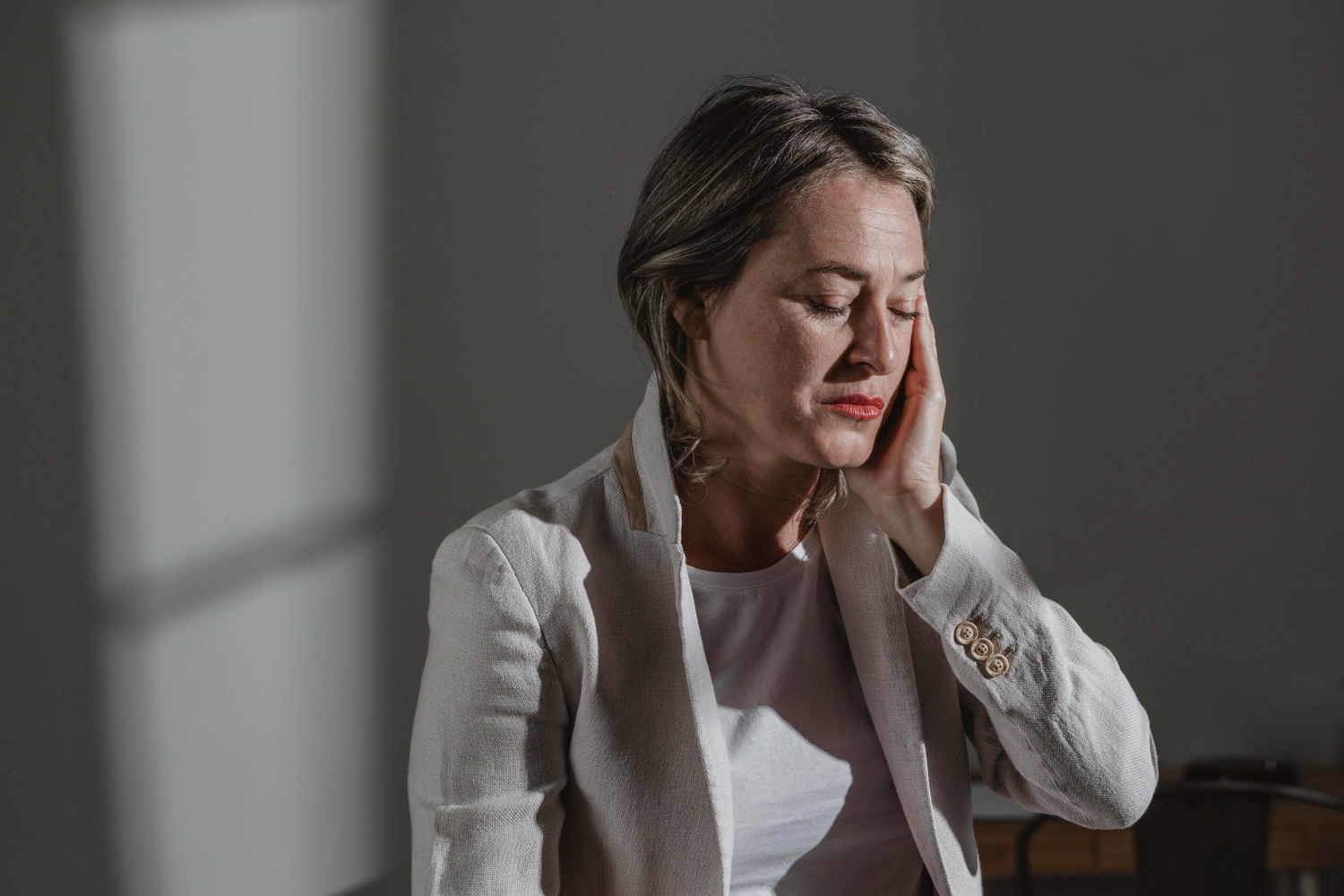
The maid’s fingers dug into my arm like claws, her grip desperate rather than rude—as if she were trying to keep me from stepping off the edge of a cliff. Her eyes were wild, darting between my face and the massive white colonial mansion behind her, its windows glowing with warm Christmas lights that seemed to mock the panic radiating from her entire body.
“Mrs. Callaway!” Her voice cracked, high and frightened, carrying a thick Hispanic accent. “Don’t go in. Please. Leave now—immediately.”
I stood frozen on the front steps, my hand still clutching the Kashmir scarf I’d spent an hour wrapping in silver paper, the bow perfect because I’d made it perfect for Desmond. My son. My only child. The boy I hadn’t spoken to in twelve months until three days ago when his voice had appeared on my phone—flat, cold, utterly devoid of warmth.
“Come for Christmas dinner, Mother. Saturday at six o’clock.”
Just that. Nothing more. No explanation for the year of silence. No acknowledgment of the fifty voicemails I’d left, each one more desperate than the last, begging him to tell me what I’d done wrong, what I could fix, how I could earn my way back into his life.
Now this woman—her name tag read ANISE in neat letters—was telling me to run.
“I don’t understand,” I managed, my voice sounding distant and confused even to my own ears. “My son invited me for Christmas dinner. I’m supposed to be here. There must be some mistake.”
Behind her, through the floor-to-ceiling windows, I could see the evidence of wealth that still stunned me even after two years of knowing about this house. A Christmas tree stood in the entrance hall, at least fifteen feet tall, decorated entirely in white lights and silver ornaments. Crystal chandeliers cast rainbow prisms across marble floors. Everything looked like a magazine spread—perfect, untouchable, expensive beyond measure.
This was my son’s life now. Investment banking. Hedge funds. A beautiful wife from old money. Success I’d barely comprehended when he’d tried to explain it over dinner two Christmases ago, the last time I’d been welcomed into this house.
“I could lose my job for this,” Anise whispered, glancing back at the house nervously. “But I can’t let you walk in there. Please, Mrs. Callaway. Get in your car. Drive away. Don’t come back.”
My knees felt weak. I was seventy-three years old, a retired nurse living on a pension in a one-bedroom apartment in Bridgeport. I’d driven two hours to Greenwich, Connecticut, through light snow and heavy traffic, my stomach knotted with nervous hope the entire way. For a year, Desmond hadn’t answered my calls, hadn’t responded to my birthday card or my Thanksgiving letter. For a year, I’d examined every interaction we’d ever had, searching for the moment I’d failed him, the thing I’d said or done that had made him cut me out of his life so completely.
And now, finally, an invitation. A chance to see my son. To understand. To repair whatever had broken between us.
But this woman’s terror was real. I could see it in the way her hands shook, in the tears gathering in her eyes, in the desperate set of her jaw.
“Is Desmond okay?” I asked, my voice shaking. “Is he hurt? Did something happen—”
“He’s fine,” Anise cut me off, her accent thickening with emotion. “But you are not safe here. Trust me. I have a mother too. I know what it means to love your child. But your son…” She couldn’t finish the sentence, her face crumpling with something that looked like shame or horror or both.
A shadow moved across the hallway window inside the house. Tall. Male. My breath caught.
“Go,” Anise said, tears spilling over now. “Por favor. Just go.”
I stumbled backward, my heel catching on the edge of the driveway. I nearly fell, catching myself against the hood of my ten-year-old Camry. The car looked pathetic next to the circular fountain in the center of Desmond’s driveway, next to the Range Rover and the Mercedes parked in the five-car garage, next to a house that probably cost more than I’d earned in my entire forty-year nursing career.
Anise was already moving toward a side door, fast, her shoes crunching on the gravel. She disappeared inside without looking back.
I stood there frozen, the December wind cutting through my good coat—the wool one I’d bought on clearance last year specifically for occasions when I needed to look presentable. My fingers had gone numb around my keys. When I looked down, I realized I’d been clutching them so hard the metal had cut into my palm, leaving a thin line of blood bright red against my pale skin.
Move, I told myself. Move right now.
I yanked open my car door and threw myself inside, my hands shaking so badly I dropped the keys on the floorboard. I had to bend down, scrabbling in the dark under the brake pedal, my breath coming in short gasps that fogged the windshield.
Found them. Jammed the key into the ignition.
The engine started with its familiar rattling cough—the sound of a car that was old but reliable, that I maintained meticulously because I couldn’t afford to replace it.
I threw the car into reverse and hit the gas too hard. Tires squealed. Gravel sprayed. In my rearview mirror, the mansion stayed lit and perfect and beautiful, like a Christmas card come to life.
No one came running out. No one stopped me. The house simply sat there, glowing with warmth and light, looking exactly like the kind of place where families gathered for holidays and made memories that lasted a lifetime.
I made it to the end of the long private driveway and pulled onto the shoulder of the main road, unable to drive any farther. My whole body was shaking now, trembling so hard my teeth chattered. The wrapped gift sat on the passenger seat—silver paper, perfect bow, Kashmir scarf that had cost more than my grocery budget for two weeks.
I’d worked double shifts at Hartford General to give Desmond the best of everything. Even when “the best” meant my feet swelling in nursing shoes until I could barely walk. Even when it meant eating ramen for dinner so he could have piano lessons and SAT tutoring and a laptop for college. Even when it meant taking out loans I’d only finished paying off last year so he could go to Yale without student debt.
My phone was in my purse. I should call him. Demand to know what was happening. Why his maid had looked at me with such naked fear. Why she’d risked her job to warn me away.
But my hands wouldn’t stop shaking.
So I sat there with the engine running, heat blasting from the vents, and tried to remember the breathing techniques I used to teach panicked patients in the ER.
In through the nose. Hold for four counts. Out through the mouth.
You’re okay. You’re safe. Nothing happened.
Except something had almost happened. Something bad enough to make a woman I’d never met risk everything to save me.
Five minutes passed. Maybe ten. My breathing finally started to slow, the shaking subsiding to occasional tremors. I was reaching for my phone to call Desmond when it rang, the sound so sudden and loud in the quiet car that I jumped and cracked my head against the roof. Pain exploded across my skull.
I grabbed the phone with trembling fingers.
Unknown number.
I almost didn’t answer. Almost let it go to voicemail. But what if it was Desmond? What if he’d seen me leave and was calling to explain?
“Hello?” My voice came out small and scared.
“Mrs. Callaway.” A man’s voice—deep, professional, careful. “This is Detective Marcus Reeves with Greenwich Police Department. Are you currently in the vicinity of 847 Lakeshore Drive?”
The world tilted. That was Desmond’s address.
“I was just there,” I whispered. “I left. What’s wrong? Is my son—”
“Ma’am, I need you to stay exactly where you are. Don’t return to that address under any circumstances. Can you tell me your current location?”
“I’m pulled over on Lakeshore,” I said, my throat tight. “Maybe a quarter mile from the house. Detective, what’s happening? Is Desmond hurt?”
“Your son is being taken into custody as we speak, Mrs. Callaway.”
My vision went dark around the edges. The phone felt heavy in my hand, impossibly heavy, like it weighed a thousand pounds.
“Taken into custody?” I repeated stupidly. “I don’t understand. For what?”
“Mrs. Callaway, I need to ask you something very important.” His voice stayed calm, measured, the way nurses speak to patients in crisis. “When you arrived at the residence today—did you go inside the house?”
“No,” I said. “The maid stopped me at the door. She told me to leave. She seemed terrified. I don’t understand what’s—”
“The maid saved your life, ma’am.”
Everything stopped. My heart, my breath, time itself seemed to freeze around those words.
“What?”
“We’ve been conducting surveillance on your son for three weeks, Mrs. Callaway. We have substantial evidence that he and his wife were planning to poison you today at Christmas dinner.”
The words made no sense. They were in English, I recognized all of them individually, but together they formed something impossible. Poison. Murder. My Desmond.
“No,” I breathed. “No, there must be a mistake. Not my son. He wouldn’t—”
“Ma’am, are you aware that your late husband had a life insurance policy through his employer?”
My throat tightened. Gerald. My Gerald, dead forty years, clutching his chest in our tiny kitchen while eight-year-old Desmond stood in the doorway watching, his small face pale with shock.
“The policy paid out twenty thousand,” I said automatically, because I’d repeated that number so many times over the years. “Barely enough for the funeral and six months of bills while I found work. That money is long gone, Detective. There’s nothing left to—”
“There was a second policy, Mrs. Callaway,” Detective Reeves said. “A substantially larger one that was mishandled during corporate restructuring in the 1980s. It’s been tied up in legal proceedings for decades. The settlement cleared probate last month. The payout is 2.3 million dollars. And you’re the sole beneficiary.”
The phone slipped from my fingers and landed on my lap.
2.3 million.
The number was so enormous it didn’t feel real. It belonged to someone else’s life, someone else’s story. Not mine. Never mine.
I picked up the phone with shaking hands.
“I never received any notification,” I whispered. “No one contacted me about any settlement. I would have known if—”
“They did contact you,” Reeves said gently. “Multiple letters were sent to your address over the past year. We have copies from the insurance company’s records. But your son has been intercepting your mail for approximately fourteen months—since he first learned about the policy through professional connections at his hedge fund.”
The year of silence suddenly made horrible, perfect sense.
Desmond hadn’t stopped calling because I’d done something wrong. He hadn’t abandoned me because he was busy or stressed or tired of dealing with his aging mother.
He’d cut me off because I was worth more to him dead than alive.
I fumbled with the door handle, got it open just in time, and vomited onto the frozen grass beside the road. Nothing came up but bile and the coffee I’d managed to choke down this morning, too nervous about seeing Desmond to keep anything else down.
“Mrs. Callaway,” Reeves’ voice came through the phone, distant. “Are you there?”
I wiped my mouth with the back of my hand, pulled the door closed, and sat shaking in the driver’s seat.
“I’m here.”
“I know this is difficult to process,” he said, his voice kind but firm. “But I need you to understand—this wasn’t a sudden impulse. We have evidence of extensive planning. Internet searches on untraceable poisons. Purchases made through encrypted channels. Text messages between your son and his wife discussing the method. They researched your medical history thoroughly. They knew you take medication for your heart condition.”
My gaze fixed on my dashboard—the check engine light that had been on for six months because I couldn’t afford to fix it, the crack in the windshield from a highway rock last summer that would cost three hundred dollars to replace.
My life had been small. Shabby. Honest. Careful.
And apparently worth killing me for.
“They planned to give you a digitalis overdose,” Reeves continued. “It would have interacted with your regular heart medication. Made your heart race, then stop. It would have looked completely natural—an elderly woman with a known heart condition having a fatal cardiac event during the stress of the holidays. No one would have questioned it.”
“How do you know all this?” I asked, my voice barely above a whisper.
“Because your son’s housekeeper, Anise Rodriguez, came to us two weeks ago when she overheard them discussing the plan. She’s been wearing a wire since then, recording their conversations. Without her courage, we wouldn’t have enough evidence for an arrest. She saved your life, Mrs. Callaway.”
I thought of her face. The fear. The tears. The way she’d said, “I have a mother too,” like that explained everything.
A woman who cleaned houses for minimum wage, who probably sent money back to family in another country, who had everything to lose—she’d risked it all to save a stranger.
While my own son, who I’d sacrificed everything to raise, had been planning my murder for money.
“I’m sending a patrol unit to escort you to the station,” Reeves said. “We need your statement. And Mrs. Callaway, I strongly recommend you speak with an attorney immediately—both about pressing charges and about protecting your inheritance. Do you understand?”
“Yes,” I said, though I understood nothing except that my son had tried to kill me and a stranger had saved my life.
Through the bare winter trees, I could see the roofline of Desmond’s mansion. Red and blue lights were flashing now, reflecting off the white columns. Police cars crowded the circular driveway where I’d stood just minutes ago, where I would have died if Anise hadn’t grabbed my arm and pulled me back.
My phone buzzed with a text message.
Unknown number.
This is Anise. I’m sorry. I couldn’t let him hurt you. My mother raised me alone too. She taught me right from wrong. I hope your son rots in prison.
I saved the number. Then I read the message again and again until the words blurred with tears.
A police cruiser pulled up behind me, lights flashing. A young officer got out—maybe thirty, with kind eyes that reminded me of the residents I used to work with at the hospital.
He tapped on my window. I lowered it, cold air rushing in.
“Mrs. Callaway, I’m Officer Phillips. Detective Reeves asked me to escort you to the station. Are you able to drive, or would you prefer to ride with me?”
“I can drive,” I said. My voice sounded hollow, like it was coming from somewhere far away.
“Follow me then, ma’am.” He hesitated, then added, “And Mrs. Callaway… I’m glad you’re safe. What you did—leaving when that woman warned you—that took courage.”
Courage. As if I’d done something brave instead of simply running when someone told me to run.
I followed his cruiser back toward Greenwich proper, past houses decorated for Christmas, past families visible through glowing windows gathered around trees and tables. Normal people having normal holidays. People whose children didn’t try to poison them for inheritance money.
At a stoplight, I caught my reflection in the rearview mirror. Silver hair that I’d styled carefully this morning. Lipstick applied with a shaking hand because I wanted to look nice for Desmond. Eyes that were red-rimmed and shocked.
I looked old. Ancient. Fragile.
But my eyes were different now. Something had changed when Detective Reeves said the words “planned to poison you.”
Something had broken. But something else had formed in its place—something cold and clear and sharp as broken glass.
The light turned green. I pressed the gas and followed Officer Phillips toward whatever came next.
The police station smelled like burnt coffee and industrial cleaner, the familiar scent of institutional buildings everywhere. Officer Phillips led me down a hallway to a small interview room with a metal table and three uncomfortable chairs.
Detective Reeves was waiting. He was older than his voice had suggested—maybe sixty, with gray hair and tired eyes that had seen too much of humanity’s worst impulses. He shook my hand gently, his grip warm and steady.
“Mrs. Callaway, thank you for coming in. I know this is incredibly difficult. Please, sit.”
The chair was cold and hard. Good. The discomfort kept me anchored, kept me from floating away into shock.
Reeves opened a thick folder, pulling out pages of documents that would, I already knew, change my understanding of my son forever.
“I need to walk you through what we know,” he said. “Some of this will be very hard to hear. If you need a break at any point, just say so.”
“I want to know everything,” I said. My voice was steadier than I expected. “All of it.”
He slid a page across the table—a transcript of a conversation, printed in stark black text.
December 1st, 2:47 PM
Sloan: So we’re really doing this Saturday.
Desmond: It’s the perfect opportunity. Christmas dinner, family gathering. She has a heart condition, takes medication. An overdose would look completely natural.
Sloan: What if someone questions it?
Desmond: Who? She has no other family, no close friends. She’s a lonely old woman who worked too hard her whole life. Heart attacks happen all the time at her age.
Sloan: And you’re absolutely sure about the money.
Desmond: 2.3 million. Cleared probate last month. As soon as she’s declared dead, it transfers to me as next of kin.
I read it twice. Three times. The words made sense individually but together they formed something impossible—my son talking about my death the way people discuss vacation plans or grocery lists.
“That’s really him,” I whispered. “Really my Desmond?”
“It’s really him,” Reeves said quietly. “Anise Rodriguez was cleaning in the next room. She heard everything through the open door. After that, she started recording subsequent conversations on her phone, then brought them to us. We obtained warrants for electronic surveillance and have been monitoring the house since December 3rd.”
He showed me more documents. Text messages between Desmond and his wife Sloan, casual and cold:
Desmond: Stopped at the pharmacy. Got what we need. She won’t feel a thing.
Sloan: I’m practicing my crying. Need to look devastated when the ambulance comes. Think you can pull off the grieving son?
Desmond: I’ve been playing that role my whole life.
That last sentence hit like a physical blow. I’ve been playing that role my whole life.
The loving son. The grateful son. The devoted son who visited for holidays and called on birthdays.
All of it had been performance. A role he’d been acting out while waiting for the right moment to cash in on my death.
“How long?” I asked, my voice cracking. “How long has he been planning this?”
“Based on our investigation,” Reeves said, “he learned about the insurance policy in October of last year through connections at his firm—someone in the legal department handling the probate. He immediately began distancing himself from you, establishing a pattern of separation. It’s less suspicious when a son who barely speaks to his mother suddenly shows up for Christmas and she dies.”
October. Thirteen months ago. Right when the phone calls stopped and the silence began.
“He’s been planning my murder for over a year,” I said.
“Yes, ma’am.”
Reeves pulled out more evidence—computer printouts of searches from Desmond’s laptop:
Untraceable poisons for elderly victims
Heart attack symptoms
How to fake grief convincingly
Connecticut inheritance laws
Life insurance payout timelines
I stared at the pages until they blurred. My son had been researching how to kill me the way students research term papers—methodically, thoroughly, with attention to detail.
“There’s something else,” Reeves said, and his voice changed—softer, more careful. “And this is perhaps the hardest part.”
I looked up, my hands gripping the edge of the table.
“Your son’s first wife.”
My throat tightened. “First wife? Desmond was never married before Sloan.”
Reeves didn’t blink. “Her name was Caroline Brennan. They married fifteen years ago when your son was thirty. The marriage lasted approximately two years. Caroline died of what was officially ruled an accidental drug overdose.”
The room spun. I’d never known. He’d never told me. Why wouldn’t he tell me he’d been married?
Reeves slid a photograph across the table. A young woman with auburn hair and a warm smile, the kind of smile that suggested she’d laughed easily and loved deeply.
“Caroline had a life insurance policy worth five hundred thousand dollars,” Reeves said. “Your son was the sole beneficiary.”
My stomach dropped through the floor.
“But—if he—” I couldn’t finish the sentence.
“The payout went through because the death was ruled accidental,” Reeves said. “But Caroline’s family always suspected foul play. They pushed for an investigation, but there wasn’t enough evidence. The case was eventually closed.”
I stared at Caroline’s photo—this woman whose existence I’d never known about, whose death had funded my son’s first taste of what murder could buy.
“After Caroline’s death,” Reeves continued, “your son waited about six months before meeting Sloan. Sloan comes from a wealthy family, but her money is tied up in a trust she can’t access until she’s fifty. Meanwhile, your son has been living well beyond his means. Risky investments. Bad decisions. He needed cash. And when he found out about your inheritance, you became his solution.”
I felt hollow, scooped out, like someone had reached inside my chest and removed everything vital.
“This isn’t my son,” I whispered.
Reeves didn’t argue with me. The evidence on the table was the only argument that mattered.
The door opened and Anise walked in—no longer in her uniform, just regular clothes, looking young and frightened and brave all at once. When our eyes met, hers filled with tears.
She crossed the room and sat beside me, reaching for my hand.
“Mrs. Callaway,” she said, her voice shaking. “I’m so sorry. I’m so sorry for what he tried to do.”
I grabbed her hand and held on like she was the only solid thing in a world that had turned to water.
“You saved my life,” I said. “You risked everything to save me.”
“I couldn’t let him hurt you,” Anise said through her tears. “When I saw your photo on his desk, you looked like my mother. She raised me alone too, worked so hard. When I heard them planning, I thought—what if someone tried to hurt her? I would want someone to stop it.”
We sat there holding hands—two women connected by one monster and one moment of extraordinary courage.
The trial came three months later. By then, the media had turned my private nightmare into a public spectacle. Reporters camped outside my apartment building. Cameras followed me to the grocery store. Headlines screamed about the “Hedge Fund Killer” and the “Mother Who Almost Died for Millions.”
My former colleagues from Hartford General rallied around me. Nurses I’d worked with for decades called daily, brought food I couldn’t eat, sat with me when the walls felt like they were closing in.
“We always thought something was off about that boy,” one of them said gently. “Too polished. Too cold.”
The courtroom was packed. Caroline Brennan’s family sat in the front row, her sister sobbing quietly. Media. Spectators. Curious strangers who’d read about the case and wanted to see the monster who’d tried to poison his own mother.
And at the defense table sat Desmond.
He wore a tailored navy suit, his hair perfect, his face composed. He looked exactly like what he was—a successful hedge fund manager, an Ivy League graduate, a handsome man from a good family.
Not a murderer. Not a monster. Just someone who’d made a mistake, his lawyers would argue. Just a family dispute blown out of proportion.
When our eyes met across the courtroom, he smiled. Not big. Not friendly. Just a small curve of his lips—confident, amused, like he was watching an entertaining show.
And that smile triggered a memory I’d buried so deep I’d convinced myself it was a dream.
The night Gerald died. Desmond was eight years old. I’d heard a crash and run into the living room to find my husband on the floor, clutching his chest, face gray with pain.
“Call 911!” I’d screamed at Desmond.
He’d stood in the doorway watching. Not moving. Not crying. Not helping.
Just watching. With that same small, curious smile.
I’d told myself afterward that I’d imagined it, that children process trauma strangely, that I’d misremembered in my grief.
But sitting in that courtroom, seeing that smile again forty years later, I knew I hadn’t imagined anything.
The trial lasted two weeks. The prosecution presented evidence that was damning in its thoroughness—the surveillance footage, the text messages, Anise’s testimony, financial records showing Desmond’s desperate need for money.
Anise took the stand and told the jury how she’d heard them planning my murder, how she’d recorded their conversations, how she’d gone to the police knowing she might lose everything.
“I am here because murder is wrong,” she said, crying openly. “Because I saw Mrs. Callaway’s picture and she looked like my mother. And I couldn’t let him hurt her. I knew I might lose everything. But some things are more important than safety.”
The defense tried to destroy her—implied she was motivated by immigration status, by dreams of reward money, by jealousy of wealthy employers.
But Anise held firm. Her truth was simple and unshakeable: she’d done the right thing because it was right.
When I took the stand, the defense attorney tried to make me the villain—the overbearing mother, the suffocating presence, the woman who’d driven her son away with her neediness and demands.
“How many hours a week did you work when Desmond was a child?” he asked.
“Sixty. Sometimes more.”
“Who watched him when you were gone?”
“Babysitters. Neighbors. He was a latchkey kid sometimes.”
“So he spent much of his childhood alone.”
“I had to work,” I said, my voice steady. “We needed food, rent, electricity. His education. I did what I had to do to keep us alive.”
The attorney looked at me with something like pity. “Best intentions don’t always equal good parenting, do they, Mrs. Callaway?”
I looked at my son sitting at the defense table, his face blank, his eyes cold.
“I gave him everything,” I said. “Everything I had. If he chose to turn that into resentment instead of gratitude, that’s his choice. Not my failure.”
The jury deliberated for four hours.
When they came back, the forewoman stood and read the verdict: “On the charge of conspiracy to commit murder, we find the defendant, Desmond Callaway, guilty.”
The room erupted. Caroline’s sister sobbed with relief. Desmond’s head dropped. Then he lifted it and looked at me with pure, undisguised hatred.
Before the bailiffs could stop him, he lunged toward me and screamed: “You should have died! You should have died and given me what’s mine! You ruined my life!”
They dragged him away, still screaming, and I sat there understanding finally and completely that the boy I’d raised was gone—if he’d ever existed at all.
Sentencing came three weeks later. Desmond received fifteen years. Sloan got the same.
And I walked out of that courthouse into cold February sunshine a different woman than the one who’d driven to Greenwich for Christmas dinner.
Six months after the trial, I sat in my attorney’s office signing the last of the paperwork that would transform blood money into something meaningful.
The Callaway Nursing Scholarship Fund—fully endowed, income-based, prioritizing single mothers in nursing programs.
Named after Gerald. Not Desmond.
The first recipients had already been chosen—ten students who would get full tuition, books, and living expenses. Women working multiple jobs, raising children alone, showing up to class with exhaustion in their eyes and determination in their hearts.
Women like I’d been.
One of those recipients was Anise Rodriguez. She’d enrolled in nursing school after receiving citizenship support through the witness protection program.
When she came to tell me she’d been accepted at Yale, we stood in my new living room—a small house in New Haven with a garden and two bedrooms and space to breathe—and cried together.
“I’m going to be a nurse because of you,” she said.
“No,” I corrected. “Because of us. Because you chose courage over fear.”
I sold my Bridgeport apartment and bought this house with some of the inheritance money. The rest went into the scholarship fund and investments that would ensure it continued long after I was gone.
I volunteered at a women’s shelter twice a week, speaking at community centers about elder abuse and family manipulation, helping people recognize warning signs I’d missed for too long.
“Not all children are safe,” I told audiences who looked shocked by the words. “Not all love is returned. Sometimes the people we create become strangers. And that isn’t always our failure.”
Christmas Eve came again—exactly one year after everything changed.
This time, I invited people to my home. Not family by blood, but family by choice.
Anise and her mother, who’d finally gotten a visa to visit from Mexico. Three scholarship students. Detective Reeves and Officer Phillips. My attorney. The prosecutor who’d fought for justice.
People who’d shown up when I needed them. People who’d chosen to care.
We gathered around my table—small, scratched, real—and ate food I’d cooked myself. Simple food that tasted like safety and hope and new beginnings.
After dessert, as we sat drinking coffee and talking about everything except the reason we’d all met, one of the nursing students asked the question I’d been expecting.
“Do you ever think about him?” she asked softly. “About your son?”
I set down my cup and looked at the faces around my table—kind faces, honest faces, faces that held no threat.
“Every day,” I said. My voice didn’t shake. “Every day I think about the son I imagined I had. I grieve him like he died. Because in a way, he did. Or maybe he never existed the way I believed.”
I paused, feeling the old ache but finding it had dulled with time.
“I don’t wake up wishing I could fix it anymore,” I continued. “I don’t wake up blaming myself. I wake up grateful that a stranger with a conscience stood in front of a door and pulled me back from death.”
I looked at Anise, who smiled through tears.
“I used to think love meant sacrificing until you had nothing left,” I said. “Now I know that love is also protection. Love is also truth. Love is also walking away when staying means destruction.”
Outside, snow had begun to fall—soft and quiet and harmless.
Inside, my house was warm. Not because it was expensive or grand, but because it was full of people who’d chosen each other, who’d built something real from the ashes of betrayal.
When I went to bed that night, I didn’t dream of Desmond. For the first time in over a year, I slept deeply and dreamlessly, wrapped in the quiet peace of a life reclaimed.
The boy I’d raised was gone. The money he’d wanted to kill me for was saving lives instead.
And I was still here, still breathing, still building something beautiful from the wreckage.
That, I’d learned, was the best revenge of all—not destruction, but creation. Not bitterness, but purpose. Not the life he’d tried to steal, but the life I’d chosen to build from what remained.
I’d survived my son’s attempt to murder me. But more than that, I’d survived the death of the illusion I’d held my entire life—that blood always means family, that mothers’ love is always returned, that the children we raise will always love us back.
Some children are born with something broken inside them. Some choose darkness no matter how much light you offer. And sometimes, the greatest act of love is accepting that truth and walking away.
I walked away from the burning building of my old life.
And in the ashes, I found family that wasn’t bound by blood but by choice, by courage, by the simple human decision to do the right thing even when it costs everything.
As I drifted off to sleep that Christmas Eve, my last thought was of Anise’s face the moment she’d grabbed my arm on those front steps—terrified, determined, desperately human.
She’d saved my life. And in saving mine, she’d given me the chance to help save others.
That was worth more than any inheritance. More than any illusion of family. More than anything my son could have taken from me.
Because in the end, what he’d tried to steal—my life, my dignity, my future—had become the foundation for something he could never touch or tarnish or destroy.
Hope. Purpose. Real family.
And that was a gift worth living for.

Lila Hart is a dedicated Digital Archivist and Research Specialist with a keen eye for preserving and curating meaningful content. At TheArchivists, she specializes in organizing and managing digital archives, ensuring that valuable stories and historical moments are accessible for generations to come.
Lila earned her degree in History and Archival Studies from the University of Edinburgh, where she cultivated her passion for documenting the past and preserving cultural heritage. Her expertise lies in combining traditional archival techniques with modern digital tools, allowing her to create comprehensive and engaging collections that resonate with audiences worldwide.
At TheArchivists, Lila is known for her meticulous attention to detail and her ability to uncover hidden gems within extensive archives. Her work is praised for its depth, authenticity, and contribution to the preservation of knowledge in the digital age.
Driven by a commitment to preserving stories that matter, Lila is passionate about exploring the intersection of history and technology. Her goal is to ensure that every piece of content she handles reflects the richness of human experiences and remains a source of inspiration for years to come.