Seventeen years ago, my father slammed the door in my face and told me I was no longer his daughter. Standing in the rain that night with a single duffel bag, I stopped being Amara Whitfield, the obedient child, and became the woman he tried to erase. His final words carved a wound so deep it never fully closed: “If you want to fly, do it without me.” I built a life from that exile, carved out a place in the sky he’d told me I had no right to claim. But nothing—not the storms I’d flown through, not the lives I’d saved, not the seventeen years of silence—prepared me for what happened when I walked back into his world at my brother’s wedding.
The foghorns from Camden Harbor moaned through the morning mist, their deep voices mixing with the sharp, bitter smell of coffee that filled my small kitchen. Pale light seeped weakly through the window, carrying that gray, damp chill New England always wears in late October. I sat at the counter with an envelope in my hands, cream cardstock edged in gold, the words pressed across the front in elegant cursive: “The Whitfield Family cordially invites you…” My fingers trembled as I slid out the invitation announcing that my younger brother, Matthew, was marrying Hannah Richardson in two weeks’ time.
And there it was, printed in careful script beneath the formal wording: “Family.” After seventeen years of silence, after being thrown out and cut off, somehow I was still listed as family. A rush of heat spread through my chest—equal parts anger and longing. Was I really family? Or just a name they couldn’t edit out without raising uncomfortable questions?
I stared at the word until the letters blurred, then lifted my eyes to the framed photograph on the wall. It showed the rescue helicopter I’d flown dozens of times into storms and chaos, its rotors frozen mid-spin in the captured moment. That machine had been more of a home to me than the house I’d been forced out of all those years ago.
The shrill buzz of my phone shattered the moment. One new message from an unknown number. No name attached, just blunt words flashing on the screen: “Don’t come. Don’t embarrass him.”
I froze, the pulse in my throat pounding against my skin. I didn’t need to ask who “him” was. Only one man had the power to send words slicing through me like glass—my father. I set the phone down slowly, the silence in the room so thick I could hear my own breathing. Then I let out a shaky laugh, bitter at first, but sharpening into resolve.
Tearing the message into digital nothing with a swipe of my thumb, I whispered to the empty room, “I’m going. Not for him. For Matthew. And for what Hannah already knows.”
On the counter beside the invitation, I placed a small object I always kept hidden at the back of a drawer—a strip of medical gauze, stained and stiff with old salt water. The fabric had saved someone’s life once, and its story was mine alone. For now. Its presence was a quiet promise that the past wasn’t finished with me yet.
The night I was thrown out comes back to me in fragments, like shards of broken glass I’ve never quite managed to sweep away. The heavy reek of my father’s cigarettes. The concrete dust still clinging to his work shirt from the construction site. The slam of papers hitting the kitchen table with the finality of a judge’s gavel.
He didn’t bother sitting down. A manila folder skidded across the wood toward me, its corners bent, my name typed neatly at the top of every form inside. Law school applications. Accounting programs. Business administration. Every path but the one I had already chosen.
I stood there clutching a letter that felt heavier than stone—the acceptance into the air medical training program I’d been dreaming of for years. My hands shook as I held it out like a child offering proof she was worth keeping, worth believing in.
He didn’t even glance at it. His eyes stayed cold, locked on mine with the kind of contempt that makes you feel smaller than you’ve ever been. “This house isn’t raising a glorified taxi driver,” he said flatly, his voice laced with such disdain it felt like a physical blow. “You want to waste your life playing helicopter pilot, you do it somewhere else.”
I swallowed hard, heart pounding in my ears so loudly I could barely hear my own voice when I finally spoke. “I’m not playing, Dad. I’m choosing the sky. This is what I want to do with my life.”
It was the first time I’d ever contradicted him directly, the first time I’d claimed something for myself against his will. The silence that followed was colder than the rain tapping against the kitchen windows.
Then he walked to the front door, pulled it open wide, and without raising his voice said, “You want to fly? Start by surviving without me. Get out.”
My mother burst into tears, rushing to him, clutching his arm, begging through broken sobs. But her voice was drowned by the thunder rumbling outside and his stony refusal to soften. On the staircase, Matthew hovered—sixteen years old, pale and stricken, his eyes darting between us. I could see the conflict written across his face, loyalty to our father weighing heavier than the apology he couldn’t say aloud.
I remember the sound of my own breath, shallow and ragged, as if the walls of the house themselves were pushing me out. I lifted the strap of my duffel bag—heavy with nothing more than a few clothes, a pair of worn sneakers, and the folded acceptance letter pressed deep into the side pocket.
The rain hit like needles when I stepped outside, soaking through my jacket within seconds. Behind me, the door slammed shut, the echo sealing a fracture that would split seventeen years wide. The air smelled of wet cement and cigarette smoke, and I knew even then it would haunt me forever.
I tightened my grip on the bag, set my jaw against the cold, and walked into the storm. Every step through the darkness, I repeated one vow in my head like a mantra: “Every mile I fly will be my answer.”
Back in the present, I sat at my small kitchen table with my flight log open, pages filled with scrawled notes from missions that sometimes blurred together in memory. One entry caught my eye, dated October 2012. My handwriting became urgent and cramped, shaped by adrenaline: “Cliff rescue. Female, 16-17 years old. Hypothermia risk. Severe weather conditions.”
The memory snapped back sharp as salt spray. A storm off the coast, winds battering the rotor blades until they screamed, ropes whipping wildly as I rappelled down the slick face of a cliff. The girl clung desperately to the rocks, her knuckles bloodless, eyes wide with the kind of terror that comes when you realize you might actually die.
I could feel the vibration of her shivering through the rope as I hooked onto her harness, the cold so intense it burned. I pressed my forehead against hers, locking her gaze in the howl of the wind and sea spray.
“Breathe with me,” I said, my voice cutting through the chaos with practiced calm. “Just look at me. Don’t let go. We’re going up together.”
My own arms burned from the strain, muscles screaming as we rose inch by brutal inch, the sea clawing at our heels like something alive and hungry. When the winch finally lifted us clear, my hands were raw and bleeding. The strip of gauze I’d wrapped around her arms to stop the bleeding from where the rocks had cut her became soaked stiff with seawater and her blood.
I still kept that strip, faded and brittle now, tucked away like a secret only I understood.
Later, I’d received a message—just a short note from someone signing only as “H,” simple words of gratitude for saving her life. For years, I never knew who she was. I carried the mystery like an unanswered question, wondering occasionally if our paths would ever cross again.
It wasn’t until a few weeks before Matthew’s wedding that the truth landed like a storm I hadn’t seen coming. Hannah Richardson—my brother’s bride-to-be—had asked to meet me for coffee. When she walked in, something about her eyes seemed familiar, but I couldn’t place it.
Then she told me.
“Ten years ago, you saved my life on a cliff,” she said, her voice steady but full of weight. “I was the girl who thought she was going to die that day. You lowered yourself down on a rope in the middle of a storm and told me to breathe with you.”
The coffee shop seemed to fade around us as the memory crashed back with full force.
“I’ve never forgotten what you did,” Hannah continued, reaching across the table to take my hand. “When Matthew told me about his sister who flew rescue helicopters, I had to know if it was you. I tracked down the records, found your call sign. It was you. You saved me, and now you’re going to be my sister. Tomorrow, at the wedding, I want everyone to know who you really are.”
The rehearsal dinner took place at an upscale restaurant overlooking the harbor, the kind of place with white tablecloths and more forks than any reasonable meal required. The air smelled of garlic butter and expensive wine, with low country music playing under the hum of conversation. I smoothed the skirt of the simple navy dress I’d chosen—neat but unassuming—and took my seat halfway down the long table.
At the head, my father leaned back with the air of a man who owned not just the room but the entire town. He swirled his glass of cabernet, eyes narrowing when they landed on me before his mouth twisted into something between a smile and a sneer.
“Flying in circles all day,” he drawled, loud enough for everyone to hear, his voice carrying that particular edge of contempt I remembered so well. “What good does that really do for anyone?”
The room froze. Forks hovered midair. Every gaze turned toward me, waiting for a reaction, for drama, for the confrontation that seemed inevitable.
Then a woman near the end of the table—someone I didn’t recognize—set her napkin down deliberately and spoke, her voice carrying with steady conviction.
“You’re Amara Whitfield, aren’t you? The life flight pilot?” She looked at me directly, her eyes bright with emotion. “You flew my husband to Portland Medical last year when his heart stopped during a fishing trip. The doctors said if he’d been ten minutes later, he wouldn’t have made it. He’s alive today because of you.”
A murmur rippled through the guests. For a fleeting second, warmth filled the silence—recognition, gratitude, the acknowledgment I’d never asked for but that somehow meant everything.
But my father cut it short with a sharp shake of his head, his jaw tightening. “Don’t exaggerate,” he snapped, his voice harsh. “It’s a reckless stunt job dressed up as heroics. Don’t paint it as something noble when it’s just adrenaline junkies playing with expensive equipment.”
Another voice joined in from across the table—one of his old colleagues from the fire department, a man who’d known our family for decades. He leaned forward, meeting my father’s eyes with unexpected directness.
“Robert, that’s not fair and you know it. What she does is dangerous work that saves lives. Real lives. You should be proud of her.”
Color rose up my father’s neck, spreading to his face. “Not in this family,” he barked back, his voice rising. “We don’t call playing taxi driver in the sky a profession. We have standards.”
Beneath the table, Hannah’s hand found mine—a small squeeze, quick but firm. Her whisper was hidden under the scrape of chairs and nervous coughs. “Tomorrow,” she said. “Tomorrow I’ll tell them everything.”
I lifted my glass of wine, let the tartness settle on my tongue, and smiled. Not in defiance, not in anger, but in the calm certainty of someone who had weathered storms harsher than this. Across the table, my father’s stare burned into me, trying to diminish me as he always had.
But this time, I didn’t flinch. I’d already learned how to stand steady in the eye of a hurricane.
Later that night, alone in the small inn where I was staying, the wind screamed down the coast, rattling the thin windowpanes with such force I wondered if they might shatter. I sat at the small wooden desk, the ocean’s roar crashing in rhythm with the pulse in my ears.
In front of me lay a wooden box I hadn’t opened in years, its hinges creaking under the weight of memory. Inside, folded carefully, was a letter from my mother in her delicate, wavering handwriting—written in her final days before cancer took her five years ago.
“Hope is the thing with feathers,” she’d quoted, the words from Emily Dickinson that had been her favorite. She’d left it for me with a friend to pass along, a whisper of faith pressed into ink when her voice could no longer carry the words.
Beneath it lay another envelope, never sealed—the letter I had once written to my father, inviting him to a ceremony where I’d received a medal for distinguished service after a particularly harrowing rescue. My words were blurred where tears had fallen years ago when I’d written it. I had never sent it. He had never known.
I reached for my phone, scrolling back to the message that had clawed at me earlier: “Don’t come. Don’t embarrass him.” With a few taps, I traced it to its source, and the truth landed like a punch to the ribs. The number belonged to one of his spare phones, the one he used for work calls.
It had been him all along. My father had sent it. He hadn’t just denied me—he wanted to erase me completely, to keep me invisible even at my own brother’s wedding.
My hands shook, but not from fear. Anger steadied me, hardened my resolve. I captured a screenshot, damning evidence stored away, then deleted the thread. Not as surrender, but as choice. Tomorrow would speak louder than any reply I could send.
One by one, I returned the letters to the box. On top, I laid the strip of salt-stained gauze, brittle now with age. Three relics stacked like layers of my life: my mother’s hope, my father’s absence, and the life I had fought to save when no one believed in me.
I closed the lid gently as the storm outside clawed at the walls, and whispered into the dark, “Tomorrow, the truth will stand on its own.”
The old boathouse had been transformed into something magical—strings of golden lights crisscrossed the exposed beams, white flowers tucked into every corner, their fragrance mixing with the ever-present smell of saltwater that clung to the aged wood. Waves slapped against the pilings below, the wind outside rising with the kind of restless energy that warned of a storm moving in. Guests laughed, glasses clinked, and for a moment the celebration carried on as if nothing dark hovered on the horizon.
The ceremony had been beautiful—Matthew and Hannah exchanging vows with the harbor as their backdrop, their faces glowing with genuine love. I’d stood in the back, watching my little brother become a husband, feeling the strange mix of joy and distance that came from being present but not quite belonging.
Now, at the reception, my father rose during the toasts, wineglass in hand, his voice cutting through the music and conversation like a blade. “Some people think flying in circles all day counts as serving the community,” he said, letting the pause stretch deliberately. “To me, it’s nothing but showing off with other people’s lives at risk.”
The room stilled. Eyes flicked toward me—curious, uncomfortable, waiting. From across the crowded tables, the same woman from the rehearsal dinner stood, her voice trembling but fierce.
“That’s not true, and it’s cruel to say it. She flew my husband when his heart gave out. If not for her quick thinking and skill, he wouldn’t be alive to walk our daughter down the aisle next month.”
Murmurs spread, heads nodding in agreement, the tide of opinion shifting palpably. My father’s jaw tightened, his knuckles white against the stem of his glass. “Coincidence,” he snapped, but his tone faltered—the first crack in his certainty. “Don’t make her into something she’s not.”
Just then, my phone buzzed in my pocket. I slid it open discreetly under the table, glancing at the emergency alert from the weather center: High winds. Widespread outages expected. Severe storm warning. I silenced it and slipped the phone away, but unease prickled at the back of my neck.
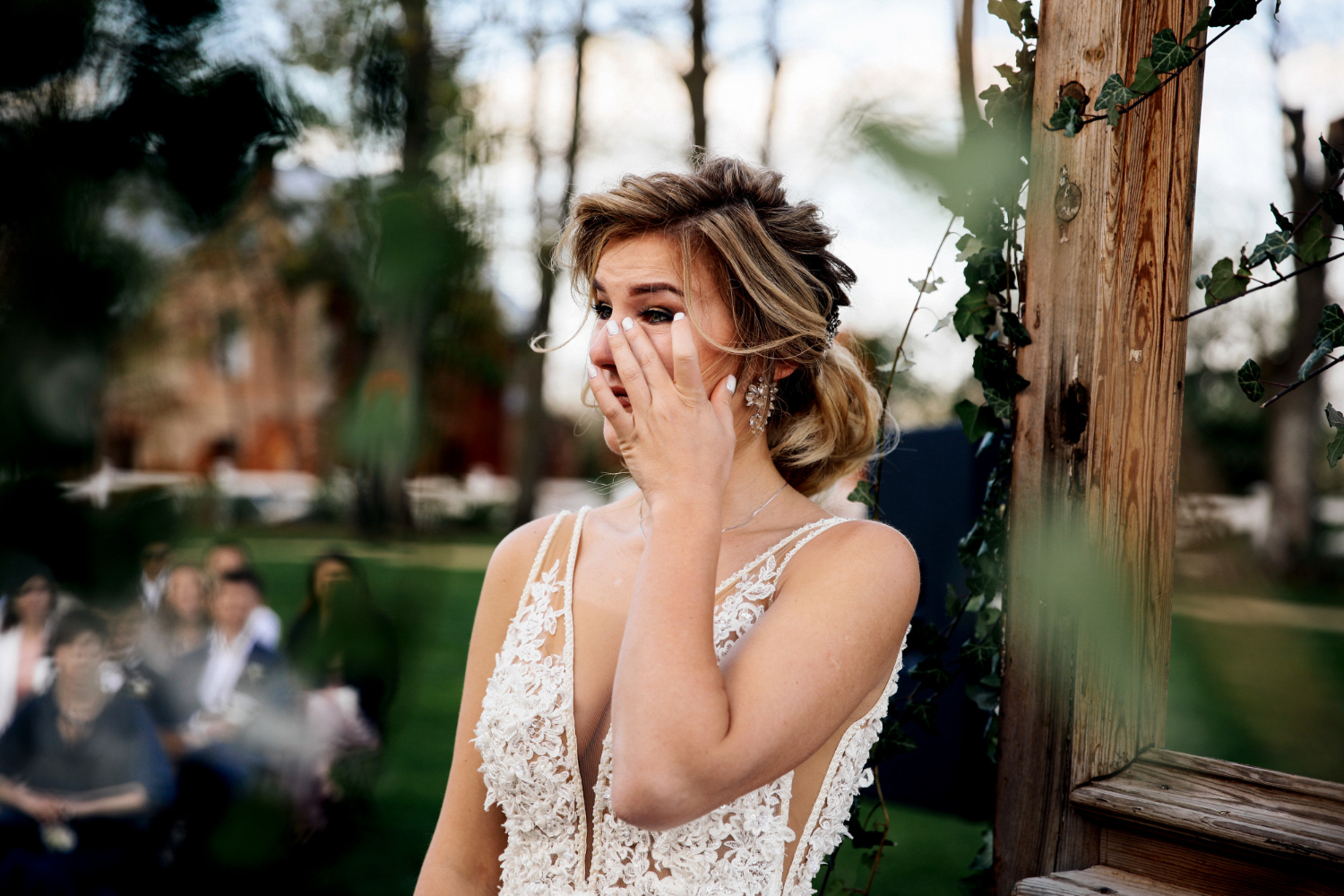
At that moment, Hannah stepped forward to the microphone at the center of the dance floor, her wedding dress catching the light like captured starlight. Her hands trembled slightly as she adjusted the mic, and the entire room fell silent. The band stopped mid-note. Only the wind outside and the restless surf filled the pause.
“Before we have our first dance,” Hannah began, her voice soft but carrying clearly, “I need to tell you all something important.”
She drew a breath deep enough to steady her shaking shoulders, then looked straight at me. “Ten years ago this month, I was stranded on a cliff during a storm. I was sixteen years old, and I truly believed I was going to die. I could feel my hands slipping, the cold stealing my strength. Then, through the rain and wind, I saw a helicopter.”
The room was utterly silent now, every person leaning forward.
“A young woman lowered herself down on a rope,” Hannah continued, her voice growing stronger. “She came down into that storm, into that danger, for me. She pressed her forehead to mine and told me to breathe with her, to look only at her, not to let go. She wrapped my bleeding arms with gauze because I didn’t even realize I was hurt. And she brought me up, inch by inch, until I was safe.”
Tears were streaming down Hannah’s face now, but her voice never wavered. “That woman saved my life. She gave me every moment I’ve had since then—my college graduation, my career, falling in love with Matthew. Everything. And that woman is standing right here, my sister-in-law, Major Amara Whitfield.”
Gasps rippled through the room. The silence held like a held breath.
“Because of what she did for me,” Hannah said, “I started the Coast and Sky Fund three years ago. We’ve funded twenty-three training programs for rescue teams across Maine. We’ve equipped volunteer fire departments with medical gear. We’ve trained nearly a hundred first responders. All of it built on the example she set, on the courage she showed.”
The back doors of the boathouse opened, and suddenly uniformed rescuers filed in—men and women in flight suits and paramedic gear, standing at attention among the wedding guests. One by one, they saluted, hands raised sharply to their foreheads in a gesture of profound respect.
Hannah’s voice broke with emotion. “These are the people whose lives have been touched by what Amara represents. This is what one person’s courage can build.”
Matthew stepped forward, his own eyes red. “I asked Hannah to trace the records until she found you, Amara. You’ve always been my sister, even when Dad made you leave. This is your family too, if you want it.”
Chairs scraped back as people rose to their feet. Thunderous applause rolled through the boathouse like the ocean outside, wave after wave of recognition and respect. Through the blur of faces and the shimmer of light, I saw only my father—rigid in his chair, knuckles white against the edge of the table, his face a mask of emotions I couldn’t read.
I stood slowly, lifted my glass in acknowledgment, and inclined my head to Hannah. The ovation crashed around me like waves breaking on rocks, but my father stayed seated, alone in the eye of it all.
The night pressed in heavy after that, the wind howling off the bay with increasing ferocity, rattling the old boathouse walls until the whole structure seemed to groan. The strings of golden lights swung wildly overhead, casting dancing shadows. The celebration continued, but the storm outside grew more insistent, and I could feel the atmospheric pressure dropping, that peculiar sensation that comes before severe weather hits.
Then, without warning, the room went black. A sharp pop echoed through the space as the power failed, plunging everything into darkness broken only by the dim glow of emergency exit signs. Silence fell for a heartbeat, then panic spread fast. Children cried out. Voices rose in confusion and fear. The storm outside shrieked through cracks in the walls, and the building shuddered.
A scream cut through the chaos—sharp, terrified, urgent. “Someone help! He’s collapsed!”
I moved without thinking, muscle memory and training taking over. Phone screens flickered on around the room, casting harsh shadows as I pushed through the crowd. Near the head table, a man had crumpled to the floor, his body limp, one arm splayed at an unnatural angle.
In the pale glow of emergency lighting, I recognized him—my father’s oldest friend, Thomas, a man who’d been at every family gathering I could remember before I was thrown out.
I dropped to my knees, fingers immediately finding his neck, searching for a pulse. Faint, thready, irregular. Then nothing. His eyes were fixed and unfocused.
“Clear the space!” I shouted, my voice cutting through the panic with the authority of someone who’d commanded emergency scenes dozens of times. “I need light here. Someone call 911. Now!”
My father loomed over me, frozen, blocking the beam of someone’s phone. For a split second, our eyes locked—his wide with shock and something that might have been fear.
“You’re in my way,” I barked, not as his daughter but as the medical professional in command of the situation. “Step back.”
And for the first time in seventeen years, he obeyed without question.
Training surged through me like electricity. I interlocked my hands, positioned them precisely over Thomas’s sternum, and began compressions. “You,” I pointed to a woman in the crowd, “you’re a nurse, right? I saw your name tag at the rehearsal. Get down here. I need you on respirations.”
She dropped beside me without hesitation, following my lead. The air was thick with salt and sweat, the acrid smell of fear and adrenaline. Each push rattled my arms, each breath a gamble against the dark. Thomas’s chest rose under the strobe-like effect of multiple phone beams.
The rhythm of my compressions matched the relentless pound of the sea against the pilings. “One, two, three, four, five…” I counted aloud, keeping the pace steady, forcing blood through vessels that had stopped moving it on their own.
Minutes stretched, brutal and endless. My shoulders burned, my arms screamed in protest, but I didn’t stop. Couldn’t stop. Around us, the crowd had gone silent, watching with held breath.
Until flashing red lights broke through the storm outside. Paramedics burst through the door, sliding a stretcher across the wet floor, their emergency kit rattling. Even as they moved in with their equipment, I stayed, pressing down, maintaining the rhythm that was the only thing keeping Thomas’s brain alive.
“We’ve got it,” the lead paramedic said, and I recognized him—Jake, someone I’d flown with on a dozen missions. His eyes met mine with professional respect. “On my count, transition.”
We moved in perfect synchronization, practiced and precise. The AED pads went on. Everyone stepped back. The shock delivered with a thump that lifted Thomas’s body briefly off the floor.
Then suddenly, miraculously, his body jerked. A cough, harsh and wet. A gasp. Life clawing its way back from the edge.
The hall was silent, every breath held in unison, until a single clap started from somewhere in the back. Then another. Applause swelled slowly, rolling like thunder, like waves breaking against the shore in a storm.
I sat back on my heels, chest heaving, the taste of salt sharp on my tongue, my sleeves damp with sweat and spotted with blood. The storm outside had begun to loosen its grip, leaving only the hiss of rain sliding down the boathouse roof and the creak of timber still straining against the wind.
I found a bench in the corridor outside the main hall, lungs still aching from exertion, my hands trembling now that the adrenaline was fading. That’s when I saw his shadow stretch long across the wet planks—the unmistakable shape of my father approaching.
He stopped a few feet away, his frame somehow smaller than I remembered, his shoulders stooped in a way I’d never noticed before. For a long moment, we just existed in that space, the only sound the rain and the distant murmur of voices inside.
I pulled my phone from my pocket, the screen still glowing, and held it up for him to see. The screenshot stared back at us both, accusatory and undeniable: “Don’t come. Don’t embarrass him.”
“You didn’t just deny me,” I said, my voice low but steady, each word chosen with precision. “You tried to erase me. You wanted me invisible at my own brother’s wedding because you were afraid. Afraid I’d make you look small in front of your friends. Afraid of what it means that I succeeded without you.”
His fists curled tight, the veins standing out like old rope beneath weathered skin. For a moment I thought he might explode, might fall back into the rage I remembered. But instead, his eyes flickered—wet and trembling.
When he finally spoke, the words came out cracked and broken. “I don’t know how to do this,” he said, so quietly I almost didn’t hear. “I don’t know how to stand beside someone I tried to destroy. I don’t know how to be proud of something I spent seventeen years pretending didn’t exist.”
Behind us, footsteps. Matthew appeared, his face pale, caught between the two of us like he’d been seventeen years ago. But he was a man now, not a frightened teenager.
“This isn’t about who was right seventeen years ago,” Matthew said firmly, looking at our father with something like disappointment. “It’s about who we choose to be tomorrow. Hannah showed us all tonight who Amara really is. Now you have to decide if you’re going to keep living in denial or if you’re finally going to see what everyone else saw.”
Hannah emerged from the doorway, still in her wedding dress, and pressed something into my hand—a small remote microphone, the kind speakers use. “Say something,” she whispered. “There are young people in there, students from the programs we funded. They’re listening. They need to hear this.”
I stood slowly, my legs unsteady, and walked back into the hall. The crowd had quieted, children sitting on parents’ laps, the uniformed rescuers still standing at attention along the walls. I clicked on the microphone, and the small sound echoed in the sudden silence.
“I don’t usually give speeches,” I began, my voice rough with exhaustion and emotion. “I’m better at doing than talking. But tonight feels like maybe words matter.”
I paused, gathering my thoughts. “Seventeen years ago, someone I loved told me that my dreams weren’t good enough. That the sky I wanted to claim wasn’t worthy of his respect. He threw me out into a storm and told me to survive on my own.”
The room was utterly still.
“I’m not going to lie and say it didn’t break something in me, because it did. But here’s what I learned in those seventeen years: If someone throws you out the door, remember that doors aren’t just for leaving. They’re also for coming back—once you’ve built your own wings.”
My eyes found the young faces Hannah had mentioned, teenagers in the crowd who’d received training scholarships, who were learning to save lives.
“Don’t wait for permission to be who you are,” I said. “Don’t wait for someone else to validate your worth. Find what sets your soul on fire and chase it, even if you have to chase it alone. Because the life you build for yourself, on your own terms, is the only one that can’t be taken from you.”
A ripple of applause broke out, starting with the children’s high-pitched claps, then spreading to deeper, heavier hands joining in. Some adults wiped their eyes. Others nodded, perhaps remembering their own battles for autonomy.
I looked back at my father. He stood in the doorway, his face unreadable. But for the first time, his eyes lowered—not in contempt, but in something that might have been shame.
The sky was a pale wash of silver when the rotors began to turn the next morning, scattering gulls into the air with their harsh cries. I lifted the life flight helicopter smoothly off the pad, the bay still draped in morning fog that peeled back in slow ribbons as the sun crept higher. Beneath me, Rockport shrank to a scatter of rooftops, the docks stretching out like the bones of an ancient hand reaching into the sea.
The wedding was over. Thomas had survived, already recovering in the hospital. Matthew and Hannah had left for their honeymoon with embraces and promises to stay in touch. And I was back in the sky, where I belonged.
The vibration of the controls steadied me, a rhythm I’d trusted for years, more reliable than any human relationship had ever been. Then my phone, strapped to the dashboard, lit up with a message. I glanced at the screen, my pulse catching despite myself.
From his main number—the first time in nearly two decades he’d contacted me directly: “If you want, meet me at the pier next weekend. No past. Just learning how to stand beside each other.”
I let the words hang there, the glow of the text bright against the morning haze. For a long moment, I didn’t move, didn’t type, didn’t answer. The helicopter skimmed low over the bay, its shadow rippling across the water like a second skin.
My hand hovered over the phone. I could respond now, could commit to that meeting, could take the first step toward whatever reconciliation might look like. Or I could let it wait, could make him wonder, could maintain the distance I’d grown comfortable with.
In the end, I typed just two words: “Maybe. Someday.”
It wasn’t forgiveness. It wasn’t reconciliation. It was acknowledgment—that the door, once slammed shut, could remain open, waiting, if I ever chose to step back through. But it would be on my terms, in my time, when and if I decided I was ready.
I pressed send and watched the message deliver. Then I turned my attention fully back to the sky, to the instruments and the horizon and the endless work of being who I’d fought so hard to become.
Sunlight struck the windshield, painting my reflection back at me—my face calm now, the tightness around my eyes eased, the set of my jaw determined but no longer defensive.
“Hold your altitude,” I murmured to myself, voice lost in the thrum of the blades. “Maintain your course.”
The helicopter climbed higher, and I felt it again—that sensation that had called me seventeen years ago, that had been worth every sacrifice, every lonely night, every door slammed in my face. The absolute freedom of flight. The certainty of purpose. The knowledge that I had built something solid and real with my own hands, my own courage, my own stubborn refusal to be anything less than who I was meant to be.
Below, the coast stretched out in both directions, a ribbon of land between sea and sky. Somewhere down there, my father would receive my message. He would read those two words—”Maybe. Someday”—and he would have to sit with the uncertainty, with the knowledge that reconciliation was no longer his to grant or withhold. It was mine to offer, if and when I chose.
The realization filled me with something that wasn’t quite joy but was close—a deep, quiet satisfaction. Not triumph over him, but victory over the girl who’d once believed she needed his approval to exist.
I didn’t need it anymore. I’d built my own wings, flown through my own storms, saved lives that had nothing to do with his validation. I was Major Amara Whitfield, decorated rescue pilot, trainer of the next generation, the woman who’d built a legacy from the wreckage of rejection.
And that was enough.
The radio crackled to life. “Life Flight Seven, we have a call. Fishing vessel in distress, coordinates incoming. How’s your fuel?”
I checked the gauges, adjusted my heading, and felt the familiar surge of purpose. “Life Flight Seven responding. Send the coordinates. I’m on my way.”
The helicopter banked smoothly, turning toward the open ocean where someone needed help, where my skills and training and seventeen years of determined survival would mean the difference between life and death for a stranger I’d never met.
This was who I was. This was what I’d chosen. And as the coastline fell away behind me and the vast expanse of sea opened up ahead, I knew with absolute certainty that I’d made the right choice all those years ago.
The door my father had slammed remained open behind me, growing smaller in the distance. But I was flying forward now, toward the next rescue, the next storm, the next life that needed saving.
And I’d never felt more free.

Ethan Blake is a skilled Creative Content Specialist with a talent for crafting engaging and thought-provoking narratives. With a strong background in storytelling and digital content creation, Ethan brings a unique perspective to his role at TheArchivists, where he curates and produces captivating content for a global audience.
Ethan holds a degree in Communications from Zurich University, where he developed his expertise in storytelling, media strategy, and audience engagement. Known for his ability to blend creativity with analytical precision, he excels at creating content that not only entertains but also connects deeply with readers.
At TheArchivists, Ethan specializes in uncovering compelling stories that reflect a wide range of human experiences. His work is celebrated for its authenticity, creativity, and ability to spark meaningful conversations, earning him recognition among peers and readers alike.
Passionate about the art of storytelling, Ethan enjoys exploring themes of culture, history, and personal growth, aiming to inspire and inform with every piece he creates. Dedicated to making a lasting impact, Ethan continues to push boundaries in the ever-evolving world of digital content.