The Christmas I Stopped Being Invisible
Some stories begin with a single moment—a door slamming, a secret revealed, a word spoken that can never be taken back. But mine began with years of silence, with hands that worked in shadows while someone else stood in the light, with a love that felt conditional on how useful I could be. And when that usefulness was finally rejected, when I was told I wasn’t needed anymore, something inside me didn’t break. It transformed.
This is the story of how I learned that being excluded from someone’s perfect picture can be the greatest gift they never meant to give you.
I’m Olivia, twenty-eight years old, living in a cramped one-bedroom apartment in Los Angeles where the ancient heater rattles like it’s arguing with itself and the freeway outside provides a constant white noise that you either learn to sleep through or go slowly insane fighting. My kitchen is barely large enough to turn around in, my bedroom window looks directly into my neighbor’s bedroom window, and the carpet is a beige that has probably witnessed three decades of other people’s lives before mine.
It’s not much. But it’s mine.
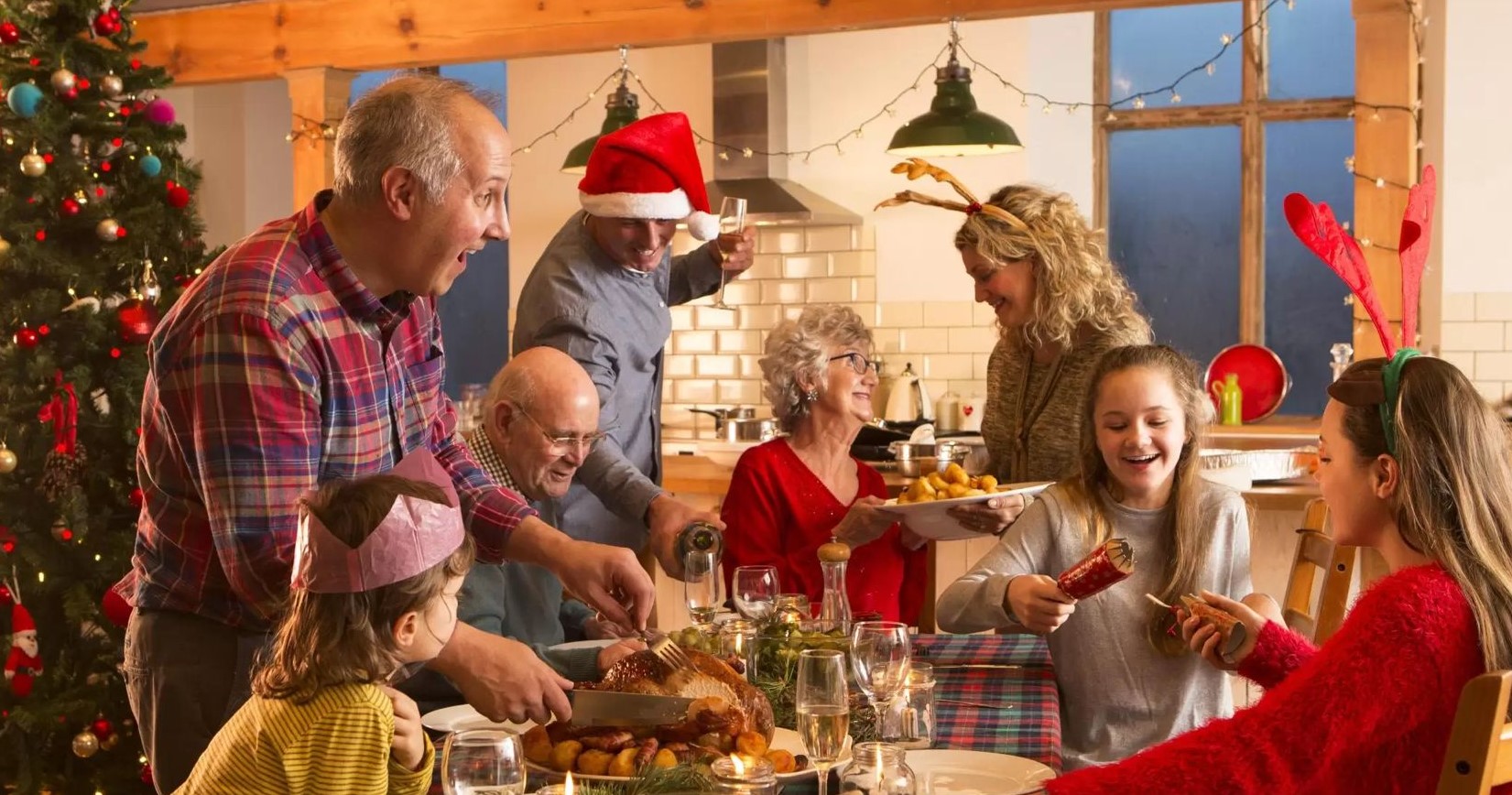
For twenty-eight years, every December of my life has been carefully orchestrated, meticulously planned, and completely owned by my mother, Margaret. In our family, Christmas isn’t just a holiday—it’s a production, a performance, a carefully curated image that gets photographed, posted, praised, and preserved like a museum exhibit of domestic perfection. My mother is the director, the star, and the curator all at once, and she moves through those December days like someone who has always understood that appearance is everything.
She gets the compliments on the table settings. She receives the appreciative texts about the hand-calligraphed place cards. She stands in the center of every family photo, radiant in her carefully chosen sweater—always cashmere, always in jewel tones that photograph well—while everyone else arranges themselves around her like supporting characters who exist only to make her shine brighter.
And me? I’m the crew. I’m the invisible infrastructure that makes the magic happen.
I’m the one who spends October researching recipes and building spreadsheets that cross-reference dietary restrictions with cooking times. I’m the one who orders the decorations in September because waiting until November means everything good is already sold out, and who tests three different brands of fairy lights to find the ones that don’t flicker. I create the group chats that start buzzing in early November and never really stop, full of reminders about arrival times and requests for people to confirm their attendance and gentle nudges about bringing specific dishes.
I’m the one who calls Aunt Linda to remind her that Grandma Joan needs to be picked up by four because otherwise she’ll panic and call everyone repeatedly. I’m the one who makes the last-minute runs to three different grocery stores on Christmas Eve because my mother forgot napkins, or decided the wrong shade of cranberries was in the sauce, or suddenly remembered we need a backup turkey “just in case,” even though in twenty-eight years we have never needed a backup turkey.
I’m the one scrubbing roasting pans at midnight with my hands raw and my back aching while my mother floats through the living room in her perfect outfit, accepting compliments like they’re her natural due, like Christmas just spontaneously arranges itself around her through some combination of her personal charm and the benevolence of the universe.
And for years, I told myself this was fine. I told myself that being needed was close enough to being loved. I told myself that the warmth I felt when she smiled at a perfectly set table was the same as the warmth of actually being seen. I told myself that someday, when I had accomplished enough, done enough, perfected enough, I would graduate from the background into the frame.
I told myself a lot of things that turned out to be lies I was choosing to believe because the truth was too lonely to face.
Then this year, everything changed with a single phone call in mid-November.
My mother’s voice was brisk, efficient, the tone she uses when she’s working through her mental checklist and doesn’t want to be slowed down by unnecessary conversation. There was no preamble, no small talk, no asking how I was or what I’d been doing. She simply stated it, flatly, like she was crossing an item off her to-do list:
“We’re keeping Christmas small this year. Just immediate family. You don’t need to come.”
The words landed in my chest like stones dropping into still water, creating ripples I couldn’t quite track. I remember standing in my tiny kitchen with my phone pressed to my ear, staring at the chipped tile backsplash I’d been meaning to replace since I moved in three years ago, and hearing myself respond with a calmness that didn’t match what was happening inside my body.
“Oh. Okay.”
She continued talking, something about wanting a more intimate celebration, about how exhausting the big productions had become, about how she deserved to have a relaxing holiday for once, as if the previous twenty-seven Christmases had been forced upon her against her will rather than carefully crafted monuments to her own vision of familial perfection.
I made appropriate sounds. I said something neutral. I ended the call with the same politeness I’d been trained to maintain since childhood. And then I stood very still in my small apartment, holding my phone, feeling something inside me that wasn’t quite sadness and wasn’t quite anger—something colder and quieter and more permanent than either of those things.
I wasn’t invited. I wasn’t needed. I wasn’t wanted.
But the strangest part, the part that would take me days to fully process, was how calm my voice had stayed while something fundamental inside me had gone completely cold.
The next morning, my brother Ryan called. Ryan always calls when our mother wants the emotional edges of something softened, when she needs someone to smooth over the rough parts of her decisions without having to do the actual work of caring herself. He’s four years older than me, lives in Portland with his wife and two children, works in tech doing something he’s explained to me a dozen times that I still don’t fully understand, and has perfected the art of seeming concerned while doing absolutely nothing.
He didn’t ask if I was okay. He didn’t acknowledge that our mother had just uninvited me from the family Christmas for the first time in my life. Instead, after some brief pleasantries, he asked—casually, like it was a small favor between siblings—if I could still “handle the usual stuff.”
My presence was optional. My labor, apparently, was required.
“What stuff?” I asked, even though I already knew.
“You know, the usual. The planning, the group chat, coordinating with everyone, making sure Grandma gets picked up, that kind of thing. Mom’s really stressed this year, and you’re so good at all that organizational stuff.”
I repeated her words back to him, slowly, making sure he could hear each one: “She said no one needs me to come.”
There was a pause, the kind of silence that speaks louder than words, the sound of someone realizing they’ve walked into a conversation they’re not prepared to have.
“Look, Liv,” he said, using the shortened version of my name that only he uses, the one that’s supposed to signal affection and familiarity. “You know how Mom gets. She’s done so much for all of us over the years. She’s practically done everything alone. Maybe she just needs a break from the big production, you know?”
Everything alone. The phrase hung in the air between us like a bad smell.
I almost laughed. I almost asked him who exactly he thought had been doing the actual work for the last decade while our mother posed for pictures. I almost said a lot of things. But instead, I just listened as he continued, his voice taking on that slightly patronizing tone that men in my family use when they think they’re being reasonable.
And then he said something that made my entire body go still.
“Besides, after she helped me out with that credit card thing a few years back, I figure we kind of owe her, right? That fund of yours really saved my ass. I’m sure you understand.”
The fund. My fund.
He said it like it was common knowledge, like I was supposed to nod along and agree, like of course I knew all about how my college savings account had been drained to pay off his irresponsible spending. He realized his mistake a second too late—I could hear it in the sharp intake of breath, the sudden silence that followed.
“Ryan,” I said slowly, “what fund?”
“Oh shit. Liv, I thought you knew. I thought Mom told you. Listen, I gotta go, the kids are—”
He was gone before I could say another word, the call disconnecting with the cowardice of someone who has just realized they’ve revealed a secret they were supposed to keep.
I spent the rest of that day like a woman possessed, tearing through old emails and bank statements I’d saved in various folders over the years, following a thread I hadn’t even known existed. My hands were shaking as I scrolled through years of digital clutter, searching for something I couldn’t quite name but would recognize when I saw it.
And then I found it.
Buried in an old email account I barely used anymore was a message from a bank we used to visit when I was sixteen, seventeen years old—the years when my mother would occasionally take me along on errands and make them feel like special mother-daughter time. The email was a notification about an account opened in my name: “College Savings Account for Olivia Martinez – Designated Beneficiary.”
I had never opened this account. I had never signed these papers. But there it was.
The initial deposit had been substantial—a gift from my grandmother on my father’s side, the grandmother who died when I was eighteen, the one who had always said education was the greatest gift you could give someone. Over the years, small deposits had been added. It had grown. It had been meant to be my future.
The balance had been completely wiped out five years ago.
I clicked through to the archived statements, my heart pounding so hard I could feel it in my throat. The withdrawal had been made in a single transaction, the entire amount removed at once, and the signature on the authorization form—which I had to request from the bank’s document archive—didn’t match my handwriting. It looked rushed, crude, like someone had been counting on the fact that I would never think to check, that I would never have any reason to look for money I didn’t know I had.
Five years ago was the same year Ryan had mentioned a “credit card disaster” at Thanksgiving, when he’d alluded to some financial crisis that had been mysteriously resolved. The same year my mother had taken a sudden European vacation she’d been “saving for.” The same year I’d been working two jobs and taking out student loans to finish my last year of community college.
The money that was supposed to be my education had paid for someone else’s mistakes and someone else’s pleasures.
And no one had ever told me. No one had thought I deserved to know.
That’s when the hurt stopped being soft and vague and turned into something sharp and crystalline and perfectly clear.
For years, I had been operating under a specific understanding of how our family worked: I provided the labor, the invisible infrastructure, the coordination and care. And in return, I was part of something, included in something, valued in some way even if it wasn’t the way I secretly wanted to be valued. It was a transaction, maybe, but at least it was a transaction I understood.
But now I saw the whole picture with a clarity that was almost physically painful.
I had been useful, yes. But only when my usefulness was convenient. When I could be exploited without having to be acknowledged. When my labor could be extracted without the messy complication of actual reciprocity or gratitude or love. And when I had something they wanted—money that was legally mine but I didn’t know about—they had simply taken it, forged my name, and assumed I would never be important enough to notice, never be respected enough to tell.
If my mother could empty what was meant to be my future and still expect me to decorate hers, then she didn’t deserve my silence, my effort, or my forgiveness-by-default. If my family could use me this thoroughly and still exclude me this casually, then I owed them exactly nothing.
Something inside me that had been bent and flexible for twenty-eight years suddenly went rigid and immovable.
I opened the big family Christmas group chat—the one I had created and maintained for six years, the one where I was the admin, the coordinator, the person who kept everyone informed and organized. I stared at the list of names: aunts, uncles, cousins, family friends, my grandma, Ryan, his wife. Everyone except the newest addition to the chat this year—my mother’s name was there too, of course, at the top where I’d pinned her so she wouldn’t miss any updates.
And I built a new plan with trembling hands and a heart that felt steady for the first time in months.
First, I created a new group chat. Carefully, deliberately, I added everyone from the original list except for two names: Margaret and Ryan.
Then I typed a message that I revised seventeen times before sending, making sure every word was polite and reasonable and completely plausible:
“Hi everyone! Mom mentioned she wanted to keep Christmas more low-key and intimate this year, just her and Ryan’s family. But I know we all love getting together, so I wanted to throw out an invitation: anyone who wants to still have a big family Christmas is welcome to come to my place in LA! It won’t be fancy, but it’ll be warm and full of love. Let me know if you’re interested and I’ll send details. No pressure either way—I know it’s a longer drive for some of you. Love you all!”
I stared at the message for a full minute before hitting send, my thumb hovering over the blue arrow like I was about to jump off something high and irreversible.
Then I pressed it.
The replies started almost immediately.
Aunt Linda: “Oh thank GOD. I was dreading a quiet Christmas. What can I bring?”
My cousin Jessica: “YES. I’ve missed the big gatherings. I’ll bring my famous mac and cheese!”
Grandma Joan: “Sweetheart, I’d love to come. Your apartment is easier for me to get to anyway. Can I bring my pies?”
Uncle Tom: “We’re in. The kids will be thrilled.”
And then, the message that made my eyes sting with tears I hadn’t expected:
From my cousin David, who I’d always been close to growing up: “Real talk, Liv? We’ve all been coming for you anyway. Mom’s whole production has always been kind of stressful. Your place sounds way better.”
The responses kept coming. Warm, enthusiastic, honest. People admitting they’d been feeling obligated for years. People saying they were excited to actually relax at Christmas for once. People offering to bring dishes, asking what time to arrive, treating my tiny apartment like it was the real holiday destination instead of a backup plan.
Out of eighteen people in that original family chat, fifteen confirmed they were coming to my place. Only three said they’d stick with my mother’s “intimate” celebration—Ryan, his wife, and her parents who’d been invited separately.
My small apartment, with its rattling heater and view of the freeway, suddenly felt like it was going to be full of the actual love I’d been searching for in all the wrong places.
Two days before Christmas, my mother finally called.
Her voice was nothing like the brisk, efficient tone from our previous conversation. This was fury, raw and unfiltered, the voice of someone who has been humiliated and is looking for someone to blame.
“What the hell have you done?” she demanded, not even bothering with a greeting. “Half the family isn’t coming to Christmas because of you. Because of some stunt you pulled. How dare you manipulate everyone like this?”
I sat on my secondhand couch, holding my phone, feeling remarkably calm.
“I didn’t manipulate anyone,” I said quietly. “You said I wasn’t needed. You said no one needs me to come. So I made other plans. I didn’t realize you still expected me to do all the work for a holiday I wasn’t invited to.”
“This is about more than one Christmas, Olivia, and you know it. This is about family. This is about loyalty. This is about not being a selfish, ungrateful—”
“Did you take my college fund?” I interrupted.
The silence that followed was profound.
“Did you forge my signature and steal the money my grandmother left for my education to pay off Ryan’s credit cards?”
“That money was needed,” she said finally, her voice cold. “Family helps family. That’s what you do. You don’t keep score, you don’t demand credit, you just help when you’re needed.”
“When I’m needed,” I repeated slowly. “But I’m not needed for Christmas. You made that very clear.”
“Don’t twist my words. You know what I meant.”
“I do know what you meant,” I said, and I could hear my voice getting stronger, clearer, like I was finally speaking a language I’d been searching for my whole life. “You meant that my labor is needed, my time is needed, my effort is needed—but I, the actual person, am not needed. I’m not wanted. I’m just the invisible infrastructure that makes your perfect picture possible.”
“You’re being dramatic. You’re always so sensitive, Olivia. This is exactly why I—”
“Why you what? Why you stole from me? Why you’ve been treating me like unpaid staff for decades? Why you can exclude me and still expect me to do all your planning?”
She made a sound of frustration. “No one needs you to come,” she said again, throwing the phrase at me like it was a weapon, like saying it louder would finally make me fold.
I looked around my small apartment, imagining it full of family members who had chosen to be here, who had actively wanted to spend Christmas with me instead of attending my mother’s carefully staged production. I thought about Grandma Joan’s pies and Jessica’s mac and cheese and David’s kids running around and the way it would feel chaotic and imperfect and real.
I thought about the college fund that was supposed to be my future, stolen by someone who was supposed to love me.
And I felt the last thread of guilt, the final strand of obligatory family loyalty, snap cleanly in half.
When my mother paused to take a breath, still waiting for me to apologize or back down or crumble, I said one word:
“Cool.”
Then I did something I’d been preparing for this exact moment. I switched to my phone’s app, opened the original family group chat—the one that still included both my mother and Ryan—and I attached a screenshot. The bank statement showing my college savings account. The zeroed-out balance. The date of withdrawal. The forged signature authorization I’d requested from the bank’s archives, helpfully highlighted by the bank itself as “potentially fraudulent—please confirm.”
My thumb hovered over the blue send arrow for just a moment, that small icon glowing on my screen like a spark in a silent room.
I thought about all the years of invisible work. All the midnight hours scrubbing pans. All the group chats and reminder calls and last-minute errands. All the times I’d told myself that being useful was close enough to being loved. All the family photos where I stood at the edge, half out of frame, smiling like I belonged.
I thought about my grandmother, who I barely remembered but who had thought I was worth investing in, who had believed my education mattered enough to set aside money she probably didn’t have much of.
I thought about the Christmas that was now just two days away, and how my apartment was going to be full of people who actually wanted me there.
And I pressed send.
The message appeared in the group chat instantly, visible to everyone: “Since we’re talking about family loyalty and keeping score, I thought everyone should know that the college fund Grandma Martinez left for me was withdrawn five years ago, signature forged, to pay off Ryan’s credit card debt. The bank has flagged the withdrawal as potentially fraudulent. Just thought that was interesting context for this conversation about who helps whom and who’s being selfish. Merry Christmas.”
I could see the typing indicators pop up immediately—first my mother, then Ryan, then other people who were clearly reading the chat in real-time even though they weren’t officially part of this phone call.
Before anyone could respond, before the explanations and excuses and attempts at damage control could begin, I did one more thing.
I left the original group chat. Just deleted myself from it entirely.
Then I turned off my phone.
Christmas Eve arrived cold and clear, the kind of Los Angeles winter day that makes people from other places jealous. I’d spent the previous day cleaning my apartment, which felt less like preparation and more like meditation—each surface wiped down, each corner organized, making space for the people who were choosing to fill it.
They started arriving at noon. Aunt Linda came first with her two daughters, carrying bags of groceries and giving me a hug that lasted longer than usual. “Your mother called me four times yesterday,” she whispered. “I didn’t answer. I’m proud of you.”
Grandma Joan arrived next, her pies carefully balanced, her eyes bright. “I knew something was wrong with that fund,” she said as I helped her inside. “I asked your mother about it years ago and she changed the subject so fast I knew she was hiding something. I’m glad you found out. I’m glad you’re standing up for yourself.”
The apartment filled slowly, beautifully. Jessica and her husband, David and his kids, Uncle Tom and his new girlfriend, cousins I hadn’t seen in years who drove down from San Francisco because they’d rather spend six hours in the car than pretend everything was fine.
We cooked together in my tiny kitchen, people bumping into each other and laughing about it. We ate sitting on the floor because I didn’t have enough chairs. We played games with my neighbor’s kids who heard the noise and wandered over and were immediately adopted into the celebration. We sang off-key carols and told stories and didn’t take a single photo that was about proving anything to anyone.
It wasn’t perfect. The turkey was slightly dry. Someone spilled wine on my carpet. The heater gave up entirely around eight p.m. and we all had to pile on blankets.
It was the best Christmas I’d ever had.
Around ten, I finally turned my phone back on. There were sixty-three messages, mostly from my mother and Ryan, ranging from furious to pleading to threatening. I scrolled through them once, felt nothing except a distant curiosity about why they thought any of those words would change anything, and then I deleted them without responding.
There was one message I did respond to, though. From my cousin David: “Thank you for finally being honest about how fucked up this all was. We all knew. We just didn’t know how to say it.”
I wrote back: “Merry Christmas. Thanks for being here.”
As midnight approached and people started gathering their things, saying goodbye with full hearts and promises to do this again next year, I stood in my small apartment and felt something I hadn’t felt in years.
I felt needed. Not for what I could do, not for the labor I could provide, not for the way I could make someone else’s vision come to life while staying invisible.
I felt needed for who I was. Wanted for being myself. Loved without conditions or transactions or the requirement to stay small so someone else could feel big.
My mother had said no one needs you. She had meant it as a dismissal, an exclusion, a way of putting me in my place.
But she was wrong.
These people needed me. And I needed them. And we were building something real together, something that didn’t require perfection or performance or pretending everything was fine when it wasn’t.
I was done being invisible. I was done making someone else’s picture perfect while staying out of frame. I was done treating scraps of conditional approval like they were the same as love.
I turned off the lights in my small, messy, imperfect apartment, and I felt free.
THE END

Adrian Hawthorne is a celebrated author and dedicated archivist who finds inspiration in the hidden stories of the past. Educated at Oxford, he now works at the National Archives, where preserving history fuels his evocative writing. Balancing archival precision with creative storytelling, Adrian founded the Hawthorne Institute of Literary Arts to mentor emerging writers and honor the timeless art of narrative.