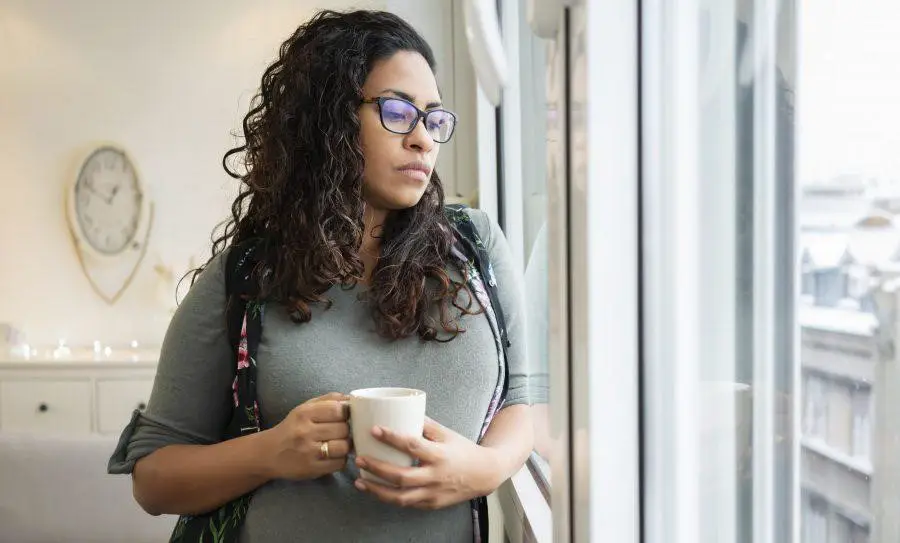
I Invited Everyone To My Baby Shower, But On The Day No One Showed Up. When I Asked Why, My Mother…
The afternoon light filtered through the sheer curtains of my living room, casting soft shadows across the carefully arranged decorations that had taken me weeks to plan. I stood in the center of what should have been a celebration, my hand resting protectively on my swollen belly, and felt the weight of silence pressing down like a physical thing. The house was perfectly prepared, every detail considered, every corner touched with the kind of hope that comes after years of heartbreak. But something was terribly, inexplicably wrong.
My phone sat on the coffee table, its screen dark and accusing. I picked it up for what must have been the twentieth time in the past hour, scrolling through messages that weren’t there, checking for notifications that refused to appear. The rational part of my brain kept insisting there had to be an explanation—a massive traffic accident, perhaps, or some city-wide emergency I’d somehow missed. But the growing knot in my stomach knew better. This wasn’t coincidence. This was something else entirely.
The preparation for this day had begun months ago, back when I first saw those two pink lines on the pregnancy test and allowed myself, cautiously, to believe that maybe this time would be different. After three devastating miscarriages that had left me hollow and questioning everything, after two years of fertility treatments that drained our savings and tested every limit of my marriage, after so many nights crying into Jake’s shoulder wondering if we’d ever get to be parents—this pregnancy had made it past the first trimester. Then the second. Now, at thirty-two weeks, with a healthy baby boy doing somersaults against my ribcage, I had finally let myself plan this celebration.
The baby shower had been scheduled for 2:00 p.m. on a Saturday in late October, when the autumn light turned golden and the air carried just enough crispness to make being indoors feel cozy rather than confining. I’d sent out invitations six weeks in advance—proper printed invitations with embossed lettering, not just a mass text or Facebook event. Each one had been addressed by hand, sealed with a wax stamp in the shape of a tiny elephant, because elephants were going to be the nursery theme. Elephants for luck, for family bonds, for the promise of never forgetting.
The responses had come back steadily over the following weeks. My mother and father: “Wouldn’t miss it for the world!” My younger sister Madison: “So excited!!! ” My aunts Susan, Carol, and Beth. My cousins Jennifer, Amy, and their husbands. Jake’s mother and two of his sisters—Caroline couldn’t make it from Seattle, but she’d sent her regrets with genuine disappointment in her voice when we’d talked on the phone. Friends from work, from our neighborhood, from my book club. By the final count, thirty-two people had confirmed. Thirty-two.
I’d rented extra chairs. Ordered enough food to feed forty, because there were always a few last-minute additions, and I’d rather have too much than watch anyone go hungry. The vanilla cake—three layers, with buttercream frosting and delicate sugar roses in shades of pink and white—sat on the dining room table under a glass dome. Pink and gold balloons clustered in every corner, their ribbons trailing down like party streamers. I’d set up a gift table near the door, draped with a white cloth and topped with a basket for cards. There was a game station with baby-themed bingo cards and cute pencils shaped like safety pins. A photo backdrop with a custom banner reading “Oh Baby!” in elegant script.
The nursery upstairs was ready too—I’d finished it two weeks ago, unable to contain my nesting instincts any longer. Soft yellow walls the color of morning sunshine. White furniture with clean lines and smooth corners. A mobile of felt elephants in grays and whites circling above the crib. A rocking chair in the corner where I’d already spent hours sitting, hands on my belly, imagining the nights I’d spend there feeding my son, watching him sleep, memorizing his tiny features in the dim glow of the nightlight.
Everything was perfect. Everything was ready.
Except no one was here.
By 2:30 p.m., when it became clear that whatever was happening wasn’t just a case of everyone running fashionably late, I felt the first tendrils of real panic starting to curl around my chest. The pink and gold balloons that had seemed so festive an hour ago now bobbed like cheerful accusations, mocking my optimism. The vanilla cake sat untouched, its buttercream roses already beginning to slump in the warmth of the house, as if even they were embarrassed for me.
Jake had been pacing between the kitchen and the living room, checking his own phone, looking out the front window every few minutes like a sentinel watching for an army that would never arrive. My husband was normally calm in a crisis—he worked in emergency medicine, after all, and was used to staying level-headed when everything around him went to hell. But I could see the tension in his shoulders, the way his jaw kept clenching and unclenching.
“Something’s wrong,” he said finally, abandoning his post by the window to come stand beside me. It was his fourth lap from kitchen to couch in as many minutes. “Thirty-two people don’t all get lost. They don’t all forget. This doesn’t make sense.”
I knew he was right, but I didn’t want to voice what we were both thinking—that this wasn’t an accident or a misunderstanding. That something deliberate had happened, and we were only just beginning to understand the scope of it.
I refreshed my phone again. No traffic alerts. No weather warnings. No mass apology texts with strings of confetti emojis and “running late!” explanations. Just the same silent screen I’d been staring at for the past hour, my own reflection ghosted in the black glass, looking lost and small.
At 3:02 p.m., I made the call I’d been dreading.
My mother answered on the third ring, her voice bright and breathless in a way that made my stomach drop before she’d even finished saying hello.
“Oh, Emma!” she sang, and I could hear street noise in the background—car engines, the distant sound of music, people talking and laughing. She was out somewhere. Somewhere that definitely wasn’t my house. “Sorry, sweetie—we’re out with Madison right now. She wanted to go shopping for nursery décor and you know how she gets when she’s excited about something. We just couldn’t say no!”
For a moment, my brain couldn’t process what she’d said. The words didn’t fit together properly. It was like trying to force puzzle pieces from completely different boxes into the same frame.
“Shopping?” My voice came out cracked, thin, barely recognizable as my own. “Mom, this is my baby shower. Today. Right now. You RSVP’d. You said you wouldn’t miss it for the world.”
There was a pause, just long enough for me to hear Madison’s laugh in the background, carefree and bright. Then my mother spoke again, and this time there was a note of something I couldn’t quite identify in her voice—defensiveness, maybe, or annoyance at being questioned.
“Well, yes, I know, honey, but Madison’s pregnancy has been so much more complicated than yours, you know that. First pregnancies are scary! She’s been having such a hard time with anxiety about everything, and she really needed us today. She was almost in tears this morning, Emma. We couldn’t just abandon her when she needed support. People had options today, and they chose what felt right for them. You’ll have other opportunities for celebrations. This isn’t the end of the world.”
Other opportunities.
The words hung in the air between us like a slap that hadn’t quite landed yet. I stood there in my silent, empty house, surrounded by decorations that suddenly felt pathetic, and tried to understand what I was hearing. My baby shower—the one I’d planned for months, the one that represented so much more than just a party after everything we’d been through to get pregnant—had been abandoned. Not because of an emergency. Not because of some unavoidable crisis. But because my sister wanted to go shopping.
“Mom,” I started, but I didn’t know how to finish that sentence. What was there to say? How did you explain to someone who was supposed to love you that this wasn’t okay, that this was so far from okay it existed in a different universe entirely?
“I have to go, sweetie,” my mother cut in before I could find the words. “Madison’s calling me from inside the store. We’ll talk soon, okay? Love you!”
The line went dead.
I stood there with the phone still pressed to my ear, listening to the silence on the other end, and something inside me cracked. Not broke—not yet—but cracked in a way that would eventually splinter into something much worse.
Jake was beside me immediately, taking the phone from my hand, guiding me to the couch. I sat down heavily, my pregnant belly making the movement awkward, and stared at the untouched cake on the dining room table. One of the sugar roses had completely collapsed now, leaving a small crater in the perfect white frosting.
“What did she say?” Jake asked quietly, crouching in front of me so we were at eye level.
I told him. All of it. The shopping trip. Madison’s complicated pregnancy. The casual dismissal of this day that meant everything to me. The promise of “other opportunities” as if baby showers were interchangeable events you could reschedule like a haircut appointment.
Jake’s face went through several expressions in rapid succession—confusion, disbelief, anger—before finally settling into something cold and calculating that I rarely saw from him.
“That’s not everyone,” he said slowly. “Your mother and father and Madison, okay, that’s three people. What about the other twenty-nine? What about my mom? Your aunts? Your work friends? They all decided to go shopping for Madison’s nursery?”
He was right. Of course he was right. But before I could even begin to process that question, my phone buzzed.
It was a text from my Aunt Susan, my mother’s older sister. We’d always been close—she was the one who’d taken me for ice cream after my first miscarriage, who’d sat with me in the fertility clinic waiting room when Jake had to work, who’d sent me a care package every month during my IVF treatments with notes that said things like “You’re stronger than you know” and “This is going to happen for you.”
The text read: “Emma, honey, I just tried to come to your house for the shower and there’s a sign on the door saying it’s been postponed?? I drove 45 minutes. What’s going on? Are you okay? Is the baby okay??”
I read it three times before the words penetrated.
A sign. On my door. Saying the shower was postponed.
Jake and I looked at each other, then both moved at once toward the front door. I got there first, yanking it open and looking around. Nothing on the door itself. Nothing on the frame. But there, tucked into the corner of the doormat where you might not see it unless you were really looking, was a folded piece of paper.
Jake picked it up and unfolded it. In neat, printed letters—the kind you’d get from a computer printer, nothing handwritten—it read:
“BABY SHOWER POSTPONED DUE TO MEDICAL CONCERNS. NEW DATE TO BE ANNOUNCED. SORRY FOR ANY INCONVENIENCE.”
We stood there staring at it. Someone had put this here. Someone had deliberately sabotaged my baby shower, had turned guests away at the door with a lie, had orchestrated this entire nightmare.
“Call everyone,” Jake said, his voice tight. “Right now. Call everyone who RSVP’d and ask them what happened.”
Over the next hour, as the autumn afternoon faded toward evening and the party I’d planned dissolved into something darker and stranger, the truth began to emerge in pieces.
Aunt Susan had been the only one to actually come to the house and find the sign. Most of the others had been contacted directly—phone calls, texts, even a few Facebook messages, all claiming to be from me or Jake, saying the shower was cancelled or postponed. Some were told I’d been put on bedrest. Others heard I was having complications and needed to rest. A few were told the shower was being moved to a different, smaller venue for “family only” and they were no longer invited but thank you for thinking of us.
My work friends had gotten an email from what looked like my work email address—except it wasn’t, not quite. Someone had created a spoofed address, just one letter different, close enough that you wouldn’t notice unless you looked carefully. The email thanked them for planning to attend but explained that we’d decided to keep the celebration intimate and small.
Every story was different. Every excuse carefully calibrated to sound plausible, to avoid triggering too many questions. The only common thread was the request to “please keep this between us”—don’t mention it to Emma, she’s stressed enough already, we don’t want to worry her, you understand.
It was sophisticated. It was thorough. And it had worked perfectly.
By the time the sun set on what should have been the happiest day of my third trimester, I was sitting on my couch surrounded by pink and gold balloons that had started to droop, crying so hard I could barely breathe while Jake made call after call, documenting everything, screenshotting messages, forwarding emails to his own account.
“This wasn’t just your mother,” he said grimly, setting his phone down after speaking with his mom, who was horrified and apologetic even though she’d done nothing wrong. “This took planning. Multiple people, multiple methods. Someone spent serious time and effort to make sure no one came to this shower.”
That night, after we’d taken down the decorations and put the uneaten food in the refrigerator and cut ourselves each a slice of cake that we ate in silence at the kitchen table, Jake’s sister Caroline called from Seattle.
Caroline was a lawyer—not family law, but corporate litigation—but she had the kind of analytical mind that could cut through emotional chaos and see the structure underneath. Jake had called her earlier to explain what happened, and she’d spent the evening doing what she did best: gathering facts and building a case.
“Tell me everything,” she said when I answered, her voice gentle but firm. “Don’t leave anything out. I need to understand the whole picture.”
So I told her. I started with the invitations and worked forward through every detail—the planning, the RSVPs, the empty house, my mother’s phone call, the sign on the door, the text messages and emails and systematic lies. I told her about Madison’s shopping trip, about being told I’d have “other opportunities,” about the casual cruelty of thirty-two people choosing somewhere else to be.
When I finished, there was a long silence on the other end of the line. Then Caroline spoke, and her voice was very, very calm in a way that somehow made everything feel more serious rather than less.
“Emma, listen to me carefully. What you’re describing isn’t a misunderstanding. This isn’t people making a mistake or failing to communicate. This is calculated, deliberate humiliation. Someone in your family orchestrated this—probably your mother, possibly with Madison’s involvement—and they put significant effort into making sure it succeeded. This is cruel in a way that goes beyond simple favoritism or poor judgment. This is designed to hurt you.”
“But why?” The question came out as barely more than a whisper. “Why would they do this?”
“I don’t know,” Caroline said honestly. “Sometimes people do terrible things because they’re jealous, or because they’re narcissistic and can’t handle not being the center of attention, or because there’s some family dynamic at play that you’re not fully seeing. But the why doesn’t matter as much right now as the what. What matters is that you understand this for what it is, and you protect yourself going forward.”
“Protect myself?”
“Document everything,” Caroline said. “Every text, every email, every phone call. Screenshot it, save it, back it up. Don’t delete anything. And I want you to consider very carefully whether you want these people in your life, and more importantly, whether you want them anywhere near your child.”
That last sentence hit me like cold water. My child. My son, who was currently using my ribcage as a kickboxing practice dummy, who would be here in just eight weeks, who would be vulnerable and precious and mine to protect.
Did I want him around people who could do something like this?
“Think about it,” Caroline said gently. “You don’t have to make any decisions tonight. But start thinking about boundaries, and what you need to feel safe. And Emma? I’m so, so sorry this happened. You deserved better. You deserve so much better.”
After we hung up, I cried again, but differently this time—not the shocked, bewildered tears of the afternoon, but something deeper and angrier. Jake held me, and we sat together in the nursery that should have been celebrated today, looking at the elephants and the yellow walls and the empty crib waiting for our son.
“Caroline’s right,” I said finally, my voice hoarse. “I need to protect him. I need to protect us.”
“Whatever you need to do,” Jake said quietly. “I’m with you. Whatever that looks like.”
The next week passed in a strange fog. I went to work, I came home, I moved through my daily routines like someone wading through deep water. People at my job who’d been invited to the shower approached me cautiously, apologetic and confused, wanting to understand what had happened. I explained as simply as I could: there had been a misunderstanding, some miscommunication in the family, it wasn’t their fault and I appreciated them trying to come.
I didn’t hear from my mother. Not a phone call, not a text, not even a Facebook message. Radio silence, as if nothing had happened at all, as if she hadn’t just blown up one of the most important days of my pregnancy.
Madison posted photos on Instagram throughout the week—Madison at brunch, Madison getting a prenatal massage, Madison trying on maternity clothes at an expensive boutique. In several of the photos, my mother was visible in the background, smiling indulgently.
I studied those photos with a kind of morbid fascination, trying to understand. Madison was pregnant with her first child, due about six weeks after mine. She was twenty-six, married to her college boyfriend, and had gotten pregnant on the second month of trying. Her pregnancy had been textbook normal—no complications, no scares, nothing but smooth sailing and glowing skin. She complained sometimes about morning sickness or being tired, but nothing that struck me as particularly unusual or worthy of the kind of emergency intervention that required abandoning someone else’s baby shower.
But apparently, Madison’s “complicated” pregnancy—her first-time anxiety, her need for nursery shopping support—had trumped my years of fertility struggles and three dead babies.
I tried not to let it make me bitter. I tried to remember that Madison was my sister, that once upon a time we’d been close, that her pregnancy and mine should have been a bonding experience rather than a competition. But every time I tried to find that generosity of spirit, I remembered the empty house and the drooping balloons and my mother’s voice saying “other opportunities,” and the bitterness came flooding back.
Then, exactly one week after the failed shower, an envelope arrived in the mail.
It was heavy, expensive card stock—the kind you ordered from a custom stationery company, not something you printed at home. My name and address were written in calligraphy on the front. The return address was my parents’ house.
I opened it standing in the kitchen, and inside was an invitation so beautiful it looked like something designed for a royal wedding.
“You’re cordially invited to celebrate the upcoming arrival of Madison Grace Thompson’s first child…”
The details were all there, laid out in embossed gold lettering. Crystal Garden Reception Hall—one of the nicest venues in the city, a place that cost thousands to rent. October 28th at 6:00 p.m. Cocktail hour with champagne and hors d’oeuvres. Sit-down dinner. Live music. A photographer.
And at the bottom, in smaller but still clearly readable print:
“In lieu of traditional gifts, the parents-to-be request monetary contributions of $2,500 per person to help establish their family’s future. Please send via Venmo or Zelle by October 25th to ensure accurate catering count.”
I read it three times before my brain could fully process what I was seeing. Twenty-five hundred dollars. Per person. For my sister’s baby shower.
There was more. A small piece of notepaper, folded in half, had been tucked into the invitation. I recognized my mother’s handwriting immediately—that same neat, careful script she’d used for grocery lists and birthday cards throughout my childhood.
“Emma, dear,” it read. “We know you’ll want to contribute generously to your sister’s celebration after everything Madison has been through this year. The venue alone is $12,000, and the catering is quite expensive—you understand how these things add up! Please send your contribution by Wednesday so we can finalize the head count with the caterers. P.S.—Don’t worry about bringing Jake to the event. We’re keeping it to immediate family and Madison’s closest friends to keep things intimate.”
I stood there in my kitchen, seven months pregnant with a baby I’d fought for three years to conceive, and stared at an invitation to a lavish party being thrown for my sister—the same sister whose “complicated” pregnancy had caused thirty-two people to abandon my baby shower a week earlier—and I felt something inside me shift. Not crack this time. Shatter.
They had destroyed my shower—deliberately, systematically, with planning and forethought. They had humiliated me, had taken away what should have been a joyful celebration of my miracle pregnancy after years of loss. And now they wanted me to pay twenty-five hundred dollars for the privilege of watching them throw Madison the party they’d denied me.
And Jake—my husband, my partner, the man who’d held me through three miscarriages and countless failed treatments—wasn’t even invited. We were being told, in the politest possible terms, that his presence wasn’t wanted at a “family” event.
I called Jake at work. He was in the middle of his shift at the hospital, but he stepped out when he heard my voice.
“Read this,” I said, and sent him photos of the invitation and the note.
There was silence on the other end of the line for a long moment. Then: “They want twenty-five hundred dollars.”
“Each,” I clarified. “Per person. But you’re not invited anyway, so I guess that saves us money.”
Jake’s laugh was sharp and humorless. “What are you going to do?”
I looked at the invitation again, at the gold embossing and the expensive paper, at my mother’s handwritten note assuming I’d just hand over thousands of dollars to celebrate the sister who’d been prioritized over me at every turn.
“I’m going to respond,” I said slowly. “I’m going to send exactly what this is worth.”
After we hung up, I opened the Zelle app on my phone. I entered my mother’s phone number. In the amount field, I typed: $0.01.
One penny.
In the memo field, I typed a single word: “Congratulations.”
Then I pressed send.
It felt petty even as I did it, childish maybe, but I didn’t care. Sometimes pettiness is the only power you have left when everything else has been taken from you.
But I wasn’t done.
I called a locksmith and scheduled an appointment for the next day—every lock in the house changed, new keys cut, old ones destroyed. Then I went through my phone and systematically blocked numbers. My mother. My father. Madison. One by one, I deleted them from my life with the press of a button.
Jake came home early from his shift and found me sitting at the kitchen table surrounded by baby shower decorations I’d pulled back out of storage, a cup of tea going cold in front of me.
“I blocked them,” I said without preamble. “All of them.”
He nodded slowly, pulling out the chair across from me and sitting down. “How do you feel?”
“Scared,” I admitted. “But also… relieved? Is that terrible?”
“No,” Jake said firmly. “It’s not terrible. It’s survival.”
Two days later, someone pounded on our front door.
It was early—just past seven in the morning on a Saturday. I was still in my pajamas, barely awake, moving slowly through the pregnancy waddle that had become my default mode of transportation. Jake was in the shower upstairs.
The pounding came again, hard enough to rattle the glass panel beside the door, aggressive and demanding in a way that made my heart start racing.
“Emma!” My mother’s voice cut through the wood, sharp and angry. “Emma, open this door right now. We need to talk.”
I froze in the hallway, my hand on my belly where the baby was already stirring, startled by the noise.
“Emma!” The pounding intensified. “This is ridiculous. I know you’re in there. Open. The. Door.”
Jake appeared at the top of the stairs, hair wet, pulling a shirt over his head. He took the stairs quickly and moved to the sidelight window, peeking carefully through the narrow glass panel.
When he turned back to me, his expression was grim. “They brought your dad. And Madison. There’s someone else too—might be your uncle?”
As if in response, another voice joined the chorus outside. My father this time, trying for reasonable but coming across as patronizing: “Emma, sweetheart, this is silly. We’re family. You can’t just shut us out over a misunderstanding.”
A misunderstanding. That’s what they were calling it now.
Then another knock, different from the aggressive pounding—measured, professional, official.
“Ma’am?” A woman’s voice, calm and authoritative. “This is Officer Rodriguez with the city police. We’ve received a call about a wellness check at this address. I need someone to come to the door please.”
My blood went cold. They’d called the police. My mother had called the police because I wouldn’t answer the door.
Jake and I looked at each other. He nodded once, a silent communication we’d developed over years of marriage. We had nothing to hide. We’d done nothing wrong. The only way through this was forward.
I slid the chain lock across—one of the new ones the locksmith had installed two days ago—and opened the door just wide enough to see out.
Officer Rodriguez was a woman in her forties, dark hair pulled back, expression professionally neutral. Behind her, crowded on my front porch and spilling onto the walkway, were my mother, my father, Madison with her hand on her own pregnant belly in a gesture that was clearly meant to mirror mine, and my uncle Tom.
My mother’s face was red, her expression furious. The moment the door opened even that crack, she lurched forward.
“Finally! Emma, what is the meaning of—”
“Step back, ma’am,” Officer Rodriguez said firmly, putting a hand up. My mother stopped mid-sentence, looking outraged. The officer turned to me. “Ma’am, I’m Officer Rodriguez. Your family called us because they were concerned they couldn’t reach you. Are you alright? Is there any medical emergency or situation we should be aware of?”
“No, officer,” I said, trying to keep my voice steady. “I’m fine. I’m seven months pregnant and everything is normal with the pregnancy. There’s no emergency.”
“She won’t answer our calls!” My mother burst out. “She’s shutting out her entire family! We’re worried about her mental state—pregnancy hormones can do terrible things, you know, and with her history of—”
“Ma’am,” Officer Rodriguez cut in, her tone cooling noticeably. “Please let me do my job.”
She turned back to me. “Can you step outside for a moment so I can see that you’re alright?”
I looked at Jake, who had moved to stand beside me. He gave a tiny nod. I opened the door wider and stepped out onto the porch, Jake right behind me, his hand finding the small of my back.
Officer Rodriguez did a quick visual assessment—no injuries, no signs of distress beyond the obvious stress of the situation itself. “You look healthy,” she said. “Is there a reason you’re not taking calls from your family?”
Before I could answer, my mother jumped in again. “She sent me one penny! Can you believe that? I invited her to her sister’s baby shower—a beautiful event, so much effort went into planning it—and she sent one penny as an insult!”
“You destroyed my baby shower first,” I said, and I was proud that my voice didn’t shake. “You deliberately sabotaged it. You told people not to come, put a fake sign on my door, made sure no one showed up. Then you asked me for twenty-five hundred dollars to attend Madison’s shower, where my husband isn’t even invited.”
“That’s not what happened,” Madison said, speaking for the first time. Her voice was weak, tremulous, performing fragility. “Mom was just trying to help because I was having such a hard day. You’re twisting everything.”
“I have text messages,” I said. “I have screenshots of the fake cancellation notice. I have people who were told directly that the shower was postponed, using my name without my permission. I can prove everything.”
Officer Rodriguez’s expression had shifted from neutral professionalism to something more interested. “Ma’am,” she said to my mother, “this sounds like a family dispute, not a wellness emergency. Your daughter appears to be fine. She has the right to decide who she communicates with.”
“But she’s pregnant!” My mother’s voice rose to something almost like a shriek. “She’s not thinking clearly! We’re her family—she can’t just cut us off!”
“Actually, she can,” Officer Rodriguez said, her tone now distinctly cool. “She’s an adult. She can choose who she wants in her life. Unless you have evidence of an actual emergency—medical crisis, threats of self-harm, something that constitutes a real danger—there’s nothing here that requires police intervention.”
“This is absurd,” my father said, speaking up finally. His voice carried that particular blend of disappointment and authority he’d perfected over my childhood. “Emma, stop this nonsense. You’re embarrassing the whole family. This isn’t how we handle disagreements.”
“No?” I felt something uncurl in my chest—something that had been compressed for so long I’d forgotten it was there. Anger, maybe. Or courage. “How do we handle them, Dad? By lying to people? By sabotaging events? By demanding thousands of dollars and then playing victim when someone says no?”
“You’re being dramatic,” Madison said, and there was a edge to her voice now, the fragility dropping away for just a moment. “It was one party. Get over it.”
One party. As if that’s all it was. As if it hadn’t represented every hope I’d carried through three dead babies and two years of treatments. As if it hadn’t been the first time I’d let myself believe that maybe, finally, I got to be celebrated too.
“Officer,” Jake said quietly, “is there anything else you need from us? Because if not, we’d like to go back inside our house.”
Officer Rodriguez looked at the assembled family members, then back at us. Something in her expression softened slightly—not sympathy exactly, but understanding.
“No, that’s all I need,” she said. “You’re clearly fine. This is a family matter, not a police matter.” She turned to my mother. “Ma’am, I suggest you leave the property now. If you continue to harass them or show up uninvited, they could file for a restraining order. Do you understand?”
My mother’s mouth opened and closed like a fish. My father took her arm, tugging her back toward the street where their car was parked.
“This isn’t over,” my mother hissed as she was pulled away. “You can’t just erase your family, Emma. You’re going to regret this. When that baby comes and you need help, don’t come crying to us.”
“I won’t,” I said simply. “Goodbye.”
We went back inside and closed the door. Through the sidelight window, we watched them argue on the sidewalk for a few minutes before finally getting into their cars and driving away. Officer Rodriguez lingered for a moment, then left us her card with a note on the back: “Family stuff is hard. Good luck with the baby.”
Jake locked the new locks. We went to the kitchen and made breakfast in silence—eggs and toast, orange juice, normal mundane things that felt surreal after what had just happened.
“They’re going to try again,” Jake said finally, pushing his eggs around his plate.
“I know,” I said.
“You okay with that? With holding the line?”
I put my hand on my belly, felt my son moving under my palm. In eight weeks—maybe less—he’d be here. He’d be real and vulnerable and wholly dependent on us to keep him safe. To make choices that protected him, even when those choices were hard.
“Yeah,” I said. “I’m okay with it.”
The next few weeks were strange. My phone was quiet without the constant texts from my mother, without Madison’s stream of pregnancy updates and requests for advice. I kept expecting to feel guilty, to second-guess my decision, to wake up one morning consumed with regret.
Instead, I felt lighter.
My actual friends—the ones who’d tried to come to the shower, who’d been confused and apologetic when they learned what happened—rallied. My book club threw me an impromptu party, small and simple, in one of their backyards. Jake’s sister Caroline flew out from Seattle for a long weekend and took me shopping for last-minute baby items. My Aunt Susan, who’d been horrified when she learned the full scope of what happened, came over several times just to sit with me, fold baby clothes, and tell me stories about my mother as a young woman that helped me understand that maybe this selfishness wasn’t new, I’d just been too close to see it before.
At work, my colleagues surprised me with a cake and presents during lunch one day—nothing formal, just genuine affection from people who cared. It wasn’t the party I’d planned, but it was something better: it was real.
I never heard from my mother again. No apology, no acknowledgment, nothing. According to Aunt Susan, who maintained communication with her sister despite everything, my mother told everyone I’d had a mental breakdown due to pregnancy hormones and was refusing all contact. Madison’s elaborate shower happened as scheduled. The photos on Instagram showed crystal chandeliers, a champagne tower, designer decorations, and my mother beaming beside Madison like she was mother of the year.
I didn’t look at those photos more than once. There was no point.
Jake and I focused on preparing for our son. We took birthing classes. We finished the nursery. We picked a name—Oliver James, which meant both “peace” and “beloved.” We practiced swaddling techniques on stuffed elephants and learned how to properly install a car seat.
And when Oliver arrived eight days before his due date, small and perfect and screaming with impressive lung capacity, the hospital room was full of people who loved us. Jake’s mother. Caroline, who’d flown out again as soon as I texted that labor had started. Aunt Susan, who showed up with flowers and stayed just long enough to kiss my forehead and whisper “I’m so proud of you.” My book club president, who brought a onesie that said “Well-Read Baby.”
No one who hadn’t earned the right to be there. No one who would use this moment for their own purposes or turn it into something about them.
Just love. Simple, honest, uncomplicated love.

Adrian Hawthorne is a celebrated author and dedicated archivist who finds inspiration in the hidden stories of the past. Educated at Oxford, he now works at the National Archives, where preserving history fuels his evocative writing. Balancing archival precision with creative storytelling, Adrian founded the Hawthorne Institute of Literary Arts to mentor emerging writers and honor the timeless art of narrative.