I Bought A Mansion In Secret, Then Caught My Daughter-In-Law Giving A Tour To Her Family
I bought a mansion in secret. For six quiet weeks, I thought I’d made the smartest move of my sixty-three years. The kind of decision that feels like wisdom settling into your bones—calculated, careful, full of hope for what comes next. But hope is a strange currency. Sometimes you spend it on people who were never planning to pay you back.
Then one Tuesday afternoon, I stood behind my own front door and heard my daughter-in-law give a tour like she owned the place.
If you’ve never heard someone claim walls you paid for, it changes how you breathe. It changes how you see family dinners and holiday photos and all those years you thought you were building something together. I didn’t burst in. I didn’t raise my voice or make a scene. I just set my hand on the brass knob—the one I’d chosen myself from a hardware store catalog—and counted to five while my heart learned a new rhythm.
The House That Was Supposed to Be Home
Three months earlier, I was Margaret Stevens—newly widowed in a small American town where Elm Street crosses Main and people still wave from their porches. The kind of place where everyone knows your name at the post office and the diner still serves coffee in thick white mugs that have seen better decades. After Henry’s funeral, people kept telling me to “keep busy.” They said it with kind eyes and covered casseroles, as if activity could fill the Henry-shaped space in my days.
My son Kevin and his wife Rebecca called every evening that first month. “Don’t stay in that old house alone, Mom,” Kevin would say, his voice carrying that particular worry children develop when their parents suddenly seem fragile. “Find something to look forward to. You deserve that.”
Rebecca would chime in on speakerphone, always supportive, always saying the right things. “We’re here for you, Margaret. Whatever you need. Family takes care of family.”
So I looked. I spent weeks driving through neighborhoods I’d only passed through before, windows down, radio playing the oldies station Henry used to hum along to. I wasn’t sure what I was searching for until I found it: a Victorian that felt like a second chance wrapped in clapboard and charm.
Six bedrooms. A wraparound porch with gingerbread trim. Tall ceilings that made even whispers feel important. Oak trees older than my marriage standing sentinel in the yard. The church bells from Saint Michael’s down the block reached the property every Sunday morning, clear and purposeful. There was a hardware store two streets over that still cut keys while you waited, where the owner knew his customers by name. A little American flag hung across the neighbor’s porch, faded but faithful.
The sunlight—God, the sunlight. It slid across the hardwood floors like warm honey in the late afternoon, pooling in corners and making the whole place glow. The kitchen was enormous, big enough for three generations to move around each other without bumping elbows. Big enough for Sunday dinners and birthday cakes and the kind of memories I wanted to build now that Henry couldn’t help me make them anymore.
I bought it quietly. Henry’s life insurance, carefully managed. Money from a trust his mother had left us decades ago that we’d never touched. I hired painters who showed up on time and floor crews who treated the old wood like it mattered. I planted new garden beds along the front walk—hydrangeas and black-eyed Susans, the kind that would bloom loyal and bright every summer.
I planned a surprise. Something generous and grand. I’d call Kevin and Rebecca over for dinner, hand them the keys, and say, “Welcome home. This is for all of us. For family.”
I didn’t plan what happened next.
The First Crack in the Foundation
Before I’d even moved a single box into the house, before I’d spent my first night under that roof I’d chosen so carefully, I saw her.
Rebecca.
Walking up the front path like she belonged there, sunglasses perched on her head, phone pressed to her ear, smiling that practiced smile she uses for her real estate clients. “My new place,” she said into the phone, casual as Sunday morning. “Our plan is finally coming together.”
I was sitting in my car across the street, engine off, just sitting there looking at the house the way you look at something precious. The way you memorize light and angles before everything changes.
I watched her point at the windows I’d chosen—the ones with the original wavy glass I’d insisted on keeping. She gestured toward the light fixtures I’d spent two hours arguing about with contractors who still called me “ma’am” and listened when I said no to the modern ones, yes to the vintage style.
Then Kevin’s car pulled up.
My son—my boy who I’d raised to be honest, who used to tell me everything—arrived with a folder under his arm and that distracted expression he gets when he’s focused on business. They moved like people who already knew the turns, who’d walked these steps before in their minds. Rebecca pulled something from her purse. Metal flashed in the afternoon sun. A key.
The door opened. They crossed my threshold like the house had been waiting for them all along.
I should have driven over right then. Should have walked up those porch steps and asked what the hell they thought they were doing. But shock is a strange paralytic. It keeps you frozen in your car seat while your brain tries to catch up with what your eyes are showing you.
I sat there for twenty minutes. Watching. Waiting. Trying to understand.
Inside My Own House
I couldn’t help myself. I had to know. I had to hear it with my own ears.
I got out of my car, crossed the street quiet as a prayer, and approached the house—my house—like a stranger. Like someone who didn’t belong. The front door was slightly ajar, the way people leave it when they’re comfortable, when they’re home.
I stood in the entryway, just inside, where the afternoon light came through at an angle and the old house seemed to hold its breath.
Rebecca’s voice carried from upstairs, bright and sure. “This is the master suite. It’ll be ours. My mom can have the room next door—she’ll love the morning light. Kevin’s mom can take the smaller room at the end of the hall. It’s cozy. She won’t need much space at her age anyway.”
Ours. My mom. At her age.
Kevin murmured something I couldn’t quite hear. Agreement, probably. That small laugh he does when Rebecca makes a decision and he’s already three steps behind, nodding along.
“We can put the crib in here eventually,” Rebecca continued. I heard footsteps, the soft pull of a tape measure clicking out and retracting. “Guest room here. Maybe we convert the sunroom downstairs into your office, babe. And the kitchen—God, the kitchen is perfect. We’ll host Thanksgiving here. Christmas. Everything.”
I stood there in the house I’d bought with Henry’s insurance money, with the trust his mother left us, with the future I’d imagined for all of us—equal, together, family—and I realized they’d already rewritten the story. In their version, I was a side character. A guest in my own surprise.
The phrase “at her age” kept looping in my head. As if sixty-three meant invisible. As if widowhood came with an expiration date on relevance.
I backed out slowly, eased the front door shut with a soft click, and walked to my car on legs that felt like somebody else’s.
The Night I Made My Decision
That night I sat at my old kitchen table—the one from the house Henry and I had raised Kevin in, with the water ring from his science project in eighth grade still visible on one corner—and I spread the deed out under my palm.
Margaret Anne Stevens. Sole owner.
The paper was crisp, official, impossible to misunderstand. This house was mine. Not ours. Mine.
I thought about the line between love and ownership. How it gets blurry when family starts saying “this is what’s best for everyone” the way salespeople say “final offer.” How generosity can become permission if you’re not careful. How “I’m doing this for you” can slide so easily into “I’m taking this from you.”
I thought about Henry. What he would say. He’d probably tell me I was overreacting, that Kevin was a good boy, that families make mistakes. But Henry never had to watch someone plan around him like he was furniture that came with the house.
I made coffee at midnight. Sat in the dark. Watched the street outside stay empty and American and small.
By dawn, I knew what I had to do.
The Second Visit
At dawn I drove back. The porch light was still on, glowing yellow against the purple-blue sky like the house was keeping vigil. The street was quiet the way U.S. streets are before the school buses start their routes, before the joggers and the dog walkers and the day shifts heading out.
I parked across the street again. Watched. Waited.
They arrived at eight-thirty. But this time, Rebecca wasn’t alone.
She pulled up in her silver SUV with two other people—a man and a woman in their sixties, dressed like they were going to Sunday service. Her parents. I recognized them from Kevin and Rebecca’s wedding, from Christmas cards with photos of grandchildren I didn’t have yet.
Rebecca unlocked the front door with that same key—where had she gotten it? Had she made a copy somehow? Bribed a contractor?—and held it open like a hostess welcoming guests to a party.
Through the window, I watched her gesture and guide. Watched her mother’s face light up. Watched her father nod approvingly at the crown molding, the hardwood, the bones of the place.
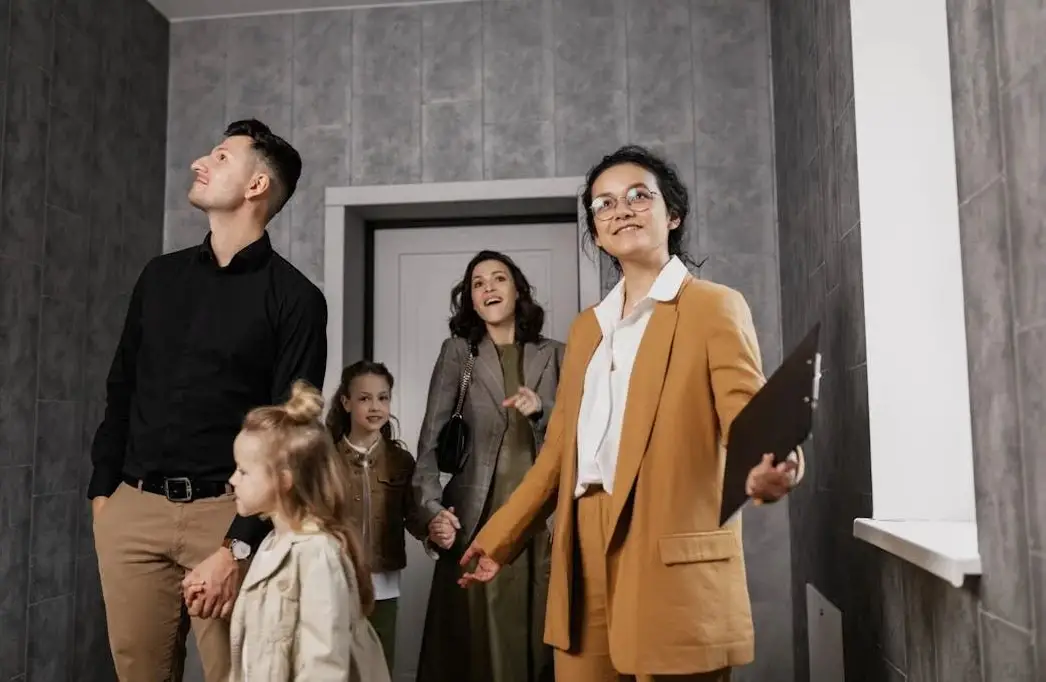
Rebecca lifted one hand toward the staircase like a tour guide at a museum. Professional. Proud. “Master bedroom is upstairs—that’ll be ours. Mom, you’ll be right next door in the room with the garden view. You’re going to love it here.”
Her mother actually clapped. Small, delighted claps like a child receiving a gift.
“When do we move in?” her father asked.
“Soon,” Rebecca said. “Very soon. We’re just finalizing a few details.”
Details. As if I was a detail. As if my name on the deed was just paperwork to work around.
Two things clicked at once in my sixty-three-year-old mind.
One: I had trusted the wrong people. Not with money or property or things that could be replaced. With the future I’d imagined. With the shape of family I’d thought we were building together.
Two: They were about to learn who holds the keys.
The Confrontation
I didn’t clear my throat. I didn’t stage a scene or prepare a speech. I just stood there where the heart of the house meets the entryway, where sound carries up the stairs and down the halls, and I let the moment choose its own ending.
Rebecca reached for the front door from inside, still talking, all bright plans and future tense. “Let me show you the backyard—we’re thinking about putting in a patio, maybe a fire pit for family gatherings—”
The knob didn’t turn.
She tried again. Rattled it. Once, then harder.
Her voice thinned. “That’s weird. It was working fine yesterday.”
There was a small pause. The kind of silence that fills up fast with worry. Color slipped from her face like water down a drain. She glanced over her shoulder at her parents, then at Kevin.
“Did you lock it?” Kevin asked.
“No, I—it shouldn’t be locked. I don’t understand.”
I stepped forward from the shadows of the entryway where I’d been standing, quiet as a ghost in my own house, and said, “It’s locked because I locked it.”
Four heads turned. Four faces registered surprise in different flavors—shock, confusion, embarrassment, and in Kevin’s case, something that looked almost like relief. Like he’d been waiting for this moment and didn’t know it.
“Mom?” Kevin said. “What are you doing here?”
“I could ask you the same thing,” I said. My voice was steady. Calm. The kind of calm that comes from a sleepless night and a clear decision. “But I already know the answer. You’re touring my house. Giving away my rooms. Planning my future without asking me first.”
Rebecca’s mouth opened. Closed. Opened again. “Margaret, I—this isn’t—we were just—”
“Just what?” I took a step closer. “Just assuming I’d be grateful for the smaller room at the end of the hall? Just deciding I wouldn’t need much space at my age? Just making plans for a house you don’t own?”
Her father cleared his throat. “Rebecca, what is she talking about?”
“This is my house,” I said, looking at him directly. “I bought it three months ago. With my money. In my name. Your daughter has been treating it like hers.”
The silence that followed was the kind you could build a house in. Heavy and solid and full of foundation cracks nobody wanted to look at.
The Unraveling
Rebecca’s mother spoke first, her voice careful. “Honey, is this true?”
Rebecca’s face went through several colors. “Mom, it’s complicated. Margaret wanted to help us—”
“I wanted to surprise you,” I interrupted. “I wanted to buy a house big enough for all of us. Together. As family. I never said you could have the master bedroom. I never said you could move your mother in. I never said any of this was yours to plan.”
Kevin ran his hand through his hair, that gesture he’s done since he was sixteen and caught in a lie. “Mom, Rebecca said you wanted us to take the lead on the house setup. That you were overwhelmed and needed help deciding—”
“I never said that.”
“She told me you did.”
We looked at Rebecca together. Mother-in-law and son. Unified for the first time in months.
“I thought—” Rebecca started. “You seemed so lost after Henry died. So lonely. I thought if we took charge, made plans, showed you how the house could work for everyone, you’d be relieved. You’d see how perfect it could be.”
“Perfect for who?” I asked.
She didn’t answer.
“Let me tell you what I see,” I continued. “I see someone who found out about a house I was buying—how, I still don’t know—and decided it was an opportunity. I see someone who made a key without permission. Who brought her family to tour property she doesn’t own. Who planned to move her mother into my space and relegate me to the smallest room like I’m an aging relative who needs to be managed.”
“That’s not—” Rebecca’s voice cracked. “I was trying to help.”
“Help yourself,” I said. “There’s a difference.”
Kevin was staring at his wife like he was seeing her for the first time. Or maybe seeing clearly for the first time. “Becca, did you tell my mom we could have the house?”
“No! I never—” She stopped. Swallowed. “I thought we’d all live there together. I thought she’d want us to take the bigger rooms because we’re younger, because we might have kids someday, because—”
“Because you assumed,” I said. “You assumed and planned and decided without asking. You know what that’s called, Rebecca?”
She shook her head.
“Theft. Maybe not legal theft. But theft of something worse. You tried to steal my future.”
What Came Next
Rebecca’s parents left quietly. Awkward goodbyes, apologies murmured in my direction that didn’t quite land. Her mother squeezed my hand and said, “I didn’t know. I’m so sorry.” Her father looked ashamed. Good.
Kevin stayed.
We sat on the porch steps—the wraparound porch I’d imagined us sharing, rockers lined up, glasses of iced tea in summer, watching the neighborhood live its life.
“I didn’t know,” he said finally. “I swear to God, Mom, I thought this was something you wanted. She kept saying you’d talked about it, that you needed us close, that you were scared to be alone.”
“I never said I was scared,” I told him. “I said I was lonely. There’s a difference. Lonely means I miss your father. Scared means I’ve lost my spine.”
He almost smiled. “You’ve never lost your spine.”
“No,” I agreed. “But your wife thought I had.”
We sat in silence while the morning pushed toward noon. A neighbor walked by with a golden retriever. Birds argued in the oak trees. Somewhere down the street a lawn mower started up, that reliable summer sound of American suburbs everywhere.
“What happens now?” Kevin asked.
“Now I move into my house,” I said. “Alone. The way I planned. And you and Rebecca figure out what your marriage looks like when you can’t plan around other people’s property.”
“She’s not a bad person, Mom.”
“I didn’t say she was. I said she made a bad choice. A series of them. And you went along because it was easier than asking questions.”
He nodded slowly. “What about us? You and me?”
I looked at my son—my boy who was fifty now, graying at the temples, wearing a wedding ring that suddenly seemed heavier than it had that morning. “We’ll be fine,” I said. “But we’ll be fine on my terms now. Not hers. Not yours. Mine.”
The Move
I moved into the house two weeks later. Kevin helped me carry boxes. Rebecca didn’t come. He said she was embarrassed. I said that was appropriate.
We didn’t talk much while we worked, just the practical language of furniture placement and wall anchors. “Couch here?” “Yeah, that’s good.” “Lamp?” “By the window.”
When we finished, he stood in the living room—the big one with the bay windows and the afternoon light—and looked around like he was memorizing something.
“It’s a beautiful house, Mom.”
“It is.”
“I’m sorry. For all of it.”
“I know.”
“Can I still visit?”
I smiled. Not the careful smile you give people you’re angry with. A real one. “Of course you can. You’re my son. This house is big enough for visits. For dinners. For holidays if we want them. But it’s my house, Kevin. Mine. And anyone who comes through that door comes as a guest. With respect. With honesty. Or they don’t come at all.”
He nodded. Kissed my cheek. Let himself out.
I stood in my house—my mansion, really, though I’d never call it that—and listened to it settle around me. The creak of old wood. The whisper of wind through window frames that needed weatherstripping. The distant church bells from Saint Michael’s marking the hour.
Six bedrooms. A wraparound porch. Tall ceilings and oak trees and Sunday morning light. All mine.
I poured myself a glass of wine. Sat on the porch in the rocking chair I’d bought specifically for this spot. Watched the neighborhood do what neighborhoods do—people coming home, kids on bikes, the mailman making his rounds with that blue bag over his shoulder.
And I thought about Henry. How he’d laugh at all this. How he’d say I handled it exactly right. How he’d pour his own glass and sit in the chair next to mine and we’d rock in silence, the way married people do when they’ve said everything that needs saying.
Six Months Later
Rebecca and Kevin are still married. They bought a house of their own three towns over. Smaller. Just big enough for two. She sends me Christmas cards now with photos of them on vacation, smiling carefully.
Kevin visits every other Sunday. Alone. We have dinner. Talk about his work. My garden. The book club I joined at the library. Normal things. Mother and son things. The way it should be.
Rebecca came once, three months after everything happened. Knocked on the door like a stranger. Stood on my porch with a bakery box of cookies and said, “I’m sorry. I was wrong. I let ambition and planning and the idea of a perfect future make me forget whose future I was planning.”
I invited her in for coffee. We sat at the kitchen table—the big one I’d imagined for three generations—and talked like adults. Not family. Not yet. But not enemies either.
“The house is beautiful,” she said. “You chose well.”
“I did.”
“Do you ever get lonely here? All this space?”
“Sometimes,” I admitted. “But lonely isn’t the same as empty. The house is full. Just full of me. My choices. My life. That’s enough.”
She nodded. Drank her coffee. Looked around at the curtains I’d chosen, the paint colors, the photographs I’d hung of Henry and Kevin and family from before things got complicated.
“I was wrong,” she said again. “I thought I knew what was best. I thought taking charge was helping. I’m sorry.”
“I know you are.”
“Can we try again? To be family?”
I thought about it. Really thought. “Yes,” I said finally. “But different this time. With boundaries. With respect. With questions asked before plans are made.”
“Okay,” she said. “I can do that.”
Maybe she can. Maybe she can’t. Time will tell. But the point is the house is still mine. The decisions are mine. The future I build here, with or without them, belongs to me.
The Real Ending
I’m writing this from my porch on a Sunday morning in October. The oak trees are turning gold and red. The church bells just finished their nine o’clock song. My neighbor’s flag is snapping in the wind. Coffee’s hot. The air smells like autumn and woodsmoke and possibility.
Six bedrooms. A wraparound porch. Tall ceilings and rooms that smell like new paint and old dreams.
I bought a mansion in secret. And then I learned that the most important room in any house isn’t the master bedroom or the kitchen or the one with the best view.
It’s the room you keep in your heart for yourself. The one nobody else can tour or measure or claim. The one that stays yours no matter who tries to rewrite the floor plan.
That room, I’m never giving away again.
THE END

Adrian Hawthorne is a celebrated author and dedicated archivist who finds inspiration in the hidden stories of the past. Educated at Oxford, he now works at the National Archives, where preserving history fuels his evocative writing. Balancing archival precision with creative storytelling, Adrian founded the Hawthorne Institute of Literary Arts to mentor emerging writers and honor the timeless art of narrative.