My Daughter-in-Law Locked Me Out After Chemo—Then My Son Came Home
Coming Home to a Locked Gate
The taxi driver looked at me in the rearview mirror, his eyes full of concern. “You sure you’re okay, ma’am? You want me to wait a minute? Make sure you get inside alright?”
I shook my head, even though my hands were trembling from the chemo. “No, thank you. I’m home now.”
But as the taxi pulled away with that familiar rumble of an old engine, I realized I wasn’t home at all. The gate to my house—the house I’d lived in for forty years—was locked. A big silver padlock hung from the chain, glinting in the afternoon sun like it was mocking me.
My legs felt like wet noodles. The chemo always made me feel like I was floating underwater, everything slow and heavy and wrong. I gripped the wrought iron bars of the gate and called out weakly.
“Valerie? It’s me, Helen. I’m back from the hospital.”
Nothing. Just the sound of wind rustling the oak tree in our front yard—the tree Matthew used to climb as a boy.
“Valerie, I can’t get in. The gate is locked.”
I stared up at her, my mouth hanging open. The afternoon sun was making me dizzy, and for a moment I thought maybe I’d misheard her. “Like what?”
“All pale and bald!” she shouted, loud enough for the whole street to hear. “You look like a ghost. It’s scary!”
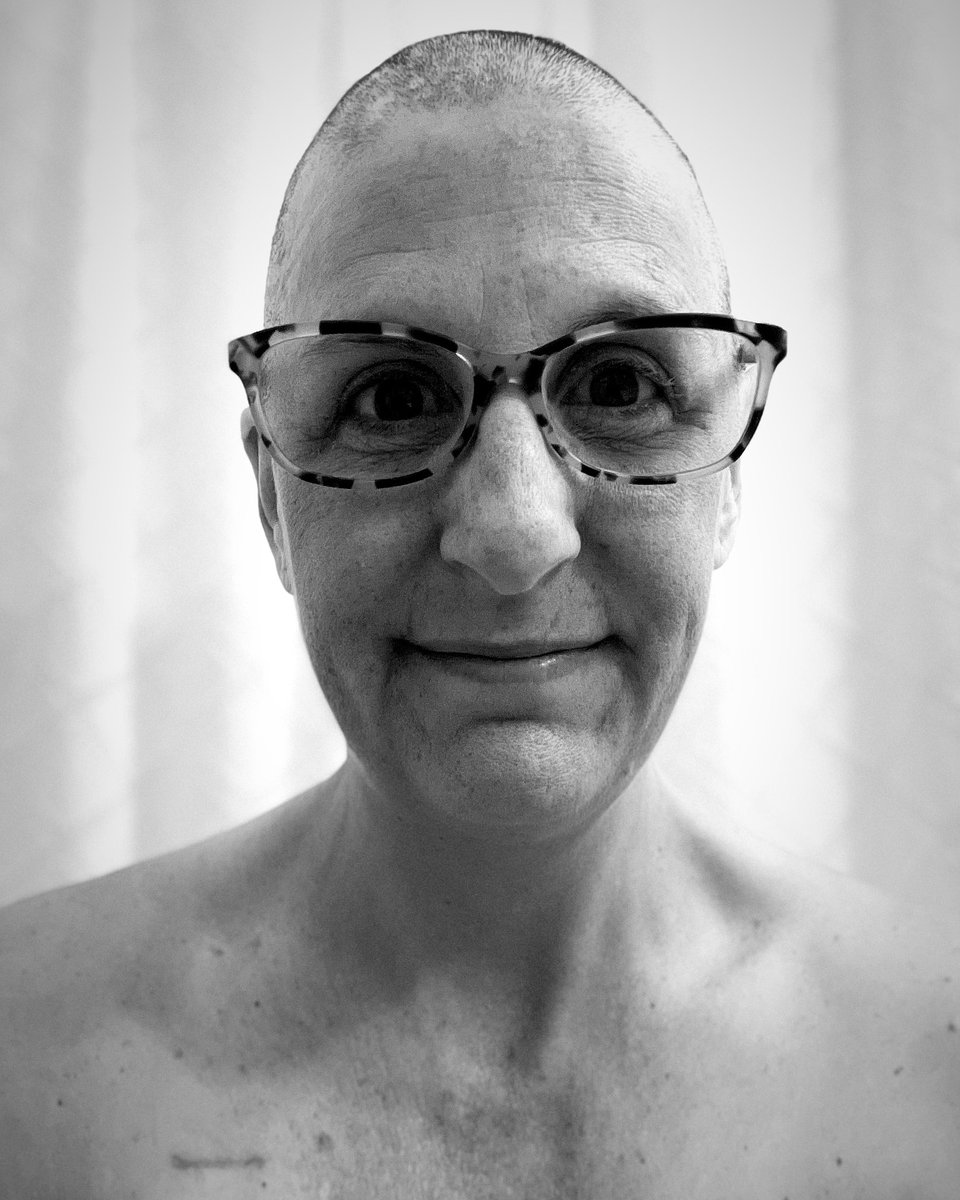
My hand went automatically to my wig. It was a good one—real hair, styled to look like my old chestnut brown hair. I’d spent three hundred dollars on it, money I could barely afford on my Social Security. But underneath, I was completely bald from the chemo. The treatments had stolen my hair, my energy, my appetite. Some days, they made me feel like they were stealing pieces of my soul.
“Please,” I whispered, my voice cracking. “I just need to lie down. I’m so tired.”
“Find somewhere else!” she snapped back. “Go to a motel or something. Stay at one of those cancer places.”
A motel. She wanted me to go to a motel in my condition, with no energy and barely enough money left after my medications to buy groceries. And what cancer places was she talking about? The only “cancer place” I knew was the hospital, and they’d just kicked me out after eight hours of poison dripping into my veins.
“Valerie, this is my house. I’ve lived here since before you were born.”
“Yeah, well, things change,” she said with a nasty smile that made my stomach turn. Then she grabbed a plastic water bottle from her windowsill and hurled it down at me like I was some kind of stray animal. It bounced off my shoulder and rolled into the gutter, spinning until it came to rest against a storm drain.
“There! So you can’t say I left you to die of thirst.”
The humiliation hit me harder than the bottle. I sank down onto the curb, my whole body shaking. Not just from the chemo this time, but from shock and hurt so deep it made my chest ache.
The Memories Come Flooding Back
Sitting there on the cold concrete, I couldn’t help but remember the first time I’d met Valerie. It was three years ago, and Matthew had been so nervous bringing her home. He’d cleaned his old room twice, asked me three times if the chicken was seasoned right, and changed his shirt before she arrived.
“Mom, I want you to meet someone special,” he’d said, his face glowing with the kind of happiness I hadn’t seen since he was a kid on Christmas morning.
Valerie had walked through that same gate holding little Emma’s hand. She was beautiful—tall, blonde, with a smile that could light up a room and legs that went on forever. Emma was four then, just a tiny thing with chocolate brown pigtails and a gap-toothed grin that made my heart melt instantly.
“Mrs. Morrison!” Valerie had exclaimed, throwing her arms around me like we were old friends. “Matthew has told me so much about you. I can’t wait to be part of your family.”
I’d made my best dinner for them that night—roast chicken with rosemary potatoes, green bean casserole, and my famous apple pie. Emma had climbed right up in my lap during dessert and called me “Grandma Helen” without any prompting. My heart had melted completely.
But after dinner, when I was clearing the table and humming because I was so happy, I found a crumpled napkin beside Valerie’s plate. Written on it in red lipstick—the same shade she’d been wearing—was: “Soon, this house will be mine.”
I’d laughed and thrown it in the trash. Kids today and their jokes, I thought. She’s just being playful, maybe a little presumptuous, but harmless.
Now, sitting on the curb outside my own locked gate, I realized it hadn’t been a joke at all. It had been a promise. A threat. A plan.
The Neighbors Start to Notice
I tried to wave, but my arm felt too heavy. “Just waiting for Matthew,” I called back weakly, trying to sound normal.
Mrs. Chen disappeared inside for a moment and came back with a thick quilted blanket and a thermos. She walked to the fence between our yards and handed them through the gaps in the chain link.
“This isn’t right,” she whispered, glancing up at Valerie’s window with a frown. “That girl should be ashamed of herself. Leaving you out here when you’re sick.”
“She’s just… she’s worried about Emma,” I said, still trying to make excuses. “She doesn’t want her to catch anything.”
Mrs. Chen snorted. “Catch what? Cancer isn’t contagious, and that woman knows it. She’s being cruel.”
More neighbors started appearing, drawn by that magnetic pull of neighborhood drama. The Johnsons from across the street came out to get their mail—for the third time that afternoon, I noticed. Mrs. Rodriguez next to them started watering her already-soaked flowers with a garden hose. Even Tommy, the sixteen-year-old from the corner house, put down his skateboard and stared openly.
I wrapped Mrs. Chen’s blanket around my shoulders and tried to make myself invisible. But there’s no hiding when you’re a sixty-eight-year-old cancer patient sitting on your own curb like a piece of trash someone forgot to pick up.
“You could come wait at my house,” Mrs. Chen offered gently. “I’ve got soup on the stove.”
“Thank you, but I should stay here. Matthew will be home soon, and he’ll fix this.”
I hoped I was right. Matthew usually got home from his construction job around five-thirty. It was only four now. An hour and a half to sit here while the whole neighborhood watched my humiliation unfold like some kind of daytime soap opera.
Death walking around. That’s what she called me.
My chest tightened painfully. Emma had nightmares about me? The little girl who used to crawl into my lap and beg for stories about when her daddy was little? Who drew me pictures with purple crayon and called me her “best grandma”?
I closed my eyes and tried not to cry. The chemo made everything worse—every emotion, every hurt felt like it was amplified through a megaphone. But I couldn’t break down here, not in front of everyone. I had to hold it together.
How It All Started Going Wrong
The problems with Valerie had started small, like a crack in a foundation that you don’t notice until the whole house starts to shift. Little comments that I told myself were just her being young and adjusting to living with an older person.
“Helen, do you really need to cook such heavy food all the time? We’re trying to eat healthier. Emma needs to learn good habits.”
“Maybe you could watch TV in your room tonight? We’re having friends over and the living room is a little crowded with three generations.”
“I rearranged the kitchen to be more efficient. Hope you don’t mind. Everything’s in a more logical place now.”
I minded. I minded a lot. But I kept quiet because Matthew seemed so happy, happier than I’d seen him since his father died five years ago. And Emma was like the granddaughter I’d always dreamed of having.
Then came my diagnosis six months ago. Breast cancer, stage two, caught early but aggressive. The doctor had been optimistic—we caught it in time, treatment should go well, good prognosis for someone my age. But Valerie’s attitude changed overnight.
Suddenly, I wasn’t just an inconvenience. I was a liability. A problem to be managed.
“You can’t cook anymore,” she announced after my first round of chemo, standing in my kitchen like she owned it. “What if you contaminate the food? What if you get sick while you’re handling it? Emma could get sick.”
“The oncologist said I’m not contagious,” I protested weakly. “It’s just chemo. It makes me tired, but I’m not infectious.”
“Better safe than sorry,” she said with a shrug, like she was talking about the weather. “I’ll take over the cooking from now on.”
She took over my kitchen. She rearranged my living room “to be more sanitary.” She started cleaning obsessively whenever I was around, spraying disinfectant and wiping down every surface I’d touched like I was carrying the plague.
“It’s just until you’re better,” Matthew said when I tried to talk to him about it. He looked exhausted—working double shifts to help pay for my treatments. “Valerie’s trying to help. She’s scared, Mom. We all are.”
But I wasn’t getting better fast enough for Valerie’s liking. The chemo was brutal. It left me weak, nauseated, and yes, completely bald under my expensive wig. And now, apparently, she’d decided I shouldn’t come home at all.
Matthew’s Truck Turns the Corner
I was starting to doze against Mrs. Chen’s blanket when I heard it—the familiar rumble of Matthew’s pickup truck, the one with the broken muffler he kept promising to fix. My heart jumped with relief and dread at the same time.
Relief that he was finally home. Dread that I’d have to explain why his mother was sitting on the sidewalk like a homeless person.
“Mom! What the hell—” He caught himself, glancing around at the neighbors who were watching like this was dinner theater. “What happened? Why are you sitting out here?”
Before I could even open my mouth to answer, Valerie’s voice rang out from the window like a fire alarm going off.
“I told her she can’t stay here, Matthew! We talked about this. She’s sick, she looks awful, and I won’t have Emma traumatized by living with death.”
Matthew’s head snapped toward the window like he’d been slapped. His jaw clenched so tight I could see the muscle twitching in his cheek. “You locked my mother out of her own house?”
“It’s temporary!” Valerie called back, her voice getting shriller. “Just until she looks normal again. Maybe she can stay at one of those facilities.”
“What facilities?” Matthew’s voice was dangerously quiet now, the way it got when he was really angry.
“I don’t know! Hospice or something!”
The word ‘hospice’ hit me like a physical blow. Hospice was for people who were dying. I wasn’t dying—I was fighting. Fighting hard. My prognosis was good. The doctors were optimistic. But to Valerie, I was already dead.
Matthew stared up at that window for a long moment. The whole street had gone quiet. Even the birds seemed to be holding their breath. Mrs. Chen had come out to her front porch. The Johnsons were standing in their driveway now, not even pretending to do anything else. Tommy had moved closer with his skateboard under his arm.
Then something changed in Matthew’s posture. His shoulders straightened. His hands curled into fists. When he spoke, his voice was calm, but there was steel underneath it—the kind of steel that could cut through bone.
“Valerie, this is my mother’s house. She’s not going anywhere.”
The Confrontation Begins
“Matthew, you can’t just—” Valerie started, but he cut her off with a gesture so sharp and final it made her mouth snap shut.
“Get down here. Now.”
The window slammed shut with a bang that echoed down the street. A few minutes later, the front door opened and Valerie stepped out, little Emma peeking around her legs like she was hiding from a storm. Valerie was perfectly dressed, as always—designer jeans that probably cost more than my monthly medication budget, silk blouse, makeup that looked like it had been applied by a professional.
Matthew walked to the gate and examined the padlock. Without saying a word, he went to his truck, pulled out a pair of heavy-duty bolt cutters from his toolbox, and positioned them around the lock’s shackle.
“Matthew!” Valerie protested, her voice rising in panic. “What do you think you’re doing?”
He didn’t answer her. The cutters closed with a sharp snapping sound, and the lock fell to the ground in two pieces. The metal clattered against the concrete like broken promises.
He opened the gate wide and gently took my arm, helping me to my feet. My legs were shaky from sitting so long, but his hand was steady and warm.
“Come on, Mom. Let’s get you inside where you belong.”
“The doctors said what, exactly?” Matthew’s voice was getting louder, and I could see veins standing out in his neck.
Valerie’s mouth opened and closed like a fish out of water. “Well, they… everyone knows that cancer patients…”
“Everyone knows what?” Matthew stepped closer to her, and she actually took a step back. “That they don’t deserve a place to live? That they should be thrown out on the street when they’re at their weakest?”
“I’m just trying to protect Emma!” Valerie’s voice was getting shriller by the second. “Look at her! She looks like death warmed over!”
That’s when little Emma broke away from her mother and ran to me, wrapping her small arms around my waist. She had to reach up to do it—she’d grown so much in the months since I’d been too sick to really spend time with her.
“Grandma Helen!” she said, her face lighting up like Christmas morning. “You came home! I missed you so much! Mommy said you were too sick to see me, but I wanted to see you anyway!”
My heart broke and mended at the same time. I knelt down carefully, my joints protesting, and hugged her back. She smelled like strawberry shampoo and childhood—that indefinable sweet scent that all little kids carry.
“I missed you too, sweetheart. More than you know.”
“Mommy said you were scary now because you’re sick,” Emma said with the brutal honesty that only children possess. “But you don’t look scary. You just look like Grandma Helen. Maybe a little tired.”
Out of the mouths of babes.
I looked up at Valerie, who had gone pale as paper. “Nightmares?” I asked quietly.
Valerie couldn’t meet my eyes. Her perfect composure was cracking like ice in spring.
Inside My Own Home
Matthew helped me into the house, past Valerie who stood frozen on the porch like a statue. The familiar smells hit me like a warm embrace—lavender sachets in the linen closet, the lingering aroma of this morning’s coffee, furniture polish. But there were other smells too, ones that didn’t belong. Bleach. Disinfectant. The sterile, chemical smell of a hospital.
The living room had been completely rearranged. My favorite reading chair—the one my husband Frank had given me for our twentieth anniversary—was gone. In its place sat a sleek modern couch I’d never seen before. My family photos had been moved from the mantel to make room for Valerie’s decorative vases and abstract art.
“I’ll put everything back,” Matthew said quietly, noticing my expression as I took in the changes. “Every single thing.”
He settled me on the unfamiliar couch and knelt beside me, still in his dusty work clothes. Up close, I could see how tired he looked. There were dark circles under his eyes, new lines around his mouth. Working double shifts and worrying about me was taking its toll.
“Mom, I am so sorry. I had no idea this was happening. I’ve been working seventy-hour weeks trying to help with your medical bills, and I thought… I thought she was taking care of you.”
Matthew shook his head firmly. “No, Mom. This isn’t hard. This is cruel. There’s a difference.”
Valerie appeared in the doorway, Emma still clinging to her hand. She looked smaller somehow, less confident than the woman who’d been screaming at me from the window twenty minutes ago.
“Matthew, we need to talk,” she said, her voice carefully controlled. “Privately.”
“No,” he said, standing up to face her. “We’re done talking privately. If you have something to say about my mother, say it in front of her.”
Valerie’s eyes darted around the room, looking for allies or escape routes. Finding neither, she turned to Emma. “Emma, go play in your room.”
“I want to stay with Grandma Helen,” Emma said stubbornly, tightening her grip on my hand. “I haven’t seen her in forever.”
“Emma, go. Now.” There was steel in Valerie’s voice that made the little girl flinch.
Emma looked confused but obeyed, trudging upstairs with her shoulders slumped like she was carrying the weight of the world.
The moment Emma’s footsteps faded, Valerie let loose.
The Truth Finally Comes Out
“This is ridiculous, Matthew! I’ve been trying to protect our family while you’ve been working all the time. Do you know what it’s like living with someone who’s dying?”
“I’m not dying,” I said quietly, but my voice got lost in their argument.
“You look like you are!” Valerie snapped at me. “Emma asks me every day if Grandma Helen is going to die. Every single day! Do you know how hard that is? I’m trying to give her a normal childhood, and having a cancer patient in the house makes everything about death and sickness and fear.”
Matthew stood perfectly still for a moment, then spoke with deadly calm. “A cancer patient. Is that what you call her?”
“That’s what she is!”
“She’s my mother, Valerie. She’s Emma’s grandmother. She’s a person with a name—Helen Morrison—and she’s fighting for her life.”
“Fighting for her life in my house!”
The room went dead silent. Even the grandfather clock in the hallway seemed to stop ticking.
Matthew’s voice was dangerous when he spoke. “Your house?”
Valerie realized her mistake immediately. Her face flushed red, then went white. “I meant our house. You know what I meant.”
“No, I think you said exactly what you meant. You think this is your house.”
Matthew sat back down beside me and took my hand, the same way he used to when he was little and scared. “Mom, whose name is on the deed to this house?”
“Mine,” I said softly. “Your father and I bought it in 1985. When he died, it went to me.”
“And when you invited Valerie and Emma to move in after we got married, what did you tell them?”
“That this was their home now. That we were a family.”
“And did you ever say they could kick you out when you got sick?”
“Of course not.”
Matthew looked at Valerie with disgust. “So let me get this straight. My mother owns this house. She graciously invited you to live here when we got married. She’s been nothing but kind to you and Emma. And when she gets cancer—cancer, Valerie, not some choice she made—your response is to lock her out?”
“It’s not that simple—”
“It’s exactly that simple,” Matthew interrupted. “My mother has been fighting cancer for six months. Six months of chemo, radiation, surgery, feeling sick every single day. Do you know what she did the morning after her first surgery? She made Emma’s lunch for school because you had to work early.”
I remembered that day. I could barely lift my arm, but Emma needed her sandwich cut just right, and Valerie had rushed out for some appointment.
“Do you know what she did the week she was so sick from chemo she couldn’t keep food down? She still drove Emma to dance class because you forgot.”
Valerie’s face was getting redder. “I didn’t forget. I had things to do.”
“What things, Valerie? What was so important that my sick mother had to drive your daughter around?”
“I had… I was…”
“You were getting your nails done,” I said quietly. “I remember because Emma was excited to show you her new dance moves, but you were running late for your appointment.”
“Matthew, you can’t mean—”
“I mean exactly what I said. This is Mom’s house. She’s recovering from cancer here, where she belongs, surrounded by people who love her. If you can’t be one of those people, then you need to figure out where you do belong.”
Valerie’s eyes filled with tears, but they looked more like tears of anger than sadness. “You’d choose her over your own family?”
“She IS my family, Valerie. She’s been my family for thirty-six years. You’ve been my family for three years, and apparently, you think love comes with conditions.”
“All families have conditions!”
“Not this one,” Matthew said firmly. “Not anymore.”
The Healing Begins
That night, after the drama had died down and the neighbors had finally gone inside, Matthew made me soup and grilled cheese—the same meal I used to make him when he was sick as a child. We sat in the kitchen, the one room Valerie hadn’t completely taken over, while she stayed upstairs.
“I should have known,” he said, stirring his soup without eating it. “I should have paid more attention.”
“You’ve been working so hard to help with my medical bills,” I said. “You couldn’t know what was happening here during the day.”
“I could have asked. I could have checked in more. I could have seen how she was treating you.”
“Matthew, you can’t blame yourself for this.”
“I can blame myself for not protecting you when you needed it most.”
“Yes, sweetheart. I’m staying right here.”
“Good,” she said, snuggling against me. “I like it better when you’re home. The house feels different when you’re gone. Sadder.”
I looked up at Matthew, who raised his eyebrows. Even Emma had noticed.
“Mommy gets mad a lot when you’re at the hospital,” Emma continued in that innocent way children have of revealing family secrets. “She throws things sometimes. And she cries.”
Interesting. Maybe Valerie was more scared than cruel. Maybe she was just handling her fear badly. Very badly.
Over the next few weeks, things slowly changed. Valerie never apologized—I don’t think she was capable of admitting she was wrong—but she stopped being openly hostile. She moved my reading chair back to its spot by the window where I could watch the birds at the feeder. She stopped spraying disinfectant every time I entered a room. She even started asking if I needed anything when she went to the store.
More importantly, she stopped trying to keep Emma away from me.
The neighbors rallied around us in a way that took my breath away. Mrs. Chen organized a meal train that brought dinner to our door every night for a month. The Johnsons shoveled our walkway after every snowfall without being asked. Mrs. Rodriguez brought over homemade tamales and taught Emma how to help her plant flowers in our front garden.
Even Tommy, the teenager from the corner house, started bringing in our mail when he saw me struggling with the walk to the mailbox. “My grandma had cancer,” he said one day, as if that explained everything. Maybe it did.
“This is what family looks like,” Matthew said one evening as we watched Emma and Mrs. Rodriguez watering the new flower bed. “People who show up when you need them.”
The Road to Recovery
Three months after that terrible day on the curb, I rang the bell at the cancer center to mark the end of my chemotherapy treatments. Matthew was there holding one hand and Emma was holding the other. Valerie came too, though she stood in the back and didn’t say much.
The oncology nurses cheered and took pictures. Other patients in the infusion center applauded. It felt like graduation day.
As we walked out of the hospital into the bright spring sunshine, I felt lighter than I had in months. Not just because the chemo was over, but because I knew where I belonged. I was going home, to my house, surrounded by people who loved me.
Six months later, when the doctor told me I was in remission—cancer-free—I had a whole army of people celebrating with me. Matthew cried actual tears of joy. Emma danced around the living room singing “Grandma’s all better!” Even Valerie managed a genuine smile and said, “I’m glad you’re okay, Helen.”
It wasn’t much, but it was progress.
The gate to my house no longer has a padlock. It stands wide open most days, just like it should be. Emma runs through it every day after school, calling “I’m home!” as she bursts through the front door.
My hair grew back in soft silver curls that Emma loves to touch. “It’s like petting a baby lamb,” she says, which makes me laugh every time.
Valerie and I will never be best friends—we both know that. But we’ve reached a kind of understanding. She stopped trying to erase me from the house, and I stopped trying to be the mother-in-law she wanted me to be. We’re both just trying to love Emma the best we know how.
Looking Back
One year after that day on the curb, Emma was helping me plant tulip bulbs in the front garden when she looked up at me with those serious brown eyes of hers.
“Grandma Helen, when you were really sick and Mommy was scared, I wasn’t scared of how you looked. She was wrong about that.”
“What made you think that, sweetheart?”
“Because you’re still you inside. And inside is what matters most.”
Out of the mouths of babes.
That evening, I sat in my reading chair—back in its rightful place by the window—and watched the street where I’d sat on the curb just a year before. Mrs. Chen waved from her porch where she was hanging laundry. Tommy rode by on his skateboard and gave me a thumbs up. The Johnsons were outside grilling dinner and called out a friendly hello.
Matthew came home from work and found me there, looking out at the neighborhood that had rallied around me when I needed them most.
“What are you thinking about, Mom?”
“Just how funny life is,” I said. “The day I thought was the worst day of my life turned out to show me some of the best people.”
He kissed the top of my head, right where my hair had grown back. “Coffee tomorrow morning?”
“Always,” I said. “It wouldn’t be morning without it.”
And it’s true. Every morning, Matthew comes downstairs to the smell of coffee brewing, and says, “Smells like home, Mom.” And Emma runs down in her pajamas and climbs into my lap while I read her the comics from the newspaper.
Even Valerie has started joining us sometimes, drinking her fancy organic tea and scrolling through her phone. She doesn’t say much, but she’s there. And sometimes, that’s enough.
Sometimes the worst moments show us who we really are—and who the people around us really are. That day on the curb was one of the hardest of my life, but it also showed me that my son would always choose love over convenience. And that’s worth more than any house could ever be.
I’m cancer-free now, and Emma still runs to hug me every day after school. Valerie and I aren’t best friends, but we’re family—and sometimes that’s enough. The gate to my house stands open, welcoming everyone who needs a place to belong. And every morning, I make sure the coffee is ready when Matthew comes downstairs, because some traditions are worth keeping forever.

Lila Hart is a dedicated Digital Archivist and Research Specialist with a keen eye for preserving and curating meaningful content. At TheArchivists, she specializes in organizing and managing digital archives, ensuring that valuable stories and historical moments are accessible for generations to come.
Lila earned her degree in History and Archival Studies from the University of Edinburgh, where she cultivated her passion for documenting the past and preserving cultural heritage. Her expertise lies in combining traditional archival techniques with modern digital tools, allowing her to create comprehensive and engaging collections that resonate with audiences worldwide.
At TheArchivists, Lila is known for her meticulous attention to detail and her ability to uncover hidden gems within extensive archives. Her work is praised for its depth, authenticity, and contribution to the preservation of knowledge in the digital age.
Driven by a commitment to preserving stories that matter, Lila is passionate about exploring the intersection of history and technology. Her goal is to ensure that every piece of content she handles reflects the richness of human experiences and remains a source of inspiration for years to come.