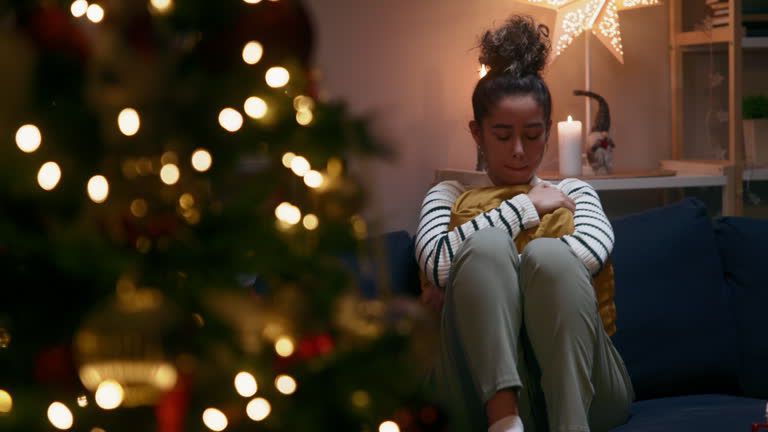
The Christmas I Finally Disappeared
The afternoon light was already fading when I pulled up to my parents’ house, the winter sky that particular shade of gray that makes everything feel heavy and compressed. I had a cashmere scarf draped over my arm—something expensive my mother had mentioned wanting months ago, though she’d never asked directly, just dropped hints the way she always did—and a bottle of wine that cost more than most people spent on an entire dinner. These were the tokens of entry into my family, the price of admission I’d been paying for years without fully realizing it.
My name is Claire Bennett. I’m 38 years old. I built a consulting firm from the ground up, starting in my tiny studio apartment with nothing but a laptop, a phone line, and the kind of desperate determination that comes from needing to prove something to yourself. Fifteen years later, I employ forty-seven people, I work with Fortune 500 companies, and I live in a house on the Malibu coast with floor-to-ceiling windows that frame the Pacific Ocean like a living painting. By any objective measure, I’ve succeeded beyond what anyone—including myself—expected.
I thought that success meant I was finally out of the shadow of being the “invisible daughter,” the one who was always a little too serious, a little too focused on work, a little too much of everything except what they wanted me to be. I thought earning my own money, building my own life, creating my own identity separate from the family narrative would finally shift how they saw me. I thought achievement would translate into respect.
I was wrong.
I parked in the circular driveway behind my sister Evelyn’s Range Rover—new, I noticed, though I didn’t remember her mentioning buying one—and my father’s Mercedes. The house looked exactly as it always had: imposing, immaculate, the kind of old-money elegance that communicated status through understatement. This was the house I’d grown up in, though “grown up” might be too strong a phrase for what I’d done here. I’d existed here, occupied space here, tried desperately to matter here.
The front door was unlocked, as it usually was during the day when they were expecting family. I let myself in quietly, adjusting the scarf on my arm and preparing the smile I always wore when I came home—the one that said everything was fine, I was fine, I was grateful to be included even when I felt anything but.
That’s when I heard my name coming from the kitchen.
I stopped in the hallway, one hand still on the door handle, my body suddenly alert in the way prey animals become when they sense a predator nearby. Something about the tone made me pause rather than announce my presence.
“Fifteen thousand dollars for the Christmas party,” my mother said, her voice as calm and measured as if she were discussing the weather. “Claire will send it.”
The words hit me like a physical blow. Fifteen thousand dollars. For a party I hadn’t been asked to co-host, hadn’t been consulted about, hadn’t even been told was happening beyond a vague mention that they were “doing something small this year.”
My father’s laugh came next—that particular chuckle he reserved for moments when he thought he was being clever, when he’d gotten away with something. “She’s so stupid she doesn’t realize it. She thinks she’s part of this family.”
The room seemed to tilt sideways. My father’s voice, saying those words about me, with that casual cruelty that suggested this was a well-worn observation, a shared joke, something they’d discussed multiple times.
And then Evelyn. My sister. My younger sister whom I’d defended countless times, whom I’d supported through bad breakups and career changes, whom I’d bailed out financially more times than I could count. Her laugh was bright and conspiratorial, the sound of someone enjoying being on the inside of something mean.
“Well, someone has to pay for all this,” she said, and I could hear the smile in her voice. “And it’s not going to be us. Why should we spend our money when she’s so eager to throw hers around?”
I stood frozen in that hallway, my keys digging into my palm where I’d clenched my fist around them, and something crystallized in my mind with perfect, terrible clarity.
I wasn’t helping. I was being used.
Every dinner I’d paid for over the years, every “little favor” that had become increasingly less little, every time I’d been cut out of family photos or forgotten at holidays only to receive a last-minute text that felt more like an afterthought than an invitation—they’d taken it all so naturally because they’d never seen me as anything other than a resource to be exploited.
The pattern was suddenly, horrifyingly clear. The phone calls that only came when they needed something. The warmth that appeared when I was useful and disappeared the moment I wasn’t. The way conversations would shift when I entered a room, the glances exchanged between them that spoke of shared understanding I wasn’t part of. I’d told myself I was being paranoid, too sensitive, reading too much into normal family dynamics.
But I’d been right all along. I just hadn’t wanted to see it.
I should have walked into that kitchen. I should have confronted them, demanded an explanation, forced them to look me in the eye while they tried to justify what they’d said. But something stopped me—not fear, not even hurt, though hurt was certainly there. Something colder, more calculating, more deliberate.
I backed toward the door silently, my movements careful and controlled. I got back in my car, placed the expensive scarf and the wine on the passenger seat, and sat there for a long moment while my heart rate returned to normal and my breathing steadied.
I wouldn’t face them in that kitchen. I wouldn’t cry for a seat at a table where they only wanted my wallet. I wouldn’t give them the satisfaction of seeing me hurt or angry or broken. I wouldn’t let anyone see the impact of what I’d just heard.
I would disappear. No drama. No confrontation. No messy emotional scenes that they could later reframe as me being difficult or oversensitive. I would do what I’d done my whole life—comply, accommodate, make things easy for everyone else. Only this time, I’d do it deliberately, strategically, with full awareness of exactly what I was doing.
I drove home and immediately called my mother. My voice was steady, pleasant, exactly what they expected from me.
“Mom, I just realized I forgot to drop off your scarf. I’ll bring it by tomorrow. Also, about Christmas—I was thinking about the party. How much do you need?”
There was a pause, and I could almost hear her recalculating, wondering if I somehow knew something. But greed won out over caution, as it always did.
“Fifteen thousand should cover everything,” she said, trying to sound casual, as if this were a reasonable request. “You know how expensive these things get, and we want it to be special.”
“Of course,” I said smoothly. “I’ll transfer it this week.”
“You’re such a good daughter,” she said, and the words that might once have meant something to me now sounded hollow and transactional. “I don’t know what we’d do without you.”
I knew exactly what they’d do without me. They’d find someone else to exploit.
Over the next week, I let them believe everything was proceeding as planned. I responded to texts about the party with enthusiasm. I confirmed I’d be there Christmas Eve. I even asked what I should bring, playing the role of the eager-to-please daughter they’d always taken for granted.
Meanwhile, I was making my own plans.
I went through my contacts carefully, separating the real from the performative. The people who’d called me just to talk, not just when they needed something. The friends who’d shown up when I was going through a rough patch, not just to my success celebrations. The colleagues who treated me as an equal, not as a stepping stone or a resource. The list was shorter than I would have liked, but it was real.
I sent out invitations for Christmas Eve—not to a party, exactly, but to a gathering. Intimate. Genuine. At my house in Malibu where the ocean would provide the backdrop and the guest list would include only people who actually wanted to be there.
The responses came back quickly, enthusiastically. People were touched to be invited, grateful for the inclusion. Nobody asked what they could get from me. Nobody calculated what I might be worth to them. They just said yes because they wanted to spend time together.
It felt revolutionary.
I hired a jazz band—a trio I’d heard at a small venue months ago who played with passion rather than pretension. I arranged for catering from a local restaurant whose owner I’d gotten to know through weekly takeout orders, someone who remembered my usual order and always asked how my week was going. I set up the house not for show, but for comfort—soft lighting, warm spaces, the kind of environment where people could actually relax and connect.
And I said nothing to my family. Not a word about my own plans, my own party, my own celebration that had nothing to do with them.
Three days before Christmas, my mother called about the money.
“Claire, darling, I hate to bother you, but we need the funds transferred by tomorrow so we can finalize everything with the caterers and the florists.”
“Of course,” I said. “I’ll take care of it.”
I didn’t transfer a single dollar.
Two days before Christmas, Evelyn texted: Can’t wait for the party! Mom says you’re covering everything. You’re the best!
I replied with a simple emoji—a Christmas tree—and said nothing else.
Christmas Eve morning, I woke up in my Malibu house to the sound of waves and the kind of clarity that comes from making a decision you know is right, even when it’s hard. I spent the day preparing—not frantically, not stressed, but with genuine pleasure in creating something beautiful. The house looked spectacular by late afternoon, warm and inviting, the kind of space that felt like home rather than a showpiece.
My guests started arriving around six-thirty, and the energy was immediately different from any family gathering I’d ever attended. People hugged genuinely. Conversations flowed naturally. Laughter came easily, not forced or performative but real. The jazz trio started playing around seven, and someone opened champagne, and suddenly the whole evening felt like something I’d been searching for without knowing it—belonging that didn’t require me to disappear, acceptance that didn’t come with a price tag.
At seven-fifteen, my phone started ringing.
I glanced at the screen and saw my mother’s name. I let it go to voicemail and turned back to my guests, to the conversation I’d been having with an old friend about her new business venture, to the warmth and authenticity that filled every corner of my home.
The phone rang again. And again. And again.
By seven-thirty, I had six missed calls from my mother, four from my father, and a dozen texts from Evelyn ranging from confused to demanding to angry.
Where are you??
The party is starting and you’re not here
People are asking where you are
Mom is freaking out about the catering bill
Claire this isn’t funny
CALL ME RIGHT NOW
I read them all and responded to none of them. Instead, I posted a photo on social media—something I rarely did, but tonight felt appropriate. The image showed my living room full of people, the ocean visible through the windows, the warm glow of lights and the blur of movement that suggested life and laughter. The caption was simple: Grateful for authentic connections and genuine friendships. Merry Christmas to those who matter.
I tagged several people at the party, people my family would recognize, people whose presence would make it clear this wasn’t a random gathering but a deliberate choice.
My phone exploded.
By eight o’clock, I had over fifty missed calls and countless text messages. My mother’s voicemails progressed from confused to panicked to furious. My father’s messages became clipped and terse, the tone he used when he was trying to maintain control but could feel it slipping. Evelyn’s texts devolved into caps-lock accusations and wounded outrage.
But mixed in with all of that were messages from other people. Cousins I hadn’t heard from in years suddenly concerned about my welfare. Family friends wondering where I was. People who’d apparently been invited to my parents’ party—presumably on my dime—now asking questions my family couldn’t answer.
Because the money hadn’t come through. The transfers hadn’t happened. And a party budgeted at fifteen thousand dollars was now being billed to people who’d assumed someone else was paying.
I didn’t feel guilty. I felt free.
Around nine o’clock, my mother tried a different tactic. Her voicemail was tearful, wounded, playing the victim with practiced expertise: “Claire, sweetheart, I don’t understand what’s happening. Did we do something to upset you? Please call me back. Everyone’s asking where you are and I don’t know what to tell them. This is so embarrassing. How could you do this to us?”
The framing was perfect—I was the one causing problems, not the family that had planned to spend my money without permission and called me stupid for not realizing it. I was the one being difficult, not the people who’d been using me for years while mocking me behind my back.
I deleted the voicemail and went back to my party.
By ten o’clock, someone at my parents’ house had apparently seen my social media post. Evelyn’s text was incandescent with rage: Are you fucking kidding me right now? You threw your own party? With OUR friends? While Mom and Dad are being humiliated here? You’re such a selfish bitch. I hope you’re proud of yourself.
I read it twice, noting the “our friends” designation for people who’d never actually been their friends in any meaningful sense, noting the concern for my parents’ humiliation but not for how they’d humiliated me, noting the accusation of selfishness from someone who’d been taking from me for years without ever questioning whether that was appropriate.
I blocked her number.
At eleven, my father called from a number I didn’t recognize—probably a friend’s phone since I wasn’t answering his. I made the mistake of picking up, thinking it might be someone else.
“Claire.” His voice was tight with controlled fury. “I don’t know what kind of game you think you’re playing, but you’ve made your mother cry and you’ve embarrassed this entire family. Whatever point you think you’re making, you’ve made it. Now get over here and help us salvage this disaster.”
“No,” I said simply.
The silence on the other end was profound. I don’t think I’d ever said no to him before. Not directly. Not without qualification or apology.
“What did you say to me?” His voice had dropped to that dangerous quiet that had terrified me as a child.
“I said no. I’m not coming. I’m not paying for your party. I’m not pretending anymore that I’m part of a family that only wants me around when they need something from me.”
“You ungrateful—” he started, but I interrupted him.
“I heard you,” I said quietly. “Last week. When I came to drop off Mom’s gift. I heard you laughing about how stupid I am, how I don’t realize I’m being used. I heard Mom planning to spend my money without asking. I heard Evelyn laughing about it. I heard everything.”
Another silence, longer this time. I could practically hear him calculating, trying to figure out how to spin this, how to make it my fault.
“You misunderstood,” he said finally. “You took things out of context—”
“I have to go,” I said. “I have guests who actually want me here. Merry Christmas.”
I hung up and turned off my phone entirely.
The party continued around me, oblivious to the drama unfolding forty miles away. Someone had started a card game in the corner. The jazz trio was taking a break, eating the food I’d provided, laughing with other guests. A friend I’d known since college was telling a story that had everyone near her in stitches. This—this warmth, this ease, this genuine connection—this was what family was supposed to feel like.
By midnight, when I finally turned my phone back on to charge it, I had over a hundred missed calls and more messages than I could count. I scrolled through them with detached curiosity, noting the progression from confusion to anger to attempted manipulation to outright threats.
My mother: If you don’t make this right, you’re no longer welcome in this family.
My father: You’ve shown your true colors tonight. Don’t bother coming around anymore.
Evelyn: I always knew you were jealous of me. This proves it. You’re pathetic.
Threats disguised as boundaries. Ultimatums meant to scare me back into compliance. The assumption that being cut off from them would devastate me, that I’d come crawling back begging for forgiveness, that I’d pay whatever price they demanded to be readmitted to their good graces.
They didn’t understand. They’d never understood. Being cut off from them wasn’t a punishment—it was liberation.
But there was something else in my messages. Something that made my stomach clench and my hands go cold. A text from a number I didn’t recognize, sent around ten-thirty:
This is James Rothman, your parents’ attorney. We need to discuss a serious matter regarding documents bearing your signature. Please call me first thing after the holiday.
I stared at that message for a long time. James Rothman was real—I’d met him once, years ago, at some family function. He handled my parents’ estate planning and business affairs. Why would he be texting me on Christmas Eve about documents with my signature?
The rest of the night I smiled and hosted and played the gracious party-giver, but part of my mind was elsewhere, turning over that message, trying to figure out what it meant.
My last guest left around two in the morning, and I spent another hour cleaning up, my hands busy while my mind raced. Documents with my signature. Serious matter. Legal attorney reaching out on Christmas Eve. None of it added up to anything good.
I’d kept careful records over the years—not for revenge, not for drama, just dates and details and the kind of documentation that comes from being methodical and a little bit paranoid. Every transfer I’d made, every loan that was never repaid, every request they’d made and promise they’d broken. I had it all organized in a folder on my laptop, backed up in three different places, timestamped and categorized.
But now I was wondering what records they’d kept. What documents they’d created. What they might have signed my name to without my knowledge or permission.
The morning after Christmas, I called James Rothman from my office—the room in my house I’d set up with proper lighting and a professional background for video calls. I wanted to be in control of this conversation, wanted him to see me as the successful businesswoman I was, not the family disappointment they’d painted me as.
He answered on the second ring, his voice professional but tinged with something that might have been sympathy.
“Ms. Bennett. Thank you for calling. I apologize for reaching out on Christmas Eve, but this matter is time-sensitive.”
“What matter?” I asked directly.
There was a pause. “Are you aware that your name appears as a guarantor on several business loans your father took out over the past three years?”
The room seemed to tilt. “What?”
“Three loans, totaling approximately two million dollars, with your personal assets listed as collateral. Your signature appears on all the documents, notarized and filed properly. Your father’s business has defaulted on two of these loans, and the third is sixty days past due. The lenders are beginning collection proceedings, which will include pursuing the guarantor—you—for the full amount.”
I couldn’t breathe. Two million dollars. My signature. My assets as collateral. For business loans I’d never heard of, never agreed to, never signed for.
“I never signed anything,” I said, my voice barely above a whisper.
Another pause. “Ms. Bennett, I have copies of the documents here. Your signature is on every page. I can email them to you if you’d like to review them.”
“Please do that. Immediately.”
I hung up and opened my laptop with shaking hands, pulling up the folder where I kept everything. While I waited for his email, I started searching through my files, looking for anything that might explain this. Had I signed something years ago without reading it carefully? Had there been documents mixed in with other paperwork I’d reviewed quickly?
The email arrived, and I opened the attachments with a sense of dread. Three loan agreements, each one thick with legal language and terms and conditions. And on every signature page, there it was—my signature, my name printed clearly, the date and notary stamp making it all official and binding.
Except I’d never seen these documents before in my life.
I pulled up my own records and started cross-referencing. The dates on the loan documents—I checked my calendar for those days. The first one: I’d been in New York for a conference, three thousand miles away. The second: I’d been in the hospital having my appendix removed, heavily medicated and in surgery during the hours the document was supposedly signed and notarized. The third: I’d been on a plane to Tokyo for a business trip.
They were forgeries. They had to be. Someone had forged my signature, created false documents, and used my name and assets as collateral without my knowledge or consent.
And given what I’d overheard the week before—given how casually they’d discussed using my money, how entitled they’d felt to my resources—there was only one explanation for who would do such a thing.
My hands were steady as I called my own attorney, Elena Martinez, someone I’d worked with for years on business contracts and who’d become a friend in the process.
“Elena,” I said when she answered. “I need you to clear your schedule. I have a significant fraud case, and I need to move fast.”
Over the next week, the pieces came together with horrible clarity. My father’s business—a real estate development company that had been struggling for years—had taken out loans to finance several projects. But instead of putting up his own assets or my mother’s, he’d forged my signature and used my considerably more substantial holdings as collateral. My credit score, my business reputation, my financial stability—all of it had been put at risk without my knowledge.
The notary signatures were fake. The dates were impossible. The whole thing was fraud on a massive scale, the kind that could result in criminal charges if prosecuted.
Elena worked quickly, gathering evidence, building a case, preparing documents. We filed a police report. We contacted the lenders with proof that the signatures were forged. We initiated legal proceedings not just to clear my name, but to hold my father accountable for what he’d done.
My mother called, crying, begging me to “work this out as a family” and not involve the authorities. My father called, alternating between threats and attempts at manipulation, telling me I was destroying the family, that I’d regret this, that no amount of money was worth tearing apart our relationships.
But the thing was—we’d never had a real relationship. We’d had a transaction. We’d had a one-sided arrangement where I gave and they took, where I accommodated and they exploited, where I tried desperately to earn love that was never really on offer.
Evelyn tried a different approach. She showed up at my house uninvited one evening in January, standing at my door looking smaller and less confident than I’d ever seen her.
“Can we talk?” she asked quietly.
I almost said no. But curiosity won out. I let her in but didn’t offer her anything—no water, no coffee, no comfort. We sat in my living room with the ocean visible through the windows, and she stared at her hands for a long moment before speaking.
“I didn’t know,” she said finally. “About the loans. About Dad forging your signature. Mom just told me yesterday, and I… I didn’t know.”
“But you knew they were planning to spend my money,” I said evenly. “You laughed about it. You called me stupid.”
She flinched. “I know. And I can’t take that back. But Claire, I need you to understand—I grew up watching Mom and Dad treat you like you weren’t enough. You were too serious, too focused on work, too independent. They made you feel like you had to buy your way into the family because they never just accepted you. And I learned from that. I learned that using people was okay as long as you were clever about it.”
“That’s not an excuse,” I said.
“I know it’s not. But it’s an explanation. And I’m trying—I’m really trying—to unlearn all of that. To see how twisted it was. To understand why what we did was wrong.”
We sat in silence for a while. Part of me wanted to throw her out, to add her to the list of blocked numbers and closed doors. But another part of me—a smaller, more generous part—recognized that she’d been shaped by the same toxic family dynamics I had, just from a different angle.
“What do you want from me?” I asked.
“Nothing,” she said, and for the first time, I believed her. “I’m not here to ask for anything. I just wanted you to know that I’m sorry. Really, truly sorry. And that I understand if you never want to see me again.”
She left after that, and I sat alone in my living room watching the sunset paint the ocean in shades of gold and pink, trying to sort through the complicated mess of feelings that conversation had stirred up.
The legal proceedings moved forward. The evidence was overwhelming—forensic document analysis proved the signatures were forged, my alibis for the signing dates were ironclad, and my father’s business records showed a pattern of financial mismanagement and desperation that provided clear motive. The criminal charges were filed, and my father was arrested.
My mother hired an attorney and tried to claim she’d known nothing about the forgeries, that she was as much a victim as I was. But the financial records told a different story—money from those fraudulent loans had paid for renovations on their house, for Evelyn’s new car, for luxury vacations and country club memberships and all the trappings of a lifestyle they could no longer afford on their own.
By March, my father had accepted a plea deal—five years probation, full restitution, and a permanent record that would follow him forever. My mother filed for divorce, trying to distance herself from the scandal. Evelyn moved across the country, starting over somewhere no one knew the story.
And I stayed in my house in Malibu, watching the seasons change, rebuilding my life without the weight of their expectations and exploitation dragging me down.
The truth is, I didn’t win. Not in the way revenge fantasies suggest, where the bad guys are punished and the hero rides off into the sunset feeling vindicated and whole. I lost my family—what little of a real family I’d ever had. I spent months dealing with legal proceedings and financial cleanup. I had to explain to colleagues and clients why my name was appearing in court documents. The whole thing was messy and painful and public in ways I’d never wanted.
But I gained something too. I gained clarity. I gained boundaries. I gained the ability to distinguish between people who valued me and people who valued what I could provide. I gained a life that was entirely mine, built on authentic relationships and genuine respect rather than obligation and exploitation.
The house in Malibu became what it was always meant to be—a home, not a showpiece. A place where people were invited because I wanted them there, not because they expected access. A space that reflected who I actually was rather than who my family had wanted me to be.
That Christmas Eve party—the one I threw for real friends while my family’s party fell apart without my funding—became an annual tradition. Every year, I host the same kind of gathering: intimate, genuine, warm. The guest list changes slightly as relationships evolve and new people enter my life, but the spirit remains the same.
Sometimes I think about my family, about what might have been if they’d seen me differently, if they’d valued me for myself rather than my resources. But mostly I think about how lucky I am to have escaped, to have found the courage to disappear from a story that was never really mine and write a new one where I get to be the protagonist.
The final lock clicked into place that Christmas Eve when I chose my own celebration over their exploitation. And every day since, I’ve been building a life on the other side of that door—a life where I don’t have to buy my way into belonging, where I don’t have to shrink myself to fit into spaces that were never meant for me, where I don’t have to pretend that crumbs are cake.
My name is Claire Bennett. I’m 38 years old. I built a consulting firm from scratch, and I live on the Malibu coast. And for the first time in my life, I’m exactly where I’m supposed to be—surrounded by people who chose me, not my wallet.

Adrian Hawthorne is a celebrated author and dedicated archivist who finds inspiration in the hidden stories of the past. Educated at Oxford, he now works at the National Archives, where preserving history fuels his evocative writing. Balancing archival precision with creative storytelling, Adrian founded the Hawthorne Institute of Literary Arts to mentor emerging writers and honor the timeless art of narrative.