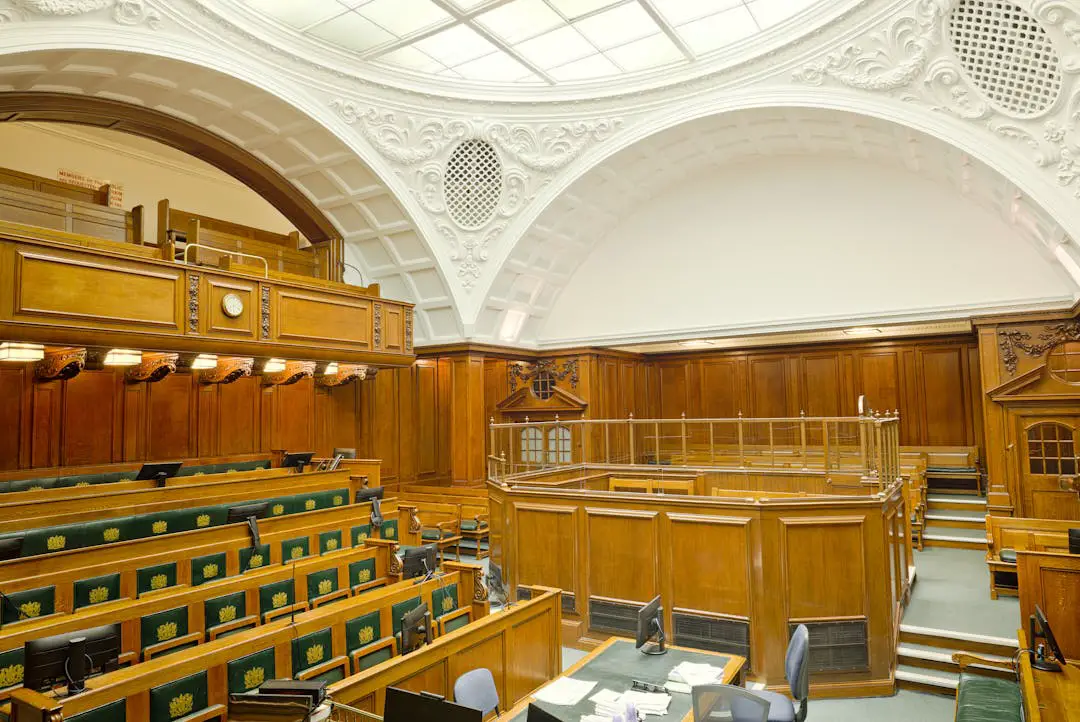
My Family Tried to Steal My “Little Vacation Home”—Then the Judge Asked About My Other 11 Properties
The Family That Never Believed
I sat in that courtroom, staring at the faces of people who were supposed to love me. My sister Nicole, perfectly polished in designer clothes bought with her husband’s money. My brother-in-law Chris, radiating the smug confidence of a man who’d never been told no. My parents, Richard and Susan Manning, sitting stiff-backed in the gallery like they were doing me a favor by showing up to watch my humiliation.
They all wore the same expression—anticipatory satisfaction. Like children waiting to blow out candles on a birthday cake that wasn’t theirs.
Eight years. It had been eight years since they’d written me off completely, and now they thought they could waltz back into my life and take whatever they wanted.
I remembered the day it started. I was twenty-two, standing in my parents’ mahogany-furnished living room, listening to my father destroy my future with casual indifference.
“We’ve decided to stop paying your college tuition,” he’d said, not even looking up from his newspaper. “Nicole’s wedding is going to be expensive. And honestly, Tracy, investing in you would be a waste of money.”
Mom had nodded, sipping her tea like we were discussing the weather. “You have no real talent, dear. You’re plain. You should find someone suitable and settle down. It’s the best you can hope for.”
But instead of breaking me, it freed me.
I made a vow that day, standing in that suffocating living room with its expensive furniture and cheap values. I would never again let anyone decide my worth. I would build something so substantial, so undeniable, that their opinions would become irrelevant.
I dropped out of college—not because they stopped paying, but because I had bigger plans. While Nicole planned her fairy-tale wedding, I got three part-time jobs. Waitressing at a diner during the day, cleaning offices at night, and helping elderly Mrs. Patterson with her bookkeeping on weekends.
I lived on ramen noodles and spite, saving every penny.
When I told my father about my plan to buy real estate, he’d laughed until tears ran down his face.
“Real estate? Tracy, don’t make me laugh. That’s not work for someone like you. You’ll be chewed up and spit out in a week.”
That was eight years ago. Now we were sitting in a courtroom because they wanted to steal what I’d built.
The Forged Contract
Their lawyer stood up, a slick man in an expensive suit who spoke with the confidence of someone who’d never been challenged.
“Your Honor,” he began, gesturing toward me with theatrical pity, “Miss Tracy Manning has long struggled with emotional instability. She alternates between brief periods of rational thinking and extended phases of impulsive, reckless behavior.”
I kept my face neutral, even though rage was building in my chest like steam in a pressure cooker.
It was brilliant, in a sick way. Because I was “unstable,” I needed a guardian—them. But because the contract was signed when I was supposedly “rational,” it was valid. A perfect catch-22 designed to strip me of everything no matter how I responded.
Chris looked back at me from the plaintiff’s table, his lips curled in that familiar smirk I’d seen at every family gathering where he’d made jokes about “poor Tracy” and her “little dreams.”
His eyes sent a clear message: We write the story of your life, Tracy. You’re just a character in our play.
Judge Brown, a sharp-eyed woman in her sixties, was reviewing the contract they’d submitted. I watched her expression carefully as she read, and I saw the exact moment something caught her attention.
Her reading glasses slipped down her nose slightly. Her eyebrows drew together. She looked from the contract to me, then back to the contract.
“Miss Manning,” she said, her voice neutral but curious, “this address listed on the contract—this is one of twelve properties in your current real estate portfolio, correct?”
The air in the courtroom seemed to crystallize.
“Correct, Your Honor,” I replied calmly.
“Twelve properties,” the judge repeated slowly. “How interesting. I’d like to review your complete holdings.”
They’d truly believed their own narrative. The story of pathetic, incompetent Tracy who was burning through money and heading for ruin. It had never occurred to them that the phrase “twelve-property real estate portfolio” would ever be associated with my name.
But I wasn’t surprised. This was exactly what I’d been waiting for.
The Empire Revealed
My lawyer, David Johnson, rose slowly from his chair. Unlike my flustered family and their sweating attorney, his movements were calm and predatory. He’d been looking forward to this moment as much as I had.
He opened his briefcase and pulled out a thick stack of meticulously organized files. The stack alone made their single forged contract look pathetic by comparison.
“Your Honor,” Johnson began, his deep voice carrying to every corner of the room, “to provide proper context for this dispute, I’d like to explain the complete asset portfolio of my client, Miss Tracy Manning.”
He opened the first file.
“The first property was purchased eight years ago—a studio apartment in the Oldtown district. The down payment was saved entirely through Miss Manning’s work as a waitress, janitor, and bookkeeper, often working sixteen-hour days.”
I glanced at my father. The confusion on his face was shifting to something else—panic, maybe. Or recognition that the world wasn’t what he thought it was.
With each property Johnson listed, I watched my family’s faces change. The smug confidence melted away, replaced by a growing horror as they began to understand the scope of what I’d accomplished while they weren’t paying attention.
“The third property… the fourth property…”
By the time Johnson reached the sixth property, Nicole was gripping her husband’s arm so tightly her knuckles were white. Chris was no longer smirking—he was staring at his lawyer with undisguised fury, clearly thinking, “You useless idiot.”
The sixth property brought back memories I’d tried to bury. A four-story building in a transitional neighborhood where a structural problem had nearly bankrupted me. For two months, I’d lived on bread and coffee, sleeping three hours a night, fighting to save everything I’d built.
Those were the darkest days of my life. I’d had nightmares about losing it all and ending up back in my parents’ house, listening to them say, “We told you so.”
But I’d fought through it. I’d learned to read building codes and negotiate with contractors. I’d rebuilt the repair plans myself and cut costs by 30%. That near-disaster had made me stronger, and today that building was one of my highest-yielding assets.
When Johnson reached the tenth property, the entire atmosphere changed.
“Located in the downtown district,” he announced, his voice dropping for emphasis, “15 Riverside Avenue. Commonly known as the Phoenix Lofts.”
A murmur ran through the gallery. This wasn’t restless shifting anymore—this was awe.
The Phoenix Lofts was a local legend. Four years ago, it had been a derelict factory, a dangerous eyesore that the city had given up on. Then an anonymous investor had transformed it into one of the most successful redevelopment projects in the city’s history.
It housed Michelin-star restaurants, art galleries, and high-tech startup offices. Everyone knew the Phoenix Lofts.
What they didn’t know was that I owned it.
Chris’s face had gone beyond pale—it was gray, the color of wet concrete. I knew why. The impossible-to-book French restaurant where he bragged about taking Nicole for their anniversary was on the top floor of my building.
Nicole’s favorite boutique, where she spent thousands of Chris’s dollars on designer clothes, was on the ground floor.
The luxury world they worshipped, the expensive lifestyle they enjoyed as consumers—I owned it. Tracy, the woman they looked down on as a pathetic spinster, was their landlord.
Judge Brown leaned forward, recognition dawning in her eyes. “The Phoenix Lofts. I see.”
That simple acknowledgment connected every dot for everyone in the room.
The Final Revelation
Judge Brown raised her hand, stopping Johnson before he could continue.
“Counsel,” she said, her voice dangerously calm, “moments ago you claimed that Miss Manning lacks judgment and engages in reckless spending. However, the evidence suggests something quite different.”
She fixed the opposing lawyer with a stare that could have melted steel.
“Miss Manning owns and operates the Phoenix Lofts, one of this city’s most successful development projects, plus at least nine additional income-producing properties. How do you explain this discrepancy with your claims of financial incompetence?”
Their lawyer was sweating now, stammering uselessly. “Your Honor, we were… we were unaware…”
Johnson wasn’t finished. He pulled out one final file.
The courtroom’s shock reached its peak. The Grand Majestic had been saved from demolition three years ago by an anonymous benefactor who’d funded its complete restoration. It was now the crown jewel of the city’s cultural district.
“Miss Manning personally funded the restoration of this theater,” Johnson continued, “and received official recognition from the City Historical Preservation Society.”
He submitted the gold-framed commendation as evidence.
“Your Honor, I ask you: Could someone prone to mental instability and financial recklessness complete a project requiring such vision, planning, and community commitment?”
The answer was obvious to everyone except my family, who were sitting in stunned silence.
“Now,” Johnson’s voice sharpened to a razor’s edge, “why would the plaintiffs bring such demonstrably false claims? Simple—they wanted to steal Miss Manning’s assets. But if she owns twelve properties, why focus obsessively on just one vacation home?”
He held up a magazine article.
“Six weeks ago, this property was featured as a ‘Hidden Luxury Retreat’ in a lifestyle magazine. The owner’s name was withheld for privacy. The very next day, Miss Nicole Irving called her sister.”
I remembered that call perfectly. Nicole’s voice, sweet as poisoned honey: “Tracy, I heard you bought some amazing vacation house. But you’re single—what’s the point? That’s something a family like ours should be using.”
It wasn’t a request. It was a declaration of ownership.
“Armed with a forged contract and malicious lies, they attempted to steal it,” Johnson declared.
Chris finally cracked, his composure shattering completely. “It’s all lies! There’s a contract! She signed it!”
His desperate scream echoed through the courtroom, but nobody believed him anymore.
Justice Served
Judge Brown silenced Chris with an icy look that could have frozen water. “Mr. Irving, regarding this contract you submitted…”
She picked up the document with two fingers, like it was contaminated.
“We commissioned a forensic analysis,” Johnson said on cue. “First, the signature is a crude forgery that doesn’t match Miss Manning’s handwriting with 98.7% certainty.”
Nicole let out a sharp gasp. Chris turned to glare at her with pure rage. It was obvious who had actually forged my signature.
“More importantly,” Johnson continued, “the ink analysis shows this contract was written with a polymer blend that wasn’t released by the manufacturer until three months ago. Yet the document is supposedly one year old.”
He paused, looking directly at Chris.
“Unless the plaintiffs have access to time travel technology, how do we explain this discrepancy?”
A ripple of suppressed laughter ran through the gallery. This wasn’t a trial anymore—it was a public execution of their credibility.
This was my moment. The final stage.
I stood slowly, my voice calm and clear. “The reason I never told my family is simple, Your Honor. They didn’t want me to succeed.”
I saw my father flinch like I’d struck him.
“Eight years ago, when I told them I wanted to invest in real estate, they told me I had no talent. They said it was a ‘man’s world’ and I’d be chewed up and destroyed. My mother told me that a woman’s happiness only comes from finding a good man.”
The courtroom was completely silent.
“Instead of believing in me, they forced the role of ‘incompetent daughter’ onto me because it was convenient. It made them feel superior. When I bought my first apartment, my sister laughed. Her husband called me pathetic. They wanted me to fail because my success would prove everything they believed was wrong.”
I looked directly at Nicole, who was crying now, mascara running down her face in dark streaks.
“When they learned about my assets, their response wasn’t celebration or respect. It was theft. The forged contract they submitted wasn’t just fraud—it was the embodiment of their desire to see me exactly as they’d always claimed: foolish, reckless, and incompetent.”
I turned back to Judge Brown.
“They called this my ‘little real estate game.’ What I was protecting was my life’s work. My empire.”
I sat down to thunderous silence.
Judge Brown’s voice, when it came, carried the weight of final judgment.
“Miss Irving, Mr. Irving—your actions go far beyond a family dispute. You knowingly used forged documents to deceive this court and unlawfully seize another person’s property. This is criminal fraud.”
She pronounced each word deliberately.
“This petition is dismissed entirely. Furthermore, I’m referring the allegations of perjury and fraud to the District Attorney’s office for immediate prosecution.”
Chris’s lawyer dropped his briefcase with a clatter. Chris slumped forward, his head hitting the table. Nicole’s sobs filled the courtroom.
“Mr. and Mrs. Manning,” the judge continued, turning to my parents, “your approval and support of this fraud makes you complicit. Your liability will be pursued in civil court.”
The gavel fell like thunder, ending eight years of their hold over me.
The Aftermath
Chris was arrested immediately, led away in handcuffs while his legs dragged uselessly. His career, his pride, his comfortable lifestyle—all ended in that courtroom.
Nicole received a suspended sentence but faced immediate social exile. Her wealthy friends dropped her overnight. The invitations stopped coming. Her role as the “perfect wife” was stripped away along with the house that had to be sold to pay legal fees.
My parents faced comprehensive civil suits. Johnson pursued them relentlessly, and they were forced to pay substantial damages. But the real punishment was the shame. Local media branded them as “toxic parents who cannibalized their daughter’s success.” Their furniture business collapsed as customers refused to associate with them.
They ended up in a small rental apartment, spending their days blaming each other for the destruction of everything they’d built.
I obtained permanent restraining orders against all of them. My twelve properties were placed under ironclad trust management to prevent any future attempts at theft.
As I walked out of that courthouse, the sun felt different on my face. Warmer. Cleaner.
For eight years, I’d built my empire in secret, protecting it from people who would have destroyed it out of spite or jealousy. Now it was revealed, protected, and mine completely.
They have no place in my world anymore. They never did.
That night, I stood on the balcony of the Phoenix Lofts—my building, my creation, my victory—and looked out over the city I’d helped rebuild. Below me, the lights of restaurants and galleries glowed like jewels, filled with people who appreciated beauty and success.
For the first time in eight years, I wasn’t fighting alone.
I was fighting for myself, and I had won.
Sometimes the people who claim to love you are the ones who want to destroy you most. They thought I was a pathetic spinster with delusions of grandeur. Instead, I was an empire builder who’d learned to hide her strength until the moment it was needed. In that courtroom, their greed became their undoing, and my silence became my sword.
My family thought they could steal my “little vacation home” and get away with it. What they discovered was that I owned half the buildings they admired, ate in, and shopped at. The vacation home they wanted so desperately? It was just property number twelve in an empire they never saw coming. Justice tastes sweetest when served by your own success.

Adrian Hawthorne is a celebrated author and dedicated archivist who finds inspiration in the hidden stories of the past. Educated at Oxford, he now works at the National Archives, where preserving history fuels his evocative writing. Balancing archival precision with creative storytelling, Adrian founded the Hawthorne Institute of Literary Arts to mentor emerging writers and honor the timeless art of narrative.