What the Orchid Hid
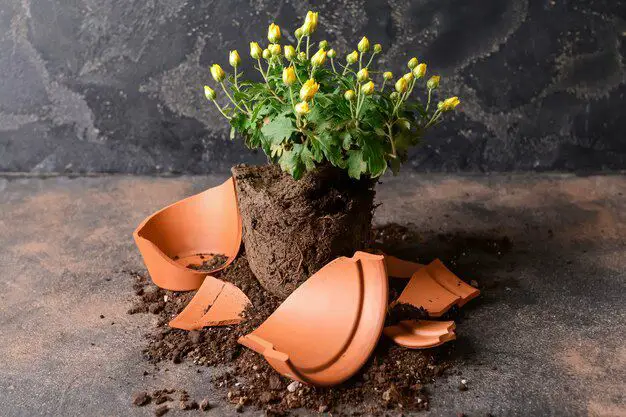
My husband passed away after a fall inside our house. Five years later, when the flowerpot—the last thing he ever gave me—slipped from the shelf and broke apart, what I uncovered in the soil beneath it made my knees buckle.
I screamed before I even realized it, then grabbed my phone and called the police with shaking hands.
What I found that day didn’t just change my understanding of my husband’s death. It changed everything I thought I knew about my marriage, my life, and the man I’d loved for twelve years.
The Night Everything Changed
It has been five years since the night my life split in two.
My name is Elena Morgan, and I’m forty-three years old now. Back then, I was thirty-eight, married to David for twelve years, living in a modest two-story house in Salem, Massachusetts. We had a good life—not exciting, not dramatic, just steady and comfortable. David worked as an accountant at a mid-sized firm. I taught English at the local high school. We talked about having children someday but had never quite gotten around to it.
That night in October changed everything.
The storm had rolled in around seven p.m., the kind of nor’easter that turns the sky black and makes the whole house creak. The electricity flickered twice before finally going out completely. I’d been in the kitchen making dinner by candlelight when David texted that he was picking up batteries and candles from the store.
He came home around eight-thirty, shaking rain from his jacket, carrying a plastic bag from CVS. I remember he was laughing about something—how the store had been packed with people panic-buying supplies like it was the apocalypse.
“I got the good candles,” he’d said, holding up a package of vanilla-scented pillars. “The expensive ones you like.”
Those were the last words I ever heard him say.
He’d started up the stairs to change out of his wet clothes. I was still in the kitchen, putting away groceries he’d brought, when I heard it.
The sound.
It wasn’t just a thud—it was multiple impacts, each one distinct and sickening. The crash of a body hitting wood, again and again, tumbling down fifteen stairs.
Then silence.
I ran. Screamed his name. Found him at the bottom of the staircase, his body twisted at an angle that didn’t look human, his eyes open but not seeing anything.
The neighbors—Bob and Linda from next door—burst through our front door within minutes. Someone had already called 911. Linda held me while I sobbed. Bob tried to find a pulse, his hands shaking, repeating “Come on, buddy, come on” like a prayer that wouldn’t be answered.
The paramedics arrived within eight minutes. They tried. They worked on him for twenty minutes, right there on our living room floor, but there was nothing they could do.
Massive head trauma. Broken neck. He’d died almost instantly, they told me later. He probably didn’t feel anything.
That was supposed to be a comfort.
The police came. They took photos, asked questions, examined the staircase. The floor at the top of the stairs was wet—David had tracked water in from outside. The fall had been an accident. Tragic, terrible, but an accident.
No investigation followed. No doubts were raised. Everyone agreed it was a terrible tragedy—a healthy forty-year-old man, dead because of a wet floor and bad luck.
I didn’t question it. Why would I?
The Years After
The years afterward blurred together in that way grief does. I existed, but I wasn’t really living. I moved through my days like a shadow—teaching my classes, grading papers, coming home to an empty house that still smelled like David’s cologne in certain corners.
People told me to get rid of his things. “It’s not healthy,” my mother said. “You need to move on.” But I couldn’t. His clothes still hung in our closet. His books still lined the shelves. His coffee mug—the one that said “World’s Okayest Husband”—still sat in the cabinet, washed but unused.
I kept everything except one thing that mattered most: a lilac orchid he had given me on our wedding day.
It wasn’t an anniversary orchid or a birthday gift—it was from our actual wedding day, twelve years ago. We’d gotten married at a small garden venue in Marblehead. The ceremony was simple, just forty guests, his mother’s friend playing violin, my best friend Sarah reading a poem.
At the end of the ceremony, instead of a traditional bouquet toss, David had surprised me. He’d walked over with a potted orchid—delicate, elegant, the palest purple I’d ever seen—and said, “Something living. Something that will grow with us.”
I’d kept that orchid alive for twelve years. Through moves, through winters, through the days when I forgot to water everything else. That orchid thrived on my bedroom windowsill, reblooming faithfully every spring, a living connection to the man I’d loved.
After David died, that orchid became even more precious. It was the last thing he’d touched before he died—he’d watered it that very morning, I remembered. The soil had still been damp when I’d checked it the day after his funeral.
I talked to it sometimes. Told it about my day. About how much I missed him. About how the house felt too big and too empty and too full of memories all at once.
Five years. Five years of that orchid blooming and fading and blooming again. Five years of me teaching, existing, going through the motions of living while feeling hollow inside.
And then, on a quiet Tuesday afternoon in October—exactly five years after David’s death—everything changed.
The Break
It was around three p.m. I’d just gotten home from school, still carrying my bag full of ungraded essays. The day had been unremarkable—a lecture on “The Great Gatsby,” a quiz in my sophomore class, the usual teenage drama in the hallways.
I’d let my dog, Bailey—a golden retriever David and I had adopted seven years ago—out into the backyard. He was getting old now, moving slower, but he still loved to chase squirrels and bark at birds.
I was in the kitchen making tea when I heard it: Bailey barking frantically at something on the back porch. Then a crash, a yowl—the neighbor’s cat, probably. That orange tabby was always wandering into our yard.
I rushed to the back door and saw the chaos unfolding. The neighbor’s cat had somehow gotten onto our second-floor balcony—the one off our bedroom that overlooked the yard. Bailey was below, barking like this was the most exciting thing that had happened in his life. The cat, panicked, was scrambling along the balcony railing.
And then it jumped.
Not down—thankfully—but through the open bedroom window, into our bedroom.
I ran upstairs, my heart pounding, worried the cat would shred our curtains or knock something over. I could hear it moving around, frantic, looking for escape.
When I burst into the bedroom, I saw the cat leap from the dresser to the bookshelf to the windowsill where my orchid sat.
“No, no, no—” I started, reaching out.
Too late.
The cat’s back legs scrambled for purchase on the narrow sill. Its claws caught the pot, dragging it forward.
The orchid tipped, seemed to hang in the air for a moment, and then fell.
The sound of breaking ceramic echoed sharply through the room—violent, final, devastating.
My heart dropped.
I stood frozen as the cat bolted out of the room, escaping down the stairs and presumably out through whatever opening it had found.
I didn’t care about the cat.
I stared at the floor where the last piece of my husband—the last living thing connecting me to our wedding day—lay shattered across the hardwood.
The ceramic pot had broken into a dozen pieces. Soil spread across the floor in a dark stain. The orchid itself lay on its side, roots exposed, delicate flowers crushed.
I knelt down slowly, tears already forming, and reached for the largest piece of ceramic. My hands were shaking. This was it—the last physical thing David had given me, destroyed by a random accident. Just like David himself.
As I gathered the soil, trying to salvage what I could, my fingers touched something unusual.
Something that didn’t belong.
Buried beneath the roots, hidden deep in the soil, was a small bundle wrapped in cloth.
I froze.
My heart started pounding for a different reason now—not grief, but something else. Confusion. Unease.
That pot had always been mine. David had given it to me twelve years ago. I’d repotted the orchid twice over the years, carefully transferring it to slightly larger containers. I’d tended to it weekly, checking the roots, adjusting the soil.
And I had never—not once—seen anything buried inside it.
The Discovery
I lifted the bundle with trembling hands. It was small, maybe the size of a deck of cards, wrapped in what looked like an old handkerchief—once white, now yellowed and stained with soil. It was tied with thin black thread, wrapped multiple times, secured with tiny, careful knots.
Whatever this was, someone had wanted it to stay hidden. Someone had taken time to package it carefully, to bury it where no one would think to look.
I sat back on my heels, the bundle in my lap, my heart racing so fast I felt dizzy.
When had this been buried? By whom? And why?
My fingers trembled as I started unwrapping the cloth. The knots were tight, old, difficult to untie. I had to use my teeth on one of them, tearing the thread rather than unknotting it.
The cloth fell away, and inside was a small plastic bag—the kind you’d use for jewelry or small items—sealed with tape that had yellowed with age.
Inside the bag were several items:
A USB drive.
A small key—the kind that opens a padlock or a small safe.
A folded piece of paper.
And underneath everything, a photograph.
I pulled out the photograph first, my hands shaking so badly I almost dropped it.
It was a picture of David. But not the David I knew.
In the photo, he was younger—maybe late twenties—standing next to a woman I’d never seen before. She was beautiful—dark hair, bright smile, her arm around his waist. They were standing in front of a house, laughing at something off-camera.
The woman was wearing an engagement ring.
I turned the photo over. On the back, in handwriting I recognized as David’s, was written: “Me and Rachel, June 2008.”
June 2008. Two years before David and I met.
Who was Rachel? Why had David never mentioned her? Why was this photo buried in a flowerpot?
My hands shaking, I unfolded the piece of paper. It was a handwritten note, also in David’s handwriting, but the words made my blood run cold:
“If you’re reading this, something has happened to me. Rachel knows everything. The money is in the account—access code is on the USB. The key opens the box at Commonwealth Storage, unit 247. I’m sorry. I’m so sorry. This was never supposed to happen. —D”
I read it three times, my brain refusing to process the words.
Rachel knows everything.
The money is in the account.
This was never supposed to happen.
What money? What account? Who was Rachel? What was David sorry for?
And why—why would he bury a note like this in a flowerpot unless he was expecting something to happen to him?
Unless he knew he was in danger.
Unless his death wasn’t an accident after all.
I screamed before I even realized it—a raw, animal sound that tore from my throat. Bailey started barking downstairs, confused and alarmed.
I grabbed my phone with shaking hands and called 911.
“I need police,” I said when the operator answered. “I found something. Evidence. My husband—he died five years ago. They said it was an accident. But I found—I found something. Please, I need someone to come.”
The Investigation Reopens
Two detectives arrived within forty minutes. Detective Sarah Chen and Detective Mark Rivera—both in their forties, both with the careful, neutral expressions of people who’d heard a lot of stories and believed very few of them.
I showed them everything. The broken flowerpot. The cloth bundle. The photograph. The note. The USB drive and key.
Detective Chen photographed everything while Detective Rivera asked questions.
“Your husband died five years ago?”
“Yes. October 15th, 2019. He fell down our stairs during a storm. The police investigated. They ruled it an accident.”
“And you’ve never seen these items before?”
“Never. I’ve had that orchid for twelve years. I’ve repotted it twice. I’ve never seen anything buried in it.”
“Do you know who Rachel is?”
“No. David never mentioned anyone named Rachel. I thought I knew everything about his past, but—” My voice broke. “I don’t understand any of this.”
Detective Rivera picked up the USB drive carefully, holding it by the edges. “We’ll need to examine this. It could be encrypted or password protected.”
“The note says the access code is on it.”
“We’ll check. What about this storage unit?”
“I didn’t know he had a storage unit. I’ve never heard of Commonwealth Storage.”
The detectives exchanged a look—the kind of silent communication that happens between partners who’ve worked together for years.
“Mrs. Morgan,” Detective Chen said gently, “we’re going to need to take these items as evidence. We’ll also need to review the original police report from your husband’s death. If there’s any possibility that his fall wasn’t accidental—”
“You think someone killed him?” The words came out as a whisper.
“We don’t know yet. But we’re going to find out.”
The USB Drive
It took the police digital forensics team three days to access the USB drive. When they did, they called me in to the station.
Detective Chen sat across from me in an interview room, a laptop open between us.
“Mrs. Morgan, what we found on this drive is… complicated. Before I show you, I need you to understand that what you’re about to see may change your understanding of your husband and your marriage. Are you sure you want to see this?”
“Yes.” My voice didn’t shake. I’d spent three days preparing myself for the worst. “I need to know the truth.”
She turned the laptop to face me.
The USB drive contained dozens of files—documents, spreadsheets, photographs, even video files. All of them meticulously organized, dated, labeled.
The first folder was titled “Rachel.”
Inside were hundreds of photos spanning what looked like five or six years. David and this woman—Rachel—at restaurants, on vacation, at parties. They looked happy. In love. Like a couple who’d been together for years.
“Who is she?” I whispered.
“Her name is Rachel Hartley. She lives in Providence, Rhode Island. We contacted her yesterday.” Detective Chen paused. “Mrs. Morgan, Rachel was David’s fiancée. They were engaged for three years, from 2007 to 2010.”
“That’s not possible. I met David in 2010. He told me he’d been single for two years—”
“He lied.” She said it gently but firmly. “According to Rachel, David broke off their engagement in March 2010. He told her he needed space, that he wasn’t ready for marriage. Two months later, she discovered he’d started dating someone else. You.”
The room spun. “He was with her when he met me?”
“No. He broke up with her first. But the breakup was sudden, unexpected. Rachel said David had changed in the months before—becoming secretive, anxious, taking calls in private. She thought he was having an affair.”
“Was he?”
“We don’t know yet. But there’s more.” Detective Chen clicked to another folder. “This is the financial information.”
What I saw made my stomach drop.
Spreadsheets showing bank accounts I’d never heard of. Transactions dating back to 2009. Money moving in and out—large amounts, six figures, sometimes more.
“What is this?” I asked.
“We’re still investigating, but it appears your husband was involved in some kind of financial scheme. Possibly embezzlement from his accounting firm, possibly something else. The money was being moved through shell companies, offshore accounts, and what looks like money laundering operations.”
“David was an accountant. He did taxes for small businesses—”
“He also had access to client accounts. Large client accounts. And according to these records, he was systematically stealing from them for at least five years before he died.”
I couldn’t breathe. Couldn’t think. The David I knew—the man who worried about our mortgage payment, who clipped coupons, who insisted we save fifteen percent of every paycheck—had been stealing millions of dollars?
“How much?” I finally asked.
“We’re still calculating, but preliminary estimates suggest approximately $3.2 million over five years.”
Rachel
They brought Rachel Hartley in the next day. I’d asked to meet her—needed to meet her, to understand who she was and what she knew.
She was still beautiful, though older now, with lines around her eyes that suggested five years of stress. She looked at me with something between sympathy and resentment.
“I didn’t know he’d remarried,” she said quietly. “I didn’t know he’d moved on so completely.”
“He never mentioned you,” I said. “Not once.”
“He was good at that. Compartmentalizing. Keeping parts of his life separate.” She folded her hands on the table. “I loved him. For six years, I thought we’d spend our lives together. Then one day he just… ended it. Said he wasn’t ready, needed time, couldn’t give me what I deserved. Two months later, I saw him on Facebook, tagged in photos with you. At restaurants we used to go to. At places we’d talked about visiting together.”
“I’m sorry,” I said, though I wasn’t sure what I was apologizing for.
“He called me once,” Rachel continued. “About two years after we broke up. This would have been 2012, maybe early 2013. He was drunk, rambling. He said he’d made mistakes, that he’d gotten involved in something he couldn’t get out of, that people were watching him. I thought he was just drunk and emotional. I told him to go home and sleep it off.”
“Did he say what he was involved in?”
“No. But he was scared. Really scared. He kept saying, ‘If anything happens to me, Rachel, you need to know—’ but then he stopped, like he’d realized he’d said too much. He made me promise not to tell anyone we’d talked. I didn’t hear from him again after that.”
Detective Chen leaned forward. “Ms. Hartley, do you have any idea what David was referring to? What he was afraid of?”
Rachel hesitated, then nodded slowly. “I didn’t understand it at the time, but looking back… David worked at a mid-sized accounting firm, right? Mercer & Associates?”
“Yes,” I said.
“One of their biggest clients was a real estate development company called Cornerstone Holdings. David was their primary accountant for years. He handled all their books, their taxes, their financial reporting.”
Detective Rivera, who’d been silent until now, sat up straighter. “Cornerstone Holdings? That’s Marcus Voss’s company.”
My blood went cold. “Who’s Marcus Voss?”
“A real estate developer with suspected ties to organized crime,” Detective Chen explained. “His company has been under investigation multiple times for money laundering, bid rigging, and fraud. Nothing’s ever stuck—he’s very good at covering his tracks.”
Rachel nodded. “David started acting strange around the time he started working with Cornerstone. At first, it was just long hours, stress. But then it became paranoia. He’d check over his shoulder constantly. He insisted we couldn’t talk about his work, even in our own apartment. He started talking about leaving Boston, starting over somewhere else.”
“You think he was laundering money for Marcus Voss,” I said quietly.
“I think Marcus Voss forced him to. David wasn’t a criminal. He was a good person who got caught in something he couldn’t escape from.” She looked at me directly. “And I think that’s what got him killed.”
The Storage Unit
The key from the flowerpot opened unit 247 at Commonwealth Storage, a facility on the outskirts of Salem.
I went with the detectives, my hands shaking as Detective Rivera unlocked the unit and rolled up the door.
Inside was a small 5×10 space containing a single metal filing cabinet and a banker’s box.
The filing cabinet contained more financial records—years of meticulous documentation showing exactly how David had moved money through Cornerstone Holdings, how he’d hidden transactions, how he’d cooked the books to make illegal operations look legitimate.
And there were names. Dozens of names, people David had worked with, people who were involved in whatever scheme this was.
At the top of the list: Marcus Voss.
The banker’s box contained something even more damning—audio recordings. David had been secretly recording his meetings with Voss for at least two years before his death.
We listened to them in Detective Chen’s office. David’s voice, younger and more frightened than I’d ever heard it:
“I can’t keep doing this. Someone’s going to notice. The IRS, the SEC, someone—”
“Then you better make sure no one notices.” Marcus Voss’s voice was calm, almost friendly. “Because if they do, if this all comes apart, you’re the one whose name is on these documents. You’re the one who goes to prison. Not me.”
“You forced me into this—”
“I gave you an opportunity. You took it. Don’t act like you’re some innocent victim, David. You’ve made almost three million dollars from this arrangement.”
“Money I can’t touch. Money I can’t explain. Money that’s sitting in accounts I’m too afraid to access—”
“Then consider it your retirement fund. Or your insurance policy. As long as you keep your mouth shut and keep the books clean, you and your pretty little fiancée get to live your nice quiet life. But if you talk, if you go to the police, if you even think about becoming a problem for me—” A pause. “Well. Accidents happen, David. Stairs are slippery. Cars crash. Houses catch fire. You understand what I’m saying?”
The recording ended.
I sat there, stunned, as the implications sank in.
“He was being blackmailed,” I said quietly. “For years. That’s why he broke up with Rachel—to protect her. That’s why he married me quickly, built a normal life, acted like everything was fine. He was trying to look like an ordinary person so no one would look too closely.”
“And he was documenting everything,” Detective Chen said. “Building a case. Maybe he was planning to go to the police eventually, or maybe this was just insurance. Either way, he hid the evidence where no one would think to look.”
“In the flowerpot,” I whispered. “The one thing I’d never throw away. The one thing I’d keep forever.”
“He was protecting you,” Detective Rivera said. “If he died, if something happened to him, he wanted you to eventually find this. He wanted the truth to come out.”
“Did Marcus Voss kill him?” I asked. “That night, the fall—was it really an accident?”
“We’re investigating. But Mrs. Morgan, the timing is suspicious. David died in October 2019. Two months earlier, Cornerstone Holdings was served with a federal subpoena. The FBI was investigating their financial practices. If David had been planning to cooperate, if Voss thought he might talk—”
“He’d eliminate the threat,” I finished.
The Truth
It took six more months for the full investigation to unfold. The FBI seized David’s financial records. Marcus Voss was arrested along with twelve other people involved in the money laundering operation.
The evidence David had collected—the recordings, the documents, the meticulous trail he’d built—was enough to bring charges. Multiple charges. Fraud, money laundering, racketeering, witness tampering.
And when one of Voss’s associates—a man named Tommy Chen who’d been promised a plea deal—finally broke down and told investigators the truth, the final piece fell into place.
David’s death hadn’t been an accident.
Tommy Chen had been sent to the house that night. He’d been ordered to make it look like an accident—no gun, no visible violence, just an unfortunate fall during a storm. He’d waited until David came home from the store, followed him into the house while I was in the kitchen, and pushed him at the top of the stairs.
The wet floor had been real. The storm had been real. But the fall had been murder.
Premeditated. Calculated. Carried out because David Morgan had become a liability to Marcus Voss’s criminal empire.
Marcus Voss was charged with first-degree murder along with all the financial crimes. Tommy Chen testified against him in exchange for a reduced sentence. The trial took eight months.
Marcus Voss was convicted on all counts. He’s currently serving life in prison without the possibility of parole.
Five Years Later (Again)
I’m writing this from a new house—a smaller place in a different town, far from Salem and the memories of that staircase.
The $3.2 million David had moved through those offshore accounts? The FBI seized most of it, returning it to the victims of Voss’s scheme. But there was a life insurance policy—one I hadn’t known about—that paid out after the case was solved and David’s death was officially ruled a homicide. Between that and the sale of our house, I was able to start over.
I left teaching. Started working with a victims’ advocacy group, helping families navigate the criminal justice system when their loved ones are murdered. It turns out living through this nightmare qualifies me to help other people through theirs.
Rachel and I talk sometimes. Not friends, exactly, but connected by shared loss and shared betrayal. She never married. Neither have I. We’re both still trying to process loving someone who wasn’t who we thought they were.
I think about David constantly. About the man I knew—kind, careful, devoted—and the man he actually was—trapped, frightened, desperate. Were both versions real? Was either?
I’ve come to believe that David did the best he could in an impossible situation. He made mistakes—getting involved with Marcus Voss in the first place, letting fear control him for years, building a life on lies. But he also tried to protect the people he loved. He built a case against the man who’d enslaved him. He left evidence so the truth would eventually surface.
He planted a mystery in a flowerpot, knowing someday—maybe years later, maybe never—I might find it.
The new orchid I bought blooms on my windowsill now. It’s not the same species—I couldn’t bring myself to buy a lilac one—but it’s beautiful. Living. Growing.
Sometimes I talk to it like I used to talk to the old one. I tell it about my day. About the families I’m helping. About how much I miss David, even knowing everything I know now.
And sometimes—not often, but sometimes—I thank it for breaking. For falling. For revealing what needed to be revealed.
Because truth, no matter how painful, is better than a lie.
Even when that truth is buried in the dirt, wrapped in cloth, hidden for five years.
Even when that truth destroys everything you thought you knew.
It’s still better than living in the dark.
The orchid blooms, and I water it carefully, and I live with the truth.
It’s all any of us can do.

Ethan Blake is a skilled Creative Content Specialist with a talent for crafting engaging and thought-provoking narratives. With a strong background in storytelling and digital content creation, Ethan brings a unique perspective to his role at TheArchivists, where he curates and produces captivating content for a global audience.
Ethan holds a degree in Communications from Zurich University, where he developed his expertise in storytelling, media strategy, and audience engagement. Known for his ability to blend creativity with analytical precision, he excels at creating content that not only entertains but also connects deeply with readers.
At TheArchivists, Ethan specializes in uncovering compelling stories that reflect a wide range of human experiences. His work is celebrated for its authenticity, creativity, and ability to spark meaningful conversations, earning him recognition among peers and readers alike.
Passionate about the art of storytelling, Ethan enjoys exploring themes of culture, history, and personal growth, aiming to inspire and inform with every piece he creates. Dedicated to making a lasting impact, Ethan continues to push boundaries in the ever-evolving world of digital content.