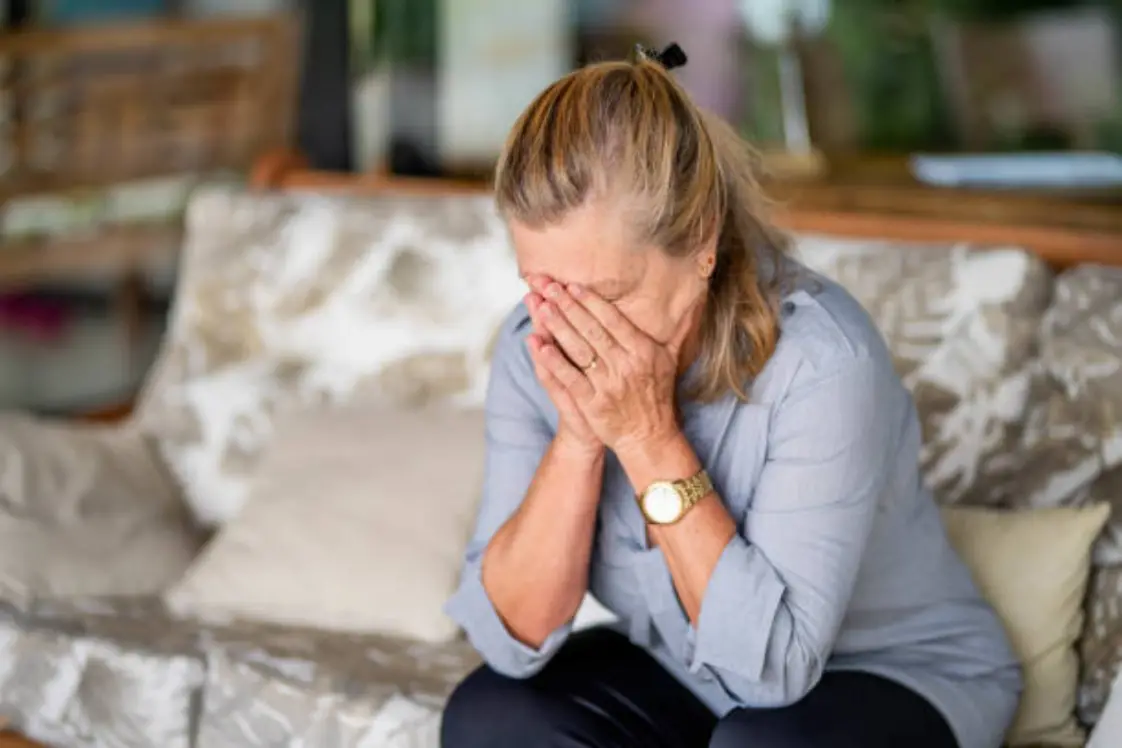
I stood outside my daughter’s house at 2:30 on a Thursday afternoon, my finger hovering over the doorbell, second-guessing the decision that had brought me here unannounced. For three months, something had been gnawing at me—a persistent unease I couldn’t shake, couldn’t explain with logic or evidence. Just a mother’s instinct whispering that Laura needed me, even though she kept insisting everything was fine.
The house looked perfect from the outside. Daniel and Laura had bought this modest colonial in a quiet suburb two years ago, shortly after their wedding. White siding, black shutters, neatly trimmed hedges—the kind of house that belonged on a postcard about the American dream. But lately, when I drove past on my way to the grocery store, something about it felt wrong. Too still. Too quiet. Like a photograph instead of a home.
I’d called Laura that morning, as I did most Thursdays, and she’d answered on the fifth ring, her voice slightly breathless.
“Mom, hi. Sorry, I was just… busy. Can I call you back?”
“Of course, sweetheart. Is everything okay?”
“Everything’s fine. Really. I just have a lot to do today.”
In the background, I’d heard a woman’s voice—sharp, authoritative—saying something I couldn’t quite make out. Then Laura’s quick response: “Yes, I’m coming.”
The call had ended abruptly, leaving me staring at my phone with that familiar twist of worry tightening in my chest. When she didn’t call back by noon, I’d made a decision. I grabbed my coat, got in the car, and drove the twenty minutes to her house without calling ahead.
Now, standing on the porch, I questioned whether I was overreacting. Laura was thirty-one years old, married, living her own life. What kind of mother showed up uninvited in the middle of the afternoon? But then I remembered the way her voice had sounded over the past few months—increasingly flat, increasingly careful, as if she were reading from a script someone else had written.
I rang the doorbell and waited. No answer. I rang again, counting to thirty this time. Still nothing, though I could hear movement inside—footsteps, the distant sound of running water, muffled voices.
Finally, I pulled out the spare key Laura had given me five years ago when she first moved out of my house. “Just in case, Mom,” she’d said, pressing the cool metal into my palm. “For emergencies.”
This felt like an emergency.
The door swung open, and immediately I understood why no one had answered. The house was freezing—not uncomfortably cool, but genuinely cold, the kind of temperature you’d expect with a broken heating system in late November. My breath almost formed visible clouds as I stepped into the entryway.
“Laura?” I called out, removing my coat but then thinking better of it and pulling it back on.
From somewhere toward the back of the house came the steady sound of running water and the soft clinking of dishes. I followed the sound through the living room, where two coffee mugs sat on the side table beside the sofa, steam no longer rising from their surfaces. The television was on with the volume low, tuned to a home improvement show.
The kitchen doorway framed a scene that made my heart clench with recognition—not of this specific moment, but of something deeper, something I’d seen before in the faces of women who’d lost pieces of themselves so gradually they hadn’t noticed until almost nothing remained.
Laura stood at the sink in a thin cardigan that wouldn’t have been warm enough even if the heat were on. Her hands were red and raw-looking, moving mechanically through an endless rotation: rinse, scrub, rinse again. A stack of clean dishes sat in the drying rack beside her, already done but apparently not done enough. Her shoulders were hunched forward, her spine curved in the posture of someone trying to make themselves smaller.
At the dining table, which separated the kitchen from the small breakfast nook, sat Daniel—my son-in-law of two years—and his mother, Margaret. They were both wrapped in warm sweaters and scarves, eating what looked like a late lunch of soup and sandwiches. A space heater glowed orange beneath Margaret’s feet.
The contrast was so stark it felt deliberate: them comfortable, warm, fed, while Laura worked alone in the cold, her own lunch apparently forgotten or forbidden.
Margaret noticed me first. She set down her spoon with deliberate precision, her expression cycling quickly from surprise to irritation to a practiced smile that never reached her eyes.
“Oh, Diane. We didn’t expect you today.” She remained seated, making no move to stand or greet me properly. “Laura didn’t mention you were coming.”
“That’s because I didn’t tell her,” I replied, my voice steady despite the anger beginning to build in my chest. “I was worried.”
Daniel glanced up from his bowl, his expression unreadable. “Worried about what?”
I didn’t answer. Instead, I watched Laura, who’d frozen at the sound of my voice but hadn’t turned around. Her hands gripped the edge of the sink, knuckles white against the stainless steel.
“Sweetheart,” I said gently, “are you okay?”
She didn’t respond immediately. Margaret filled the silence instead.
“Of course she’s okay. She’s just finishing up the dishes. Laura, dear, are you almost done? We’d like more tea.”
The casualness of it—the easy expectation that my daughter would stop what she was doing to serve them, while they sat warm and comfortable—sent a flash of recognition through me. I’d seen this pattern before, though never in my own daughter’s life. I’d seen it in friends who’d gradually disappeared from social gatherings, who’d stopped returning calls, who’d developed that same careful way of speaking, as if every word had to be weighed for potential consequences.
Laura finally turned around, and what I saw in her face took my breath away. This was my daughter—my bright, ambitious daughter who’d graduated top of her class, who’d built a successful career in graphic design, who’d once had opinions about everything from politics to pizza toppings. But the woman standing in front of me looked like a faded photograph of Laura, all the vibrant colors washed out to pale imitations.
“Hi, Mom,” she said quietly, attempting a smile that cracked at the edges. “I didn’t know you were coming.”
“I tried calling earlier. You said you’d call back.”
“Oh.” She glanced quickly at Margaret, then back at me. “I’m sorry. I got busy.”
“Too busy to talk to your mother for five minutes?” The words came out sharper than I intended, and I watched Laura flinch.
“She’s been very busy today,” Margaret interjected smoothly, standing up and pushing her bowl toward the edge of the table. “We’ve had a lot to accomplish. Laura, this soup is getting cold. Could you heat it up again? And bring fresh bread.”
I watched my daughter’s face as Margaret spoke—watched the way her expression went blank, the way her shoulders tensed even further. She was about to comply. I could see it in the automatic way she started to move toward the table.
“No,” I said quietly.
Everyone looked at me.
“No,” I repeated, louder this time. “Laura, you don’t need to heat anyone’s soup right now. Come sit down. You look exhausted.”
“Mom, it’s fine—”
“It’s not fine.” I moved closer to her, close enough to see the dark circles under her eyes, the way her hands trembled slightly, the defensive way she held her body as if expecting criticism. “Laura, when did you last eat something?”
She opened her mouth, closed it, looked at Daniel.
“She ate breakfast,” he said, his tone suggesting I was making a problem where none existed. “She’s fine, Diane. You’re overreacting.”
But I wasn’t looking at him anymore. I was looking at the kitchen, really seeing it for the first time. The counters were spotless, not a crumb or water spot in sight. Every dish had been washed, dried, and put away except for the ones Margaret and Daniel were actively using. The floor looked recently mopped. The stove gleamed. This wasn’t the kitchen of someone who lived here—it was the kitchen of someone who’d been cleaning for hours, trying to meet an impossible standard.
“Why is it so cold in here?” I asked, pulling my coat tighter around myself.
“The heater’s broken,” Laura said quickly. “We’re waiting for—”
“It’s not broken,” Margaret interrupted. “It’s simply unnecessary. We’re perfectly comfortable, and there’s no point wasting money on excessive heating. Laura tends to exaggerate her discomfort.”
I looked at the space heater glowing beneath Margaret’s feet, then at my daughter shivering in her thin sweater, and something inside me shifted. This wasn’t concern or worry anymore. This was recognition. This was seeing, with terrible clarity, exactly what was happening to my daughter.
“Laura,” I said, keeping my voice calm, “I need to speak with you. Privately.”
“She’s in the middle of cleaning up,” Margaret said. “Perhaps later would be better.”
“No. Now would be better.”
Daniel stood up, his chair scraping against the floor. “Diane, I don’t know what you think you’re seeing here, but you’re making Laura uncomfortable with this… interrogation.”
“Making her uncomfortable?” I almost laughed at the absurdity. “She’s standing in a freezing kitchen, working while you both sit and eat. She looks like she hasn’t slept in days. And you’re telling me I’m the one making her uncomfortable?”
“You don’t understand our household,” Margaret said, her pleasant veneer cracking slightly. “Laura has certain responsibilities here. We all contribute in different ways.”
“By ‘contribute,’ you mean she does all the work while you give orders?”
The room went very quiet. Laura’s face had gone pale, her eyes wide with something that looked like fear mixed with a desperate kind of hope—as if she wanted me to keep pushing but was terrified of what would happen if I did.
I pulled out my phone, stepping away from the kitchen toward the living room. My hands were steady despite the adrenaline flooding my system. I scrolled through my contacts until I found the name I needed: Javier Martinez, an old family friend who’d become a lawyer specializing in family law and domestic situations.
I’d first met Javier twenty years ago when he was fresh out of law school, volunteering at a women’s shelter where I’d done some administrative work. We’d stayed in touch over the years, meeting occasionally for coffee, and I’d watched him build a reputation for helping families navigate complicated, emotionally charged situations.
He answered on the second ring. “Diane? What’s wrong? You never call during the workday.”
“I need you to come to my daughter’s house. Now.” I gave him the address, keeping my voice low but urgent.
“What’s happening?”
“I think—” I paused, choosing my words carefully while glancing back at the kitchen where Daniel had moved closer to Laura, speaking to her in a low, intense voice I couldn’t quite hear. “I think my daughter is in trouble. The kind of trouble that needs professional intervention.”
“I’ll be there in twenty minutes. Don’t leave. If you feel unsafe at any point, call 911.”
“I will.”
“And Diane? Document what you’re seeing. Photos if you can do it discreetly. Notes if you can’t.”
I hung up and opened my camera app, pretending to check messages while actually taking several photos: Laura standing alone in the cold kitchen, her raw hands gripping the counter. Daniel and Margaret sitting at the table with their warm sweaters and space heater. The spotless kitchen that spoke of hours of work. The contrast between comfort and hardship in a single frame.
When I returned to the kitchen, the atmosphere had shifted. Margaret was standing now, her posture rigid with barely controlled anger. Daniel had his hand on Laura’s shoulder in a grip that looked more restraining than comforting.
“We’ve decided you should leave,” Margaret announced. “You’re clearly having some kind of episode, and you’re upsetting Laura.”
“I’m not leaving without talking to my daughter. Alone.”
“That’s not going to happen,” Daniel said. “This is our house, and you’re not welcome here anymore.”
“Laura,” I said, ignoring him completely, “do you want me to leave?”
She looked up at me, and for just a moment, her mask slipped. I saw exhaustion, fear, desperation, and underneath it all, a plea for help she couldn’t voice out loud.
“I…” she started, then stopped. Her eyes filled with tears that she quickly blinked away. “I don’t know.”
“Yes, you do,” I said gently. “You know exactly what you need. You’ve always been brave enough to know.”
Margaret scoffed. “Brave? She can barely make a decision about what to cook for dinner without falling apart. You’ve filled her head with nonsense her whole life about being independent and strong, and look where that’s gotten her—unable to handle even basic household responsibilities.”
“The only thing Laura can’t handle,” I replied, my voice hardening, “is being treated like a servant in her own home.”
“How dare you—”
A knock at the door cut off whatever Margaret was about to say. Daniel moved toward the hallway, but I was faster. I opened the door to find Javier standing on the porch, briefcase in hand and two police officers flanking him—something I hadn’t expected but was intensely grateful for.
“Good afternoon,” Javier said, his voice carrying the calm authority of someone who’d walked into difficult situations countless times before. “I’m Javier Martinez, attorney. We received a call expressing concern about the welfare of a resident at this address.”
Daniel’s expression shifted from annoyance to shock to something that looked like fear. “There’s been a misunderstanding. Everything’s fine here.”
“I’d like to verify that myself,” one of the officers said—a woman in her forties with kind eyes and a no-nonsense demeanor. “May we come in?”
I stepped back, gesturing them inside before anyone could object. Margaret appeared in the kitchen doorway, her face flushed with anger.
“This is outrageous. You’re harassing us in our own home. We’ve done nothing wrong.”
“Then you won’t mind answering a few questions,” Javier replied smoothly.
Laura had emerged from the kitchen, still clutching that thin cardigan around herself. When she saw the police officers, she froze, her eyes going wide with what looked like panic mixed with something else—relief, maybe, or hope that this might finally be real, that help might actually be here.
The female officer approached her gently. “Ma’am, I’m Officer Sarah Chen. Are you Laura Morrison?”
“Yes,” Laura whispered, her voice barely audible.
“Are you all right? Are you safe?”
Laura looked at Daniel. Then at Margaret. Then at me. I watched her struggling, saw the years of conditioning warring with the truth she’d been suppressing. Her hands twisted the fabric of her cardigan, pulling it tighter.
“I…” She swallowed hard. “No. I’m not… I’m not all right.”
The words hung in the air, simple and devastating. Margaret immediately started to speak, her voice taking on a reasonable, explanatory tone.
“Officer, my daughter-in-law tends toward drama. She’s been struggling emotionally, and we’ve been trying to help her by providing structure and—”
“Ma’am,” Officer Chen interrupted politely but firmly, “I need you to let her speak.”
Laura’s breathing had quickened, her chest rising and falling rapidly as if she’d just surfaced from deep water. “I can’t do this anymore,” she said, her voice gaining strength even as tears began sliding down her cheeks. “I can’t live like this. It’s not… this isn’t normal. It’s not okay.”
“What’s not okay, Laura?” Javier asked gently.
And then, as if a dam had finally broken, the words came pouring out.
“I’m cold all the time because Margaret says heating the house is wasteful. I cook all their meals but I have to eat standing up in the kitchen because Margaret says I haven’t earned a seat at the table until the work is done. I clean for hours every day, but nothing’s ever clean enough. I’m not allowed to see my friends anymore because Daniel says they’re a bad influence. I can’t even call my mother without asking permission first.” She was sobbing now, years of suppressed pain flooding out. “I work full-time—I’m a graphic designer, I make good money—but I don’t even have access to my own paychecks anymore. They say they’re managing our finances, but I can’t even buy myself a warmer sweater without asking.”
“That’s enough,” Daniel said sharply, moving toward her.
The second officer, a tall man in his fifties, stepped smoothly between them. “Sir, I need you to stay where you are.”
“This is my wife. She’s clearly having some kind of breakdown—”
“What I’m hearing,” Javier interjected, his voice calm but carrying unmistakable authority, “sounds like financial abuse, emotional coercion, and isolation—all recognized forms of domestic abuse under Washington state law.”
“Abuse?” Margaret’s voice rose to a near-shriek. “How dare you suggest—we’ve given her everything! A home, stability, guidance. She was a mess when Daniel met her, and we’ve helped her become—”
“Become what?” I asked, my voice cutting through hers. “A shadow? A servant? Someone who’s afraid to speak without permission?”
Officer Chen had moved to stand beside Laura, creating a physical barrier between her and the rest of the room. “Ma’am, do you feel safe in this home?”
Laura shook her head, tears streaming down her face.
“Has anyone here threatened you or physically harmed you?”
“Not… not physically,” Laura managed. “But Daniel—when I try to object to something, he… he backs me into corners. He stands too close. He doesn’t hit me, but he makes me feel like… like he might. And Margaret…” She turned to look at her mother-in-law, her voice dropping to barely above a whisper. “She tells me every day that I’m worthless. That no one else would put up with me. That I should be grateful they tolerate my presence.”
“Lies,” Margaret hissed. “All lies. She’s unstable, mentally unwell—”
“I have documentation,” I said, pulling out my phone and showing Officer Chen the photos I’d taken. “And I’m happy to provide a statement about the conditions I observed here today.”
Javier had been making notes on a legal pad. Now he looked up, his expression professionally neutral but his eyes blazing. “Based on what I’m hearing, I would strongly recommend immediate protective measures. Laura, do you want to stay in this house tonight?”
“No,” she said immediately, then looked terrified at her own certainty. “No, I can’t… I can’t stay here.”
“You don’t get to make that decision,” Daniel said, his voice low and threatening. “This is our house. You’re my wife.”
“Actually,” Javier said calmly, “she absolutely gets to make that decision. Officer Chen, I’m formally requesting that you help facilitate Mrs. Morrison’s safe departure from this residence.”
The next hour moved in a blur of official procedures and raised voices. Daniel was asked to step outside while Laura gathered some belongings. Margaret threatened legal action, insisted this was all a misunderstanding, demanded to know who I thought I was to interfere in their family.
I ignored her completely, following Laura upstairs to help her pack. Her hands shook so badly she could barely fold clothes. I took over, moving quickly and efficiently while she sat on the edge of the bed, still crying but also, somehow, beginning to breathe more freely.
“I can’t believe this is happening,” she whispered. “I can’t believe you called… I thought no one would ever believe me.”
“I believe you, sweetheart. I’ve always believed you, even when I didn’t fully understand what was happening.”
“I wanted to tell you. So many times I almost called, but then I’d think… maybe it’s not that bad. Maybe I’m overreacting. Maybe this is just what marriage is supposed to be like—compromise and sacrifice and—”
“No.” I stopped packing and knelt in front of her, taking her cold hands in mine. “Marriage is partnership. It’s mutual respect and support. It’s not one person serving while others take. It’s not control masquerading as love.”
She collapsed forward, and I held her while she sobbed—really sobbed, the kind of crying that comes from a deep well of suppressed pain finally being acknowledged.
When we came back downstairs with two suitcases and her laptop bag, Javier had paperwork spread across the dining room table. “Laura, I’ve prepared an emergency protection order request. If you’re comfortable with it, we can file this tonight, which will prevent Daniel from contacting you while we sort out the legal details of your separation.”
“Separation?” Daniel’s voice came from the doorway where Officer Chen had been keeping him. “You can’t just leave. Where will you even go?”
“She’s coming home with me,” I said firmly. “Where she should have been able to come months ago if you hadn’t been screening her calls and isolating her from her own mother.”
Margaret pushed past the officers, her composure completely shattered. “This isn’t over. We’ll fight this. We’ll prove she’s incompetent to make her own decisions. We’ll—”
“I’d advise you to remain calm, ma’am,” Officer Chen said. “Everything being said right now is being documented.”
Javier handed Laura a business card. “Call me tomorrow. We need to discuss your employment situation, your finances, and the logistics of formally separating from Daniel. But for tonight, just go somewhere safe and rest.”
As we walked toward my car, Laura suddenly stopped and turned back toward the house. I thought she might be having second thoughts, might be pulled back by the years of conditioning that had taught her to doubt herself.
But she simply stood there for a long moment, looking at the house that had been her prison, and then she straightened her spine—really straightened it, for the first time in I don’t know how long.
“I’m done,” she said quietly. “I’m finally done.”
The weeks that followed were harder than either of us anticipated. Living with abuse—even the quieter kind that doesn’t leave visible bruises—does something to a person’s sense of reality. Laura would sometimes wake up in the middle of the night convinced she’d made a terrible mistake, that she was overreacting, that she should go back and apologize.
We had many late-night conversations at my kitchen table, the same table where she’d done homework as a child, where we’d planned her college applications, where I’d taught her to make my grandmother’s bread recipe.
“What if they’re right?” she’d ask, hands wrapped around a mug of tea she wasn’t drinking. “What if I am too sensitive, too difficult, too—”
“Stop,” I’d say firmly. “Listen to yourself. You’re a successful graphic designer. You support yourself financially. You’re intelligent and capable. The only thing you were too much of was tolerant—tolerant of people who were systematically breaking you down.”
Javier helped her navigate the legal complexities of her situation. Turned out that Daniel and Margaret had been gradually taking control of her finances for months—redirecting her paychecks, paying her credit cards so she’d feel indebted, creating a web of financial dependence that made leaving feel impossible.
We untangled it slowly, with help from Javier and a financial counselor who specialized in abuse recovery. Laura opened her own bank account—a small act that made her cry with relief. She changed her passwords, her phone number, her routines. She started therapy with a counselor who understood the particular psychology of emotional abuse.
The healing wasn’t linear. Some days she’d seem strong, making plans for her future, talking about getting her own apartment. Other days she’d regress, doubting herself, wondering if she’d destroyed a marriage over nothing.
But gradually, I watched my daughter come back to life. It started with small things—the way she began choosing her own clothes again instead of asking if they were “appropriate.” The way she started expressing preferences about dinner instead of saying “whatever you want is fine.” The way she laughed one afternoon at something silly on TV, and then looked surprised, as if she’d forgotten she was allowed to find things funny.
Three months after that terrible afternoon in her kitchen, Laura signed a lease on a small apartment downtown. It wasn’t fancy—just a one-bedroom with big windows and a decent kitchen—but it was hers. Entirely hers.
The day she moved in, I helped her arrange furniture and hang curtains. At one point, she stood in the middle of her living room and just turned in a slow circle, taking it all in.
“It’s quiet,” she said wonderingly.
“Too quiet? We can turn on music—”
“No, I mean… peaceful quiet. Not the kind where I’m waiting for someone to criticize me or give me another task. Just… quiet.”
That night, she made dinner in her own kitchen—simple pasta and salad—and we ate at her small table with candles she’d bought herself. Afterward, she walked me to the door.
“Thank you,” she said, hugging me tightly. “Thank you for not looking away. For not accepting my lies when I said everything was fine. For making that phone call.”
“You would have found your way out eventually,” I told her. “I just helped speed up the process.”
“I don’t know if that’s true. I was so far down I couldn’t see the surface anymore. You threw me a rope.”
Six months later, Laura’s divorce was finalized. Daniel had tried to contest it, but the evidence was overwhelming—not just my testimony and the police report, but months of documentation that Javier had helped Laura compile. Text messages showing control and manipulation. Financial records showing systematic isolation. Testimonies from friends who’d noticed the changes in her and been shut out.
Margaret made one final attempt to contact Laura, showing up at my house claiming she just wanted to “explain” and “make things right.” I called the police and let them handle it. The protective order held.
Today, a year and a half after I stood in that freezing kitchen and watched my daughter wash dishes while her abusers ate comfortably, Laura has rebuilt a life I barely dared hope she’d find again. She’s thriving at work, recently promoted to senior designer. She’s dating someone new—carefully, slowly, with the wisdom of someone who’s learned to recognize red flags early.
Last week, she invited me over for dinner at her apartment. When I arrived, the space felt completely different from that first sparse day. Now it was warm, colorful, filled with plants and art and evidence of a life being actively lived rather than merely survived.
We cooked together, and I noticed the way she moved through her kitchen—confident, relaxed, at ease in her own space. At one point, she turned on the heat because she felt a little cold. Such a small thing—adjusting the thermostat in your own home—but it made my throat tight with emotion remembering the woman who’d stood shivering because someone else had decided she didn’t deserve warmth.
“You’re staring at me,” she said, smiling as she stirred the sauce.
“I’m just… proud of you. And grateful.”
“Grateful for what?”
“That you had the courage to tell the truth that day. That you found your voice again.”
She was quiet for a moment, then set down the spoon and turned to face me. “I almost didn’t, you know. When that police officer asked if I was okay, every instinct I had was screaming at me to say yes, to smooth everything over, to protect them from consequences. Because that’s what I’d been trained to do—protect them from their own cruelty by absorbing it silently.”
“What changed?”
“I looked at you, and I remembered something you told me when I was a kid. I’d let some friend talk me into doing her homework, and when you found out, you sat me down and said, ‘Laura, being kind doesn’t mean letting people be cruel to you.’ That memory hit me like lightning. I thought, if I can’t be honest now, with a police officer and a lawyer and my own mother all standing there offering help, then I’ll never be able to. It was my only chance.”
“And you took it.”
“Because you gave it to me. Because you didn’t accept my performance. Because you knew me well enough to see through it.”
We ate dinner at her table—a proper meal, unhurried, with conversation that ranged from serious to silly and back again. Toward the end, Laura asked me something that had clearly been on her mind.
“Do you ever worry you overstepped? That you had no right to call Javier and the police to my house that day?”
I considered the question carefully. “Sometimes. Late at night, I second-guess myself—was I being an interfering mother? Was I making assumptions? But then I remember your face in that kitchen. I remember the way you were shaking from cold while they sat warm and comfortable. I remember that you were being destroyed slowly, in ways that didn’t leave visible scars but were destroying you nonetheless. And I know I’d make the same call again, every time.”
“Good,” she said softly. “Because you saved my life. Not in the dramatic way you see in movies, but in the real way—you saved the life I was supposed to have. The person I was supposed to be.”
Some acts of love are loud and obvious—grand gestures that everyone recognizes and celebrates. But some acts of love are quiet and uncomfortable, requiring us to intervene when we’re told to mind our own business, to trust our instincts when we’re told we’re overreacting, to make difficult calls that might damage relationships because staying silent would damage something more important.
That afternoon in Laura’s kitchen, I had a choice: walk away and preserve the illusion of peace, or stay and disrupt the appearance of normalcy that was hiding something cruel. I chose disruption. I chose my daughter over comfortable fiction.
And every time I see Laura now—confident, rebuilding, healing—I know it was the right choice. Because sometimes the most loving thing you can do is refuse to look away from suffering, even when everyone around you insists there’s nothing to see. Sometimes you have to be willing to make the call that changes everything, even if you’re not entirely sure you have the right.
I made the call. And my daughter found her voice again. In the end, that’s all that matters.

Lila Hart is a dedicated Digital Archivist and Research Specialist with a keen eye for preserving and curating meaningful content. At TheArchivists, she specializes in organizing and managing digital archives, ensuring that valuable stories and historical moments are accessible for generations to come.
Lila earned her degree in History and Archival Studies from the University of Edinburgh, where she cultivated her passion for documenting the past and preserving cultural heritage. Her expertise lies in combining traditional archival techniques with modern digital tools, allowing her to create comprehensive and engaging collections that resonate with audiences worldwide.
At TheArchivists, Lila is known for her meticulous attention to detail and her ability to uncover hidden gems within extensive archives. Her work is praised for its depth, authenticity, and contribution to the preservation of knowledge in the digital age.
Driven by a commitment to preserving stories that matter, Lila is passionate about exploring the intersection of history and technology. Her goal is to ensure that every piece of content she handles reflects the richness of human experiences and remains a source of inspiration for years to come.