“You’re Too Poor to Be Wearing This!” My Stepmom Hissed—Then a Veteran Shut Her Up
The Mechanic’s Daughter
I grew up in a house that smelled like engine oil and instant coffee. My father, Thomas Butcher, worked sixty-hour weeks as an aircraft mechanic, his hands permanently stained, his shoulders hunched from decades of bending over turbines. After my mother died when I was eight, it was just the two of us.
We didn’t talk much about feelings. We talked about fixing things, about showing up, about doing what needed to be done. That became our language—practical, direct, built on action rather than words.
When I joined the Air Force at eighteen, Dad drove me to the recruiter’s office in his work truck, still wearing coveralls. He shook my hand when I signed the papers. No tears, no speeches, just a firm grip and a nod that said everything he couldn’t put into words.
He was there when I graduated basic training at Lackland, standing in the bleachers in a shirt he’d ironed himself. He was there when I commissioned as a second lieutenant, when I pinned on captain at twenty-seven. Every milestone, every promotion, he found a way to be present.
The Air Force became my identity in ways I hadn’t anticipated. It gave me structure, purpose, a clear path forward. Dad understood that—he’d spent his whole life in service to machines that kept people safe in the air.
That’s when he met Lynn.
“Your father talks about you constantly,” she said over dinner that first night. “I’m so proud to know you.”
It felt genuine. I wanted it to be genuine. Dad deserved companionship after fifteen years alone. If Lynn made him happy, that was enough for me.
So when she started joining us for holidays, when she moved into the house a year later, I welcomed it. I helped them repaint the living room during a weekend leave. I brought gifts when I visited. I tried to be the supportive daughter who wouldn’t resent her father moving on.
The first time I gave them money was when Dad had complications from hernia surgery. Insurance covered most of it, but not the co-pays, follow-ups, medications that added up faster than his retirement income could handle. I didn’t think twice—I wired three thousand dollars and told him not to worry about paying it back.
Lynn thanked me over the phone, her voice thick with gratitude. “You’re an angel, Melissa. I don’t know what we’d do without you.”
A few months later, the water heater broke. Then the roof needed repairs. Then Dad’s truck threw a transmission. I helped each time. It wasn’t charity—it was family. That’s what you do. You show up. You fix things. You don’t keep score.
The Slow Shift
Lynn started introducing me to her friends at gatherings. “This is my stepdaughter,” she’d say with a practiced smile. “She works in the military.” Never my rank, never specifics—just vague enough to sound impressive without being too detailed.
I made major at thirty-four after a demanding assignment managing logistics for joint operations. The promotion came with more responsibility, longer hours, and a commendation that Dad framed and hung in his workshop.
Over the next few years, I settled into a rhythm. Visit every few months when my schedule allowed, help where I could, keep interactions with Lynn polite and functional. But there was a shift I couldn’t quite name—a subtle tightening in her tone, an edge that hadn’t been there before.
She started commenting on my schedule: “You work too much, Melissa. Don’t pilots burn out?” Or when I couldn’t rearrange leave for something minor: “You should be helping your father more.”
She’d rewrite small histories in conversation, casually revising who did what. When people asked about Dad’s recovery, she’d say she handled everything, minimizing my involvement. I’d contributed time, money, and flexibility, but in her version, I was mostly absent, too busy with career to really be there.
When I made lieutenant colonel at thirty-nine, Lynn called her relatives before I’d told my closest friends. She framed the achievement as a family win, told everyone she’d always believed in me, always pushed me toward success.
Dad didn’t correct her. He just looked tired.
The Heirloom and Growing Resentment
The comments about my appearance started small. How I dressed off duty. How the ribbons and decorations on my uniform made me look like I was “showing off.”
“People don’t need to see all that,” she said once. “It’s a bit much, don’t you think?”
Then came the comment about my mother’s brooch—a simple gold piece, delicate and understated, passed down through my mother’s family. I wore it to formal events, pinned near my shoulder.
Lynn saw me wearing it at a family gathering and pulled me aside. “People are going to think that’s fake,” she said quietly. “You should probably leave it at home.”
I stared at her. “It was my mother’s.”
“I know. I’m just saying. It looks expensive. People might get the wrong idea.”
Dad overheard. He didn’t say anything, but his jaw tightened. I should have drawn a line then, but I didn’t want to create conflict. I didn’t want to make Dad choose between us.
She began making pointed comments about my career choices. Why I wasn’t married. Why I’d chosen work over family. Why I didn’t visit more often. Each question carried implied criticism, suggesting my priorities were wrong.
“You’re so focused on rank,” she said once. “But what are you building outside of that?”
I was building competence, trust, leadership. I was responsible for hundreds of personnel, millions in equipment, missions requiring precision and judgment. But explaining that to Lynn felt pointless. She’d already decided what my life meant.
I started visiting less, not dramatically, just gradually spacing out trips. It was easier than sitting in that house absorbing small humiliations while pretending everything was fine.
When I made full colonel at forty after leading a complex humanitarian airlift operation, Lynn posted about it on social media before I’d told most friends, tagging me in a long paragraph about “our” family success.
She’d printed the post and framed it, hanging it in the hallway next to photos of Dad’s service and my academy graduation. But the focus wasn’t the achievement—it was Lynn’s narration of it.
The Breaking Point Builds
The breaking point started building the day she criticized my uniform. I’d stopped by during brief leave, still in service dress from a regional command meeting. Lynn looked at my ribbons and decorations—the visible record of years of service—and frowned.
“It’s too much,” she said. “You look like you’re trying to show off.”
“This is the regulation uniform,” I said.
“I know, but still. It’s a lot. People might think you’re being arrogant.”
Dad set his coffee down too hard. “Lynn.”
She turned to him, expression innocent. “What? I’m just saying.”
I realized then that Lynn had been building a case against me for years. Each small comment, each implied criticism, each rewritten history was part of a larger narrative: the difficult stepdaughter who didn’t appreciate what she had, too career-focused to be a real part of the family, needing Lynn’s guidance and patience.
The Military Gala
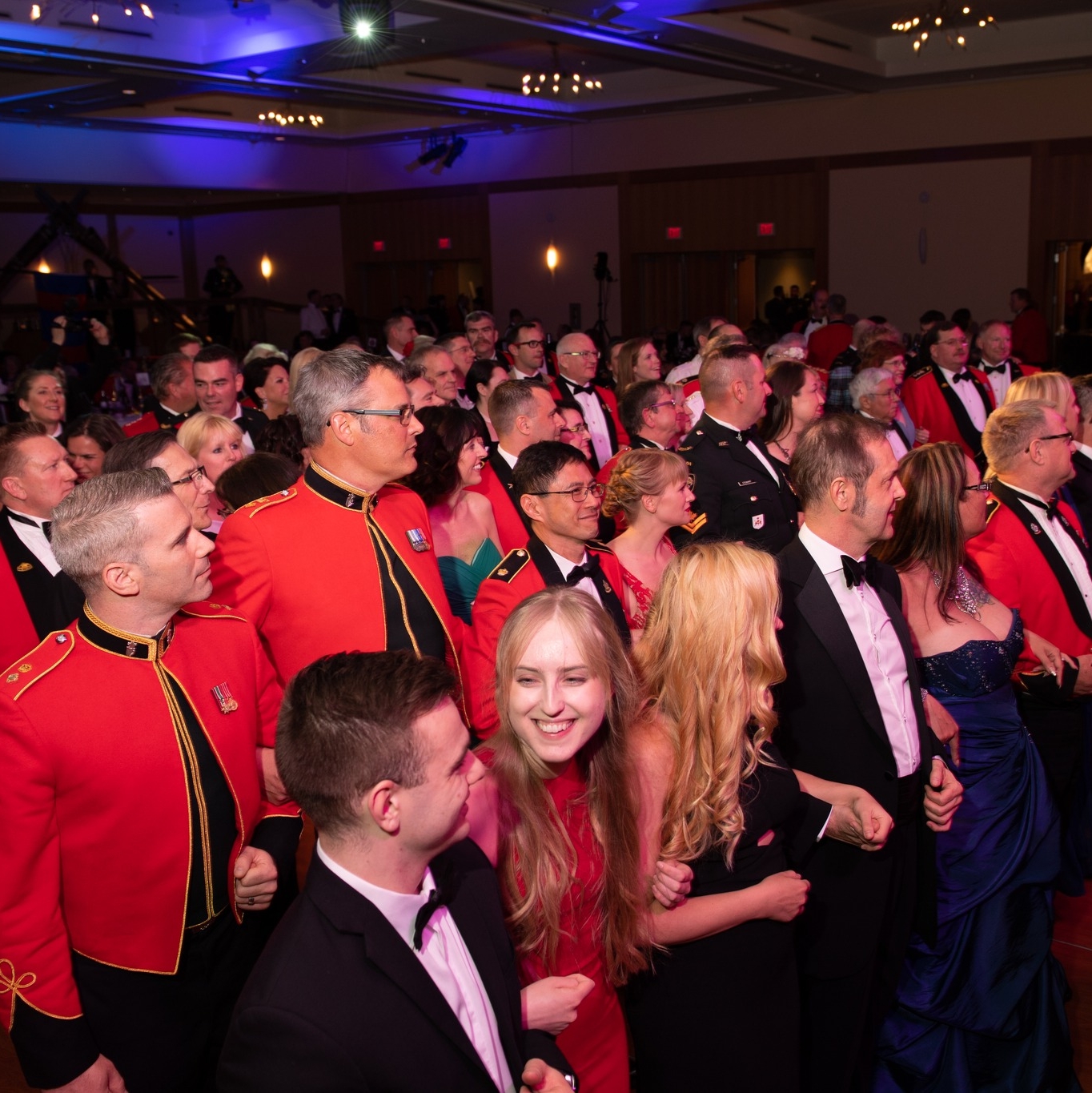
The charity gala was held at a downtown hotel ballroom, a formal event supporting veteran transition programs. I’d been invited as a guest of honor, one of several senior officers recognized for contributions to the cause.
Dad was excited to attend. Lynn insisted on coming, talking for weeks about what she’d wear, who might be there, the prestige of being associated with the event.
I wore a simple black dress, fitted but appropriate. At my shoulder, I pinned my mother’s brooch—the gold piece I’d worn for years, a small link to the woman I barely remembered but whose strength I tried to carry forward.
We arrived at 7 PM. The ballroom was filling with active-duty personnel, veterans, and civilians connected to military organizations. I recognized several faces, exchanged greetings, introduced Dad to colleagues who’d heard me mention him.
Lynn stayed close, observing, cataloguing, positioning herself to be included in photos and conversations. She introduced herself as my stepmother to anyone who’d listen, laughed too loudly at jokes she didn’t understand, touched Dad’s arm possessively whenever someone paid attention to him.
The accusation landed like a physical blow. “It was my mother’s.”
“That’s not what it looks like.”
Her eyes locked onto the brooch, expression shifting to something harder, colder. “You stole this.”
The words came out quietly, but the venom was unmistakable. I froze. Around us, the gala continued—voices and laughter blending into background noise.
Lynn’s hand moved toward the brooch, her fingers closing around it. “You’re too poor to be wearing something like this,” she hissed.
She pulled hard. The pin dug into my dress fabric, the sudden pressure wrenching my shoulder forward. I tried to step back, but her grip tightened. She was trying to rip it off me in the middle of a ballroom full of military personnel and veterans, in front of colleagues and strangers, in front of my father.
The Veteran’s Intervention
He looked at Lynn, his expression calm but unyielding. “Lady,” he said quietly, “that is the Medal of Honor.”
The room didn’t exactly go silent, but I felt the shift. People nearby turned, picking up on the tension.
Lynn’s face went pale. She tried to pull her hand back, but the man held firm for another second before releasing her.
“Do you not know who she is?” he added, his voice still calm but carrying weight that silenced the space around us.
Lynn stepped back, her expression cycling through shock, confusion, and panic. She looked at me, at the brooch, at the people watching, trying to piece together what had just happened.
Dad appeared at my side, his face flushed with shame. Not shame for me—shame for her.
The older man nodded once, a small acknowledgment, then stepped back into the crowd.
Lynn opened her mouth, closed it, opened it again. “I—I didn’t—”
“Don’t,” I said quietly.
She looked at Dad, searching for support, for someone to tell her it was okay, that she’d just made a mistake. But Dad didn’t move. He stood next to me, solid and silent.
Lynn turned and walked away, moving through the crowd toward the exit.
It wasn’t the public spectacle that hurt—it was the instinct. The immediate assumption that anything beautiful on me couldn’t possibly belong to me, that I must have stolen it. Because in Lynn’s mind, I was always somehow less, always too poor, too undeserving to wear something valuable.
The Aftermath and Understanding
I stepped outside twenty minutes later, needing air and distance. The older man from inside was there, moving carefully with his cane.
“I hope I didn’t overstep,” he said. “I don’t make a habit of grabbing people.”
“You didn’t. Thank you.”
He turned to leave, then paused. “For what it’s worth, that brooch? Your great-uncle earned it. Normandy, 1944. Saved his entire squad when their position got overrun. Died three days later from wounds he took doing it.”
I stared at him. “How did you know?”
“I didn’t serve with him, but I knew men who did. That insignia is distinctive if you know what you’re looking at.” He glanced back toward the door. “Some people see a piece of metal and think it’s jewelry. Others see what it cost.”
Dad came out as the man left. He looked older suddenly, more tired than I’d seen him in years.
“She crossed a line,” he said finally.
“Yeah.”
“I should have said something earlier. All those little comments, the way she talked to you. I thought if I ignored it, it’d stop.”
“It’s not your fault.”
“It is, though. Part of it. She made you feel small in my house. And I let her.”
I realized I’d been overfunctioning for years, compensating for her lack of contribution by contributing more myself. Absorbing her disrespect because confronting it would create conflict, and conflict would hurt Dad.
But staying quiet had hurt him too. It had allowed Lynn to believe she could treat me however she wanted without consequences.
Setting the Boundary
I called Dad two days later and asked if we could meet somewhere neutral. He suggested a diner we used to go to when I was younger, the kind of place with vinyl booths and coffee that tasted like it had been sitting too long.
He was already there when I arrived, hands wrapped around a mug, weariness in his face showing he knew this conversation wouldn’t be easy.
“Lynn’s been staying at a friend’s house since the gala,” Dad said. “I didn’t ask her to leave.”
“I know.”
“I told her she needed space to think about what she did. She’s been calling, texting, trying to explain. Everything except an actual apology.”
“I need to tell you something,” I said. “And I need you to hear it without defending her.”
Dad nodded.
“Lynn doesn’t respect me. She hasn’t for years. The gala wasn’t a one-time thing—it was the culmination of every small dismissal, every casual cruelty, every comment designed to make me feel less than.”
I kept my voice level, factual. “She’s rewritten history to take credit for things she didn’t do. She’s minimized my contributions while maximizing her own. She’s used my rank for social currency while resenting me for having it.”
“I’ve tolerated it because I didn’t want to put you in the middle. But what happened at the gala made me realize something. By staying quiet, I’ve been teaching her that my boundaries don’t matter.”
I wrapped my hands around the coffee mug. “I’m not doing that anymore.”
“What are you saying?”
“I’m saying Lynn doesn’t get access to me anymore. She doesn’t get my time, money, or patience. She doesn’t get to attend military functions with me. She doesn’t get to introduce me as her stepdaughter while actively undermining me.”
I looked at him directly. “I’m not cutting you out. But I’m drawing a line with her. And it’s not negotiable.”
The Resolution
Dad was quiet for a long time, weighing loyalties, trying to find a middle path that didn’t exist.
“She’s going to say you’re overreacting,” he said finally.
“I know.”
“She’s going to blame your career. Say the military’s made you cold.”
“I know.”
“What do you need from me?”
“I need you to stop trying to smooth this over. I need you to let her sit with the consequences instead of protecting her from them.” I paused. “And I need you to know that no matter what happens between me and Lynn, you and I are solid.”
Relief washed over his face. He’d been afraid of losing me, but he’d had it backwards. The risk wasn’t in confronting Lynn—it was in letting her continue unchecked until the damage became irreparable.
Her friends started reaching out, positioning themselves as mediators who could “bridge the gap” if I’d just meet Lynn halfway. I told them all the same thing: this was between me and Lynn, and I wasn’t interested in discussing it with third parties.
Meanwhile, Lynn’s version of events circulated through her social network. She’d been humiliated at a military event by her stepdaughter, who’d “let some veteran grab her” over a “simple misunderstanding.” She was the victim of military arrogance.
I let her tell whatever story she needed. The people who mattered knew the truth.
Three months passed. Lynn stopped calling. Dad mentioned her occasionally in neutral tones—she was still at her friend’s house, looking for her own place, talking about moving to a different city.
“How are you with all of it?” I asked him during one of our regular calls.
“Tired,” he admitted. “But better. The house is quieter.”
I knew what he meant. Not the absence of noise, but the absence of tension—the stress of managing someone else’s moods, walking carefully to avoid criticism.
Without Lynn’s constant demands, Dad had started rebuilding routines he’d let go. He’d rejoined his veterans’ group, started having coffee with old friends from the shop.
“I didn’t realize how much I’d given up,” he said one evening. “Little things. But they added up.”
I understood. I’d given up things too—peace of mind, boundaries, the assumption that showing up for family meant being treated with basic respect.
Moving Forward
Life simplified without the expectation of managing Lynn’s reactions. I had bandwidth I’d forgotten existed. I slept better, worked more efficiently, spent time with friends without guilt that I should be “visiting Dad” instead.
The irony wasn’t lost on me—cutting Lynn out had made my relationship with Dad stronger. We talked more frequently, conversations less fraught because they weren’t happening under her watchful management.
When I made the promotion list for Brigadier General at forty-one, I called Dad immediately.
“One star,” I said.
The silence lasted just long enough for me to worry. Then: “Your mother would be so proud.”
“Yeah. I am too.”
The official pinning ceremony was small. Dad stood in the front row in his best suit, hands shaking slightly as he clutched the program. When they called my name, he pinned one of the stars himself, fumbling the clasp.
“Proud of you, kiddo,” he whispered.
“Proud of us,” I whispered back.
Lynn wasn’t there. I hadn’t invited her. Dad hadn’t asked if he should.
Fifteen years later, I stood in a reception hall at Fort Myer wearing three stars—Lieutenant General. Dad was eighty-three now, retired to Arizona, moving slower but mind sharp as ever.
A young captain approached me nervously. “Ma’am, there’s someone asking to speak with you. She says she’s family. Lynn Hutchins. Says she used to be your stepmother.”
I found her near the entrance—older, smaller, silver hair cut shorter than I’d ever seen it. The polished veneer had cracked. Time had carved new lines, the kind you don’t get from laughing.
“Melissa,” she said when I reached her. “Congratulations. Three stars. That’s remarkable.”
“What are you doing here, Lynn?”
“I saw the announcement online. I wanted to see you. To tell you I’m proud. And to apologize. Really apologize.”
She looked smaller, not physically but spiritually. “I’m not asking you to forgive me. I’m not asking to be anything in your life. I just wanted you to know I finally understand what I did wrong.”
“I hurt both of you. I made everything about me. About how I looked. I wanted credit for things I didn’t do and control over things that weren’t mine. And I lost the only family that actually mattered because of it.”
Her eyes were wet, but she didn’t reach for theatrics. Just a woman who’d finally run out of excuses.
“Fifteen years is a long time,” I said eventually.
“I know.”
“This doesn’t change anything. We’re not going back.”
“I didn’t come here to ask for that. I just wanted you to know I see it now. That you were right to set boundaries. That all the things I blamed you for—being ‘cold,’ ‘unforgiving,’ ‘military’—those were just words I used so I wouldn’t have to look at myself.”
She didn’t wait for a reply. She turned and walked away, slipping out into the hallway. No dramatic glances, no collapse, no last-minute plea. Just gone.
“How do you feel?” Dad asked as he appeared beside me.
“Okay,” I said. “She said what she needed to say. I heard it. But it doesn’t change anything.”
Sometimes the most important thing you can do is simply stop participating in someone else’s dysfunction. Not with anger or drama, just with clarity. Real strength isn’t how much you can endure—it’s knowing when to put something down and walk away with your dignity intact.
Lynn saw a piece of metal and thought it was jewelry I couldn’t afford. The veteran saw it and recognized the blood. I learned the difference between access and relationship, between family and people who just happen to share your space. The brooch still sits on my dresser—a reminder that some things are earned, not given, and that respect isn’t negotiable, no matter who’s asking for it.

Lila Hart is a dedicated Digital Archivist and Research Specialist with a keen eye for preserving and curating meaningful content. At TheArchivists, she specializes in organizing and managing digital archives, ensuring that valuable stories and historical moments are accessible for generations to come.
Lila earned her degree in History and Archival Studies from the University of Edinburgh, where she cultivated her passion for documenting the past and preserving cultural heritage. Her expertise lies in combining traditional archival techniques with modern digital tools, allowing her to create comprehensive and engaging collections that resonate with audiences worldwide.
At TheArchivists, Lila is known for her meticulous attention to detail and her ability to uncover hidden gems within extensive archives. Her work is praised for its depth, authenticity, and contribution to the preservation of knowledge in the digital age.
Driven by a commitment to preserving stories that matter, Lila is passionate about exploring the intersection of history and technology. Her goal is to ensure that every piece of content she handles reflects the richness of human experiences and remains a source of inspiration for years to come.