The promise came with Cameron’s dying breath, whispered through lips that could barely form words after the massive stroke had stolen half his body and most of his voice. I leaned closer to his hospital bed, straining to hear over the mechanical symphony of life support machines that had become our constant companions for four agonizing days.
“Daisy.” His left hand squeezed mine with surprising strength, the only part of him that still worked properly. “Promise me.”
“What, sweetheart?” I whispered back, my throat tight with unshed tears. “Tell me what you need.”
His eyes—those green eyes that had looked at me with love for forty-four years—were wide with something that looked almost like terror, an expression I’d never seen on his face before.
“Never go to Cypress Hollow.”
I frowned, confused. Cypress Hollow was the old farm property he’d bought in Arkansas thirty-two years ago, right after Clare was born. Six hundred acres of swampland and forest he’d called an investment that never panned out. In all our years together, he’d never taken me there, always saying it was too run-down, not worth the drive.
“Cameron, why would I go there?” I asked softly. “You always said it was just empty land.”
“Promise.” His grip tightened until my fingers ached. “Forget it exists.”
The desperation in his voice frightened me more than the stroke itself. In four decades of marriage, I had never seen Cameron look scared. He’d built his trucking company from nothing, weathered economic downturns, buried our daughter Clare twenty-five years ago with a stoic strength that had carried us both through the darkest period of our lives.
“I promise,” I whispered, brushing his gray hair back from his forehead. “I promise I’ll never go to Cypress Hollow.”
He closed his eyes then, and some of the tension left his face. “Love you. Always loved you.”
“I love you too, Cameron. More than anything.”
He died at three-seventeen in the morning, slipping away so quietly that I almost missed the moment when the machines changed their rhythm and nurses rushed in to confirm what I already knew in my heart.
Eight months later, I was still trying to understand what had frightened him so much about a piece of property in the Arkansas wilderness. I’d spent those months doing what widows do—sorting through a lifetime of accumulated memories, deciding what to keep and what to let go. Cameron’s clothes went to charity, his tools to his nephew Bobby, his fishing gear to the neighbor who’d admired his tackle collection for years.
But questions about Cypress Hollow lingered like smoke that wouldn’t clear. The property taxes came automatically from our bank account every six months. I’d found the deed in Cameron’s filing cabinet along with insurance papers for a house I didn’t know existed and maintenance receipts for work I’d never authorized.
Just let it go, Daisy, I told myself every time curiosity got the better of me. You made a promise.
The phone call came on a Tuesday morning while I was boxing up the last of Cameron’s business papers.
“Mrs. Whitmore? This is Sheriff Dale Cooper from Cross County, Arkansas. I need you to come to the Cypress Hollow property immediately.”
The words hit me like ice water. I sat down heavily in Cameron’s old desk chair, my heart suddenly racing. “Sheriff, my husband made me promise never to go there. He’s been dead eight months, but I gave him my word.”
There was a long pause, filled with the kind of uncomfortable silence that precedes bad news. “Mrs. Whitmore, I’m afraid I have to insist. We’ve found something at the property that requires your immediate attention. Something involving your family.”
“What kind of something?”
“Ma’am, this isn’t a conversation I can have over the phone. But there’s someone here who’s been living on your property, someone who knows you, and she’s in serious medical distress.”
My mind raced through possibilities, none of them making sense. “Living there? Sheriff, that property has been empty for thirty years. Cameron always said it was just abandoned farmland.”
“Mrs. Whitmore, I need you to drive down here today if possible. The address is 175D Old Cypress Road, about three miles south of Wynne. And ma’am? You might want to bring some identification and any property documents you have. This situation is complicated.”
I drove to Arkansas in a daze, following GPS directions through increasingly rural countryside until I turned onto a dirt road that wound through dense stands of cypress trees draped with Spanish moss. The closer I got to the coordinates the sheriff had given me, the more convinced I became that there had been some mistake.
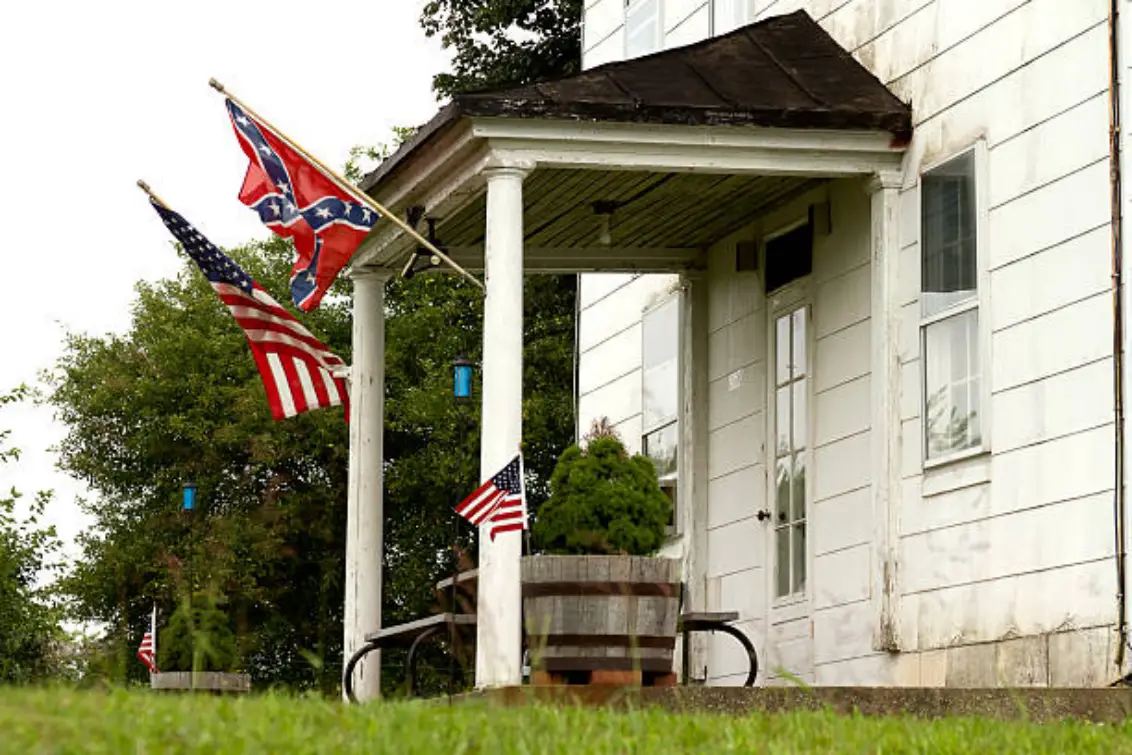
But when I rounded the final curve, I saw them: three sheriff’s department vehicles, an ambulance, and what appeared to be a well-maintained farmhouse with smoke rising from the chimney. This wasn’t abandoned property. This was someone’s home.
Sheriff Cooper met me as I got out of my car, his expression grim. He was a tall man in his fifties with kind eyes and the weathered hands of someone who’d spent time doing real work before pinning on a badge. “Mrs. Whitmore, thank you for coming. I know this is confusing, but we need you to identify someone for us.”
“Sheriff, I’ve never been here before in my life,” I said, my voice shaking slightly.
“Ma’am, that may be so, but the woman inside knows your name. She’s been asking for you specifically.”
On the front porch, wrapped in a blanket and being attended to by paramedics, sat an elderly woman with silver hair and startlingly blue eyes. She looked to be in her late eighties, fragile but alert. When she saw me approaching, her face crumpled with an emotion I couldn’t identify.
“Daisy,” she said, her voice barely above a whisper. “You came.”
I stopped dead in my tracks. “I’m sorry, but I don’t know who you are.”
The woman smiled then, a sad, tired expression that seemed to carry decades of pain. “No, you wouldn’t know me. But I know you. Cameron told me all about you. Said you were the strongest woman he’d ever met. That you nearly died trying to give him a child.”
The blood drained from my face. “Who are you?”
She looked down at her hands, trembling despite the blanket. “My name is Lorraine Defrain. I’ve been living in this house for thirty-two years. Cameron took care of me.”
“Took care of you?” I repeated. “How?”
“He brought me here after…” She paused, studying my face with an intensity that made me uncomfortable. “Daisy, I’m the woman who gave birth to your daughter. To Clare.”
The world tilted sideways. I felt Sheriff Cooper’s hand on my elbow, steadying me as my legs threatened to give out. “That’s impossible,” I whispered. “I gave birth to Clare. I was there. I held her.”
Lorraine’s eyes filled with tears. “You held her, yes. You raised her. Loved her. You were her mother in every way that mattered. But Daisy, Clare was my biological daughter. And the baby you carried—your real baby—died during birth.”
I sank onto the porch steps, my mind refusing to process what I was hearing. “You’re lying. This is some kind of sick joke.”
“Cameron switched the babies,” Lorraine whispered. “Your daughter was born dead, and mine was born healthy. He couldn’t bear to tell you, so he made an arrangement with me.”
The ride to the hospital felt like traveling through someone else’s nightmare. I followed the ambulance in my car, my hands gripping the steering wheel so tightly my knuckles went white. At the hospital, I paced the waiting room while doctors examined Lorraine’s hip fracture and ran tests to assess her overall health.
When they finally let me see her, I pulled the visitor’s chair close to her bed, my hands clasped tightly in my lap to keep them from shaking. “I need you to explain everything,” I said. “From the beginning.”
Lorraine took a shaky breath. “I was twenty-five years old, working as a waitress in Baton Rouge, barely making enough to feed myself. Cameron came into the restaurant one night. He was charming, successful, said he was in town on business. We had an affair that lasted three weeks.”
She wiped tears from her eyes with a tissue. “When I found out I was pregnant, I tracked him down in Memphis. That’s when I learned about you. He begged me not to tell you, said it would destroy his marriage. He offered me money to disappear.”
“How much?” I asked, my voice hollow.
“Two hundred thousand dollars,” she said. “It seemed like salvation. I had no family, no support system, no way to raise a child alone. But then he told me about you—about how you’d been trying to have a baby for years, about the complications you’d had.”
My hands clenched into fists. “What complications?”
“You’d had three miscarriages,” Lorraine said gently. “Cameron said the doctors weren’t sure you’d ever be able to carry a baby to term. But you were pregnant again, due just a week after me. He said if anything happened to your baby…”
Understanding crashed over me like a wave. “He already had a backup plan.”
“I didn’t know what he was planning,” Lorraine insisted. “I gave birth on March seventh at Baptist Memorial Hospital. Cameron was there. He told me he’d found a good family for the adoption, that everything would be handled properly. I signed the papers he gave me, took the money, and tried to disappear like we’d agreed.”
“But you didn’t disappear.”
“Three days later, Cameron showed up at my motel room,” she said. “He told me your baby had been stillborn, that you’d nearly died from complications, that he’d made a decision. He’d given you my baby instead of telling you the truth.”
I felt physically ill. “And you let him?”
“I tried to argue,” Lorraine said, her voice breaking. “I said it was wrong, that you deserved to know the truth. But Cameron said you were unconscious, that the trauma of losing the baby might kill you if you knew. He said it was better this way—you’d have a healthy baby, and I’d have my money to start over.”
“But that’s not what happened,” I said coldly.
“No.” Lorraine’s face crumpled. “Cameron said he couldn’t risk me changing my mind, couldn’t risk me coming back and disrupting your family. He’d already bought this property. He moved me here and told me it was temporary, just until the adoption was finalized and you’d recovered fully. But weeks turned into months, and he kept saying it wasn’t safe for me to leave yet.”
“He held you prisoner.”
“He called it protection,” she whispered. “He said if I left, if anyone knew what we’d done, we could all go to prison. He said he was protecting all of us—me, you, Clare. After a while, I started to believe him.”
Sheriff Cooper had been listening from the doorway. Now he stepped forward, his expression grave. “Mrs. Whitmore, I need to ask you directly: did you know about any of this?”
“Eight hours ago I thought my husband had been faithfully married to me for forty-four years,” I said, my voice shaking with emotion. “I’m learning that apparently I don’t know anything about my own life.”
Over the next several days, as Lorraine recovered from hip surgery, the full scope of Cameron’s deception began to emerge. Sheriff Cooper’s investigation uncovered a trail of falsified documents, paid-off officials, and carefully constructed lies that had sustained this elaborate deception for more than three decades.
I returned to Memphis and did what I should have done months ago—I tore apart every corner of Cameron’s life looking for the truth. It was behind the winter coats in his closet that I found the metal file box, locked with a padlock I broke open with a hammer and screwdriver.
Inside were documents that made my hands shake: the original birth certificate for Clare Defrain, born March seventh to Lorraine Defrain and Cameron Whitmore. Medical records from Baptist Memorial Hospital showing that I’d delivered a stillborn baby on March fourteenth—a baby who’d died in utero from cord strangulation, a baby whose death I’d never been told about because I’d been unconscious for seventy-two hours after hemorrhaging during delivery.
But it was the notebooks that devastated me completely. Thirty-two years of monthly entries documenting Cameron’s visits to Cypress Hollow, his delivery of supplies, his careful management of what he clearly viewed as a dangerous situation that required constant monitoring.
I read them all, every single entry, tears streaming down my face as I learned the truth about my marriage, my daughter, and the elaborate fiction Cameron had constructed to avoid facing the consequences of his choices.
In the final notebook, written just weeks before his death, I found the entry that broke my heart completely: “I buried our real daughter myself. Paid the hospital crematory supervisor to incinerate her body without paperwork, without records. I told Daisy the baby had been taken care of, that she didn’t need to worry about funeral arrangements while she was recovering. She was so weak, so grateful that I was handling everything. She never asked for details. Our daughter never had a name, never had a funeral, never had a grave. She existed for nine months in Daisy’s womb and then nothing. Like she never existed at all.”
My biological daughter had been cremated like medical waste while I lay unconscious, never knowing she’d existed, never given the chance to hold her or say goodbye or grieve.
I called Sheriff Cooper and told him everything I’d found. He said there would be an investigation, though he admitted that with Cameron dead and the crimes decades old, justice would be complicated at best.
But I didn’t care about justice anymore. I cared about truth.
Three weeks later, I drove back to Arkansas and sat across from Lorraine in her hospital room. She was recovering well from surgery, the doctors said, though at eighty-nine, the healing process was slow.
“I’ve been thinking about what you said,” I told her. “About how biology doesn’t make someone a mother.”
Lorraine looked at me with those blue eyes that I now realized Clare had inherited. “Daisy, I never meant to—”
“Let me finish,” I said gently. “You’re right. Biology doesn’t make someone a mother. Love does. Sacrifice does. Being there when they need you. And I was Clare’s mother in all the ways that mattered.”
Tears rolled down Lorraine’s cheeks. “You were the mother she deserved.”
“But you were her mother too,” I said. “You gave birth to her. You mourned her from that farmhouse for twenty-five years. Cameron robbed us both—he took your daughter and gave her to me, and he took my daughter and never even let me know she existed.”
We sat in silence for a long moment, two women bound together by one man’s terrible choices.
“What happens now?” Lorraine finally asked.
“Now,” I said, “we figure out how to move forward with the truth. The sheriff says you’re free to go whenever you’re healthy enough. The property is yours if you want it—I’m signing over the deed. And if you need help transitioning back into the world after thirty-two years…”
“Why would you help me?” Lorraine asked, her voice breaking. “After everything?”
“Because you were a victim too,” I said simply. “Cameron manipulated both of us. He took advantage of your vulnerability when you were young and scared, and he lied to me for our entire marriage. Neither of us deserves to keep suffering for his choices.”
Lorraine reached out and took my hand. “Thank you, Daisy. For being kind. For not hating me.”
“I don’t hate you,” I said honestly. “I hate what happened. I hate that my biological daughter never got to have a life, never even got to have a name. I hate that you were imprisoned for three decades. I hate that Clare died never knowing the truth about where she came from. But hating you wouldn’t fix any of that.”
Over the following months, Lorraine and I developed an unlikely friendship. I helped her navigate the world she’d been isolated from for so long—opening a bank account, getting a new driver’s license, learning to use a smartphone. She told me stories about Clare’s childhood from the photographs Cameron had brought her, adding details I’d never known about my daughter’s life through a mother’s eyes I’d never had the chance to see through.
We held a small memorial service for my biological daughter, the baby who’d never had a name or a funeral. I called her Grace, because grace was what I was learning to extend to everyone involved in this terrible situation—including myself.
Lorraine planted a tree at Cypress Hollow in Grace’s memory, and we scattered ashes I’d asked the hospital to create from a lock of my hair and one of Clare’s baby blankets. It wasn’t the burial my daughter deserved, but it was acknowledgment, recognition, love.
Sheriff Cooper’s investigation concluded that while crimes had been committed, prosecution was impossible with Cameron dead and the statute of limitations long expired. Doctor Marcus Brennan, the physician who’d helped Cameron switch the babies, had died fifteen years ago. The hospital crematory supervisor had retired and moved to Florida.
There would be no justice in a courtroom, no dramatic trial, no satisfying punishment for the people who’d participated in this deception.
But there was something more valuable than justice: there was truth, and there was healing.
One year after that phone call from Sheriff Cooper, I stood on the porch of the Cypress Hollow farmhouse and watched Lorraine working in her garden. She’d decided to stay on the property, transforming it from a prison into a home. I visited every month, and we’d grown close in a way I never would have expected.
“Do you think Clare would have been angry?” Lorraine asked me one afternoon as we sat on the porch drinking sweet tea. “If she’d learned the truth about her birth?”
I thought about my daughter—the bright, compassionate, fiercely intelligent girl who’d grown into a young woman with an unshakeable sense of justice and an infinite capacity for understanding complex situations.
“I think she would have been confused at first,” I said honestly. “And probably angry at Cameron for lying. But Clare had this way of seeing past surface complications to the human heart of things. I think eventually she would have understood that love is more powerful than biology, and that both of us loved her in our own ways.”
“I wish I’d gotten to know her,” Lorraine said softly.
“Me too,” I replied. “But Lorraine, she’s gone. We can’t change that. All we can do is honor her memory by living honestly from here forward.”
As the sun set over the Arkansas farmland, painting the sky in shades of orange and pink, I thought about promises and secrets and the weight they carry. I’d promised Cameron I’d never go to Cypress Hollow, and I’d broken that promise. But in breaking it, I’d found truth, and forgiveness, and an unexpected friendship with a woman who’d been as much a victim of Cameron’s deception as I had been.
Some promises, I’d learned, weren’t meant to be kept. Some secrets were too destructive to remain hidden. And sometimes the only way to heal from betrayal was to face the truth head-on, no matter how painful that truth might be.
I raised my glass of sweet tea toward the setting sun, a silent toast to Grace, the daughter I’d never known, and to Clare, the daughter I’d loved with all my heart, and to Lorraine, the unexpected friend who’d helped me understand that families aren’t just built on blood—they’re built on love, forgiveness, and the courage to keep moving forward even when the past threatens to break you.
“To truth,” I said softly.
Lorraine clinked her glass against mine. “To truth,” she echoed. “And to the future.”
And for the first time since that phone call from Sheriff Cooper, I felt something that had been missing for months: hope that despite everything that had been stolen from us, despite all the lies and manipulation and loss, we could both find a way to build lives worth living from the wreckage of Cameron’s terrible choices.
The past couldn’t be changed. But the future was still ours to write, and this time, we’d write it in truth.

Lila Hart is a dedicated Digital Archivist and Research Specialist with a keen eye for preserving and curating meaningful content. At TheArchivists, she specializes in organizing and managing digital archives, ensuring that valuable stories and historical moments are accessible for generations to come.
Lila earned her degree in History and Archival Studies from the University of Edinburgh, where she cultivated her passion for documenting the past and preserving cultural heritage. Her expertise lies in combining traditional archival techniques with modern digital tools, allowing her to create comprehensive and engaging collections that resonate with audiences worldwide.
At TheArchivists, Lila is known for her meticulous attention to detail and her ability to uncover hidden gems within extensive archives. Her work is praised for its depth, authenticity, and contribution to the preservation of knowledge in the digital age.
Driven by a commitment to preserving stories that matter, Lila is passionate about exploring the intersection of history and technology. Her goal is to ensure that every piece of content she handles reflects the richness of human experiences and remains a source of inspiration for years to come.