I had barely caught my breath after delivering my baby boy when my eight-year-old daughter leaned down close to my face and whispered, urgent and trembling, “Mom, get under the bed. Now.”
There was no playfulness in Emily’s voice, no hint of childish imagination. Just raw, visceral fear that cut through my post-labor fog like a blade.
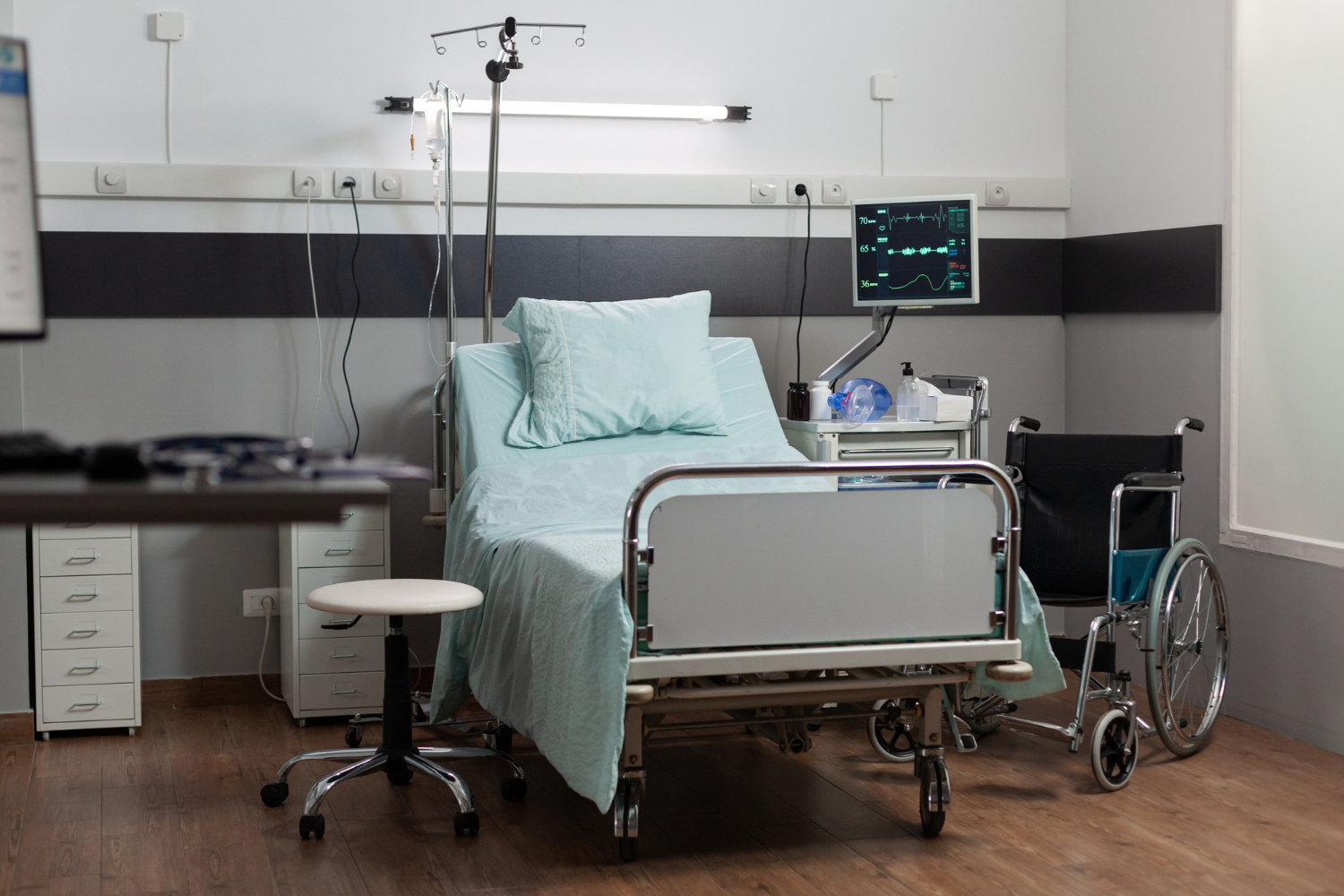
I was shaking from exhaustion, my body still buzzing from the pain of delivery, my hospital gown clinging damply to my skin. The room carried that sharp antiseptic smell mixed with the soft, sweet scent of a newborn. Nurses had just wheeled my son away for routine checks—standard procedure, they’d assured me. My husband Mark had stepped out to answer a phone call, leaving just Emily and me in the sterile quiet.
“Emily,” I murmured weakly, trying to reassure her, trying to be the calm mother despite feeling like I’d been turned inside out. “What are you talking about, sweetheart?”
She shook her head hard, her blonde ponytail whipping across her shoulders. “There’s no time. Please, Mom. They’re coming.”
“They?” The word came out as barely more than a whisper. “Who’s coming?”
Her eyes—Mark’s eyes, the same shade of gray-blue—flicked toward the door with genuine terror. She squeezed my hand, her small fingers ice-cold against my feverish skin. “I heard Grandma on the phone. She said everything would be ‘handled’ today. She said you wouldn’t be a problem anymore.”
My heart slammed violently against my ribs. Mark’s mother, Linda Reynolds, had never hidden her dislike for me. From the moment Mark brought me home to meet his family three years ago, she’d made her feelings abundantly clear. She blamed me for Mark leaving his lucrative corporate job at her family’s investment firm to start a small environmental consulting business. She resented that I already had a child from a previous marriage—saw Emily as proof that I was “damaged goods,” as she’d once said when she thought I couldn’t hear.
And she had made her feelings about this baby painfully, explicitly clear. She didn’t want another grandchild tying her son permanently to a woman she considered beneath their family’s social standing.
But this was a hospital. There were cameras, staff, protocols, regulations. Surely even Linda, with all her wealth and connections, couldn’t…
“Emily,” I whispered, forcing calm into my voice despite the ice spreading through my veins. “Adults sometimes say strange things when they’re upset. Grandma doesn’t actually mean—”
“She was talking to a doctor,” Emily interrupted, tears gathering in her eyes. “The one with the silver watch. The tall one who was here earlier. She said you signed papers. But you didn’t, Mom. I know you didn’t. You were screaming in pain and crying and you could barely hold the pen.”
A wave of cold realization crept up my spine, raising every hair on my body. Earlier that morning, in the middle of labor, someone had placed papers in front of me. I remembered being barely conscious, contractions tearing through my body like earthquake tremors. I’d been at eight centimeters, screaming for the epidural that hadn’t kicked in yet. Mark and Linda had been standing close, their voices a blur. Someone—a nurse? a doctor?—had pressed a pen into my hand.
“Just a formality,” a voice had said. “Standard consent forms.”
The pen had slipped from my trembling fingers. Someone had guided my hand. I’d made marks on paper—signatures that could have been anything, authorized anything, consented to procedures I couldn’t even comprehend in that state of agony.
Footsteps echoed down the hallway outside our room. A cart rolled closer, wheels squeaking against polished linoleum. Voices approached—low, professional, purposeful.
Emily dropped to her knees beside the bed and lifted the white bed skirt with shaking hands. “Please,” she whispered, her voice breaking. “Just trust me.”
Every logical thought told me this was absurd. I’d just given birth. I needed rest, monitoring, care. Crawling under a hospital bed was irrational, probably dangerous given my condition. The medical staff here had helped me deliver a healthy baby boy just minutes ago.
But another instinct—older, deeper, the primal mother-instinct that had kept my daughter safe her entire life—screamed louder than logic ever could.
Ignoring the pain that lanced through my abdomen, ignoring the weakness in my legs, ignoring every sensible objection my exhausted mind could muster, I slid off the bed and crawled underneath just as the door handle turned with a soft click.
From my position on the cold floor, pressed against institutional tile that smelled of bleach, I saw shoes enter the room. Expensive leather loafers—men’s, polished to a mirror shine. White orthopedic clogs with blue trim—a nurse’s shoes. And then Linda’s signature Chanel pumps, the black patent leather ones she wore to intimidate people at charity galas.
My world narrowed to shadows, dust particles dancing in strips of fluorescent light, and sound.
Linda’s voice cut through the air, calm and measured. “Doctor, she should be ready now.”
“Yes, Mrs. Reynolds.” The male voice was unfamiliar, professional, detached. “The consent documents were already signed. Postpartum outcomes can be unpredictable, especially with complicated deliveries.”
My breath caught in my throat. Complicated deliveries? My son had been born healthy after six hours of labor. Nothing complicated about it except the pain, which was completely normal.
The nurse spoke hesitantly. “Doctor… her vitals were stable earlier. She seemed to be recovering well.”
“We’ll reassess,” the doctor replied smoothly. “Postpartum hemorrhaging can develop suddenly. The paperwork is in order.”
Linda exhaled, and I heard the smile in her voice. “I understand. It’s tragic, of course. But my son has been under so much stress lately. Losing his wife would be devastating… though unavoidable, given the circumstances.”
Losing his wife.
The words echoed in my head, each syllable a hammer blow. This wasn’t medical care. This was planned. Deliberate. Murder dressed up in hospital scrubs and legal consent forms I’d been forced to sign while I was too drugged and desperate with pain to understand what I was authorizing.
My muscles screamed as I stayed frozen beneath the bed, every instinct demanding I run, scream, fight—but Emily was up there, standing beside the bed, and I couldn’t do anything that would put her in danger.
The mattress above me dipped slightly as someone leaned against it. I could see the doctor’s shoes moving closer, see Linda’s pumps planted firmly by the door as if standing guard.
Then Emily spoke, her voice small but steady. “She isn’t here.”
The silence that followed was crushing, heavy with confusion and something darker—frustration, perhaps even anger.
“What do you mean?” Linda’s tone sharpened.
“My mom went to the bathroom,” Emily said quietly, and I heard the tremor she was trying to hide. My brave, terrified daughter, lying to protect me.
“That’s not possible,” the doctor replied. “She wouldn’t be allowed to walk unassisted this soon after delivery. Where—”
“Allowed to what?”
Mark’s voice came from the doorway, and I’d never been so relieved to hear anyone in my entire life.
The door opened wider. His shoes—the brown leather ones I’d given him last Christmas—stopped abruptly just inside the room.
Linda laughed, but it came out too quickly, too high-pitched. “Oh, Mark, we were just checking on—”
“Why is a doctor in here talking about consent forms?” Mark interrupted, and I heard genuine confusion in his voice. “I just spoke to the nurse’s station. They said my wife hasn’t been cleared for any procedures. They said she’s supposed to be resting.”
The nurse with the blue-striped shoes stepped backward. “Sir, I was told by Dr. Morrison that—”
“Told what, exactly?” Mark’s voice was getting louder. “My wife just gave birth. Why would she need any procedures?”
Linda’s composure was cracking. “Mark, this isn’t the time to—”
“Dad,” Emily said, and her voice was shaking but loud and clear. “Dad, Mom is under the bed because Grandma is trying to hurt her.”
The room went absolutely silent. I could hear my own heartbeat, could hear someone’s sharp intake of breath, could hear the distant beeping of monitors from other rooms down the hall.
Slowly, like a man moving through water, Mark knelt beside the bed. He lifted the white skirt, and our eyes met in the dim space beneath the hospital bed. All the color drained from his face. His mouth opened, but no sound came out.
“What…” he finally whispered. “What is happening?”
Everything erupted at once.
Mark surged to his feet, yelling for security, his voice carrying down the hallway. The hesitant nurse fled, her shoes squeaking as she ran. The doctor—Dr. Morrison, apparently—began stammering through an explanation about standard postpartum monitoring and routine procedures, but his words tangled as Mark demanded his full name, his credentials, his authorization for whatever the hell he thought he was doing in this room.
Linda backed toward the door, her perfectly composed mask finally cracking. “Mark, you’re overreacting. This is a simple misunderstanding. I was just trying to make sure she received proper care—”
“By telling a doctor my wife was about to die?” Mark roared. “By talking about her death like it was inevitable? Like it was already decided?”
Security arrived within minutes—two large men in navy blue uniforms who assessed the situation with practiced eyes. One of them gently helped me out from under the bed while the other blocked Dr. Morrison’s exit. A charge nurse appeared, then the floor supervisor, then hospital administrators in suits and concerned expressions.
I was helped back onto the bed, shaking uncontrollably now that the adrenaline was wearing off, leaving only shock and exhaustion. Emily climbed up beside me, pressing against my side, her small body trembling.
Statements were taken. The forged consent forms were pulled from my medical file—documents I’d supposedly signed authorizing “emergency interventions as medically necessary” which, as the hospital’s legal counsel grimly explained, could have been interpreted to justify almost anything if complications arose.
Except there were no complications. My delivery had been textbook. My vitals were perfect. There was no medical justification for any intervention beyond standard postpartum care.
As security escorted Linda from the room, she didn’t look at me. But I caught her expression as she passed—not remorse, not shame, but cold calculation. She was already planning her defense, already crafting her story about a concerned mother-in-law who’d been misunderstood.
But she’d made a critical mistake. She’d underestimated an eight-year-old girl who paid attention, who questioned, who refused to accept that adults were always right simply because they were adults.
The investigation stretched on for weeks. I was moved to a different room immediately, then discharged two days later with security escorts and strict instructions about who was permitted to visit. Mark stayed with me through every police interview, every meeting with hospital attorneys, every sleepless night when I woke up gasping, convinced someone was in our house.
The hospital’s internal investigation confirmed that the signatures on the consent forms had been obtained while I was heavily medicated and in active labor—essentially, under duress and without informed consent. The handwriting analysis showed that while the signatures were technically mine, they’d been made during moments of peak contraction when I would have been incapable of reading or understanding what I was signing.
Dr. Morrison, it turned out, had been Linda’s personal physician for years. The medical board discovered that he’d received substantial “consulting fees” from Linda just days before my delivery. His medical license was revoked. He faced criminal charges for conspiracy to commit fraud at minimum, potentially much worse depending on what could be proven about his intentions.
Linda was charged with forgery, fraud, conspiracy, and attempted murder, though her expensive legal team managed to get the last charge reduced to reckless endangerment. She posted bail within hours and immediately began a media campaign painting herself as a devoted grandmother concerned about her son’s wife receiving proper medical care.
Mark was devastated, caught between the mother who’d raised him and the wife she’d tried to eliminate. He attended every court hearing, sitting on my side of the courtroom, but I could see the war raging behind his eyes.
“I never thought she’d go this far,” he said quietly one night as our newborn son—we’d named him Daniel, after my father—slept in his bassinet between us. “I knew she didn’t like you, didn’t approve of our marriage. But this… I can’t comprehend this.”
“She tried to have me killed,” I said flatly. “There’s no other way to interpret what happened in that hospital room.”
“I know.” His voice cracked. “I know, and I hate that I didn’t see it coming. I hate that I made excuses for her for years. I told myself she just needed time to adjust, that she’d come around eventually. I chose keeping the peace over protecting you, and I’m so sorry.”
I looked at him in the dim light of our bedroom—this man I’d married, who I’d believed loved me, who’d stood by passively while his mother undermined me, criticized me, made me feel small and unwelcome at every family gathering.
“But she did go this far,” I said quietly. “And I survived because our daughter was braver than every adult in that room, including you.”
Mark flinched as if I’d struck him. “That’s not fair.”
“Isn’t it? Where were you when those papers were being shoved in front of me? Where were you when your mother was standing there, watching me sign documents I couldn’t even read through the pain?”
“I stepped out to take a phone call. I didn’t know—”
“You didn’t want to know,” I interrupted. “That’s different. You’ve spent our entire marriage not wanting to know how your mother treated me. Not wanting to see how she excluded me from family events, how she made sure I understood I wasn’t good enough for her precious son.”
We sat in silence for a long time. Daniel stirred in his sleep, making soft newborn sounds. Emily was asleep in her room down the hall, probably having nightmares about hospital rooms and grandmothers who smiled while planning murder.
Something between Mark and me had changed permanently that day. Trust, once shattered, never fits back together the same way. You can glue the pieces, but the cracks remain visible, weak points that will always be vulnerable to pressure.
Three months later, I filed for divorce. Not out of anger—I’d moved beyond anger into something clearer and colder. Out of certainty that I couldn’t spend the rest of my life with someone who’d chosen comfort over confrontation, who’d prioritized his mother’s approval over my safety.
Mark didn’t contest it. He agreed to joint custody, generous child support, and a division of assets that left me financially stable. He admitted in our final mediation session that he understood why I couldn’t stay married to him.
“I failed you,” he said simply. “I failed Emily. I failed our son. I don’t know how to come back from that.”
“You can’t,” I replied. “Some failures are permanent.”
Linda’s trial lasted six weeks. The prosecution presented overwhelming evidence: the forged consent forms, Dr. Morrison’s financial records showing payments from Linda, testimony from the hesitant nurse who’d been promised a bonus to “assist with a sensitive family matter,” phone records showing calls between Linda and the doctor in the days leading up to my delivery.
Linda’s defense attorney argued that she’d simply been trying to ensure I received adequate medical care, that the consent forms were standard procedure, that any discussions about “outcomes” referred to normal medical contingencies. He painted her as a concerned grandmother whose words had been misconstrued by an imaginative child and an overly emotional new mother.
But Emily’s testimony destroyed that narrative. At eight years old, sitting in the witness box with a child advocate beside her, she recounted exactly what she’d heard: Grandma saying I’d signed papers when I hadn’t, Grandma talking about me not being a problem anymore, Grandma sounding pleased about something that was going to happen in the hospital room.
The jury deliberated for seven hours. They found Linda guilty on all charges except attempted murder, which the judge had removed from consideration due to insufficient evidence of intent to kill versus reckless endangerment.
She was sentenced to six years in prison, with eligibility for parole after three. For trying to orchestrate my death in a hospital bed while I was at my most vulnerable, for terrorizing her own granddaughter, for corrupting a medical professional—six years.
It felt simultaneously like too much and not nearly enough.
Today, my children and I live quietly in a small house across town from where Mark and I used to live together. No secrets. No pretending. No forcing smiles at family gatherings with people who wish you didn’t exist.
Emily still dislikes hospitals, though she’s getting better. She wants to be a lawyer when she grows up, she tells me solemnly. “To stop bad people who wear nice clothes and use big words to hurt people,” she says.
Daniel is three now, a bright-eyed boy who has no memory of the day he was born, no understanding yet of how close he came to growing up without a mother. Mark sees both children regularly. He’s in therapy, trying to understand how he became the kind of man who could ignore warning signs, who could enable abuse through passivity.
We’re cordial, Mark and I. Sometimes almost friendly. But there’s a distance between us that will never close, a gulf created by the moment he chose comfort over courage.
I think about that day often—the cold hospital floor, the bed above me, my mother-in-law calmly planning my removal from her son’s life, from my children’s lives. I replay it in the quiet moments, examining it from different angles, trying to understand how a human being could stand in a hospital room and discuss another person’s death as if it were an inconvenient appointment being rescheduled.
I’ve learned things I wish I didn’t know. That danger doesn’t always look violent or chaotic. Sometimes it looks polite, professional, wearing expensive perfume and speaking in measured tones about “unfortunate but unavoidable outcomes.”
I’ve learned that institutional settings—hospitals, schools, government offices—can become stages for abuse when the right people are willing to exploit their positions of authority.
I’ve learned that the word “family” can be weaponized, used to demand loyalty while offering none in return, to justify cruelty disguised as concern.
But I’ve also learned something more hopeful: that courage doesn’t require size or strength or age. Sometimes courage is an eight-year-old girl who hears something wrong and refuses to ignore it. Sometimes courage is trusting your child when every adult around you is saying everything is fine.
Emily saved my life that day. Not with physical strength, but with awareness. She listened when adults assumed she wasn’t paying attention. She questioned what didn’t make sense. She acted when action was terrifying but necessary.
I make sure she knows this. I tell her regularly that she’s a hero, that she did something remarkably brave, that I’m alive because she chose to speak up when it would have been easier to assume the adults had everything under control.
She usually shrugs, embarrassed by praise but pleased nonetheless. “You always told me to trust my gut,” she says. “My gut was screaming that something was wrong.”
“And you listened to it,” I reply. “That’s the hardest part.”
We have new traditions now, the three of us. Sunday breakfasts where we each share something we’re proud of from the week. Evening walks around our neighborhood where we greet neighbors who know nothing of hospitals or trials or mothers-in-law in prison. Bedtime routines where I tell both children that they’re safe, loved, and that their voices matter—always, even when adults are telling them otherwise.
Sometimes Daniel asks why Grandma Linda doesn’t visit like Grandma Sarah—my mother, who flew across the country immediately when she heard what happened and stayed for three months to help me recover.
“Grandma Linda made some very bad choices,” I tell him truthfully. “Choices that hurt people. When you hurt people badly enough, there are consequences.”
He seems to accept this, the same way he accepts that some people prefer chocolate and others prefer vanilla, that the world contains both kindness and cruelty, and that adults aren’t infallible beings who always make the right decisions.
Emily rarely mentions what happened anymore, though I know it shaped her in ways we’re still discovering. She’s more cautious around new people, more observant of dynamics between adults, quicker to question authority when something feels off.
Her therapist says this vigilance will likely stay with her, that childhood trauma rewires the brain’s threat detection systems. But the therapist also says Emily is remarkably resilient, that she’s processing the trauma in healthy ways, that her determination to become a lawyer shows she’s channeling her experience into purpose rather than fear.
I hope that’s true. I hope the lesson she learned wasn’t that the world is dangerous and adults can’t be trusted, but rather that she has instincts worth listening to and a voice worth using.
As for me, I’m rebuilding. I went back to school—something I’d put off for years—and I’m studying social work with a focus on domestic abuse prevention. I want to help other women recognize danger before it escalates to hospital rooms and forged consent forms. I want to teach people that abuse isn’t always bruises and shouting, that sometimes it’s systematic, subtle, dressed up in concern and wrapped in family obligation.
I speak at support groups sometimes, sharing my story with women who nod in recognition, who’ve experienced their own versions of being dismissed, undermined, gradually erased by people who smile while sharpening knives.
“Trust your gut,” I tell them. “If something feels wrong, it probably is. Don’t let anyone—family, friends, professionals—convince you to ignore your own instincts.”
And I always end with this: “If you have children, teach them to question. Teach them that ‘because I said so’ isn’t good enough when something feels dangerous. Teach them that their safety matters more than politeness, more than not making a scene, more than keeping uncomfortable secrets.”
Because Emily saved my life by being the kind of child who questioned, who spoke up, who trusted her gut even when it meant defying what she’d been taught about respecting adults and not causing problems.
I don’t know what would have happened if I’d refused to get under that bed. Maybe nothing—maybe Mark would have walked in before anything occurred, maybe the nurse would have refused to participate, maybe Linda would have lost her nerve.
But I don’t think so. I think if I’d stayed in that bed, trusting that a hospital was a safe place and that surely no one would hurt me there, that Dr. Morrison would have found a way. An “unfortunate complication.” An “unexpected hemorrhage.” A tragic outcome that happens sometimes, despite everyone’s best efforts.
And Linda would have comforted her devastated son, helped him raise his motherless children, and gradually erased me from the family narrative until I became a footnote—Mark’s first wife, the unfortunate woman who died in childbirth, poor thing, these things happen.
Instead, I’m alive. I’m raising my children. I’m building a career that matters to me. I’m living in a small house with a garden that needs weeding and a porch that needs painting, surrounded by people who value me not for what I can provide but for who I am.
Linda gets out of prison next year. Her lawyers have already filed motions requesting that she be allowed supervised visits with Daniel, arguing that she’s his grandmother and that children benefit from family relationships.
My lawyer assures me those motions will be denied. “No judge is going to allow a woman convicted of trying to harm you to have access to your children,” she says confidently.
But I’m not taking chances. I’m documenting everything, keeping detailed records, preparing for legal battles that may or may not come.
Because I learned something else that day beneath the hospital bed: predators don’t stop being dangerous just because they’ve been caught once. They adapt, regroup, find new approaches.
But so do survivors.
I’m not the woman who crawled under that hospital bed anymore—terrified, exhausted, barely recovered from childbirth, dependent on others to protect me.
I’m the woman who crawled out. Who testified. Who divorced. Who rebuilt.
I’m the woman raising children who know their voices matter, who know they’re allowed to question, who know that sometimes survival means hiding under beds and sometimes it means standing up in courtrooms and sometimes it means simply choosing yourself over people who will never choose you.
And I’m the woman who will spend the rest of my life making sure that Emily knows she saved not just my life, but all three of our lives—because without me, there would have been no one to protect her from a grandmother capable of such calculated cruelty, no one to raise Daniel with love instead of manipulation.
Sometimes I still wake up feeling cold linoleum against my cheek, hearing Linda’s calm voice discussing my death like a minor inconvenience. Those nights, I check on both children, watch them sleeping peacefully, remind myself that we made it through and we’re safe now.
Then I go back to bed and sleep soundly, because I know something Linda will never understand: that the smallest voice in the room—the one adults so often dismiss or ignore—can be the one that changes everything.
My daughter whispered, “Hide. Now.”
And because I listened, we survived.
That’s the story I’ll tell for the rest of my life, the truth I’ll share with anyone who’ll listen: pay attention to the children. They see more than we think. They hear what we miss. They sense danger we’ve been trained to rationalize away.
Emily saved my life by refusing to ignore what she knew was wrong.
I’m alive because I trusted her.
And that trust—between mother and daughter, between protector and protected, between two people who chose each other over everyone else—is the inheritance I’ll pass down to both my children.
Not fear. Not cynicism. Not the belief that the world is fundamentally unsafe.
But vigilance. Awareness. The understanding that safety is created, not assumed. That trust must be earned, not demanded. That family is defined by actions, not biology.
And most importantly: that your voice matters, even when—especially when—you’re the smallest person in the room.

Lila Hart is a dedicated Digital Archivist and Research Specialist with a keen eye for preserving and curating meaningful content. At TheArchivists, she specializes in organizing and managing digital archives, ensuring that valuable stories and historical moments are accessible for generations to come.
Lila earned her degree in History and Archival Studies from the University of Edinburgh, where she cultivated her passion for documenting the past and preserving cultural heritage. Her expertise lies in combining traditional archival techniques with modern digital tools, allowing her to create comprehensive and engaging collections that resonate with audiences worldwide.
At TheArchivists, Lila is known for her meticulous attention to detail and her ability to uncover hidden gems within extensive archives. Her work is praised for its depth, authenticity, and contribution to the preservation of knowledge in the digital age.
Driven by a commitment to preserving stories that matter, Lila is passionate about exploring the intersection of history and technology. Her goal is to ensure that every piece of content she handles reflects the richness of human experiences and remains a source of inspiration for years to come.