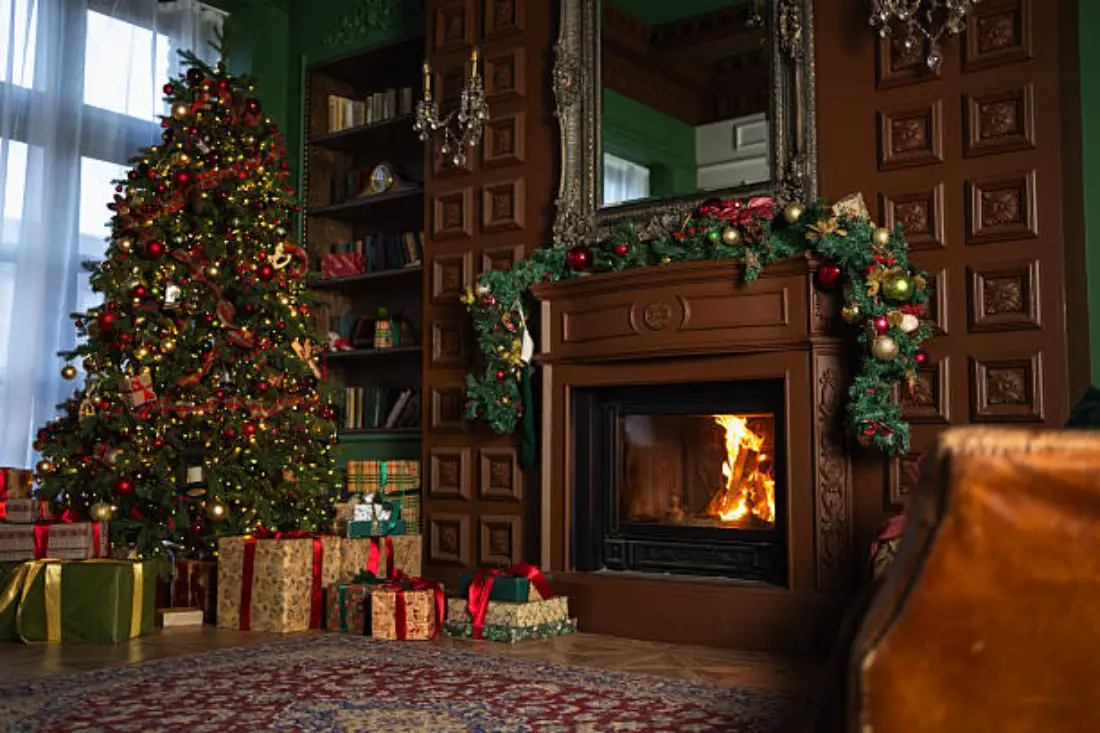
My name is Mera Lane, and for thirty-four years, I believed family was supposed to be your anchor—the people who saw you at your worst and still called you their own. I was wrong. My family’s love wasn’t an anchor. It was a spotlight that never quite found me, always fixed on my sister while I stood just outside the warm circle of light, watching.
This story doesn’t start at Christmas, though that’s where everything finally shattered. It starts in the quiet moments that accumulate over a lifetime, building a wall between you and the people who share your blood, brick by invisible brick.
I grew up in a suburb where appearances mattered more than authenticity. Manicured lawns, new cars every three years, Christmas cards featuring matching family sweaters. My father, Robert Lane, built a successful chain of auto parts stores from nothing. He loved to remind everyone of that fact—the self-made man, the patriarch who provided. My mother, Evelyn, was his perfect complement: the gracious hostess, the keeper of our carefully curated image.
And then there were his daughters.
Chloe, my younger sister by two years, was the star. Bright, bubbly, with a laugh that could soften our father’s stern face in an instant. She got the solo in the school musical, brought home the trophies, required extra help and attention because she was just so sensitive, so special, so deserving of their focus.
I was the stagehand. Reliable, quiet, the one my grandmother once called “Mirror” because I reflected back whatever people needed to see. I got straight A’s without fanfare, learned to cook at twelve because Mom was too busy helping Chloe with homework, started working at sixteen and never asked for a dime. I built my own life in the margins of theirs, eventually becoming a graphic designer with a small apartment in the city—forty minutes from the perfect house where I’d grown up feeling like a guest.
I visited every Sunday for dinner. I called. I remembered birthdays. I was the dependable one, the easy one, the one they never had to worry about. And I told myself I didn’t mind. I was stronger, more independent. I didn’t need what Chloe needed.
But the cracks were always there. They showed in the way my mother’s hug felt slightly mechanical when it was my turn, compared to the long, rocking embrace she gave Chloe. They appeared in the Christmas gifts—Chloe got a weekend trip to Paris one year while I received a practical new coat. “You’re so sensible, Mera,” my mother said. “You appreciate practical things.”
The cracks widened at dinner tables where my father talked over me if I mentioned my work but leaned in fascinated when Chloe discussed her latest yoga class drama. I became an expert at translation, turning their neglect into something that didn’t hurt. He’s stressed with the business. She’s closer to Chloe because they’re more alike. They show love in different ways.
But some wounds can’t be translated away.
The deepest cut came five years ago when my grandmother died. Nana was the only person in my family who truly saw me. She taught me to paint, kept my childhood drawings in a special folder, whispered to me once, “Your heart is a quiet superpower, Mirror. Don’t let them make you think it’s weakness.”
In her will, she left me her wedding ring—a simple, beautiful sapphire that had been on her finger for sixty years. She left Chloe a small sum of money.
The day after the will reading, my mother cornered me in the kitchen. “Mera, honey,” she said, her voice coated in false sympathy, “Chloe is devastated. She feels so overlooked. That ring would mean so much to her, and you’re just not sentimental like that. Would you consider letting her have it?”
I looked at this woman who had just lost her own mother and realized she was asking me to surrender my last tangible connection to the only person who’d made me feel loved—all to soothe the fictional grief of a daughter who’d visited Nana maybe three times a year.
My heart didn’t just crack. It went cold.
“No, Mom,” I said, my voice surprisingly steady. “Nana left it to me. I’m keeping it.”
The shock on her face was profound, as if I’d slapped her. I had broken the script. I was supposed to be compliant, to smooth things over, to understand. By refusing, I’d become difficult.
Things were never the same after that. The Sunday dinners grew strained. My achievements—a promotion, buying my apartment—were met with muted “that’s nice” while Chloe getting a new puppy warranted a week-long celebration. The distance grew, but I kept showing up because that’s what family does, right? You keep showing up even when you’re only there as background scenery.
Then last year, I started noticing whispers. I’d catch the tail end of conversations when I walked into rooms. My parents would exchange loaded glances. When I asked what was going on, my father waved dismissively. “Just business, Mera. Nothing to worry about.”
I wasn’t worried. I was suspicious. The air in their house grew thick with a secret I wasn’t part of. I knew with cold certainty that I was on the outside of some family meeting to which I hadn’t been invited. And I knew, deep in my bones, that this Christmas was going to be different.
Christmas at my parents’ house wasn’t just a holiday—it was a production. My mother started planning in October. Every decoration had to be magazine-perfect. The menu was a curated blend of tradition and showmanship. It felt less like a celebration and more like filming an episode of The Perfect Lane Family Holiday Special.
That year, the pressure felt sharper. The usual festive anxiety was laced with something else: a nervous, giddy energy that hummed around my parents, especially when they looked at Chloe. My sister practically vibrated with smugness, calling me periodically to drop cryptic hints. “You are going to be so surprised this Christmas, Mera. Mom and Dad have outdone themselves.”
Meanwhile, my own life was quietly thriving. My design business was flourishing. I’d landed two major clients that fall and even taken a solo trip to Italy in November—something I’d dreamed of for years. When I showed my family photos after a Sunday dinner, my father squinted at the Coliseum and said, “That’s a long way to go by yourself. Couldn’t you have waited for someone?” My mother patted my hand. “It’s brave, dear. A little lonely, but brave.”
I smiled and put my phone away. Their inability to be happy for me no longer stung. It just felt factual.
A week before Christmas, my mother called. “Mera, we’re doing gifts differently this year. Your father and I have one big gift for Chloe—it’s substantial. We don’t want her to feel awkward opening it if everyone else has smaller things, so we thought we’d do hers first, just family, before the cousins arrive.”
The subtext was crystal clear: Your gift will be pathetic in comparison, and we need to manage the optics.
“What about my gift?” I asked flatly.
“Oh, we’ll exchange regular gifts afterward,” she said quickly. “This is just about Chloe’s main present. You understand, don’t you? You’ve always been so understanding.”
Understanding. My family role, codified. The one who made things easy by accepting less.
“Sure, Mom. Whatever works.”
After I hung up, I sat in my apartment for a long time, looking at my small Christmas tree decorated with ornaments I’d collected over years: a glass star from Nana, a silly felt penguin from college, a blown-glass ball from Venice. It was my tree, representing my life—a life they never really saw.
A cold resolve formed in my chest.
I had already bought their gifts: a leather journal for Mom, a rare first-edition book on classic cars for Dad, an expensive cashmere scarf for Chloe. Thoughtful, personal, substantial. But suddenly they felt like props in a play where I was the bit-part actor.
I walked to my desk and opened the top drawer. Inside a small elegant box was a key—a real brass key attached to a keychain shaped like an abstract house. This key represented a secret project I’d been working on for over a year, something I’d told absolutely no one about.
While they whispered and planned Chloe’s substantial gift, I had been quietly, meticulously building something of my own.
I could go to Christmas, play my part, swallow the bitterness, keep the peace. I could be understanding Mera one more time. Or I could change the script.
I set aside the rare book I’d wrapped for my father and replaced it with a simple flat envelope. Inside, I placed a single sheet of paper containing a photograph and one line of text. I wrapped it neatly, tied it with a ribbon, and on Christmas morning, I drove to my parents’ house with it on the passenger seat and my heart beating steady as a drum—not with anxiety, but with certainty.
The house was predictably a winter wonderland: giant wreath, garlands snaking up the banister, pine and cinnamon so strong it was almost oppressive. My mother met me at the door. “Mera, you’re late,” she said—not hello.
I was fifteen minutes past the unspoken pre-gathering time. “Traffic,” I lied. I’d actually sat in my car down the block, finishing my coffee and my resolve.
Inside, the scene was set. My father stood by the fireplace with whiskey in hand, every bit the patriarch. Chloe perched on the cream sofa in a red dress, practically bouncing with suppressed glee. The air was thick with anticipation—none of it for me.
“Well, now that everyone’s finally here,” my father said with a pointed glance my way, “let’s get started. Your mother and I have something very special for Chloe.”
My mother clasped her hands, eyes shining with tears. “Chloe, sweetheart, we’ve watched you struggle. The city is expensive, and that apartment isn’t a forever home. We want you to have stability. A foundation.”
Chloe’s hand flew to her mouth in a perfectly rehearsed gesture. “Oh, Mom. Dad.”
My father pulled a small wrapped box from behind the tree and presented it with a flourish. “This is just the beginning, pumpkin.”
With trembling fingers, Chloe tore the paper. Inside, nestled on velvet, was a shiny silver key.
“It’s not just any key,” my father boomed, chest swelling. “It’s the key to your new home. We bought you a house, Chloe. A beautiful two-bedroom condo in the river development. Paid in full.”
The room erupted. Chloe screamed, launching herself into their arms. Tears, laughter, “I can’t believe it.” My mother sobbed openly. My father looked prouder than I’d ever seen him.
Then their eyes slid to me, waiting for my reaction.
Chloe detached herself, clutching the key like a holy relic. “Oh, Mera,” she said, voice dripping with condescension, “don’t feel bad. You’re so independent. You’ve always been the strong one. You’ll understand one day when you have a family that needs this kind of help.”
My mother nodded vigorously. “Yes, darling. You’re so self-sufficient. You’ll understand one day.”
There it was—the final brushstroke on the masterpiece of my exclusion. My self-sufficiency wasn’t a trait to admire. It was an excuse. A reason I didn’t need their love or support. My needs were invisible because I didn’t make them a spectacle.
I didn’t say a word. I didn’t cry or flinch. I just stood there holding my gifts and offered a small, closed-lipped smile—the smile of someone who has just seen the final puzzle piece click into place.
My father, perhaps unsettled by my silence, cleared his throat. “Well, shall we do the rest of the gifts? Mera, what did you bring for your sister?”
This was the moment. I could hand over the scarf, mumble congratulations, let the scene play out. Or I could step into the light.
“Actually, Dad,” I said, my voice calm and clear, “I have something for you first.”
I walked forward into the center of their perfect tableau and held out the flat envelope to my father.
He looked at it, then at me, confusion replacing pride. “What’s this?”
“Your Christmas gift.”
He took it, brow furrowed, and untied the ribbon with clumsy fingers. He slid out the single sheet of paper, looked down, and his face dropped. All the color—all the smug satisfaction—drained from his features in an instant. His eyes went wide, then narrowed as he scanned the page. His mouth went slack.
He stared at the paper as if it were written in a forgotten language.
The room fell utterly silent. My mother’s sniffles stopped. Chloe froze, key pressed to her heart.
“Robert,” my mother whispered, voice tense, “what is it?”
My father didn’t answer. He slowly raised his eyes from the paper to meet mine. In them, I saw a storm: shock, disbelief, dawning horror, and finally a piercing, awful comprehension. He finally understood. But I could see in his eyes the simultaneous terrible realization—it was too late.
The understanding had come a lifetime too late.
“Robert, for God’s sake, what is it?” My mother’s voice cut through the quiet. She took a step toward him, but he seemed not to hear.
Chloe looked between us, confused. “Dad, what did she give you?”
He looked down at the paper again, as if hoping it had changed. It hadn’t.
On the sheet was a stunning photograph: a modern two-story home built of reclaimed wood and glass, nestled among tall pines at a lake’s edge. Morning sun glinted off huge windows, and the front porch overlooked water so still it mirrored the sky. It was the kind of house featured in architectural magazines—a serene masterpiece speaking of peace and quiet success.
Beneath the photograph, in clean bold type, was a single line: “Lakehouse purchased in full by Mera Lane. October 15th.”
That was it. No explanation. No plea for recognition. Just a fact. A beautiful, devastating fact.
My father’s breath left him in a slow, pained exhale. “You bought this?” he finally managed, voice raspy.
I nodded once. “Yes.”
“October. You closed two months ago.” He was floundering, his businessman’s mind trying and failing to process it. “With what? How could you afford this?”
“With my business,” I said calmly. “The one you never asked about. The clients I’ve worked for. The projects I’ve completed. I saved. I invested. I built it, Dad. Just like you built yours.”
The comparison hung in the air, a direct challenge he couldn’t refute. He had built his empire from nothing. And I—his quiet, understanding, self-sufficient daughter—had built a life completely without him. Without his help, advice, money, or approval.
I hadn’t just bought a house. I had built a monument to my own independence, exposing the hollow core of his favoritism.
My mother snatched the paper from his hand. She stared at the photo, her face morphing from confusion to horrified understanding. “You bought a house. A lakehouse. Why didn’t you tell us?”
Her questions were accusations born of wounded pride. “Why would I tell you?” I asked gently, without warmth. “You never asked. You were always too busy planning Chloe’s next big thing.”
Chloe finally moved, dropping her precious key on the coffee table with a clatter. She strode over and peered at the photograph, her face contorting with ugly, jealous disbelief. “That’s the Silver Lake development. Those lots cost a fortune. This has to be fake. Photoshop.”
I looked at my sister who’d just been handed a condo and was now resentful of a picture. “It’s not fake, Chloe. It’s my home. The deed is in my safe, along with the blueprints I helped design.”
My father found his voice, but it was hollow. “You helped design it?”
“Yes. I worked with the architect for over a year. It has a studio with northern light for painting. A library. A kitchen with a fireplace.”
I wasn’t bragging—just describing the life I’d built brick by brick while they weren’t looking.
My father sank into his armchair that served as his throne. He looked suddenly old, lines deepening. The proud patriarch was gone, replaced by a man who’d just realized he’d been admiring a single tree while an entire forest grew silently behind his back.
“You did all this alone,” he whispered.
“I had to,” I said. And in those three words, I packed all the years of lonely triumphs—promotions celebrated with takeout for one, decisions made with no one to ask.
“You made it very clear that your support and investment were for Chloe. My strength was my problem. So I solved it.”
My mother was crying again, but these weren’t happy tears. “We didn’t know. We thought you were fine.”
“I was fine,” I said, my composure showing its first cracks, a tremor entering my voice. “I am fine. I’ve always been fine because I had to be. But fine isn’t the same as being seen. Fine isn’t the same as being loved equally.”
I looked at the three of them: my father shrunken in his chair, my mother clutching the damning photograph, my sister staring at me with hatred and awe. The Christmas tree twinkled, a silent witness to our family myth unraveling.
“A lakehouse,” my father said again, not a question—just trying the words on, feeling their weight. In his world, a house was the ultimate symbol of provision, of patriarchal success. He’d just presented Chloe with a condo key like a crown jewel, and I’d casually revealed I owned a crown of my own making—one that outshone his gift in autonomy, artistry, and sheer silent achievement.
My mother finally lowered the photograph, tears dried into shiny tracks. “Why would you do this? To embarrass us? To punish us on Christmas?”
“I didn’t hide it to punish you, Mom. I didn’t tell you because you never created a space where my news would be welcome. If I’d told you I was looking at lots, you would have asked why I needed something so big. If I’d shown you plans, you would have worried about cost, told me it was risky. You would have compared it to what Chloe needed. I didn’t want your worry or comparisons. I just wanted to build my home in peace.”
Chloe found her voice, shrill and scraping. “So this is your big ‘I told you so’? You couldn’t just be happy for me. You had to make it about you.” She gestured wildly at the key. “You had to one-up my gift.”
I almost laughed at the lack of self-awareness. “Chloe, for thirty-four years, every Christmas, every birthday, every family dinner has been about you. Your achievements, your crises, your needs. Today, for five minutes, the truth of my life entered the room. That’s not making it about me. That’s just finally allowing me to exist in the same space as you.”
My father lifted his head, eyes haunted. “You think we don’t love you?”
The question was raw, stripped bare—the heart of the cold thing that had lived inside me for years.
I thought of Nana’s ring, forgotten school plays, a thousand conversations where my words evaporated before reaching their ears.
“I think you love the idea of me,” I said carefully. “The easy daughter who doesn’t make waves. I think you love that I make your lives convenient. But love isn’t convenience, Dad. Love is attention. Curiosity. Celebrating quiet victories as much as loud ones. You love Chloe actively. You love me by absence—by assuming I’ll always be there, understanding, in the background.”
My mother made a small wounded sound. “That’s not true. We’re proud of you.”
“Are you?” I asked, genuinely curious. “What’s the name of my business? Who are my biggest clients? What project did I just finish that I was excited about?”
Their blank, guilty stares were answer enough.
“You’re proud of the fact that I’m independent. You’re not proud of me. There’s a difference.”
My father pushed himself up and walked to the window, looking out at the empty backyard. “All this time, I thought we were giving you the gift of our confidence. That by not coddling you, we were making you strong. I saw you as finished. Complete. Like you didn’t need what Chloe needed.”
“I didn’t need a house bought for me,” I said, standing behind him. “I needed my father to look at my blueprints. I needed my mother to ask about paint colors. I needed you to want to be part of it—not fund it. Chloe needed a rescue. I just needed a witness.”
He turned, face etched with grief. “I failed you.”
The confession was wrenched from somewhere deep. Hearing it should have felt like victory. It didn’t. It felt like a door slamming on a room I’d been trying to leave for years.
“Yes,” I said simply. “You did.”
The room settled into this new awful truth. My mother cried softly, but it sounded real now. Chloe had sunk onto the sofa, staring at the wall, her earlier glow extinguished.
I picked up my purse, leaving the other gifts behind. They belonged to the family I’d thought I had.
“I’m going to go,” I said.
No one tried to stop me. They were paralyzed by understanding that had finally arrived but also broke the last thread holding us together in the old way.
As I walked out through the foyer with its towering tree and out the front door into the crisp Christmas afternoon, I felt a strange mix of emotions: deep aching sorrow, breathtaking emptiness, and underneath it all—like the first green shoot after a fire—a tiny, unshakable sense of peace.
I had spoken my truth. I had shown them who I really was. And for the first time in my life, I was leaving their house not as the understanding daughter, but simply as Mera. Alone, yes—but whole.
The weeks that followed were a journey through silence and self-discovery. I didn’t return their calls immediately. I drove to the lakehouse and spent the days between Christmas and New Year’s there, sitting by the fire I built myself, watching the frozen lake, learning who I was without the constant static of their disappointment.
My mother texted: “We’re so sorry. We love you. Please call when you’re ready.”
They were the right words, finally. But words couldn’t travel back in time. The love might be real, but the pattern was deep.
On New Year’s Eve, I made myself a promise. No more echoes of their expectations. Only my own voice.
A week into January, when the weak winter sun broke through clouds and laid a dazzling stripe across the frozen lake, I knew it was time. The peace I’d found was solid enough to withstand a difficult conversation.
I drove to their house unannounced. My mother opened the door looking like she’d aged years in two weeks. “Mera,” she breathed, relief profound in her voice. “You came.”
We sat in the living room—same configuration as Christmas, but the energy was entirely different. My father looked gaunt, the confidence he wore like armor utterly absent.
“The lakehouse is beautiful,” my father said, his words clumsy but sincere. “The photograph… it’s stunning.”
“Thank you. It is. I love it.”
My father leaned forward, gaze fixed on the carpet. “When you gave me that picture, it was like a window blew open in a sealed room. I saw everything. All the times I nodded without listening. All the times I compared your strength to Chloe’s needs and called it fair. I was lazy. It was easier to pour everything into the child who demanded it and assume the quiet one was fine. It wasn’t parenting. It was triage. And I got it catastrophically wrong.”
Hearing him articulate it so plainly was more powerful than any dramatic confession. “What do you want from us?” my mother asked, voice small. “How do we fix this?”
“I don’t think you can fix it,” I said gently. “You can’t go back and be present at my graduation. You can’t suddenly be curious about the last ten years. That time is gone. What you can do is decide what happens now.”
“I mean I’m not going to be the background character anymore. If you want a relationship with me, it has to be with the real me. The one who built a business and a house. You have to learn me. And that will take time and effort.”
“We want that,” my mother said. “I don’t know where to start.”
“You start by asking and listening without comparing it to Chloe. You start by coming to see my house as guests in my home. You start by accepting that our relationship will be different. It can’t be the same. But it can be real.”
We talked for over an hour. It wasn’t magical healing—it was hard, gritty work. But for the first time, we were talking about the dynamic instead of just living in it.
When I stood to leave, my father put a tentative hand on my shoulder. “When would it be okay to see your house?”
“Give me a couple weeks. I’ll invite you for lunch.”
“I’ll bring my toolbox,” he said. “In case anything needs fixing.”
It was his language, his offering—practical help he’d never thought I needed. “Okay, Dad. That would be nice.”
Two weeks later, they came to the lakehouse. They arrived nervous, like applicants for an important interview. When they crossed the threshold, their reactions were genuine. My mother gasped at the space, the light. My father examined the craftsmanship with reluctant respect.
I showed them the studio. My mother walked to the half-finished painting. “You captured the stillness of the ice,” she said softly—the first comment she’d ever made about my art that felt like she was actually seeing it.
Over lunch, my father told me he was stepping back from the business. “I realized I built a successful company and failed at the one thing that actually matters. I don’t know if I can learn how to be a father to you, but I’d like the time to try.”
My mother said she’d started therapy to understand why she’d let appearances hurt me. “Chloe is seeing someone too. It’s been hard for her.”
After lunch, my father fixed a sticky cabinet door, spending twenty minutes meticulously adjusting the hinge. This powerful man focusing all his attention on making a small broken thing in my home work smoothly—it felt like a perfect metaphor.
Before they left, my father opened his arms in a questioning space. I stepped into the hug. It was awkward, a little stiff. But it was real.
“We’ll see you next Sunday for dinner?” he asked.
“I’d like that.”
For the first time, I believed the dynamic could be different.
Spring came to the lake slowly. My life, like the landscape, was in gradual transformation. Sunday dinners resumed, but they were different. Sometimes just me and my parents. Sometimes Chloe came, quieter now, less the center of the universe, grappling with her own therapy revelations.
My father kept his word, stepping back from work. The first time he visited just to spend time, he brought a fishing rod. We sat in silence on my dock for an hour, not catching anything, and it was one of the best conversations we’d ever had.
My mother started a messy garden and sent me proud pictures. She asked about my clients and sometimes actually listened.
I learned to let them in without losing myself. The lakehouse was no longer my secret fortress—it was my anchor, the physical proof that I could build a beautiful life on my own terms.
One spring evening, I sat on my deck with Finn, the dog I’d adopted, his head in my lap. I thought about the journey from that Christmas morning—the key, the photograph, the shattered silence.
I hadn’t gotten the family I desperately wanted as a child. That perfectly attentive, equally loving family was a fantasy. But I’d gotten something better: reality. A family finally, awkwardly trying. And myself—a woman no longer defined by their approval or neglect.
The greatest triumph wasn’t the house or the business success or even the family shift. It was the quiet knowledge that I was enough, just as I was.
My quiet strength was no longer a curse of invisibility. It was my superpower. It had built this. It had saved me.
If you’ve ever been the quiet one, the reliable one, the one who loves from the shadows while someone else basks in the spotlight, know this: your strength is not a convenience for others. It is your foundation. You don’t need a dramatic revelation to be seen. You can start by seeing yourself.
Build your own life brick by quiet brick. Set your boundaries. Speak your truth. It might not change your family, but it will change you. It will anchor you in your own worth.
My name is Mera Lane. I was the daughter who was told “you’ll understand one day.” Now I do. I understand that the love that matters most is the love you build for yourself. Everything else is a fragile, beautiful bonus. And sometimes, when you finally show up as your whole self instead of the easy version others prefer, you might be surprised who’s willing to meet you there.
The lakehouse stands as my testament—not to what I lacked, but to what I built. And every morning when I wake to see the water through those huge windows, I remember: I am the architect of my own life, and that quiet superpower was worth discovering.

Adrian Hawthorne is a celebrated author and dedicated archivist who finds inspiration in the hidden stories of the past. Educated at Oxford, he now works at the National Archives, where preserving history fuels his evocative writing. Balancing archival precision with creative storytelling, Adrian founded the Hawthorne Institute of Literary Arts to mentor emerging writers and honor the timeless art of narrative.