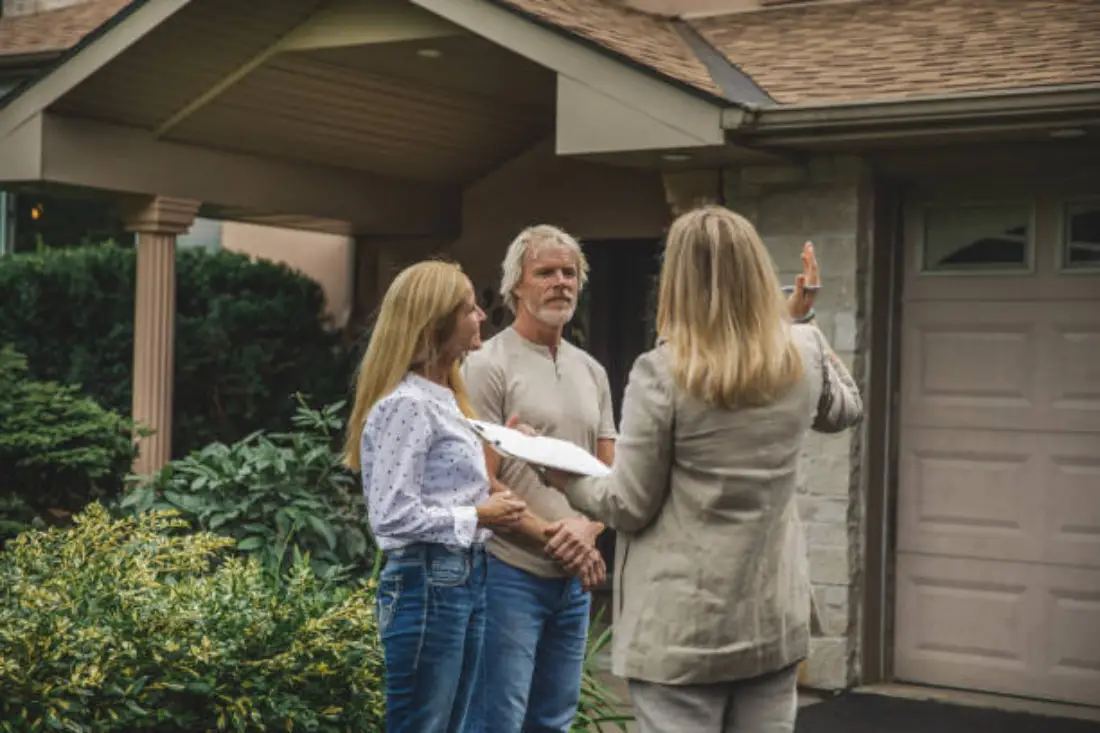
My son is screaming on the front porch, his fist pounding the door so hard the frame shakes. Belle stands behind him, her face the color of old milk, mascara already streaking down her cheeks in dark rivers. The note trembles in Quinton’s other hand—I can see it fluttering like a trapped bird. Through the window, I watch his mouth forming words. Ugly words. The kind a mother shouldn’t hear from her child. He tries his key again, jams it into the lock with such force I think it might snap. Nothing happens. The cylinder doesn’t turn, doesn’t give, doesn’t yield.
I changed the locks yesterday. Every single one. Deadbolts, doorknobs, the side entrance he probably forgot even existed. The locksmith finished at four-thirty in the afternoon, and I paid him in cash from the metal box I keep hidden in the basement—the box Quinton doesn’t know exists and never will.
Belle tugs at his arm now, her manicured fingers clutching his sleeve. Her mouth moves, probably telling him to calm down, to think, to get back in their car with the expensive luggage and new clothes they bought with my furniture money. But Quinton shakes her off violently. She stumbles backward, catching herself on the porch railing. He kicks the door once, twice, three times. The sound echoes through my empty house like gunshots.
My empty house. That’s what I came home to six days ago. Bare floors where my grandmother’s Persian rug used to lay, the one she brought from Iran in 1952. Naked walls where four generations of family photos hung in frames I’d collected over forty years. A kitchen with cabinets gaping open like mouths with missing teeth. They took the dishes—the everyday ones and my mother’s good china. They took the glasses, the silverware, the cast-iron skillet that belonged to my mother and her mother before her. They took the couch where I nursed Quinton through chickenpox thirty-seven years ago, where I held him when he cried about his first heartbreak, where his father and I sat every evening watching the news. They took the rocking chair Teao built with his own hands during my pregnancy, sanding it smooth so there would be no splinters for baby skin. They took everything except my bed and dresser, like leaving me a place to sleep made the theft less complete, like it was a mercy instead of an insult.
I watch Quinton read the note again through the window. His shoulders heave. He’s crying or raging or both. Belle backs away from him now, her eyes wide. She’s scared. Good. She should be. She’s the one who convinced him this was smart, this was practical, this was just managing Mom’s assets before things got complicated. This was her idea, her plan, her greed wearing the mask of concern.
The neighbors are watching now. Mrs. Shiomara stands on her porch across the street, her hand shading her eyes against the afternoon sun. Old Mr. Vega peers through his front window, his face pressed close to the glass. The young couple three houses down have stopped unloading groceries from their car to stare.
Let them watch. Let them see what my son became when he decided I was more valuable as furniture than as a mother. Let them see what happens when you mistake your parent’s trust for weakness, their love for senility, their kindness for opportunity.
Quinton pulls out his phone. He’s calling me. I can see his thumb jabbing at the screen with increasing desperation. My phone buzzes in my hand, vibrating against my palm like something alive and angry. I let it ring. He tries again. Again. On the fourth call, I answer.
“Ma. Ma, where are you? Are you okay?” His voice sounds wrong, strangled, like he actually cares.
“I’m fine, Quinton. I’m home.”
Silence. Complete, total silence. Then, “Home? Are you inside? The locks won’t work. My key won’t—did something happen to the locks?”
“I know they won’t work. I changed them.”
The silence that follows is thick enough to choke on. I can see his mouth hanging open through the window, see the exact moment my words register in his brain, see understanding dawn across his face like a slow sunrise.
“You what? Why would you change the locks? Ma, this doesn’t make sense. Let us in so we can talk about this.”
“This is my house, Quinton. My name is on the deed. Has been for forty-three years.”
“I know it’s your house, but I have power of attorney. I have legal rights to—”
“You have the right to make medical decisions if I’m incapacitated,” I interrupt, my voice staying level and calm because I practiced this, rehearsed it in the mirror until I could say it without crying. “The right to manage my finances if I can’t. But I’m standing right here. I’m not incapacitated. I’m not confused. And you don’t live here. You have your own apartment across town with the granite countertops and stainless steel appliances you couldn’t quite afford.”
His face goes red. Even from here, even through the window with the afternoon light glaring off the glass, I can see the color rising up his neck like a thermometer measuring shame.
“Ma, please, just let us in. We can explain everything.”
“There’s a note on the doorstep,” I say. My voice stays level, calm. I practiced this part too. “Read it. Then we’ll see if there’s anything left to talk about.”
I hang up. Through the window, I watch Belle’s hands shake as she picks up the envelope I left tucked against the door this morning, positioned exactly where they’d see it when they tried to unlock what they thought was still their access to my life. She opens it with trembling fingers, pulls out the single page. Her knees actually buckle. She grabs the porch railing to steady herself, and for a moment I think she might faint right there on the weathered boards Teao painted green twenty years ago.
She hands the note to Quinton without speaking, without looking at him. He reads it once, fast, like he’s hoping he misunderstood. Then he reads it again, slower this time. His lips move with each word, and I can almost hear him in my head, his voice cracking as he processes what I’ve written.
The note says exactly what I want it to say, what I spent three hours writing and rewriting last night, making sure every word landed like a hammer on glass: “You took everything from me while I was gone. You sold my life and didn’t even call to ask permission or explain or apologize. Now you know how it feels to come home and find the door locked, to realize the person you trusted most played you for a fool. The difference is, this is my house. It always was. You have no power here anymore. Go sleep somewhere else tonight. Think about what you did. Maybe tomorrow we’ll talk. Maybe not. Your mother.”
Six days ago, I woke up in a hotel room in Phoenix. My sister Odiss had already left for her morning walk through the desert preserve near her retirement community. The Arizona sun cut through the curtains in sharp lines, painting stripes across the carpet. My phone showed three missed calls from my neighbor Shiomara. That’s when I knew something was wrong. Shiomara doesn’t call unless it’s important.
I called her back with hands that already knew to shake.
“Nadia, honey, I don’t want to worry you, but there were moving trucks at your house yesterday. Big ones. They were loading furniture for hours.”
My stomach dropped like an elevator with cut cables. Moving trucks. At my house. While I was two states away.
“I asked the movers what was going on,” she continued, her voice careful, gentle, like she was trying not to scare me. “They said they were hired by your son. Said you were downsizing, moving to a smaller place.”
I wasn’t downsizing. I wasn’t moving anywhere. I’d told Quinton I wanted to die in that house, wanted my last breath to be in the bedroom I’d shared with Teao for forty years.
I hung up and called Quinton. It went straight to voicemail. I called again. Again. On the fifth try, I called the airline. The flight home cost twice what I’d paid to get there—last-minute tickets always do. I didn’t care. I used the credit card Quinton didn’t know about, the one I’d opened after Teao died, the one I kept for emergencies with a modest limit and a post office box statement address.
This was an emergency.
Odiss tried to come with me. I told her no. I needed to see this alone, needed to process whatever I was about to find without having to manage someone else’s reactions.
The house looked normal from the outside. Same blue shutters, same mailbox with the dent from when Quinton backed into it learning to drive, same rose bushes I planted the day he was born. I unlocked the front door, stepped inside, and felt my heart crack open like an egg dropped on concrete.
The entryway rug—gone. The console table where I kept my mail and keys—gone. I walked to the living room on legs that didn’t feel like mine, that felt like they belonged to someone else, someone who was about to discover that their entire life had been erased.
Empty. Completely, utterly empty. The couch, the chairs, the coffee table my father made, the bookshelf that held forty years of accumulated reading, the lamps, the TV stand—all of it vanished. The room echoed when I stepped inside, my footsteps bouncing off bare walls that still showed the faint rectangles where pictures had hung, protecting the paint from fading.
I checked every room with increasing horror. The dining table where we’d eaten Sunday dinners for forty years. The china cabinet that held my mother’s dishes, the ones she’d saved from the old country. The desk in the den where Quinton used to do his homework while I cooked dinner. My sewing machine. The photo albums. My mother’s jewelry box with her wedding ring and the pearls my father gave her on their twenty-fifth anniversary.
Gone. All of it gone. Sold. Disappeared into some secondhand store or auction house or stranger’s living room.
They’d left my bed, my dresser, some of my clothes still hanging in the closet like ghosts. The washer and dryer in the basement because they were bolted down. The refrigerator because it came with the house. Everything else they could carry, everything with value, everything with memory—they took it all.
I sat on the bedroom floor for an hour, maybe two. The sun moved across the bare walls as I watched the shadows change shape, watched the light fade from gold to orange to purple. I didn’t cry. Couldn’t cry. The grief was too big, too complete, too all-consuming to fit into something as small as tears.
Then I went to the basement.
My husband Teao died ten years ago. Heart attack. Quick and brutal. One moment he was laughing at something on television, the next he was clutching his chest, and thirty minutes after that he was gone. But before he died, he taught me things—important things that a woman alone needed to know.
“Never put all your money where the government can see it,” he used to say, usually while we were working on some project in the basement, his hands stained with wood varnish or paint. “Keep something for emergencies, something nobody knows about. Not the bank, not the IRS, not even family. Especially not family.”
We built the false floor together, summer of 1998. Quinton was at camp, learning to canoe and identifying trees and being thirteen. We spent three days in the basement measuring, cutting, installing. Made it look like regular concrete tile, the same gray squares that covered the rest of the floor. You’d never know unless you knew where to press.
Three tiles from the wall, four tiles down. Press hard on the northwest corner until you hear the click.
The panel lifted. The metal box sat exactly where I’d left it, wrapped in oiled cloth, sealed tight against moisture. I pulled it out, opened it, counted the bills inside. Fifty thousand dollars, give or take. Cash from years of garage sales, money from selling my mother’s coin collection after she passed, the lump sum payment when the hospital bought out my pension early and offered me retirement at sixty-two instead of sixty-five. Bills folded flat and stacked neat, sorted by denomination, preserved and protected.
Quinton didn’t know about it. I’d never told him, never told anyone except Teao. And Teao was in the ground at Elmwood Cemetery, buried under the oak tree he always said he liked because it reminded him of the one in his childhood yard.
I put the box back, sealed the panel, went upstairs. Then I called Rashad Kemp.
Rashad and I went to high school together a hundred years ago. He became a lawyer—the kind who doesn’t lose, the kind people hire when they want results instead of sympathy, when they want someone who knows how to fight dirty while staying just inside the lines.
He answered on the second ring. “Nadia Tavar, that you?”
“It’s me, Rashad.”
“Must be fifteen years since I heard your voice. How you been?”
“I need a lawyer. The kind who doesn’t play fair.”
Silence, then, “What happened?”
I told him all of it. The trip to Phoenix, the phone call from Shiomara, coming home to an empty house. The furniture, the photographs, the family heirlooms. My son’s betrayal wrapped in a legal document I’d signed because I trusted him.
When I finished, he was quiet for a long moment. I could hear him breathing, could almost see him thinking, calculating angles.
“That’s elder abuse,” he finally said, his voice hard. “Financial exploitation. We can prosecute. I can have him arrested by tomorrow morning.”
“I don’t want prosecution. Not yet. I want something else.”
“What’s that?”
“I want them to understand what it feels like to come home and find everything gone. To realize the person they trusted most in the world played them for a fool.”
“You talking about revenge, Nadia?”
“I’m talking about justice. There’s a difference.”
He breathed out slow, a sound I remembered from high school when he was considering his next chess move. “What do you need from me?”
“Information. Resources. Someone who can change locks. And someone who can make sure when they try to use that power of attorney against me, it won’t work.”
Three months ago, Quinton brought papers to my kitchen table. Belle sat beside him, smiling her white-teeth smile, the one that never quite reached her eyes. The papers were thick, legal-size, full of words like principal and attorney-in-fact and durable power.
“It’s just a precaution, Ma,” Quinton said, squeezing my shoulder in that way he’d done since he was small. “You’re healthy as a horse, but at seventy-two, you gotta be smart. What if something happens? What if you have a stroke or a fall or something? This way, I can make sure your bills get paid, your medical decisions get made. You won’t have to worry about a single thing.”
It made sense. Perfect sense. I was getting older, living alone in a house that needed constant maintenance. Quinton was my only child. Who else would handle things if I couldn’t?
Belle pushed the papers closer, her fingernails painted that shade of red that always looked like blood to me. “We’ll take care of everything. You won’t have to stress about anything complicated. We’ll handle all the details.”
I signed. I signed because I trusted him. Because he was my son. Because I’d changed his diapers and nursed him through fevers and taught him to ride a bike and helped him with algebra homework and held him when his father died. I signed because I loved him and believed he loved me.
Now I understand what I really did. I handed him the keys to my life, and he waited just long enough for me to forget they were gone before he used them to rob me blind.
Rashad arrived at my house with his paralegal, Kendra, at two o’clock the day after I found the empty rooms. They brought papers, information, a plan. We sat on my bedroom floor because there was no table, no chairs—just bare hardwood and afternoon light cutting through the windows in dusty beams.
“Power of attorney is a problem,” Rashad said, spreading documents around us like we were having a picnic of legal strategy. “It gives them authority to make decisions on your behalf, but it doesn’t give them ownership of your possessions. What they did is theft, pure and simple. Elder financial abuse. You can have them arrested.”
“I don’t want them arrested,” I said, keeping my voice steady. “Not yet, anyway.”
Kendra looked up from her notes, her pen pausing mid-word. “What do you want?”
“I want them to come home from their vacation—the vacation they took with my furniture money—and find the locks changed. I want them to stand on the porch with their suitcases and their stolen money and their new clothes and realize they can’t get in. I want them to feel what I felt.”
Rashad nodded slowly, a smile tugging at the corner of his mouth. “You want them to know they didn’t win.”
“I want them to know they can’t just erase me and expect no consequences.”
“Okay.” He pulled out his phone. “I’ll call the locksmith now. He owes me a favor. But Nadia, you need to understand—they can fight this. They have power of attorney. They can claim they were acting in your best interest, moving you to assisted living, managing your assets.”
“Let them claim it.” I met his eyes. “I’m sitting right here. I’m competent. I didn’t authorize any of this. And this is my house. My name on the deed. My property. My choice.”
Kendra smiled for the first time since arriving. “You’re going to make them beg.”
“They stole from me. They lied to me. They treated me like I was already dead, like my life was something to be liquidated and profited from.” My voice stayed level, calm. “Now they’re going to ask for permission to come inside my own house, and I’m going to decide whether to give it.”
The locksmith arrived at three-fifteen, finished by four-thirty. New deadbolts, new doorknobs, new everything. I held the keys in my palm afterward—they were still warm from the cutting machine, the metal edges sharp and new.
That night, I wrote the note. I must have started it twenty times, crossed out words, rewrote sentences, tore up drafts and started over. I wanted it perfect, wanted every word to land exactly right, wanted him to feel the weight of what he’d done.
I spent the next five days preparing. Cleaning the empty house. Checking the locks. Rehearsing what I’d say if they called, if they showed up, if they brought the police. Rashad called every morning to make sure I was okay, to remind me I was doing the right thing. Odiss called every night, still trying to convince me to give Quinton a chance to explain.
“Maybe there’s a reasonable explanation,” she kept saying.
“There’s an explanation,” I’d reply. “He stole from me. That’s the explanation.”
On the morning of day six, I positioned myself by the bedroom window—perfect view of the driveway. I had my phone ready, camera open, recording.
At four forty-seven, Quinton’s car turned onto my street. My heart pounded, but my hands stayed steady.
They pulled into the driveway looking like different people—tanned, rested, glowing with vacation health. Belle wore a dress I’d never seen before, designer label visible even from my window, probably cost more than my monthly grocery bill. Quinton had new sunglasses, expensive brand, the kind he could never afford on his insurance adjuster salary.
They bought those things with my furniture money. My mother’s jewelry money. My life money.
They pulled matching luggage from the trunk, laughing about something I couldn’t hear. Quinton’s hand rested on Belle’s lower back as they walked up the porch steps—casual, confident, like he owned the place. He reached for the doorknob, inserted his key, turned it.
Nothing.
His smile faded like someone had switched off a light. He tried again, harder this time, forcing it.
“That’s weird,” I heard him say through the window. “Key won’t turn.”
Belle tried her key. Same result. Confusion spread across their faces like ink in water.
They circled the house, testing every window, trying the back door. All locked, all changed, all mine again.
The phone calls started then, and I let them ring. On the fourth call, I answered and delivered my lines exactly as rehearsed.
When I hung up and told him to read the note, I watched Belle pick it up with shaking hands. She read it. Her face went white. Not pale—white, like someone had drained all the blood from her body. She handed it to Quinton without speaking.
He read it once, then again. His mouth moved, forming words I couldn’t hear but could imagine. Then he started screaming, pounding on the door with both fists like he could break through solid oak through sheer force of rage.
Neighbors came out. Let them watch, I thought. Let them all see what happens when you betray your mother.
Quinton pulled out his phone. “If you won’t open this door, Ma, I’m calling the cops. You’re clearly confused, clearly not thinking straight. When they get here, they’ll make you let us in, because I have power of attorney. I have legal rights.”
I’d been counting on this. Rashad had prepared me for exactly this scenario.
Two police officers arrived fifteen minutes later. Officer Callahan was older, gray at the temples, eyes that had seen everything twice. Officer Torres was younger, notebook already out, pen ready.
Quinton intercepted them before they reached the porch, his voice loud enough for me to hear every word through the window.
“Officers, thank God you’re here. My mother’s locked me out of my house. She’s elderly, confused, possibly having some kind of medical episode. I’m really worried about her.”
When the officers knocked on my door, I counted to three, then opened it. I was dressed neatly, hair brushed, completely composed.
“Good evening, officers. Can I help you?”
Both of them blinked. Whatever they’d been expecting, it wasn’t a perfectly lucid seventy-two-year-old woman.
“Ma’am, your son says you’ve locked him out of his house,” Callahan said.
“This is my house, officer.” I pulled the deed from my pocket—Rashad had told me to keep it handy—unfolded it, showed them my name. “See? Only my name. Has been for forty-three years.”
Officer Callahan examined the document carefully, handed it to Torres. “Ma’am, your son says you might be having memory issues.”
“Do I seem confused to you, officer?”
He looked at me, then looked around my empty house. His expression changed, hardened. “Ma’am, where’s your furniture?”
“Excellent question. You should ask my son. He had it moved while I was visiting my sister in Phoenix, without my permission, without even telling me. I came home six days ago to find my house stripped bare. He didn’t call, didn’t ask—just sold my life and went on vacation with the proceeds.”
Torres wrote something in her notebook. Callahan’s jaw tightened.
“Ma’am, that’s elder financial abuse. That’s a serious crime.”
“I know what it is, officer.”
“Do you want to file a report?”
“I’m considering it.”
The conversation outside got heated after that. I heard Quinton’s voice getting louder, angrier, more desperate. Callahan remained firm, unmoved. Finally, I heard the magic words I’d been waiting for.
“Sir, this is her property. You cannot force entry. Power of attorney doesn’t grant ownership, and it doesn’t authorize theft. You can leave voluntarily, or we can assist you. Your choice.”
The car door slammed. Tires screeched. They were gone.
The phone rang all night. Texts poured in—from Quinton, from Belle, from people I’d never heard of, from Belle’s mother. Not one apology. Not one person asking if I was okay. Just accusations, demands, guilt trips.
I turned my phone on silent at midnight and slept better than I had in weeks.
Morning came with harsh sunlight. At eight-fifteen, the doorbell rang. Quinton’s car, but only Quinton. No Belle.
He looked destroyed—red eyes, wrinkled clothes, like he’d aged ten years overnight.
I debated, then opened the door. Didn’t invite him in. Just stood there.
“Where’s Belle?”
“Gone. Left. Took half the money from selling your stuff and disappeared. Blocked my number. Won’t answer.”
I stared at him. “She played you too.”
He nodded, started crying—real tears this time, not the manipulative kind. “She convinced me this was smart, Ma. Said we were helping you, getting ahead of estate complications. She made it sound so logical.”
“And you believed her.”
“I wanted to believe her.”
I looked at my son—really looked at him. The boy I raised. The man who betrayed me.
“Sorry doesn’t bring back my mother’s wedding ring,” I said quietly. “Or your father’s rocking chair. Or the quilt I sewed by hand. You didn’t just steal my things, Quinton. You stole my trust. You erased me while I was still alive.”
He sobbed harder.
I should have slammed the door. Should have called Rashad. But I saw something in his face—genuine remorse. Devastating pain.
I made a choice. “Come in. We need to talk.”
We sat on the bare floor. I laid out terms. Simple, clear, non-negotiable.
“Every cent gets repaid, with interest. Five hundred dollars a month minimum. No exceptions.”
“Okay.”
“The power of attorney is revoked. Today.”
“Okay.”
“You earn back trust through actions. Not words. Actions. And that’s going to take years.”
“I understand.”
“And you never contact Belle again. Ever.”
“She’s already gone.”
Six months have passed now. Quinton comes every Sunday, brings his payment in cash—always exactly five hundred dollars, sometimes more. He helps with yard work, fixes things around the house, works side by side with me like we used to when he was young.
The house has furniture now—nothing fancy. Thrift store couch, yard sale table, dollar store dishes. It’s not the same, will never be the same, but it’s mine.
Quinton knocks when he visits. Waits for me to answer. Never assumes. The locks stayed changed. I’m the only one with keys.
I teach a class now at the senior center—financial literacy, protecting yourself from scams and predatory family members. The first week, twenty people showed up. Now I have a waiting list.
The basement still has its secret. Three tiles from the wall, four tiles down. The metal box still holds its treasure—a little less now, but most of it still there. My security. My power. My proof that I’m not helpless.
Yesterday, Quinton asked if he could bring something next week.
“What?” I asked.
“I found something at an estate sale. Thought you might want it.”
“What is it?”
“A surprise. But Ma, it’s not to buy forgiveness. I know that’s not how this works. I just saw it and thought of you.”
This morning, I sat on my thrift-store couch with tea and looked around. This house isn’t the same one I left when I flew to Phoenix. That house is gone forever.
But this house is mine. Completely mine. No one can take it. No one can sell it. No one has power over it except me.
I pulled out the one photograph I recovered—found it at a pawn shop three months ago. Me and Teao on our wedding day, young and stupid and so in love. The owner wanted fifty dollars. I paid a hundred. Worth every penny.
I set it on my thrift-store end table. My husband smiles at me from forty-five years ago.
“We did good, Teao,” I whisper. “We raised a son who made a terrible mistake. But maybe he’s learning. Maybe it’s not too late.”
The house is quiet, empty in some ways, full in others. And it’s all mine.
Justice isn’t always about punishment. Sometimes it’s about teaching what was never learned. Sometimes it’s about standing your ground when everything’s been taken, proving you have more power than they wanted you to believe.
Your name on the deed matters. Your signature on your life matters. And trust, once broken, takes years to rebuild—if it can be rebuilt at all.
But maybe that’s the lesson Quinton needed to learn. Maybe watching him try, Sunday after Sunday, cash envelope in hand, is its own kind of victory.
The door stays locked. I hold the only keys. And that’s exactly how it should be.

Adrian Hawthorne is a celebrated author and dedicated archivist who finds inspiration in the hidden stories of the past. Educated at Oxford, he now works at the National Archives, where preserving history fuels his evocative writing. Balancing archival precision with creative storytelling, Adrian founded the Hawthorne Institute of Literary Arts to mentor emerging writers and honor the timeless art of narrative.