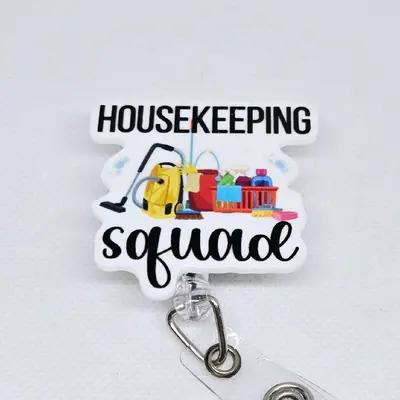
The Badge
They handed me a name badge at Christmas dinner.
Not a gift tag. Not a cute little place card with holly and ribbons.
A badge.
HOUSEKEEPER, printed in block letters on adhesive paper—clipped onto my cashmere sweater by my own daughter-in-law, Jane, like I was hired staff who’d shown up at the wrong entrance. Her parents laughed, that polite country club laugh that says we’re in on the joke. The cousins laughed, glancing at each other to confirm it was safe. Even the children giggled, because they could feel the adults enjoying something, even if they didn’t understand why.
And the worst part, the part that made my chest go tight and my vision narrow?
There wasn’t a chair for me at the table.
Not an empty chair that had been forgotten. Not a spot that could be squeezed in with an apologetic smile and a quick rearrangement. Just… nothing. As if I’d never been expected. As if my presence was an oversight that needed correction.
I’m Victoria Harper. I’m seventy years old. I raised two children largely on my own while my husband built his career. I helped grow a struggling insurance agency into a business that paid for private schools, beach vacations, and that North Dallas house with the vaulted ceilings and the designer Christmas tree. I spent forty years holding a family together with the kind of invisible work people only notice when it stops—the birthday cards that arrive on time, the holiday traditions that repeat themselves like magic, the phone calls that keep distant relatives connected, the meals that appear without anyone asking how.
So when I stood in that dining room—all Italian marble and recessed lighting, crystal glasses catching the glow from the chandelier, linen napkins folded into perfect fans—I didn’t explode.
I didn’t cry.
I didn’t make a scene.
I just looked at the seating chart displayed on an easel by the entryway, done up in calligraphy on cream cardstock, and saw my name printed at the bottom under a section labeled Support Staff.
Between “Maria (catering)” and “David (bar service).”
Jane beamed like she’d done something terribly clever, something that would be retold at future gatherings as evidence of her wit. “Just so the caterers don’t get confused,” she announced, her voice projecting across the open-concept living space. “We don’t want anyone mixing up the family with the help.”
Several people chuckled. Jane’s mother—Patricia, who wore her tennis bracelets like armor—raised her wine glass in a small salute of approval.
My son Caleb smirked, that same half-smile he’d had since he was fourteen and learned that cruelty could be disguised as humor.
“Ma, don’t make that face,” he said, reaching past me for the carving knife beside the turkey. “Food’s for family, you know that. You can eat in the kitchen after we’re done. There’s plenty.”
He said it casually, like he was explaining house rules to someone who’d just arrived. Like I hadn’t spent every Christmas of his life making sure there was a turkey, a table, a home for him to come back to.
I looked at my husband Mark, sitting in the third chair from the head of the table, positioned beside Jane’s father—and he stared down at his plate like silence could protect him from having to choose a side. His hands were folded in his lap. His jaw was tight. But he didn’t speak. He didn’t stand. He didn’t even meet my eyes.
That’s when I realized something sharp and simple, something that cut through forty-seven years of marriage and thirty-eight years of motherhood with clean, surgical precision:
This wasn’t a “joke.” It was a decision. A public one.
They wanted me small in front of witnesses. They wanted me humiliated with an audience. And they wanted me to accept it—to laugh along, to play the part, to make it easy for them to pretend this was all in good fun.
They wanted me to disappear into the role they’d written for me.
So I did what I’ve learned to do when people try to humiliate you, when they try to make your dignity negotiable: I got quiet. I got precise. I stopped performing the emotions they expected.
I looked down at my left hand, at the wedding ring that had been on my finger so long it had worn a permanent groove into my skin—a simple gold band bought back when Mark and I were twenty-three and broke, when we lived in a cramped apartment over his brother’s garage and dreamed together about the life we’d build. When we were partners. When we chose each other every single day because that’s what love meant to us.
Then I slid it off.
My finger felt strange without it. Lighter. Exposed. The white band of skin underneath looked vulnerable in the chandelier light, like something that had been hidden too long.
I stepped forward into the space where my chair should have been—the gap between Caleb’s seat and Jane’s—and I placed that ring on the white linen tablecloth in front of my son’s plate. Right next to his water glass. Right where he couldn’t possibly miss it.
The clink of gold on porcelain wasn’t loud—but the room froze like someone had pulled a fire alarm.
Conversations stopped mid-sentence. Forks paused halfway to mouths. Jane’s mother’s wine glass stopped moving toward her lips.
Caleb stared down at the ring, then slowly up at me. His smirk had evaporated. “Mom… what are you doing?”
I didn’t raise my voice. I didn’t insult anyone. I didn’t plead or explain or justify.
I just took one breath—the kind of breath you take before stepping off a ledge you can’t come back from—and I said four calm words that turned the whole dinner to stone:
“I’m resigning. Effective immediately.”
The silence that followed wasn’t just quiet. It was the kind of stunned, airless silence that happens when something fundamental shifts and no one knows what the new rules are yet.
Jane’s smile cracked like porcelain dropped on tile. “What… what are you talking about?”
I looked at her directly for the first time since I’d arrived. Really looked at her—at this woman my son had married three years ago, this stranger who’d decided that cruelty was an acceptable price for whatever social currency she thought she’d gain by diminishing me.
“I’m talking about the fact that you just handed me a badge that says ‘housekeeper’ and seated me with the catering staff,” I said, my voice even and clear. “So I’m accepting the termination. I’m resigning from my position as your unpaid labor, your emotional support system, your free childcare, your party planner, your gift buyer, your family historian, and your punching bag.”
“Mom, it was a joke—” Caleb started, but I held up one hand and he actually stopped talking.
That might have been the most shocking part. My son, who hadn’t listened to me in years, stopped talking because the woman standing in front of him wasn’t the mother he’d learned to dismiss. She was someone new. Someone done.
“It wasn’t a joke,” I said. “Jokes are funny. Jokes don’t come with seating charts that deliberately exclude someone. Jokes don’t involve humiliating your mother in front of three generations of witnesses. This was a statement. You made it very clear where I stand in this family. So I’m accepting that information and acting on it.”
I turned to Mark, who was still staring at his plate like it might open up and swallow him. “Mark. Look at me.”
He did, finally. His face was pale. His eyes were wide with something that might have been panic.
“You sat there,” I said quietly. “You sat there and said nothing while your son told me to eat in the kitchen. While your daughter-in-law pinned a ‘housekeeper’ badge on me like I was a servant she’d hired for the evening. You sat there and chose silence. So here’s what’s going to happen: I’m going home. To my home. The one I picked out, the one I decorated, the one I’ve been maintaining while you’ve been playing golf and attending your son’s barbecues and pretending you don’t see what’s been happening.”
“Victoria, let’s not do this here—” he started.
“Where should we do it, Mark? In private, where you can tell me I’m overreacting? Where you can explain that I’m being too sensitive, that I should let it go, that family is complicated and I need to be the bigger person? I’ve been the bigger person for forty-seven years. I’m tired. I’m done. And I’m leaving.”
“You can’t just leave Christmas dinner,” Jane said, and there was an edge of panic in her voice now. “What will people think?”
I almost laughed. “What will people think? Jane, you seated me with the caterers. You literally labeled me as hired help. I’m fairly certain ‘what people think’ stopped being my problem about ten minutes ago.”
I looked around the room—at Jane’s parents trying to pretend they were invisible, at the cousins staring at their phones, at Caleb’s sister Emma sitting frozen in her chair near the window. Emma, my daughter, who’d flown in from Colorado and hadn’t said a single word in my defense.
“Emma,” I said softly. “Do you have anything you’d like to say?”
She opened her mouth. Closed it. Her eyes were wet. “Mom, I… I didn’t know they were going to do that. I didn’t know about the badge.”
“But you knew there wasn’t a chair for me. You’ve been here for two hours. You saw the seating chart. And you said nothing.”
“I thought… I thought maybe you’d said you weren’t hungry, or that you wanted to help in the kitchen, or—”
“You thought I’d voluntarily choose to be excluded from my own family’s Christmas dinner?”
She couldn’t answer that. Because we both knew the truth: she hadn’t thought about it at all. It had been easier not to.
I picked up my purse from where I’d set it on the console table by the door. My hands weren’t shaking. My voice wasn’t breaking. I felt strangely calm, the way you feel when a decision that’s been building for years finally clicks into place with the weight of inevitability.
“Here’s what’s going to happen,” I said, addressing the room. “I’m going home. I’m spending Christmas alone, which honestly sounds peaceful right now. And starting tomorrow, things are going to change.”
“What things?” Caleb asked, and now he sounded worried. Good.
“All the things,” I said. “The birthday cards I send to your kids? Done. The Christmas shopping I do for your entire family? Done. The summer barbecues at my house? Done. The free babysitting every Thursday? The meals I drop off when Jane’s too busy? The checks I write when you’re ‘short’ on rent even though you drive a BMW? All done. You wanted to treat me like an employee you can dismiss? Fine. Consider me dismissed. And employees who are dismissed don’t keep working for free.”
“You’re being ridiculous,” Jane said, but her voice had gone thin.
“Am I? Because I’m pretty sure what’s ridiculous is spending three hours driving here, bringing gifts for everyone, baking two pies from scratch, and getting handed a ‘housekeeper’ badge for my trouble. I’m pretty sure what’s ridiculous is being married for forty-seven years to a man who won’t stand up for me in front of his own son. I’m pretty sure what’s ridiculous is watching my daughter sit silent while I’m humiliated because she doesn’t want to make waves.”
I opened the front door. Cold December air rushed in, carrying the smell of winter and freedom.
“Merry Christmas,” I said. “Enjoy your dinner. I hope it’s everything you wanted.”
I drove home in silence.
Not angry silence—though God knows I had every right to be angry. Not hurt silence, though the hurt was there, heavy and old and finally acknowledged.
Just… silence. The kind that comes after a storm passes. The kind that feels like the first full breath you’ve taken in years.
My house was dark when I pulled into the driveway. I’d left at 3 p.m., expecting to be gone until late evening. I’d put the lights on timers, but they hadn’t kicked on yet. The windows were black and empty.
For a moment, sitting in my car in the driveway, I felt the weight of what I’d just done. The loneliness of it. The finality.
Then I unlocked my door, stepped into my own home, and turned on every single light.
I changed out of my cashmere sweater—the one Jane had clipped that badge onto—and into flannel pajamas. I made myself a cup of tea. I turned on the fireplace. I pulled out the book I’d been meaning to read for six months but never had time for because I was too busy being everyone else’s solution to every problem.
And I sat in my living room, in my favorite chair, in my own house that I’d earned, and I read.
Around 8 p.m., my phone started ringing.
Mark, first. I let it go to voicemail.
Then Caleb. Voicemail.
Then Emma, whose voicemail I actually listened to: “Mom, please pick up. Everyone’s freaking out. Caleb’s mad, Jane’s crying, Dad’s just sitting there… Can you just come back? We can talk about this. Please?”
I deleted it.
Then texts started coming. A flood of them.
Mark: We need to talk. You can’t just walk out like that.
Caleb: This is so typical. You always have to make everything about you.
Emma: Mom please. This is Christmas. Can we just get through dinner?
Jane’s mother, Patricia: I’m not sure what happened but I hope you’re alright, dear.
That last one almost made me laugh. Patricia, who’d raised her wine glass in approval when her daughter humiliated me, suddenly concerned about my wellbeing now that I’d removed myself from the equation.
I turned my phone off.
I made myself dinner—leftover soup from earlier in the week, with good bread and butter. I ate it slowly, at my own table, in my own time. I watched a movie I’d been wanting to see. I went to bed at 10 p.m., in clean sheets, in blessed silence.
I slept better than I had in months.
The next morning, I woke to seventeen missed calls and forty-three text messages.
Most were from Mark. The tone progressed from annoyed (“This is childish”) to worried (“Are you okay? Please call me”) to angry again (“You’re making this worse”) to something approaching panic (“Victoria, we need to talk about the house”).
The house.
That’s when I knew he’d started thinking about logistics. About what my “resignation” actually meant in practical terms.
I made coffee. I took my time. Then I called my lawyer.
Janet Reeves had handled our estate planning five years ago when we’d updated our wills. She was sharp, no-nonsense, and had once told me at a dinner party that she’d seen enough bad marriages to know that good women needed better boundaries.
“Victoria,” she said when she answered. “I was hoping I’d hear from you eventually. What’s going on?”
I told her. The badge. The seating chart. The ring on the table. The decision to stop performing unpaid emotional labor for people who’d made it clear they didn’t value it.
“And Mark?” she asked.
“Sat there and said nothing.”
She was quiet for a moment. Then: “Okay. Here’s what we’re going to do. First, are you safe? Is there any chance this becomes a safety issue?”
“No. Mark’s not violent. He’s just… absent. Checked out.”
“Good. Second question: do you want to preserve the marriage?”
I thought about that. Really thought about it. About forty-seven years of partnership that had slowly eroded into parallel lives. About a man who’d stopped seeing me as a person and started seeing me as a function. About sitting in my house last night, alone, and feeling more peaceful than I’d felt in years.
“I don’t know yet,” I said honestly. “But I know I need space. And I know I’m not going back to the way things were.”
“Understood. So here’s the plan…”
By noon, I’d done three things:
First, I’d opened a separate bank account in my name only and transferred half of our joint savings. Completely legal, completely fair, and completely necessary.
Second, I’d called our insurance agent and removed myself as the primary contact on Caleb’s supplemental policy—the one I’d been paying for because he’d claimed he couldn’t afford it, despite the European vacation photos all over his Instagram.
Third, I’d sent a group email to the extended family explaining that I wouldn’t be hosting Easter, Thanksgiving, or any other holiday gatherings going forward, and that they should make alternative arrangements.
The responses came fast.
Aunt Linda: Oh Victoria, are you feeling alright? This doesn’t sound like you.
Mark’s brother Tom: What the hell is going on?
Emma: Mom what are you DOING
Caleb: (no response)
Jane: This is so unfair. You’re punishing the kids for something that was just a misunderstanding.
That last one made me set down my coffee cup with more force than necessary.
I called Jane directly. She answered on the first ring.
“Victoria—”
“Let me be very clear,” I said, cutting her off. “This isn’t about punishment. This is about consequences. You and my son made a choice yesterday to publicly humiliate me. You labeled me as ‘support staff’ and excluded me from the family table. That’s not a misunderstanding. That’s a statement about how you view me. So I’m accepting that view and adjusting my behavior accordingly.”
“But the children—”
“The children will be fine. They have two parents who can figure out birthday gifts and holiday traditions without me. If you’re concerned about them learning life lessons, here’s a good one: treat people with respect, or they’ll stop showing up for you.”
“You’re being cruel.”
I actually laughed at that. “Jane, I was handed a badge that said ‘housekeeper’ at Christmas dinner. I was told to eat in the kitchen. And I’m being cruel for declining to continue providing free labor to people who treat me like an inconvenience?”
“You know that’s not what—”
“It’s exactly what happened. You did it in front of witnesses. Own it or don’t, but stop trying to rewrite history while it’s still fresh in everyone’s memory.”
I hung up.
My hands were shaking—but not with fear. With something cleaner. Something that felt like power reclaimed.
Mark came home that evening.
I heard his car in the driveway, his key in the lock. He walked into the living room where I was reading, still in my flannel pajamas because why not, and he stood there looking like a man who’d been through a war.
“We need to talk,” he said.
“Okay.” I marked my page and set the book aside. “Talk.”
“You can’t just… blow up our life like this.”
“I didn’t blow up anything. I removed myself from a situation where I was being treated poorly. That’s called self-respect.”
“It was one dinner, Victoria. One bad night. You can’t throw away forty-seven years because of one dinner.”
“It wasn’t one dinner,” I said quietly. “It was years of dinners. Years of you checking out while I held everything together. Years of you prioritizing Caleb’s feelings over mine, Jane’s comfort over my dignity, your golf games over our marriage. Yesterday was just the first time I decided to stop pretending it was acceptable.”
“So what, you’re leaving me?”
“I don’t know yet.”
That clearly wasn’t the answer he expected. He sat down heavily on the couch, his face gray. “You don’t know?”
“I don’t. What I do know is that I’m not going back to being invisible. I’m not going back to doing everything for everyone while being treated like I should be grateful for the scraps of acknowledgment I get. I’m not going back to begging my own husband to defend me to our son.”
“I should have said something,” he admitted, his voice rough. “At the dinner. I should have stood up for you.”
“Yes, you should have. But you didn’t. And that tells me something I needed to know.”
“What does it tell you?”
I looked at this man I’d been married to for forty-seven years. This man I’d loved, built a life with, made sacrifices for. This stranger wearing my husband’s face.
“It tells me that somewhere along the way, you stopped being my partner and started being my dependent,” I said. “You stopped seeing me as Victoria and started seeing me as… what? The woman who handles things? Who makes your life run smoothly? Who absorbs the problems so you don’t have to deal with them?”
“That’s not fair.”
“Isn’t it? When was the last time you asked me how I was doing? When was the last time you noticed I was tired, or stressed, or hurt? When was the last time you defended me instead of telling me to let it go?”
He couldn’t answer. We both knew why.
“Here’s what’s going to happen,” I said. “I’m staying in this house. You can stay or you can go, but if you stay, things are going to be different. You’re going to handle your own relationship with Caleb. You’re going to do your own laundry, make your own meals, manage your own schedule. You’re going to figure out birthday presents and holiday cards without me. And you’re going to go to marriage counseling, because we clearly need help figuring out if there’s anything left here worth saving.”
“And if I don’t?”
“Then I call Janet back and we start talking about legal separation. Your choice.”
He stared at me for a long moment. Then he nodded slowly. “Okay.”
“Okay?”
“Okay. Counseling. Changes. Whatever it takes.”
I wanted to feel relief. I wanted to feel hope. Instead, I just felt tired. Forty-seven years tired.
“We’ll see,” I said.
The following weeks were hard in ways I hadn’t anticipated.
Emma called every day, trying to mediate, trying to fix things. “Mom, can’t you just talk to Caleb? He’s really upset.”
“He should be,” I said. “Maybe being upset will teach him something about consequences.”
“But you’re his mother. You’re supposed to love him unconditionally.”
“I do love him. That’s why I’m doing this. Because loving someone unconditionally doesn’t mean tolerating disrespect unconditionally. And if he never learns that, he’ll treat everyone in his life the way he treated me. Is that what you want for his wife? His children? His friends?”
She didn’t have an answer for that.
The extended family took sides. Some people—mostly the older aunts who’d been dealing with difficult sons-in-law for decades—quietly reached out with messages of support. Others acted like I’d committed some unforgivable sin by refusing to just “get over it.”
Patricia, Jane’s mother, actually had the nerve to send me a Facebook message: I think you owe Jane an apology. She’s devastated.
I blocked her.
Mark started therapy—individual first, then couples counseling with me. It was awkward and painful and sometimes I wanted to walk out because listening to him finally articulate all the ways he’d stopped seeing me as a person was harder than just living with it had been.
But I stayed. Because maybe, just maybe, something could be salvaged.
Caleb didn’t call. Not for three weeks. Not until Jane’s mother apparently told him that I’d removed him from several beneficiary accounts and stopped paying his supplemental insurance.
When he finally called, he was angry.
“You’re really going to cut me off financially because of one dinner?”
“I’m going to stop subsidizing the lifestyle of a grown man who treated me like a servant,” I corrected. “You’re forty years old, Caleb. You have a job. Jane has a job. Your children are not my financial responsibility, and neither are you.”
“So that’s it? You’re just done being my mother?”
“I’ll always be your mother. But I’m done being your ATM, your emotional punching bag, and your unpaid staff. When you’re ready to apologize—really apologize, not the ‘I’m sorry you were offended’ non-apology—and when you’re ready to treat me with basic respect, we can talk about rebuilding our relationship. Until then, I’m protecting my peace.”
He hung up on me.
I cried after that call. Not because I regretted what I’d said, but because it hurt. Because no matter how justified I was, I was still watching my relationship with my son crumble. I was still choosing my dignity over his comfort, and that choice came with grief.
But I didn’t take it back.
Three months after Christmas, on a rainy Tuesday in March, my doorbell rang.
I opened it to find Caleb standing on my porch, looking like he hadn’t slept in days. No Jane. No kids. Just my son, holding a white envelope and looking smaller than I’d seen him since he was a boy.
“Can I come in?” he asked.
I stepped aside.
We sat in my living room—the same room where I’d sat that Christmas night, reading in peace. He looked around like he was seeing it for the first time.
“The house looks different,” he said.
“I repainted. Rearranged some furniture. I needed a change.”
He nodded. Swallowed hard. “Mom, I… I wrote you a letter. Because every time I try to say this out loud, I mess it up. So I wrote it down. Can I… can I read it to you?”
“Okay.”
He opened the envelope with shaking hands and pulled out three handwritten pages.
“Dear Mom,” he began, and his voice cracked immediately. He cleared his throat and tried again. “Dear Mom. I’ve been trying to figure out how to say this for three months now. How to explain what happened at Christmas, why I let it happen, why I participated in it. The truth is, there’s no explanation that makes it okay. There’s no excuse. I treated you horribly. I let Jane treat you horribly. And I did it in front of our entire family because… because it was easier than standing up to her. Because I’ve gotten used to letting other people take the blame for my choices. Because I convinced myself that you’d always forgive me, so it didn’t really matter how badly I treated you.”
He paused, wiping at his eyes with the back of his hand.
“I’ve been in therapy. Individual therapy, because Jane and I are… we’re separated. We have been for six weeks. After you left that night, after everything fell apart, I started really looking at my marriage. At how Jane talks to people. How she talks about people. How she treats anyone she thinks is beneath her. And I realized I’d married someone cruel. Someone who thought humiliating you was funny. And worse, I realized I’d become someone who thought it was funny too. Or at least, someone who was willing to go along with it.”
He looked up at me then, his face wet with tears. “I don’t know if you can forgive me. I don’t know if I deserve forgiveness. But I need you to know that I’m sorry. Really sorry. Not sorry that you were offended, not sorry that things got awkward, but sorry for what I did. For who I became. For treating my own mother like she was invisible. For sitting there while my wife handed you a ‘housekeeper’ badge and pretending it was okay. For telling you to eat in the kitchen like… like you were nothing.”
He folded the letter, his hands shaking so hard the paper rattled. “I know I can’t undo it. I know saying sorry doesn’t fix it. But I need you to know that I see it now. I see what I did. And I’m going to spend the rest of my life trying to be better. Trying to be the son you deserved. Whether you want me in your life or not.”
The silence that followed was enormous.
I thought about that Christmas dinner. About the badge. About the empty space where my chair should have been. About forty years of motherhood reduced to a joke at a holiday table.
I thought about the three months since. The peace I’d found. The boundaries I’d built. The life I’d started reclaiming.
And I thought about this man sitting in front of me—my son, my baby, the child I’d raised to be better than this—finally, finally seeing what he’d done.
“Stand up,” I said.
He did, confused, still clutching his letter.
I stood too. And I wrapped my arms around him—this man who’d hurt me so deeply, this child I’d loved before he was born—and I held him while he sobbed into my shoulder like he was twelve years old again and the world had just ended.
“I forgive you,” I whispered into his hair. “But Caleb, listen to me. I forgive you, but things can’t go back to the way they were. Do you understand? We can rebuild. We can heal. But I’m not going back to being invisible. I’m not going back to being taken for granted.”
“I know,” he choked out. “I know. I don’t want you to. I want… I want to know you. Really know you. Not just as mom, but as a person. I want to do better.”
“Then we’ll figure it out. Together. But slowly. One step at a time.”
He pulled back, wiping his face. “Can I ask you something?”
“What?”
“The ring. That night, when you put your ring on the table… were you leaving Dad?”
I thought about that. About Mark, who was slowly, painfully learning to see me again. About the counseling sessions that were hard but honest. About the small changes that were starting to add up to something that might, eventually, look like partnership again.
“I was leaving the version of myself who accepted being treated that way,” I said. “Whether that meant leaving your father was something I hadn’t decided yet. But I knew I couldn’t stay in that room, in that dynamic, and keep any part of myself that mattered.”
“And now?”
“Now we’re trying. Your father and I. It’s hard. It’s not fixed. But we’re trying.”
He nodded. “Jane wants to apologize. She asked me to ask you if she could call.”
I thought about that. About Jane’s cruelty. About the badge, the seating chart, the deliberate humiliation. About whether some things were forgivable and whether I had the energy to find out.
“Not yet,” I said. “Maybe someday. But not yet. I’m still healing. And I don’t owe her my forgiveness before I’m ready to give it.”
“That’s fair,” Caleb said. “That’s more than fair.”
It’s been a year now since that Christmas dinner.
Caleb and I talk every week. Sometimes more. We meet for coffee, for lunch, for walks in the park near my house. We’re rebuilding slowly, carefully, with the kind of attention you give to something fragile and precious. He tells me about his therapy, his separation, his plans for co-parenting. He asks me about my life—really asks, really listens—in a way he hasn’t since he was a teenager.
Emma and I are closer now too. She apologized six months ago, crying in my kitchen, admitting that she’d been scared of making waves, scared of being excluded the way I was. We’re working on it.
Mark and I are still married. Still in counseling. Still figuring out if what we have left is enough to build on. Some days it feels possible. Some days it doesn’t. But at least now we’re both present for the conversation.
Jane and I have not spoken. Maybe we will someday. Maybe we won’t. I’ve stopped worrying about it.
I still have that badge, actually. The “HOUSEKEEPER” one from Christmas dinner. I keep it in my desk drawer, not as a reminder of the hurt, but as evidence that I survived it. That I chose myself. That I walked away from people who tried to make me small and built a life where I could be whole.
Last Christmas was different. Small. Just me and Mark, Emma and her partner, Caleb and his kids. No Jane. No extended family. No production. We ordered Chinese food and played board games and it was quiet and imperfect and real.
When Caleb arrived, he hugged me first thing. Long and tight. “Thank you for not giving up on me,” he whispered.
“Thank you for doing the work to deserve a second chance,” I whispered back.
We set the table together—all of us. And when we sat down, there was a chair for everyone.
No badges. No seating charts. No one relegated to the kitchen.
Just family. Imperfect, healing, trying.
And that, finally, was enough.
THE END

Lila Hart is a dedicated Digital Archivist and Research Specialist with a keen eye for preserving and curating meaningful content. At TheArchivists, she specializes in organizing and managing digital archives, ensuring that valuable stories and historical moments are accessible for generations to come.
Lila earned her degree in History and Archival Studies from the University of Edinburgh, where she cultivated her passion for documenting the past and preserving cultural heritage. Her expertise lies in combining traditional archival techniques with modern digital tools, allowing her to create comprehensive and engaging collections that resonate with audiences worldwide.
At TheArchivists, Lila is known for her meticulous attention to detail and her ability to uncover hidden gems within extensive archives. Her work is praised for its depth, authenticity, and contribution to the preservation of knowledge in the digital age.
Driven by a commitment to preserving stories that matter, Lila is passionate about exploring the intersection of history and technology. Her goal is to ensure that every piece of content she handles reflects the richness of human experiences and remains a source of inspiration for years to come.