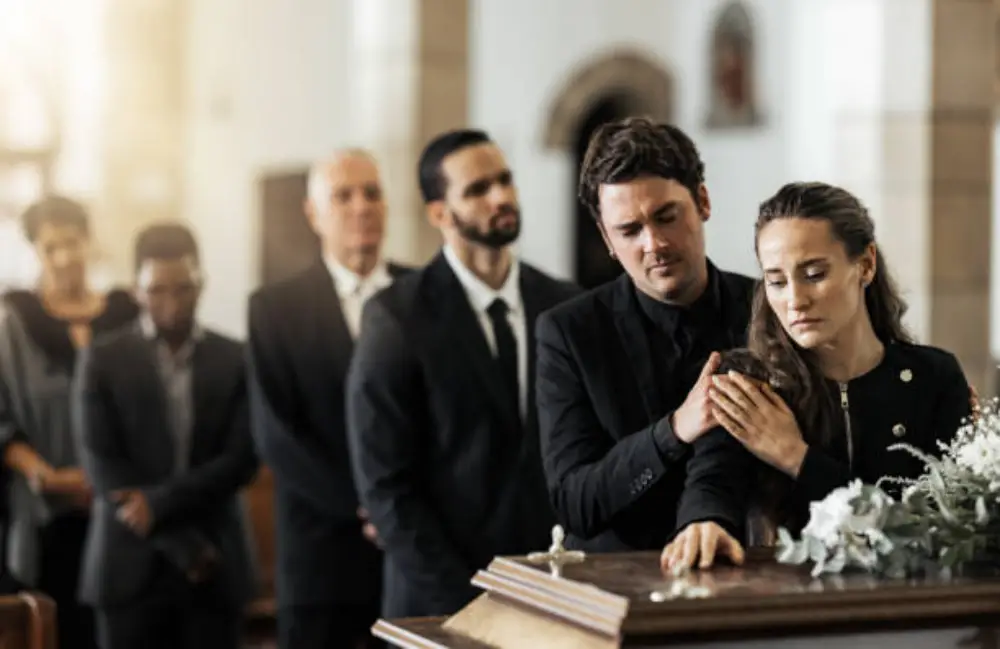
My husband Lucas Reed didn’t speak to his mother for five years. Not a cooling-off period after an argument, not a gradual drift—an actual, deliberate wall of silence built brick by brick with intention and pain. The reason was both simple and devastating: Lucas married me, Emily Parker, instead of the woman his mother had chosen for him, and Karen Reed didn’t forgive people who disrupted her plans.
Karen had mapped out Lucas’s entire life like an architect designing a building. Country club connections, a girlfriend from the “right family” she’d been steering him toward since college, a career path that would look impressive in the alumni magazine. When Lucas told her at twenty-eight that he was done being managed like a portfolio and was going to marry me—a public school teacher from a working-class family who’d never set foot in a country club—she gave him an ultimatum delivered over Sunday brunch with the calm certainty of someone who’d never been told no.
“You can have your little rebellion,” she’d said, fork poised over her eggs Benedict, “or you can have your family. Not both.”
Lucas chose me. He chose us. And Karen made good on her threat with a completeness that still takes my breath away when I think about it.
We built a quiet life after that, one where love was measured in weeknight dinners and Saturday morning hardware store trips rather than grand gestures. Lucas worked hard and loved harder. He co-owned a small home renovation company with his business partner Jason Miller—two guys who’d met in trade school and discovered they balanced each other perfectly, Lucas’s meticulous planning complementing Jason’s creative problem-solving. We spent weekends restoring old furniture we found at estate sales, talking about starting a family “once things slowed down,” making plans that always felt like they had time.
Then, on a random Thursday in October, with leaves turning gold outside and coffee still warm in our cups, everything stopped. A sudden cardiac event, the doctors said, using clinical language for something that felt like the world splitting open. One phone call from a number I didn’t recognize. One hospital room that smelled of antiseptic and felt too bright, too loud, too impossible for something so final. Lucas was thirty-three years old and had never had heart problems. Life doesn’t care about fairness or logic or the plans you make.
Three days later, I was sitting in a funeral home office with eyes so swollen they hurt to blink and a notebook full of decisions I’d never imagined making—casket type, flower arrangements, obituary wording, the playlist Lucas had once joked about at a friend’s funeral, saying he wanted “anything but elevator music” if he went first. I’d laughed then, young and stupid enough to think we had decades before those conversations mattered. Now I was twenty-nine and picking out the music for my husband’s memorial service.
Jason handled the business side—the employees who needed reassurance, the job sites that needed managing, the clients who needed to know their projects wouldn’t be abandoned. I handled everything else because Lucas was my husband, and even though he was gone, that was still our life, still our commitment to each other.
The morning of the visitation, I arrived at the chapel early. I’d barely slept, kept awake by the cruel mathematics of grief—counting the hours since I’d last heard his voice, calculating how many days we’d had together, subtracting all the years we’d never have. I was arranging the photo display—pictures of Lucas at job sites, Lucas laughing at our wedding, Lucas holding his nephew with awkward tenderness—when the front doors swung open with a force that made the funeral director look up sharply.
Karen Reed.
She marched in wearing black like armor, heels clicking against the polished floor with military precision, her chin lifted in that way people hold themselves when they’re preparing for battle. Two people I didn’t recognize followed behind her—a man in an expensive suit carrying a briefcase and a woman clutching a designer handbag like a shield. Karen scanned the room with proprietorial assessment, found me standing by the casket, and didn’t even bother to lower her voice.
“This is my son,” she announced, as if I were event staff rather than his widow. “You don’t get to run this.”
For a moment, I couldn’t speak. My throat felt like I’d swallowed glass. I’d known Karen might show up—had played out the scenario in my head during the sleepless nights—but the reality of her presence, the absolute certainty in her voice, hit me like a physical blow.
Then she pointed at the guestbook sitting on its small table. “You have no right to mourn him after what you did to this family.”
The words landed wrong, their meaning scrambled by disbelief. “What I did?” I managed, my voice sounding thin and far away.
“You stole him from his family,” Karen snapped, her face arranged in lines of righteous anger. “You manipulated a vulnerable young man and turned him against his own mother. And before we go any further—before you parade strangers past his body and pretend to be the grieving widow—we’re settling the business. I want to know where his money is. What you’ve done with it. What’s in the accounts. The company assets. All of it.”
The funeral director, a kind man named Mr. Hendricks who’d guided me through every terrible decision with patient compassion, tried to intervene. “Mrs. Reed, perhaps we could discuss this in a more private—”
Karen waved him off like he was a particularly annoying insect. “No. This ends now. She doesn’t get to take what belongs to my son.”
Jason stepped forward from where he’d been talking to one of Lucas’s employees, his face carefully neutral but tension visible in his shoulders. “Karen, this isn’t the time or place.”
“It’s exactly the time,” she hissed, turning that fury on him. “I’m not letting some opportunistic little nobody walk away with everything Lucas built. His company, his money, his property—it should stay in the family. The real family.”
My hands were shaking so badly I had to clench them into fists. Part of me wanted to scream, to match her volume and fury, to defend myself and Lucas and the life we’d built together. But another part—the part that had spent five years hearing Lucas’s stories about his mother’s manipulations—knew exactly what she was doing. Karen thrived on confrontation. She wanted me to break down, to look unstable, to give her ammunition for whatever legal battle she was preparing.
So instead, I reached into my bag with trembling fingers and pulled out a large manila envelope Lucas had insisted I keep in our safe six months ago. It was labeled in his neat, precise handwriting: FOR MOM. OPEN IF SHE SHOWS UP.
I’d asked him about it at the time, confused by his certainty that we’d need it. “She hasn’t spoken to you in four years,” I’d said. “Why would she show up now?”
“Because she only cares about what I can give her, not who I am,” he’d replied, his voice carrying a sadness that had made my chest ache. “And if something happens to me, she’ll show up wanting control. I won’t let her hurt you, Em. Not even after I’m gone.”
Now, standing in the chapel with guests beginning to filter in and Karen’s fury filling the space like smoke, I held out the envelope to her with hands that shook despite my best efforts.
“Fine,” I said, my voice steadier than I felt. “Let’s settle it right now.”
Karen’s face changed the instant she saw Lucas’s handwriting on the envelope. Something flickered behind her eyes—not grief exactly, but a shadow of recognition that her son had anticipated this moment, had prepared for her exactly the way he’d learned to prepare for hurricanes and electrical failures and all the things that could go wrong if you didn’t plan ahead.
She snatched the envelope from my hand, her perfectly manicured fingers leaving slight impressions in the paper. For a heartbeat, she looked almost triumphant, like she assumed Lucas had left instructions to “fix things,” to put her back in charge of his life even though she’d spent five years refusing to be part of it.
She didn’t step aside for privacy. She didn’t wait for a more appropriate moment. She tore open the envelope right there in the entry hall, with early arrivals watching uncomfortably and soft instrumental music playing from the chapel speakers, filling the silence with artificial peace.
Inside was a second envelope, still sealed, and a folded letter on Lucas’s business stationery. Karen’s eyes moved rapidly as she read, and I watched her expression shift like weather—from confident to confused to something that looked almost like fear.
At first, her mouth stayed tight and superior, the expression she wore when dealing with people she considered beneath her. Then her lips parted slightly. Then the color drained from her cheeks, leaving her makeup stark against suddenly pale skin.
Her lawyer—because of course she’d brought a lawyer to her estranged son’s visitation—leaned in to see what had caused the reaction. Karen jerked the page away from him, but it was too late. I’d seen the envelope often enough to recognize the header printed in bold at the top of the second sealed envelope: LAST WILL AND TESTAMENT – EXECUTOR DESIGNATION.
Lucas had done everything properly. Not a handwritten note that could be disputed, not a casual document that could be challenged. A formal will, prepared by a reputable attorney, signed in the presence of witnesses, notarized, filed with the county, ironclad.
He’d named me as executor and primary beneficiary. He’d left me our home, his personal accounts, his portion of the retirement savings we’d been building together. He’d left Karen a single, specific inheritance: a modest sum placed in a separate trust, conditional on very clear terms—no disrupting memorial services, no harassing me, no interfering with the business until legal proceedings were properly completed through the courts.
And then there was the letter. Lucas had written it in his plain, steady voice, the same tone he used when explaining why a project needed to be done a certain way or why rushing through the planning phase always caused problems later.
Mom,
If you’re reading this, it means you showed up after ignoring me for years. I wish I could say I’m surprised, but I’m not. I’m just sorry.
I’m sorry you chose pride over a relationship with your son. I’m sorry you couldn’t be happy for me when I found someone who loves me for who I am, not who you wanted me to be. I’m sorry you made me choose between having a mother and having a life.
Emily is my wife. She is my family. She’s the person who supported my dreams, who celebrated my successes, who held me when I was scared, who built a home with me that felt like safety instead of performance.
If you make this harder for her—if you turn my death into another battlefield where you try to prove you were right about everything—you will prove exactly why I stayed away. You’ll prove that you never loved me, you just loved controlling me.
I hope you find peace someday. I really do. But I won’t sacrifice Emily’s wellbeing for your ego, not even now.
Your son, Lucas
Karen’s hands trembled as she finished reading, and for a split second, I saw something human behind the anger—something that might have been grief or regret or recognition. But it vanished as quickly as it appeared, replaced by cold fury that made her whole body rigid.
“This is manipulation,” she said, loud enough that Mr. Hendricks winced and several early arrivals froze in the doorway. “He wouldn’t have done this unless she pressured him. Unless she poisoned him against his own family.”
Jason’s jaw clenched visibly. “Lucas drafted that will two years ago, Karen. Right after you showed up at our office and tried to corner him in the parking lot. You remember. You screamed at him about throwing his life away and told him he’d regret choosing her over you.”
Her eyes flashed with something dangerous. “You have no business speaking to me about my relationship with my son.”
“Actually,” Jason said, his voice controlled in a way I knew meant he was working hard to stay calm, “I have every business. I’m the one who’s been holding the company together while Emily holds herself together. I’m the one Lucas trusted to keep things running. And I’m the one who was there when you showed up making threats.”
The lawyer cleared his throat, attempting to redirect toward something more professional. “Mrs. Reed, we can certainly discuss estate matters, but this isn’t the appropriate venue. Perhaps we could schedule—”
Karen turned on him with venom. “So we’ll just let her take everything? She’s not even a real Reed. She’s nobody. And you want me to stand here and watch her—”
That’s when something inside me clicked into place. Grief had wrapped me in fog for days, making everything feel distant and unreal. But Karen’s cruelty cut through that fog like a blade, leaving me suddenly, painfully clear-headed.
“I’m his wife,” I said, my voice low but steady, each word deliberate. “I’m the person he came home to every night. The person who knew how he took his coffee and what jokes made him laugh. The person who held his hand in the hospital while he was dying. The person who’s planning his funeral while you were busy not speaking to him for half a decade because your pride mattered more than your son.”
The entry hall had gone completely silent. People who’d been filtering in stood frozen, unsure whether to proceed or retreat. I hated that this was happening here, in this place that should have been about remembering Lucas, about celebrating his life, about collective grief. But Karen had brought this energy into the space, and I wasn’t going to let her steamroll me.
I turned to Mr. Hendricks. “Please escort Mrs. Reed and her guests to the side office. If she can’t be respectful to the other mourners, she can wait there or she can leave.”
Karen tried to protest, sputtering about rights and family and proper behavior, but Mr. Hendricks—kind Mr. Hendricks who had probably seen every variety of family dysfunction play out in his chapel—was suddenly firm in a way that didn’t allow argument.
“Ma’am,” he said quietly, “I’m going to ask you to come with me. We can discuss the situation privately, or I can ask you to leave the premises. Those are the options.”
Karen’s lawyer touched her elbow, leaning in to whisper something I couldn’t hear. Whatever he said worked. Karen let herself be guided toward the side office, her heels clicking with sharp, angry precision. Jason followed, partly to provide support and partly, I suspected, to make sure Karen didn’t try to twist the narrative.
Alone in the suddenly quiet entry hall, I took a shaking breath and looked at the small group of witnesses who’d inadvertently become part of this scene. “I’m sorry you had to see that,” I said to no one in particular. “Please, come in. Lucas would want you here.”
The visitation was supposed to start at two o’clock. It actually began at two-forty-five, after Mr. Hendricks convinced Karen that she could either participate quietly or wait in his office until the service ended. She chose the office, where I could hear her raised voice occasionally filtering through the walls as she apparently spent the next two hours on the phone with other lawyers, other relatives, anyone who might help her find an angle.
The service itself was beautiful in the way funerals can be when they’re really about the person who died rather than the people left behind. Lucas’s friends told stories about job sites where everything went wrong in hilarious ways. His former teachers talked about his meticulous approach to every project, even in high school shop class. Jason gave a eulogy that made people laugh and cry in equal measure, talking about how Lucas could fix anything except his own jokes, which were consistently, charmingly terrible.
I stood near the photo display and accepted hugs from people whose faces I barely registered. I kept waiting for Karen to burst back in, to stage another confrontation, to make his death about her anger. But she stayed away, and for those few hours, we got to remember Lucas as he actually was—funny, hardworking, deeply kind, someone who made the world a little better through small, steady actions.
After the burial the next day, I thought the worst was over. I was wrong.
For the next several weeks, Karen launched what could only be described as a campaign. She called distant relatives Lucas had barely known and presented herself as the devastated mother “shut out” by a controlling, manipulative daughter-in-law. She left voicemails that swung wildly between sobbing grief and venomous accusations, sometimes within the same message. She emailed Jason’s business account pretending to be an authorized estate representative, asking for payroll details, client lists, financial records—anything that might give her leverage.
Jason forwarded everything to me and to Lucas’s attorney, Rachel Moore. Rachel was a sharp woman in her fifties who specialized in estate law and had evidently seen every variety of family dysfunction play out in probate court. She didn’t waste time on sympathy or outrage. She sent Karen a formal cease-and-desist letter that detailed exactly what harassment looked like in legal terms, reminded her that she was not the executor or a beneficiary beyond the conditional trust, and pointed out the clause Lucas had included: any harassment or interference would jeopardize her inheritance entirely.
That got Karen’s attention in a way grief never had. Money spoke a language she understood.
She filed a notice of intent to contest the will anyway, more as intimidation than genuine legal strategy. But Lucas had built his paperwork like he built houses—with a solid foundation and attention to every detail. Medical records confirmed he’d been of sound mind when drafting the will. The witnesses were credible—a paralegal and a notary who’d known Lucas for years. The timeline was clean. And Jason’s documentation wasn’t just casual notes. He’d kept emails from Karen, screenshots of threatening texts, statements from coworkers who’d witnessed her show up at the office multiple times trying to cause scenes.
When Karen’s lawyer reviewed everything Rachel provided during discovery, he requested a meeting. I expected another attack, another attempt to paint me as the villain. Instead, he showed up at Rachel’s office looking tired in a way that suggested he’d spent considerable time trying to convince his client to be reasonable.
“I’m advising Mrs. Reed not to proceed with the contest,” he said carefully, addressing Rachel rather than me. “The documentation is extremely thorough. The chance of success is minimal, and the risk of losing the trust distribution is substantial. I’ve explained this to her multiple times.”
Rachel nodded with professional neutrality. “And her response?”
“She’s… considering her options.”
That was lawyer-speak for “my client is furious but starting to understand she’s out of moves.” Karen didn’t take the advice well initially. She sent me one final message—a long, vitriolic paragraph about bloodlines and entitlement, about how I’d “ruined” her son and stolen his future, about how I’d never understand what it meant to be a real Reed.
I read it once, felt the familiar sting of her words, and then did exactly what Lucas would have wanted. I didn’t respond. I blocked her number, forwarded the message to Rachel as documentation, and refused to engage in the drama Karen needed to feel powerful.
The business side took time, but it stayed professional in a way that honored what Lucas built. I didn’t want his employees punished because his mother couldn’t accept boundaries. Jason and I worked with Rachel to structure a buyout: the company would purchase Lucas’s ownership share from the estate over an agreed period, at a fair market valuation. It kept the crew employed, kept clients served, protected the reputation Lucas and Jason had built, and gave me financial stability during a time when grief made even simple decisions feel overwhelming.
I used part of the proceeds to cover funeral costs, to pay off the mortgage on our house so I wouldn’t risk losing it if grief made work difficult for a while, to create a small emergency fund. The rest I put away, not sure yet what the future looked like but knowing Lucas would want me to be secure.
Six months after Lucas died, I visited his grave on a quiet Wednesday afternoon when I knew I’d be alone. I brought the same type of wildflowers he used to pick from the roadside—Queen Anne’s lace and black-eyed Susans—”because,” he’d say, “they’re stubborn enough to grow in the ditch, and that’s worth celebrating.”
I sat in the grass beside his headstone and talked to him the way I used to talk to him while he cooked dinner or worked on a project, just sharing the thoughts that filled my head. I told him I missed him in ways that still surprised me—reaching for my phone to text him something funny, setting two plates on the table by habit, waking up at night reaching for his hand. I told him I was angry that he’d left so soon, that we’d never get the future we planned, that his heart had betrayed us both.
And I told him I was grateful—for the letter, for the will, for the way he’d protected me even when he didn’t know he’d need to, for loving me enough to plan for every contingency including his own death.
Sitting there in the late afternoon sun with bees humming in the clover and wind moving through the oak trees, I realized something that surprised me: Karen hadn’t actually won anything by showing up at the funeral. She hadn’t reclaimed her son or gained control or proven any of her points. She’d only demonstrated exactly why Lucas had made the choices he did. Why he’d walked away from her ultimatum and never looked back.
Lucas had known his mother would show up wanting something from him, even in death. He’d known she’d make it about money and control rather than grief and loss. And he’d prepared for that reality with the same careful planning he brought to every aspect of his life.
The envelope he’d left, the will he’d written, the letter he’d composed—they weren’t acts of revenge. They were acts of love. His final gift to me was protection from the person who’d spent his whole life trying to control him.
I stayed at the grave until the sun touched the horizon, then gathered my flowers and drove home to the house that was now solely mine, to the life I was slowly learning to build alone. Karen never contacted me again after her lawyer advised her to drop the contest. I heard through mutual acquaintances that she’d moved to Arizona to live near her sister, that she’d started telling people Lucas had died suddenly and they’d been estranged, editing the story to make her the victim.
I didn’t correct the narrative. I didn’t need to. The people who mattered knew the truth.
A year after Lucas died, Jason and I met for coffee on what would have been Lucas’s thirty-fourth birthday. We’d maintained a friendly relationship through the business transition, and now that everything was settled, we could simply be two people who’d loved the same man and missed him terribly.
“You know what I think about sometimes?” Jason said, stirring sugar into his coffee. “That letter he wrote to his mom. How he knew exactly what she’d do and prepared for it anyway.”
“He was always a planner,” I said.
“More than that. He loved you enough to protect you from something he knew was coming but hoped you’d never have to face.” Jason shook his head. “That’s the kind of person he was. Prepared for the worst, hoped for the best, made sure the people he cared about would be okay either way.”
We sat quietly for a moment, comfortable in shared grief.
“Do you think he’d be proud of how you handled everything?” Jason asked.
I thought about the funeral, about standing up to Karen, about blocking her number and refusing to engage with her manipulation. I thought about the life I was building, different from what we’d planned but still good, still meaningful.
“Yeah,” I said finally. “I think he would be.”
The truth is, grief doesn’t excuse cruelty. Karen showed up at her estranged son’s funeral not to mourn him but to claim what she thought she deserved. She tried to turn his death into another battlefield, another place to prove she was right about everything. And she failed, not because I fought her, but because Lucas had already won by choosing love over control, partnership over ownership, me over her.
That’s his real legacy, more valuable than any inheritance or property or business share. He showed me that family isn’t just who you’re born to—it’s who shows up, who stays, who loves you for who you are rather than who they need you to be.
And when I visit his grave now, bringing wildflowers and stories about my day, I tell him the truth: that he saved me twice. Once when he married me despite his mother’s ultimatum, and once when he left behind that envelope, that will, that letter.
He protected me in life and in death, and that’s the kind of love worth mourning, worth celebrating, worth building a new life to honor.
Karen wanted control. Lucas gave me freedom. And in the end, that made all the difference.

Sophia Rivers is an experienced News Content Editor with a sharp eye for detail and a passion for delivering accurate and engaging news stories. At TheArchivists, she specializes in curating, editing, and presenting news content that informs and resonates with a global audience.
Sophia holds a degree in Journalism from the University of Toronto, where she developed her skills in news reporting, media ethics, and digital journalism. Her expertise lies in identifying key stories, crafting compelling narratives, and ensuring journalistic integrity in every piece she edits.
Known for her precision and dedication to the truth, Sophia thrives in the fast-paced world of news editing. At TheArchivists, she focuses on producing high-quality news content that keeps readers informed while maintaining a balanced and insightful perspective.
With a commitment to delivering impactful journalism, Sophia is passionate about bringing clarity to complex issues and amplifying voices that matter. Her work reflects her belief in the power of news to shape conversations and inspire change.