Protected
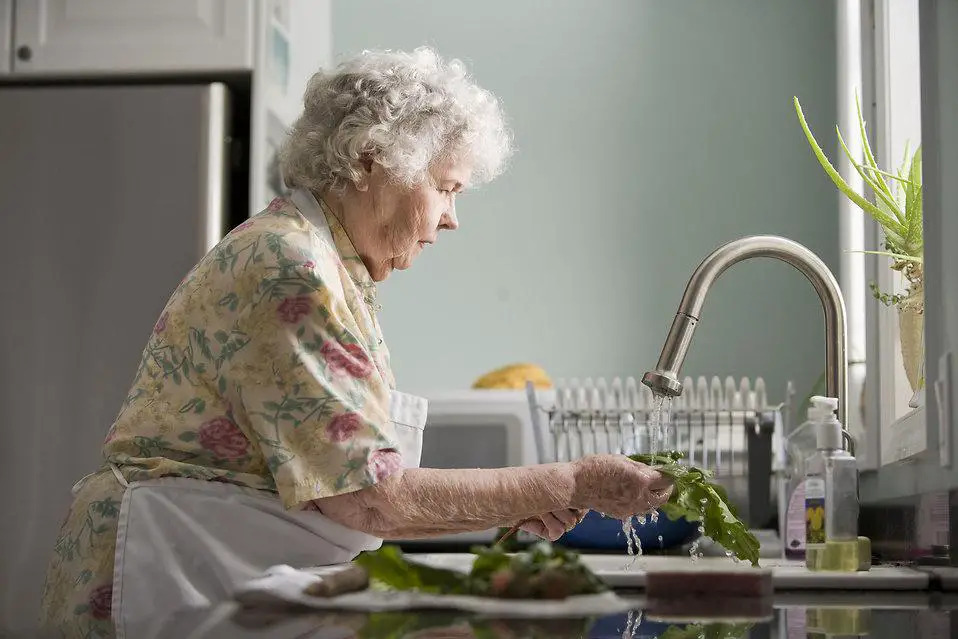
My son said coldly, “Starting today, you have to pay rent.” His wife even nodded in agreement, saying nothing is free—not even for me. But they had no idea this house was actually “protected” by my husband, and with one small mistake, they could lose everything.
I stood there in my own hallway, the one with the framed family photos documenting thirty-five years of birthdays and graduations and ordinary Tuesdays, the one with the scuffed hardwood floors I’d polished for decades until I knew every groove by heart. And I felt my grief—the quiet, constant companion I’d carried for three years—rearrange itself into something sharper. Something with edges.
Three years ago, when Robert passed, I thought the hardest part would be learning how to eat dinner alone. Learning to sleep in a bed that felt too big. Learning to make decisions without the man who’d been my partner since I was twenty-three years old.
I didn’t realize the real loneliness would come from watching my own child look at me like I was a bill that needed paying. Like I was a burden to be managed rather than a person to be loved.
My name is Caroline Mitchell. I’m sixty-seven years old, and I’ve lived in this house for forty-two years. Robert and I bought it when Michael was two and Susan was still a dream we hadn’t met yet. We painted every room ourselves, planted the maple tree in the front yard that’s now tall enough to shade the entire porch, fixed the leaky basement during that terrible winter of 1987. This house holds every major moment of our marriage—first steps, last breaths, and everything in between.
The house sits on a quiet suburban street in Worthington, Ohio, the kind of neighborhood where the mailboxes line up neatly and the neighbors wave from behind their steering wheels as they pull out of driveways at exactly 7:42 a.m. every weekday. After Robert died, I kept busy on purpose. Library volunteer shifts on Tuesday and Thursday mornings. Church potlucks where I brought the same lemon bars I’d been making for twenty years. A little garden out back that still smelled like Robert’s old work gloves when I turned the soil in spring.
I talked to my daughter Susan on FaceTime from her sunny California kitchen—she’d moved to San Diego twelve years ago for work and stayed for love, marrying a kind man named David who taught high school biology. She had two daughters I saw three times a year if I was lucky. We’d video call and she’d hold the phone up so I could see the girls doing homework or playing in the backyard, and I’d pretend the distance didn’t matter as much as it did.
Michael stayed in Ohio. My careful, cautious boy who’d grown into a careful, cautious man. He worked in insurance adjusting, lived thirty minutes away in a rented apartment, and called every Sunday like clockwork. He’d always been the one who asked permission before taking a cookie, who checked twice before crossing the street, who needed reassurance that he was doing things right. Susan had been fearless and self-directed from the moment she could walk, but Michael needed guidance, approval, someone to tell him he was okay.
When Michael called six months ago to say he and his wife Jessica had “fallen on hard times”—his company downsizing, her boutique failing, rent getting too expensive—I didn’t hesitate. I let them move into my spare bedroom, the one that had been Michael’s growing up, the one with the closet that still had marks on the doorframe tracking his height from age six to eighteen.
“It’s just temporary, Mom,” he’d said. “Just until we get back on our feet.”
“Take all the time you need,” I told him. Because that’s what mothers do. That’s what family means.
Jessica came with them—a woman I’d met only a handful of times at family gatherings, who’d married Michael in a small ceremony I’d found out about three weeks before it happened. She had a polished smile, perfectly shaped nails that clicked when she typed on her phone, and a way of speaking that made every sentence sound like a negotiation. Everything was “just a suggestion” or “something to consider” or “what makes the most sense financially.”
I told myself it was fine. That this was what family did. That it was temporary.
At first, they played sweet.
Jessica cooked elaborate dinners—Thai curries and French stews, things that required ingredients I’d never heard of and trips to specialty stores. She’d take photos of the plates before we ate, posting them on Instagram with captions like “Family dinner nights ” and “Grateful for this time together” with heart emojis. She’d tag the location as “Home” like she’d lived here her whole life.
Michael mowed the lawn without being asked, fixed a leaky faucet in the downstairs bathroom, and thanked me in that soft voice that still sounded like my boy. “Thanks for letting us stay, Mom. It means everything.”
But then the small changes started.
My kitchen drawers got reorganized without asking—the silverware moved to a different drawer, the measuring cups relocated to a cabinet I could barely reach. When I mentioned it, Jessica smiled brightly and said, “Oh, I was just trying to make things more efficient! I hope you don’t mind.”
My grocery brands got replaced with cheaper ones. The coffee I’d been buying for twenty years disappeared, replaced with store-brand grounds that tasted like burnt water. The butter I preferred—real butter, the kind Robert and I had always splurged on—was swapped for margarine. When I bought my preferred brands and put them in the fridge, they’d be gone within days, replaced again.
My habits got criticized under the disguise of concern.
“You waste electricity,” Michael said one evening, turning off the light over my kitchen sink while I was still reading the paper. “Do you know how much it costs to leave lights on all day?”
“You leave the heat too high,” Jessica added another time. “It’s not good for the environment. Or the bills.”
“You should really think about selling this house,” Jessica said casually one Saturday morning, looking around the kitchen like she was appraising it. “It’s too big for one person. Too much maintenance. You could get a nice little condo somewhere, something manageable.”
I smiled and changed the subject because I was raised to be polite, to not make waves, to keep peace in my own home even when it was being invaded.
But I noticed. I noticed everything.
I noticed how Jessica opened my mail—not sneakily, just openly, like she had a right to know what bills came, what letters arrived. I noticed how she started making comments about “our house” instead of “your house.” I noticed how Michael stopped asking me about my day and started asking me about my “plans for the property.”
I noticed that in six months, they’d paid exactly zero dollars toward groceries, utilities, or household expenses. They’d moved in under the pretense of financial hardship, but Jessica’s nails stayed perfect, Michael’s new watch was expensive, and their Amazon packages arrived almost daily.
And I noticed that they’d stopped treating my home like a temporary shelter and started treating it like their inheritance come early.
The rent demand didn’t happen in a dramatic shouting match. It happened over dinner, with a calm tone that somehow made it feel even crueler.
We were eating Jessica’s latest creation—some kind of quinoa bowl that probably looked better than it tasted—when Michael cleared his throat like he’d rehearsed the moment in the car. Jessica leaned back in her chair with a look that said she’d already won an argument I didn’t know we were having.
“Mom,” Michael started, his voice taking on that careful, measured tone he used when he was about to say something he knew I wouldn’t like. “Jessica and I have been talking.”
I set down my fork and waited.
“We’ve been here six months now, and we’re really grateful for everything you’ve done. But we think it’s important to establish some… boundaries. Some structure.”
“Structure,” I repeated.
Jessica jumped in, her smile sharp and bright. “We think it’s only fair that everyone contributes. Nothing is free in this world, Caroline—not even for family. We all need to pull our weight.”
Michael slid a piece of paper across the table like it was a restaurant bill. A number was written at the top: $1,200/month.
“Starting next month, we think you should contribute to the household expenses,” he said. “It’s only fair. You live here too.”
The words took a moment to land. To reorganize themselves into something that made sense.
“You want me to pay rent,” I said slowly. “In my own house.”
“We prefer to think of it as contributing to shared expenses,” Jessica corrected, like the semantics mattered. “We’re all adults here. We’re all using the utilities, the space, the resources. It makes sense for everyone to chip in proportionally.”
“Proportionally,” I said.
“Well, you have the master bedroom. That’s the biggest room. And you use the most electricity with all those lights you leave on.”
I looked at my son. My careful, cautious boy who was now a forty-three-year-old man telling his mother to pay rent in the house she’d owned for forty-two years.
“Michael,” I said quietly. “Do you agree with this?”
He couldn’t meet my eyes. He stared at his quinoa bowl like it held answers. “Mom, you have to understand. We’re trying to save money. We’re trying to get back on our feet. And it’s been six months. We can’t just live here for free forever, and neither can you.”
“I own this house.”
“We know,” Jessica said quickly. “And we’re not trying to take that away from you. We’re just saying that ownership comes with responsibilities. And maybe… maybe it’s time to start thinking about the future. About what makes sense long-term.”
That’s when she started talking about “paperwork” and “real estate realities.”
“Someone your age shouldn’t be handling property alone,” she said, her voice dripping with false concern. “What if something happens? What if you get sick or confused? It would be simpler if the house was in Michael’s name too. Joint ownership. That way he could help with taxes and maintenance. That way you’d be protected.”
Protected. She used that word specifically. Deliberately.
“We could help you,” Michael added, still not looking at me. “Take some of the burden off your shoulders. You wouldn’t have to worry about anything.”
“I’m not worried,” I said.
“But you should be,” Jessica insisted. “At your age, things can change so quickly. It would be smart to have a backup plan. To make sure everything is handled properly. We could take care of the paperwork this week. There’s a notary public right by Michael’s office. It would be simple.”
I looked at the paper with the $1,200/month written on it. Then at Jessica’s perfectly manicured hands folded calmly on the table. Then at Michael, who still couldn’t meet my eyes.
In that moment, I saw it clearly. This wasn’t a misunderstanding or poor communication or a family discussion that had gotten out of hand.
This was a plan.
They wanted my house. Not someday, when I was gone and they’d inherit it naturally. Now. They wanted control, ownership, the deed in their names. And they were willing to push me, pressure me, make me feel unsafe and incapable in my own home until I gave in.
I smiled. Not because I agreed, but because I finally understood the game they thought they were playing.
They assumed I was grieving. Tired. Easy to pressure. The kind of older woman who would trade her dignity for peace and quiet. The kind who’d rather sign papers than cause conflict.
They didn’t know Robert had been careful in ways I hadn’t fully appreciated until I needed them. They didn’t know my husband had spent his career as an estate planning attorney, that he’d seen every trick and scheme people used to steal property from vulnerable family members, and that he’d made decisions years ago specifically to prevent this kind of push.
And they definitely didn’t know what happens when people get greedy and start leaving a trail of words, demands, and threats behind them.
“I’ll think about it,” I said calmly, picking up my fork.
Jessica’s smile widened. “We knew you’d understand.”
Michael finally looked at me, relief washing over his face. “Thanks, Mom. This is better for everyone.”
I ate the rest of my quinoa bowl in silence while they chatted about their plans—how they’d “help” me organize my finances, how they’d “streamline” the household, how much “easier” everything would be once the paperwork was handled.
That night, while they slept under my roof, in my spare bedroom, surrounded by my furniture and protected by my locks, I sat in the quiet living room and listened to the house creak the way it always had.
Then I went to the fireproof safe in my closet and pulled out the documents Robert had prepared seventeen years ago.
The next morning, I called my attorney.
Not Michael’s friend who did wills on the side. Not some general practitioner who’d handle this casually. I called Patricia Hammond, the senior partner at the firm where Robert had worked for thirty years, the woman who’d attended his funeral and held my hand while I cried and told me, “If you ever need anything, Caroline, you call me directly.”
“Patricia,” I said when she answered. “I need help.”
“What’s going on?”
I told her everything. The rent demand. The pressure to sign over the house. Jessica’s comments about my age and capability. Michael’s silence while his wife tried to manipulate me out of my own property.
There was a long pause. Then Patricia’s voice came back, sharp and cold. “Are they still living with you?”
“Yes.”
“Are you safe?”
“Physically? Yes. But Patricia, they’re not going to stop. They think I’m an easy target.”
“Caroline, do you remember the living trust Robert set up?”
“Vaguely. He handled all of that.”
“He set it up specifically to prevent this exact situation. The house is in an irrevocable living trust with you as the primary beneficiary for life. You have full rights to live there, but you cannot transfer ownership, sell, or add anyone to the deed without the approval of the successor trustee.”
“Who’s the successor trustee?”
“I am. And Susan. Robert wanted two people he trusted completely to have that authority. He saw too many cases where elderly clients were coerced into signing over property. He wanted to make sure no one could pressure you, even family.”
I felt something in my chest loosen. “So they can’t make me sign anything?”
“They can ask all they want. They can pressure and manipulate and threaten. But legally, you cannot transfer that house to them even if you wanted to. The trust prevents it. And Caroline? Any attempt to coerce you into signing documents under duress is elder abuse. It’s a crime.”
“What do I do?”
“Do you want them gone?”
I thought about my son. My careful boy who’d somehow grown into a man I didn’t recognize. I thought about Jessica and her polished nails and calculated smile. I thought about the house Robert and I had built our life in, the home we’d intended to protect not just for me, but from people exactly like this.
“Yes,” I said. “I want them gone.”
“Then we start a paper trail. I’m going to draft a formal letter demanding they vacate the premises within thirty days. I’m going to document everything you’ve told me. And I’m going to make it very clear that any further attempts to coerce you into signing documents will be reported to Adult Protective Services and potentially law enforcement.”
“Michael is my son.”
“I know, honey. I know this is hard. But what he’s doing isn’t love. It’s exploitation. And Robert made sure you’d be protected from it.”
The letter arrived two days later via certified mail.
I watched through the front window as Michael signed for it, his face confused. Jessica hovered behind him, trying to see the return address.
I was in the kitchen when they opened it. I heard the silence first—the kind of silence that happens when people realize they’ve miscalculated badly.
Then Jessica’s voice, sharp and rising: “What the hell is this?”
Michael appeared in the kitchen doorway, the letter shaking in his hands. “Mom… what did you do?”
“I protected myself,” I said calmly.
“You called a lawyer?”
“I called Robert’s lawyer. Patricia Hammond. She reminded me about the living trust your father set up.”
Jessica pushed past Michael, her face flushed. “This is ridiculous. We weren’t trying to steal your house. We were trying to help—”
“You demanded I pay rent in my own home. You pressured me to sign over the deed. You told me I was too old and confused to handle my own property. That’s not help, Jessica. That’s exploitation.”
“We have rights,” she said. “We’ve been living here for six months. We’ve made improvements—”
“You’ve paid exactly zero dollars in rent, utilities, or groceries. You’ve made no improvements. And you have no rights because you’re guests in my home. Guests I’m now asking to leave.”
Michael’s face had gone gray. “Mom, please. We didn’t mean—”
“Yes, you did,” I said, and my voice was steady even though my heart was breaking. “You meant every word. You saw your grieving mother as an opportunity. You saw my loneliness as weakness. And you tried to take advantage of it.”
“That’s not true—”
“Michael, you told me to pay rent. In the house your father and I bought before you could walk. You sat silent while your wife tried to convince me I was too old and incompetent to handle my own property. You participated in a scheme to coerce me into signing over my home. Don’t tell me what’s not true.”
Jessica’s perfectly manicured hands clenched into fists. “This is how you treat family? After everything we’ve done—”
“What have you done?” I asked. “You’ve reorganized my kitchen without asking. You’ve replaced my groceries with cheaper versions. You’ve criticized every aspect of how I live in my own home. You’ve posted fake happy family photos on social media while planning to steal my house. What exactly do you think you’ve contributed besides stress?”
“You’ll regret this,” Jessica said, her voice cold. “You’ll be alone. You’ll have no one.”
“I’d rather be alone than exploited.”
Michael was crying now, quiet tears running down his face. “Mom, I’m sorry. I didn’t… I didn’t realize…”
“You didn’t realize it was wrong to try to take your mother’s house? Or you didn’t realize you’d get caught?”
He couldn’t answer.
“You have thirty days,” I said. “The letter explains everything. If you’re not out by then, I’ll file for formal eviction. Patricia has documented everything—the rent demand, the pressure to sign documents, all of it. If you try to retaliate or damage the property, I’ll file a police report for elder abuse.”
“Elder abuse?” Michael’s voice cracked. “Mom, I would never—”
“You already did,” I said quietly. “The moment you tried to make me feel unsafe and incapable in my own home. The moment you tried to take what your father worked so hard to protect. You already did.”
They moved out in three weeks.
Not quietly. Not gracefully. There were arguments and slammed doors and boxes thrown into their car with enough force to make the neighbors stare. Jessica left marks on the wall where she’d ripped down a picture frame. Michael took the kitchen faucet he’d fixed, leaving the sink leaking again.
But they left.
The day they drove away, I stood in the driveway and watched their car disappear around the corner. Then I went inside, locked the door, and sat in my empty, quiet house.
And I cried. Not because I’d made the wrong choice, but because it hurt to make the right one. Because protecting yourself from your own child shouldn’t be necessary, but sometimes it is.
Susan called that night. Michael had called her first, his version of events making him the victim and me the cruel, irrational mother who’d thrown him out for no reason.
“Mom,” Susan said carefully. “Michael says you kicked him out. He says you’re being unreasonable.”
“Did he tell you they tried to make me pay rent in my own house? Did he tell you they pressured me to sign over the deed?”
Silence. “What?”
I told her everything. The rent demand. Jessica’s manipulation. The living trust. Patricia’s letter.
“Oh my God,” Susan said, her voice shaking. “Mom, I’m so sorry. I didn’t know. He didn’t tell me any of that.”
“I didn’t think he would.”
“Are you okay? Do you need me to come home?”
“I’m okay, sweetheart. I just needed to handle it.”
“Dad would be so proud of you.”
That made me cry again. The good kind of crying, the kind that releases something you’ve been holding too tightly.
“I miss him,” I said.
“I know, Mom. I know.”
It’s been eight months since Michael and Jessica moved out.
Eight months of learning to live alone again, but this time by choice. By design. By the boundaries I finally learned to set.
I still volunteer at the library on Tuesdays and Thursdays. I still make lemon bars for church potlucks. I still tend my garden, which now has a new section of roses I planted in Robert’s memory.
Susan visits more now. She flew out twice in the spring, brought the girls for a week in the summer. We FaceTime three times a week, and she actually asks about my life instead of just updating me on hers.
Michael sends occasional texts. Short ones. Awkward ones. I’m sorry. I miss you. Can we talk?
I respond sometimes. Brief, polite messages that don’t invite more contact but don’t slam the door completely. I’m glad you’re doing well. I’m not ready yet.
Patricia says he and Jessica are divorcing. Apparently, when the house scheme failed, other cracks in their marriage became too obvious to ignore. I don’t feel victorious hearing that. I just feel sad.
Last week, I got a longer message from Michael. Not excuses or justifications, just acknowledgment:
Mom, I know what I did was wrong. I know I hurt you in ways I’m still understanding. Jessica pushed, but I let her. I chose money and convenience over your dignity and safety. I don’t expect you to forgive me. I just wanted you to know that I see it now. I see what I did. And I’m working on being better. I love you.
I saved the message. Maybe someday I’ll respond with more than politeness. Maybe someday we’ll rebuild something smaller and more honest than what we had before. Maybe someday I’ll trust him again.
But not today.
Today, I’m sitting in my living room, in the house Robert and I built our life in, the house he made sure I’d keep even when our own child tried to take it. The afternoon light comes through the windows at that perfect angle that makes everything look golden and possible.
I’m protected. Not just by legal documents and trust arrangements, but by the knowledge that I’m strong enough to choose myself. To set boundaries. To say no, even when it breaks my heart.
The house still creaks at night in that familiar way. The maple tree still shades the porch. The scuffed hardwood floors still hold the memory of every step my family has taken over four decades.
But now, for the first time in three years, the house feels like mine again.
Not because I fought for it, but because I refused to give it away.
And Robert, wherever he is, would understand.
THE END

Lila Hart is a dedicated Digital Archivist and Research Specialist with a keen eye for preserving and curating meaningful content. At TheArchivists, she specializes in organizing and managing digital archives, ensuring that valuable stories and historical moments are accessible for generations to come.
Lila earned her degree in History and Archival Studies from the University of Edinburgh, where she cultivated her passion for documenting the past and preserving cultural heritage. Her expertise lies in combining traditional archival techniques with modern digital tools, allowing her to create comprehensive and engaging collections that resonate with audiences worldwide.
At TheArchivists, Lila is known for her meticulous attention to detail and her ability to uncover hidden gems within extensive archives. Her work is praised for its depth, authenticity, and contribution to the preservation of knowledge in the digital age.
Driven by a commitment to preserving stories that matter, Lila is passionate about exploring the intersection of history and technology. Her goal is to ensure that every piece of content she handles reflects the richness of human experiences and remains a source of inspiration for years to come.