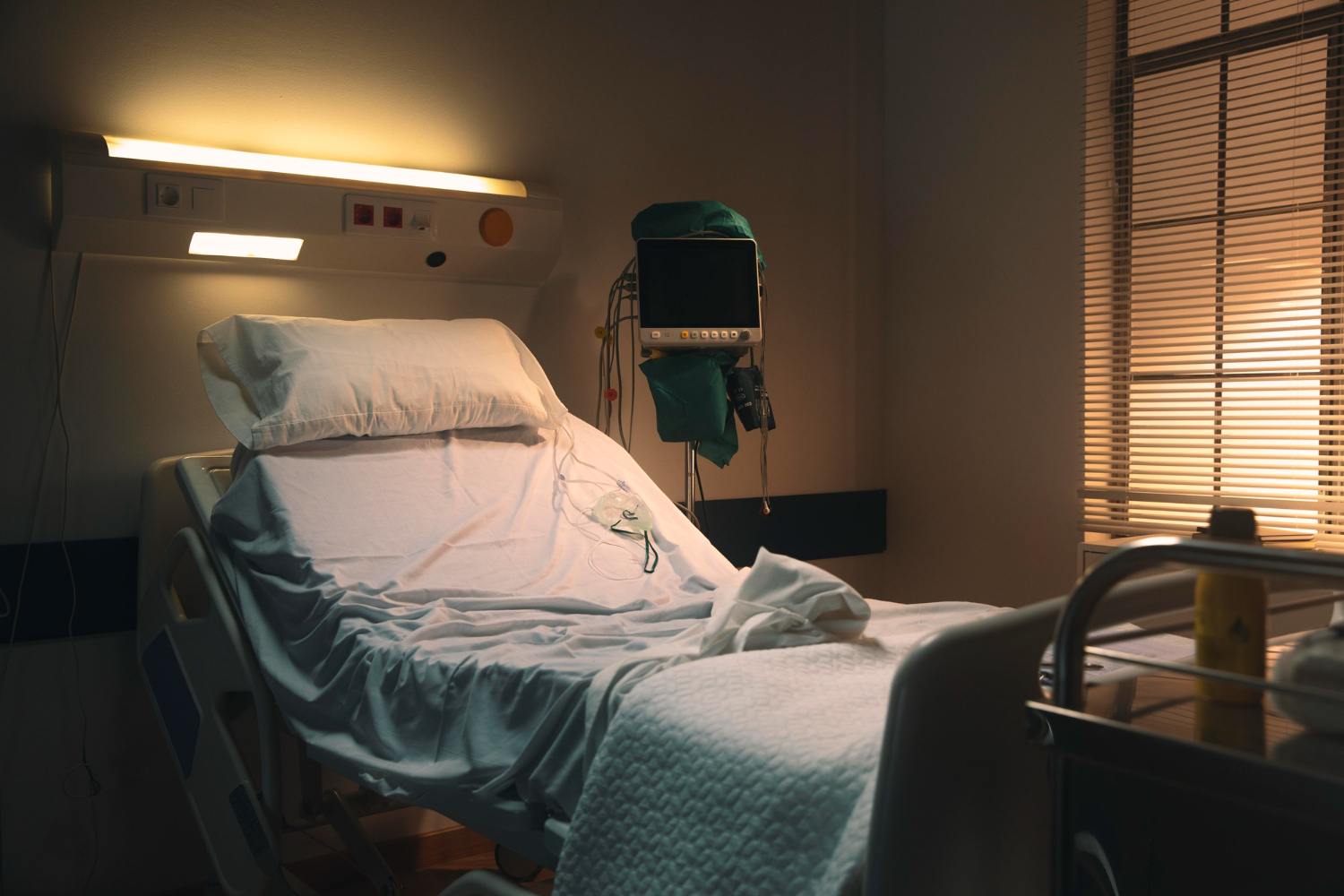
They smiled when they walked in—sun-browned, sand still clinging to their ankles, laughter trapped in their lungs like something precious they’d brought back from paradise. They never guessed that the ICU patient lying motionless in front of them had seen everything, knew everything, and was already ten steps ahead of the story they thought they were still writing.
My name is Daniel Parker, and I’m fifty-two years old. Until three weeks ago, I thought I understood the shape of my life. I was wrong in ways that nearly killed me.
It started on a Monday in late October, one of those deceptive autumn days where summer refuses to surrender and the heat sits heavy despite the calendar insisting otherwise. I was mowing the lawn, sweating through my shirt, watching the grass clippings spray in arcs that caught the afternoon light. The smell was sharp and green, almost medicinal, and the physical work felt good after a week spent at a desk managing spreadsheets and conference calls.
Inside the house, I could hear Anna’s voice floating through the open windows—bright, efficient, with that particular tone she used when organizing anything from dinner parties to family emergencies with the same cheerful competence.
“Lucas, did you remember to pack the phone chargers?” she called out. “Emily, don’t forget your passport is in the kitchen drawer. And someone please find the sunscreen before we end up looking like lobsters on day one.”
Their vacation had been planned for months: Costa Rica, two weeks of beaches and rainforests and zip lines through canopies. Anna had called it “a much-needed family reset,” using the language of wellness influencers and travel magazines. Lucas and Emily—my stepkids, though I’d stopped using that prefix years ago—had called it “finally getting to live a little” with the breathless excitement of people who believed adventure was something that happened only in expensive places far from home.
I didn’t resent the trip. Not at first. Not consciously.
When you marry someone with children from a previous marriage, you understand that family comes as a package deal with complicated assembly instructions and pieces that don’t always fit together smoothly. I’d come into their lives when Lucas was fourteen and Emily was twelve, both of them wary and wounded from their parents’ divorce, both testing me like someone checking whether a fence would hold their weight.
It took years to earn their trust. Countless basketball games in the driveway where I let Lucas win just often enough to keep him engaged. Late nights helping Emily with science projects, building volcanos and solar system models at the kitchen table while Anna slept upstairs. Midnight drives to pick them up from parties where they’d had too much to drink, never lecturing, just making sure they got home safe. Quiet talks over breakfast when their teenage world felt too loud and confusing and they needed an adult who would listen without judging.
Somewhere in those accumulated moments, something shifted. They stopped calling me “Dan” with that slight distance and started just calling me “Dad” without seeming to realize they’d made the switch. Anna cried the first time she heard Lucas say it casually, like it was the most natural thing in the world.
So when Anna studied my face that Sunday evening and said, “You look pale,” and Emily added, “Are you feeling okay?” I brushed off their concern with the automatic dismissiveness of someone who’d spent a lifetime being the strong one, the reliable one, the person who didn’t complain.
“Just tired,” I said, waving a hand like I could physically dispel the weakness that had been creeping through my body for days. “Little dizzy, bit short of breath. Probably just allergies with all this pollen. Don’t worry about it. You guys should go, have an amazing time.”
Anna hesitated, standing in the doorway with her phone in one hand and a packing list in the other, already mentally half-gone but making the required gesture of consideration. “We could delay the trip,” she offered, the words coming a fraction too quickly. “Push it back a week or two if you’re not feeling well.”
Lucas echoed her from where he was loading suitcases into the car, his voice deeper than it had been when I first met him but carrying that same earnest quality. “Seriously, we can reschedule if you need us here.”
I remember looking at their faces—expectant, slightly anxious, clearly hoping I’d release them from the obligation of staying. The tickets were nonrefundable. The house they’d rented was already paid for. They’d been counting down to this trip for months.
I gave them permission with a smile that felt generous at the time. “Go,” I said firmly. “I’m fine. I’ll probably just sleep the whole time anyway. Take pictures, drink something with an umbrella in it, come back with stories.”
And they didn’t insist. Not once. They accepted my reassurance with visible relief, hugged me goodbye with enthusiasm that felt sincere, and drove off toward the airport with their windows down and music playing loud enough that I could hear it until they turned the corner.
That night, my symptoms didn’t improve. They cascaded.
My skin alternated between furnace-hot and ice-cold. My chest tightened as if someone was slowly cinching a belt around my ribs, notch by notch. I tried to drink water and it tasted metallic, wrong. My vision started to blur at the edges. At some point around midnight, I stood up to get my phone and my legs simply stopped cooperating with my intentions.
I made it halfway down the hallway before the floor rose up to meet me with surprising gentleness.
I remember the carpet fibers against my cheek, rough and familiar. The smell of the laundry detergent Anna used, lavender and something chemical. The blurry view of the ceiling light fixture I’d installed three years ago, its frosted glass shade swimming in and out of focus.
And a thought that didn’t feel dramatic or panicked, just coldly factual: If I don’t reach my phone in the kitchen, I will die here alone.
My hand clawed forward along the carpet, fingers digging into the pile, pulling my body inch by excruciating inch toward the kitchen counter where my phone sat charging. My vision tunneled to a point. The world narrowed to the distance between me and that device, and the distance felt infinite.
I don’t know how long I crawled. Seconds that felt like hours. Minutes that stretched into eternities. Then everything went black, and I fell into a darkness that felt both terrifying and oddly peaceful.
When I woke up, I was somewhere else entirely.
The ceiling was water-stained and institutional white under harsh fluorescent lights that hummed with electrical persistence. There was a rhythm beside me—beep, beep, beep—steady and indifferent, the sound of machines keeping score of whether I was winning or losing. Something tugged at my arm. My mouth felt like it had been stuffed with cotton and left in the sun to dry.
I tried to lift my head. A wave of dizziness slammed me back against the pillow.
A nurse appeared in my field of vision—brown hair tucked under a surgical cap, eyes that looked tired until they met mine and softened with something like relief.
“Hey there,” she said quietly. “Welcome back to the world.”
My throat worked, producing a sound like gravel. “Where… where am I?”
“ICU at County General,” she answered, already checking the monitors surrounding my bed. “You gave us quite a scare. Your neighbor found you on your kitchen floor and called 911. You’ve been here for three days.”
Three days. The number didn’t compute.
A doctor arrived shortly after, looking like he’d been living in his scrubs and surviving on coffee and stubbornness. He explained in careful, measured tones that I’d developed severe sepsis from an infection that had gone unnoticed and unchecked. My organs had started failing. I’d been hours—maybe minutes—from cardiac arrest when the paramedics arrived.
“You’re lucky,” he said, and the word “lucky” sounded absurd applied to lying in an ICU with tubes running in and out of my body. “You should have sought medical attention sooner.”
The implicit criticism stung, but what came out of my mouth was a question: “Where’s my family?”
The nurse—her name tag read MARIA—exchanged a glance with the doctor. Something passed between them, a look I couldn’t quite interpret.
“We called the emergency contacts in your wallet,” Maria said gently. “Left messages. No one’s come yet.”
The words hung in the air like a diagnosis. I stared at her, waiting for an explanation, a clarification, something that would make the absence make sense.
No explanation came.
“Maybe they’re on their way,” I whispered, more to myself than to her, trying to build a story that made my family’s absence temporary rather than deliberate.
Maria’s expression didn’t change, but something flickered in her eyes—something that looked like pity mixed with a kind of weary anger, like she’d seen this particular variety of abandonment before and knew how the story ended.
“Try to rest,” she said. “You need to conserve your strength.”
Rest felt impossible. Time in the ICU isn’t really time—it’s a fog, a suspended state where hours blend into each other and consciousness comes in waves. There were blood draws and medication changes, doctors consulting in low voices, machines beeping out the mathematics of survival. And through it all, I waited.
The first day, I told myself there had been a communication breakdown. Maybe the hospital called an old number. Maybe Anna’s phone had died and she hadn’t gotten the messages yet.
The second day, I told myself they were in transit, dealing with airports and delays, probably frantically trying to get home.
The third day, I started to feel something that wasn’t just sadness or confusion. It was darker, colder. Suspicion.
Because my phone wasn’t with me. No one had pressed it into my hand with messages of concern. No one had said, “Your wife called, she’s on her way.”
On the fourth day, I asked Maria again, my voice still rough from the intubation I barely remembered. “Any word from my family?”
She didn’t meet my eyes as she adjusted my IV line with practiced efficiency. “No,” she said softly. “Nothing yet.”
Day five passed. Then six. Then seven.
No visits. No calls. Not even a message relayed through the hospital administration.
I lay in bed watching the hallway, trying not to let my mind spin the stories it wanted to spin, the narratives of abandonment and betrayal that felt too dramatic to be real. These were people I’d raised, loved, built a life around. There had to be an explanation.
Then on the eighth day, Maria said something while checking my vitals, her voice casual as if discussing the weather. “I hope your family’s having a good time in Costa Rica. Your wife mentioned it was a special trip when we called.”
My stomach turned to ice. “Costa Rica?” The words came out barely above a whisper.
Maria froze, her eyes snapping to my face and then away. “I’m sorry,” she murmured, her professional composure cracking slightly. “I assumed you knew they were still there.”
I stared at the ceiling until the water stains blurred into abstract art. They hadn’t delayed. They hadn’t stayed. They hadn’t cut short their vacation to be with me while I fought for my life.
They’d gone exactly as planned. While I lay here with tubes in my veins and machines breathing for me, while my body waged war against infection and collapse, my family had boarded their flight and left for paradise.
Not for work. Not for some unavoidable emergency. For vacation. For beaches and cocktails and zip lines through the rainforest.
That was the moment my mind stopped protecting me with comforting lies.
Because there’s a difference between being forgotten and being abandoned. And this wasn’t forgetfulness.
It took convincing, but Maria eventually brought me my phone on the ninth day, sealed in a plastic bag like evidence from a crime scene. The battery was dead. She helped me plug it in, watching my face with an expression that suggested she knew what I was about to discover.
When the screen finally lit up, my pulse jumped so violently that the monitors started complaining. Missed calls: several from the hospital, a couple from my boss asking if I was okay, one from my neighbor. Nothing from Anna. Nothing from Lucas or Emily.
Text messages told the same story: appointment reminders, spam, work notifications. But no messages from my family asking if I was alive.
Social media notifications, though—those were plentiful. Tags. Mentions. Photo uploads.
My hands shook as I opened Instagram, and there they were.
Anna on a pristine beach, her skin glowing with sun and happiness, smiling like she’d stepped out of a lifestyle magazine. Lucas shirtless with a beer in his hand, sunburned and grinning at the camera. Emily in a white sundress, spinning on a wooden dock with her arms outstretched, the ocean sparkling behind her.
Captions that made my chest hurt: “Freedom.” “Finally living.” “Family reset.” “We deserve this.”
No mention of me. Not a single word acknowledging my existence.
I scrolled through the photos with numb fingers, my brain cataloging details while my heart tried to make sense of what I was seeing. Then I saw a video Emily had posted—her dancing on the shoreline in a bikini, laughing into the camera with the kind of unselfconscious joy I’d seen her express a thousand times growing up.
The caption read: “Freedom!”
I paused the video. Zoomed in. In the background, clearly visible if you knew to look, Anna was holding a drink in one hand and laughing with her other hand resting on a man’s shoulder.
Not mine. A stranger’s.
I stared at that image until it burned into my retinas. At first, my brain tried its usual defense mechanisms. It could be a random tourist. It could be the angle. It could be—
Then Anna turned her head in the video, and I saw the way she was smiling at him. Not the public smile. Not the smile for acquaintances or distant friends. The private smile. The one that said: You’re mine and I’m happy about it.
My throat closed. I set the phone down, breathing shallow, and stared at the ICU wall until the urge to scream passed.
When you discover betrayal while you’re physically helpless, you experience it in a different register. You can’t storm out. You can’t confront. You can’t channel the rage into action. You can only absorb it, let it seep into your bones, let it change you at a molecular level.
I started replaying the past year with new eyes, seeing patterns I’d deliberately ignored. Lucas asking increasingly specific questions about finances. “What happens to the house if something happens to you?” “Do you have life insurance?” “Is everything in your name or Mom’s?” “Shouldn’t you get your affairs in order?”
Anna insisting I update my will, framing it as responsible planning. “Just in case,” she’d said, squeezing my hand. “We should be prepared.”
The nights I’d woken to murmured conversations in the hallway, voices too low to make out words. I’d assumed they were discussing Lucas’s job search or Emily’s relationship troubles. Now I wondered if they were discussing me. Planning for my absence.
On the tenth day, I asked Maria for pen and paper. She watched me for a long moment, then left and returned with a legal pad.
Later that evening, she set a small piece of notepaper on my tray. A name. A phone number. “Patrick Lawson — Attorney.”
“Don’t tell anyone I did this,” she whispered, her tired eyes fierce with a protectiveness I hadn’t expected.
“Why?” I managed to ask.
She hesitated, then spoke words I’ll never forget. “Because I’ve seen this before. People smiling while someone’s dying. People pretending to care while the paperwork is already written. And you deserve better than being a quiet funeral they can profit from.”
I stared at the number until my vision blurred, then I called.
Patrick Lawson answered like someone who never truly slept, his voice alert despite the late hour. “Lawson.”
I told him everything—the collapse, the abandonment, the social media evidence, the increasing questions about money and inheritance. Patrick didn’t interrupt, didn’t offer empty sympathy, just listened with the focused attention of someone mapping a battlefield.
When I finished, he exhaled slowly. “First, I’m sorry this is happening. Second—don’t confront them yet. We need to protect you legally and practically before they know you’re aware.”
He walked me through immediate steps: changing beneficiaries on life insurance, locking down bank accounts, updating medical directives, revoking any power of attorney. All of it could be done from the hospital with proper documentation.
“Do you think—” I started, then stopped, afraid to voice the question.
“Do I think they wanted you to die?” Patrick finished the thought I couldn’t speak. “I don’t know. But I know that neglect can be intentional. And I know you were alone long enough that you nearly didn’t make it.”
That night, with shaking hands and a pulse that made the monitors protest, I changed every password I could access. Email, bank accounts, phone carrier, social media—anything that could be used as leverage or control. I upgraded the home security system remotely, adding cameras with better audio and cloud backup to an account only I could access.
Each small action felt like taking back oxygen, reclaiming the life they thought they’d already inherited.
Two weeks after my admission, they finally returned.
They came in like people expecting applause, walking through the ICU doors with vacation energy still radiating from their sun-touched skin. Anna led the way, sunglasses pushed up into her highlighted hair, wearing casual clothes that probably cost more than my hospital stay. Lucas followed with a gym bag and that easy confidence of someone who’d spent two weeks being carefree. Emily entered last, carrying a gift bag with tissue paper poking out the top.
They smiled when they saw me, and I realized something that made my blood run cold: they didn’t look relieved that I was alive.
They looked surprised.
“Honey!” Anna rushed to my bedside with performance-quality concern, her hand finding mine. “You’re awake! Thank God. We were so worried.”
I stayed perfectly still, my body weak but my mind diamond-sharp. I let her talk.
“We came as soon as we could,” she continued, the lies flowing smooth as water. “The flights were impossible to change, and we weren’t getting good phone service at the resort—”
Lucas patted my other hand. “Man, you really scared us. But you look good. You look really good for someone who was in the ICU.”
Did I scare them? Or did I inconvenience their plan by surviving?
Emily stood at the foot of the bed, studying me with an expression I couldn’t quite read. “We brought you something,” she said softly, holding up the gift bag. “From the trip.”
I didn’t reach for it. Didn’t smile. Just watched them.
Anna’s eyes flicked to my face, and for a fraction of a second, her mask slipped. “You’re okay, right? I mean, obviously you’re still in the hospital, but you’re going to be okay?”
“I’m alive,” I said, my voice flat.
Anna laughed, too brightly, too quickly. “Of course you are. You’re the strongest person I know.”
Strong. The word that used to feel like praise now sounded like disappointment.
They didn’t ask how I’d gotten to the hospital. Didn’t ask about my diagnosis or prognosis. Didn’t explain their absence or apologize for not coming back. They were simply there, covering tracks, making sure the right narrative was established.
When Maria entered to check my vitals, Anna immediately straightened, voice shifting to concern for an audience. “We’ve been absolutely beside ourselves with worry. We’re just so grateful he’s going to be alright.”
Maria’s eyes met mine for half a second, and in that glance she communicated everything: Don’t let them know you see through them.
So I didn’t. I stayed quiet, weak, compliant. I let them believe they still controlled the story, that I was still the man who’d waved them off to vacation and would forgive anything.
Because by then, I wasn’t just a patient in an ICU bed anymore.
I was already executing my exit strategy.
The next day, against my doctor’s strong objections, I discharged myself. “You need more rest,” he insisted.
“I have urgent legal matters to attend to,” I said, and something in my tone made him stop arguing.
Patrick Lawson met me at his office downtown. He handed me a folder containing updated estate documents, beneficiary changes, and protective filings that would create a paper trail if things escalated further.
“Security footage?” he asked.
I slid a flash drive across his desk. “Backed up in three locations.”
Patrick nodded, satisfied. “Good. Now we need more evidence if you want to pursue this.”
So I hired a private investigator. Not for revenge—for facts.
Two days later, the PI called. “The man in the video has a name. Brian Mercer. And he’s not an old flame rekindled on vacation. Phone records show daily contact with your wife for six months.”
My jaw clenched. “And financially?”
The PI paused. “Your wife sent him money. Thousands of dollars from your joint account, disguised as ‘consulting fees.'”
Consulting fees. The phrase almost made me laugh. This wasn’t just an affair. It was a systematic siphoning of the life I’d built while my body fought to keep it.
Patrick’s forensic accountant confirmed a pattern of transfers, hidden accounts, spending that accelerated after my symptoms started.
Then the home audio footage delivered the final evidence.
Anna’s voice, late at night on the phone: “If the infection doesn’t take him, the stress will eventually. Either way, we just need to be patient.”
Lucas in the kitchen one evening: “If he doesn’t make it, we’re set. Like, completely set. The house alone is worth—”
Those words were timestamped, clear, undeniable.
Neglect wasn’t an accident. It was a strategy. Leave him alone long enough, let his body do the work, no evidence, no mess. Perfect, if you can call cowardice perfect.
Except I survived. And survival changed the mathematics entirely.
Three days after we assembled the case, Patrick said simply, “We’re ready.”
I didn’t go home. I sat in a hotel room with my laptop open, security cameras streaming live, watching my house like it was a television show about someone else’s life.
At 7:12 a.m., Anna appeared on the front door camera, padding down the hallway in a bathrobe, hair messy, looking like someone who believed she’d won.
The doorbell rang.
Two plainclothes detectives stood on my porch, another official behind them holding paperwork.
Anna opened the door with a smile that died the moment she saw their badges.
“Anna Parker?” one detective asked.
“Yes?” Her posture stiffened.
“We need to speak with you regarding an ongoing investigation.”
“What investigation?” She tried to sound indignant, confused.
The detective held up documentation. “We have a warrant. May we come in?”
Lucas appeared behind her, shirtless, immediately aggressive. “You can’t just—”
“We can,” the detective said calmly. “And we are.”
What happened next unfolded with the inevitability of truth finally catching up to fiction. Emily came downstairs mid-confrontation. Anna tried to charm and control. Lucas started yelling.
Then the detective played audio.
Anna’s own voice filled the entryway: “If the infection doesn’t take him, the stress will eventually.”
I watched her face crumble through the security feed, color draining from her skin as she heard herself incriminate herself with her own recorded words.
The handcuffs came out. The arrest wasn’t violent—it was worse than violence. It was undeniable.
By noon, local news had the story. By evening, it had spread across social media. “Man Abandoned in ICU Discovers Family Hoped He’d Die.” “Wife Charged After Husband’s Miraculous Survival.” “Vulnerable Adult Exploitation Case Shocks Community.”
I didn’t feel triumphant. I felt clear. Like fog lifting to reveal a landscape I’d been living in without seeing it properly.
A week later, I did something Patrick advised against. I visited Anna in jail. Not to gloat, not to yell—just to look at her face and confirm I wasn’t losing my mind.
She sat across from me in an orange jumpsuit, stripped of all the performance. No jewelry, no styled hair, no carefully chosen outfit. Just tired skin and hard eyes.
“I can’t believe you’d do this to your own family,” she hissed.
I blinked slowly. “My family?”
“You humiliated us. You made us look like monsters.”
I leaned forward slightly. “You left me to die while you went to the beach with your boyfriend. You planned for it.”
Her eyes flickered—not with guilt, but with calculation, still looking for an angle.
“You were always so dramatic,” she snapped.
I let the silence stretch between us like a chasm.
Then, quietly, I said, “No. I was trusting. There’s a difference.”
Anna’s mask slipped for just a moment. “I didn’t think you’d actually survive,” she admitted, the words coming out like a confession she hadn’t meant to make.
Not an apology. Just a fact. Like discussing weather.
“Neither did I,” I said softly.
I stood to leave. Anna’s voice sharpened. “You think you’re some kind of hero now?”
I looked at her one final time. “No. I think I’m a man who finally stopped pretending he had something he never really did. Goodbye, Anna.”
The legal proceedings dragged on for months, but the outcome was never really in doubt. Anna took a plea deal—probation, restitution, a permanent record. Brian Mercer disappeared, probably finding another target. Lucas filed bankruptcy when the money stopped flowing. Emily rebranded herself online as a “wellness influencer,” posting pastel quotes about forgiveness while carefully editing me out of her past.
None of them contacted me. And I discovered something surprising: I didn’t want them to.
I sold the house—too many ghosts. Moved to a quiet town where nobody knew my story. Started over with white walls and no history. Found a therapist who helped me understand that some wounds heal cleaner when you stop pretending they don’t exist.
My health recovered. My work stabilized. I built a small life that felt genuine in ways my old life never had.
A year after the ICU, I received a voicemail from Maria, the nurse who’d helped me see the truth.
“Hey,” she said, her voice warm. “I just wanted to check in. I’m glad you’re still here. I mean that. Some people don’t make it. You did. And I think about that sometimes—not in a sad way, but in a you-survived way.”
I saved that message.
Because survival isn’t the same as victory, but it’s something more fundamental. It’s proof that truth outlives lies, that consciousness persists beyond conspiracy, that the life trying to kill you doesn’t always win.
I’m still here. Breathing. Healing. Watching everything with eyes that finally see clearly.
And that, more than any revenge or vindication, is the one thing they never planned for.

Sophia Rivers is an experienced News Content Editor with a sharp eye for detail and a passion for delivering accurate and engaging news stories. At TheArchivists, she specializes in curating, editing, and presenting news content that informs and resonates with a global audience.
Sophia holds a degree in Journalism from the University of Toronto, where she developed her skills in news reporting, media ethics, and digital journalism. Her expertise lies in identifying key stories, crafting compelling narratives, and ensuring journalistic integrity in every piece she edits.
Known for her precision and dedication to the truth, Sophia thrives in the fast-paced world of news editing. At TheArchivists, she focuses on producing high-quality news content that keeps readers informed while maintaining a balanced and insightful perspective.
With a commitment to delivering impactful journalism, Sophia is passionate about bringing clarity to complex issues and amplifying voices that matter. Her work reflects her belief in the power of news to shape conversations and inspire change.