The Birth Certificate
My name is John Miller. I’m 38 years old, a Texas oil field engineer who spent half his life offshore in the Gulf.
For six years, I thought I had built something solid—a house outside Houston, a Ford F-150, and a wife, Sarah, who I believed understood the sacrifices I made.
Working offshore isn’t just a job; it’s a lifestyle that swallows whole chunks of your existence. Two, sometimes three weeks at a time on a rig, surrounded by nothing but steel and ocean. You miss birthdays, anniversaries, and the quiet Tuesday nights that make a marriage work.
But every paycheck I wired home felt like proof I was doing right by us.
When Sarah handed me that positive pregnancy test wrapped in a box with tiny socks, I felt like the luckiest man in Texas. I cut back on rotations. I painted the nursery yellow. I built the crib with my own hands.
I trusted her completely.
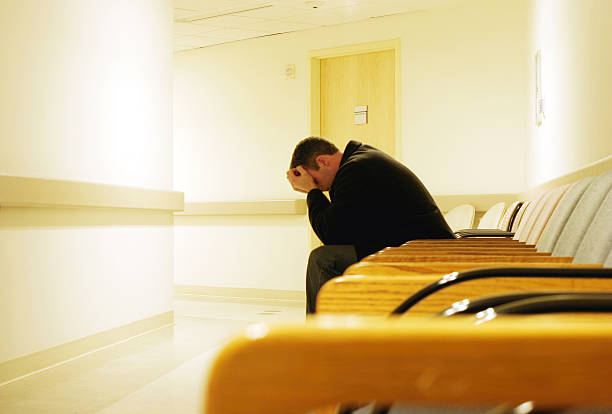
The day finally came at Houston Methodist Hospital. Sarah’s labor was rough—hours of sweat and pain. But when that tiny cry filled the room, the world stopped.
It was perfect. Until the administration lady walked in carrying the birth certificate.
“Honey, why don’t you fill it in?” Sarah asked, smiling, cradling the baby. “I’m a bit tied up.”
I looked down at the certificate. Eighteen years of responsibility. Eighteen years of being a father.
But something had been gnawing at me—a cold, hard knot in my stomach I’d ignored for months. The math. The dates. The nights I was hundreds of miles away versus the conception date the doctors estimated.
I looked at Sarah, then at her mother Karen, who had been suspiciously overprotective lately.
“Not yet,” I said, voice steady as steel. “We wait for the DNA.”
The silence that followed sucked the air from the room.
“John, are you out of your mind?” Karen snapped. “This is your wife. This is your child. How dare you?”
“How dare you accuse me?” Sarah’s voice trembled. “After everything we’ve built?”
I stood my ground. “It’s not madness. It’s math. I was offshore in July. You were here. The dates don’t lie.”
Then I dropped the name that had been burning a hole in my gut—the man who had been “mentoring” her, texting her at 10 PM.
“David Collins.”
Sarah froze. The color drained from her face.
“He’s my boss. He’s married. That’s insane.”
But she wouldn’t look me in the eye.
“I’m not signing,” I said, stepping back. “Not until science tells me who I am to that child.”
I turned and walked out, leaving the pen untouched. Behind me, the room erupted into chaos.
I walked out into the humid Houston night, feeling like a man who had just stepped out of his life and into a deep, dark hole.
The automatic doors slid shut behind me. The air was thick, smelling of wet asphalt and exhaust.
I stood on the curb, hands shaking—not from fear or cold, but from the adrenaline crash. The kind you get after a near-miss on the rig when you realize a split second was the only difference between life and death.
Only this time, the disaster had hit me square in the chest.
I drove to a budget extended-stay hotel off the highway—the kind oil workers stayed in when they had nowhere else to go. The room smelled of stale carpet cleaner and loneliness.
My phone buzzed. Sarah. Then Karen. Then Sarah again.
“John, please come back. You’re making a mistake.”
I turned the phone off.
The next morning, I went to see Robert, my lawyer. He listened as I laid out the timeline, the offshore rotations, the math that didn’t add up.
“You did the right thing, John,” he said. “Signing that document is legal acknowledgment of paternity. Once you sign, unringing that bell is expensive and difficult. In Texas, if you sign, you are the father, biology notwithstanding.”
He slid a notepad toward me. “We file for divorce immediately, but pause the proceedings pending DNA results. We need to secure your assets.”
“File it,” I said. “Freeze the joint accounts. I want everything separated. Today.”
I went to the house while Sarah was still at the hospital. I packed essentials, my laptop, my passport, documents from the safe.
Then I made the mistake of entering the nursery.
The room was bathed in soft yellow light. The crib stood empty. The mobile—little felt clouds and stars—spun slowly. On the changing table sat the tiny white onesie meant to be the “coming home” outfit.
I had wanted this so badly. I had imagined rocking my daughter in that glider chair, reading her stories, protecting her from the world.
But the math was relentless. July. I was on the Deepwater Horizon II platform for twenty-one days straight. Sarah had sent me photos of her “quiet nights in.”
Lies. All of it.
I dropped the onesie and walked out, closing the door firmly.
That evening, my phone rang. Tom Miller—a buddy from the offshore life.
“John, I heard. I need to talk to you. Not over the phone. Buffalo Wild Wings on the west side. An hour.”
“Tom, I’m not really in the mood—”
“It’s about David Collins.”
I froze. I hadn’t told anyone but the lawyer about David.
“I’ll be there.”
I found Tom in a back booth, two pitchers of beer on the table and a haunted look on his face.
“How do you know that name, Tom?”
Tom poured me a beer. “Because he’s the reason I’m divorced, John.”
I froze. “What?”
“My ex-wife. Two years ago. I was on a six-week rotation in the North Sea. When I came back, she was different. I found the texts. She was seeing a guy. His name was David Collins.”
My blood ran cold. “The same David Collins?”
“The very same. And here’s the kicker—after I kicked her out, I started digging. I talked to a guy in my hunting club, Mike Reynolds. Cop. His wife worked at the same firm as David five years ago. Same story. Husband works night shifts, David swoops in.”
Tom leaned across the table. “It’s a pattern, John. He targets us. Guys in the industry. Guys on the rigs, cops, firemen, military. Men who are gone for long stretches. He knows the wives are lonely. He knows the schedule. He hunts them.”
I felt sick. This wasn’t just an affair. This was predation.
“How many?” I asked.
“That I know of?” Tom held up three fingers. “Me. Mike Reynolds. And now you. But I bet there’s more.”
“We need to—” I started, but Tom cut me off.
“We don’t use fists. We use the truth. He thrives in the dark. He relies on shame. He counts on guys like us being too embarrassed to talk about it.”
Tom pulled out his phone. “I called Mike. And Don Coleman—you know Don from the auto shop? They’re coming. We’re going to compare notes. And when we have enough, we’re going to burn his reputation to the ground.”
Ten minutes later, Mike Reynolds walked in, still in his police uniform. Don Coleman followed, wiping grease from his hands.
They slid into the booth. No handshakes. Just nods of grim recognition.
“It’s true then?” Mike asked. “Sarah?”
“Yeah. Birth certificate is unsigned. Waiting on DNA.”
Mike slammed his hand on the table. “Son of a bitch. That’s exactly how he got Jessica.”
We spent two hours dissecting our lives. It was humiliating, painful. Four grown men admitting we’d been played.
We laid out the dates. The patterns were identical. The flattery. The fake concern about our dangerous jobs. “You must be so worried about him out there,” he’d tell them. “You must be so lonely.”
He wasn’t just sleeping with them. He was manipulating them, poisoning them against us.
By the time the waitress brought the check, we had a map of the destruction.
“What’s the play?” Mike asked.
“We make him famous,” I said. “We don’t touch him. We don’t threaten him. We just tell the truth. To everyone. His partners. His neighbors. His country club. We strip away the cover.”
“Social suicide,” Tom nodded.
“Professional extinction. In this town, reputation is currency. If he’s known as the guy who preys on the wives of first responders and roughnecks? In Texas? He won’t be able to close a deal in this state again.”
The next 48 hours were torture. The wait for DNA results is a specific kind of agony.
Sarah sent long, rambling texts. “John, she looks like you. I swear, look at her nose. Please just come home.”
She sent a picture. A close-up of the baby sleeping.
It broke me. I stared at that photo for an hour. The baby had dark hair. My hair was light brown. Sarah’s was blonde. David Collins had black hair.
Then my mother called. Margaret Miller was a retired schoolteacher who could silence a room with a look.
“I went to see them,” she said.
“Why?”
“Because I needed to look Sarah in the eye when you weren’t there.”
“And?”
“She’s terrified, John. But not like a wronged woman. Like a child caught stealing. She kept asking if you’d signed the papers yet, if you’d talked to a lawyer. She didn’t ask how you were feeling. She only asked about the paperwork.”
My mother paused. “I saw the baby. She’s beautiful. But she has David Collins’s chin. I met him at the Christmas party last year. I remember him.”
I spent the time digging through phone records. There was one number that appeared constantly—late nights, weekends when I was offshore. Hundreds of texts. Hours of talk time.
I ran the number through a reverse lookup.
Registered Name: David A. Collins.
While I was risking my life on a storm-tossed rig, she was on the phone with him for forty-five minutes at 1:00 AM.
On the morning of the third day, my phone buzzed.
Subject: CONFIDENTIAL – Paternity Test Results
My finger hovered over the notification. This was the moment the world split in two.
I tapped the screen. I scrolled past the legal jargon straight to the bottom.
Probability of Paternity: 0.00%
Zero. Absolute. Final.
I didn’t cry. I didn’t scream. I felt the tension in my shoulders snap—a physical release.
It was over. The gaslighting was over. The doubts were over. The marriage was over.
I called my lawyer. “Robert, it’s zero. File the papers. Serve her today.”
Then I texted Tom. It’s confirmed. Not mine. Let’s burn him down.
I drove to the house with the envelope on the passenger seat. Sarah’s car was there. Karen’s car was there.
I walked to the front door and unlocked it.
They were in the living room. Sarah was nursing the baby. Karen was pacing. They both froze when I walked in.
“John?” Sarah whispered.
I didn’t say a word. I held up the envelope.
I walked in and tossed it onto the coffee table. “Read it.”
Karen lunged for it, tearing at the flap. She pulled out the paper, her eyes scanning frantically. The color drained from her face.
“No. These tests can be wrong.”
“0.00%,” I said. “Zero, Karen. There is no margin of error for zero.”
Sarah grabbed the paper. She read it. Then she broke—a raw, guttural wail.
“I’m sorry,” she sobbed. “I didn’t mean for this… I didn’t think—”
“You didn’t think I’d find out?” I asked. “Or you didn’t think it mattered?”
“I was lonely! You were always gone! He was there, and he listened, and he made me feel like I existed!”
“And did he make you feel like you existed when you let me paint that nursery yellow? When you let me build that crib?”
“I ended it! When I found out I was pregnant, I cut him off. I wanted us!”
“You didn’t choose me. You chose a safety net. You chose a paycheck.”
I looked at her one last time. “My lawyer filed this morning. You’ll be served by end of day. I want you out of the house.”
“John, no! We can go to counseling! I love you!”
“You loved the life I provided.”
I walked out, closing the door gently. That click of the latch was the loudest sound I’d ever heard.
I went straight to the rendezvous point. The private room at the steakhouse where Tom had set up our war council.
They were all there. Tom. Mike. Don. And two new faces—Chris, a firefighter, and Mark, a pilot for United.
“Meet Chris and Mark,” Mike said. “Same story. David Collins.”
Five men. Five marriages. One predator.
“We have the dossier,” Don said, tapping a thick folder. “Texts, emails, hotel receipts, witness statements. A timeline stretching back four years.”
“Where is he tonight?” I asked.
Mike smiled coldly. “Houston Energy Gala. The big charity black-tie thing. David is receiving the ‘Executive of the Year’ award. He’s there right now with his wife, his boss, and half the oil and gas industry in Texas.”
“Let’s go,” I said.
We took two cars. We weren’t wearing tuxedos. We were in jeans, boots, and button-downs. We looked like the men who kept the lights on.
The valet tried to stop us. Mike flashed his badge. “Police business. Step aside.”
We walked through the gilded lobby, past fountains and chandeliers. The music from the ballroom drifted out—a string quartet playing something polite and expensive.
We pushed open the double doors.
The ballroom was vast, filled with round tables and hundreds of people in tuxedos and evening gowns. On stage, a man was speaking.
“…integrity, leadership, and commitment to excellence. Ladies and gentlemen, please welcome your 2024 Executive of the Year, Mr. David Collins!”
Applause rippled through the room. David Collins walked up the steps—tall, fit, confident, polished.
“Thank you. This award means so much. Integrity is the cornerstone of everything we do…”
I stepped into the aisle.
“Liar!”
The word tore through the applause like a knife.
David froze. The crowd turned. The string quartet stopped.
I walked down the center aisle, boots clacking loudly. Security guards started to move, but Mike held up a hand. “We aren’t here to hurt anyone. We’re just here to clarify the definition of integrity.”
“Who are you?” David squinted against the spotlight. “Security!”
“You know who I am, David. I’m John Miller. Sarah’s husband.”
David’s face went pale.
“And I’m Tom Miller. Karen’s ex-husband.”
“Mike Reynolds. Jessica’s husband.”
“Don Coleman. Lisa’s husband.”
The names rang out like a roll call of his sins. The room went silent.
“You seem to have a hobby, David,” I said. “You like to target the wives of men who work away from home. Men who are offshore, flying planes, patrolling streets to keep you safe.”
“This is harassment! I’ll have you arrested!”
“For what? Speaking? We have proof, David.”
Don and the others started walking through tables, placing packets down.
Slap. Slap. Slap.
Guests picked them up. I saw eyebrows raise, hands cover mouths. I saw a woman in a red dress—David’s wife—pick up a packet. She looked at the photos, the text logs, the timeline.
She stood up, looked at David on stage, and with quiet dignity, walked out.
“Your wife knows, David. Now your boss knows. Now your clients know.”
David looked at the crowd. He saw the shift. He saw the disgust.
“You stole our families. You let me paint a nursery for a child that wasn’t mine. You let me believe I was a father while you laughed.”
I took a step closer. David recoiled.
“I’m not going to hit you. I don’t need to. You’re done.”
I turned to the crowd. “When we’re out there doing the dirty work that keeps this state running, he’s in our homes, preying on our wives. He is a predator. And he is a coward.”
I looked at David one last time. “Enjoy the trophy. It’s the only thing you have left.”
I turned and walked out. The other men followed. Behind us, the murmur rose into a roar.
The next morning, my lawyer called. “Did you see the news? ‘Oil Exec Exposed in Scandal.’ His company terminated him ‘effective immediately.’ And Sarah accepted service. She’s not contesting the divorce or paternity finding.”
I hung up and sat on the edge of the bed. It was done.
The divorce was quick. Texas unfaithfulness and paternity fraud expedite things with irrefutable evidence. I sold the house at a loss. I went back to the rig and threw myself into work.
It took a year. A full year of seasons changing over the water before the numbness began to thaw.
I started living again. Got a small apartment in the Heights. Bought a new truck. Started fishing.
One rainy Tuesday, I was at a hardware store when a voice spoke up.
“You’re looking at the wrong torque rating for a Chevy block.”
I turned. A woman in coveralls, hair in a ponytail, grease smudge on her cheek.
Beautiful.
“That wrench will strip the bolts. You want the one on the left.”
“You know your engines.”
She smiled. “I grew up in my dad’s shop. I’m Lily.”
“John.”
“Would you maybe want to get coffee?”
She scanned my face. “I drink my coffee black. And I’m off in ten minutes.”
Lily was different—a mechanic who ran her own shop. We took it slow. On our third date, I told her everything. The rig, Sarah, the baby, the DNA test, the gala.
“You’re not broken, John,” she said, covering my hand with hers. “You’re just cautious. But I’m not her. And I’m not afraid of your ghosts.”
Eighteen years is a long time.
In eighteen years, Lily and I raised two boys. But I never forgot the girl.
Last Tuesday, my oldest son Leo was touring the University of Houston. We walked through the engineering hall, looking at senior capstone projects.
A project in the corner caught my eye—a model for an offshore platform with a brilliant new stabilizing system.
Standing behind it was a young woman. Tall, dark curls, flannel shirt, hands stained with graphite.
I knew those eyes. They were David Collins’s eyes.
But the set of her jaw, the confident stance—that wasn’t David.
I glanced at the name tag.
Emily Collins.
“Interesting design,” I said.
She lit up. “Thank you, sir. Most people walk past.”
“Not me. I spent twenty years on the rigs. Thunder Horse.”
Her eyes went wide. “That’s the rig that inspired this design!”
We talked for twenty minutes. She was sharp, humble, brilliant.
“I work two jobs,” she admitted. “Mechanic shop on weekends, waitressing at night. My mom helps when she can, but it’s just us. I’m on scholarship, but I have to cover the rest.”
Just us. David Collins wasn’t in the picture.
“Your father must be proud,” I said.
Her face tightened. “I don’t have a dad. My biological father left before I could walk. And there was another man before I was born. My mom told me about him once.”
“What did she say?”
Emily looked down. “She said he was a good man. A man of principle. She told me his leaving was the wake-up call she needed to become a mother who could raise me right. She told me I had to work twice as hard to be half the person he was.”
I felt a lump in my throat.
Sarah hadn’t painted me as the villain. She had used my memory as a standard.
Leo called from across the room. “Dad! Come check this out!”
I pulled out my business card. “If you need an internship next summer, call this number. We need engineers who know how to work.”
She took the card, reading the name.
John Miller.
She looked up, shock registering. “Mr. Miller?”
I looked at her one last time. I didn’t see David Collins. I didn’t see betrayal. I saw a kid who had survived the storm and learned to sail her own ship.
“Good luck with the project, kid.”
I walked away to join my son. I didn’t look back.
She wasn’t her father’s lies. She wasn’t her mother’s fear.
She was her own truth.
And as I walked out into the bright Texas sunlight, I finally felt the last shadow of the past evaporate.
The math finally added up.

Lila Hart is a dedicated Digital Archivist and Research Specialist with a keen eye for preserving and curating meaningful content. At TheArchivists, she specializes in organizing and managing digital archives, ensuring that valuable stories and historical moments are accessible for generations to come.
Lila earned her degree in History and Archival Studies from the University of Edinburgh, where she cultivated her passion for documenting the past and preserving cultural heritage. Her expertise lies in combining traditional archival techniques with modern digital tools, allowing her to create comprehensive and engaging collections that resonate with audiences worldwide.
At TheArchivists, Lila is known for her meticulous attention to detail and her ability to uncover hidden gems within extensive archives. Her work is praised for its depth, authenticity, and contribution to the preservation of knowledge in the digital age.
Driven by a commitment to preserving stories that matter, Lila is passionate about exploring the intersection of history and technology. Her goal is to ensure that every piece of content she handles reflects the richness of human experiences and remains a source of inspiration for years to come.