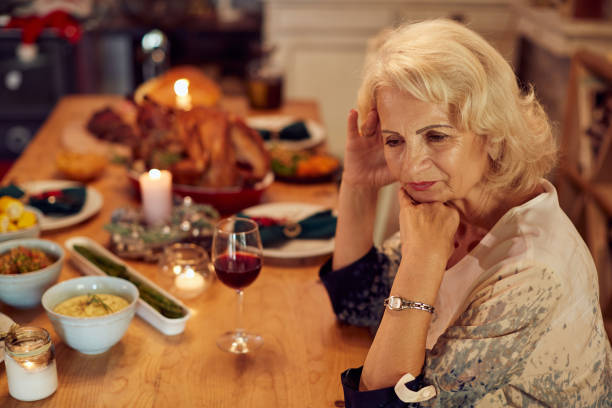
The Empty Gift Bag
I sat there watching my mother hand out gifts to everyone, stopping right before she reached me. The whole table laughed, unaware those presents had been purchased with my money. I didn’t argue or cry. Instead, I went home, opened my banking app, and hit cancel like I was cutting oxygen to a burning house.
Two weeks later, they stood outside my door, banging on the wood and screaming my name like they were begging.
My name is Violet Parker. I’m thirty-two years old, and up until ten days ago, I was under the impression that blood was thicker than water.
I live in Seattle—a city of gray skies and sharp coffee—where I work as a senior strategist for Crescent and Alder Media. I analyze consumer behavior, look at spreadsheets, and tell companies exactly where they’re bleeding money.
It’s ironic that I could spot a failing brand strategy from a thousand miles away, but I couldn’t see the rot in my own family until it was served to me with a side of overcooked turkey.
The notification came three weeks ago. A group text from my mother, Denise.
“Early Christmas dinner combined with Thanksgiving this year. Everyone home by 4. Do not be late.”
Dayton, Ohio is a long way from Seattle. It’s a flight and a rental car and a mental regression that starts the moment the plane touches the tarmac.
I packed light, but the daughter in me spent four hours the night before baking a bourbon pecan pie from scratch. I wanted to walk into that house with something tangible, something that said I cared enough to make an effort.
I arrived at 3:45. The driveway was packed with cars. Nobody came to the door. I had to shoulder it open.
The wall of sound hit me first. The television blasted a football game. My father, Mark, was shouting at the screen. My two younger sisters, Tessa and Belle, were on the sofa scrolling through their phones.
“I’m here,” I said.
My father didn’t turn around. “Move the car, Vi. You’re blocking the view of the street.”
“I parked on the street, Dad.”
“Oh. Well, don’t let the cold in.”
That was my greeting.
I walked into the kitchen. My mother was stirring gravy with frantic energy.
“Hi, Mom. I brought a pie.”
She glanced at the box. “Store-bought?”
“No. I made it from scratch.”
“We have plenty of dessert. Just put it on the counter and don’t clutter up the island.”
I set the pie down next to a pile of unopened mail—credit card bills, utility notices, late warnings.
Dinner was a masterclass in exclusion. The turkey was dry. The conversation was chaotic overlapping voices, none interested in listening.
“So, Violet, still doing that computer thing?” Uncle Rick boomed. “What is it you do again—Facebook for dogs?”
“I work in digital marketing strategy. We handle branding for tech firms.”
“Sounds fake,” Belle chimed in. “Like, you just sit on Instagram all day. I could do that.”
I focused on my food, wanting to get this over with.
Then came the performance.
My mother stood up, tapping her wine glass with a fork. The sharp ding-ding-ding cut through the noise.
“Since we won’t see Violet at actual Christmas because she’s too busy for us, I decided we should do our gift exchange now.”
She pulled out a massive shiny red bag overflowing with wrapped packages.
“First one is for Mark.” A high-end golf polo shirt. “Nice,” he grunted.
“For Tessa.” A designer smartwatch band. “Oh my God! This is the one I sent you the link for!”
“For Belle.” Expensive athletic leggings. “Yes! Finally.”
“For my big brother Rick.” Blue label bourbon. “Denise, you spoil me.”
I sat there, hands folded in my lap, smiling that polite, frozen expression I used in boardroom meetings.
I waited.
My mother reached into the bag and pulled out a small box. “Oh! This is for me from Dad.” She tore it open—a bottle of perfume.
Then she set the red bag down on the floor. It folded in on itself.
Empty.
The room went quiet. My father admired his shirt. Tessa buckled the watch band. Rick read his whiskey label.
They didn’t notice.
I cleared my throat. “Is there anything for me?”
My mother looked up, eyes clear and completely devoid of warmth. “Oh, Violet. You’re an adult. You have a job. You can buy whatever you want.”
“But Dad has a job. Rick has a job.”
“It’s different. They have expenses. You live the high life out there in the city. Besides, you should be grateful you’re even sitting here. We adjusted our entire schedule for you.”
Then Uncle Rick laughed. “She’s got you there, Vi. Rich girl like you asking for handouts. That’s rich.”
The table erupted in laughter.
I looked at the gifts scattered on the table.
I knew the prices because I paid the credit card bill.
The polo: $85. The watch band: $60. The leggings: $98. The bourbon: $120.
The card my mother used for “household emergencies” was a supplementary card on my account. I had given it to her five years ago for groceries and gas.
I was paying for the very gifts they were using to exclude me.
I didn’t cry. The urge vanished, replaced by cold, hard clarity. I saw them not as my family, but as a failed investment.
I stood up.
“Where are you going?” my mother asked. “We haven’t had coffee yet.”
“I’m leaving.”
“Don’t be dramatic. Sit down. You’re ruining the mood.”
“I’m not being dramatic. I’m just going.”
“If you walk out that door,” my father said, finally looking up, “don’t expect us to come running after you.”
I looked at him. “I don’t expect anything from you, Dad. Not anymore.”
I grabbed my coat and suitcase. I walked to the rental car. I saw the pie box on the passenger seat. I walked to the trash can at the end of the driveway and dropped the pie inside.
It landed with a heavy, wet thud.
I drove straight to the airport, changed my ticket, and boarded the red-eye flight back to Seattle.
As the plane climbed into the dark sky, I didn’t feel sad.
I felt light.
The flight back was a blur. Arriving at my apartment at 3:00 a.m. felt like stepping into a cryotherapy chamber.
I sat on the cold kitchen floor, leaning against the dishwasher, staring at the blinking microwave clock.
My phone was heavy in my hand. I knew the family group chat was probably roasting me right now.
I called my friend Cara, an ER nurse on her night off.
She picked up on the second ring. “Vi. You’re supposed to be in Ohio.”
“I’m back in Seattle. I left early.”
I told her everything—the gifts, the exclusion, the credit card.
“Open your banking app right now,” Cara commanded. “Put me on speaker. You need to see the damage.”
I opened the app, navigating to the credit card authorized for my mother.
“Go to transaction history,” Cara said.
The list populated. It was a long scroll.
“There’s the gym membership. Gold’s Gym in Dayton. Forty-nine a month.”
“Keep going.”
“Streaming services. Netflix, Hulu, Disney Plus, HBO Max, Spotify Family Plan. About eighty a month total.”
“What else?”
“Fresh Door meal kits. One-twenty a week.”
“A week?” Cara shouted. “Violet, that’s almost five hundred a month.”
I kept scrolling. Amazon Prime. Car wash subscription. Beauty box for Tessa and Belle. Bengals game tickets—four tickets, $300.
“There’s an Uber account linked. Saturday night rides. Downtown Dayton to home.”
“So you’re paying for their drinks, rides, food, entertainment, and gym,” Cara summarized. “And in return, you get a seat at the table if you’re lucky.”
I felt sick.
“Here’s what you’re going to do,” Cara said. “You’re not going to call and scream. You’re going to go silent. You’re going to cut the cord.”
We hung up. I sat in the dark for ten minutes.
Then I stood up.
I grabbed a yellow legal pad and wrote a ledger.
Gold’s Gym — $49/month — Mom Streaming bundle — $85/month — Dad/everyone Meal kit delivery — $480/month — Mom/Dad Cell phone family plan — $240/month — everyone
I did the math. Roughly a thousand a month. Twelve thousand a year. Over five years, that was sixty thousand dollars.
That was a down payment on a house.
I picked up my phone and opened the banking app.
Robert’s car payment: $467 monthly. Jessica’s student loan: $340 monthly. Their car insurance: $215 monthly.
My finger hovered over Cancel Autopay.
I thought about my husband. What would David say?
I canceled every automatic payment. Every single one.
Each click felt like cutting a cord.
Then I called the credit card company and removed them as authorized users.
“Are you sure?” the representative asked three times.
“Absolutely certain.”
I went to the recurring payments tab.
Netflix: Cancel. Hulu: Cancel. Meal kits: Cancel. Gym: Cancel.
I wasn’t angry. I was efficient.
I was cutting overhead costs.
When I finished, I put the phone down and took a deep breath.
The apartment felt different. It felt fortified.
I checked the time. 4:00 a.m. In Ohio, it was 7:00 a.m.
My father would be waking up soon, reaching for the remote.
The silence would not last long.
Saturday morning arrived with Seattle’s persistent drizzle. I sat at my desk with my laptop open.
The strategy was surgical.
I logged into the master account for the media bundle. I could see the profiles: Dad’s Cave, Mom’s Shows, Tessa, Belle, Rick.
I hadn’t even realized Uncle Rick was on my Netflix.
I clicked Security. Selected Sign out of all devices.
Somewhere in Dayton, screens went black.
Then I changed the password to thirty random characters.
Finally: Cancel subscription.
I called Gold’s Gym. “I’m revoking authorization for any future charges. If you attempt to charge this card again, I will flag it as fraud.”
The membership would freeze until a new payment method was added.
I canceled the meal kit delivery. The menu for next week was already selected. Steak frites. Truffle risotto. Salmon.
They were eating better than I was.
I clicked Cancel plan.
I removed my card from Amazon’s shared wallet, then removed their accounts from the household entirely.
I worked for two hours, methodically documenting everything.
When finished, I created a spreadsheet: The Ledger.xlsx
Date of cancellation, service name, reason.
This was my shield.
It was noon in Ohio. The pizza they tried to order would be declined. The movie they tried to rent would ask for a credit card.
I began to mentally prepare for the fallout.
The silence lasted exactly forty-eight hours.
Monday morning at 10:00, my phone vibrated.
Mom calling.
I ignored it. Five minutes later, it buzzed again.
A text: “Emergency. Pick up.”
I stepped out of my meeting and answered.
“Is everyone okay?”
“I am standing at the front desk of Gold’s Gym,” my mother hissed. “There’s a line of three people behind me. The girl just told me my card was declined. She said the account is terminated.”
“I know. I canceled it.”
Silence. Then: “You what?”
“I canceled the membership. I removed my credit card on Saturday.”
“Why would you do that without telling me?”
“I’m cutting back on expenses. You’re welcome to sign up again with your own card. It’s forty-nine a month.”
“My own card? You know we’re tight right now. This is for my health. Are you saying you want me to be in pain?”
“I want you to be healthy. But I’m not paying for it anymore.”
“You’re being incredibly petty. Is this about the pie?”
“I have to go back to work. Put it on your card or go home.”
I ended the call.
At lunch, my father called three times in a row.
“Fix it. I’m trying to watch the game and the screen says update payment method.”
“I removed the payment method because I’m not paying for your streaming services anymore.”
“You canceled the sports package? Violet, I’ve been watching that channel for three years.”
“Then you should know how much it costs. You can add your own Visa.”
“I’m not adding my Visa to the internet! That’s how you get hacked.”
“I’m not fixing it, Dad.”
“You’re being a brat. You think because you have a fancy job, you can look down on us.”
“If we’re family, then why do I feel like an ATM?”
“Don’t you dare play the victim. We sacrificed everything for you—”
“And I have paid you back ten times over. Goodbye, Dad.”
I hung up and blocked the number for the rest of the workday.
By evening, the family group chat was a war zone. Forty-two unread messages.
Uncle Rick: “Pretty cold move, Vi.” Mom: “It’s not about the money. It’s about principle. Family helps family.” Belle: “Wait. Does this mean the Uber account is dead too?” Tessa: “lol. Imagine making six figures and crying over a Netflix bill.”
They were feeding off each other, building a narrative where I was the villain.
I didn’t respond. Anything I said would be twisted.
Then came the public shaming.
Cara sent me a screenshot. “Check Instagram.”
Tessa’s story: a black-and-white selfie, tragic and pensive.
“It hurts when you realize some people value money more than their own blood. Family first.”
She was using my money to pay for the data plan to trash me.
Then a Facebook message from my cousin Beth.
“Hey Violet. Your mom is telling everyone you cut her off out of nowhere. But at dinner, she was bragging about getting a great deal on the gifts because she used the platinum rewards points from your card. Did you know she bought the Christmas gifts with your account?”
I froze.
Rewards points. The emergency card was basic. It didn’t have platinum perks.
There was only one card with high-tier rewards.
I opened my laptop and checked my credit report.
There was a department store card I thought I’d closed years ago. Status: open. Balance: $4,000.
I logged into the credit center.
Six months ago: “Report card lost/stolen. Send replacement.”
Mailing address: 242 Maple Drive, Dayton, Ohio. My parents’ house.
Someone had called customer service, pretended to be me, requested a replacement card.
I looked at the transactions from the week before dinner.
November 14th — men’s wear — $85 November 14th — jewelry accessories — $60 November 14th — liquor — $120 November 14th — athletic wear — $98 November 14th — cosmetics — $110
They matched perfectly. The polo. The watch band. The bourbon. The leggings. The perfume.
They had used a stolen card in my name to buy gifts for themselves, wrapped them, and performed a ceremony of giving while leaving me out.
I sat there frozen.
They had not just used my money. They had committed identity theft to fund a performance designed to humiliate me.
I called Cara. “They didn’t just steal my credit card. They’re trying to become me.”
I spent the next morning documenting everything. Every transaction, every unauthorized charge.
Total over five years: $72,415.32.
Seventy-two thousand dollars.
I called a lawyer. Eleanor Price was sharp as glass.
“The house is your separate property,” she said after reviewing my evidence. “They have no legal claim. You have every right to ask them to leave.”
“This is straightforward,” Eleanor explained. “The property was purchased with your funds before marriage. But we have two issues: the financial fraud with the credit card, and potential harassment.”
I told her about the stolen department store card, the fraudulent transactions.
“We file a police report for the identity theft,” she said. “And based on the pattern, we can pursue a protection order if they continue contact.”
“Do it,” I said.
I filed the police report. Case number: SPD20231104.
Then I opened my email and composed a message to my entire family.
Subject: Regarding gratitude
Since we’re talking about family and who sacrifices for whom, I thought it would be helpful to have the facts.
Attached is a breakdown of expenses I’ve covered for this family over five years. The total is $72,415.32.
Also attached is the transaction log from the department store credit card ending in 4022—the card opened in my name that I didn’t authorize.
As you can see, the dates and amounts correspond exactly to the Christmas gifts Mom gave everyone at dinner.
I bought the shirt. I bought the watch band. I bought the leggings. I bought the whiskey. I bought the perfume.
You told me I should be grateful to have a seat at the table. Looking at these numbers, I think the question is: who is actually taking care of whom?
I’m not asking for the money back. I know you don’t have it.
I’m asking you to stop lying about me.
Violet
I attached the spreadsheet and screenshots.
I clicked Send.
It took eleven minutes.
Text from my mother: “I cannot believe you. You put a price tag on love. You made a spreadsheet. That is sick.”
She was attacking the method to ignore the truth.
“I told you about that card. You forgot. You’re twisting everything.”
Then: “You are ungrateful. You are toxic. I am done. Do not contact us until you’re ready to apologize.”
Within an hour, they had blocked me on everything. Facebook, Instagram, even my father’s profiles.
They had fired me from the position of family savior.
But I wasn’t done discovering their secrets.
An email arrived from a bank I’d never used.
“Action required — Unusual activity on your loan application.”
A home equity line of credit. A HELOC.
I didn’t own a home in Ohio.
They were trying to take out a loan using property I’d inherited from my grandmother—a small plot of land I’d given my father power of attorney to manage the taxes on.
They were trying to leverage my name, my credit, and my inheritance before I could stop them.
The discrepancy in employment verification had flagged it. They’d tried to fake my employment and messed up.
This wasn’t about subscriptions anymore. They were trying to mortgage my future.
I called Eleanor. “I need someone who handles identity theft and family fraud. They’re not just stealing my credit card. They’re trying to become me.”
It had been two weeks since I sent the email. Two weeks of silence.
Then, on a Tuesday evening, my doorbell rang.
Not the intercom from the lobby—the actual doorbell to my fourteenth-floor unit.
I froze. The only way someone could be at my door was if they’d tailgated through security.
I looked through the peephole.
My mother and father. My mother held a large glossy red gift bag—identical to the one from dinner.
“Violet, honey, are you in there? We saw the light under the door.”
I didn’t unlock the deadbolt.
“I’m not opening the door.”
“Don’t be silly. We flew all the way here. We’re tired. Let us in. I brought you a present.”
“I don’t want the present. You need to leave.”
“Unlock this door right now,” my father boomed. “This is ridiculous.”
“We can talk through a lawyer. No contact unless it’s through legal channels.”
“You’re going to sue your own parents over money?”
“It’s not just money. It’s fraud. You tried to take out a loan in my name.”
“That was for the family! We were going to lose the house!”
My mother started pounding on the door. Thud. Thud. Thud.
“Open this door. I am your mother. You’re humiliating us.”
I called the front desk. “This is Violet Parker in unit 1402. I have two intruders outside my door refusing to leave. They’re banging and disturbing the peace. I need security.”
“Did you hear that?” I yelled at the door. “Security is coming.”
“She actually called them,” my father hissed. “Let’s go.”
“I’m not leaving my child!”
“Denise, move. I’m not getting arrested in Seattle.”
I heard their footsteps retreating. They took the stairs to avoid security on the elevator.
Minutes later, security arrived. “Are you all right?”
“I’m fine. Please ensure their photos are at the desk. They’re not allowed back in.”
They’d left the red gift bag on my welcome mat.
Inside was a cheap photo album filled with pictures of me as a child. Tucked in the front was a note:
“We returned the polo shirt and bourbon to get cash for this album. We just wanted you to remember we used to be a family. Please sign the papers. We’re drowning.”
The album cost ten dollars. They were trying to manipulate my memories to get access to my credit.
My phone buzzed. Voicemail from Uncle Rick, slurring slightly.
“You made your father cry in a hallway. You think you’re tough. You have no idea what you started. You want a war? You got one.”
I put the album in a drawer. The note went into a plastic sleeve in my Evidence folder.
I emailed Eleanor: “Urgent — harassment and trespassing incident.”
I wasn’t the little girl in the photos anymore.
The siege continued. Unknown numbers. Voicemails from my mother claiming hypertensive crisis—while her Facebook showed her at Panera with her best friend.
My father left messages demanding I “issue a statement” to fix the family’s reputation.
Belle posted a TikTok: “When family becomes strangers. Money changes people.”
But the comments surprised me:
“Parents don’t usually get cops called unless they’re doing something crazy.” “Missing context here.” “If a woman cuts off her family, it’s usually for survival.”
Then a neighbor posted shaky video from her peephole showing my mother kicking my door, screaming “You’ll die alone!”
The truth was out. I didn’t have to explain anymore.
I worked with Eleanor to file for a restraining order. “Based on the threats and physical altercation, we have grounds for an anti-harassment order.”
“Do it,” I said.
Then I discovered they’d tried again. A request to raise the credit limit on the stolen card from $5,000 to $15,000.
They were using their own home address. Claiming my salary as income.
“When we file the police report,” I told Eleanor, “make sure the address is correct. I want the police to go to the right door.”
I wasn’t reacting anymore. I was executing a strategy.
Three months later, I sat on a restaurant balcony in Seattle, celebrating a promotion with Cara and other friends.
Without the mental load of managing chaos, without the financial drain, I’d focused entirely on work.
I’d landed a massive campaign. I was now a director.
My phone buzzed. Email from Denise Parker.
Subject: Checking in
“Violet, we moved into a condo. It’s small. Dad is working at a hardware store to make rent. It’s hard. We miss the house. I hope you’re happy in your big city. I just wanted you to know we’re surviving. Even though you didn’t help, we still love you. Even if you don’t love us.”
It wasn’t an apology. It was a guilt trip.
She took no responsibility for the fraud, the lies, the theft.
I typed a reply.
“Mom, I’m glad you found a place. I’m happy. If you want to have a real conversation, please refer to the conditions I left with Mr. Sterling regarding therapy and accountability. Until then, I wish you the best.”
I hit send, then archived the email into a folder: Family — Read Only.
“Everything okay?” Cara asked.
I looked at the sunset reflecting off the water.
“Yeah. Everything is perfect.”
I had won. Not because I punished them. Not because they were suffering.
I won because they could no longer hurt me.
I had taken back the pen, and for the first time in my life, I was writing my own story.
Sometimes the most satisfying revenge isn’t making them pay.
It’s simply closing your wallet, locking your door, and letting them face the consequences of their own actions.

Lila Hart is a dedicated Digital Archivist and Research Specialist with a keen eye for preserving and curating meaningful content. At TheArchivists, she specializes in organizing and managing digital archives, ensuring that valuable stories and historical moments are accessible for generations to come.
Lila earned her degree in History and Archival Studies from the University of Edinburgh, where she cultivated her passion for documenting the past and preserving cultural heritage. Her expertise lies in combining traditional archival techniques with modern digital tools, allowing her to create comprehensive and engaging collections that resonate with audiences worldwide.
At TheArchivists, Lila is known for her meticulous attention to detail and her ability to uncover hidden gems within extensive archives. Her work is praised for its depth, authenticity, and contribution to the preservation of knowledge in the digital age.
Driven by a commitment to preserving stories that matter, Lila is passionate about exploring the intersection of history and technology. Her goal is to ensure that every piece of content she handles reflects the richness of human experiences and remains a source of inspiration for years to come.