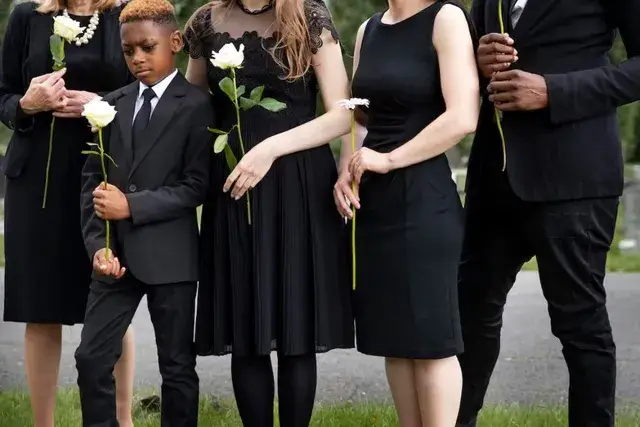
The Final Goodbye
My husband is on a luxury vacation while I’m at our daughter’s funeral. He texted: “I’ll call you later. Important meeting.” But he doesn’t know what I’ve already done.
The day of my daughter Grace’s funeral was painted in muted grays. The clouds hung low, as if the sky itself mourned her loss. I stood at the edge of her grave, the weight of my sorrow pressing down on me, making it hard to breathe. My little girl—my sweet Grace—was gone, and with her, a piece of my soul had been buried too.
Friends and family murmured condolences, their voices barely penetrating the haze of my grief, but I noticed one thing above all: the empty space beside me.
Marcus wasn’t there.
When the last shovel full of earth was laid, I couldn’t feel anything but numbness. As I walked to the car, my phone buzzed. For a moment, I thought it might be Marcus finally reaching out to explain why he wasn’t at his own daughter’s funeral.
Instead, it was a text message: “Important meeting. I’ll call you later.”
My hands shook as I stared at the screen. The audacity of those words made my blood boil, but it wasn’t just the message—it was the small detail beneath it: the location tag. The text hadn’t come from a conference room or an office building.
It had come from a luxury beach resort.
My vision blurred, not with tears this time, but with pure, unadulterated rage. Marcus wasn’t in a meeting. He wasn’t mourning. He was relaxing in paradise while I stood at our daughter’s grave.
I closed my eyes, clutching the phone tightly as memories flooded back—the weeks leading up to Grace’s death, the arguments, the cold distance that had crept into our marriage. He had grown increasingly distant, his excuses piling up like bricks in a wall between us: business trips, late-night meetings, vague mentions of stress.
I had been too focused on Grace and her illness to question him, but now everything fell into place.
I remembered the nights I stayed by her bedside, holding her fragile hand as she fought for every breath. I had begged Marcus to come home from one of his supposed trips, to be with her, to be with us. He had promised, but he never showed up.
Sitting in the car, I stared at his message again: “I’ll call you later.” The casual tone, the lack of urgency—it was as if Grace’s death was just another inconvenience in his carefully curated life.
That was when the spark of anger turned into something much darker.
The drive home felt endless, but it gave me time to think, to plan. I replayed every moment of the past year in my mind, searching for clues, for cracks in Marcus’s facade: the late-night phone calls, the sudden expenses, the constant excuses.
When I arrived home, the emptiness of the house hit me like a punch to the chest. Grace’s room was just as she had left it—her toys neatly arranged, her favorite blanket folded at the foot of her bed. I couldn’t bring myself to go inside, so I closed the door and leaned against it.
I went to the kitchen and opened my laptop, searching—social media profiles, email accounts, bank statements—anything that could confirm what I already knew in my gut.
It didn’t take long to find the proof. Marcus had been withdrawing large sums of money from our joint account, all while claiming to be cutting back on expenses for Grace’s medical bills. There were receipts for five-star hotels, expensive dinners, and spa treatments, all charged to a credit card I didn’t even know he had.
And then there were the photos.
My heart clenched as I scrolled through his social media, finding carefully curated images of him with a younger woman. Lily—that was her name. She was tagged in nearly every photo, her face glowing with happiness as they lounged by the pool or shared cocktails on the beach. In one image, Marcus was kissing her on the cheek, a wide grin on his face.
My stomach churned. I slammed the laptop shut.
It was worse than I had imagined. He wasn’t just unfaithful—he was living an entirely separate life, one where Grace and I didn’t exist.
My grief turned into a burning fury. Marcus had not only betrayed me, but he had also betrayed Grace. He had chosen his own selfish desires over his family, over his daughter, over everything that should have mattered.
Marcus thought he had won, that he had escaped the responsibilities of our life together. But he was wrong. He had underestimated me.
That night, I sat down at the table with a notebook and pen, writing out every detail of my plan—Marcus’s lies, his infidelity, his embezzlement. I would expose it all.
I stared at the notebook in front of me, the plan taking shape with every stroke of my pen. Marcus had built his life on lies, but those lies would be his undoing.
The first step was simple: gather evidence. I couldn’t confront him without proof—not just for my own satisfaction, but to ensure there was no way he could wriggle out of the consequences.
I started with our joint account. Over the past year, there had been multiple withdrawals labeled as business expenses, each transaction sizable, often leaving me scrambling to cover Grace’s medical bills. I had believed him when he said the money was tied up in investments or being used for her treatments.
Now I knew better.
Cross-referencing the withdrawals with receipts I found in his emails, I realized most of the money had been spent on luxury hotels, fine dining, and high-end boutiques.
But the money wasn’t the only thing he’d stolen. He had taken time—precious moments that Grace and I could never get back.
That was when I decided to bring in someone who could help me dig deeper: a private investigator. I found a local investigator online, a woman named Eleanor who had glowing reviews for her discretion and thoroughness.
When I called her, I kept my voice steady. “I need help uncovering my husband’s secrets.”
Eleanor didn’t ask unnecessary questions. She simply assured me she would find what I needed and set up a meeting.
The next morning, I met Eleanor in a quiet cafe. She was sharp-eyed and professional. As I laid out what I already knew—his affair, the financial discrepancies, his absence at Grace’s funeral—her expression remained neutral, but I could tell she understood the gravity of the situation.
“I’ll dig into his financials, track his movements, and see if there’s anything else he’s hiding,” Eleanor said. “It might take a few days, but I’ll get you what you need.”
Over the next few days, Eleanor kept me updated. Each phone call brought a new revelation, each one more damning than the last. Marcus wasn’t just spending our money on vacations and gifts for Lily—he had been embezzling from his own company. He had been siphoning funds from his business accounts, covering his tracks with false invoices and fake vendors.
But it wasn’t just the financial betrayal that cut deep. Eleanor also uncovered emails between Marcus and Lily discussing their plans to move abroad together. He had been setting the stage to leave me entirely—abandoning the life we had built and starting fresh with her.
One email in particular made my blood run cold. In it, Marcus had written: “Once everything is finalized, we’ll never have to look back. She’ll never see it coming.”
He meant me.
I sat in my kitchen that night, staring at the email printout. The audacity, the cruelty—it was almost too much to comprehend. Marcus hadn’t just betrayed me; he had plotted to erase me from his life entirely.
But if he thought I would sit back and let him win, he was sorely mistaken.
With Eleanor’s findings in hand, I began the next phase of my plan: building the trap. I needed to make Marcus believe he was in control, that his lies were still working.
So I sent him a carefully worded text: “I’ve been thinking about us. I know we’ve been distant, but I want to talk. Can we meet at the vacation home next weekend? I think we need some time to reconnect.”
I stared at the screen, waiting for his reply. It didn’t take long.
“Of course. I’ll be there,” he wrote, his tone casual as if nothing had happened.
The irony wasn’t lost on me. He thought he was manipulating me, stringing me along while he pursued his selfish desires.
But the truth was, I was the one pulling the strings now.
In the days leading up to our meeting, I worked tirelessly to ensure everything was in place. I gathered every piece of evidence Eleanor had uncovered—bank statements, emails, photos—and organized them into a folder.
I also prepared something extra: a video montage of Grace—her laughter, her smiles, the moments we had shared as a family before everything fell apart. I wanted him to see what he had thrown away.
The drive to the vacation home felt surreal. The ocean stretched endlessly to my right, its rhythmic waves a stark contrast to the tempest brewing inside me.
This place had once been a sanctuary for our family. Now it felt like a stage for retribution, a battleground where the truth would finally destroy the facade Marcus had built.
Inside, I moved with purpose. The folder of evidence was heavy in my hands. I opened it on the dining table, spreading out the incriminating documents: bank statements, emails, and photos of Marcus with Lily.
I had also brought the video montage of Grace. I connected my laptop to the television and queued it up, pausing on the first frame—Grace beaming at the camera, her eyes full of life.
Marcus would see it, and he would feel the depth of what he had lost.
The sound of tires crunching on the gravel driveway snapped me out of my thoughts.
He was here.
Marcus entered the house as if he owned the world, his smile practiced and confident. He carried a small overnight bag and wore a casual linen shirt, the epitome of a man on a carefree vacation.
“Hey,” he said, his voice warm.
I forced a smile, masking the storm inside me. “Hey. Thanks for coming. I thought we needed some time to talk.”
He set his bag down and walked over to me, leaning in to kiss my cheek. I turned my face slightly, letting his kiss land awkwardly near my temple.
“You’re right,” he said, sliding into the chair across from me. “We’ve been through a lot. I’m glad you reached out.”
I nodded, folding my hands on the table. “I’ve been doing a lot of thinking about us, about Grace, about everything that’s happened.”
Marcus nodded solemnly. “I know it’s been hard, but we’ll get through this together. I promise.”
His words were a cruel joke, but I didn’t flinch. Instead, I reached for the first piece of evidence—a bank statement showing a series of withdrawals—and slid it across the table toward him.
Marcus glanced at the document, his brow furrowing. “What’s this?”
“Just something I found while going through our accounts. I noticed some discrepancies. Maybe you can explain them to me.”
He picked up the statement, his eyes scanning the numbers. For a brief moment, his confident facade faltered.
“These are just work expenses. You know how it is—travel, meetings, client dinners.”
I leaned forward, my eyes locking onto his. “Client dinners at five-star resorts? Meetings that cost thousands of dollars, Marcus? Do you really expect me to believe that?”
Before he could respond, I reached for another document: a receipt for a luxury suite dated the same week Grace had been hospitalized. I placed it on the table.
“Let me guess. Another client dinner?”
Marcus’s jaw tightened. His eyes darted toward the door. “I don’t know what you’re trying to imply, but you’re clearly upset, and I think we should talk about this later.”
I laughed, a bitter sound that echoed in the silence. “Later? Like when you’re on your next business trip? No, Marcus. We’re talking about this now.”
I stood and walked to the living room, grabbed the remote, and turned on the television. The screen lit up with Grace’s smiling face, frozen on the first frame of the video I had prepared.
Marcus froze. “What is this?”
I pressed play.
The video began to roll, showing clips of Grace laughing, playing, and blowing out candles on her birthday cake. Her voice filled the room, bright and full of joy.
I turned to Marcus, my voice trembling with rage. “This is what you missed while you were off with her. This is what you threw away for your selfish desires.”
He didn’t respond. The weight of the video, of Grace’s absence, was too much for even him to deflect.
But I wasn’t finished.
I picked up the final piece of evidence: a printed email from Lily detailing their plans to move abroad together. I slammed it onto the table.
“Were you even going to say goodbye? Or were you just going to disappear, leaving me to pick up the pieces while you played house with her?”
Marcus’s face turned pale. His confidence evaporated. For the first time, I saw fear in his eyes.
I stepped closer, my voice low and steady. “You took everything from me, Marcus—my daughter, my trust, my life—and now you’re going to pay for it.”
The silence that followed was deafening, broken only by the sound of Grace’s laughter still playing on the screen.
He had no idea what was coming next.
The air between us felt heavy, suffocating. Marcus sat frozen, his face pale as the weight of the evidence sank in. The laughter of our daughter still echoed softly from the television, a cruel reminder of everything he had turned his back on.
I crossed my arms, my gaze unwavering. “Say something. You always have something to say, Marcus, so explain this to me. Explain how you justified abandoning your daughter while she was dying.”
He swallowed hard. “I didn’t abandon her. I was working. I was trying to provide for us.”
“Provide for us?” I shot back, my tone laced with venom. “Is that what you call draining our accounts to fund your vacations and your mistress? Is that what you call leaving me alone to watch Grace die while you were too busy lounging on a beach?”
His hands clenched into fists on the table. “I didn’t know it would get this bad. I didn’t know she would die.”
“You didn’t know because you weren’t there, Marcus. You didn’t care enough to know.”
The words hung in the air like a knife. For a moment, he looked like he might argue, but then his shoulders slumped.
“I made mistakes,” he admitted, his voice barely above a whisper. “I wasn’t there when I should have been, but you don’t understand. I needed an escape. I couldn’t handle watching her suffer.”
I laughed bitterly. “You needed an escape? Do you think I didn’t? Do you think I didn’t cry myself to sleep every night praying for a miracle while you were off living your fantasy life? You didn’t need an escape, Marcus. You needed an excuse.”
I stepped closer, grabbing the folder and pulling out a photo of him and Lily on a yacht. I held it up in front of him.
“Was she worth it? Was she worth losing your daughter, your family, your soul?”
He flinched. “It wasn’t like that. I didn’t mean for it to go this far. I just needed someone who wasn’t drowning in grief all the time.”
The word hit me like a slap. I stared at him. “Grief. You think I wanted to be drowning in grief? You think I chose this? You’re the one who left, Marcus. You’re the one who abandoned us.”
I slammed the folder onto the table. “Save it. I don’t care about your excuses, because while you were busy playing house with her, I was busy making sure you’ll never get away with it.”
His eyes widened. “What do you mean?”
I smiled coldly, reaching into my bag and pulling out a stack of documents. “These are copies of every fraudulent transaction you made—every dollar you embezzled from your company, every cent you stole from us.”
His hands trembled as he picked up the documents. “How did you get this?”
“Does it matter? What matters is that the authorities have them too. I reported you, Marcus. They’re probably already building a case.”
His face went pale. “You can’t do that. Do you know what will happen to me? I’ll lose everything.”
“You mean like I lost everything? Like Grace lost everything because you were too selfish to be there for her? Yes, Marcus. I know exactly what will happen, and I don’t care.”
He stood abruptly, pacing the room. “You don’t understand. If this gets out, I’ll go to prison. My reputation will be ruined.”
“Good. You deserve it.”
He turned to face me, his expression a mix of anger and desperation. “You’re just doing this to hurt me. You’re not thinking about the consequences.”
“The consequences?” I repeated, my eyes blazing. “I have thought about nothing else—every sleepless night, every tear I’ve shed, every moment I’ve spent planning this. I’ve thought about the consequences, and I’m ready to face them. Are you?”
He stared at me, struggling to find a response. For the first time, he looked truly defeated.
But I wasn’t finished. I turned back to the television, pausing the video of Grace on her birthday. “Look at her. Look at what you missed. Look at what you threw away.”
He turned slowly, his eyes locking onto the screen. His shoulders sagged, and for a moment I thought I saw tears welling in his eyes.
“I’m sorry,” he said, his voice barely audible. “I’m so sorry.”
I shook my head. “It’s too late for sorry, Marcus. Sorry doesn’t bring Grace back. Sorry doesn’t undo the damage you’ve done.”
The room fell silent. Marcus sank into a chair, his head in his hands, while I stood over him.
“You thought you could betray me, betray us, and walk away unscathed. But now you know the truth. You can’t. And you won’t.”
I turned off the television, the room plunging into silence. “We’re done here. You can leave, but don’t think for a second that this is over.”
Marcus looked up at me, his eyes filled with guilt, fear, and something else I couldn’t quite place.
But I didn’t care. This wasn’t about him anymore. This was about me.
And I was just getting started.
The next morning, I got to work. Marcus had underestimated me for years, treating me like a passive participant in our marriage—someone too blinded by love or duty to challenge him.
But he had no idea what I was capable of when pushed to my limits.
The first step was ensuring his professional downfall. I drafted an anonymous email to the board of directors at his company, attaching copies of the financial documents Eleanor had uncovered. The email was concise and damning, detailing his embezzlement and fraudulent activities.
I didn’t just send it to the board; I sent it to key stakeholders, investors, and even the company’s legal team.
As I hit send, a sense of satisfaction washed over me. Marcus had built his career on lies, and now those lies would unravel in spectacular fashion.
By the end of the day, news of Marcus’s financial misconduct had spread like wildfire. Eleanor kept me updated on the chaos unfolding behind closed doors.
“They’re conducting an internal investigation,” she told me. “It’s only a matter of time before they bring in law enforcement.”
“Good,” I replied. “Let them.”
Meanwhile, I made sure Marcus’s personal life wasn’t spared from scrutiny. I shared the photos of him and Lily with a carefully curated list of mutual acquaintances—friends, family, colleagues.
The reactions were immediate and visceral. Messages flooded my phone, most expressing shock and outrage. People who had once admired Marcus now saw him for what he truly was.
Two days later, I received the call I had been waiting for. A stern voice introduced himself as Detective Reynolds, part of the task force investigating financial crimes.
“Thank you for bringing this to our attention,” he said. “We’ll be in touch if we need further information.”
I hung up, my hands trembling—not with fear, but with vindication.
The day Marcus was arrested was both surreal and strangely satisfying. I watched from the window as two plainclothes officers approached him outside his office. He tried to maintain his composure, but the sight of him being handcuffed and led into a squad car was a moment I would never forget.
My phone buzzed incessantly after the news broke. Friends and acquaintances shared articles and social media posts. Marcus’s name was plastered across headlines: prominent executive arrested for embezzlement, businessman’s double life exposed.
I didn’t respond to any of the messages. Instead, I sat in my living room sipping tea and scrolling through the coverage. The photos were unflattering—Marcus in handcuffs, his face pale and drawn.
It was poetic justice.
A week later, Marcus called me from jail. I stared at the phone as it rang, his name flashing on the screen. For a moment, I considered answering.
But then I remembered Grace’s laughter, the nights I had spent alone in the hospital, the cold emptiness of her funeral.
I let the call go to voicemail.
He called again the next day, and the day after that. Each time, I ignored him. I didn’t need to hear his excuses or his pleas.
The media storm continued to rage. Reporters camped outside Marcus’s former office. Tabloids speculated about his relationship with Lily, painting her as a gold-digging accomplice.
For the first time in months, I felt a sense of control over my life.
As the weeks passed, I began to rebuild. I sold the vacation home, the place that had once been a symbol of our family but had become tainted by Marcus’s betrayal. I donated the proceeds to a charity supporting children with terminal illnesses, a tribute to Grace’s memory.
Every decision I made, every step I took, was a reminder that I was more than the pain Marcus had caused me. I was a mother, a survivor, a woman who had reclaimed her power.
And Marcus? He was just a man who had lost everything.
The silence in my house was different now. It wasn’t the suffocating stillness that had haunted me after Grace’s death. This silence was lighter, almost peaceful.
Marcus was gone, his life in ruins, and I had made sure he could no longer manipulate or hurt anyone.
I sat on the couch, staring at the flickering flames in the fireplace. I had done what I needed to do, what I knew was right. Marcus deserved every consequence.
But I couldn’t ignore the faint ache that whispered in the back of my mind.
It wasn’t regret. I didn’t regret exposing him. It was something else: a quiet realization that revenge, as necessary as it had been, couldn’t mend everything. It couldn’t bring Grace back or erase the scars Marcus had left.
Justice had been served, but justice wasn’t the same as healing.
I let out a deep breath, running my fingers along the edge of the coffee table. A framed photo of Grace sat there, her smile radiant as ever. I picked it up, tracing the curve of her cheek with my thumb.
“I hope I made you proud,” I whispered.
In that moment, I made a decision. It was time to move forward—not just for me, but for Grace. She had been my light, my reason for fighting through every storm. I couldn’t let her memory be tied to the pain Marcus had caused.
I needed to create something beautiful from the ashes of our past.
The next few weeks were a whirlwind of change. I started by packing up the family home, boxing up memories that carried both joy and sorrow. It wasn’t easy, but it also felt liberating. Each box I sealed was a step closer to reclaiming my life.
Moving to a smaller, quieter apartment brought its own challenges, but it also offered a fresh start. The space was modest but warm, with sunlight streaming through the windows.
I started reconnecting with friends I hadn’t spoken to in months. I enrolled in a photography class. I volunteered at a local children’s hospital. These small victories felt like the first steps toward healing.
One afternoon, as I sat by the bay window with Grace’s photo in my hands, an idea began to take shape.
I wanted to honor her memory in a way that would bring light to others, just as she had brought light to my life.
That’s when the Grace Foundation was born.
I started small, reaching out to community leaders and organizations for support. The foundation’s mission was simple: to provide resources and support for families with children facing terminal illnesses.
The first event we organized was a charity walk. I was overwhelmed by the response. Friends, neighbors, and even strangers came together. As I stood at the starting line, looking out at the sea of faces, I felt an overwhelming sense of gratitude.
Grace’s memory was alive in every step they took, in every dollar raised to help families in need.
The foundation gave me a sense of purpose I hadn’t felt in years. It reminded me that love could endure even in the face of unimaginable loss.
Grace’s spirit lived on—not just in my heart, but in the lives of the families we helped.
One evening, as I sat on the couch flipping through an old photo album, I came across a picture of Grace and me at the beach. She was building a sandcastle, her face scrunched up in concentration while I knelt beside her laughing.
I smiled, a bittersweet ache blooming in my chest. The memories no longer felt like daggers—they felt like gifts.
“I miss you every day,” I whispered, “but I’m going to be okay. I promise.”
And for the first time in a long time, I believed it.
The days turned into months, and slowly life began to take on a new rhythm. The pain didn’t disappear—it never truly would—but it became a part of me, a quiet reminder of where I had been and how far I had come.
The Grace Foundation continued to grow, touching more lives than I ever could have imagined. As I stood on the stage at our second annual fundraiser, looking out at the crowd of supporters, I felt a sense of peace wash over me.
Marcus’s name was a distant memory, his presence erased from the life I had rebuilt.
This was my story now—a story of resilience, of love, of finding light in the darkest of places.
And as I spoke into the microphone, my voice steady and strong, I knew that Grace was with me, her light guiding me forward.

Lila Hart is a dedicated Digital Archivist and Research Specialist with a keen eye for preserving and curating meaningful content. At TheArchivists, she specializes in organizing and managing digital archives, ensuring that valuable stories and historical moments are accessible for generations to come.
Lila earned her degree in History and Archival Studies from the University of Edinburgh, where she cultivated her passion for documenting the past and preserving cultural heritage. Her expertise lies in combining traditional archival techniques with modern digital tools, allowing her to create comprehensive and engaging collections that resonate with audiences worldwide.
At TheArchivists, Lila is known for her meticulous attention to detail and her ability to uncover hidden gems within extensive archives. Her work is praised for its depth, authenticity, and contribution to the preservation of knowledge in the digital age.
Driven by a commitment to preserving stories that matter, Lila is passionate about exploring the intersection of history and technology. Her goal is to ensure that every piece of content she handles reflects the richness of human experiences and remains a source of inspiration for years to come.