The Sister Who Disappeared
My name is Emily Carter, and I’ve spent twenty-eight years learning to be invisible. Not because I wanted to, but because my family found it easier when I wasn’t quite so present. When I took up less space—physically, emotionally, conversationally. When I learned to laugh at jokes made at my expense and pretend they didn’t leave marks.
I work as a graphic designer for a marketing firm in Portland. I have my own apartment with plants I manage to keep alive and a cat named Toulouse who doesn’t care what I look like. I have friends who actually like me. I have a life that, on most days, feels full enough.
But family has always been different.
My older sister Rachel called on a Tuesday afternoon in late September, three months before her December wedding. I was at my desk, finishing a logo redesign for a client who couldn’t articulate what they wanted but knew they didn’t like anything I’d shown them so far. When her name lit up my phone screen, I actually smiled. Maybe she was calling about bridesmaid dress fittings, or to ask my opinion on centerpieces, or just to chat.
I answered on the second ring.
“Don’t come to my wedding.”
No greeting. No hesitation. Just five words delivered in a voice so sharp it could have drawn blood.
I actually laughed—that surprised, uncomfortable sound you make when someone says something so bizarre your brain can’t quite process it as real. “What?”
“I don’t want any fat relatives there. It’s embarrassing. Stay away.”
The laugh died in my throat.
For a few seconds, I genuinely couldn’t speak. The words hung in the air between us like smoke from a fire I hadn’t realized was burning. I kept waiting for the punchline, for her to say “just kidding” in that mean way she sometimes did when she pushed a joke too far.
But she didn’t.
Instead, I heard something worse.
Laughter.
Not from Rachel—from somewhere in the background. And then I understood with a sickening clarity that made my stomach drop: she had me on speaker. My parents were there. They were listening. And they thought this was funny.
My mother’s voice came through, that particular tone of exasperation she reserved for me. “Rachel, honestly.” But she wasn’t scolding her. She was sighing—this dramatic little exhale like I was the inconvenience, like my existence was the problem that needed managing.
Then my father. That snort—an actual snort of amusement that I’d heard a thousand times growing up, usually right before he’d repeat something embarrassing I’d said or done.
“Just listen to your sister,” my mom continued, and her voice had shifted into that false-patient register, like she was talking to a child who couldn’t understand basic instructions. “It’s her big day. Don’t ruin it.”
I should have said something. I should have argued, defended myself, demanded to know what kind of people un-invite their own daughter and sister from a wedding because of how she looks. I should have told them exactly what I thought of their cruelty, their shallowness, their complete failure as a family.
But I didn’t.
I didn’t say anything at all.
I just hung up.
And then I sat at my desk, staring at the logo design on my screen—cheerful colors for a children’s bookstore, all warm and inviting—and felt something inside me that had been bending for years finally snap.
The thing about growing up as the “bigger” sister is that people don’t realize it’s not just about weight. It’s about worth. It’s about watching your parents beam with pride when your sister walks into a room and seeing them subtly flinch when you do. It’s about family photos where you’re always positioned in the back or on the end, like you’re an afterthought. It’s about birthday parties where relatives comment on what you’re eating and holidays where your mother suggests you try this new diet she read about.
It’s about learning that your family’s love comes with conditions you can’t quite meet.
I’ve tried everything people tell you to try. Diets that worked until they didn’t. Gym memberships that started with enthusiasm and ended with shame. Doctors who were helpful and doctors who weren’t. Therapy that taught me the problem wasn’t my body—it was how people treated my body. Meditation. Medication. Everything short of surgery, because surgery scared me and also because some part of me refused to let my family be right about me needing to be fixed.
Some things helped. Some didn’t.
But none of it mattered to Rachel. Or my parents. Or the extended family who made comments they thought were helpful and invitations they thought were kind when they suggested I could come to events “once I’d lost a few pounds.”
To them, my worth was always tied to a number on a scale. A number that was never quite right, never quite enough, always too much.
The worst part of that phone call wasn’t the un-invitation itself.
It was how easy it was for them to erase me.
How little they hesitated. How quickly they laughed. How naturally my mother told me not to ruin Rachel’s day, as if my presence—my existence—was inherently ruinous.
Like I was an inconvenience, not a daughter. Not a sister. Not a person who deserved basic dignity.
For three days after that call, I couldn’t function properly. I called in sick to work—something I never do—and spent the time crying in my apartment, surrounded by evidence of a relationship I’d apparently misunderstood. Old emails about the wedding that I couldn’t bring myself to delete. Text messages where Rachel asked my opinion on venues and flowers and dress styles. A saved photo of us from her engagement party where she had her arm around me and we were both laughing.
Had I imagined that she cared? Had I constructed an entire relationship out of crumbs and wishful thinking?
On the fourth day, something shifted.
I was lying on my couch, staring at the ceiling with Toulouse purring on my chest, when my phone buzzed. An Instagram notification. Rachel had posted a photo—her and Daniel at some upscale restaurant, both of them dressed up, both looking perfect. The caption read: “Three months until I marry my best friend! Can’t wait to celebrate with everyone we love. #blessed #weddingcountdown”
Everyone we love.
I stared at that phrase until the words stopped making sense.
And something in me—something that had been wounded and weeping—hardened into something else entirely.
Because Rachel’s wedding wasn’t just “a wedding.”
It was a production. A performance. A carefully curated Instagram moment spread across an entire day. Her fiancé Daniel came from a respected family—his father was a partner at a law firm, his mother served on nonprofit boards. There would be coworkers from Rachel’s marketing job, friends from college, distant relatives who sent generous checks. People who thought Rachel was sweet, elegant, generous, kind. People who saw her glossy social media presence and beautiful engagement photos and assumed that surface was the whole story.
People who had absolutely no idea what she was like when the cameras were off.
And I realized something with perfect, crystalline clarity:
Rachel didn’t just want me gone because I embarrassed her.
She wanted me gone because I was evidence. Evidence that the perfect, gracious, loving person she pretended to be was fiction. Evidence that beneath the Instagram filters and the practiced smile was someone capable of cruelty. Someone who valued appearances over everything—over kindness, over family, over basic human decency.
She didn’t want her image touched by anything that didn’t fit the story she was telling.
So I made a decision.
I wasn’t going to scream or cry or beg. I wasn’t going to show up and cause a scene. I wasn’t going to post angry rants on social media or send nasty emails or do any of the obvious, messy things that hurt people do when they’ve been hurt.
I was going to do something much simpler, much quieter, and infinitely more effective.
I was going to tell the truth.
Not to Rachel. Not to my parents. But to the one person who actually deserved to know what kind of family he was marrying into.
Daniel.
I’d only met him a handful of times—engagement party, a few dinners, one uncomfortable lunch where Rachel spent the entire meal criticizing my food choices while Daniel looked progressively more uncomfortable. He seemed nice enough. Quiet. A little reserved. The kind of person who smiled politely and didn’t make waves.
I didn’t have his number, but I had his email from the wedding planning spreadsheet Rachel had shared months ago, back when I was still invited. Back when I was still family.
I spent an entire evening drafting and deleting messages. Everything I wrote sounded either too dramatic or too casual, too angry or too pathetic. Finally, around midnight, I sent something simple:
“Hi Daniel. This is Emily, Rachel’s sister. I found something of Rachel’s at my apartment from years ago—a necklace I think she might want for the wedding. Would you have time to meet for coffee so I can give it to you? I know things are probably hectic with planning.”
It was a lie. There was no necklace. But it was a lie designed to get a conversation, and sometimes you need a small dishonesty to expose a larger truth.
He responded the next morning: “Sure! That’s really thoughtful of you. I’m free Thursday afternoon if that works?”
We met at a coffee shop downtown, one of those places with exposed brick and vintage furniture that tries very hard to look like it’s not trying at all. Daniel arrived exactly on time, wearing business casual and carrying that slightly harried expression people get when they’re juggling too many things at once.
“Emily! Good to see you.” He gave me a quick hug—genuine, warm, the kind of thing that made me wonder how much of Rachel’s toxicity he’d actually witnessed. “How are you? Things must be crazy with the wedding coming up.”
I ordered a coffee I didn’t really want and we sat by the window. I’d brought a small gift box with me—prop work, something to make the story believable—but I knew already I wasn’t going to open it.
We made small talk for a few minutes. He told me about the stress of coordinating two families’ schedules and the nightmare of finalizing the guest list. He asked about my work, seemed genuinely interested in graphic design, told me about a logo redesign his firm had recently done that he thought was terrible.
And then he said it.
The question I’d been both hoping for and dreading.
“So, I have to ask—” He paused, looking uncomfortable. “Why aren’t you coming to the wedding? Rachel mentioned you couldn’t make it, but she was really vague about why.”
My heart started pounding so hard I could feel it in my throat.
This was the moment. The choice. I could lie—make up some work conflict or prior commitment. I could protect Rachel’s image, protect my parents’ reputation, protect the family fiction one more time.
Or I could tell the truth.
I looked at Daniel—really looked at him. Saw the genuine confusion in his face. The concern. This was a man who thought he knew who he was marrying. Who thought his future wife was the kind, generous person she pretended to be in public.
He deserved better than a lie.
“Rachel un-invited me,” I said quietly. “She called three weeks ago and told me not to come. She said she doesn’t want any fat relatives at her wedding. That it would be embarrassing. My parents were on speaker, and they laughed. Then they told me to obey her and not ruin her big day.”
The change in his expression was immediate and devastating. Confusion shifted to shock, then to something that looked like he’d been physically struck.
“What?”
I pulled out my phone with hands that shook slightly. I’d prepared for this—screenshot the messages, saved the voicemail my mother had left the next day reiterating that I should “respect Rachel’s wishes.” I turned the screen toward him.
He read in silence. Took the phone gently and scrolled through the messages. Then I played the voicemail, my mother’s voice filling the space between us: “Emily, I know you’re upset, but you need to understand this isn’t personal. Rachel has a certain vision for her day, and we should support that. It’s only fair. You can see her after the honeymoon. Try to be the bigger person here.”
The bigger person.
Even in that message, the language was revealing.
Daniel set my phone down carefully, like it might explode. He didn’t speak for what felt like a full minute, just stared at the table with an expression I couldn’t quite read.
“That’s…” He stopped. Started again. “That’s not okay.”
“No,” I agreed softly. “It’s not.”
“Did she really—” He couldn’t seem to finish the sentence. “I don’t understand. She’s never… she doesn’t talk like that around me.”
“I know,” I said. “That’s kind of the point.”
He looked up at me, and I saw something shift behind his eyes. Recognition, maybe. Or memory. “She makes comments sometimes. About people. About how they look, what they’re wearing. I always thought she was just… I don’t know. Particular. I didn’t realize…”
“That she’s cruel?”
The word hung between us, sharp and unavoidable.
“I’m not trying to sabotage your wedding,” I said, and I meant it. “I’m not here because I’m angry or want revenge. I’m here because you’re about to marry someone, and you deserve to know who that someone actually is. Not the Instagram version. The real version.”
Daniel ran his hands through his hair, that universal gesture of stress and overwhelm. “Jesus. I need to… I don’t know what I need to do.”
“That’s up to you,” I said. “But I wanted you to have the information. What you do with it is your choice.”
We sat there for another ten minutes, talking. He asked questions—how long had this been going on, was it always like this, did Rachel know how her words affected people. I answered honestly. Didn’t embellish, didn’t exaggerate. Just told him what my life had been like as Rachel’s sister.
When we finally left, he hugged me again. Longer this time. “Thank you,” he said. “I mean that. Thank you for telling me.”
I went home not knowing what would happen next. Not knowing if he’d confront Rachel, call off the wedding, or decide to ignore everything I’d said and marry her anyway.
But I’d done what I needed to do.
I’d told the truth.
The weeks that followed were strange. Radio silence from my family—no calls, no texts, nothing. I checked Rachel’s Instagram obsessively, looking for signs that something had changed. But the posts continued like clockwork. Dress fittings. Venue photos. Countdown posts with heart emojis.
Maybe Daniel hadn’t said anything. Maybe he’d decided my word against Rachel’s years of performance wasn’t enough. Maybe love—or investment, or momentum—was stronger than truth.
I tried to make peace with that. Tried to move on.
And then, three days before the wedding, my phone rang.
Daniel.
“Hi Emily. I hope I’m not bothering you.”
“Not at all.”
“I wanted to tell you something.” He paused. “I confronted Rachel. About what you told me. About the messages.”
My heart stopped. “And?”
“She denied it at first. Said you were lying, that you were jealous, that you’d always been dramatic. But I showed her the screenshots you’d showed me. I told her I’d heard the voicemail. And then…”
“Then?”
“She admitted it. All of it. She said she was just being honest, that she had a right to want her wedding to look a certain way, that you were making it about yourself when it should be about her.” His voice was tight, controlled. “She didn’t apologize. She doubled down. Said her parents agreed with her, that everyone was on her side.”
I closed my eyes. “I’m sorry you had to hear that.”
“Don’t be sorry. You did me a favor.” He took a breath. “The wedding’s still happening. My parents have invested too much, the deposits are non-refundable, and honestly, canceling three days out would be a nightmare. But after the honeymoon, I’m going to have some serious conversations about whether this marriage was a mistake.”
“That’s fair.”
“But there’s something else.” His voice changed, became almost conspiratorial. “I can’t uninvite your family at this point. But I wanted you to know—you’re invited. Officially. As my guest. I’ve already told Rachel. She’s furious, but it’s my wedding too, and I want you there.”
I felt tears burning at the corners of my eyes. “Daniel—”
“You don’t have to come,” he said quickly. “I know it would be uncomfortable. I know your family would make it awful. But I wanted you to know that you’re invited. That someone in this situation thinks you matter.”
I thought about it for exactly three seconds.
“I’ll be there.”
The wedding day arrived with unseasonably warm weather for December. The venue was one of those converted industrial spaces that wealthy people think is rustic—exposed beams, string lights, carefully curated vintage furniture that cost more than my car.
I arrived early, wearing a dress I’d bought specifically for this occasion. Dark emerald green, perfectly fitted, elegant without being flashy. I’d done my makeup carefully, styled my hair, wore the confidence like armor.
Daniel had saved me a seat—front row, on his side of the aisle. When I walked in, I saw my mother’s face go pale. Saw my father’s jaw tighten. Saw Rachel, in her bridal suite somewhere, presumably losing her mind.
The ceremony began right on schedule.
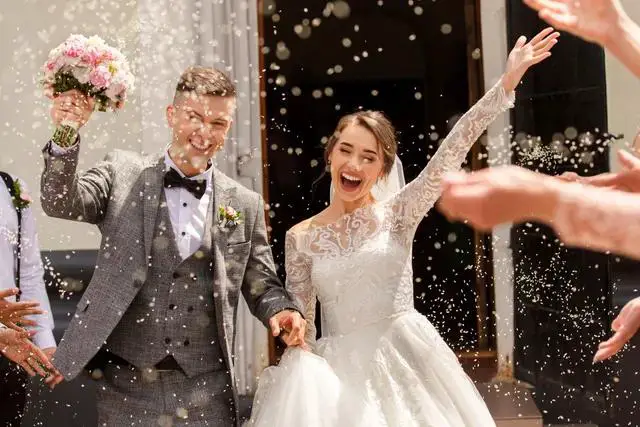
Rachel walked down the aisle looking stunning—she always did. The dress was perfect, the flowers were perfect, the smile was perfect. She saw me as she passed my row, and her step faltered for just a fraction of a second. But she recovered quickly, like she always did.
The ceremony proceeded. Vows were exchanged. Rings were placed. The officiant said all the traditional words about love and commitment and honoring one another.
And then came the reception.
I sat at a table with Daniel’s college friends, people who were kind and funny and had no idea about the family drama playing out in real time. I made small talk. I ate the expensive catered food. I sipped champagne.
And I watched.
Watched my mother try to ignore my existence while making pointed comments to relatives about “unexpected guests.” Watched my father glare at me from across the room like I was a gate-crasher instead of an invited guest. Watched Rachel circulate through the room with her practiced smile, accepting congratulations and posing for photos, while shooting daggers at me whenever she thought no one was looking.
But other people were looking.
Daniel’s parents, who’d been told the whole story, made a point of coming over to my table to introduce themselves and welcome me. Several of Daniel’s friends asked how I knew the couple, and I told them honestly: “I’m Rachel’s sister.”
The surprise on their faces was revealing. “Oh! We didn’t realize Rachel had a sister. She never mentioned you.”
“No,” I said calmly. “She wouldn’t have.”
Word spread the way it always does at weddings—quietly, through whispered conversations and exchanged glances. By the time the toasts began, there was a subtle shift in the room’s energy. A current of confusion and curiosity that hadn’t been there before.
Rachel’s maid of honor gave a speech full of the usual platitudes about friendship and happiness. My father gave a speech about his “beautiful daughter” and her “perfect day” that made my stomach turn.
And then Daniel stood up to give his toast.
He looked at Rachel. Looked at me. Looked at the assembled guests.
“Marriage,” he began, “is about honesty. It’s about showing your partner who you really are—not the curated version, not the performance, but the real, complicated, sometimes difficult person underneath. It’s about being seen fully and loved anyway.”
Rachel smiled, not catching the edge in his voice.
But I did.
“In the past few weeks,” he continued, “I’ve learned a lot about honesty. About the difference between the image we project and the truth we live. And I’ve learned that the people who love us—really love us—are the ones who tell us the truth even when it’s uncomfortable.”
He raised his glass.
“To Emily,” he said clearly, looking directly at me. “My sister-in-law. Who showed me what honesty looks like. Thank you for your courage.”
The room went completely silent.
Rachel’s face was a portrait of frozen shock. My mother looked like she’d been slapped. My father started to stand, then sat back down, clearly unsure what to do.
And Daniel smiled at me—a real smile, warm and genuine and grateful—before turning back to the crowd.
“And to Rachel,” he added, his tone shifting. “My wife. Here’s hoping we figure out what honesty means together.”
The toast ended. People clinked glasses awkwardly. The DJ started the music back up.
But the damage was done.
For the rest of the reception, people kept glancing between Rachel and me, clearly trying to piece together the story. Several guests approached me with variations of “It’s so nice to meet you” that carried unspoken questions. Rachel’s forced smile became more and more brittle as the evening wore on.
My parents left early, making excuses about being tired.
Rachel avoided me completely until the very end of the night, when she cornered me near the coat check.
“Are you happy now?” she hissed, her perfect makeup starting to crack around the edges. “You ruined my wedding.”
I looked at her—really looked at her. Saw the anger and fear and desperation. Saw someone who’d built her entire identity on a carefully maintained image and was watching it crumble.
“I didn’t ruin anything, Rachel,” I said quietly. “I just told the truth. What happened after that was your choice.”
“You’re vindictive and petty and—”
“I’m your sister,” I interrupted. “And you told me I was too fat to exist in your presence. You laughed. Mom and Dad laughed. And then you expected me to just… what? Disappear? Pretend it didn’t happen? Protect your image?”
She didn’t have an answer.
“I hope you and Daniel are happy,” I said, and I meant it. “I really do. But happiness built on lies doesn’t last. Eventually, the truth catches up.”
I left before she could respond.
Drove home through quiet streets, past houses lit up with Christmas lights, and felt something I hadn’t felt in years.
Free.
Not healed—healing takes longer than one night, one conversation, one perfectly delivered truth bomb. But free from the weight of pretending. Free from the exhausting performance of being the family member who absorbed the cruelty and smiled anyway.
Free from the lie that my worth was determined by their approval.
Three weeks later, I got a text from Daniel.
“Thank you again for everything. Things are complicated right now, but I’m glad I know the truth. You deserve better than how they treated you. I hope you know that.”
I wrote back: “I’m starting to.”
And for the first time in my life, I actually believed it.
My family hasn’t spoken to me since the wedding. No calls on Christmas. No texts on New Year’s. Just silence—the kind that used to hurt but now feels like relief.
Because I learned something important that December:
Sometimes the people who are supposed to love you are the ones who hurt you most. And sometimes, the bravest thing you can do is tell the truth—not for revenge, not for vindication, but because you deserve to live in reality instead of a carefully curated fiction.
Rachel wanted a perfect wedding. A perfect image. A perfect story.
But perfection built on cruelty isn’t perfect at all.
It’s just an illusion waiting to break.
And when it finally did—when Daniel raised his glass and thanked me for my honesty in front of two hundred guests—I realized something.
I didn’t need their approval anymore.
I just needed to be seen.
And finally, I was.

Ethan Blake is a skilled Creative Content Specialist with a talent for crafting engaging and thought-provoking narratives. With a strong background in storytelling and digital content creation, Ethan brings a unique perspective to his role at TheArchivists, where he curates and produces captivating content for a global audience.
Ethan holds a degree in Communications from Zurich University, where he developed his expertise in storytelling, media strategy, and audience engagement. Known for his ability to blend creativity with analytical precision, he excels at creating content that not only entertains but also connects deeply with readers.
At TheArchivists, Ethan specializes in uncovering compelling stories that reflect a wide range of human experiences. His work is celebrated for its authenticity, creativity, and ability to spark meaningful conversations, earning him recognition among peers and readers alike.
Passionate about the art of storytelling, Ethan enjoys exploring themes of culture, history, and personal growth, aiming to inspire and inform with every piece he creates. Dedicated to making a lasting impact, Ethan continues to push boundaries in the ever-evolving world of digital content.