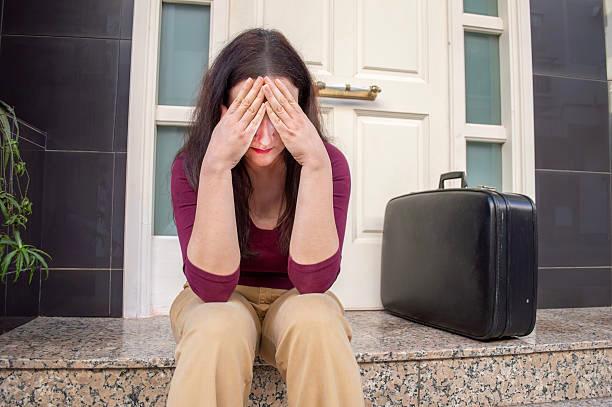
My son looked at me across the breakfast table that morning and said something I’ll never forget. His voice was steady, almost rehearsed, like he’d been practicing the words in his head for days.
I didn’t argue. I didn’t raise my voice. I didn’t plead or cry or remind him of everything I’d sacrificed.
I simply walked out quietly, carrying only what I could fit in two worn suitcases—and later that night, alone in a roadside motel room that smelled of old carpet and disinfectant, I did something I should have done months ago.
I shut off every dollar I’d been pouring into their life.
My name is Margaret. I’m sixty-eight years old, a widow living on a modest pension that barely covers my own needs most months. But I have something many people don’t—a two-story home that my late husband Daniel and I spent three decades building into more than just walls and a roof.
This house holds every important moment of our life together.
The kitchen counter where we rolled out birthday cakes for Robert every single year, flour dusting our elbows and laughter filling the room. The back door where muddy shoes collected in chaotic piles after neighborhood baseball games. The upstairs hallway where morning sunlight streamed through the window just right, creating a golden patch on the hardwood floor that Daniel used to stand in with his coffee, looking peaceful and content.
Every corner of this house whispers memories.
After Daniel died four years ago from a sudden heart attack that gave us no time to prepare, no time to say the things we’d been saving for “someday,” I thought I’d spend my remaining years here quietly. Maybe take up gardening more seriously. Maybe host book club meetings with the ladies from church. Maybe finally finish organizing all those photo albums I’d been meaning to put together.
I thought I’d grow old in the home we built, surrounded by everything that still smelled faintly like him—his old flannel shirts hanging in the closet, the woodworking tools in the garage he never quite finished organizing, the jazz records he loved playing on Sunday mornings.
Then two years ago, everything changed.
Robert called me late on a Tuesday evening. I remember because I’d just settled into my favorite reading chair with a cup of chamomile tea, preparing to lose myself in a mystery novel someone at the library had recommended. His voice had that careful, measured quality he always uses when he needs something important.
“Mom,” he began, and I could hear the weight in that single word. “We’re drowning here. The mortgage payment on our place is killing us. Jessica just had her hours cut at work, and my commission-based income has been unpredictable. We can’t keep this up.”
He paused, and in that pause, I knew what was coming.
“Could we stay with you? Just for a little while—maybe six months, a year tops—until we get back on our feet financially. I know it’s a lot to ask.”
What does a mother say to that?
What does a mother do when her child—her only child, the boy she raised alone after her first marriage fell apart, the man she watched grow from scraped knees and homework struggles into someone with his own family—comes to her desperate and struggling?
I did what mothers do.
I said yes.
I opened my door without hesitation, without conditions, without truly understanding what I was inviting into my carefully ordered life.
The first month felt almost normal, like an extended visit. Robert and Jessica took the large upstairs bedroom—the one Daniel and I had shared for all those years, the one with the big windows facing east so we could watch the sunrise together on weekends. I moved myself downstairs into what had been Daniel’s study, converting it into a makeshift bedroom with a narrow bed and a small dresser.
I told myself it was temporary.
I told myself families help each other, that this was what you do when someone you love is struggling, that my comfort could wait a few months while they got their situation sorted out.
But “temporary” has a way of stretching like taffy, pulling longer and thinner until you can barely recognize its original shape.
The first few weeks, they were grateful. Jessica cooked dinner twice a week. Robert helped with yard work and took out the trash without being asked. They seemed genuinely appreciative, always thanking me, always promising this was just a short-term arrangement.
Then came the small requests.
“Mom, could you watch the kids Saturday night? We haven’t had a date in months.”
“Mom, my car needs new tires—could you spot me three hundred dollars until my next paycheck?”
“Mom, would you mind picking up some groceries? We’re running low and won’t get paid until Friday.”
Each request made sense individually. Each one seemed reasonable, small, manageable. What mother wouldn’t help with childcare? What mother wouldn’t assist with an emergency car repair? What mother wouldn’t pick up milk and bread for her grandchildren?
But individual requests have a way of accumulating into something much heavier, like snowflakes that seem harmless until they’ve built into something that can collapse a roof.
Then the bigger requests started.
Their credit card debt needed paying down. School supplies and new clothes for the kids. The annual registration for their cars. Jessica’s student loan payment that she’d fallen behind on. Robert’s work equipment that needed upgrading.
My modest pension, which had been sufficient for my simple needs, slowly transformed into their safety net—catching them every time they stumbled financially, cushioning every fall, preventing every consequence.
Month after month, I poured pieces of my life into theirs.
I canceled my own dental appointments because I’d just paid for their car insurance. I stopped buying the good coffee I liked because I’d covered their electric bill. I wore my winter coat another season even though the zipper was broken because I’d just paid off their credit card minimum payment.
I watched my savings account—the one Daniel and I had carefully built over decades, the one meant to cover my old age in dignity—slowly drain away until I couldn’t tell what belonged to me anymore.
The shift happened so gradually I didn’t notice at first.
It started with how they talked about the house.
One afternoon, about eight months in, I overheard Jessica on the phone in the kitchen. I wasn’t trying to eavesdrop—I’d just come from the garden with a basket of tomatoes and was approaching the back door when I heard her voice, bright and animated, describing something to whoever was on the other end.
“Oh, it’s perfect,” she was saying. “Three bedrooms, beautiful original hardwood floors, and such a great location. So much space for when my parents come to visit. Margaret barely uses any of it anyway—she’s happy with her little room downstairs.”
Margaret.
Not Mom. Not even “Robert’s mom.”
Just Margaret.
Like I was a tenant. Like I was someone who happened to live here too, rather than the woman who owned every square inch of this property.
I stood there in my own garden, holding tomatoes I’d grown in soil my husband had tilled, and felt something cold settle in my chest.
Later, when I mentioned to Jessica that I’d overheard her conversation and was surprised by how she’d described things, she smiled that polite smile she uses when she’s annoyed but wants to seem pleasant.
“Oh, you must have misheard me, Margaret. I would never say something like that.”
But I hadn’t misheard. And the shift she’d revealed didn’t stop—it accelerated.
Furniture started moving without anyone asking me first. I’d come home from my weekly visit to Daniel’s grave to find the living room rearranged completely, my grandmother’s antique side table shoved into a corner to make room for their new television stand.
“We were just trying to make the space more functional,” Jessica explained when I asked. “Hope you don’t mind.”
But she didn’t ask if I minded before doing it.
My grandmother’s curtains—the ones she’d sewn by hand in the 1950s, pale yellow with tiny embroidered flowers—disappeared from the dining room windows one day. In their place hung modern gray panels that Jessica had ordered online.
“Those old things were so dated,” she said cheerfully. “These really brighten up the space.”
Those old things had been in my family for three generations.
Friends—their friends, people I’d never met—started being invited over late on weeknights. Loud conversations and laughter would echo through the house at ten, eleven at night while I lay in my downstairs room staring at the ceiling, unable to sleep, unable to concentrate on my book, unable to relax in what had once been my peaceful sanctuary.
Music thumped through the floors on weekend mornings, waking me at seven when I’d planned to sleep in. The kitchen was always a mess by the time I got to it, dishes piled in the sink, coffee grounds scattered across the counter, the good cutting board I’d asked them to be careful with showing new knife gouges.
My quiet routines evaporated.
My sense of control over my own environment dissolved.
I felt like a ghost haunting my own home—present but invisible, there but not acknowledged, existing in spaces that were somehow no longer mine even though my name was on the deed.
I told myself I was being selfish. I told myself families share space and compromise. I told myself their temporary struggle justified these changes.
But late at night, alone in my small room that used to be Daniel’s study, I’d sometimes cry quietly into my pillow and whisper to my husband’s memory, “I don’t know what to do.”
The breaking point came on a Tuesday afternoon in October.
The leaves outside had turned that beautiful gold and crimson that Daniel always loved. I remember thinking that morning that maybe I’d rake them later, enjoy the fall air, take some time in the yard that was feeling less and less like mine.
I was in my room folding laundry—my room, though by that point I’d almost stopped thinking of it that way—when Robert walked in without knocking.
He just opened the door and stepped inside like my privacy wasn’t something that required respecting.
Jessica stood behind him in the doorway, arms crossed, face set in that determined expression I’d seen before when she wanted something and wasn’t planning to take no for an answer.
“Mom,” Robert said, and something in his tone made my hands stop moving. “We need to talk.”
I set down the shirt I’d been folding and waited.
“Jessica’s parents are coming from California,” he continued. “Her dad’s health isn’t great, and they want to be closer to family for a while. They’re going to stay here with us.”
I nodded slowly, processing this information, waiting for him to explain where exactly they planned to put two additional adults in a house that already felt overfilled.
Then he said it.
The words that changed everything.
“They’ll need to take your room. It’s the only one on the first floor, and her dad can’t manage stairs well with his hip problems. You’ll need to move out. Maybe find a small apartment or something.”
I stared at him.
I stared at this man I’d raised alone after his father abandoned us when he was six years old. This boy I’d worked double shifts to provide for, sacrificing my own dreams and education to make sure he had what he needed. This son I’d welcomed into my home two years ago when he was struggling, giving up my comfort and my space and my savings to support him.
I stared and waited for the moment where he’d remember who I was to him.
Where he’d remember that this was my house.
Where he’d remember that I was his mother, not some inconvenient obstacle to be removed.
That moment never came.
“Mom, you’re strong,” he added, like strength was the issue here. “You’ve always been resourceful. You can figure something out. Maybe stay with one of your friends for a while, or find a nice senior apartment. This is really the best solution for everyone.”
Jessica murmured something about “fairness” and “everyone contributing equally” and “not wanting to be a burden on anyone,” each phrase landing like a small stone being dropped into what was left of my dignity.
The room I had lived in for thirty years—the house I had lived in for thirty years, the home Daniel and I had built together through decades of work and love and sacrifice—suddenly didn’t feel like mine at all.
It felt like something I was being evicted from.
By my own son.
For the benefit of people who had been living here rent-free for two years while I paid their bills and covered their emergencies and watched my own security disappear.
Something crystallized in that moment.
Something cold and clear and final.
So I didn’t argue.
I didn’t cry or yell or remind him of everything I’d done.
I didn’t list the thousands of dollars I’d spent supporting them, the space I’d given up, the freedom I’d sacrificed, the retirement I’d postponed.
I simply nodded and said quietly, “I understand.”
It took me three hours to pack.
Two suitcases—that’s what I could carry on my own at sixty-eight years old. One for clothes, one for essentials and the few precious items I couldn’t leave behind.
Daniel’s watch. Our wedding photo. The silver locket my mother gave me.
I left the photo albums because my hands were shaking too hard to carry anything else. I left Daniel’s tools in the garage. I left my grandmother’s china in the cabinet and her quilts in the closet and all those accumulated treasures from a life lived in one place.
Robert helped carry my suitcases to my car with an expression that was trying to be sympathetic but mostly looked relieved, like he was glad I wasn’t making this harder than it needed to be.
“We’ll store your things carefully, Mom,” he assured me. “And you can visit anytime. The door’s always open.”
The door to my own house was always open. How generous.
I drove to a small motel off the highway—the kind of place that charges by the week and doesn’t ask too many questions. The room smelled of stale cigarettes poorly masked by industrial air freshener. The bedspread was thin and pilled. The window looked out at the parking lot and a truck stop beyond.
I sat on the edge of that unfamiliar bed in that sterile room and felt the weight of everything settle over me.
That night, everything felt painfully, completely quiet.
Not the peaceful quiet of my garden at dawn.
Not the comfortable quiet of reading in my chair with tea.
This was the kind of hollow quiet that comes when something fundamental has broken, the kind that lets truth show itself without any distractions to hide behind.
I sat there for a long time, just breathing, just existing in that strange space.
Then I opened my banking app.
I hadn’t looked at it carefully in months—hadn’t wanted to see the numbers dropping, hadn’t wanted to confront how much I was spending to keep their lives comfortable while mine shrank and shrank.
Now I looked.
Really looked.
Recurring payment to their mortgage: $1,200 monthly.
Recurring payment to their car insurance: $340 monthly.
Recurring payment to Jessica’s student loan: $275 monthly.
Recurring payment to their credit card: $180 monthly minimum.
Plus all the one-time transfers I’d made over the months—$400 here for car repairs, $600 there for kids’ school expenses, $250 for the emergency vet bill when their dog got sick, $800 when their washing machine broke.
The numbers blurred together into one overwhelming total.
I’d given them more than $45,000 over two years.
Forty-five thousand dollars from a widow’s pension and carefully saved retirement fund.
Forty-five thousand dollars that had bought me exactly this: a motel room and two suitcases.
My finger hovered over each recurring payment.
And one by one, I turned them off.
Not out of anger, though anger was there.
Not out of revenge, though some part of me felt satisfaction at the thought of them facing consequences.
But because something inside me finally understood a truth I should have learned much earlier:
Support should never require disappearing.
Love should never demand your own erasure.
Family shouldn’t mean becoming invisible in your own life.
The next morning, my phone started ringing at 6:47 AM.
Robert’s name flashing on the screen again and again.
I watched it ring and stayed completely still, my coffee growing cold in my hands.
Call after call.
Then text messages started flooding in.
“Mom, we need to talk immediately.”
“Mom, there’s been some kind of mistake with the bank.”
“Mom, our mortgage payment bounced. CALL ME.”
“Mom, this isn’t funny. We have bills due.”
Then Jessica’s number appeared too.
“Margaret, I don’t know what’s going on, but we need you to fix this NOW.”
Not please. Not “we’re concerned about you.” Not “are you okay?”
Just demands. Just panic about their money problems.
I turned off my phone and sat in that quiet motel room, watching morning light filter through the thin curtains, and felt something I hadn’t felt in years:
Peace.
For the first time in two years, I wasn’t rushing to fix anything.
I wasn’t immediately solving someone else’s problem.
I wasn’t making myself smaller so others could expand.
I was just sitting still, being Margaret, existing in my own space without apology.
Three days later, I went to visit an old friend named Dorothy who I’d been meaning to see more often but never had time for—because I’d always been too busy managing Robert and Jessica’s emergencies.
Dorothy made tea in her sunny kitchen and listened while I told her everything.
She didn’t interrupt. She didn’t offer advice. She just listened with the kind of attention that feels rare and precious.
When I finished, she reached across the table and squeezed my hand.
“You gave them everything,” she said quietly. “And they wanted more. That’s not love, Margaret. That’s consumption.”
The word hit me hard.
Consumption.
Like I was a resource to be used up.
“What will you do now?” Dorothy asked.
I thought about that question.
I thought about my house—my beautiful house full of memories I couldn’t access because someone else had decided it was theirs now.
I thought about my pension that would slowly rebuild now that I wasn’t pouring it into someone else’s life.
I thought about the lawyer I’d made an appointment with for next week to discuss my options regarding the property that still had my name on the deed.
“I’m going to figure out who I am when I’m not busy disappearing for someone else,” I said.
Dorothy smiled. “Good.”
Robert finally reached me a week later.
I’d turned my phone back on and found sixty-three missed calls and forty-one text messages, each one progressively more desperate.
When I answered, his voice was different—higher, stressed, almost panicked.
“Mom, what the hell are you doing? Do you know what kind of position you’ve put us in?”
“I do know,” I said calmly. “I’m putting you in the position of handling your own financial responsibilities.”
“But we can’t afford—”
“That’s unfortunate,” I interrupted. “But it’s your situation to manage, not mine.”
“You can’t just abandon your family!”
The word “abandon” hung there in the air.
I let it sit for a moment before responding.
“Robert,” I said slowly, “you asked me to leave my own home so your in-laws could take my bedroom. You spent two years treating my house like it was yours, my money like it was yours, my life like it existed only to support yours. And now you’re telling me I’ve abandoned you?”
Silence on the other end.
“I didn’t abandon you,” I continued. “I stopped letting you consume me. There’s a difference.”
“But what are we supposed to do?”
“What every adult does. Figure it out. Get second jobs if you need to. Budget better. Downsize. Move somewhere cheaper. All the things you expected me to do when you evicted me.”
“We didn’t evict you—”
“You told me to leave my own home, Robert. What else would you call it?”
More silence.
“I love you,” I said, and I meant it despite everything. “But I’m done making myself smaller so you can be bigger. I’m done sacrificing myself on the altar of your convenience.”
I hung up before he could respond.
It’s been three months now.
I’m living with Dorothy temporarily while I work with my lawyer to resolve the situation with my house. The process is messy and complicated and painful, but it’s necessary.
Robert and Jessica are struggling financially, I know. They’ve had to make hard choices, face real consequences, figure out how to manage without my constant financial support.
Part of me still aches for them—the mother in me that wants to fix their problems, wants to make things easier, wants to rescue them from difficulty.
But a stronger part of me knows that rescuing them again would just teach the same lesson: that they can take and take and take without ever having to give back or grow up.
I’ve started painting again—something I gave up years ago because there was never time, never space, never money for supplies after covering everyone else’s needs.
Dorothy’s spare room has good light in the afternoons, and I sit there with watercolors and paper, creating small quiet scenes that belong to nobody but me.
I’m not sure what happens next.
I don’t know if I’ll get my house back or if I’ll end up finding a small place of my own somewhere new.
I don’t know if Robert will ever truly understand what he did or if he’ll just remain angry at me for setting boundaries he didn’t want to respect.
But I know this:
I’m not disappearing anymore.
I’m not making myself invisible so others can feel bigger.
I’m not sacrificing my existence at the altar of someone else’s comfort.
I’m here.
I’m Margaret.
And for the first time in years, that feels like enough.
THE END

Sophia Rivers is an experienced News Content Editor with a sharp eye for detail and a passion for delivering accurate and engaging news stories. At TheArchivists, she specializes in curating, editing, and presenting news content that informs and resonates with a global audience.
Sophia holds a degree in Journalism from the University of Toronto, where she developed her skills in news reporting, media ethics, and digital journalism. Her expertise lies in identifying key stories, crafting compelling narratives, and ensuring journalistic integrity in every piece she edits.
Known for her precision and dedication to the truth, Sophia thrives in the fast-paced world of news editing. At TheArchivists, she focuses on producing high-quality news content that keeps readers informed while maintaining a balanced and insightful perspective.
With a commitment to delivering impactful journalism, Sophia is passionate about bringing clarity to complex issues and amplifying voices that matter. Her work reflects her belief in the power of news to shape conversations and inspire change.