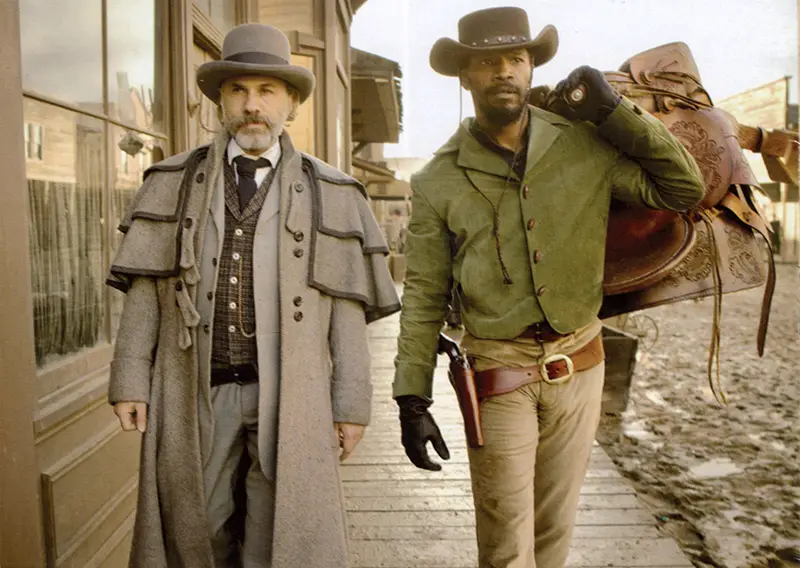
The Price of Freedom
I was eighteen years old, and my price was a handshake and a stack of bills my father didn’t even count before walking away.
I stood on the cracked wooden platform of the train station in Helena, Montana, clutching a satchel that held two dresses and a Bible. The wind howled across the plains, kicking up dust that stung my eyes, but I refused to cry.
My father’s final words echoed in my head, cold and final: “It’s done, Clara. Silas Thorne needs a mother for his kin, and we need the money. Don’t you dare run.”
Silas Thorne. The name alone made the locals cross the street. They called him the “Stone of Blackwood Creek.” A widower. A recluse. A man who allegedly worked his ranch hands to the bone and hadn’t spoken a kind word since the day his wife died in that terrible fire.
I expected a monster.
When the dusty black wagon pulled up, the horses looked like they were carved from muscle and shadow. The man holding the reins was terrifying—broad shoulders that blocked out the sun, a jaw set like granite, and eyes the color of a stormy sky.
He didn’t smile. He didn’t say hello.
He just looked at me, scanning my trembling hands and pale face.
“You look like you’re waiting for a hanging, Miss,” he said. His voice was deep, scraping like gravel, but it wasn’t angry. It was just tired.
“I’m Clara,” I managed to whisper.
“I know who you are,” he replied, tipping his hat. “Get in. The wind’s picking up.”
I climbed up, sitting as far away from him as possible. In the back sat three children, staring at me with wide, hollow eyes. Colton, the oldest, looked at me with suspicion. Little Hattie clutched a ragged doll. And baby Beau, thumb in his mouth.
They looked wild, unkempt, and desperately lonely.
As we rode toward the horizon, I felt the weight of stares from people on the street. Pity. Disgust. Fear.
“Don’t mind them,” Silas muttered, staring straight ahead. “Folks in this town love a tragedy until it moves in next door.”
We arrived at Blackwood Creek as the sun bled orange over the mountains. The ranch was massive but neglected—fences leaning, the porch sagging.
As I stepped onto the dirt, a rough-looking cowboy spat on the ground near my boot. “Another one, Boss? Think this one will last the winter?”
Silas stopped dead. The air seemed to freeze. He turned slowly to the hand, his voice dropping to a dangerous whisper.
“She’s under my roof now, dealing with my kids. You speak to her with respect, or you ride out tonight.”
My heart hammered. I had been sold to be a servant, a nanny, a ghost in this house. But as I looked at Silas’s rigid back, defending me before I’d even unpacked, I realized two things:
First, the rumors about his temper were true.
And second, the danger out here wasn’t the hard work—it was the secrets buried in this land, and the enemies waiting in the dark to burn us all down.
The first week at Blackwood Creek was a siege. The enemy wasn’t outside the fences yet—it was the house itself. The silence was so heavy you could choke on it.
I woke up that first morning on a cot in the sewing room, surrounded by boxes of things that belonged to her. Sarah. His late wife. I hadn’t even met her ghost yet, but I knew she was there.
I didn’t see Silas until noon. When I walked into the kitchen, the sink was piled high with dishes. The table was sticky with old syrup. The children sat there like statues.
Colton was the hardest. He had his father’s eyes—steel gray and guarded—but they burned with raw, youthful anger. He was cutting an apple with a knife that looked too sharp for a boy his age.
“Where’s your pa?” I asked, tying an apron around my waist.
“Working,” Colton muttered without looking up. “Like he always is. You gonna leave today or tomorrow?”
“I’m not leaving, Colton. I’m here to make breakfast.”
“We don’t need your breakfast. We don’t need you.” He stood up, the chair scraping violently, and stormed out.
Hattie watched him go, then looked at me. She was hugging that ragged doll so tight her knuckles were white. “He thinks you’re going to steal Pa’s money and run. That’s what the last lady did.”
I knelt down to her eye level. “I don’t have anywhere to run to, Hattie. And I’m not a thief. I’m just Clara.”
She didn’t smile, but she didn’t run away. That was my first victory.
The days bled into one another, defined by backbreaking labor. I scrubbed floors until my knees were bruised and my hands were raw. I cooked stews with meager supplies—sacks of flour, dried beans, and salted pork.
Silas was a phantom. He came in only to eat and sleep. At dinner, he sat at the head of the table, smelling of horse sweat and tobacco, eating with mechanical efficiency. He rarely spoke. When he did, it was an order.
He never looked me in the eye.
But I watched him. Through the window, I watched him break a wild colt in the corral. He moved with terrifying grace, a mix of brute strength and intuitive calm. He had patience for horses, patience for the land, but none for himself.
And none, it seemed, for me.
The turning point came on a Tuesday.
I needed supplies. Silas had left a jar of coins on the counter without a word. It was a test, I realized. He was testing to see if I’d take the money and hop the next train.
I harnessed the old mare to the buggy and drove the three miles into town alone.
Rosewater was a small, dusty scar on the landscape. As I steered down Main Street, the activity stopped. Men straightened up. Women paused their sweeping to stare.
The whispers were louder than the wind.
“That’s the girl.”
“Bought her like a prize heifer.”
“Thorne’s folly.”
I kept my chin high, but my face burned. I tied the horse in front of the General Store and stepped inside.
Mr. Henderson, the shopkeeper, stopped when he saw me. The customer, a woman in a bonnet, moved away from me as if I were contagious.
“I need flour, sugar, coffee, and teething powder,” I said, placing the list on the counter.
Mr. Henderson didn’t look at me. “Cash only for the Creek. No credit for Thorne.”
“I have cash.” I put the coins down.
As he began gathering items, the door opened behind me. The atmosphere shifted instantly—not the silence of judgment, but the silence of fear.
I turned around.
Standing in the doorway was a man in a pristine gray wool suit. His boots were polished to a mirror shine. He held a cane topped with silver. His face was handsome in a sharp, predatory way.
This was Jeb Whitaker.
He walked toward the counter, stopping right beside me, close enough that I could smell his expensive cologne.
“So,” he said, his voice smooth like oil. “This is the acquisition.”
I stiffened. “I’m Clara Vance.”
“I know who you are, darling. I knew your father. A man of flexible morals. And a terrible poker face.”
My stomach dropped. “My father is none of your business.”
“On the contrary. Your father and I had a business arrangement. A contract. Regarding you.”
I felt the blood drain from my face. “I don’t know what you’re talking about.”
“Silas Thorne thinks he’s noble. Thinks he saved you. But he just outbid me at the last second. I don’t like losing what I’ve already paid for.”
“I’m not property,” I snapped, though my voice trembled.
“Aren’t you?” He gestured around the store. “Look at them. They all think you are. And Silas is sitting on my water rights, and now he’s sitting with my housekeeper.”
He reached out and, before I could pull away, tucked a stray lock of hair behind my ear. His fingers were cold.
“Tell Silas the grace period is over. He returns the asset, or I take the land. And if I take the land, he and those brats will starve. You’re the leverage, Clara. Welcome to the war.”
He tipped his hat and walked out.
I drove back to the ranch with tears streaming down my face.
When I got back, the sun was setting. Silas was on the porch, fixing a bridle. He saw my face—red-eyed and pale—and he froze.
He walked to the buggy and grabbed the horse’s bridle. “What happened?”
“Who is Jeb Whitaker?” I asked, my voice cracking.
Silas went still. The leather bridle creaked as his grip tightened. “He spoke to you?”
“He touched me. He said I was supposed to be his. He said my father had a contract with him first.”
Silas swore, harsh and guttural. He threw the bridle onto the porch and paced the yard. “I should have killed him last winter.”
“Silas!” I yelled. “Talk to me! What did you buy me into?”
He stopped and turned to me. For the first time, the “Stone of Blackwood Creek” looked cracked. He looked desperate.
“You weren’t a pawn, Clara. You were a rescue.” He walked over, towering over me, but he didn’t touch me. “Your father owed Whitaker money. Gambling debts. Whitaker didn’t want a housekeeper. He runs a saloon in Miles City. A brothel. That’s where you were headed.”
The world tilted. I grabbed the wheel of the buggy. “A brothel?”
“I heard about the debt. I knew Whitaker was coming to collect. I went to your father two hours before the train arrived. I paid off the debt, plus five hundred dollars. I bought you to keep you out of that hell.”
I stared at him. The scary, silent rancher. He hadn’t bought me to scrub his floors. He had bought me because he couldn’t stand to let a girl he didn’t know be sold into ruin.
“Why didn’t you tell me?” I whispered.
“Because it doesn’t matter. You’re here. You’re safe. And as long as you’re under my roof, Whitaker can’t touch you.”
“He said he’d take the land.”
“He’s a liar. This is my land. My water. And you’re my responsibility now.”
He grabbed the supplies and marched inside. I stood there in the darkening yard, feeling the weight of everything shift.
I wasn’t just the hired help anymore. I was a refugee in a fortress under siege.
That night, the dynamic changed. I made dinner—cornbread and beans. When I set the table, I put an extra spoon of jam on Hattie’s plate. She looked at me, surprised, and gave a tiny smile.
Colton was still surly. “I saw Whitaker’s men near the creek today,” he said suddenly.
Silas stopped chewing. “How close?”
“South ridge. Cutting wire.”
Silas slammed his hand on the table. “You stay away from the south ridge, Colton. You hear me?”
“I can shoot. I can help.”
“You’re a boy. I’m the father. I do the shooting. You protect your sister and your brother. That’s your job.”
After the children were asleep, I went out to the porch. Silas was sitting there in the dark, a rifle across his lap, watching the tree line.
I sat on the swing, a few feet away. The wood creaked.
“You should be asleep,” he said.
“I can’t sleep.”
We sat in silence. Finally, he spoke, his voice so quiet I almost missed it.
“I’m sorry for bringing you into this mess. I thought if I paid the debt, he’d back off.”
“Men like Whitaker don’t care about paper. They care about power.”
Silas turned to look at me. In the moonlight, the lines of his face were softer. “My wife Sarah. She didn’t die in an accident. It was a fire in the barn. But it wasn’t an accident. We had a dispute with a drover who worked for Whitaker. Sarah went to check the horses. They set it to scare us. She didn’t make it out.”
I covered my mouth. “Oh, Silas.”
“I didn’t have proof. The sheriff is in Whitaker’s pocket. So I buried her. And I turned into stone. I swore I’d never let anyone near this family again because everyone near me gets burned.”
He looked at me, his eyes intense and pleading. “If you leave now, if you run tonight, I won’t stop you. I’ll give you a horse. You can go to California. Be safe.”
I looked at the rough wooden planks. I thought about the way Hattie had smiled at the jam. I thought about Colton trying to be a man. I thought about the baby sleeping upstairs. And I thought about this man who stood guard all night so his children could dream.
“I told you,” I said softly. “I’m not running.”
He exhaled, a long, shaky breath. “You’re a fool then, Clara Vance.”
“Maybe. But I’m your fool.”
For a second, I thought he might reach out and take my hand. The air between us crackled with something that wasn’t fear and wasn’t quite love, but was the seed of both.
Then, a gunshot shattered the night.
It came from the barn.
Silas was off the porch before the echo faded, rifle shouldered. “Stay inside!” he roared, sprinting toward the darkness.
But I didn’t stay inside. I grabbed the lantern and ran after him.
The barn doors were open. Inside, the horses were screaming, thrashing in their stalls. The smell of smoke hit me instantly. A bale of hay near the entrance was smoldering, flames licking up the wooden stall.
“Get the water!” Silas yelled, beating at the flames with a saddle blanket.
I grabbed buckets from the trough, sloshing water as I ran. Together, we doused the flames. It had been a small fire, set hastily, intended to panic rather than burn. But the intent was clear.
When the last ember was out, Silas collapsed against a stall door, coughing.
Then I saw it. Pinned to the main beam with a hunting knife was a piece of paper.
I pulled it free. The handwriting was elegant, jagged script.
Next time, the house burns. Deliver the girl by Friday noon, or we burn the whole nest out. – J.W.
Silas snatched the paper from my hand. He read it, and his face changed. The sadness was gone. The exhaustion was gone. In its place was cold, terrifying rage.
He crumpled the paper in his fist.
“Friday. That gives us two days.”
“Two days for what?” I asked, trembling.
He looked at me, his eyes like iron. “Two days to turn this ranch into a fortress. And two days to teach you how to shoot.”
He walked past me toward the house. “Wake Colton. Tell him he gets his wish. We’re going to war.”
I stood in the smoky barn, the smell of burnt hay thick in the air. I looked at the knife still stuck in the wood.
My life before—the poverty, the uncertainty, the fear—had just been training for this.
I wasn’t a victim anymore. I was a survivor.
And as I watched Silas Thorne march back to defend his children, I knew I would do anything to help him win.
I blew out the lantern and followed him into the dark.
The forty-eight hours before Friday noon felt like a single held breath.
Silas transformed the ranch into a fortress. He boarded up windows with thick oak planks. He filled barrels with water at every corner—a grim acknowledgment that fire was Whitaker’s favorite weapon.
But the hardest work was on me.
Wednesday morning, Silas took me behind the ridge with a Winchester rifle and a Colt revolver.
“You ever held a gun?” he asked.
“No. My father didn’t believe women should handle weapons.”
“Your father was a fool who planned to sell you. Out here, a gun doesn’t care if you’re a man or a woman. It only cares if your hand is steady.”
He handed me the Winchester. It was heavier than I expected.
“Shoulder it.”
I fumbled. Silas sighed and stepped behind me.
“No. Like this.”
He reached around me. His chest pressed against my back. His large, calloused hands covered mine, adjusting my grip.
“Pull it tight into your shoulder pocket,” he murmured, his voice low. “Lean into it. You control the weapon; it doesn’t control you.”
For an hour, we stood there. My arms ached. My shoulder throbbed from the recoil. But I didn’t complain. I fired until I hit the tin can on the fence post three times in a row.
When I finally lowered the rifle, Silas looked at me. There was no smile, but there was a nod.
“You’ve got a good eye, Clara. If they come through that door, you don’t hesitate. You aim for the chest. You think about Hattie. You think about Beau. Do you understand?”
“I understand.”
Thursday night, the house was silent. The children were asleep in the cellar—a cramped root cellar beneath the kitchen that Silas had reinforced. It was the safest place for them.
I sat in the kitchen, checking the load on the shotgun. The clock ticked loudly—tick, tick, tick—counting down to Friday.
Silas walked in from the porch. He looked exhausted. He poured himself a glass of whiskey but didn’t drink it. He just stared at the amber liquid.
“You should be in the cellar with them,” he said.
“I’m not going in the hole, Silas. I’m staying here. With you.”
He turned to me, his expression tortured. “Do you know what they’ll do if they get in? Whitaker’s men aren’t just cowboys. They’re hired guns. Drifters. Men with no souls.”
“I know. But you can’t watch all four sides alone. You need eyes in the back of your head. I’m those eyes.”
He set the glass down and took a step closer. When death is knocking at the door, the walls around your heart start to crumble.
“I promised to protect you,” he whispered, his voice cracking. “I bought you to give you a life, not a war.”
“You gave me a choice. And I’m choosing this family.”
He reached out, his hand hovering near my face before his thumb grazed my cheekbone. It was a touch so tender it made my heart ache.
“Why?” he asked. “We’ve given you nothing but hard work and scorn.”
“Because for the first time in my life, I feel like I’m worth fighting for. Because you stood up for me.”
He stared at me, conflict raging in his eyes. Then he pulled his hand away, the facade slamming back into place.
“Get some sleep, Clara. Dawn comes early.”
Dawn broke gray and sickly. The wind had died, leaving an eerie stillness.
Friday noon.
The clock chimed twelve times. The last chime seemed to hang in the air forever.
Nothing happened.
12:05. 12:10.
“Maybe they aren’t coming,” Colton whispered.
“They’re coming,” Silas said. “Whitaker likes to make people wait.”
Then we heard it. The thundering of hooves. Not two or three horses. A dozen.
They crested the ridge like a dark wave. They didn’t ride quietly. They whooped and hollered, firing pistols into the air—psychological warfare designed to terrify.
Silas turned to me. “Get down. Don’t fire until I say.”
I crouched behind the overturned kitchen table, the Winchester slippery in my sweating hands.
The riders circled the house, dust choking the air. Then silence.
A voice boomed out. Whitaker.
“Silas Thorne! It’s Friday. Send the girl out, and we ride away. Keep her, and we turn this shack into a bonfire.”
Silas cracked the front door open. “Get off my land, Whitaker! You have no claim here!”
“I have the deed to her debt! Last chance, Silas. Don’t die for a piece of skirt.”
Silas didn’t answer. He turned to me, his eyes locking onto mine for a split second. A silent goodbye.
He kicked the door open and fired.
The world dissolved into noise. Glass shattered. Wood splintered. The roar of gunfire was deafening.
“Back door!” Silas screamed. “Clara, watch the back!”
I scrambled to the kitchen door. I heard boots on the back porch. The door handle turned. Then a boot kicked it, splintering the lock.
The door flew open. A man stood there, a red bandana over his face, a pistol raised.
I didn’t think. I just remembered Silas’s voice. The weight of the rifle. The face of baby Beau sleeping downstairs.
I pulled the trigger.
The recoil slammed into my shoulder, but the man flew backward off the porch. He hit the dirt and didn’t move.
I pumped the lever, hands shaking violently. I just killed a man.
“They’re flanking!” Colton screamed.
A Molotov cocktail smashed through the upper window. The curtains caught fire instantly.
“Fire!” I screamed. “Silas, fire upstairs!”
“Handle it! I can’t leave the front!”
I abandoned the back door and ran upstairs. The smoke was already thick. The curtains were blazing. I grabbed the pitcher and threw it, but it wasn’t enough. I ripped the burning curtains down with my bare hands, ignoring the searing heat, and stomped them out.
My hands were blistered, my lungs burning, but I got the fire out.
I looked out the shattered window. Three of Whitaker’s men were down. But Silas was pinned behind a support beam. Bullets were chewing up the wood around him.
And I saw him.
A man was creeping around the side, a shotgun leveled at Silas’s back. Silas couldn’t see him.
“Silas! Behind you!” I screamed, but the gunfire drowned me out.
I raised my rifle. My hands were shaking. The angle was steep. If I missed, I’d hit Silas.
It only cares if your hand is steady.
I took a breath. I held it. The world slowed down.
I squeezed the trigger.
The man creeping up on Silas jerked, his shotgun blasting into the dirt as he crumpled.
Silas spun around, saw the dead man, then looked up at the window. He saw me.
But the moment cost him.
A shot rang out from the ridge—a sniper.
Silas jerked violently. A bloom of red exploded on his shoulder. He spun and fell hard onto the porch planks.
“NO!” The scream tore from my throat.
Silas didn’t get up. He tried to push himself up with one arm, but collapsed.
Whitaker’s voice rang out, triumphant. “He’s down! Rush the house! Burn it all!”
The remaining men—five of them—broke cover, charging toward the porch.
I didn’t think. A primal fury took over. I ran down the stairs, jumping the last three steps.
“Clara, don’t!” Colton screamed.
I burst out the front door.
I didn’t hide. I stepped right out onto the porch, standing over Silas’s fallen body. I racked the lever of the Winchester.
The charging men hesitated. They expected a cowering girl. They didn’t expect a woman with ash on her face, blood on her dress, and eyes full of hellfire.
I fired. One man went down clutching his leg. I racked the lever. I fired again. Dirt kicked up into another’s face.
“Get back!” I screamed, a sound so raw it hurt my throat. “I’ll kill every single one of you!”
For a second, they stopped. The “purchased bride” was holding the line.
But then Whitaker rode forward. “She’s out of ammo! Take her!”
I clicked the trigger. Click.
Empty.
I dropped the rifle and grabbed the Colt from Silas’s belt. I cocked the hammer.
“Come on then!” I yelled, tears streaming down my face. “Come and take me!”
Whitaker raised his pistol, aiming at my chest. “Have it your way, darling.”
I braced myself. I looked down at Silas. He was conscious, looking up at me with devastation. I’m sorry, his eyes said.
Then, a thunderous roar shook the ground.
Not a gun. A shotgun. A massive double-barreled roar from the east.
Whitaker’s horse reared, throwing him.
Riding over the hill wasn’t the sheriff. It was the town.
Mr. Henderson from the general store was on a mule, holding a buffalo gun. Beside him was the blacksmith. The pastor. The saloon keeper. There were twenty of them, armed with everything from rusted muskets to pitchforks.
Mr. Henderson rode forward, his face grim. He leveled his gun at Whitaker, who was scrambling out of the dirt.
“That’s enough, Jeb. We saw the smoke. We heard the shots.”
“This is private business!” Whitaker spat. “She’s my property!”
“This is Blackwood Creek! And we’re done with you pushing folks around. You touch that girl, or that family, and we bury you right here.”
Whitaker looked at the townspeople. He looked at his dead and wounded men. He looked at me standing over Silas with a revolver in my hand.
He realized he had lost.
“You’ll regret this,” Whitaker snarled. “I own this valley.”
“You own a plot of dirt in the cemetery if you don’t ride,” the blacksmith growled.
Whitaker signaled his remaining men. They grabbed their wounded, mounted up, and retreated into the dust.
The moment they were gone, the strength left my legs. The revolver slipped from my fingers. I fell to my knees beside Silas.
“Silas?” I choked out. “Silas, look at me.”
He was pale, his shirt soaked in blood, but his eyes were open. He reached up with his good hand, his trembling fingers brushing the soot from my forehead.
“You crazy, stubborn woman,” he wheezed, a faint bloody smile touching his lips.
“I told you. I’m not running.”
“I know,” he whispered before his eyes rolled back and he slumped into unconsciousness.
The days after the siege were a different kind of blur—quiet, aching recovery.
We turned the dining room into a sick bay. The doctor from Rosewater spent three hours working on Silas’s shoulder. The bullet had passed through, missing the lung by an inch but shattering the collarbone.
“He’s as tough as old leather. He’ll live. But he won’t be lifting a saddle for a long time.”
“He’ll have care,” I said.
The town rallied. Mr. Henderson brought supplies and refused to take payment. Women from the church came to help patch the roof. They looked at me differently now—not with pity or judgment, but with respect.
Colton didn’t glare at me anymore. The day after the shooting, I was struggling to lift a heavy pot. Without a word, he took it from my blistered hands and hoisted it up.
“Thanks,” I said.
He stood there, looking at his boots. “You came back. When the fire started upstairs. You didn’t run.”
“I live here, Colton.”
He looked up, his grey eyes wet. “Pa says you saved us. He says you’re the reason we’re alive.”
“We saved each other.” I squeezed his shoulder. This time, he didn’t pull away.
Silas woke up on the third day.
I was sitting in the chair beside his bed, mending one of Beau’s shirts. Sunlight streamed through the window.
“You’re still here,” a rough voice croaked.
I jumped, dropping the needle. Silas was watching me. His face was gray, stubbled, but his eyes were clear.
“I told you I wasn’t going anywhere,” I said, pouring water and holding it to his lips. He drank greedily. I wiped his chin with my apron without thinking.
“Whitaker?”
“Gone. The sheriff grew a spine once the town got involved. Whitaker is facing charges. He’s left the county.”
Silas let out a long breath. “And the kids?”
“They’re fine. Colton is watching the herd. Hattie is feeding chickens. Beau is asleep.”
He looked at me, really looked at me. “And you?”
“I’m fine, Silas.”
“You killed a man to save me.”
I looked down at my hands—rougher now, scarred from the fire. “I did what I had to do.”
“No. You did more than that. You stood in the fire, Clara. You’re the bravest person I’ve ever known.”
Tears pricked my eyes. “I was terrified.”
“That’s what makes it brave.” He took my hand. His grip was weak but warm. “I haven’t been right since Sarah died. I turned into stone because I thought if I didn’t feel anything, I couldn’t be hurt again. I shut everyone out. I treated you like a transaction because I was afraid to treat you like a person.”
“Silas, you don’t have to—”
“I do. When I get better, things are going to be different. No more ‘servant.’ No more ‘nanny.’ You’re a partner in this ranch. Half of it is yours.”
“I don’t want the ranch, Silas.”
“Then what do you want?”
I looked at this broken, beautiful man who had faced down an army for me.
“I just want to stay. I want to be family. Real family.”
Silas smiled. It was the first time I’d ever seen him truly smile. It transformed his face, breaking the stone and revealing the man underneath.
“You already are, Clara. You already are.”
Six months later, winter came early to Montana, burying the valley in white. But the house at Blackwood Creek was no longer cold.
Inside, the kitchen was chaotic and loud—the good kind of loud. Hattie was rolling dough, covered in flour and giggling. Beau was banging a wooden spoon on a pot. Colton was by the fire, whittling and smiling.
I stood by the window, watching the snow fall. I wore a new dress—blue wool, warm and soft.
The door opened, and Silas walked in, stomping snow off his boots. He looked healthy again. His shoulder still stiffened in the cold, but he was strong.
He walked over and wrapped his arms around my waist from behind, resting his chin on my shoulder.
“Snow’s coming down hard,” he murmured against my hair.
“We’re ready for it,” I said, leaning back into him.
He turned me around. His eyes were bright, full of life. “Town council came by today. They want me to run for sheriff.”
I laughed, smoothing his collar. “They know a good man when they see one. Finally.”
He grew serious. He reached into his pocket and pulled out a small velvet box. My heart stopped.
“I know we said we’d wait. I know you’re still young, and I’m an old, beat-up rancher. But I don’t want another winter to pass without asking.”
He opened the box. Inside was a simple gold band, set with a small sapphire—the color of the Montana sky.
“Clara Vance, I love you. I love you more than I have words for. Will you make this official? Will you be my wife?”
I looked at the ring. I looked at Colton, who gave me a thumbs up. I looked at Hattie, who was beaming. And I looked at Silas.
I thought about the girl on the train platform, terrified and alone. I wished I could go back and tell her: It’s going to be hard. It’s going to hurt. You’re going to walk through fire. But it’s going to be worth it.
“Yes,” I whispered. Then louder, “Yes. A thousand times, yes.”
Silas let out a shout of joy that shook the rafters, lifting me off my feet and spinning me around while the children cheered.
Outside, the snow covered the scars on the barn, burying the past. Inside, we were warm. We were safe.
And we were home.

Lila Hart is a dedicated Digital Archivist and Research Specialist with a keen eye for preserving and curating meaningful content. At TheArchivists, she specializes in organizing and managing digital archives, ensuring that valuable stories and historical moments are accessible for generations to come.
Lila earned her degree in History and Archival Studies from the University of Edinburgh, where she cultivated her passion for documenting the past and preserving cultural heritage. Her expertise lies in combining traditional archival techniques with modern digital tools, allowing her to create comprehensive and engaging collections that resonate with audiences worldwide.
At TheArchivists, Lila is known for her meticulous attention to detail and her ability to uncover hidden gems within extensive archives. Her work is praised for its depth, authenticity, and contribution to the preservation of knowledge in the digital age.
Driven by a commitment to preserving stories that matter, Lila is passionate about exploring the intersection of history and technology. Her goal is to ensure that every piece of content she handles reflects the richness of human experiences and remains a source of inspiration for years to come.