The Gift That Changed Everything
The envelope felt heavier than it should have in my coat pocket as I stood outside the reception hall, smoothing down my only suit—the navy one I’d bought fifteen years ago for my mother’s funeral and had worn to exactly four occasions since. Each time I’d put it on, I’d told myself it still fit fine, that the slightly shiny elbows just meant it was well-loved, that nobody really noticed these things anyway.
I was lying to myself then, too.
Through the frosted glass doors, I could hear music starting up, that particular blend of jazz and contemporary that costs extra and sounds like money. I could see shadows moving inside, elegant silhouettes against warm lighting, and I knew that behind those doors was a world I’d helped pay for but would never truly belong to.
My name is Dewey Gomez. I’m sixty-eight years old. I worked forty-three years on the line at the Ford plant outside Detroit, and I raised a daughter who used to think I hung the moon. Used to.
I took a breath that tasted like October cold and aftershave I’d put on too heavy because I was nervous, and I pushed open those doors.
The reception hall was exactly what I’d expected—all crystal and white roses and tables set with more forks than any human being needed. The kind of place where even the air felt expensive, where my worn shoes made too much noise on the marble floor, where I could feel eyes turning toward me and then quickly away, like I was something uncomfortable they didn’t want to acknowledge.
I wasn’t supposed to be here yet. Or maybe I wasn’t supposed to be here at all—the thought had crossed my mind more than once over the past few months.
See, this whole thing—this beautiful, perfect, forty-five-thousand-dollar disaster—hadn’t started today. It hadn’t even started at the church three hours ago, when I’d shown up at what I thought was the right time only to hear through the heavy wooden doors that the ceremony was already halfway through. No, this had started much earlier, in a series of small cuts that I’d pretended didn’t hurt until I was bleeding out without even realizing it.
It started six months ago, in my daughter Rebecca’s living room.
Rebecca—Becca, I used to call her, back when she’d let me—lived in Bloomfield Hills now, in one of those new construction houses that look like they’re made of glass and ambition. Her fiancé, Preston, worked in something called “private equity,” which as far as I could tell meant he made money by having money, a concept that would’ve seemed like science fiction to me at his age.
I’d driven over that day in my 2004 pickup, the one with the passenger door that didn’t quite close right and the crack across the windshield I kept meaning to fix. I’d parked on the street instead of the driveway because the driveway was white concrete and my truck leaked oil, and I didn’t want to stain it.
That should’ve told me everything I needed to know right there—that I was already apologizing for existing in my own daughter’s space.
She’d called and asked me to come over to “discuss the wedding,” and I’d felt this stupid flutter of hope in my chest. Maybe she wanted help choosing something. Maybe she wanted my opinion on the music, or to ask if there were family traditions she should know about, or just to sit with her old man and let me pretend for an afternoon that I was still important in her life.
I’d walked in to find her at that glass dining table—everything in that house was glass or white or both—with wedding magazines spread out like a war room planning session. She had spreadsheets. My daughter had spreadsheets for her wedding.
“Dad, thanks for coming.” She didn’t get up to hug me. Just gestured to the chair across from her like I was a contractor coming to give an estimate. “I wanted to talk to you about the financial situation.”
The financial situation. Not “I’m so excited, Dad” or “Can you believe I’m getting married?” Just business.
I sat down carefully on that white chair, aware of how out of place I looked—my jeans probably not clean enough, my flannel shirt definitely not expensive enough, my work-rough hands too scarred for this pristine environment.
“Sure, honey. What do you need?”
She slid a piece of paper across the table. “This is the budget breakdown. As you can see, we’ve tried to be really reasonable, but with the venue, catering, flowers, photography, and the dress, we’re looking at about forty-five thousand. Preston’s parents are contributing twenty. I was hoping you could cover the remaining twenty-five.”
She said it so matter-of-factly, like she was reading a grocery list. Like twenty-five thousand dollars was something I just had lying around, waiting for a reason to spend it.
I picked up the paper with hands that had started to shake slightly. I scanned the numbers, and each line item felt like a punch. Flowers: $3,500. Photography: $6,000. A cake that cost more than my monthly mortgage payment.
“Becca…” I started, and she flinched at the nickname. “Rebecca. Honey, that’s… that’s a lot of money.”
“I know it’s a lot, but this is my wedding, Dad. It’s supposed to be special.”
“I understand that, I do. But twenty-five thousand… I don’t have that kind of money just sitting around. I’m on a fixed income now, and—”
“You could take out a loan,” she said, and there was something in her voice that made my stomach drop. Not a suggestion. An expectation. “Other parents do it all the time. It’s an investment in your daughter’s happiness.”
An investment. Like I hadn’t already invested everything I had into raising her after her mother left. Like thirty-five years of being both parents, of missing overtime to make it to her school plays, of eating ramen for a week so she could have new shoes, of every sacrifice I’d ever made was just a down payment on this moment.
“Rebecca, I… let me think about it, okay? Let me see what I can do.”
Her face changed then. Not dramatically—she’d learned subtlety in her new world—but enough that I could see it. The light in her eyes dimmed. Her smile, which had been polite but present, disappeared entirely.
“Right. Of course.” She started gathering up her magazines, her movements crisp. Dismissive. “I should have known. Preston’s dad said you probably couldn’t handle it, but I wanted to give you the chance.”
That sentence—that one sentence—did something to me. Preston’s dad. A man I’d met exactly twice, who lived in a different tax bracket, who probably spent more on his golf club membership than I did on living. He’d been discussing my financial capabilities with my daughter. And apparently, they’d both already decided I’d fail.
“Now wait a minute—”
“It’s fine, Dad. Really. We’ll figure it out.” She walked toward the door, opening it in a way that made clear my time was up. “I’ll let you know what we decide.”
I drove home that day with something broken loose inside my chest, rattling around like a piece of machinery that wasn’t fastened right anymore. I sat in my small living room—the one with the worn couch and the carpet that needed replacing and the photos on every surface of a little girl who used to think her daddy was a hero—and I tried to make sense of what had just happened.
But I couldn’t. Because the daughter in those photos, the one with the gap-toothed smile and the braids I’d learned to do from a YouTube video, the one who’d made me Father’s Day cards out of construction paper and genuine love—that girl wouldn’t have talked to me like I was a problem to be solved.
So I did what I always did when Becca needed something and I couldn’t provide it the easy way.
I tried anyway.
The next morning, Monday, I put on my least-worn jeans and a button-up shirt and drove to the bank. I sat across from a loan officer who was probably younger than my daughter, in an office that smelled like new carpet and other people’s anxiety, and I explained what I needed.
“Mr. Gomez,” he said, looking at his computer screen with an expression I couldn’t quite read, “I’m seeing here that you’re retired, on a fixed income from your pension and social security. Your credit is… well, it’s okay, but not great. And you’re sixty-eight years old.”
“I know how old I am, son.”
“The thing is, a twenty-five-thousand-dollar personal loan at your age, with your income… the interest rate would be pretty high. We’re talking maybe fifteen, sixteen percent. And the payment would be around five hundred dollars a month for five years.”
I did the math in my head. Five hundred dollars a month. That would mean no more Friday fish fry dinners at the VFW. No more helping out my buddy Carl with his rent when he came up short. No more cushion for when the truck finally gave up or the furnace needed replacing. No more anything except getting by.
But it was for Becca. For my daughter’s wedding. For maybe earning back some small piece of her respect.
“I’ll take it,” I said.
The loan officer looked at me for a long moment, and I swear I saw pity in his eyes. “Mr. Gomez, are you sure? That’s a significant financial burden for someone in your situation.”
“My daughter’s getting married. I want to help.”
He sighed, clicked a few things, printed out papers I barely read before signing. The whole thing took maybe forty-five minutes, and when I walked out, I had a check for twenty-five thousand dollars and a weight on my shoulders that felt like it might never lift.
I called Rebecca that night, proud and nervous and stupidly hopeful again.
“Becca? Honey, it’s Dad. I wanted to let you know—I got the money. The twenty-five thousand. I can give it to you this weekend if—”
“Oh.” Her voice was flat. Surprised, but not in a good way. “Dad, that’s… actually, that’s not necessary anymore.”
The floor seemed to shift under my feet. “What do you mean?”
“Preston’s father offered to cover the full amount. He said he didn’t want us to worry about it, that it was his gift to us. So we’re all set now. But thanks anyway.”
Thanks anyway.
Like I hadn’t just mortgaged the next five years of my life. Like I hadn’t just signed away my financial security. Like I was a backup plan that wasn’t needed anymore.
“But I already… I took out a loan, Becca.”
Silence on the other end. Then: “Well, you can return it, can’t you? Just cancel the loan.”
“It doesn’t work like that, honey. I already—”
“Dad, I really appreciate the gesture, but we’re covered now. I have to go—Preston and I are meeting with the florist. I’ll talk to you later, okay?”
She hung up before I could respond.
I sat there in my kitchen, holding a phone with no one on the other end, with a check in my pocket that was suddenly meaningless, and I realized something that should have been obvious months ago:
I’d been replaced.
Not just financially. Completely.
Preston’s father—Richard Bradford, a name that sounded like it came with a trust fund—had done more than just write a check. He’d stepped into a role I’d been playing for thirty-five years, and he’d done it so smoothly, so effortlessly, that my daughter hadn’t even paused before accepting.
I should have returned the money. Should have gone back to the bank the next day and explained there’d been a mistake. But I didn’t. I deposited that check into my savings account and told myself it was a safety net, that it wasn’t pride, that I might still need it for something wedding-related.
The truth was simpler and more pathetic: returning the money would mean admitting that my grand gesture had meant nothing. And I wasn’t ready to face that yet.
The weeks that followed were a masterclass in being slowly erased from your own child’s life.
Wedding planning meetings I wasn’t invited to. When I asked about them, Rebecca would say things like “Oh, it’s just vendor stuff, really boring” or “It’s mostly Preston’s family making decisions since they’re, you know, handling things.”
I tried to stay involved. I asked about her dress, about the guest list, about whether she needed help with anything. She’d give me vague answers and change the subject.
I offered to host a small dinner for both families to get to know each other. She said Preston’s parents were “really busy right now” but maybe later. Later never came.
I showed up at the bridal shop when she mentioned she had an appointment, thinking maybe I could be there like fathers are supposed to be. The consultant looked confused when I introduced myself. “Oh! Mr. Gomez! Rebecca’s stepfather said you might not be able to make it.”
Stepfather. Richard Bradford, who’d married into my daughter’s life with his checkbook, was now her stepfather in the minds of strangers. And she hadn’t corrected them.
Each small cut was bearable on its own. Together, they bled me dry.
But I kept showing up. Kept calling. Kept trying to find a way back into a space I’d apparently been evicted from without notice.
Then the invitation arrived.
It came in one of those heavy cream envelopes that announces its importance before you even open it. I held it with shaking hands, seeing my name written in elegant calligraphy—Mr. Dewey Gomez—and for a moment, I felt something like relief. I was still invited. Still her father. Still part of this.
I opened it carefully, not wanting to tear the expensive paper, and read through the details. The church was the big Catholic one downtown, the one with the stone facade and the bells. The reception would be at the Townsend Hotel. Very fancy. Very Rebecca’s new world.
The ceremony time jumped out at me: 2:00 PM.
I marked it in three different places—on my wall calendar, in my phone, on a sticky note I put on my bathroom mirror. 2:00 PM, Saturday, October fourteenth. I’d be there early, of course. Would wear my good suit. Would sit in the front row where fathers sit and watch my little girl get married and try not to think about all the ways I’d been minimized in the months leading up to it.
I bought a new tie for the occasion. Nothing too expensive—I was watching every penny now with that loan payment looming—but something that looked nice. Navy blue with a subtle pattern. I practiced tying it the night before the wedding, wanting to get it right.
Saturday morning, I woke up at six. Couldn’t sleep anyway, mind racing with a thousand thoughts. I took a shower, shaved carefully, put on that suit that was slightly too shiny at the elbows. The tie took three tries to get right.
I left my house at twelve-thirty, giving myself plenty of time to get downtown, to find parking, to settle my nerves. The drive took forty minutes. I parked three blocks away because I didn’t want to take a closer spot that might be needed by someone else. Walked those three blocks in dress shoes that pinched because I only wore them twice a year.
I arrived at the church at one-twenty. Forty minutes early. Perfect.
Except the parking lot was nearly empty. No decorations outside yet. No sign of activity.
I checked my phone. Checked the invitation I’d brought with me. 2:00 PM. This was the right place, the right date.
I walked up the stone steps and tried the heavy wooden doors. Open. Inside, the church was quiet, dim, empty except for a man arranging flowers near the altar.
“Excuse me,” I said, my voice echoing in the vast space. “Is this where the Ross-Bradford wedding is?”
He looked up, confused. “The wedding? That started at eleven.”
The world tilted. “What? No, the invitation said two o’clock.”
“I don’t know anything about that, but the ceremony started at eleven. They should be wrapping up photos soon and heading to the reception.”
I pulled out my invitation with shaking hands, showed it to him. He looked at it, then at me with something like sympathy.
“That’s strange. Everyone else arrived at ten-thirty. Maybe there was a misprint?”
A misprint. That’s what he called it. An accident. A mistake.
But I knew better.
I stood there in that empty church, in my slightly-too-shiny suit and my new tie, forty minutes early for a wedding that had happened two hours ago, and the last fragile piece of hope I’d been carrying shattered into something too small to ever put back together.
They’d given me the wrong time. Whether deliberately or through careless dismissal, I didn’t know. But the result was the same.
I’d missed my own daughter’s wedding.
Through the stained glass windows, I could see cars starting to arrive—guests who’d been at the ceremony, now heading to the reception. I caught a glimpse of my daughter through one of the windows, radiant in white, laughing with her new husband, surrounded by people who’d been invited to the right time.
And in the front row of that ceremony I’d missed, I knew who had been sitting in the seat that should have been mine. Richard Bradford. The man with the money and the easy smile and the checkbook that never ran dry. The better father.
I should have left then. Should have driven home and let them have their perfect day without the reminder of the actual father who wasn’t good enough to get the real invitation time.
But I didn’t.
Because that envelope in my pocket—the one I’d been carrying all week like a lifeline—contained something that had cost me more than money. It contained a piece of my soul, a sacrifice Richard Bradford with all his wealth couldn’t match.
So I drove to the Townsend Hotel. Parked in the garage because the valet looked at my truck like it might contaminate the other vehicles. Walked into that beautiful reception hall with my shoulders back and my head high, even though I felt like I was made of broken glass barely held together.
The party was already in full swing. Music played from a live band—not a DJ, a full band with a horn section. The tables were decorated with flowers that probably cost more than my monthly pension. Champagne flowed freely. Beautiful people in beautiful clothes laughed beautiful laughs that never sounded forced.
I stood just inside the doorway, and I felt every eye in the room notice me and dismiss me in the same breath. The shabby father who’d finally shown up. The obligation everyone had hoped wouldn’t appear.
I scanned the room and found Rebecca. She was at the head table, looking like a princess in a dress that had probably cost more than my truck, talking animatedly with Preston and his parents. Richard Bradford sat to her right, in the place of honor, and they were laughing about something I’d never be part of.
I moved through the crowd like a ghost, and maybe that’s what I was—the ghost of the father she used to have, haunting a celebration I wasn’t really invited to.
When I reached her table, she looked up, and I watched surprise flash across her face, followed quickly by something else. Annoyance? Embarrassment? I couldn’t quite place it, but it definitely wasn’t happiness.
“Dad. You made it.”
Not “Dad, I’m so glad you’re here” or “Dad, I was worried about you.” Just acknowledgment of my presence, said in the same tone you might use to note that it was raining.
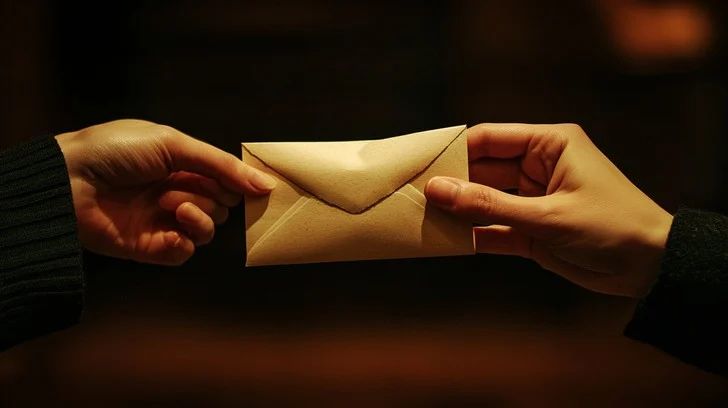
“I made it,” I confirmed. I pulled the envelope from my inside pocket, held it out to her with both hands because some gestures deserve ceremony even when the recipient doesn’t appreciate them. “I wanted to give you this. For your wedding day.”
She took it, but barely looked at it. Just set it aside on the table like it was a business card from someone she’d never call. “Thanks, Dad. That’s sweet.”
Sweet. Thirty-five years of single parenthood, six months of being slowly erased from her life, five years of debt payments I’d taken on and didn’t need—and she called it sweet.
“Becca—”
“Rebecca,” she corrected, and that hurt more than everything else combined. “It’s Rebecca now.”
“Rebecca. Can we talk for a minute? There’s some things I’d like to—”
“Actually, Dad, now’s not really a great time. We’re about to do the toasts, and then the first dance, and—” She glanced at Richard Bradford, who was watching our interaction with polite interest. “Maybe we can catch up later?”
Later. Always later. A later that never came, a conversation always postponed.
I nodded, swallowed around the lump in my throat. “Sure, honey. Later.”
I backed away from the table, found an empty seat in the far corner where I wouldn’t bother anyone, where I could watch my daughter’s wedding reception like a stranger who’d wandered in off the street.
The toasts started. Preston’s best man told funny stories about their fraternity days. Rebecca’s maid of honor talked about their friendship since college, carefully avoiding any mention of Rebecca’s life before college, before she’d learned to be embarrassed by where she came from.
And then Richard Bradford stood up.
He was everything I wasn’t—tall, distinguished, comfortable in his expensive suit, at ease with public speaking. He held his champagne glass like he’d been born knowing how to hold champagne glasses, and he smiled at my daughter with practiced warmth.
“I want to thank everyone for being here today to celebrate Preston and Rebecca,” he began, his voice carrying easily across the room. “When Preston first brought Rebecca home to meet us, I knew immediately that she was special. She’s brilliant, accomplished, driven—everything we could have hoped for in a daughter-in-law.”
He paused, looking directly at Rebecca. “And I’m honored that she’s allowed me to be part of this day, to help make it everything she dreamed of. Rebecca, you’ve become like a daughter to me, and I couldn’t be prouder of the woman you’ve become.”
The room applauded. People dabbed at their eyes. It was a beautiful speech.
And it was killing me.
Because I should have been the one giving that speech. I should have been the one standing up there, talking about the little girl I’d raised, the woman she’d become, the pride I felt even though she’d spent the last six months making me feel like I didn’t matter.
But I wasn’t. I was sitting in the corner, invisible, while a man who’d known her for less than two years claimed the role I’d held for thirty-five.
Rebecca stood up then, and I felt my chest tighten. She was going to respond to Richard’s speech. She was going to thank him, probably, and then maybe she’d thank me too, acknowledge that I was here, that I’d tried—
“Thank you, Richard. That means so much.” She raised her glass, and her voice carried the same easy confidence as his. “I want to take a moment to thank all the parents here today—Preston’s mother and father, who have welcomed me so warmly into their family.”
She paused, and I leaned forward, waiting.
“You know, growing up, I used to wish I had a different father. Someone who could give me the opportunities I wanted, who understood the life I was trying to build, who could help me become who I needed to be.”
The room went quiet. Not the comfortable quiet of an emotional moment, but the awkward quiet of people realizing they’re witnessing something they shouldn’t.
My hands gripped the edge of the table.
“But Richard,” she continued, looking at him with genuine warmth, “you’ve been all of that and more. You’ve been the father I needed, exactly when I needed him. You’ve supported me, believed in me, and made today possible. So this toast is for you—the father who stepped up when I needed one. Thank you for being the dad I always wished for.”
She lifted her glass higher. The room, after a moment of hesitation, joined her. “To Richard!”
“To Richard!” everyone echoed.
Except me.
I couldn’t move. Couldn’t breathe. Couldn’t process what I’d just heard.
My daughter—my Becca, the little girl I’d raised alone after her mother left, the child I’d sacrificed everything for—had just told a room full of people that she’d always wished for a different father.
Not that she was grateful to have two father figures now. Not that she appreciated both men in different ways.
That she’d wished I was someone else. Always.
And she’d thanked the man who’d replaced me.
In front of everyone.
Including me.
Some people were looking at me now, their expressions uncomfortable. They’d done the math, figured out who I was, realized what they’d just witnessed. A few looked sympathetic. Most looked away.
I stood up.
I didn’t make a scene. Didn’t shout or cry or cause a disruption. I just stood up, in my too-shiny suit and my new tie, and I walked toward the exit.
No one stopped me. Not my daughter, not Preston, not Richard Bradford. They’d all moved on already, the awkward moment forgotten, the toast complete, the party continuing as if I’d never been there at all.
I made it to the parking garage before the tears came. Made it to my truck before the sob that had been building in my chest finally broke free. I sat behind the wheel, shaking, crying for the first time since my mother’s funeral, mourning not a death but something worse—the complete rejection of everything I’d ever been to my child.
I drove home in a daze. Sat in my living room surrounded by pictures of a little girl who’d loved me once, before she’d learned I wasn’t enough. Before she’d found someone better.
And I tried to figure out where it had all gone wrong.
Was it when her mother left, when Rebecca was three? Had I done something then, failed in some fundamental way that made her grow up wishing I was someone else?
Was it when she went to college, when she entered a world where my blue-collar life became something to be embarrassed about?
Was it when I couldn’t immediately produce forty-five thousand dollars on demand?
Or had she always felt this way? Had every hug, every “I love you, Daddy,” every homemade card been given out of obligation rather than love? Had I been deluding myself for thirty-five years, thinking I was a good father when really I was just a burden she was counting down the days until she could escape?
I didn’t have answers. Just questions that ate at me through the long evening, through the sleepless night that followed.
Sunday morning, my phone rang.
Rebecca’s name on the screen. I stared at it for a long moment, trying to decide if I had the strength to answer. On the fourth ring, I did.
“Hello?”
“Dad.” Her voice was different. Shaky. “Dad, I… can I come over?”
“Why?”
Silence. Then: “I opened your envelope.”
The envelope. The gift I’d left behind when I’d walked out. I’d almost forgotten about it.
“And?” My voice was flat, emotionless. I didn’t have the energy for anything else.
“I need to see you. Please. Can I come over?”
Every instinct I had screamed at me to say no. To protect myself. To maintain the boundary she’d drawn by telling a room full of people I wasn’t the father she’d wanted.
But she was still my daughter. And thirty-five years of being a father doesn’t just disappear because your heart is broken.
“Fine. Come over.”
She arrived an hour later, still in casual clothes but looking like she hadn’t slept. Her eyes were red, her makeup from the wedding not fully removed. She stood on my porch—the small, shabby porch of my small, shabby house—and she looked at me like she was seeing me for the first time.
In her hands was the envelope I’d given her. Opened now.
We stood there in the doorway, and I didn’t invite her in. Didn’t make it easy. Just waited.
“Dad, I… I need to apologize.”
“Do you?”
She flinched at my tone. “Yes. For what I said yesterday. I didn’t mean… I wasn’t thinking about how it would sound.”
“You meant it,” I said quietly. “You wished I was someone else. Someone with more money, better connections, a different life. You meant every word.”
“No, I—” She stopped, and I watched her realize she couldn’t deny it. “It wasn’t about you, Dad. It was about me. About what I thought I needed.”
“And what did you think you needed, Becca?”
“Don’t call me that,” she said automatically, then seemed to hear herself. Her face crumpled slightly. “God. I even… I wouldn’t let you call me Becca anymore. What’s wrong with me?”
“I’ve been asking myself that same question for six months.”
She looked down at the envelope in her hands. “Why didn’t you tell me? About this?”
“Tell you what? What’s in there?”
“The loan papers. The hospital records. The… everything.”
Ah. So she’d actually looked. Actually read what I’d put in that envelope.
“Would it have mattered?” I asked.
“Of course it would have mattered!”
“Would it? Would you have suddenly decided I was worth keeping around? Would Richard Bradford have suddenly seemed less appealing if you’d known what I’d done?”
“That’s not fair.”
“Fair?” I laughed, and it came out bitter. “You want to talk about fair? Fair is showing up to your daughter’s wedding at the time on the invitation and actually getting to see her get married. Fair is not being told you’re an embarrassment because you don’t have enough money. Fair is not being replaced by someone who wrote a bigger check. Fair is not hearing your child tell a room full of strangers that she wished you were someone else. So no, Rebecca, I don’t think fair is a word you get to use right now.”
She was crying now, tears running down her cheeks. “I’m sorry. I’m so, so sorry. I didn’t know. I didn’t understand.”
“What didn’t you understand? That I loved you? That I sacrificed for you? That I gave you everything I had, even when it wasn’t enough?” I felt my own eyes burning, but I refused to cry in front of her. “Or did you just not care?”
“I cared! I just… I got so caught up in this new life, in trying to fit into Preston’s world, and I thought… I thought if I had the perfect wedding, the perfect family, everything would be perfect. And you didn’t fit into that picture.”
“So you erased me.”
“I didn’t mean to.”
“But you did.” I took the envelope from her hands, looked at the contents she’d finally bothered to examine. “You want to know what’s in here? Really want to know?”
She nodded, unable to speak.
I pulled out the first document. “This is the loan paperwork. Twenty-five thousand dollars at sixteen percent interest. Five hundred and twelve dollars a month for five years. That’s what I took out for you, even though I’m on a fixed income and that payment means I’m going to be eating peanut butter sandwiches for the next five years. I took it out before your future father-in-law decided to buy your love.”
I set it aside and pulled out the next papers. “These are medical records. From three years ago, when I had the heart attack I never told you about because you were busy with your new job and I didn’t want to bother you. The doctor said I need to reduce stress, take it easy. So taking out a loan I can’t afford and watching my daughter replace me probably isn’t great for my health.”
Her face had gone white.
I pulled out the next item—a small, worn notebook. “This is every birthday you missed calling me back on. Every holiday you were too busy for. Every time you said you’d visit and then cancelled. I wrote them down because I thought maybe I was being too sensitive, maybe it wasn’t as bad as I thought. Turns out it was worse.”
“Dad—”
“I’m not finished.” I pulled out a photograph—one of the ones from my living room. Becca at age seven, gap-toothed and grinning, her arms wrapped around my neck at a father-daughter dance at her school. “This is who you used to be. The girl who thought her daddy could do anything. The girl who made me cards out of construction paper. The girl who cried when she scraped her knee and the only thing that made it better was when I kissed it. Remember her?”
Rebecca was sobbing now, her whole body shaking. “I remember.”
“Do you? Because I don’t see her anymore. I see a woman who decided that money matters more than history. That a man who wrote a check is worth more than the man who raised you. That being embarrassed by your roots is more important than loyalty.”
“I was wrong!” She nearly shouted it. “I was wrong, okay? I was wrong about all of it. Richard Bradford doesn’t love me—he loves the idea of me, the charity case he got to fix. Preston’s family doesn’t actually want me there—I heard his mother talking at the wedding about how I’m ‘from a different background.’ And you… you’re the only person who ever loved me just for being me, and I threw that away for a fancy wedding and a house in Bloomfield Hills.”
I looked at this woman—my daughter, but also a stranger—and I felt something shift inside me. Not forgiveness, not yet. But maybe a crack in the wall I’d built around my heart since yesterday.
“Why did you come here, Rebecca? What do you want from me?”
“I want…” She wiped at her tears, smearing mascara across her cheeks. “I want to know if it’s too late. If I’ve destroyed this so completely that there’s nothing left to save.”
“I don’t know,” I said honestly. “You hurt me. Worse than anyone ever has. You made me feel worthless and unnecessary and like forty years of being your father meant nothing. That’s not something you just get over.”
“I know.”
“But,” I continued, and I watched hope flare in her eyes, “I’m still your father. That doesn’t change just because you decided you wanted a different one. So if you’re serious about fixing this—if you’re actually willing to do the work, to show up, to be the daughter I raised instead of the person you’ve been trying to become—then maybe we can find our way back.”
“I’ll do anything.”
“Anything’s a big word.”
“I mean it.” She stepped closer, hesitant, like she wasn’t sure if she was allowed. “Tell me what you need. Tell me how to fix this.”
I thought about it. About what I actually needed from her.
“First, you need to understand something. I’m not Richard Bradford. I’ll never have his money or his connections or his fancy house. I’m a retired factory worker who lives in a fifteen-hundred-square-foot ranch house and drives a truck that leaks oil. If you’re embarrassed by that, if that’s something you can’t accept, then we can’t move forward.”
“I’m not embarrassed,” she said quickly. “Not anymore. Not after reading what was in that envelope, not after realizing what I almost lost.”
“Second, I need you to stop trying to be someone you’re not. This new you—the one who won’t let me call her Becca, who only cares about appearances, who treats people differently based on how much money they have—she’s not someone I like very much.

Sophia Rivers is an experienced News Content Editor with a sharp eye for detail and a passion for delivering accurate and engaging news stories. At TheArchivists, she specializes in curating, editing, and presenting news content that informs and resonates with a global audience.
Sophia holds a degree in Journalism from the University of Toronto, where she developed her skills in news reporting, media ethics, and digital journalism. Her expertise lies in identifying key stories, crafting compelling narratives, and ensuring journalistic integrity in every piece she edits.
Known for her precision and dedication to the truth, Sophia thrives in the fast-paced world of news editing. At TheArchivists, she focuses on producing high-quality news content that keeps readers informed while maintaining a balanced and insightful perspective.
With a commitment to delivering impactful journalism, Sophia is passionate about bringing clarity to complex issues and amplifying voices that matter. Her work reflects her belief in the power of news to shape conversations and inspire change.