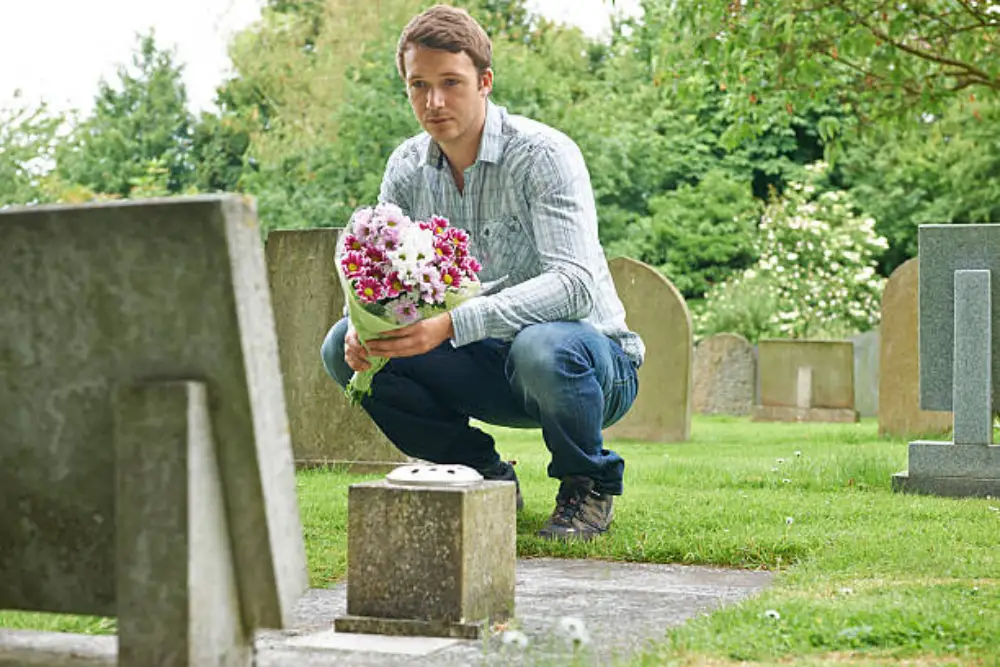
My name is Marcus Henderson, and the day before I married my second wife, I stood in a cemetery talking to a gravestone about whether I was committing the worst kind of betrayal—not against the woman I was about to marry, but against the one who’d died three years earlier in a moment that split my life into clean halves: before and after.
The phone call had come on a Tuesday afternoon while I was reviewing quarterly reports at my desk, absorbed in spreadsheets and revenue projections. “Mr. Henderson, there’s been an accident involving your wife. You need to come to County General immediately.” The words were professional, calm, utterly devastating. I remember dropping my coffee, watching the brown liquid spread across financial documents that suddenly meant nothing at all.
Catherine had been driving to her sister’s house for their weekly lunch date—a ritual they’d maintained since childhood, sisters meeting to share gossip and laughter over salads neither of them particularly enjoyed but ordered anyway because it felt healthy and responsible. A drunk driver ran a red light at forty-five miles per hour, T-boning her sedan on the driver’s side. The impact killed her instantly, the doctors assured me later, as if the speed of her death might somehow soften the permanence of it.
The funeral was a blur of flowers—so many flowers I could smell them for weeks afterward—and well-meaning relatives who promised that time would heal the wound. But I discovered that time doesn’t heal grief; it just teaches you to carry the weight differently, to integrate the pain into your daily movements until you stop noticing how heavy everything has become.
For months after Catherine’s death, I moved through life like an actor who’d forgotten his lines but kept showing up for performances anyway. I went to work because the alternative was staying home in the house we’d bought together, where every object carried the freight of memory. Her coffee mug remained in the dishwasher where she’d left it that final morning, a small domestic detail that became unbearable evidence of her sudden absence. Her books sat on the nightstand with bookmarks still marking pages she would never finish. I couldn’t bring myself to change anything, as if preserving the physical space might somehow preserve her presence within it.
Friends urged me to see a therapist. My sister practically begged me to start dating again. “Catherine would want you to be happy,” they’d say, as if they knew what Catherine would want, as if anyone could speak for the dead with such certainty. But the phrase “move forward” felt like a betrayal of everything we’d shared. How could I move forward when moving forward meant leaving her behind?
I met Rachel two years after the accident, at a professional conference where we were both presenting research on urban planning initiatives. She was intelligent and compassionate, with the kind of quiet strength that doesn’t demand attention but somehow commands it anyway. We started with conversations about work—safe topics like zoning regulations and traffic pattern optimization—that gradually expanded to include personal history, carefully shared vulnerabilities, and tentative discussions about what futures might look like for people carrying the weight of past losses.
Rachel knew about Catherine from our first real conversation. I’d learned that honesty about grief was essential—you can’t build anything real on the foundation of pretending you’ve never been broken. What struck me most about Rachel was her patience with my emotional unavailability. She never demanded I remove Catherine’s photos from my apartment or stop mentioning her in conversation. She seemed to understand that grief wasn’t a problem requiring a solution but a permanent alteration in who I was.
“Love isn’t a finite resource, Marcus,” she told me one evening as we walked through the park where Catherine and I used to jog together on Sunday mornings. “Loving her doesn’t mean you can’t love again. It just means your heart is big enough for both.”
The wisdom in her words appealed to my rational mind—I was an analyst by profession, someone who understood systems and patterns and the efficient allocation of resources. But my emotional self remained stubbornly resistant to the possibility that I could experience genuine happiness without Catherine.
After eighteen months of dating, I proposed to Rachel on a quiet Sunday morning in her kitchen while she made pancakes and hummed songs I didn’t recognize. The decision felt both inevitable and terrifying—inevitable because Rachel had become essential to my daily contentment, terrifying because it represented the final acknowledgment that Catherine was truly, permanently gone.
Rachel said yes with tears streaming down her face, and immediately began planning a wedding that would honor both our future together and the past that had shaped us. She insisted on visiting Catherine’s grave before we set a date, wanting to “introduce herself properly” to the woman whose absence had defined so much of our courtship.
I remember standing beside Rachel at the cemetery that first time, watching her kneel in the grass and speak to the granite headstone as if Catherine might actually hear her. “I’m not trying to replace you,” Rachel said softly. “I just want you to know I’ll take good care of him. I promise.”
The gesture moved me profoundly, but it also crystallized a fear I’d been carefully avoiding: that my love for Rachel was really just gratitude for her willingness to accept my damaged state, rather than genuine romantic feeling. Did I love Rachel for who she was, or for who she wasn’t? Was I marrying her because I wanted to build a life with her, or because the alternative was remaining alone with my grief?
As our wedding date approached, the questions multiplied and magnified until I couldn’t think about anything else. I found myself comparing Rachel to Catherine in a thousand small ways—the way they laughed, the way they took their coffee, their taste in music and books and weekend activities. Every comparison felt like a betrayal of one woman or the other, sometimes both.
The evening before our wedding, I drove to Riverside Cemetery with a bouquet of white roses and a heart full of uncertainty that felt like lead in my chest. I needed to visit Catherine one final time before making vows to another woman, though I wasn’t entirely sure what I hoped to accomplish. Permission, maybe. Absolution. Some sign that what I was about to do wasn’t the worst kind of betrayal.
The cemetery was quiet except for wind moving through the oak trees that lined the main path, their leaves whispering secrets I couldn’t quite decode. I’d visited monthly for three years, but tonight felt weighted with finality—the knowledge that after tomorrow, these solitary conversations with Catherine would represent a kind of infidelity to my new marriage.
I placed the roses on her grave and began the conversation I’d been rehearsing for weeks, the words I’d practiced in my car and in the shower and lying awake at three in the morning.
“Tomorrow I’m marrying Rachel,” I said to the carved stone that bore Catherine’s name and the dates that bracketed her too-short life. “I think you would like her. She’s kind and patient, and she doesn’t try to make me forget you. She lets me keep your picture on my nightstand. She doesn’t get upset when I accidentally call the park ‘our park’ even though I walk there with her now.”
The words felt inadequate for the complexity of emotions churning in my chest—love and guilt and hope and fear all tangled together until I couldn’t tell where one ended and another began.
“But I don’t know if what I feel for her is real,” I admitted, my voice breaking. “I don’t know if it’s love or just the fear of being alone forever. I don’t know if it’s possible to love someone new while still loving you this much. And I’m terrified that marrying her means I’m giving up on us, on the life we were supposed to have.”
As I spoke, I became aware of footsteps on the gravel path behind me. I turned to see a woman in her early thirties approaching with her own bouquet—carnations, bright red against the gray stone backdrop. She hesitated when she saw me, clearly not wanting to intrude on a private moment.
“I’m sorry,” she said softly. “I didn’t realize anyone else was here. I can come back later.”
“It’s okay,” I replied, wiping tears I hadn’t realized were falling. “The cemetery belongs to all of us. We’re all here for the same reason.”
She smiled sadly and moved to a grave several rows over, kneeling to arrange her flowers. I should have left her in peace, should have finished my own conversation and driven home to make final preparations for tomorrow. But something about the set of her shoulders, the careful way she touched the headstone, made me stay.
After a few minutes, she stood and walked back toward me, her eyes red but her composure intact. “I’m Sofia,” she said. “Sofia Martinez.”
“Marcus Henderson.” We shook hands in the formal way strangers do when meeting in places designed for grief.
“My brother,” she explained, gesturing toward the grave she’d been visiting. “Miguel. Motorcycle accident two years ago. He was twenty-six, about to propose to his girlfriend. Had the ring in his pocket when he died, which somehow makes it worse.”
The detail pierced me—the ring in his pocket, all that hope and future reduced to a tragic might-have-been. It reminded me of my own proposal to Catherine eight years earlier, when I’d been equally nervous about choosing the right ring and the right words, terrified she might say no even though I knew she loved me.
“How do you move forward from something like that?” I asked, though I wasn’t sure whether I was asking about Miguel’s death or Catherine’s or just loss in general.
Sofia considered the question for a long moment. “Some days I don’t,” she admitted. “Some days I call his phone just to hear his voicemail message. Some days I cook his favorite meal—chicken mole that takes hours—and then remember he’s not coming home to eat it. But other days I manage to exist in the present instead of the past. Those days are getting more frequent.”
We talked for over an hour, standing in that cemetery as the sun set and the temperature dropped, sharing stories about the people we’d lost and the different ways grief had reshaped our lives. Sofia worked as a pediatric nurse at County General—the same hospital where Catherine had been pronounced dead, which felt like more than simple coincidence.
“Do you think they know we’re here?” she asked as we finally prepared to leave, the cemetery growing dark around us.
“I think they want us to be happy,” I replied, though I wasn’t sure I believed it.
“Even if being happy means letting go of them?”
The question haunted me as I drove home through streets that felt unfamiliar despite my having lived in this city for fifteen years. Even if being happy means letting go. Was that what I was doing tomorrow—letting go of Catherine? And if so, did that make me disloyal or just human?
The wedding day arrived with the kind of perfect weather that makes you believe in cosmic approval—clear skies, mild temperature, gentle breeze that felt like a blessing. Rachel looked radiant as she walked down the aisle of the small chapel we’d chosen for its intimate atmosphere and beautiful stained glass windows. Her dress was simple but elegant, her smile genuine and full of hope for the future we were about to promise each other.
Standing at the altar watching her approach, I felt that familiar tangle of emotions I couldn’t separate into component parts. Love for Rachel, certainly—she was remarkable in a thousand ways I’d come to appreciate deeply. But also a persistent ache for Catherine’s absence, the knowledge that this moment should have been purely joyful but was instead complicated by the ghost of my first marriage.
The ceremony proceeded smoothly until the minister reached the traditional vows about forsaking all others. The phrase stopped me cold as I realized that “all others” included not just potential future partners but also the past love I’d been holding onto like a drowning man clutching a life preserver. Could I really forsake Catherine? Did loving Rachel require erasing what Catherine and I had shared?
Rachel noticed my hesitation and squeezed my hand reassuringly, her eyes full of understanding rather than concern. In that moment, I saw that she had always known this would be difficult, that her love was strong enough to accommodate my struggle without demanding I pretend it wasn’t happening.
We exchanged rings and kissed as husband and wife while our families applauded, but part of me remained in that cemetery, talking to a gravestone about the impossibility of loving two people separated by the permanent divide of death.
Our honeymoon in Vermont should have been perfect—a week at a bed and breakfast surrounded by mountains and maple trees just beginning their autumn transformation. But I found myself distracted and emotionally distant, comparing every moment to memories of trips Catherine and I had taken, finding our new experiences somehow lacking.
On the third day, Rachel confronted me with the directness that was one of her most admirable qualities. “You’re not really here with me,” she observed as we sat on the porch watching the sunrise paint the mountains gold. “Your body is here, but your heart is somewhere else.”
Her words stung because they were accurate. Despite my best intentions, I’d been mentally cataloging the differences between this trip and the honeymoon Catherine and I had taken to the Caribbean—the way the ocean had looked, the foods we’d eaten, the conversations we’d had lying in bed while rain drummed on the roof.
“I’m trying,” I said weakly, hating how inadequate it sounded.
“I know you are, Marcus. But I need to know if you married me because you love me, or because you’re afraid of being alone. Because I deserve better than being someone’s consolation prize, and you deserve better than a marriage built on fear instead of love.”
The brutal honesty of her question forced me to confront the doubts I’d been avoiding since our engagement. Did I love Rachel for herself, or was she simply the most acceptable alternative to a lifetime of solitude?
“I don’t know,” I admitted, the words feeling like both failure and relief. “I thought I knew, but now I’m not sure about anything.”
Rachel was quiet for a long time, watching mist lift off the mountains as morning advanced. When she spoke, her voice was calm but sad in a way that made my chest hurt. “I think we should see a counselor when we get home. Both of us. Because this isn’t sustainable, and we both deserve clarity.”
We found Dr. Patricia Weiss through a referral from my primary care physician. She specialized in grief counseling and had worked with many people struggling to form new relationships after the death of a spouse. Her office was deliberately soothing—soft lighting, comfortable furniture, the kind of space designed to encourage difficult honesty.
“Grief is not a problem to be solved,” she explained during our first joint session, her voice gentle but firm. “It’s a permanent change in how you experience the world. The goal isn’t to ‘get over’ Catherine’s death—it’s to learn how to carry that love forward in a way that doesn’t prevent you from experiencing new love.”
Over several months of individual and couples therapy, Dr. Weiss helped me understand that my attachment to Catherine had become unhealthy—not because I still loved her, but because I was using that love as armor against the vulnerability required for genuine intimacy with Rachel.
“You’re afraid that loving Rachel fully would somehow diminish your love for Catherine,” Dr. Weiss observed during one particularly difficult session. “But love isn’t a zero-sum game, Marcus. Having less active grief doesn’t mean having less love for the person you lost.”
The breakthrough came during a session where Dr. Weiss asked me to write a letter to Catherine explaining why I felt guilty about loving Rachel. The exercise forced me to articulate fears I’d been carefully avoiding: “I’m afraid that if I let myself love Rachel completely, it means our love wasn’t special. I’m afraid that if I’m happy without you, it means I didn’t love you enough. I’m afraid that moving forward means abandoning you, leaving you alone in that cemetery while I build a new life you’re not part of.”
Reading the letter aloud to Rachel was one of the hardest things I’d ever done, my voice shaking with the vulnerability of exposing my deepest fears. But her response surprised me.
“Those fears make complete sense,” she said, reaching across the space between our chairs to take my hand. “But Marcus, I fell in love with a man who had loved deeply and lost deeply. That capacity for profound connection is part of what drew me to you. I’m not asking you to stop loving Catherine. I’m not asking you to pretend she never existed or that your marriage to her didn’t matter. I’m just asking you to make room for me too.”
The distinction was subtle but revolutionary. Rachel wasn’t competing with Catherine for my affection—she was asking to be included in a heart that had proven capable of deep, enduring love.
A year after our wedding, Rachel and I visited Catherine’s grave together. It was the first time I’d brought anyone to this sacred space, and I felt nervous about sharing this ritual with my new wife. What if it felt like a betrayal? What if Rachel’s presence somehow violated the sanctity of my private conversations with Catherine?
But Rachel brought sunflowers—which had been Catherine’s favorite, a detail I’d mentioned once months earlier that she’d remembered—and stood quietly while I had my usual conversation with the headstone. This time, though, my words were different.
“Catherine, I want you to meet my wife, Rachel,” I said, feeling awkward but determined. “She’s been incredibly patient with my grief, and she loves me in spite of all the damaged places you left behind. I think you would like her. I think you’d appreciate how kind she is.”
Rachel stepped forward and gently placed her hand on the cool granite of Catherine’s headstone. “Thank you for teaching him how to love,” she said simply. “I promise to take good care of that gift.”
Standing there together—my past and my present physically occupying the same space—I realized that bringing Rachel to meet Catherine wasn’t a betrayal of either woman. It was an integration, a way of acknowledging that both loves were real and valid and deserving of honor.
Six months later, Rachel became pregnant with our first child. The pregnancy was planned and welcome, but it forced us to have difficult conversations about how Catherine’s memory would fit into our growing family.
“I want our children to know about Catherine,” Rachel said during one of our evening walks, her hand resting on her slightly swollen belly. “She was important to you, which makes her part of our family history.”
“Are you sure?” I asked, uncertain whether her generosity was genuine or performative. “It might be easier to just focus on our life together, to not complicate things.”
“Easier for whom? Our children deserve to understand all the experiences that shaped their father. Catherine’s love helped make you the man I fell in love with. That’s not something to hide—it’s something to honor.”
Our daughter Emma was born on a snowy February morning after twelve hours of labor that tested both our endurance and our partnership. Holding her for the first time, I experienced a love that was completely different from what I’d felt for either Catherine or Rachel—fierce and protective and uncomplicated by the weight of past loss.
In the weeks following Emma’s birth, I found myself thinking less about Catherine and more about the future we were building. The shift wasn’t deliberate; it simply happened as my emotional energy focused on the immediate demands of new parenthood—diaper changes and feeding schedules and the miracle of watching this tiny human discover the world.
Rachel noticed the change without commenting directly. She just smiled when she caught me staring at Emma with wonder, or when I talked about plans for family vacations and milestones we would celebrate together.
Today, five years after Catherine’s death and three years into my marriage with Rachel, our family includes Emma and her younger brother Michael. Our house is filled with the beautiful chaos of children’s laughter, homework negotiations, and bedtime story rituals.
Catherine’s photo still sits on my nightstand, but it no longer dominates the space. It shares the surface with pictures of Rachel and the children, creating a visual timeline of love’s evolution rather than a shrine to love’s end.
The children know about Catherine through age-appropriate stories about their father’s first marriage. Emma understands that Daddy was married before Mommy, that Catherine died in a car accident, and that it made Daddy very sad for a long time. But she doesn’t see Catherine as a competitor for my affection or a threat to our family’s stability.
“Daddy loved Catherine when he was younger,” Emma explained to a friend during a recent playdate, her tone matter-of-fact. “Now he loves Mommy and us. People can love lots of different people at different times.”
Her casual acceptance of love’s complexity reminded me how much wisdom children possess about matters that adults complicate through overthinking and fear.
I still visit Catherine’s grave occasionally, but the conversations have changed. Instead of asking for permission or seeking absolution, I simply share updates about the life I’m building and express gratitude for what we shared.
“Emma lost her first tooth yesterday,” I told the gravestone during my most recent visit. “She put it under her pillow and was so excited about the tooth fairy that she couldn’t sleep. Rachel and I stayed up past midnight waiting for her to finally drift off so we could make the exchange. It was exhausting and perfect.”
The pain of Catherine’s absence hasn’t disappeared—I don’t think it ever will entirely. But it has transformed into something more manageable, a bittersweet appreciation for what we shared rather than desperate grief for what we lost.
Rachel and I now facilitate a support group for people navigating new relationships after the death of a spouse. Our own experience, combined with professional training from Dr. Weiss, helps us guide others through the specific challenges of loving again after profound loss.
“The goal isn’t to replace your first love,” I tell new group members who are wrestling with guilt and uncertainty. “It’s to expand your understanding of what love can be. It’s to recognize that the heart’s capacity for connection is infinite when we stop treating love as a finite resource that must be rationed.”
Looking back on the journey from devastating grief to integrated healing, I understand now that the question was never whether I could love again after Catherine’s death. The question was whether I would allow myself to love differently, to embrace the complexity of human emotion rather than demanding its simplification.
Rachel never asked me to forget Catherine or pretend our marriage was my first experience with deep love. She simply asked me to make room in my heart for new experiences while honoring the old ones. That distinction—between replacement and addition—made all the difference.
The night I met Sofia in the cemetery, I was seeking permission from Catherine to move forward. But permission was never Catherine’s to give or withhold—it was mine to claim. The love I shared with Catherine taught me I was capable of profound emotional connection. The love I share with Rachel has taught me that the heart’s capacity for love is infinite when we stop treating it as a limited commodity.
Grief, I’ve learned, is not the opposite of love—it’s love with nowhere to go. The challenge isn’t to stop grieving, but to find constructive places for that ongoing love to exist alongside new relationships and experiences.
Marriage to Rachel requires daily choices to be present and engaged rather than lost in memory or paralyzed by comparison. Some days are easier than others. Sometimes Emma laughs in a way that sounds exactly like Catherine did, bringing unexpected moments of melancholy even in the midst of joy. But Rachel has taught me that acknowledging those moments doesn’t threaten our marriage—pretending they don’t exist does.
“I married all of you,” Rachel reminded me recently when I apologized for being quiet after visiting Catherine’s grave. “The parts that loved before, the parts that grieved, and the parts that learned to love again. I don’t want an edited version of who you are.”
Her acceptance has been the foundation of our happiness, but it took me years to understand that I had to extend that same generous acceptance to myself.
The man who stood in that cemetery the night before his wedding, seeking permission to love again, has been replaced by someone who understands that love doesn’t require permission—it simply requires courage. The courage to risk loss again, to be vulnerable again, to trust that the heart can expand to hold more than we ever imagined possible.
When I visit Catherine’s grave now, it’s not to ask for guidance or seek absolution. It’s simply to say thank you—for the love we shared, for the lessons her death taught me about resilience and the human capacity for recovery, and for the foundation of love that helped me recognize it when it appeared again in the form of a patient, generous woman who saw my brokenness and chose me anyway.
The roses I leave are symbols of gratitude rather than mourning, tokens of a love that has been transformed but never diminished by time, distance, or the beautiful presence of new love in my life. Catherine will always be my first love, the woman who taught me what partnership could be. But Rachel is my present and my future, the woman who taught me that hearts broken by loss can be made whole again—not by forgetting what came before, but by integrating it into something larger and more complex than I ever thought possible.
Tonight, as I tuck Emma and Michael into bed and listen to their prayers that include blessings for “Daddy’s friend Catherine in heaven,” I understand that this is what healing looks like. Not the erasure of pain, but its transformation into wisdom. Not the replacement of old love with new, but the expansion of the heart to hold both with equal honor.
And tomorrow, I’ll wake up beside Rachel, make breakfast for our children, and continue building the life that Catherine’s death once made me believe was impossible. Because that’s what love does—it transforms us, breaks us, rebuilds us, and if we’re brave enough to stay open, teaches us that endings and beginnings are sometimes the same thing, viewed from different angles of grief and grace.

Adrian Hawthorne is a celebrated author and dedicated archivist who finds inspiration in the hidden stories of the past. Educated at Oxford, he now works at the National Archives, where preserving history fuels his evocative writing. Balancing archival precision with creative storytelling, Adrian founded the Hawthorne Institute of Literary Arts to mentor emerging writers and honor the timeless art of narrative.