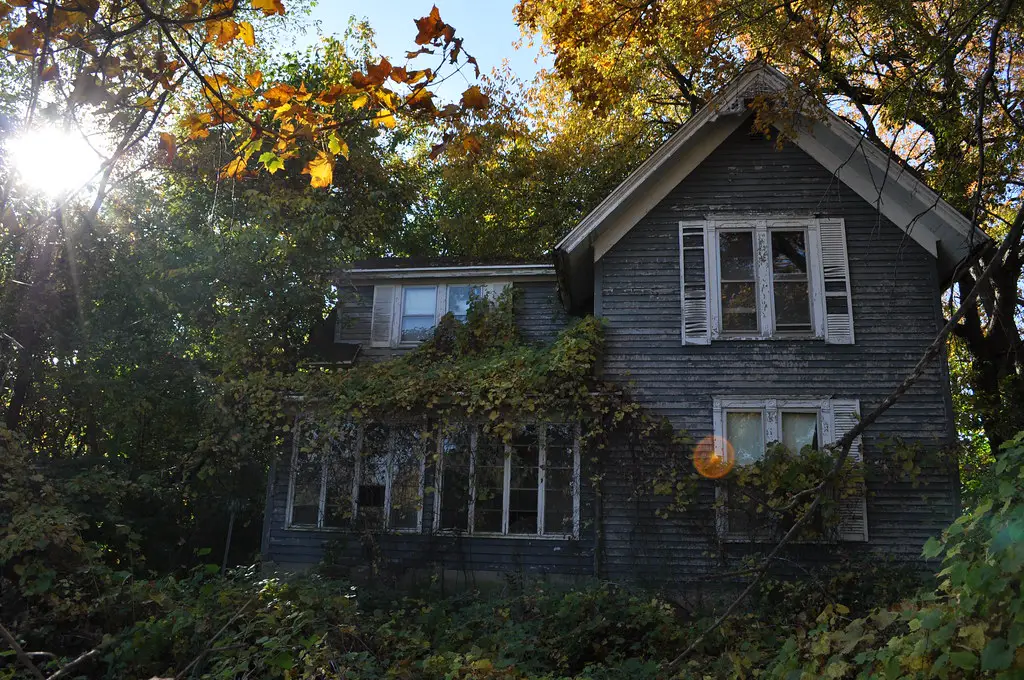
Never Go to the Farm
Never go to the farm, Catherine. Promise me.
Those words, spoken with uncharacteristic intensity, were among the few demands my husband Joshua ever made during our twenty-four years of marriage. I had always respected his wishes, even when curiosity gnawed at me during those rare moments when he’d mentioned his Canadian childhood on a property he’d left behind.
But now Joshua was gone—taken by a heart attack that no one, not even me, had seen coming. After twenty-four years of marriage, I had become a widow at fifty-two, with a bitter daughter and a hollow space in my chest where certainty used to live.
“Mrs. Mitchell,” the voice of Joshua’s attorney, Mr. Winters, pulled me from my thoughts.
We sat in his wood-paneled office two weeks after the funeral. He slid a small box across his desk. Inside lay an antique brass key attached to a maple-leaf keychain, and a sealed envelope with my name written in Joshua’s precise handwriting.
“What is this?” I asked.
“Your husband purchased a property in Alberta, Canada, three years ago. According to his instructions, you were only to be informed after his passing. The deed has been transferred to your name. All taxes are paid for the next five years.”
“A property in Canada?” I struggled to process the information.
“It’s called Maple Creek Farm. Apparently, it was his childhood home, though the deed shows it changed hands several times before he repurchased it.”
The farm. The place he’d forbidden me to visit.
“Mrs. Mitchell, there’s something else. The property has become quite valuable recently. Significant oil deposits were discovered in the region about eighteen months ago. Your husband declined multiple offers from energy companies.”
My head spun with questions. Joshua had never mentioned oil, money, or any property purchase. How had he afforded to buy a farm? And why keep it secret from me?
I opened the envelope with trembling fingers.
My dearest Catherine, if you’re reading this, then I’ve left you too soon. The farm is yours now. I’ve spent the last three years transforming it from the broken place of my childhood into something beautiful—something worthy of you. I know I made you promise never to go there. I’m releasing you from that promise. In fact, I’m asking you to go just once before you decide what to do with it. On the main house’s desk is a laptop. The password is the date we met, followed by your maiden name. I love you, Cat, more than you’ll ever know. Joshua.
I clutched the letter to my chest. “I need to see this place.”
“Of course,” Mr. Winters nodded. “But I should warn you—Joshua’s family in Canada has contested the will. His brothers claim he was not mentally competent when he repurchased the property.”
“That’s ridiculous.”
“Nevertheless, they filed objections. Given the property’s newfound value, it might get complicated.”
I tucked the key into my pocket. “I’m going to Canada today.”
Forty-eight hours later, I found myself standing before imposing wooden gates marked Maple Creek Farm. Beyond stretched rolling hills, stands of maple trees turning gold with autumn, and in the distance a large farmhouse and several outbuildings, all freshly painted.
This was no broken-down family farm. This was an estate.
The key turned smoothly in the lock. As I drove up the winding gravel driveway, my heart pounded. What secrets had Joshua kept here?
The farmhouse was a stunning two-story structure with a wide porch and large windows. Nothing about it suggested the pain Joshua had always associated with his childhood home.
My hands shook as I inserted the key into the front door. The lock clicked, the door swung open, and I stepped across the threshold into my husband’s secret world.
What I saw inside made me gasp.
The entryway opened into a soaring great room with exposed beams and a stone fireplace. But it wasn’t the architecture that stole my breath.
It was the horses.
Not real ones, but everywhere I looked—exquisite paintings of horses in full gallop, detailed sculptures, photographs framed in simple black frames. My lifelong passion surrounded me in a gallery dedicated to my greatest love.
And there, on a desk by the window overlooking endless pastures, sat a silver laptop with a single red rose laid across its closed lid.
Before I could take another step, the crunch of tires on gravel announced another arrival. Through the window, I watched a black SUV pull up behind my rental car.
Three men emerged, all bearing the unmistakable Mitchell features that Joshua had carried—tall frames, dark hair, strong jawlines.
The Mitchell brothers had arrived, and from their grim expressions, they hadn’t come to welcome the widow.
The men approached with confident strides. I quickly locked the front door, my heart racing. Through the window, I watched them pause on the porch before the oldest—a silver-haired version of Joshua with harder eyes—rapped sharply on the door.
“Mrs. Mitchell, we know you’re in there. We should talk.”
His voice carried the same Canadian accent that had softened Joshua’s speech when he was tired.
I remained silent, backing away from the door.
“Catherine, I’m Robert Mitchell, Joshua’s older brother. These are our brothers, Alan and David. We’re here about the farm.”
Of course they were. Not about Joshua. About the suddenly valuable property.
Ignoring the increasingly aggressive knocking, I moved to the desk, opened the computer, and entered the password.
The screen came to life, opening to a folder labeled For Catherine.
Inside were hundreds of video files, each named with a date—starting from today and extending a full year into the future.
With trembling fingers, I clicked the first one.
Joshua’s face filled the screen. Not the thin, pale version from his final months, but healthy, vibrant.
“Hello, Cat. If you’re watching this, then I’m gone, and you’ve come to the farm despite my years of making you promise not to.”
He chuckled softly.
“I’ve made a video for every day of your first year without me. One year of me keeping you company while you grieve. One year of explaining everything I should have told you while I was alive.”
A lump formed in my throat.
“Starting with why I bought back the farm I swore I’d never set foot on again.”
The knocking outside had stopped. Through the window, I could see the men retrieving documents from their vehicle.
“Three years ago, I was diagnosed with hypertrophic cardiomyopathy—a heart condition I inherited from my father. The doctors gave me two to five years. I chose not to tell you or Jenna. I didn’t want pity, and I didn’t want our final years overshadowed by death.”
Shock and anger surged through me. He’d hidden his diagnosis, made medical decisions without me.
“I know you’re angry right now. You have every right to be. But I hope you’ll understand that I made this choice out of love, not deception.”
Outside, the men were making phone calls now, pacing the gravel drive with frustrated energy.
“When I got my diagnosis, I decided to use whatever time I had left to create something meaningful for you. You always loved horses, always talked about having land someday where you could raise them. So I found the last place anyone would expect me to go—the farm I’d fled at eighteen.”
He leaned closer to the camera.
“What my brothers don’t know is that I legally bought the farm from our father before he died. The old man was broke, desperate for cash—swearing me to secrecy from my brothers, who still thought they would inherit it someday.”
This explained the legal challenge.
“The farm was in ruins when I bought it, Cat. But this time, I had the resources to transform it. Every business trip in the last three years, I was here overseeing renovations, building something for you.”
Outside, the brothers had approached the door again. This time, Robert held a document against the window—a court order.
“My brothers will come for it. They never wanted the farm until last year when oil was discovered in the region. Suddenly, the worthless property they’d mocked me for buying was valuable. They’ll try everything to take it from you.”
One of the brothers was on the phone again, his expression triumphant.
“In the bottom drawer of this desk is a blue folder with every legal document you need. The farm is unquestionably yours. I made sure of it.”
Joshua’s face softened.
“But, Cat, whether you keep it or sell it is entirely your choice. I built this place for you, filled it with beauty for you, but I don’t want it to become a burden.”
A vehicle was coming up the driveway—a police cruiser with Royal Canadian Mounted Police markings.
“One last thing. In the stables, you’ll find six horses—all breeds you’ve admired over the years. The staff I’ve hired will continue caring for them whether you’re here or not. They’re my last gift to you.”
The video ended, freezing on Joshua’s smiling face.
Knocking resumed at the door, more authoritative this time.
“Mrs. Mitchell. RCMP. We need you to open the door, please.”
With a deep breath, I closed the laptop, retrieved the blue folder from the drawer, and went to face whatever came next.
As I reached for the door handle, my phone rang. Jenna—our daughter.
“Mom, why didn’t you tell me about Dad’s farm or the oil? His brothers just called offering a fair settlement if I help them contest the will. What the hell is going on?”
They’d reached out to my daughter already. They were trying to manipulate my grieving daughter.
“Don’t agree to anything,” I said firmly. “These men are not our friends.”
“Mom, if there’s money involved—”
“This isn’t about money. This is about what your father wanted. Please trust me.”
After she hung up, I opened the door to face a young RCMP officer flanked by three Mitchell men whose expressions ranged from smug to openly hostile.
“Mrs. Mitchell, I’m Constable Wilson. These gentlemen have a court order requesting an inspection of the property as part of an estate dispute.”
I smiled calmly. “Of course, Constable—but first, I think you should see these.”
I held out the blue folder containing Joshua’s documentation.
Robert stepped forward dismissively. “Family property disputes are complicated, Constable. My sister-in-law is understandably emotional and confused.”
“Actually,” I interrupted, “I’m neither emotional nor confused. I’m a widow standing on property that legally belongs to me, facing three strangers who happen to share my late husband’s DNA.”
The constable took the folder, examining the contents. His expression changed.
“These appear to be in order, Mrs. Mitchell. A clear deed transfer, properly notarized statements, certified bank records of the original purchase.”
He turned to the brothers. “Gentlemen, I don’t see grounds for forcing an inspection today. This appears to be a matter for the civil courts.”
Robert’s face flushed with anger. “This is outrageous. That woman has no right—”
“That woman is Joshua Mitchell’s wife. And I have every right to be here.”
As the brothers reluctantly retreated, I felt a strange sense of both loss and discovery. The husband I thought I knew had kept secrets—some painful, others breathtakingly beautiful.
I closed the door and walked back to the desk. Tomorrow’s video awaited, and with it more pieces of the man I had loved—and was only now beginning to fully understand.
The war for Maple Creek Farm had only just begun.
I spent that night in the farmhouse, surrounded by evidence of Joshua’s secret labor of love. At dawn, I explored properly.
The main house was a masterpiece of restoration. Every room reflected thoughtful consideration of my tastes—from the library filled with first editions to the sunroom overlooking the eastern pastures.
But it was the stables that truly took my breath away.
Six magnificent horses occupied the spotless stalls: an Andalusian, a Friesian, two Quarter Horses, a Thoroughbred, and a gentle Appaloosa.
“Good morning, ma’am.”
A man in his early sixties emerged from the tack room. “I’m Ellis. Your husband hired me to manage the stables.”
“Catherine Mitchell.”
He nodded. “Mr. Mitchell spoke of you often during his visits. Said you had a natural way with horses.”
“The black Friesian there—that’s Midnight. Your husband spent months tracking him down. Said he reminded him of a horse in a painting you loved.”
My heart clenched. The Stubbs painting I’d admired at a museum twenty years ago. Joshua had remembered.
“His brothers were here yesterday,” I said, watching Ellis’s reaction.
His expression hardened. “They’ve been circling since the oil was discovered—suddenly very interested in the family farm they hadn’t visited in decades.”
“What can you tell me about them?”
“Robert’s the oldest, runs an investment firm—always acted like he was doing Joshua a favor by acknowledging him. Alan’s the middle one—lawyer, slick talker. David’s the youngest—followed Robert into finance.”
“And their relationship with Joshua?”
“Strained doesn’t begin to cover it. They tormented him as a child. When Joshua returned to buy the property, they mocked him for wasting money on worthless land—right up until the Petersons struck oil two properties over.”
“They’ll be back,” I said.
“Count on it. But Mr. Mitchell prepared for that. He was always three steps ahead.”
Back at the house, I opened the laptop for today’s video.
Joshua appeared on screen, seated in the farm’s library.
“Good morning, Cat. Today I want to show you something special.”
The camera moved through the house to a locked door.
“This room is for you alone. The key is in the top drawer of the bedside table—the antique silver one with the horse engraving.”
I found the key and unlocked the door.
A fully equipped art studio filled the large corner room, bathed in perfect northern light. Easels, canvases, paints, brushes—everything a painter could desire.
I hadn’t painted in twenty years.
The video continued. “You gave up so much for us, Cat. Your painting was the first sacrifice. Though you never complained, I always promised myself I’d give it back to you someday.”
Tears blurred my vision as I surveyed the studio.
“There’s one more thing. Check the cabinet below the window seat.”
Inside lay dozens of paintings. My work from college—pieces I thought had been lost in our moves.
Joshua had preserved them. Kept them safe for two decades until he could return them in this perfect space.
On top lay my final college project—a self-portrait of a young woman looking forward, eyes alight with possibilities.
Tucked beside it was a handwritten note.
She’s still in there, Cat. The woman who painted with such passion. I’ve given you the space. The rest is up to you.
The sound of vehicles on the gravel driveway pulled me from this emotional moment.
Two cars approached: the black SUV and behind it, a sleek silver Mercedes I recognized instantly.
Jenna had arrived.
And from the way she emerged and strode confidently toward the brothers, it appeared they had already begun working on her.
My daughter was smiling and shaking hands with the uncles she’d never met.
The battle for Maple Creek Farm had just become significantly more personal.
I watched from the window as Jenna exchanged friendly greetings with her uncles. My phone buzzed with a text from her.
Arrived with Uncle Robert. Coming in now. We need to talk.
They’d known each other less than a day, and already she was claiming family connection.
They entered without knocking—Jenna using daughter’s privilege, the brothers following like wolves behind an unwitting guide.
“Mom.” Jenna embraced me briefly, then stepped back, eyes darting around the impressive entryway. “This place is unbelievable. Why didn’t Dad ever tell us about it?”
Before I could answer, Robert stepped forward. “Catherine, I believe we got off on the wrong foot yesterday.”
His conciliatory tone didn’t match the calculating look in his eyes. Beside him, Alan clutched a leather portfolio undoubtedly containing legal documents.
“Jenna,” I said, ignoring Robert, “I thought we agreed you wouldn’t engage with your father’s brothers until we’d talked.”
She flushed. “They called again this morning with a very reasonable proposal. I thought I should at least hear them out.”
Her chin lifted defiantly. “Besides, they’re my family, too.”
“Family you didn’t know existed until yesterday.”
“Only because Dad kept them from us. Don’t you think that’s strange? What else was he hiding?”
The question hit uncomfortably close to the revelations in Joshua’s videos.
“Your father had complicated relationships with his brothers. He had reasons for the distance.”
Robert gave a dismissive wave. “Ancient history. What matters now is moving forward together.”
“Exactly,” Jenna agreed. “Uncle Robert has explained everything. This farm has been in the Mitchell family for generations. Dad bought it from Grandpa, but it was always meant to be shared among the brothers eventually.”
I suppressed a sigh. They’d been working on her for less than a day, and already she was repeating their version.
“And the sudden interest wouldn’t have anything to do with the oil discovery?” I asked.
Alan stepped forward, opening his portfolio. “We’ve prepared a fair settlement that honors Joshua’s wishes while acknowledging the Mitchell family’s historic claim.”
“We’re prepared to be very generous,” Robert added, placing a grandfatherly hand on Jenna’s shoulder. “One-third to you, Catherine, one-third to Jenna, and one-third split among us brothers. Everyone wins.”
Jenna looked at me expectantly. “It makes sense, Mom. We don’t need this huge place. We could sell it all, walk away with millions.”
“Your father specifically left this property to me. Not to you. Not to his brothers.”
“Out of confusion and misplaced sentiment,” Robert countered. “Joshua wasn’t thinking clearly in his final years.”
Anger burned through me. “My husband was perfectly sound of mind until the day he died.”
“Then why all the secrecy?” David spoke for the first time. “Why hide the property from his wife and daughter? These aren’t the actions of a man thinking rationally.”
I thought of the videos, the renovated farm, the art studio—each element meticulously planned.
“Mom,” Jenna said gently, “I know this is hard. But this proposal makes financial sense.”
The door opened, and Ellis appeared, his face concerned. “Everything all right, Mrs. Mitchell?”
The brothers turned, clearly annoyed.
Robert’s eyes narrowed. “This is a family matter.”
“Ellis is my employee. He’s welcome in my home.”
“Actually,” Alan interjected, “his employment status is among the disputed assets.”
Ellis stood his ground. “Mr. Mitchell hired me personally—made me promise to look after the place and Mrs. Mitchell.”
“We’ll be reviewing all staff appointments,” Robert said dismissively.
I’d heard enough. “I think it’s time for you to leave—all of you.” I looked at the brothers, then softened when my gaze reached Jenna. “Except you.”
“You’re not even considering their offer?” Jenna asked, incredulous.
“I’ll review any written proposal with my own attorney. But I won’t be pressured in my own home.”
Robert’s mask of conciliation slipped. “This property is worth tens of millions with the oil rights. We can do this amicably, or we can make things very difficult.”
“Is that a threat?”
“A reality check. You’re a schoolteacher from Minnesota facing opponents with significantly more resources. Joshua placed you in an untenable position.”
I thought of the blue folder with its meticulous documentation, the videos showing Joshua’s planning. “I believe my husband knew exactly what he was doing. Now, please leave.”
Jenna looked torn. “I think I’ll go with them for now. We have more to discuss.”
She kissed my cheek. “Think about the offer, Mom. Please.”
I watched them leave, a hollow feeling expanding in my chest. In twenty-four hours, my daughter had been pulled into the orbit of men Joshua had spent his life avoiding.
Ellis waited until their vehicles disappeared. “Mrs. Mitchell, there’s something you should know. Something your husband asked me not to mention unless absolutely necessary.”
I turned to him. “What is it?”
“It’s about the true extent of the property—and what’s really hidden here.” He gestured toward the stables. “We should walk. Some things shouldn’t be discussed indoors.”
Ellis led me past the main stables toward a weathered barn I hadn’t explored yet.
“Your husband was a careful man. After his brothers’ first visit last year, he became even more cautious.”
“They visited before?”
Ellis nodded. “Showed up unannounced once they caught wind of the oil discovery. Your husband was here supervising construction. They didn’t recognize him—he’d grown a beard during his treatment.”
The casual mention of Joshua’s treatment sent fresh pain through me.
“What happened?”
“He observed them from a distance, then left without revealing himself. That night, he made changes to the property plans.” Ellis unlocked the barn door. “Starting with this.”
The door revealed an ordinary barn interior. Ellis moved confidently to the back corner, shifting hay bales to expose a trapdoor.
“Your husband installed this entrance last winter. The workers thought they were building a root cellar.”
He pulled the heavy door upward, revealing a wooden staircase descending into darkness. At the bottom, lights flickered on, revealing a concrete tunnel stretching forward.
“What is this place?”
“Your husband called it insurance. I call it genius.”
The tunnel extended fifty yards before opening into a large concrete room filled with filing cabinets, a desk with computer equipment, and walls covered with maps and documents.
“Welcome to Joshua’s war room. Everything he collected about his brothers, their business dealings, and the true value of Maple Creek Farm.”
I moved to the nearest wall where a detailed survey map showed the farm and surrounding properties for miles. Red markings indicated oil deposit locations.
“Joshua knew about the oil.”
“Not at first. He bought this place to renovate for you. But about eighteen months ago, when the Petersons’ land showed oil, he hired geologists to survey Maple Creek secretly.”
Ellis pointed to the map. “They found something unexpected. The largest deposit isn’t under the eastern section where everyone’s drilling. It’s here—under the western acres that look worthless.”
I studied the map, noting the concentration of red markings on the rugged portion of the property—land Robert hadn’t even mentioned in his proposed division.
“The oil company surveys missed it because the formation is unusual, deeper. Your husband verified it with three independent experts, swearing them to secrecy.”
“So the property is even more valuable than his brothers realize.”
“But that’s not all.” Ellis moved to a filing cabinet, withdrawing a thick folder. “Joshua documented decades of questionable business practices by all three brothers. Tax evasion, insider trading, misappropriation of client funds—enough evidence to ruin them professionally.”
I leafed through the meticulous documentation.
He had built an airtight case against his brothers.
“Why collect all this?”
Ellis sat at the desk. “He knew they’d come after the farm once he was gone. He wanted you to have leverage.”
I thought of Robert’s smug confidence. Alan’s legal maneuvering. Their quick work turning Jenna against me.
“What do I do now?”
“That depends on what you want. You could sell everything and walk away wealthy but estranged from your daughter. You could fight the brothers legally using this leverage, which might win but worsen wounds.”
“Or,” I said, “or what?”
“You could do what your husband always did. Think three steps ahead and find the path no one expects.”
I considered this, examining the war room. On the desk sat a framed photograph—Joshua as a teenager, standing beside a magnificent chestnut horse, his face alight with innocent joy.
“That’s Phoenix,” Ellis said. “Your husband’s horse when he was a boy. Only bright spot in his childhood. His brothers sold the animal when Joshua was away at school just to hurt him.”
Another piece clicked into place—Joshua’s support of my love for horses despite having no personal interest. The six magnificent animals weren’t just a gift. They were his reclamation of something precious his brothers had stolen.
I picked up the photograph, a plan beginning to form.
“Ellis, does the laptop work down here?”
He nodded. “There’s secure Wi-Fi throughout the property.”
“Good. I need to watch the next few videos ahead of schedule. Then I need you to arrange a meeting for me.”
“With whom?”
“First, my daughter—alone. Then my attorney. And finally, I’d like to speak with those oil company representatives who’ve been making offers on the property.”
Ellis smiled for the first time. “You’re planning something your husband would approve of.”
“I’m planning something worthy of the man who loved me enough to create all this. And I’m going to need your help.”
“Whatever you need,” Ellis promised. “Your husband saved my life once—gave me this job when no one else would. I owe him everything.”
Over the next forty-eight hours, I barely slept. I watched a week’s worth of Joshua’s videos, each revealing more of his strategy.
“They’ll try to divide and conquer,” he warned in one recording. “Robert will be the friendly face, Alan the legal threat, David the silent observer—and they’ll target Jenna.”
In another video, he walked through the western section. “This land looks like nothing. Scrubby hills, rocky terrain. That’s why it’s perfect. No one looks closely at what appears valueless.”
Armed with Joshua’s insights, I arranged to meet Jenna at a café twenty minutes from the farm—neutral territory.
She arrived fifteen minutes late, defensive posture already in place. “I can’t stay long. Uncle Robert is taking me to meet the family attorney.”
“Uncle Robert. You’ve become quite close in three days.”
She flushed. “They’ve been nothing but kind, which is more than I can say for you.”
I sipped my coffee. “Do you remember that art history course you took? The professor who talked about perspective—how where you stand completely changes what you see.”
“What does that have to do with anything?”
“You’ve only heard their perspective. I’m asking you to consider there might be another view. Your father’s.”
“Dad’s dead. And he obviously didn’t trust either of us enough to tell us about this place.”
I reached into my bag and withdrew a tablet. “Actually, he left something for both of us.”
“What is that?”
“Your father made videos. Hundreds of them. Messages to guide me—us—after he was gone.”
I turned the tablet to face her, queuing up the video Joshua had labeled For Jenna When She Needs It.
Her face paled. “He made videos.”
“He was diagnosed three years ago with hypertrophic cardiomyopathy. He chose not to tell us.”
“That’s impossible. He would have told me.”
“Watch the video. Hear it from him.”
With trembling fingers, she pressed play.
Joshua’s face appeared—healthy, vibrant.
“Hello, my brilliant girl. If you’re watching this, then I’m gone. And knowing you, you’re probably angry about all the secrets I kept. You never did like being kept in the dark, even as a toddler.”
Tears welled in Jenna’s eyes.
“I should have told you I was sick. Should have given you time to prepare. But I was selfish. I wanted our last years together to be normal.”
Joshua shifted, leaning closer.
“But there’s something else you need to know about my brothers. They embezzled my portion of our father’s estate when I was nineteen. Used my name on fraudulent paperwork while I was away at college. When I discovered it and threatened to expose them, they threatened to implicate me as a willing participant.”
Jenna’s hand covered her mouth.
“I left Canada, changed my name slightly—from Jonathan to Joshua—and started over. Met your mother, built a life, raised you. But my brothers never changed. Whatever they’re telling you now, remember this: they’ve wanted control of the family property for decades—not out of sentiment, but pure greed. And they’ll use anyone, including my daughter, to get it.”
The video ended.
Jenna sat motionless, tears streaming. “He was protecting us. All this time.”
“Your uncles aren’t the family connection they’re pretending to be. They’re opportunists who see you as their easiest path to what they want.”
She wiped her tears, anger replacing grief. “They’ve been lying to me, haven’t they?”
“Not everything. The farm is worth millions. That part is true. But they haven’t told you about the western section they conveniently excluded—or the true extent of the oil deposits there.”
Understanding dawned. “They’re trying to cheat us.”
“Us?” I repeated, hope flickering. “Does that mean you’re back on my side?”
“Mom, I never left your side. I just wanted to feel connected to Dad through his family. They had stories about him as a kid.”
“I understand. Grief makes us vulnerable. But now we need to be smarter than they are.”
“Together,” Jenna said, straightening. “What’s the plan?”
I smiled, feeling real confidence for the first time. “First, we’re meeting my attorney this evening. Then tomorrow we have an appointment with Western Plains Energy—the oil company.”
“Why?”
“Because knowledge is leverage. And right now, we know something your uncles don’t: exactly where the oil is, and how much there really is.”
I showed her the geological surveys from Joshua’s war room.
“They think they’re dealing with an uninformed widow and a naïve niece. Time to show them exactly who they’re really facing.”
Jenna laughed—a sound of genuine amusement. “Dad always said you were the smartest person he’d ever met. That underneath that quiet high school teacher was a tactical genius who could outthink anyone if properly motivated.”
“Did he really say that?”
“All the time. He also said that the biggest mistake anyone could make was underestimating Catherine Mitchell.”
Later that evening, with Jenna beside me, I laid out my complete plan to the attorney Joshua had selected. His expression moved from professional interest to undisguised admiration.
“Mrs. Mitchell, your husband said you would surprise me. He was right.”
“My husband was right about a great many things, including his belief in my ability to not just survive his death—but to emerge stronger.”
The Mitchell brothers arrived at Maple Creek Farm exactly when I expected: 10:00 a.m. sharp, three days after my meeting with Jenna.
Their black SUV crunched up the gravel driveway with the confidence of men who believed victory was merely a formality. Behind them followed a silver Mercedes—likely their attorney or financial adviser.
I watched from the great room window, dressed in a tailored suit I’d purchased specifically for this meeting. Jenna emerged from the kitchen looking equally professional.
“They’re here,” I called.
“Ready?” she asked.
“Completely. Remember—let them talk themselves into a corner first.”
Ellis appeared from the back. “The others arrived through the service entrance. They’re set up in the dining room as you requested.”
I nodded appreciation. “Perfect timing.”
The doorbell rang.
They entered with easy entitlement. Robert led, followed by Alan with his legal portfolio, and David. Behind them walked a silver-haired man in an expensive suit.
“Catherine.” Robert nodded. “We appreciate you agreeing to this meeting. This is Harrison Wells, CEO of Northern Extraction. We thought it might be productive to have an industry expert join our discussion.”
So they’d brought an oil executive to intimidate me.
Predictable.
“How thoughtful,” I replied pleasantly. “I’ve had the dining room prepared. Shall we?”
I led them through the house. In the formal dining room, a large table had been set with documents at each place.
“Please sit,” I gestured. “I believe we have much to discuss.”
As they settled into their chairs, expressions of confidence firmly in place, I remained standing at the head of the table.
“Before we begin, I want to thank you for your previous proposal. It was educational.”
Robert’s smile widened, clearly interpreting my comment as submission. “We’re pleased you’ve had time to consider our offer.”
“Yes,” I mused, picking up a remote control. “Division. That’s precisely what I’d like to discuss.”
I pressed a button, and a hidden screen descended from the ceiling.
The brothers exchanged surprised glances.
“If you’ll direct your attention to the presentation,” I continued, clicking the remote.
A detailed map of Maple Creek Farm appeared, showing property boundaries and geological formations.
“This is the complete survey of Maple Creek. All 2,200 acres—not just the eastern 800 acres mentioned in your proposal.”
Alan shifted uncomfortably. “The western section is undevelopable rocky terrain. We excluded it for simplicity.”
“How considerate,” I smiled. “Except for one small detail.”
Another click, and the map overlaid with oil deposit locations—the complete geological survey from Joshua’s war room, showing the massive reserve beneath the “worthless” western acres.
Harrison Wells straightened in his chair, leaning forward to study the projection with sudden, intense interest.
“As you can see, the primary oil deposit extends predominantly beneath the western section—the acres you so generously offered to exclude from our fair division.”
Robert’s face flushed. “These surveys are unreliable—”
“Actually,” interrupted a new voice as the connecting door opened, “those surveys have been verified by three independent geological teams.”
The brothers turned in shock as Thomas Reeves, CEO of Western Plains Energy—Northern Extraction’s primary competitor—entered the room, followed by my attorney.
“What is this?” Robert demanded, half-rising.
“This is a meeting about the true value and future of Maple Creek Farm. Mr. Reeves has expressed significant interest after reviewing the complete geological data my husband compiled.”
Harrison Wells shot a betrayed glance at the brothers. “You told me you had exclusive negotiating rights.”
“They don’t,” my attorney interjected smoothly, placing additional documents on the table. “Mrs. Mitchell holds clear, uncontested title to the entire property, including all mineral rights.”
Robert slammed his hand on the table. “This property has been in the Mitchell family for generations. Joshua had a moral obligation—”
“Moral obligations,” Jenna spoke for the first time, “like the moral obligation you had to my father when you stole his inheritance and threatened to implicate him in your crimes if he exposed you.”
The brothers froze, color draining from their faces.
“What exactly is she talking about?” Harrison Wells asked, looking increasingly uncomfortable.
“Perhaps these will clarify,” I said, nodding to my attorney, who distributed sealed envelopes. “Copies of documentation my husband preserved regarding certain historical transactions involving Mitchell family assets. The statute of limitations has expired on some, but Canadian financial regulatory authorities might find others quite interesting.”
Alan opened his envelope, scanning with increasing alarm. “These are private family matters, completely irrelevant—”
“On the contrary, they establish a pattern of fraudulent behavior that directly impacts your credibility in these negotiations.”
The room fell silent as the brothers realized the completeness of their exposure.
“What do you want?” Robert finally asked.
“I want you to leave Maple Creek Farm and never return. I want you to cease all attempts to contest my ownership or manipulate my daughter. In exchange, these documents remain private.”
Harrison Wells stood abruptly. “I believe my company’s involvement has been based on incomplete and fraudulent information. If you’ll excuse me, Mrs. Mitchell, I’ll be in touch directly.”
He shot a disgusted look at the brothers before exiting.
Robert’s expression hardened. “The extraction costs for the western section are prohibitive—”
“Actually,” Thomas Reeves interjected, “Western Plains has developed new extraction technology specifically suited to these formations. We’re prepared to make Mrs. Mitchell an offer that acknowledges both the challenges and the exceptional potential.”
By the time the Mitchell brothers departed two hours later, defeated and legally bound by the settlement agreement my attorney had prepared in advance, the future of Maple Creek Farm had been secured exactly as Joshua had envisioned.
As their vehicles disappeared down the driveway, Ellis appeared at my side. “Your husband would be proud. You outmaneuvered them exactly as he believed you would.”
I watched the dust settle, a strange mix of emotions washing through me. “We’re not finished yet. This was just the first battle.”
But it was a battle we had decisively won—using weapons Joshua had meticulously prepared, and the strength he had always seen in me.
Six months later, I stood in the art studio Joshua had created, sunlight streaming through the north-facing windows, illuminating a canvas on the easel.
After decades away from painting, I had finally picked up a brush again.
Today’s subject waited in the paddock: Midnight, the magnificent Friesian stallion Joshua had purchased because he reminded him of a painting I’d admired twenty years earlier.
“Mom.” Jenna appeared in the doorway, laptop in hand. “Today’s video is different. I think you should see it alone.”
She handed me the computer. “It’s marked for month six. He titled it, ‘When Catherine starts painting again.'”
Alone in the studio, I opened the laptop and pressed play.
Joshua appeared, seated in this very room before any supplies had been installed.
“Hello, my love. If you’re watching this, you found your way back to your art—back to the passion you set aside for our family all those years ago.”
I touched the screen gently, tears welling.
“I’ve been thinking about legacy. What we leave behind. Most people think of legacy in terms of children or wealth. But there’s another kind: the enabling of possibility in those we love.”
He gestured to the empty room. “This space isn’t finished yet, but in my mind I can see it completed—filled with light and color and your creations.”
“I’ve structured everything to give you freedom, Cat. Financial security through the oil rights, protection from my brothers, a beautiful space to create. But what you do with that freedom—that’s your legacy to build.”
He leaned closer. “The farm, the horses, the studio—they’re not the inheritance. They’re just the tools. The real inheritance is possibility—the chance to become more fully yourself.”
I paused the video, overwhelmed.
When I resumed, his expression had softened. “I have one request. In the storage closet is a large canvas I commissioned. When you’re ready, I hope you’ll create something for it—something that captures what you feel about this place that brought me back to my beginnings and will carry you into your future.”
The video ended. “Until tomorrow, my love.”
I found the enormous blank canvas custom-built for the great room wall. Over the following weeks, I sketched countless drafts trying to capture the essence of Maple Creek Farm.
The painting took shape gradually—not a traditional landscape, but a blending of real and metaphorical elements. The farm as it existed now in the background. In the foreground, translucent layers showing what had come before: the abandoned property Joshua purchased, the family farm of his childhood, and beneath it all, the ancient land that had witnessed generations.
Threading through these temporal layers were two riders on horseback—a man and a woman—their features indistinct enough to represent both specific and universal journeys. Behind them, barely visible, a third figure: a young woman forging her own path forward.
When the painting was finally complete, Ellis helped me hang it in the great room.
Jenna stood back, studying it with tears in her eyes. “It’s him, isn’t it? And you. And me.”
She traced the paths with her finger. “The past, present, and future of this place.”
“Legacy,” I said simply. “Not what’s left behind—but what continues forward.”
That evening, as I watched the sunset from the porch of what was now truly my home, I felt Joshua’s presence not as a ghost or memory, but as a continuing partnership.
He had given me not just material security, but a framework for reinvention. The freedom to discover who Catherine Mitchell might become when unconstrained by circumstance.
The oil would provide financial stability for generations. The farm would evolve according to our stewardship. And I would continue bringing beauty into the world through newly rediscovered talents.
Tomorrow’s video waited on the laptop inside—another day of guidance and connection.
But increasingly, I found myself looking forward rather than back—grateful for his foresight, but eager to write the next chapters myself.
The forbidden farm had become hallowed ground—not a place of secrets and pain as Joshua had once known it, but a sanctuary of possibility, his final and greatest gift to me.

Lila Hart is a dedicated Digital Archivist and Research Specialist with a keen eye for preserving and curating meaningful content. At TheArchivists, she specializes in organizing and managing digital archives, ensuring that valuable stories and historical moments are accessible for generations to come.
Lila earned her degree in History and Archival Studies from the University of Edinburgh, where she cultivated her passion for documenting the past and preserving cultural heritage. Her expertise lies in combining traditional archival techniques with modern digital tools, allowing her to create comprehensive and engaging collections that resonate with audiences worldwide.
At TheArchivists, Lila is known for her meticulous attention to detail and her ability to uncover hidden gems within extensive archives. Her work is praised for its depth, authenticity, and contribution to the preservation of knowledge in the digital age.
Driven by a commitment to preserving stories that matter, Lila is passionate about exploring the intersection of history and technology. Her goal is to ensure that every piece of content she handles reflects the richness of human experiences and remains a source of inspiration for years to come.