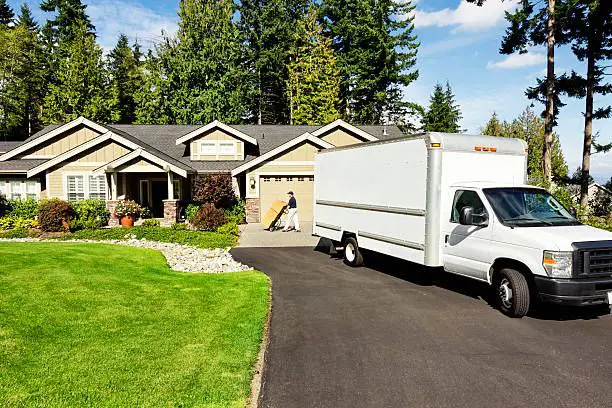
The Day My Mother Stole My House
The afternoon started like any other Tuesday. I’d left work early to pick up the final box of my belongings from my old apartment—mostly books and a few framed photos I hadn’t had the heart to pack until the last moment. The March sun was warm on my face as I drove through familiar streets toward the house I’d closed on just three weeks earlier. My house. The first space in my thirty-two years that was entirely, legally, undeniably mine.
I’d saved for six years for that down payment. Six years of saying no to vacations, to new clothes, to dinners out with friends. Six years of working overtime at the architectural firm where I’d started as a junior draftsperson and worked my way up to senior designer. Every dollar had been calculated, budgeted, sacrificed for.
The house itself wasn’t grand—a modest three-bedroom craftsman in a quiet neighborhood, with a front porch that needed painting and a backyard that was more weeds than grass. But it had good bones, southern exposure for the garden I planned to plant, and most importantly, it was mine. Not my mother’s. Not my sister’s. Mine.
I should have known that wouldn’t sit well with them.
When I pulled into the driveway, I noticed my mother’s silver sedan parked at an angle that blocked the garage. That was my first warning—Mom never visited unannounced. She believed surprises were beneath her, that proper people made appointments even with family. The second warning was the unfamiliar car behind hers, which I later learned belonged to the locksmith she’d hired.
I grabbed my box of books and walked up the front path I’d swept clean just that morning. The porch light I’d installed myself over the weekend gleamed in the afternoon sun. I reached for my keys, already thinking about where I’d shelve these last books, when I noticed the doorknob looked different.
The old brass finish I’d been planning to replace was gone. In its place sat a new deadbolt—shiny, silver, and completely unfamiliar.
My hand froze halfway to the lock.
Before I could process what I was seeing, the door swung open from the inside.
My mother stood in the doorway like she owned it. Like she belonged there and I was the intruder.
“Mom?” My voice came out uncertain, still trying to make sense of the situation. “What are you doing here? Did something happen?”
She didn’t answer right away. Instead, she stepped fully onto the porch, positioning herself between me and my own front door. Her arms crossed over her chest in that particular way she had—the stance she took when she’d made a decision and considered the matter closed.
“Leave,” she said. Not asked. Not suggested. Commanded. “This is your sister’s home now.”
For a second—maybe two—I genuinely thought I’d misheard her. My brain couldn’t process those words in that order, couldn’t make them mean what they obviously meant. Because who says something like that? Who changes the locks on a home they don’t own and tells the actual owner to leave?
But my mother wasn’t joking. There was no hint of humor in her expression, no suggestion that this was some kind of test or lesson or twisted birthday surprise I’d somehow forgotten about.
She stood there, solid and certain, like she was delivering a verdict she’d already judged to be fair.
Behind her, movement caught my eye. My sister Brianna appeared in the doorway, leaning casually against the frame like she’d lived there for years instead of—apparently—approximately five minutes. She was twenty-seven, five years younger than me, and she wore my favorite cream cardigan. The one I’d spent an entire paycheck on three years ago, the one she’d “borrowed” for a date and never returned. Seeing her in it now, in my house, felt like a preview of what they had planned.
In her right hand, she dangled a set of keys. My keys. Or rather, the new keys to my new locks.
The metal caught the light as she swung them lazily back and forth, like a hypnotist’s pendulum or a taunt.
“Mom,” I said again, slower this time, trying to keep my voice level. “What did you do?”
My mother’s expression didn’t shift. If anything, it hardened. “You’ve always been selfish,” she said, and her voice cut through the warm afternoon air like a blade. “This house is better for Brianna. She needs stability right now. You’ll survive anywhere—you always do.”
The casual cruelty of it took my breath away. Not because I wasn’t used to her favoritism—I’d lived with that my entire life—but because she genuinely seemed to believe she was doing something reasonable. Something necessary. Something I should understand and accept.
I looked at the house behind her. The house I’d toured six times before making an offer. The house I’d had inspected, negotiated for, signed a mountain of paperwork to purchase. The house I’d spent three weeks slowly moving into, arranging furniture, hanging curtains, making into a home.
“I bought this house,” I said, and my voice was steadier than I felt. “My name is on the deed. The title. The mortgage. This isn’t up for debate.”
Brianna pushed off from the doorframe and stepped forward, pulling a paper from her back pocket with theatrical flair. She unfolded it with exaggerated care and waved it in my face like she was presenting evidence in court.
“Lease agreement,” she announced brightly, her smile wide and satisfied. “See? You’re just staying here. Mom and I already signed it. You’re technically my tenant now. So if you could just—”
I took the paper from her hand before she could finish.
It was printed on standard computer paper, the kind you buy in bulk at office supply stores. The header said “RESIDENTIAL LEASE AGREEMENT” in bold Times New Roman font—probably copied from a template someone found online. The margins were wrong. The formatting was inconsistent. And there, at the bottom, were three signatures.
One supposedly mine.
I stared at my own name, written in handwriting that was close to mine but not quite right. The loops were too big. The angle was wrong. It looked like someone had traced my signature from an old birthday card or check, trying to replicate the movement without understanding the natural flow of how I actually wrote.
The date was listed as two months ago—before I’d even closed on the house. Before I legally owned it. The address was wrong, missing the unit designation that didn’t exist because this was a single-family home. The terms were absurd, claiming I’d agreed to pay month-to-month rent to Brianna for a property I owned.
It wasn’t just fake. It was insultingly fake.
I looked up at my sister, then at my mother. “This isn’t legal. You know that, right? This wouldn’t hold up anywhere. It’s not notarized. It’s not witnessed. The signature isn’t even mine.”
My mother’s jaw tightened. “It doesn’t matter. Brianna needs this house more than you do. She’s going through a difficult time—”
“She’s always going through a difficult time,” I interrupted, and my voice finally carried an edge. “And I’m always supposed to fix it. Well, not this time.”
Brianna’s smile faltered slightly, but she recovered quickly. “Who’s going to believe you over both of us? Mom and I will both testify that you signed this willingly. That you agreed to let me live here. That you’re just changing your mind now because you’re—”
“Because I’m what?” I asked quietly.
She didn’t finish. She didn’t have to. The accusation hung in the air between us, familiar and tired: selfish, difficult, unreasonable, unwilling to help family.
I’d heard variations of it my entire life. Every time I’d set a boundary. Every time I’d said no to Brianna’s requests for money, for rides, for alibis, for coverage. Every time I’d prioritized my own needs over her wants, I’d been painted as the villain in our family’s ongoing drama.
My mother took a step forward, her voice dropping to that particular tone she used when she wanted to sound reasonable while saying something completely unreasonable. “We’re not trying to hurt you. We’re trying to help Brianna. She broke up with Marcus. She needs a fresh start. This house is perfect for her—close to downtown, good schools for when she has children someday—”
“She broke up with Marcus?” I repeated slowly. “That’s your justification for stealing my house? She broke up with her boyfriend, so she gets to take the home I saved six years to buy?”
“Don’t be dramatic,” Mom snapped. “No one’s stealing anything. We’re family. Family helps each other. Or did you forget that part when you moved out here without telling anyone?”
There it was. The real accusation. I’d bought a house twenty minutes from my old apartment, but apparently twenty minutes was too far. I’d made a major life decision without consulting them first. Without asking permission. Without considering how it might affect Brianna.
I’d committed the ultimate sin in my mother’s eyes: I’d lived my own life.
My hands trembled as I held the fake lease agreement. Part of me—the part that had been trained since childhood to keep the peace, to accommodate, to bend until I broke—wanted to back down. To find some compromise. To let this go and deal with it later, privately, quietly, without making a scene.
But another part of me, the part that had spent six years working overtime and skipping vacations and saying no to myself over and over again so I could have this one thing, refused to bend.
I stepped back, pulled out my phone, and sent a single text to two contacts I’d established the week after I closed on the house:
“Turn on the cameras. Call the lawyer.”
My mother’s eyes narrowed. “What are you doing?”
I didn’t answer. I just waited for the confirmations to come through.
The first response was almost immediate: “Cameras active. Recording now.” That was from Marcus Chen, the security company technician who’d installed my home system two weeks ago. Four cameras, covering every entrance and the main living spaces. All connected to cloud storage. All time-stamped and archived.
The second response took thirty seconds longer: “On my way. Don’t engage further.” That was from Patricia Morrison, the real estate attorney who’d handled my closing and whom I’d kept on retainer for exactly this kind of situation. Because I’d known—somewhere deep down, I’d known—that my family wouldn’t accept my independence gracefully.
My mother laughed. It was a sharp, brittle sound that held no humor. “Oh, look at you,” she said mockingly. “Acting important. Sending your little texts. Thinking you’re in control.”
Brianna smirked, twirling my keys around her finger. “Who are you going to call, exactly? What lawyer is going to take you seriously when we have a signed lease agreement and you’re just a bitter—”
“The cameras have been recording since you broke into my house,” I said calmly, cutting her off. “They recorded you changing the locks. They recorded this entire conversation. And my lawyer will have the footage within the hour.”
The smirk fell from Brianna’s face. “You’re bluffing.”
“Am I?”
My mother’s expression shifted from certainty to something else. Not quite worry, not yet, but a crack in her armor. “You put cameras in your house without telling us?”
“I put cameras in my house because it’s my house,” I said evenly. “Because I own it. Because I have every legal right to protect my property from anyone who might try to—” I gestured at the new deadbolt, at the keys in Brianna’s hand, at the absurd fake lease, “—do exactly this.”
For the first time, neither of them had an immediate response.
They looked at each other, and I saw calculation happening behind their eyes. They were trying to figure out if I was bluffing. Trying to gauge whether the cameras were real, whether the lawyer was real, whether any of this would actually matter.
They turned away from me, walking back into my house like they owned it. Brianna dangled the keys as she went, her small act of defiance, her way of showing she wasn’t intimidated.
But I saw her hand shake slightly as she reached for the door.
I stayed on the porch and looked at my mother. Really looked at her. At the woman who’d raised me, who’d taught me to be strong and independent and self-sufficient, and who apparently saw those qualities as threats rather than accomplishments.
“Are you sure?” I asked softly. One last chance. One final opportunity for her to walk this back, to admit this had gone too far, to choose me for once instead of Brianna.
My mother met my eyes. Her smile was cold and didn’t reach anywhere near her eyes. “Yes.”
She said it without hesitation. Without doubt. Without any apparent awareness that she was choosing sides in a war she’d started.
I nodded slowly, something settling in my chest. Not quite peace, not quite resolution, but a kind of grim understanding.
“Okay,” I said quietly.
Because what I was about to reveal wouldn’t just take my house back.
It would expose my entire family.
The Foundation of Lies
What my mother didn’t know—what neither of them knew—was that I’d been documenting everything for years.
Not because I’d expected this specific situation. I’d never imagined they’d literally try to steal my house. But I’d learned over time that my family operated on revisionist history. Conversations I remembered clearly would be flatly denied. Agreements we’d made would suddenly never have existed. Money I’d loaned would become gifts I’d freely given.
So I’d started keeping records.
Every text message saved and backed up to cloud storage. Every email archived. Every loan documented with timestamps and written acknowledgments. Every time Brianna borrowed money “just this once” and promised to pay me back, I had records.
Three years ago, when Brianna asked me for $2,000 to cover her rent because Marcus had lost his job, I’d Venmo’d the money with a note: “Loan for April rent—to be repaid by July.” She’d sent back a heart emoji and a promise. The money never came back. When I brought it up months later, Mom told me I was “petty for keeping track” and that “family doesn’t charge interest.”
I never said anything about interest. I just wanted my money back.
Two years ago, when Brianna totaled her car and needed $5,000 for a down payment on a new one, I’d written a check. Before handing it over, I’d asked her to sign a simple agreement: “I, Brianna, acknowledge receiving $5,000 from my sister as a loan, to be repaid in monthly installments of $200 beginning next month.” She’d rolled her eyes but signed it. Mom had witnessed it, shaking her head at my “lack of trust.”
Brianna made three payments total. Then the texts started: car trouble, medical bills, work was slow. Then the texts stopped. When I asked about the remaining $4,400, Mom accused me of being “cruel” and said, “She’s struggling. Can’t you be more understanding?”
I documented every excuse. Every promise. Every time Mom took Brianna’s side and painted me as the heartless banker of the family.
Last year, when Brianna asked to stay with me “for a few weeks” after another breakup, I’d agreed—with clear boundaries. I’d sent her a detailed text outlining expectations: no guests without notice, sharing household expenses, and a firm move-out date of six weeks. She’d replied: “Obviously! Thank you so much!”
She stayed for four months. She never paid a dime toward utilities. She had friends over constantly. When I finally asked her to leave, she told Mom I was “kicking her out on the street” and Mom called me at work to yell at me about family loyalty.
I had every text. Every boundary I’d set. Every agreement Brianna had made and broken.
And now, standing on the porch of my own home while they celebrated inside, I realized all that documentation was about to become very important.
My phone buzzed. Patricia: “15 minutes out. Do NOT enter the property. Do NOT engage in physical confrontation. Document everything from the outside.”
I responded: “Understood.”
Another buzz. Marcus: “Cameras show two subjects inside. One is going through rooms opening drawers and cabinets. Recording everything. Police?”
I thought about that. Did I want to call the police? Did I want this to escalate to criminal charges?
Part of me did. Part of me wanted them arrested, fingerprinted, charged with breaking and entering, forced to explain to a judge why they thought they could steal someone’s house.
But another part of me—the part that still carried thirty-two years of family history—wanted to give them one more chance to walk away before this became permanent.
I typed back: “Hold on police. Lawyer coming first. Keep recording.”
Through the front window, I could see Brianna walking through my living room like she was taking a tour. She picked up the framed photo of me and my grandmother—Gran who’d died two years ago, who’d left me her silver jewelry box that I kept on my dresser upstairs. Brianna studied the photo, then set it face-down on the table.
That small gesture told me everything I needed to know about her intentions. She wasn’t just taking my house. She was erasing me from it.
Mom appeared in the window, phone pressed to her ear. She was talking to someone, gesturing animatedly. Probably calling other family members, spinning her version of events, building her narrative before I could defend myself.
I pulled out my own phone and opened the voice recorder app. Pressed record. Then I knocked on the door—my door—and waited.
Brianna opened it with a smirk. “Did you forget something? Oh wait—you forgot that this isn’t your house anymore.”
“I’m recording this conversation,” I said clearly. “For legal documentation. Can you please explain why you and Mom changed the locks on my house?”
The smirk faltered. “You can’t record me without permission.”
“Actually, I can. Florida is a two-party consent state for phone calls, but I can record any conversation I’m personally a part of in person. But I’m telling you right now that I’m recording, so it’s not even a question. Now please answer: why did you change the locks on my house?”
Mom appeared behind Brianna. “Stop this nonsense. You’re embarrassing yourself.”
“Mom, on the record: do you acknowledge that I purchased this house three weeks ago? That I own it legally?”
She hesitated. “You bought a house, but—”
“But what?”
“But Brianna needs it more. You’re successful, you have a good job, you can buy another house. She’s struggling. This is perfect for her. Why are you being so selfish?”
Every word, recorded. Every excuse, documented. Every admission that they knew I owned it but were taking it anyway, preserved forever.
“So you’re aware I own this house, but you’re taking it from me because you’ve decided Brianna deserves it more?”
“Family takes care of family,” Mom said, her voice rising. “I don’t know what happened to you, but you used to understand that. You used to help your sister. Now you’re just—”
“I’ve loaned Brianna over $12,000 in the past three years. She’s repaid $600. I let her live with me rent-free for four months. I’ve helped her move four times. I’ve co-signed for her car. I’ve lied to her bosses when she needed fake sick days. So please tell me, specifically, how I don’t help family.”
Silence.
“And please tell me why helping family means giving up the house I saved for six years to buy?”
More silence.
“This conversation is being recorded,” I said again. “Along with the security camera footage showing you breaking into my home and changing the locks. My lawyer is on her way. So I’m going to ask you one more time: are you sure you want to do this?”
Mom’s face flushed red. “You’re threatening us? Your own mother?”
“I’m informing you that what you’re doing is illegal. Breaking and entering. Trespassing. Possibly fraud with that fake lease agreement. I’m giving you the chance to leave now, voluntarily, before this becomes a police matter.”
Brianna stepped forward, trying to reclaim some authority. “We have a signed lease. We have witnesses. You’ll never prove—”
“I’ll prove everything,” I said calmly. “Because unlike you, I document things. I keep records. I have six years of bank statements showing every deposit I made toward this down payment. I have the closing documents with my name—only my name—on the deed. I have the title, the mortgage, the inspection reports. I have text messages from both of you acknowledging this is my house. I have everything.”
That’s when I saw it: the first real flicker of doubt in my mother’s eyes.
“And that’s just about the house,” I continued. “Because I also have documentation of every loan Brianna never repaid. Every agreement she broke. Every time she stole from me and you told me to let it go. Three years of evidence that you might not want exposed if this goes to court.”
“You’re bluffing,” Brianna said, but her voice was weaker now.
“Am I?” I pulled out my phone, scrolled through my files, and held up the screen. “Here’s the Venmo transfer for $2,000 in April three years ago. Note says ‘Loan for April rent.’ Want to see the messages where you promised to pay me back? Want to see the messages where you stopped responding?”
Brianna’s face went pale.
“Here’s the signed loan agreement for $5,000 for your car. Mom witnessed it. Want to explain to a judge why you signed a legal agreement and then just… didn’t pay?”
Mom stepped back slightly.
“Here’s the text conversation where I set boundaries for you staying with me. Here’s where you agreed. Here’s four months of you violating every single boundary. Here’s the text where you called me a ‘controlling bitch’ for asking you to clean up after yourself.”
I lowered my phone and looked at both of them. “So here’s what’s going to happen. My lawyer is going to arrive in about ten minutes. You can either leave now, voluntarily, and we can try to have a conversation about why you thought this was acceptable. Or you can stay, we can call the police, and we can let a judge sort out who owns this house and who’s been systematically stealing from whom for years.”
The silence that followed was absolute.
Brianna looked at Mom. Mom looked at Brianna. Neither of them looked at me.
“Choose,” I said softly.
The Unraveling
They didn’t choose. They stood there in my doorway—blocking my entry to my own home—and seemed genuinely unable to process that their plan had failed before it even started.
I could see the calculations happening behind my mother’s eyes. She was running through scenarios, trying to find an angle that would let her maintain control of the narrative. Trying to figure out how to spin this so she was still the victim, still the wronged party, still the mother whose ungrateful daughter refused to help family.
But for once in my life, I wasn’t giving her that opening.
A car pulled up behind my mother’s sedan. Patricia Morrison stepped out—fifty-something, gray hair pulled into a severe bun, carrying a leather briefcase that looked like it cost more than my first car. She’d handled my house closing with brisk efficiency, and I’d kept her on retainer specifically because she had a reputation for not backing down.
She walked up my front path like she owned it, her heels clicking with authority.
“Ms. Morrison,” I said. “Thank you for coming.”
She nodded curtly, then looked at my mother and sister. “I’m Patricia Morrison, Ms. Richardson’s attorney. I’m informed that you’ve changed the locks on my client’s property without authorization. Is that correct?”
Mom straightened her spine, trying to reclaim some dignity. “I’m her mother. I was helping—”
“Is this your property?” Patricia interrupted.
“No, but—”
“Do you have legal ownership or any ownership interest in this property?”
“No, however—”
“Do you have written permission from the owner to change the locks or take possession?”
“There’s a lease agreement—”
“A lease agreement you and your daughter forged,” Patricia said flatly. “Which my client has photographed and documented. Which is fraud, by the way.”
Brianna’s face went white. “We didn’t forge anything—”
“You forged Ms. Richardson’s signature on a document claiming she agreed to rent property she owns to you. That’s textbook fraud.” Patricia opened her briefcase and pulled out a document. “This is a cease and desist letter. You have two hours to vacate the premises and return all keys. If you’re still here in two hours, we’ll file for an emergency restraining order and press criminal charges for breaking and entering, trespassing, and fraud.”
She handed the letter to my mother, who took it with shaking hands.
“Additionally,” Patricia continued, “any property damage, any items removed from the home, any changes made to the property—all of it is documented on security cameras and will be used in court. So I suggest you take nothing with you except the new locks you installed.”
She looked at me. “Do you want to press charges now, or give them the chance to leave?”
I looked at my mother. Really looked at her. Tried to find some hint of remorse, some recognition that she’d gone too far.
She was staring at the cease and desist letter like she couldn’t quite believe what she was reading.
“Mom,” I said quietly. “I’m giving you a choice I shouldn’t have to give you. Leave now. Give me my keys. And we can talk about this like adults. Or stay, and I call the police right now.”
“You would really do that?” she asked, and she sounded genuinely shocked. “You’d really call the police on your own mother?”
“You really broke into my house,” I replied. “You really changed my locks. You really tried to steal my home. So yes. I really will call the police if you don’t leave right now.”
Patricia pulled out her phone. “I’m calling from three… two…”
“Wait.” Brianna’s voice was small, defeated. She looked at Mom. “This isn’t working. We should go.”
“No,” Mom said firmly. “She’s bluffing. She won’t actually—”
“One.”
I pulled out my own phone and dialed 911.
The operator answered on the second ring. “911, what’s your emergency?”
“Hi, I need to report a breaking and entering,” I said clearly. “Two individuals broke into my home and changed the locks. I’m the homeowner. They’re currently occupying my property without permission. I have documentation of ownership and video evidence of the break-in.”
Mom’s face transformed. Pure rage. “Hang up that phone right now.”
“I’m at 847 Maple Street,” I continued, ignoring her. “The perpetrators are still inside. One is my mother, Carol Richardson. The other is my sister, Brianna Richardson. They—”
Mom lunged forward, trying to grab my phone. I stepped back smoothly, and Patricia moved between us with surprising speed for someone in three-inch heels.
“Do not touch her,” Patricia said, her voice cold steel. “That would be assault, which I will also document.”
The 911 operator’s voice came through my phone: “Ma’am, are you in immediate danger?”
“I’m safe right now,” I said. “But they’re refusing to leave my property.”
“Officers are being dispatched to your location. Stay on the line.”
That’s when it hit Mom—the reality that this wasn’t going away, that I wasn’t backing down, that her plan had completely collapsed.
“Fine,” she spat. “FINE. We’ll leave. But don’t you ever—EVER—ask me for help again. Don’t call. Don’t come to family dinners. Don’t act like you have a mother. Because as of right now, you don’t.”
The words should have hurt. They were designed to hurt. Weaponized rejection from the person who was supposed to love me unconditionally.
But standing there in front of the house I’d earned, with documentation of every lie they’d told and every theft they’d committed, I felt something unexpected:
Relief.
“Okay,” I said simply.
That clearly wasn’t the response she expected. She’d thrown her nuclear option, waiting for me to crumble, to apologize, to beg forgiveness. When I didn’t, she seemed to lose her remaining composure entirely.
“You’re pathetic,” she hissed. “You always were. So proud of your little job and your little house. Like you’re better than us. Like you’re so special. But you’re not. You’re just bitter and alone and you’ll die bitter and alone.”
Brianna started crying. Loud, dramatic sobs that I recognized from childhood—her standard manipulation technique when she wasn’t getting her way.
“Mom, let’s just go,” she said between sobs. “Please. The police are coming.”
Mom threw the keys at me. They hit my chest and fell to the porch. “I hope you’re happy,” she said. “I hope this house is worth losing your family.”
She turned and stormed down the front path, Brianna trailing behind her, still crying, still looking back like I might change my mind and call them back.
I didn’t.
I stood there with Patricia as they got in their cars and drove away. The 911 operator asked if they’d left, and I confirmed they had. She said officers would still come by to take a statement, and I thanked her.
Patricia looked at me with something that might have been approval. “You okay?”
“I think so.”
“That was well done. You kept your composure. You documented everything. You gave them multiple chances to leave peacefully.”
I picked up the keys from the porch. They were still warm from Brianna’s hand. “What happens now?”
“Now?” Patricia closed her briefcase. “Now you call a locksmith—again—and change these locks. Now you make sure you have copies of all that documentation you mentioned. Now you prepare for the fact that this probably isn’t over.”
“What do you mean?”
She sighed. “People like your mother don’t give up easily. They’ll spin this. They’ll tell everyone you kicked them out for no reason. They’ll play victim. They’ll try to rally family and friends to their side. You need to be prepared for that.”
I nodded slowly. “I have documentation.”
“Good. Keep it organized. Keep it accessible. And don’t delete anything, no matter how angry or hurt you get. Those messages, those texts, those records—that’s your protection.”
The police arrived twenty minutes later. I gave them my statement, showed them the fake lease agreement, provided screenshots of my ownership documents, and gave them access to the security camera footage. They took photos of the changed locks, documented everything, and asked if I wanted to press charges.
I hesitated.
“You have every right to,” one officer said. “This is clear breaking and entering. The fake lease is fraud. You have documentation of everything.”
“What would happen to them?”
“Depends on the prosecutor. Could be fines, probation, potentially jail time for the fraud. But that’s up to you.”
I looked at my house. My beautiful, hard-won house that I’d spent six years saving for.
“Not right now,” I said finally. “But I want it documented. In case they try again.”
“Smart,” the officer said. “We’ll file the report. You can always decide to press charges later if needed.”
After they left, I sat on my porch and cried. Not from sadness, exactly. More from the overwhelming weight of everything that had just happened, everything that had been building for years, all coming to a head in one terrible afternoon.
Patricia had waited. She sat down next to me, completely un-lawyerly in that moment, and handed me a tissue.
“For what it’s worth,” she said, “you did the right thing. Family doesn’t give you the right to steal. Love doesn’t give you permission to violate boundaries. You earned this house. You deserve it. Don’t let them make you doubt that.”
I nodded, wiping my eyes. “Thank you.”
“I’ll send you my bill,” she said with a slight smile. “Which, given that I drove here on twenty minutes’ notice to serve a cease and desist letter, will not be small.”
I laughed despite everything. “Worth every penny.”
After she left, I sat on my porch until the sun began to set. I thought about calling friends, explaining what happened, seeking comfort and validation.
But I didn’t. I just sat there, in front of my house, and let myself feel everything I’d been holding back for years.
The Aftermath
The first message came three hours after they left. It was from my aunt Linda, Mom’s older sister:
“I can’t believe what your mother just told me. How could you treat her and Brianna that way? After everything they’ve done for you?”
I didn’t respond.
Then my cousin James: “Really disappointed in you. Family is supposed to come first.”
Then my uncle Robert: “Your mother is devastated. You should be ashamed.”
Then more cousins, more relatives, more family friends I hadn’t spoken to in years. All of them hearing Mom’s version: poor Carol, trying to help her struggling younger daughter, only to be cruelly kicked out by her selfish older daughter who couldn’t be bothered to share.
None of them asked for my side.
None of them asked what actually happened.
They just accepted Mom’s narrative as truth and lined up to tell me what a terrible person I was.
I sat on my couch—in my house, on my furniture, surrounded by my things—and felt the full weight of being cut off from everyone I’d known my entire life.
It should have felt worse.
But instead, I felt… lighter.
Because for the first time in thirty-two years, I wasn’t performing. I wasn’t managing anyone’s emotions. I wasn’t trying to keep peace or smooth things over or make myself smaller so everyone else could be comfortable.
I was just… existing. In my own space. On my own terms.
My phone rang. Unknown number. I let it go to voicemail.
The message was from my father—a man I hadn’t heard from in five years, who’d left when I was twelve and Brianna was seven, who sent birthday cards with twenty-dollar bills inside like that compensated for his absence.
“Hey, it’s Dad. Your mother called me, which, you know, hasn’t happened in years. She says you’re having some kind of breakdown, being really unreasonable about this house thing. I don’t want to get in the middle of anything, but maybe you should reconsider? Family’s important, kiddo. Don’t burn bridges you can’t rebuild.”
I deleted the message.
Then I blocked his number too.

Adrian Hawthorne is a celebrated author and dedicated archivist who finds inspiration in the hidden stories of the past. Educated at Oxford, he now works at the National Archives, where preserving history fuels his evocative writing. Balancing archival precision with creative storytelling, Adrian founded the Hawthorne Institute of Literary Arts to mentor emerging writers and honor the timeless art of narrative.