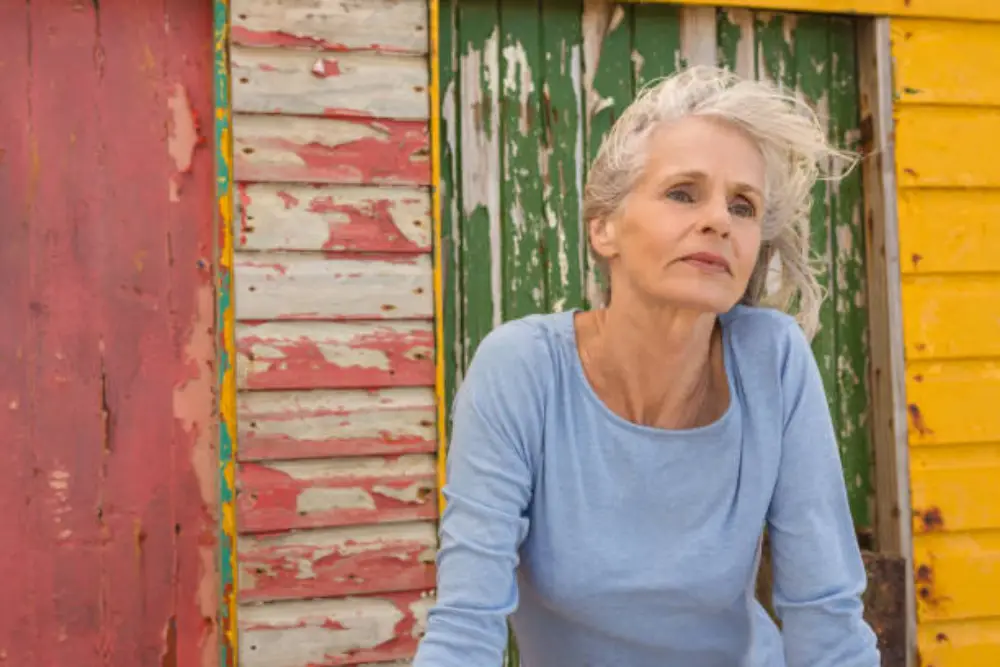
I didn’t think grief could have a schedule, but it did. It showed up the moment the attorney cleared his throat in that quiet office in Helena, the kind with leather chairs that squeak when you shift your weight and framed mountain prints meant to look calming but only remind you how small you are.
“The family residence and all associated assets will go to your daughter, Sophia Reynolds Blackwell.”
Sophia squeezed her husband Nathan’s hand like she’d just won the lottery. I kept my face still, trained into blankness by forty-two years of marriage to Frank Reynolds, a man who’d built an accounting empire on discretion and taught me how to swallow emotion and smile anyway. The Helena mansion—five bedrooms, chef’s kitchen, the kind of place featured in Montana Living magazine—would be hers. The investment portfolio. The Mercedes. Everything we’d built together, gone to our only child in one clean stroke.
Then the attorney, a thin man named Caldwell with wire-rimmed glasses, looked directly at me.
“And to my wife, Abigail Reynolds, I leave my recently acquired property in Montana near Glacier National Park.”
The silence that followed felt thick enough to cut. Sophia blinked rapidly, like she’d misheard. Nathan’s mouth twitched, caught somewhere between a smile and something that looked dangerously close to pity. Nobody asked if I was okay, because nobody needed to. A “property in Montana” sounded like the consolation prize you gave someone to keep them quiet, to make the will look fair when everyone knew it wasn’t.
“There’s also this,” Caldwell said, sliding a sealed envelope across his desk toward me. “Mr. Reynolds specified this was to be given to you privately, but given the circumstances…” He glanced at Sophia, then back to me. “It’s your choice when you open it.”
I took the envelope with hands that didn’t quite feel like mine anymore. It was cream-colored, expensive paper, with my name written in Frank’s careful accountant’s script. I slipped it into my purse before Sophia could ask what it said.
Outside the office, the September wind carried the first bite of autumn. Nathan helped Sophia into their Range Rover while I stood by my modest sedan—the car Frank had insisted I keep even after he bought Sophia her first luxury vehicle.
“Well,” Sophia said through her open window, her voice pitched in that bright, false way she uses at charity luncheons, “I suppose you’ll want to stay with us for a while, Mom. Just until you get your feet under you.”
It wasn’t really a question.
Two weeks later, I understood exactly what “staying with them” meant. I’d been moved into the guest room—not my old bedroom, but the small one at the end of the hall with the view of the garage. My wedding photo disappeared from the mantle. The silver-framed picture of Frank and me on our honeymoon, replaced by one of Sophia and Nathan at some gala.
I was expected to cook breakfast, clean up after dinner, and vanish whenever their friends arrived with expensive wine and polished laughter. I became a ghost in the house where I’d raised my daughter, folding myself smaller and quieter with each passing day.
One night, after I’d loaded the dishwasher with plates I’d scrubbed by hand first—because that’s how my mother raised me, and some habits die harder than hope—Nathan cornered me in the kitchen. He was swirling whiskey in a crystal tumbler that used to sit in Frank’s study, the Waterford one I’d given him for our twentieth anniversary.
“This isn’t working, Abigail,” he said, like he was talking about a bad contractor or a broken appliance.
I kept my hands busy wiping down the granite countertops, the ones I’d helped choose when we renovated five years ago. “I’m trying to stay out of your way.”
He leaned against the counter, blocking my path to the sink. “Frank knew exactly what he was doing when he wrote that will. He left you that property because you’re too weak to make it on your own. He was giving you a place to… hide.”
The word stung more than it should have. Before I could respond, Sophia walked in wearing silk pajamas that cost more than my monthly grocery budget used to be.
For one heartbeat, I waited for her to defend me. To tell her husband he was wrong, that I’d raised her, sacrificed for her, loved her father through thick and thin.
Instead, she sighed like I was the problem she’d been managing her whole life.
“Mom…” She glanced at Nathan, then back to me with practiced patience. “We think it’s best if you go see the Montana property. Really see it. Maybe it’s time you learned to stand on your own two feet. You’ve been dependent on other people your whole life—first Dad, now us.”
The casual cruelty of it took my breath away. I’d put her through college. Paid for her wedding when Frank was building the business. Babysat her dogs when she traveled to Europe. And this was how she saw me—dependent, weak, a burden.
“I see,” I said quietly, setting down the dishcloth with hands that had started to shake.
“It’s not personal,” Nathan added, though his eyes said it absolutely was. “We’re trying to help you grow.”
The next morning, my suitcases appeared in the hallway like eviction notices. Nathan handed me an envelope containing directions printed from MapQuest, a key that looked like it might crumble in my hand, and a smile that said he’d finally gotten rid of old furniture he’d been too polite to throw away.
“Don’t come back until you can support yourself,” he said. “We’re not running a charity.”
Sophia stood behind him, checking her phone, not quite meeting my eyes.
At sixty-eight years old, I drove out of Helena in my modest sedan, a box of tissues in the cup holder and my heart lodged somewhere behind my ribs where it couldn’t quite beat properly. The highway stretched endlessly through open sky and long miles of lodgepole pine, past gas stations with buzzing neon signs and small-town diners that smelled like coffee and fried eggs and simpler times.
I stopped once, in a place called Choteau, where a waitress with kind eyes refilled my coffee without asking if I was okay. I wasn’t. But I thanked her anyway.
Frank’s sealed envelope sat in my purse, still unopened. I wasn’t ready yet. Wasn’t ready to read his final words while sitting alone in some roadside diner, falling apart in front of strangers.
By the time I turned onto the last unpaved road, following directions that took me deeper into wilderness than I’d ever been, my hands ached from gripping the wheel. The autumn sun was sinking behind the mountains, painting everything in shades of amber and shadow.
When the cabin finally appeared through the trees, it looked exactly like Nathan wanted it to look—like proof that I’d been left nothing. The porch sagged in the middle. Shingles were missing from the roof. Windows were either cracked or boarded up with plywood. A rusted pickup truck sat in the overgrown grass like a monument to abandonment.
This was what my marriage had been worth. This was what forty-two years had earned me.
I sat in the car for a long time, watching the cabin grow darker as the sun disappeared. Then I whispered Frank’s name like it might steady me, grabbed my purse, and forced myself out into the cooling evening air.
The key Nathan had given me barely fit the lock. For a terrible moment, I thought it was the wrong key entirely, that this was some final joke. Then the lock turned with a grinding sound, and I pushed.
The hinges complained as the door opened. I fumbled along the wall for a light switch, bracing myself for dust and ruin and proof that I’d been forgotten.
The lights flickered on.
And I froze in the doorway, because the inside didn’t match the outside at all.
The room before me was beautiful. Warm honey-colored wood floors caught the light from recessed fixtures. A stone fireplace dominated one wall, with fresh logs stacked beside it. The furniture was new—a deep leather sofa, handcrafted tables, thick rugs in rich earth tones. The kitchen gleamed with stainless steel and granite countertops. Through an open doorway, I could see a bedroom with a massive bed covered in a quilted comforter.
But it was the dining table that made my breath catch.
Because someone had been here recently. Recently enough that the air still felt warm with it.
Papers were spread across the polished surface. A coffee mug sat beside them, still containing a cold half-inch of liquid. A laptop computer, closed but clearly expensive. A leather briefcase with gold initials: F.R.
Frank’s briefcase. The one I’d given him fifteen years ago.
My legs felt unsteady as I walked closer. The papers were documents—legal documents, financial statements, property deeds. I recognized Frank’s handwriting in the margins, notes and calculations in his precise accountant’s script.
Then I saw the photograph tucked under the corner of the laptop.
It was us. Frank and me, taken maybe ten years ago at Glacier National Park. We were standing at the edge of a pristine lake, mountains reflected in the water behind us. I remembered that day. We’d driven up on a whim, played hooky from responsibilities, laughed like we were young again. Frank had his arm around my waist, and I was looking up at him with an expression that made my chest ache now—pure, uncomplicated happiness.
Beneath the photograph was a sticky note in Frank’s writing: “Remember this, Abby. This is what I was building toward.”
My hands trembled as I picked up the nearest document. It was a property deed, dated six months before Frank’s death. He’d purchased this land—160 acres of pristine Montana wilderness—and built this cabin. Not the ruin on the outside, but this sanctuary on the inside.
Another document caught my eye: a construction invoice marked “PAID IN FULL.” The contractor’s name was listed as Mitchell & Sons, Columbia Falls. They’d been paid to make the exterior look abandoned while creating this beautiful interior. Deliberately deceptive.
Why?
I opened the laptop, half expecting it to be password protected. But it opened immediately to a video file on the desktop labeled “For Abby.”
My finger hovered over the trackpad. Then I clicked.
Frank’s face filled the screen. He looked thin, tired—this must have been recorded in his final weeks. But his eyes were clear, and when he smiled, it was the smile I’d fallen in love with fifty years ago.
“Hello, sweetheart,” he said, and I started crying before he finished the sentence.
“If you’re watching this, then everything went according to plan. I know that sounds cryptic, but I need you to understand something, Abby. I’ve been watching our family for a long time. Watching Sophia change. Watching Nathan’s influence. Watching you get smaller and quieter, trying so hard not to be a burden.”
He paused, looking directly into the camera with an intensity that felt like he could see me.
“This cabin is my gift to you, but it’s more than shelter. It’s freedom. The exterior is designed to look worthless—Nathan and Sophia needed to believe you inherited nothing. But the interior? This is what I was building while I still could. This is your place, Abby. Yours alone.”
Frank reached off-screen and held up more documents.
“You’ll find everything you need in the briefcase. First, the property deed in your name only. Second, a bank account I set up five years ago—it’s been growing quietly, and it’s substantial. Enough to live comfortably for the rest of your life. Third, documentation of certain… financial arrangements regarding the Helena house and assets.”
His expression grew serious.
“Here’s what Sophia and Nathan don’t know: the Helena house was already mortgaged to the hilt when I ‘left it’ to them. I made some very specific investment decisions in the last two years—risky ones that I knew would fail. The portfolio they inherited? It’s worth about forty percent of what they think. They’ll discover this in about six months when the quarterly reports come in.”
I pressed my hand over my mouth, torn between shock and something that felt dangerously close to admiration.
“I know how that sounds,” Frank continued. “But Abby, I couldn’t leave you at their mercy. I couldn’t give them the power to control and demean you. So I built you this instead—a place where you’re beholden to no one. The money I transferred to your account came from legitimate sources they have no claim to. It’s yours, free and clear.”
He leaned closer to the camera.
“You’re not weak, Abigail Reynolds. You never were. You were kind, and generous, and loyal. You bent, but you never broke. But now I need you to stand up straight again. Live here. Find yourself again. Remember who you were before you learned to make yourself small.”
The video ended with Frank blowing me a kiss, the way he used to do when he left for work in the mornings.
I sat in the silence of that beautiful cabin, tears streaming down my face, and felt something shift in my chest. Not just grief, though that was there too. But something else. Something that felt like the first full breath I’d taken in years.
The briefcase contained exactly what Frank had promised. The property deed listed 160 acres with water rights and mineral rights—worth a small fortune in this area. The bank statements showed an account with more money than I’d ever imagined having in my name. And there were other documents too: evidence that Frank had been systematically protecting me while appearing to favor our daughter.
A letter from the construction company confirmed they’d been paid to make the cabin’s exterior appear dilapidated while building a high-quality interior with solar panels hidden on the back roof, a well system, propane heat, and modern insulation. Frank had thought of everything.
There was one final envelope, sealed with wax. Inside was a handwritten letter.
My dearest Abby,
If you’re reading this, then you’ve been hurt. I’m sorry I couldn’t prevent that. But I hope you understand why I had to let it happen this way.
I needed Sophia and Nathan to reveal themselves. I needed you to see clearly what I’d been seeing for years—that they’d forgotten your worth. That they’d started to see you as an obligation instead of the remarkable woman who raised an ungrateful daughter and loved a difficult man.
This cabin is situated on land that will only increase in value. The area is slated for development, but your property has protected status due to the creek running through it. In five years, this land will be worth ten times what I paid. But that’s not why I bought it.
I bought it because I remembered that day we came to Glacier, just the two of us. You stood on that trail and said you’d never felt more at peace. You said if you could live anywhere, it would be somewhere like this—mountains, trees, silence.
I built this for you, Abby. But I also built it to teach you something: you don’t need them. You never did.
Live well, my love. Live freely. And if Sophia ever realizes what she lost, make her earn her way back into your life.
Forever yours,
Frank
I folded the letter carefully and held it against my heart.
That night, I lit a fire in the stone fireplace and slept in the massive bed under the quilted comforter. Through the window, I could see stars scattered across the sky like diamonds spilled on black velvet. The silence was profound—no traffic, no voices, just wind in the pines and the distant call of an owl.
I slept better than I had in months.
The next morning, I explored the property. The cabin sat in a clearing surrounded by old-growth forest. A creek ran along the eastern boundary, clear and cold. The hidden solar panels Frank had installed generated more power than I could use. The pantry was stocked with basics, and I found a note from Frank explaining that Mitchell & Sons had been paid to check on the place monthly until I arrived.
I was standing on the real porch—not the sagging facade but the sturdy structure hidden behind it—when my phone finally got signal and buzzed with messages. Three from Sophia, each progressively more irritated that I hadn’t called.
I didn’t respond.
Instead, I drove to the small town of Columbia Falls and introduced myself at Mitchell & Sons Construction. The owner, Jack Mitchell, was a weathered man in his sixties who smiled when I gave my name.
“Mrs. Reynolds. Frank said you’d come eventually. How’s the place treating you?”
“It’s perfect,” I said. “I wanted to thank you for taking care of it.”
“Frank was good people,” Jack said. “Paid us well, treated us with respect. He loved you a lot—talked about you all the time while we were building. Said he was creating a sanctuary for the strongest woman he’d ever known.”
Those words settled into my bones like warmth.
Over the following weeks, I made the cabin my own. I bought supplies in Columbia Falls, where shopkeepers began to know my name. I joined a book club at the local library. I volunteered at a food bank. I learned to split wood and fix a leaky faucet and navigate the long winter nights with books and fire and peace.
Sophia called twice more, then stopped. I didn’t call back.
Six months after I’d arrived, I received a frantic call from Nathan.
“Abigail, we need to talk about Frank’s estate. There’s been a… miscalculation. The portfolio isn’t what we thought. And the mortgage on the house—did you know about this?”
“No,” I said honestly. “Frank handled the finances.”
“We might need to sell,” Nathan said, and I could hear the panic under his controlled tone. “The market isn’t good right now. We’re going to take a loss.”
“I’m sorry to hear that,” I said, and meant it—sort of.
“That property you inherited—have you considered selling? The land alone might be worth something. We could split—”
“No,” I said firmly. “This is my home now.”
The silence on the other end felt heavy with things unsaid.
“I see,” Nathan finally said. “Well. I hope you’re managing okay out there. Alone.”
I looked out the window at the mountains, at the creek catching morning light, at the life I’d built from the ruins of the old one.
“I’m not alone,” I told him. “I have everything I need.”
I hung up before he could respond.
Spring came to Montana with a rush of green and wildflowers carpeting the meadows. I planted a garden. I befriended my neighbors, including a widow named Margaret who lived five miles down the road and shared my love of quilting. I learned the names of birds and identified animal tracks in the snow and remembered what it felt like to wake up without dread.
One afternoon in May, I received a letter from Sophia. Not an email, not a text, but a real letter on cream-colored stationary.
Dear Mom,
I’ve been thinking a lot lately about how things ended between us. Nathan and I are separating—he’s not who I thought he was. We’re selling the house. Downsizing.
I’ve been reflecting on the last few years, and I’m ashamed of how I treated you. You deserved so much better. You were there for every important moment of my life, and I repaid you with cruelty.
Dad left me a voicemail before he died. I only listened to it recently. He told me he hoped I’d learn the difference between wealth and value, between appearing successful and actually being a good person. He said he was leaving you the real treasure, and that if I was smart, I’d figure that out before it was too late.
I don’t expect forgiveness. I don’t deserve it. But I wanted you to know that I finally understand what he meant.
If you’re willing, I’d like to visit. To see where you are now. To try to be the daughter you deserved all along.
I love you, Mom. I’m so sorry it took me this long to remember how.
Sophia
I read the letter three times, sitting on my porch with coffee growing cold in my hands.
Frank had given me more than a cabin. He’d given me the power to choose—to decide who deserved access to this life I’d built, this peace I’d found.
I picked up a pen and began to write back.
Dear Sophia,
You’re welcome to visit. But understand this: I’m not the mother you remember. I’m not the woman who disappeared to make room for everyone else. This is my home, my life, my terms.
If you come, come ready to see me clearly. Come ready to know me again, not the ghost you tried to turn me into.
There’s a guest room here. It’s waiting for you.
Mom
I sent the letter and didn’t check my phone for three days.
When Sophia finally arrived in early June, she drove up in a modest Honda, not the Range Rover I remembered. She looked smaller somehow, standing beside her car with an uncertain expression as I walked out to meet her.
“Mom,” she said, and her voice cracked.
I didn’t rush to hug her. Instead, I took a long look at my daughter—really looked at her—and saw something I hadn’t seen in years: vulnerability. Uncertainty. Regret.
“Come inside,” I said. “I’ll make coffee.”
We sat at Frank’s dining table, the one where I’d discovered his final gift to me. Sophia cried. Apologized. Explained how Nathan had isolated her from old friends, how she’d lost herself trying to impress people who didn’t matter, how she’d been so focused on appearing successful that she’d forgotten what actually mattered.
I listened. Didn’t absolve her, didn’t punish her. Just listened.
“Dad knew,” she said finally. “He knew I’d have to lose everything to find myself again.”
“He loved you,” I told her. “But he loved me too. And he knew I needed to remember that loving you didn’t mean losing myself.”
Sophia stayed for a week. We cooked together, hiked the trails, sat by the fire at night. We didn’t solve everything—some things take more than a week to heal. But we started.
When she left, she hugged me tight.
“I’ll come back,” she said. “If you’ll have me.”
“We’ll see,” I said, not quite ready to promise anything yet.
I stood on my porch and watched her drive away, disappearing down the dusty road. Then I turned back to my cabin—my sanctuary, my freedom, my proof that I’d never been weak, only kind.
Frank had left me the real inheritance after all. Not just money or land, but the chance to remember who I was. The chance to stand up straight again.
I walked inside, closed the door, and felt the deep, abiding satisfaction of being exactly where I was meant to be.
Home.

Adrian Hawthorne is a celebrated author and dedicated archivist who finds inspiration in the hidden stories of the past. Educated at Oxford, he now works at the National Archives, where preserving history fuels his evocative writing. Balancing archival precision with creative storytelling, Adrian founded the Hawthorne Institute of Literary Arts to mentor emerging writers and honor the timeless art of narrative.