The Last Call
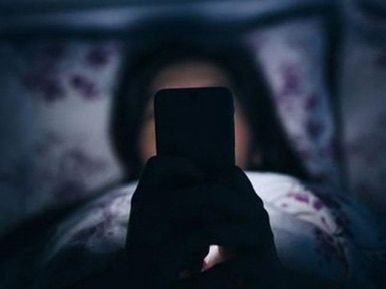
My phone lit up at 2:14 a.m. Thirty-five missed calls. One text message. I stared at the screen in the darkness of my bedroom, my heart already knowing what my mind didn’t want to accept.
My name is Isabella. I’m thirty-four years old, and I live alone in a small apartment above a coffee shop in a town whose name my family doesn’t know. For ten years, I’ve built a life where nobody yells my name like an accusation, where my bank account is mine alone, where the only person I’m responsible for saving is myself. My walls are painted soft cream. My sheets are crisp and white. Everything in my space is deliberate, chosen, mine.
It took me a long time to believe I deserved this kind of peace.
The phone buzzed again. Another call. I watched my mother’s name flash across the screen and felt that old, familiar pull in my chest—the one that used to make me answer, make me help, make me fix everything even when it broke me in the process. But tonight, I just watched it ring. And ring. And ring.
When it finally stopped, I opened the text message.
“It’s an emergency. It’s your sister.”
Four words. After ten years of silence, four words were supposed to be enough to pull me back into their orbit.
I set the phone face-down on my nightstand and stared at the ceiling. Sleep was impossible now. Not because I was worried—I’d learned to stop worrying about them years ago—but because I knew exactly why they were calling. And this time, I was ready.
In my family, roles were assigned early and enforced absolutely. I was “the strong one.” The responsible one. The plain, brown-haired girl who did her homework without being asked, took the bus without complaining, brought home report cards full of A’s and never, ever asked for anything in return.
My sister Elina was “the princess.” Three years younger, blonde where I was brunette, delicate where I was sturdy, struggling where I was succeeding. She needed help with everything—her homework, her chores, her emotions, her life. And I was taught that helping her wasn’t just expected; it was my purpose.
“Give your sister the last cookie, Isabella. You’re the strong one.”
“Let Elina use your colored pencils. You know she’s sensitive about these things.”
“Do her chores this week. She’s had a hard time at school.”
I gave her the last cookie. I gave her my art supplies, my Saturday mornings, my allowance. I did her chores and helped with her homework and listened to my mother explain, over and over, that this was what good girls did. Strong girls. Selfless girls.
I believed her. For years, I believed that my worth was measured in what I could give away.
The things I gave up started small—cookies and spare change and hours of my time. But as we grew older, the sacrifices grew too. At sixteen, I’d saved two years’ worth of babysitting money for a used car. The morning I was supposed to go look at it, my father sat me down at the kitchen table with an expression I’d seen a hundred times before.
“Your sister had an accident with her scooter,” he said, not quite meeting my eyes. “Hit the neighbor’s fence. We need to pay for repairs before they get lawyers involved.”
My car fund. All of it. Gone in an afternoon to fix a fence that Elina destroyed because she’d been texting while riding, because she never paid attention, because she never had to face consequences.
“We’ll pay you back,” my mother promised. But we both knew it was a lie.
When it came time for college, I commuted an hour each way to a state school, the cheapest option available. I took morning classes and worked double shifts at a diner four nights a week, coming home smelling like grease and coffee at midnight, collapsing into bed only to wake up at five and do it all again. Meanwhile, my parents paid for Elina’s private art college in Manhattan, her downtown studio apartment, her little yellow Beetle that she crashed twice in the first year.
“She needs the city for her creativity,” my mother explained. “You’re practical, Isabella. You don’t need all that.”
What I needed was sleep. What I needed was for someone to ask if I was okay, just once. But I was the strong one, and strong ones don’t complain.
I graduated with a degree in accounting and immediately started working at a mid-sized firm in the city. The salary wasn’t spectacular, but it was steady, reliable—everything I’d learned to be. I found a cramped apartment with two roommates and started paying off my student loans while Elina’s remained mysteriously untouched, absorbed into my parents’ mortgage refinancing or some other financial sleight of hand I wasn’t supposed to notice.
And then my salary became something else entirely: the family emergency fund.
It started with small requests. A text from my mother: “The water heater broke. Can you send five hundred? We’ll pay you back next month.” I sent it. Next month came and went. No mention of repayment. Just a new request.
“The roof is leaking. Just eight hundred to patch it.”
“Elina needs professional photos for her portfolio. Three hundred.”
“We’re a little short on the mortgage this month. Two thousand, just this once.”
Every time I hesitated, every time I tried to explain that I had my own bills, my own student loans, my own life to build, my mother had the same response.
“Don’t be selfish, Isabella. Family sacrifices for family. You’re the strong one. You can handle this.”
So I handled it. I wired the money, picked up extra hours, skipped meals, and told myself that this was temporary. That once Elina’s art career took off, once my parents got back on their feet, once things stabilized, they would see me. Really see me. They would look at me the way they looked at Elina—like I mattered for more than the balance in my checking account.
I kept waiting for that day. It never came.
The night everything broke, I was twenty-four years old and running on four hours of sleep after a ten-hour day during tax season. My feet ached. My eyes burned. All I wanted was to heat up leftover pasta and fall unconscious on my couch.
Instead, I walked into my childhood home and found the dining room set like Christmas. The good china—the set my grandmother left us that only came out for important occasions. Cloth napkins. Expensive wine that I knew my parents couldn’t afford. Candles flickering on the table.
My father sat at his usual spot, staring at his plate like it might contain answers. Elina lounged in her chair like a queen at court, swirling her wine glass and smiling that small, secret smile I’d learned to dread.
“Isabella!” My mother’s voice was bright, performative. “Perfect timing. Sit down. We have wonderful news.”
I sat because that’s what I did. I sat and I listened and I already knew, somewhere deep in my bones, that whatever came next was going to cost me.
“Your sister has the most incredible opportunity,” my mother continued, her eyes shining. “Her own boutique. Her own clothing line. Everything she’s been working toward. Isn’t it amazing?”
I looked at Elina, who was studying her wine glass like it was art. “That’s great,” I said carefully. “Congratulations.”
“There’s just one tiny thing,” my mother said, and there it was. The hook. “She needs a little help with the startup costs. You know how these things are—you have to spend money to make money.”
“How much?” I asked.
My mother glanced at my father, who continued his intense study of his dinner plate. Elina took a delicate sip of wine.
“Two hundred thousand dollars.”
The number hung in the air like smoke. I felt it settle in my lungs, making it hard to breathe.
“That’s not a little help,” I said slowly. “That’s more than I make in three years.”
“We’ve already looked into it,” my mother said quickly, eagerly. “You’d take out a business loan. Your credit is perfect—we checked. The payments would be manageable, and once the boutique is successful, Elina will pay you back with interest.”
They had checked my credit. Without asking. Without telling me. They had looked into my financial life like it was community property, like I was still a child whose college fund they could raid to pay for fences.
“No,” I said.
My mother blinked. “What?”
“No. I’m not taking out a two-hundred-thousand-dollar loan for a boutique.”
“Isabella.” My mother’s voice sharpened. “This is your sister’s dream.”
“Then she can take out the loan herself.”
“Her credit isn’t good enough,” Elina said, speaking for the first time. Her voice was soft, almost bored. “I had some issues with credit cards in college.”
Of course she did. And of course those issues had never been my problem to fix before because I’d been too busy working double shifts to have credit cards of my own to mess up.
“This is what family does,” my mother said, and now her voice had that edge I knew too well. The one that came before consequences. “We help each other. We sacrifice. You’ve always been so good at that, Isabella. Don’t be selfish now.”
Selfish. That word. The weapon she’d used against me my entire life.
But this time, something was different. Maybe it was the exhaustion. Maybe it was the sight of expensive wine I’d probably paid for sitting next to plates I’d probably paid to keep in a house I’d probably saved from foreclosure twice. Maybe it was just that I’d finally had enough.
“No,” I said again, and stood up. “I’m not doing this.”
The slap came so fast I didn’t see it coming. My mother’s hand cracked across my face hard enough that the silverware jumped on the table, that my head snapped to the side, that tears sprang to my eyes from pure shock.
“How dare you,” she hissed. “After everything we’ve done for you. After we raised you, fed you, gave you a home. This is how you repay us?”
I touched my burning cheek and looked at my father, waiting for him to say something, anything. He stared at his plate. Elina smirked into her wine glass.
“If you walk out that door,” my mother said, her voice low and dangerous, “don’t you come back. You will not be welcome in this family. Do you understand me? You walk out, you’re done. You’re nobody.”
I looked at each of them. My father, who never protected me. My sister, who never thanked me. My mother, who never saw me.
And I walked out.
I thought that was the worst they could do to me. I thought the slap and the ultimatum and the ten years of financial exploitation were the bottom. I thought wrong.
A month after I left, I ran into my cousin Rachel in a grocery store. She grabbed my arm, beaming. “Isabella! I heard the amazing news! So generous of you to back Elina’s boutique after all. I knew you’d come around—you always do.”
My blood went cold. “What are you talking about?”
Her smile faltered. “The loan? For the boutique? Your mom said you decided to help after all.”
I was in my car before Rachel finished her sentence, my hands shaking so hard I could barely get the key in the ignition. At home, I logged into my credit monitoring account with a feeling like falling.
Three new accounts. Two business loans and a line of credit. All approved in my name. Total debt: two hundred and fifteen thousand dollars.
I called the banks. They emailed me the applications. My signature on every page—not quite perfect, but close enough. Close enough that I recognized it from birthday cards I’d signed over the years, from checks I’d written, from documents I’d left on my parents’ kitchen counter.
My mother had practiced my signature. She had traced it and copied it and forged it until she could sign my name well enough to steal my entire financial future. And my sister had filled out the rest, listing herself as a co-owner of a business that existed only on paper, just long enough to get the money.
That was the night I stopped being their daughter and became a crime victim.
I didn’t call them. I didn’t give them a chance to explain or apologize or manipulate. I called a fraud attorney at seven in the morning and was in his office by noon. I filed police reports. I signed affidavits. I froze every account, locked down my credit, and let the banks and the state treat what my family did to me as what it was: identity theft and bank fraud.
The investigation took three months. In that time, my mother called sixty-seven times. My father called twice. Elina sent one text that said, “Can’t believe you’d do this to your own family.”
I responded to none of them.
When it was over, the loans were discharged. The bank ate some of the loss. The rest was my parents’ problem. The district attorney mentioned potential charges, but I told them I didn’t want to press it further—I just wanted it resolved. That was a kindness they never acknowledged and certainly didn’t deserve.
I changed my number. I moved three hours north to a town I’d picked by closing my eyes and pointing at a map. I got a new job at a different firm. I built a life where my name belonged only to me.
For ten years, they never called to apologize. For ten years, I didn’t exist to them at all.
Until three weeks ago.
My credit monitoring app pinged on a Tuesday afternoon. I was at work, halfway through an expense report, when my phone buzzed. I glanced at it, expecting a newsletter or a spam notification.
Instead, I saw: “New account activity detected.”
My stomach dropped.
I opened the app with shaking hands. There it was: a new “small-business expansion loan” in my name. Fifty thousand dollars. Approved four days ago. Already disbursed.
For a moment, I couldn’t breathe. For a moment, I was twenty-four again, staring at my laptop screen in disbelief, realizing that the people who were supposed to love me had stolen my identity and my future without a second thought.
But then the moment passed, and I wasn’t twenty-four anymore. I was thirty-four. I had a lawyer on retainer. I had systems in place. I had learned, the hard way, that some people will take everything you have and then reach for more.
I called my lawyer before I called the bank. His name is Marcus Chen, and he’s represented me since that first fraud case a decade ago. He answered on the second ring.
“Isabella. Tell me it’s not what I think it is.”
“It’s exactly what you think it is.”
He swore softly. “Same people?”
“I’m looking at the application now. Same patterns. Same business type. Elina’s name is on it again.”
“How did they get past the fraud alerts?”
That was the question I’d been asking myself. I’d locked down my credit years ago. I had monitoring on every bureau. Nothing should have gotten through.
“I’m still figuring that out,” I said. “But Marcus, I need you to start building the file. I’m not letting this go.”
“Damn right you’re not,” he said. “Forward me everything. I’ll start the paperwork.”
Over the next week, we pieced it together. Somehow—and I still don’t know the exact mechanism—they’d gained access to enough of my information to unlock my credit freeze. Maybe an old security question I’d answered years ago. Maybe a data breach. Maybe just pure persistence and luck.
They’d applied for the loan using my name, my Social Security number, my perfect credit that I’d spent ten years rebuilding. They’d listed Elina as the business partner again. They’d routed the money to accounts I’d never heard of.
And then they’d spent it. All of it. In less than a week.
Flights to Miami and Las Vegas. Designer clothes. Online gambling sites. A trail of receipts that painted a picture of pure, shameless greed.
Marcus and I built the file in silence, adding each piece of evidence like stones to a cairn. Bank statements. Applications. Transaction histories. Security footage from a boutique in Miami showing Elina trying on dresses that cost more than most people’s monthly rent.
“This is airtight,” Marcus said on our final call before filing. “They’re not going to be able to talk their way out of this one.”
“Good,” I said.
“Isabella.” His voice was gentle. “Are you ready for what comes next? Because once we file this, there’s no taking it back. The police will get involved. There might be charges this time.”
I thought about that. I thought about my mother’s voice saying I was selfish. I thought about my sister’s smirk. I thought about ten years of peace in my cream-colored apartment where nobody knew my name or how to hurt me.
“I’m ready,” I said.
We filed on a Friday afternoon. Marcus sent everything to the fraud division at my bank, to the credit bureaus, and to the detective division at the police department in my hometown. Then we waited.
The calls started at 2:14 a.m. on Sunday morning.
I didn’t sleep after the calls stopped. Instead, I got up, made coffee in the dark, and sat at my kitchen table watching the sun rise over my quiet street. In a few hours, I would drive back to that town I’d left ten years ago. I would walk into a café three blocks from my childhood home. And I would face them.
Not because they deserved an explanation. They didn’t.
Not because I wanted reconciliation. I didn’t.
But because I needed them to understand, once and for all, that I was not their emergency fund. I was not their solution. I was not the strong one who would sacrifice herself so they could keep taking.
I was just someone they’d stolen from twice.
At eight-thirty, I got in my car. The drive took two hours. I spent it in silence, no radio, no podcasts, just the sound of the engine and my own breathing. The black binder sat on my passenger seat. Inside were ten years of evidence. Ten years of proof that I’d built a life despite them, not because of them.
The café was called The Morning Grind, which I would have found funny under different circumstances. I arrived at eight fifty-five. Parked across the street. Watched the door.
At exactly nine o’clock, my mother’s car pulled up. She got out first, moving quickly, her face tight with stress. My father followed more slowly, his shoulders hunched. Elina came last, wearing sunglasses despite the overcast sky, her expression hidden.
They went inside. I gave them five minutes to order, to sit, to start worrying about whether I would show.
Then I picked up my binder and crossed the street.
They were sitting at a corner table, three sets of hands wrapped around coffee cups they probably weren’t drinking. My mother saw me first. Her face transformed—relief, anger, desperation all flickering across her features in the space of a heartbeat.
“Isabella,” she started, half-rising. “Thank God. We’ve been trying to reach you—”
“Sit down,” I said.
Something in my voice made her sit. I pulled out the fourth chair and sat across from them, setting my binder on the table between us like a chess piece.
“I know why you called,” I said. “The police came to your house. They asked about loans. About fraud. About my name on accounts I never opened.”
My father’s face went gray. Elina took off her sunglasses, and I saw dark circles under her eyes that no amount of expensive concealer could hide.
“Isabella, there’s been a misunderstanding,” my mother said, her voice taking on that familiar pleading tone. “We can explain—”
“You forged my signature,” I said, my voice level. “You accessed my credit without permission. You took out fifty thousand dollars in my name and spent it in less than a week. That’s not a misunderstanding. That’s fraud.”
“We were going to pay you back,” Elina said, her voice small. For the first time in my life, she looked scared. “We just needed a little time—”
“You said that ten years ago,” I interrupted. “When you stole two hundred thousand dollars from me. When Mom practiced my signature until she could fake it. When you listed yourself as my business partner on loans I never agreed to. You said you’d pay me back then, too.”
“That was different,” my mother protested. “That was a misunderstanding. We thought you’d agreed—”
I opened the binder and pulled out a document. “This is the police report I filed in 2015. The one where I reported identity theft. Bank fraud. Where I signed a statement saying I never authorized those loans. Where the bank’s own investigation found forged signatures and fabricated business documents.”
I laid it on the table. Pulled out another page.
“This is the settlement. Where the loans were discharged. Where you were found responsible for the debt.”
Another page.
“This is my credit report from 2016. Showing the impact of what you did. It took me five years to fully recover.”
I kept pulling out pages, building a wall of evidence between us. Transaction histories. Security camera stills. Bank statements. Each one a piece of the story they thought I’d forgotten or forgiven.
“And this,” I said, pulling out the final section, “is everything from three weeks ago. The new loan. The applications. The transactions. Fifty thousand dollars spent on flights, clothes, gambling. The exact same pattern. The exact same people.”
My mother’s hands were shaking. “Isabella, please. We’re your family—”
“You stopped being my family when you hit me for saying no,” I said quietly. “You stopped being my family when you stole my identity. You definitely stopped being my family when you did it again.”
“We made mistakes,” my father said, speaking for the first time. His voice was rough, defeated. “We know that. But we’re desperate. The house—we’re going to lose the house. Your mother’s medical bills—”
“Are not my responsibility,” I finished. “Your financial problems are not my emergency. Your choices are not my burden. I am not the bank you can rob whenever you run out of money.”
“So that’s it?” Elina’s voice rose, sharp with anger now. “You’re just going to let them arrest us? Send us to jail? Your own family?”
“I didn’t send you anywhere,” I said. “You sent yourselves. You made the choice to commit fraud. Again. You knew exactly what you were doing.”
“We didn’t have a choice!” Elina snapped. “You have money, Isabella. You have a good job, a nice apartment. You don’t know what it’s like to struggle—”
“I worked sixty-hour weeks to put myself through college,” I said, my voice still calm, still level. “I lived on ramen and coffee. I slept in my car between shifts. I know exactly what it’s like to struggle. The difference is, I didn’t steal from my family to avoid it.”
My mother was crying now, tears running down her face. “Please, Isabella. Please. We’ll do anything. We’ll go to therapy. We’ll get jobs. We’ll pay you back every penny, just please, call off the investigation. Tell them it was a mistake.”
I looked at her crying face and felt nothing. Not anger. Not satisfaction. Just a vast, empty space where love used to be.
“No,” I said.
“You’re really going to do this?” My father asked. “You’re really going to destroy your own family?”
“I didn’t destroy anything,” I said, standing up and collecting my binder. “You did. Ten years ago when you chose money over your daughter. And three weeks ago when you did it again. I’m just making sure you face the consequences this time.”
“Isabella—” my mother reached for my arm.
I stepped back. “Don’t contact me again. Not for emergencies. Not for holidays. Not ever. If you have anything to say, say it to your lawyer.”
I turned to leave, then stopped. Looked back one more time.
“For what it’s worth,” I said, “I hope you figure out how to live within your means. How to take responsibility for your choices. How to be a family that doesn’t eat its own children alive. But I won’t be there to teach you. I won’t be there to save you. I won’t be there at all.”
“What are we supposed to do?” Elina asked, her voice breaking.
“The same thing I did when you cut me off,” I said. “Figure it out.”
I walked out of that café at nine twenty-seven. Got in my car. Drove back to my small apartment above the coffee shop. Walked up my stairs, unlocked my door, stepped into my cream-colored sanctuary where everything was quiet and clean and mine.
And I breathed.
For the first time in ten years—maybe for the first time in my entire life—I breathed without the weight of their expectations, their demands, their endless, grasping need.
Marcus called that afternoon. “The police are moving forward with the investigation,” he said. “The evidence is overwhelming. They’ll probably offer a plea deal—restitution, community service, probation. Maybe some jail time for your sister since this is her second offense.”
“Okay,” I said.
“How are you doing?” he asked.
I looked around my apartment. At my bookshelves full of books I’d chosen. At my kitchen table where I ate meals I’d cooked. At my life that I’d built with my own hands, my own work, my own refusal to let them destroy me.
“I’m good,” I said. “I’m actually really good.”
Three months later, I got a letter from their attorney. It was a settlement offer—restitution paid over ten years, formal apologies, a restraining order I’d requested. At the bottom, in handwriting I didn’t recognize, was a note from my father.
“I’m sorry we failed you. I’m sorry I didn’t protect you. I hope someday you can forgive us, but I understand if you can’t. You deserved better.”
It was the first honest thing he’d ever said to me. I read it twice, then filed it with the rest of the paperwork and moved on with my day.
I don’t know if I’ll ever forgive them. I don’t know if forgiveness is even the point. What I know is that I don’t need their love anymore. I don’t need their approval. I don’t need them to see me as anything other than what I am: a woman who survived them and built something beautiful in spite of everything they tried to take.
My name is Isabella. I’m thirty-four years old. I live alone in a small apartment where nobody yells, nobody takes, nobody hurts me.
And that, finally, is enough.
THE END

Adrian Hawthorne is a celebrated author and dedicated archivist who finds inspiration in the hidden stories of the past. Educated at Oxford, he now works at the National Archives, where preserving history fuels his evocative writing. Balancing archival precision with creative storytelling, Adrian founded the Hawthorne Institute of Literary Arts to mentor emerging writers and honor the timeless art of narrative.