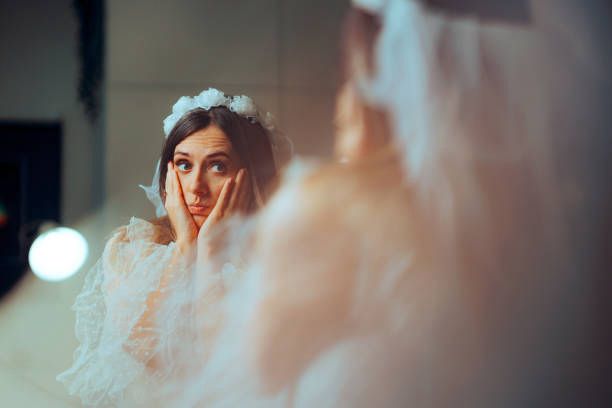
I’m Sophia Carter, and this is the story of how I disappeared—just like my daughter asked me to.
The morning after changed everything, though not in the way anyone expected.
When Amber and Blake arrived at my modest townhouse that Saturday morning—what should have been her wedding day—they weren’t alone. The Prescotts had insisted on coming, of course. Margaret Prescott didn’t do anything without an audience, and a family crisis was too good an opportunity to demonstrate her problem-solving abilities. She swept through my front door in head-to-toe cream linen, the kind that somehow never wrinkles, never stains, never apologizes for taking up space.
“Sophia,” she said, not as a greeting but as an accusation, “we need to talk about this… misunderstanding.”
I’d spent twenty years learning to make myself smaller in rooms like this. Twenty years nodding, accommodating, absorbing other people’s disappointments like it was my job. But that morning, standing in my own kitchen with the deed to my father’s house flat on the table between us, I didn’t move aside.
“There’s no misunderstanding,” I said. “Please, sit down.”
Blake’s father, Richard, remained standing. He had the posture of a man who’d never been told no by someone he considered beneath him. “I don’t think you understand the gravity of what you’ve done. There are two hundred guests who traveled—”
“One hundred seventy-three,” I corrected quietly. “I had the final count. Would you like to see it?”
The room went silent in that particular way that happens when people realize the person they’ve underestimated has been keeping score all along.
Amber’s face had gone pale beneath her carefully applied makeup. She’d arrived ready for battle—designer athleisure, hair in a perfect ponytail, the armor of someone who’d never doubted her position in the world. But now she was staring at the papers on my kitchen table like they were written in a language she’d never learned to read.
“Mom,” she said, and for the first time in years, she sounded like the little girl who used to crawl into my lap during thunderstorms. “Please. We can fix this. We can reschedule. I’ll apologize—”
“For what?” I asked. Not cruelly. Genuinely curious. “For telling me to disappear? For treating me like hired help at your own wedding? For assuming the house your grandfather left to me was yours to renovate, yours to show off, yours to build a life in without ever once asking permission?”
Blake finally spoke. “We thought… Amber said you’d want us to have it eventually. We were just… getting it ready.”
“Ready for what?” I opened the second folder—the one with the renovation receipts, the property tax statements I’d continued to pay, the insurance premiums that came out of my account every month while they picked paint colors and installed marble countertops. “Ready for me to die? Were you waiting for that?”
“Jesus, Sophia.” Richard Prescott moved toward the table now, close enough that I could smell his expensive cologne. “That’s not fair. These kids are young, they’re starting their lives—”
“And I’m fifty-eight years old,” I said, “which apparently means I’m supposed to be grateful for whatever scraps of respect they throw my way.”
Margaret placed her hand on the table, her engagement ring catching the morning light—three carats, princess cut, the kind of ring that makes a statement about whose love matters more. “What exactly do you want? An apology? Money? Because I assure you, we can—”
“I want,” I interrupted, “for all of you to understand something very simple. That house belonged to my father. He left it to me. Not to Amber. Not to Blake. To me. And two weeks ago, I sold it.”
The silence that followed was so complete I could hear the kitchen clock ticking, a sound I’d stopped noticing years ago.
Amber’s voice came out strangled. “You… what?”
“I sold it. Closed last Wednesday. The new owners take possession at the end of the month, which gives you twenty-three days to remove your belongings.”
Blake sank into one of my kitchen chairs like his legs had stopped working. “But… all our stuff. The wedding gifts that already arrived. The furniture we bought. The—”
“The marble countertops?” I suggested. “The custom cabinets? The heated bathroom floors? Yes, I imagine the new owners will enjoy those very much. Young couple, actually. She’s a teacher, he’s a firefighter. They have a baby on the way. They could barely believe the price I offered them.”
“What price?” Richard’s voice had gone dangerously quiet.
I slid another paper across the table. “I sold it for exactly what my father paid for it in 1987. Two hundred thirty-eight thousand dollars. Which, as you can see from this assessment, is approximately six hundred thousand below current market value. I believe they cried when they signed the paperwork.”
Margaret’s hand flew to her throat. “You sold a million-dollar property for—that’s insane. That’s—”
“Generous,” I finished. “The word you’re looking for is generous. Something I learned from my father, who bought that house with money he’d saved working double shifts at the plant for fifteen years. He didn’t have family money or trust funds or parents who could write checks for destination weddings. He had callused hands and a belief that you take care of your own.”
“We ARE your own!” Amber’s voice cracked, tears finally spilling over. “I’m your daughter! How could you do this to me?”
I looked at her—really looked at her—maybe for the first time in years. When had she stopped being the little girl who used to help me bake cookies and started being this stranger who measured my worth by how quietly I could disappear?
“I did exactly what you asked me to do,” I said softly. “You told me to get out of your life. So I am. The wedding is canceled. The vendors have been notified. Those who require cancellation fees will be paid from my personal account, because I may be many things, but I honor my commitments. The house is sold. And as for me…” I picked up my purse from the counter, the old leather one I’d carried for ten years because buying a new one felt wasteful. “I’m leaving.”
“Leaving?” Blake’s voice was hoarse. “Leaving where?”
“Does it matter?” I met his eyes. “You never asked before. In two years of living in that house, of hosting dinner parties and game nights and showing off the renovations to your friends, not once did either of you invite me over. Not for Sunday dinner. Not for coffee. Not to see what you’d done with my father’s house. So why would you care where I go now?”
The truth of that seemed to hit him like a physical blow. He opened his mouth, closed it, looked to Amber for help that wasn’t coming.
Margaret recovered first, because women like Margaret always do. “This is clearly an emotional reaction to a heated moment. We can all calm down, sit down, and discuss this like adults. Richard, call David—he can probably reverse the sale, there must be some kind of—”
“There isn’t.” I shouldered my purse. “The sale is final. Legal. Binding. I had it reviewed by three different attorneys just to be certain. My father taught me to do my homework.”
“Where are you going right now?” Amber’s voice had shifted from anger to something closer to panic. “Mom, please. We can’t just—I don’t understand what’s happening.”
I paused at the door to my own kitchen, my hand on the frame. “I’m going to the house one last time. There’s something I left there for you. After that, I have a flight to catch.”
“A flight where?”
“Goodbye, Amber.”
The drive to Maple Avenue took twelve minutes. I’d made this drive a thousand times—bringing over groceries when they first moved in, dropping off mail that still came to my address, letting myself in to water plants when they were away on ski trips and beach weekends I was never invited to join.
The house looked the same as always—stately, solid, the kind of house that speaks of old money even though the money that bought it was earned with overtime and sacrifice. The maple trees my father planted when I was seven towered over the front lawn, their leaves just beginning to turn with the early autumn chill.
I used my key for what I knew would be the last time.
Inside, the house was both familiar and foreign. They’d gutted my father’s study to create an open-concept space. The wallpaper my mother had chosen—delicate flowers she’d hung herself over three weekends—was gone, replaced by something called “greige” that cost more per roll than our monthly grocery budget had been when I was young.
But underneath all their renovations, I could still feel him. My father. In the creak of the third stair. In the way the afternoon light fell through the dining room window. In the pencil marks on the door frame where he’d measured my height every birthday until I turned eighteen.
They’d painted over those marks.
I found myself standing there, running my fingers over the smooth paint, wondering if he’d be disappointed in me—for letting it get this far, for not standing up sooner, for raising a daughter who measured her mother’s worth by how useful she could be.
Or maybe he’d understand. He’d spent his whole life being useful, too.
I climbed the stairs to what had been my childhood bedroom. They’d turned it into a home gym—Peloton, weights, yoga mats, a mirror wall. On the desk where I’d written college applications and heartbreak poetry, there was now a juice blender and a stack of wellness magazines.
From my purse, I pulled out a small wooden box. My father had made it in his workshop, back when he still had the energy for hobbies. Inside were three things: a letter, a photograph, and a key.
I placed the box on the windowsill where the light would catch it—where anyone packing up the room would have to see it—and then I left.
The airport was crowded with Saturday travelers—families heading to Disney, business people catching red-eyes, young couples starting adventures. I bought a overpriced coffee and sat at my gate, watching planes take off into a sky that promised weather somewhere else.
My phone had been buzzing nonstop. Seventeen missed calls from Amber. Eight from Blake. Three from Margaret. Multiple texts ranging from apologies to accusations to threats about legal action that wouldn’t go anywhere because I’d made certain of that.
I turned it off.
When they called my boarding group, I stood with my single carry-on and walked down the jetway toward a future I’d spent one sleepless week planning. The money from the house sale—two hundred thirty-eight thousand dollars minus closing costs and the vendor cancellation fees—was sitting in a new bank account. It wasn’t much by Prescott standards, but it was mine. Earned by my father’s sacrifice, freed by my own.
I had no idea what came next. That was the terrifying, exhilarating truth.
For the first time in decades, I wasn’t planning around someone else’s needs. Wasn’t making myself useful or convenient or small. Wasn’t staying in the background of someone else’s perfectly curated life.
I was just… gone.
Three weeks later, I was sitting on a beach in Puerto Vallarta when my phone finally rang with a number I didn’t recognize. I’d turned it back on a few days earlier, had waded through the messages—the anger, the bargaining, the eventual acceptance—but I hadn’t responded to any of them.
This call, though. Something made me answer.
“Mrs. Carter?” A young woman’s voice, uncertain. “This is Emma Rodriguez. My husband and I… we bought your father’s house.”
My heart did something complicated. “Is everything okay? Did something go wrong with the closing?”
“No! No, everything’s perfect. It’s just… we found something. A box. With a letter addressed to your daughter, and… I think you should know we read it. I’m sorry, we didn’t mean to pry, but it was sitting right there on the windowsill and—”
“It’s okay,” I said. “I left it there to be found.”
“Oh.” A pause. “Mrs. Carter, we called because… well, your daughter came by. With her fiancé. They were pretty upset at first, demanding to look around one more time, but then we showed them the box and…” Another pause, longer this time. “They sat on the porch steps and cried. Both of them. For like an hour.”
I closed my eyes against the Mexican sun. “What did the letter say?”
“You don’t remember?”
“I wrote it in one sitting at two in the morning. I honestly don’t remember all of it.”
Emma’s voice softened. “You want me to read it to you?”
“Please.”
I heard rustling, then Emma clearing her throat. Her voice was gentle as she began:
“Amber—
If you’re reading this, you’ve found the house empty and me gone, and you’re probably angry. You have every right to be. I took away your wedding, your home, your plans. I disappeared, just like you asked.
But before I go completely, I need you to understand something about this house.
The box you’re holding was made by your grandfather in his workshop. He built it the week you were born, intending to fill it with his wisdom for you—letters, advice, stories about our family. He only managed to finish one letter before his heart attack. He was sixty-three. He’d worked himself to death, literally, trying to provide for everyone he loved.
The photograph inside is from your fifth birthday. Do you remember it? We couldn’t afford the party you wanted—the one with the pony and the princess performers—so Grandpa turned the backyard into a carnival. He spent weeks building games, sewing costumes, painting signs. In the photo, you’re on his shoulders, wearing a crown he made from cardboard and aluminum foil, laughing so hard your eyes are closed.
You told him it was the best birthday ever. You said you didn’t need ponies because you had him.
The key opens a safety deposit box at First National. Inside is the original deed to this house, the one with your grandfather’s signature. Underneath his name, in his handwriting, it says: “For my girls—may they always have a foundation.”
He meant that literally and figuratively. This house was supposed to be your foundation. Your safety net. Your inheritance. And I spent two years watching you treat it like a showroom, a status symbol, a place to impress people who will never love you the way we did.
You never once asked about him. Never asked to see photos or hear stories. Never asked why every doorknob in this house was installed exactly 36 inches from the floor—the height that was easiest for him to reach after his first stroke.
You painted over the pencil marks where he measured you growing up. You tore out the kitchen where he taught you to make pancakes. You erased him, piece by piece, and I watched it happen because I was so afraid of losing you that I forgot how to tell you no.
I’m not angry, sweetheart. I’m heartbroken. But I’m also awake now, maybe for the first time in years.
So yes, I sold the house. But I didn’t destroy your inheritance—I gave it to someone who will cherish it the way your grandfather intended. A young family who cried with gratitude. Who will raise children in these rooms. Who will add their own pencil marks to door frames and their own stories to these walls.
And I freed you from the weight of expectations you never knew you were carrying. You don’t have to be grateful anymore. You don’t have to include me in your plans or pretend I fit into your perfect life. You don’t have to manage me like a problem that needs solving.
You asked me to disappear, and I am. Not because I don’t love you—because I do, so much it’s burned through me like acid—but because I finally love myself enough to stop waiting for you to see me.
The safety deposit box also contains one more thing: a cashier’s check for $100,000. It’s yours, no strings attached. Use it for a wedding, a house, a future. Use it to start over somewhere that doesn’t have my fingerprints all over it.
Or don’t use it at all. The choice is finally, completely yours.
I hope someday you have a daughter who looks at you the way you looked at your grandfather in that photo. And I hope you remember, then, what it feels like to be loved so completely that someone would build you a carnival from nothing.
Be happy, Amber. That’s all I ever wanted.
-Mom”
Emma finished reading, and I realized my face was wet.
“Mrs. Carter? Are you okay?”
“Yes,” I said, surprised to find it was true. “Did my daughter… did she say anything?”
“She asked for your number. We didn’t give it to her—we didn’t feel right about that without asking you first. But she left a letter for us to forward if we ever heard from you. Should I… do you want us to send it?”
I watched waves roll onto the shore, steady and endless and completely indifferent to human drama. “Not yet,” I said. “But hold onto it. Maybe someday.”
“Mrs. Carter? Can I tell you something?”
“Of course.”
“We named our daughter Sophia. We’re naming her after you. After what you did for us. You gave us a home—a real home—when you had no reason to. You could have taken the money and run, but you… you thought about us. A family you’ve never met.”
My throat closed completely.
“She’ll be here in three months,” Emma continued. “And we’re going to tell her about the woman who believed a teacher and a firefighter deserved beautiful things. We’re going to show her the door frame where we’ll measure her height. We’re going to make pancakes in the kitchen and tell her about her namesake.”
“Thank you,” I whispered. “You have no idea what that means.”
“I think I do. And Mrs. Carter? The pencil marks—the ones they painted over? We found them. Under all those layers of expensive paint. We’re restoring them. They’ll be waiting for Sophia when she’s tall enough to reach.”
Six months after that phone call, I was living in a small house in Oaxaca—nothing fancy, just two rooms with terracotta tiles and a garden where I was learning to grow vegetables I’d only ever bought at grocery stores. I was taking Spanish lessons from a woman named Rosa who found my Midwest accent hilarious, and I was writing—something I hadn’t done since college, when I thought maybe I could be someone other than useful.
The letter from Amber arrived on a Tuesday, forwarded by Emma with a note that said simply: “Whenever you’re ready.”
I let it sit on my kitchen table for three days before I opened it.
“Mom—
I don’t know where to start, so I’ll start with the truth: I was a terrible daughter.
Not sometimes. Not occasionally. Consistently, methodically, carelessly terrible. And the worst part is I didn’t even realize it until I was sitting on the porch of a house that isn’t mine anymore, holding a box that my grandfather made before I was born, reading words from you that I should have heard years ago.
Blake and I didn’t get married. We called it off—or rather, I called it off. Not because of what happened, but because of what I realized after.
I was marrying him for the same reason I renovated that house, threw that wedding, and treated you like staff: because I was terrified of being ordinary. Of being the daughter of a working-class family who made it good through student loans and sacrifice. Of being someone whose grandfather worked at a plant and whose mother clipped coupons.
I spent years running from that, Mom. Building a life that looked successful from the outside while feeling hollow on the inside. And you—God, you just kept showing up, kept supporting me, kept making yourself smaller so I had room to pretend to be big.
I found the check. I haven’t cashed it. I don’t know if I can.
Blake is in therapy now. So am I. Separately, which is probably for the best. He told me something that’s been keeping me up at night: he said that in two years of being together, he never once heard me say something kind about you. He thought I didn’t like you. He had no idea that you paid for my entire education, that you helped with our rent before the house, that you’d sewn my homecoming dress by hand when I was sixteen because we couldn’t afford the one I wanted.
I never told him because I was ashamed. Not of you—of being the kind of person who needed help. Who came from people who struggled.
The Prescotts—you were right about them, too. When the wedding fell apart, they didn’t ask if I was okay. They asked about optics. About what to tell their friends. Margaret actually said, “At least you found out before the marriage what her family is really like.”
I defended you then. Finally. Too late, but I did it.
I told her that my mother was more gracious in her exit than they’d been in two years of knowing me. That you’d given away a fortune to strangers because you believed in goodness more than you believed in getting even. That I was the one who should be ashamed, not you.
We’re not together anymore, the Prescotts and me. Turns out when you’re not marrying their son, you’re not useful to people like that.
I met Emma and Carlos, by the way. They invited me in for coffee, showed me around. Emma is pregnant—did you know? With a little girl they’re naming Sophia. She showed me the nursery, and I just… I stood there in what used to be your room, looking at the walls painted soft yellow, at the crib they’d assembled, at the door frame where they’d restored Grandpa’s pencil marks, and I couldn’t stop crying.
Carlos told me they’re going to raise their daughter with stories. About their family, about struggle and sacrifice, about a woman who gave them a home when she could have taken the money and run. They’re going to make sure Sophia knows she comes from something real.
I wish you’d done that for me. No—that’s not fair. I wish I’d listened when you tried.
I don’t know where you are or if you’ll even read this. Emma said she’d forward it if you ever called, but she didn’t promise anything. I don’t blame you if you don’t want to hear from me. I don’t know if I’d want to hear from me either.
But if you do read this, I need you to know: I’m sorry. I’m so, so sorry. For the things I said, for the way I treated you, for making you feel invisible in your own child’s life.
And I need you to know I finally understand what you were trying to teach me. About sacrifice. About real love. About the difference between what looks good and what is good.
I’m trying to be better. I moved out of our apartment—too many memories of trying to be someone I’m not. I’m renting a studio in the city, the kind of place with questionable plumbing and a radiator that clanks at night. It’s not much, but it’s mine, and I’m not ashamed of it.
I’m teaching art classes at a community center in the neighborhood. The pay is terrible, but the kids are amazing—most of them come from families like ours, families where parents work double shifts and kids wear hand-me-downs and nobody apologizes for it. I wish I’d never apologized for it.
Last week, one of my students—a girl named Maria—painted a portrait of her grandmother. She spent hours on it, getting every detail right, and when she was done she said, “This is the most important person in the world to me.”
I thought about Grandpa. About the carnival he built. About the box he never got to fill. About you, spending decades filling it in his place, and me, never bothering to look inside.
I don’t expect forgiveness. I don’t expect anything. But I wanted you to know that your daughter is finally growing up. Twenty-eight years late, but growing.
If you ever want to talk, Emma has my number. No pressure. No expectations. Just… maybe. Someday.
I love you, Mom. I don’t think I ever said it enough, or said it right, but I do. I always have, even when I was too busy performing to remember.
Your daughter,
Amber
P.S. I kept the photograph. The one from my fifth birthday. It’s on my refrigerator now, held up by a magnet from the gift shop at the community center. Every morning when I make coffee, I see it. I see Grandpa’s face, see myself laughing on his shoulders, see the crown he made from cardboard and foil.
I’m trying to remember how to be that girl again. The one who didn’t need ponies.
I hope wherever you are, you’re laughing like that too.”
I read the letter three times that first day, then twice more over the following week. I carried it with me to the market, folded in my pocket like a talisman. I left it on my nightstand and caught myself looking at it before bed, as if the words might change when I wasn’t watching.
Rosa found me crying over my Spanish homework one afternoon—though we both knew it had nothing to do with irregular verbs.
“Your daughter?” she asked in careful English, because she was patient with me in a way I was learning to be patient with myself.
“Sí,” I said.
“You love her still?”
“I never stopped.”
She nodded, understanding in the way that women who’ve raised children always understand. “But you had to love yourself more, yes? Even if just for a little while.”
“Yes.”
“And now?”
That was the question, wasn’t it? And now what?
I thought about Emma’s baby girl, who would grow up in my father’s house with stories about sacrifice and love. I thought about Amber teaching art to kids who needed to know their backgrounds weren’t something to escape. I thought about the woman I’d been six months ago—small and useful and so afraid of being inconvenient that I’d become invisible.
I thought about the woman I was becoming—someone still figuring it out, still learning to take up space, still sometimes waking up in the middle of the night wondering if I’d been too harsh, too cruel, too final.
But mostly, I thought about the photograph. Amber at five, laughing on her grandfather’s shoulders, wearing a crown made from love and imagination and the kind of wealth that has nothing to do with money.
“Now,” I said to Rosa, “I think I’ll write her back.”
I spent two weeks drafting the letter in my head before I finally put pen to paper. It was shorter than Amber’s, simpler, but every word felt like a small act of courage.
“Amber—
Your letter found me in Mexico, living in a house smaller than the bedroom you grew up in, learning a language I should have studied when I was young and convinced I had time for everything.
Thank you for your honesty. Thank you for growing. Thank you for finally seeing what I couldn’t figure out how to show you.
I’m not ready to come home yet. I don’t know if I ever will be—home feels like a word I need to redefine. But I’m not gone forever, either. I’m just… somewhere else, becoming someone I should have been all along.
I’m proud of you for teaching those kids. For choosing art over architecture, community over country clubs. For understanding that wearing hand-me-downs with dignity is worth more than designer labels worn in shame.
Your grandfather would be proud too. Not because you’re finally doing what we wanted, but because you’re finally doing what makes you real.
Keep the check. Use it or don’t—that’s genuinely up to you. But know that it comes without conditions, without expectations, without me waiting in the wings to see if you’ll finally be grateful enough.
You asked if we can talk someday. The answer is yes. Not yet—I need a little more time to be selfish, to be someone other than your mother, to remember what my own voice sounds like. But someday. When we’re both ready.
Until then, take care of yourself. Be kind to Maria and the other kids who are where you were. Tell them it’s okay to come from struggle—it means they know how to build carnivals from nothing.
And Amber? I forgive you. Not because you asked, and not because it’s easy, but because holding onto anger was making me small again, and I’ve spent too long being small.
You’re forgiven. You’re loved. And you’re free—from my expectations, from guilt, from the weight of having to make up for lost time.
Just be better. That’s all I need.
Love,
Mom
P.S. When Emma’s daughter is born, send them flowers from both of us. Yellow ones, like the nursery. And write on the card: ‘For Sophia—may you always know where you came from and never apologize for it.'”
A month after I sent the letter, I got a text message—just a photo, no words.
It was a bouquet of yellow roses with a card visible in the frame. The handwriting was Amber’s, careful and clear: “For Sophia—may you always know where you came from and never apologize for it. With love, Amber and Sophia Carter.”
I sat on my small terrace with that image on my phone, watching the sun set over Oaxaca, and I finally let myself believe it:
We were going to be okay.
Not today. Maybe not for a while. But someday, when the wounds weren’t so fresh and the lessons had time to settle, we would find our way back to each other. Different, changed, better.
And until then, I had this: a small house, a garden I was learning to tend, a language that still twisted my tongue, and the knowledge that I was capable of being more than useful.
I was capable of being whole.
Two years later, I flew back to the States for a visit. Emma and Carlos had invited me to baby Sophia’s second birthday—a small party in the backyard of the house on Maple Avenue, complete with handmade games and decorations that reminded me so much of my father that I had to step away and cry for a minute.
Amber was there.
She showed up quietly, carrying a wrapped present and an uncertain smile. We saw each other across the yard—me by the maple trees, her by the porch steps—and for a moment, neither of us moved.
Then Emma’s daughter toddled over to Amber with sticky hands and a chocolate-smeared face, and Amber crouched down to her level without hesitation, without worrying about her clothes or her appearance, and said, “Hi, Sophia. I’m Sophia too. We match.”
The little girl giggled and threw her arms around Amber’s neck, and I watched my daughter hold this child—this little girl named after me, living in my father’s house, being raised with the stories we should have told—and I saw something I’d been waiting years to see:
Amber, at peace with where she came from.
We spent the afternoon in that backyard, not alone—we weren’t ready for that yet—but together. Part of something bigger than our hurt. Part of a story that didn’t end with disappearance or anger or burned bridges, but with a little girl laughing on her father’s shoulders, wearing a crown made from cardboard and foil.
Carlos had made it, of course. He’d asked me about the photograph, about my father’s carnival, and then he’d spent three evenings in his workshop recreating something precious from memory and love.
As the party wound down and guests started leaving, Amber and I found ourselves standing by the door frame—the one with the restored pencil marks, the ones my father had made measuring me, the ones Emma and Carlos would use to measure their daughter.
“Thank you for coming,” Amber said quietly.
“Thank you for inviting me.”
“Not just to this.” She touched the door frame gently. “For… everything. For the letter. For the lesson. For loving me enough to walk away.”
I took her hand. “I never walked away from you. I walked toward myself. There’s a difference.”
She nodded, tears spilling over. “I’m getting there too. Slowly. But I’m trying.”
“That’s all anyone can do.”
We stood there together, two Sophias—one learning to take up space, one learning to give it—in the house that had taught us both what matters.
“Mom?” Amber’s voice was small. “Can I ask you something?”
“Of course.”
“Would you… could you maybe tell me about Grandpa? All the stories I never asked for? I want to know. I want to know where I come from.”
I looked at my daughter—really looked at her—and saw past the designer clothes to the little girl underneath, the one who’d once been content with cardboard crowns, who was finding her way back to that contentment one difficult choice at a time.
“I would love that,” I said. “How about dinner next week? Just us. I’ll tell you about the carnival, and the pencil marks, and the box he was making when he died. I’ll tell you everything.”
She smiled—genuine and trembling and more beautiful than anything she’d ever curated for Instagram. “I’d like that. I’d really like that.”
As I drove away that evening, back to my hotel with plans to catch a flight to Mexico the next morning, I caught a glimpse of the house in my rearview mirror. The lights were on inside, warm and golden, and I could see Emma and Carlos moving past the windows, putting their daughter to bed, living their life in the house my father built.
And I thought: This is what inheritance really means.
Not property or money or things you pass down untouched. But the lessons that shape you, the sacrifices that free you, the courage to say “no more” when yes has been killing you slowly.
My father gave me that house so I’d always have a foundation. And I gave it away so Amber could learn what foundations are really built from.
Not marble countertops or perfect weddings or lives that look good in photographs.
But love. Sacrifice. The willingness to be real even when it’s easier to be polished.
And the knowledge—hard-won and precious—that sometimes the greatest gift you can give someone is the space to find themselves, even if that space means you disappearing for a while.
I didn’t disappear forever. Just long enough to remember I was more than a supporting character in someone else’s story. Long enough to become the protagonist of my own.
And that small gift I left in the empty house—the letter, the photograph, the key—wasn’t meant to punish or hurt.
It was meant to wake her up.
Mission accomplished.
THE END

Ethan Blake is a skilled Creative Content Specialist with a talent for crafting engaging and thought-provoking narratives. With a strong background in storytelling and digital content creation, Ethan brings a unique perspective to his role at TheArchivists, where he curates and produces captivating content for a global audience.
Ethan holds a degree in Communications from Zurich University, where he developed his expertise in storytelling, media strategy, and audience engagement. Known for his ability to blend creativity with analytical precision, he excels at creating content that not only entertains but also connects deeply with readers.
At TheArchivists, Ethan specializes in uncovering compelling stories that reflect a wide range of human experiences. His work is celebrated for its authenticity, creativity, and ability to spark meaningful conversations, earning him recognition among peers and readers alike.
Passionate about the art of storytelling, Ethan enjoys exploring themes of culture, history, and personal growth, aiming to inspire and inform with every piece he creates. Dedicated to making a lasting impact, Ethan continues to push boundaries in the ever-evolving world of digital content.