The Kitchen Table Humiliation: How a $93,000 Honeymoon Exposed Everything
The wedding planner said my name the way people say “ma’am” when they’re really thinking “obstacle.” Her smile was professionally polished, her clipboard held like a shield between us, and she guided me through the Rosecliffe mansion’s reception hall with the kind of purposeful efficiency usually reserved for moving furniture or redirecting traffic.
I was neither guest nor family in that moment—I was a problem that needed solving.
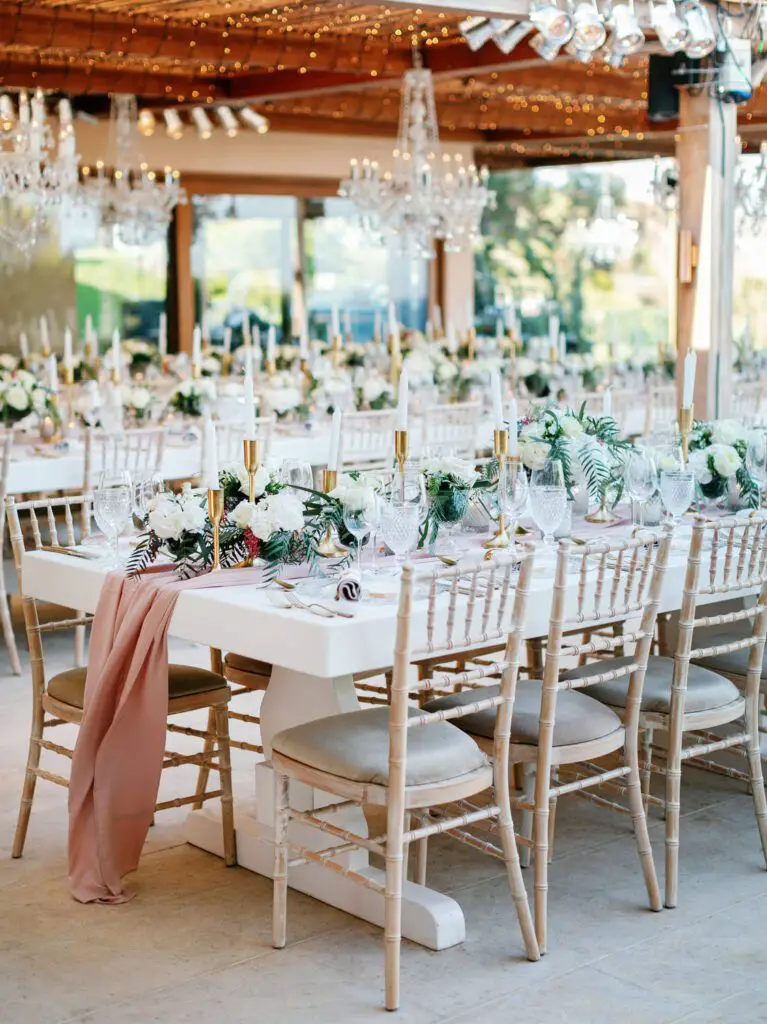
Around us, the reception hall glittered with the kind of wealth that doesn’t need to announce itself. Crystal chandeliers threw cascading diamonds of light across tables draped in ivory silk. The flower arrangements were taller than me, white roses and orchids spilling from gold-rimmed vases that probably cost more than my monthly rent. Four hundred guests filled the space—old money, new money, the kind of people who summered in Newport and knew which fork to use without thinking.
I kept smoothing my navy dress, running my palms down the fabric in a nervous gesture I couldn’t quite control. I’d spent three months finding this dress, driving to four different cities, trying on dozens of options until I found one that felt right. My son William had seen a photo and told me it made my silver hair look elegant instead of tired. That compliment had meant everything to me. I’d held onto it like a talisman, convinced that if I just looked right, if I just fit in properly, this day would be everything a mother dreams of.
I was so naive.
Across the massive hall, I could see William standing near the head table in his custom tuxedo—the one Veronica had insisted he get made in Italy, the one that had cost more than my first car. Veronica was tucked into his side, her hand resting on his arm with the possessive grace of someone who’d never questioned whether she belonged. She was stunning in her wedding gown—$47,000 of French lace and hand-sewn pearls, a dress that had required three fittings and a team of seamstresses.
I knew exactly what it cost because I’d paid for half of it.
Not that anyone here knew that.
William didn’t look up as I passed, didn’t search the crowd for my face, didn’t seem to notice or care where the wedding planner was leading his mother. He was laughing at something Veronica whispered in his ear, his attention completely absorbed by his new wife and the constellation of Bennett family members surrounding them like a protective wall.
The Bennetts. Veronica’s family. Old Boston money, the kind with roots that went back to the Mayflower and tentacles that reached into every prestigious institution in New England. They sat at the head table like royalty holding court—Veronica’s father Richard in his perfectly tailored suit, her mother Constance dripping in diamonds that had been in the family for generations, her brother James looking bored and superior, various cousins and family friends filling out the ranks.
They looked like they’d been born to these seats, to this moment, to this level of effortless superiority.
I looked like exactly what I was: a middle school teacher from Ohio who’d raised her son alone after his father left, who’d worked two jobs to put him through state university, who’d scrimped and saved and sacrificed for thirty years to give him opportunities I’d never had.
The wedding planner finally stopped walking.
Right beside the swinging kitchen doors.
I stared at the table—round, like all the others, but positioned in a location that made its status immediately clear. Five seats. Five place cards in that elegant calligraphy that probably cost ten dollars per card: a wedding photographer’s assistant, one of William’s college roommates I’d met once, a hospital colleague of Veronica’s I didn’t know, someone listed as “neighbor – childhood friend,” and my card. Martha Coleman. The groom’s mother, relegated to the social equivalent of the children’s table.
Every time the kitchen doors swung open—which was constantly, because we were literally stationed at the service entrance—heat and noise would blast across our table. The sound of clattering dishes and shouted orders. The smell of food and industrial dishwashers. Servers clipped my chair as they rushed past with trays, treating me like part of the traffic pattern, an obstacle to navigate around.
I looked up at the wedding planner, waiting for this to be some kind of mistake. Waiting for her to laugh and say, “Oh my goodness, no, your table is over here with the family.”
Instead, she consulted her clipboard with that same professional smile.
“This is your seat, Mrs. Coleman,” she said, her voice bright and empty. “We had some last-minute adjustments to the seating arrangements.”
“But…” I hesitated, not wanting to make a scene, not wanting to be difficult. “This is right by the kitchen.”
Her smile didn’t waver. “Yes, we had to accommodate some security requirements at the last minute. The Secret Service detail for Senator Morrison needed to be repositioned, which created a cascade of changes. I’m sure you understand.”
She said it like it was perfectly reasonable, like this explanation made sense, like I should be grateful they’d found me a seat at all.
Then she disappeared into the crowd, leaving me standing there with a water glass and the slowly dawning realization that this wasn’t an accident or a last-minute adjustment or anything other than exactly what it appeared to be: a deliberate statement about where I ranked in my son’s new life.
I sat down carefully, my navy dress suddenly feeling cheap and wrong despite the months I’d spent finding it. The photographer’s assistant nodded politely and went back to her phone. The others made brief small talk before lapsing into silence, all of us united in the awkward awareness that we’d been seated in social Siberia.
From my chair, I could see the head table clearly. Could watch William laugh and touch Veronica’s shoulder and pose for photos with her family. Could observe the Bennetts in their natural habitat, surrounded by people who mattered, people who belonged, people who weren’t exiled to the kitchen doors.
Three days earlier, this had all seemed so different.
William had called me from his apartment in Boston, his voice taking on that soft, slightly vulnerable quality that I knew so well. That tone that had once meant he’d had a bad day at school, or struggled with a test, or needed his mother’s comfort and reassurance.
“Mom,” he’d said, “I need to ask you a favor. Kind of a big one.”
My heart had immediately clenched with maternal concern. “What’s wrong? Are you okay?”
“I’m fine, everything’s fine. It’s just… the honeymoon planning is getting a little complicated. Veronica really has her heart set on the Maldives, and we found this incredible resort, but the deposit is more than we budgeted for. I was wondering if maybe I could borrow your credit card? Just for a small expense. I’ll pay you back as soon as we get some of the wedding gifts.”
A small expense. He’d used those exact words.
And I, being the mother I’d always been—the mother who’d worked two jobs and skipped vacations and driven a car with 200,000 miles so William could have opportunities—hadn’t hesitated.
“Of course, honey,” I’d said. “Let me get my card.”
I’d read him the numbers over the phone, listening to the relief in his voice, feeling that familiar warmth of being needed, of being useful, of being the person my son could count on.
Two hours later, my banking app had sent me an alert.
$93,000.
Ninety-three thousand dollars had been charged to my credit card.
For a moment, I’d thought it was fraud. Had to be fraud. There was no way William had meant to charge that much. This was an error, a glitch, something that would be immediately corrected with an embarrassed phone call.
But when I’d called him back, his voice had been defensive rather than apologetic.
“I know it’s more than I said, but Mom, you don’t understand the pressure. Veronica’s family, they have expectations. They’re used to a certain level of… everything. The honeymoon they took was in Bora Bora, private villa, personal chef, the whole thing. Veronica mentioned wanting to do the Maldives, and then her mother started talking about how wonderful it would be, and next thing I knew everyone just assumed we were doing this incredible three-week trip with private transfers and the luxury resort and… I couldn’t back out. I couldn’t admit we couldn’t afford it.”
“William, that’s almost a hundred thousand dollars.”
“I know, Mom. I know. But it’s done now. The deposit’s non-refundable. And honestly, it’s an investment in starting our marriage on the right foot. In making sure Veronica’s family sees me as… as someone worthy of their daughter.”
Someone worthy of their daughter.
The words had stung more than the money.
Because what he was really saying was that he wasn’t enough as he was. That the man I’d raised—the man I’d poured everything into—wasn’t good enough for the Bennetts unless he could perform wealth he didn’t actually have.
And I, his mother, was expected to fund that performance.
“Can you cover it?” he’d asked, his tone shifting into something more calculating. “I know it’s a lot, but you’ve been saving, right? And it’s for my wedding, Mom. Your only son’s wedding. This is a once-in-a-lifetime thing.”
I should have said no right then.
I should have told him that this was insane, that starting a marriage by going into massive debt—or putting his mother in massive debt—was a terrible idea, that if he couldn’t afford the honeymoon then they needed to plan something within their means.
But I didn’t.
Because I was his mother, and old habits have sharp teeth.
“I’ll… I’ll figure it out,” I’d said.
“You’re the best, Mom. I knew I could count on you. I’ll pay you back, I promise. As soon as the wedding gifts come in, as soon as we get settled, I’ll start sending you money every month. You won’t be stuck with this.”
But we both knew that was a lie.
The same way we both knew that the $93,000 wasn’t the first money I’d quietly contributed to William’s new life.
There’d been the engagement party—$8,000 to rent a venue that was “appropriate” for Veronica’s family.
The rehearsal dinner—$12,000 because the restaurant William wanted was “too casual” and they’d needed to upgrade.
My dress, my travel, my hotel room for the wedding weekend—another $3,000.
The wedding gift I’d given them—$10,000 cash, presented in an elegant envelope that William had accepted with a distracted hug before handing it off to Veronica’s mother to put with the other gifts.
Add it all up, and I’d contributed well over $125,000 to a wedding that had seated me by the kitchen doors.
Now, sitting at that table watching servers rush past with trays of expensive food I’d helped pay for, watching my son celebrate at a head table I wasn’t important enough to join, I felt something shift inside me.
Not anger, exactly. Not yet.
Just a cold, clear understanding that I’d been playing a role in a production I hadn’t auditioned for. That somewhere along the way, my son had stopped seeing me as his mother and started seeing me as a resource. An ATM that dispensed money and expected nothing in return except the occasional phone call and the privilege of watching from a distance.
The reception continued around me. Toasts were made—Veronica’s father gave a long, eloquent speech about family and legacy and the importance of marrying into the right kind of people. William’s college friend gave a funny story about their fraternity days. Veronica’s maid of honor cried prettily and talked about finding your soulmate.
No one asked me to speak.
The mother of the groom wasn’t included in the toast schedule.
By the time dinner was served—some kind of beef that probably cost $200 per plate—I’d stopped tasting anything. I smiled when appropriate, made small talk with the photographer’s assistant, and watched my son’s wedding unfold like I was observing it through a window rather than participating in it.
Around ten o’clock, I stepped out onto the terrace for air.
The Atlantic Ocean stretched dark and infinite beyond the mansion’s grounds, waves hitting the rocks below with a rhythm that felt ancient and indifferent. The salt wind cooled my face, cutting through the kitchen heat that had settled into my hair and clothes. Behind me, the party continued—music and laughter spilling through the French doors, a celebration I was part of but not included in.
I’d been standing there for maybe five minutes when I heard footsteps.
William.
He came out alone, his bow tie loosened, his face tight with an expression I recognized immediately. The look he got when he was about to ask for something difficult. When he needed his mother to solve a problem.
“Hey, Mom,” he said, not quite meeting my eyes. “Been looking for you.”
“Here I am,” I said quietly.
He moved to stand beside me, hands in his pockets, looking out at the ocean rather than at me. “Some wedding, huh? Veronica’s parents really went all out. This place is incredible.”
“It’s beautiful,” I agreed.
A pause. Then: “Listen, I wanted to catch you before things get too crazy. There’s been a slight… development with the honeymoon.”
My stomach dropped even though I already knew what was coming.
“The resort contacted us about the final payment. Apparently with the private transfers and some of the excursions Veronica wants to add, there’s an additional balance of about thirty thousand. I was wondering if maybe you could—”
“Help cover it?” I finished for him.
He had the decency to look slightly uncomfortable. “It’s the last installment, I promise. After this, we’re all set. And I really will pay you back, Mom. First thing when we get home from the honeymoon, I’m setting up a payment plan.”
I looked at my son—this man I’d raised alone, this person I’d sacrificed everything for—and tried to find some trace of the boy who used to make me breakfast on Mother’s Day, who used to call me from college just to tell me about his day, who used to say he’d take care of me when he grew up.
He was gone. Or maybe he’d never really existed the way I’d imagined.
“Thirty thousand dollars,” I said. “On top of the ninety-three thousand I already paid for.”
“I know it’s a lot—”
“On top of the engagement party and the rehearsal dinner and everything else I’ve quietly paid for without anyone knowing.”
His jaw tightened. “Mom, don’t make this into something it’s not. This is my wedding. Families help with weddings. That’s normal.”
“Is it normal to seat me by the kitchen doors?”
The question hung in the salt air between us.
William’s face flushed. “That wasn’t… the seating arrangements got complicated. There were a lot of people to accommodate—”
“Your wife’s second cousin got a better table than I did.”
“Mom—”
“People I’ve never met, people who have nothing to do with our family, they all got seated ahead of me. But I’m supposed to understand that it’s complicated. I’m supposed to smile and be grateful I got invited at all.”
“You’re being dramatic.” His voice had taken on an edge now, frustration bleeding through the veneer of filial affection. “This is my wedding day. Can you please not make it about you?”
And there it was.
The thing I’d been avoiding acknowledging for months, maybe years.
I wasn’t part of his life anymore except as a source of money. When he looked at me, he didn’t see his mother—he saw someone who could solve his financial problems. Someone who would quietly transfer money and ask no questions and demand no recognition.
Someone who could be seated by the kitchen doors and would accept it because that’s what good mothers do.
“I need an answer,” William said, pulling out his phone. “I need to send them the payment tonight. Can you transfer the thirty thousand?”
I looked at him for a long moment. At his expensive tuxedo and his impatient expression and his complete inability to see what he was asking for.
“Let me think about it,” I finally said.
Relief flooded his face. “Great. Just text me when it’s done. The account number is—”
“I said let me think about it, William.”
Something in my tone made him pause. Made him actually look at me, perhaps for the first time all evening.
“You’re not actually going to say no,” he said slowly, like the possibility had never occurred to him. “Mom, I need this. Veronica is expecting this. Her family is expecting this. You can’t just—”
“I’m going back to my hotel,” I said quietly, moving toward the door. “Congratulations on your marriage.”
“Mom, wait—”
But I didn’t wait. I walked back through the reception, grabbed my purse from my seat by the kitchen doors, and left the Rosecliffe mansion without saying goodbye to anyone.
No one noticed me go.
Back at my hotel room—a modest place several miles from the mansion because the venue hotel had been “reserved for wedding party and immediate family”—I turned on my phone to find a barrage of messages from William.
[11:47 PM] Mom we need to talk about this
[11:52 PM] I don’t understand why you’re being difficult
[12:03 AM] The payment is due tonight. TONIGHT. You’re seriously going to leave me hanging like this?
[12:15 AM] Veronica’s parents are asking questions. They’re going to think we can’t afford this. Do you want to embarrass me?
[12:31 AM] I can’t believe you’re doing this on my wedding night
[12:47 AM] You’re being selfish and petty
[1:03 AM] Fine. Don’t help. But don’t expect me to forget this.
I read each message carefully, watching my son’s desperation curdle into anger, his entitlement calcifying into bitterness.
And then I did something I’d never done before.
I opened my banking app and locked the ability to transfer funds. Put a temporary hold on my credit cards. Made it impossible for any payment to go through, even if I changed my mind in a moment of weakness.
Then I turned my phone face down, got into bed, and slept better than I had in months.
The next morning, I woke early and went downstairs to the hotel’s small restaurant. I ordered tea and toast and found a quiet table by the window overlooking the harbor. The morning sun was turning the water gold, sailboats bobbing peacefully at their moorings. It was the first moment of peace I’d felt since arriving in Newport.
I was halfway through my tea when someone approached my table.
Richard Bennett. Veronica’s father. The man who’d given that speech about family and legacy, who’d sat at the head table like a king surveying his domain.
“Mrs. Coleman,” he said, his voice polite but firm. “May I join you?”
I gestured to the empty chair, too surprised to say no.
He sat down carefully, set his coffee cup on the table, and then slid an envelope across to me.
A large manila envelope, the kind that holds important documents.
“I think,” he said quietly, “that you and I need to have a conversation.”
I stared at the envelope, not touching it. “About what?”
“About what you’ve been paying for. About what my daughter and your son have been hiding. And about why you were seated by the kitchen doors at a wedding you largely funded.”
My hand froze halfway to the envelope.
“I know about the honeymoon,” he continued, his voice low enough that nearby tables couldn’t hear. “I know about the engagement party and the rehearsal dinner and the dress. I know because I’ve been watching the same thing happen that happened to me twenty-five years ago when I married into the Bennett family.”
He tapped the envelope.
“Open it.”
With trembling hands, I pulled out the contents.
The first document was a prenuptial agreement. I’d known William and Veronica had one—he’d mentioned it casually, said it was “just standard for people with family money”—but I’d never seen it.
Reading it now, my blood went cold.
The prenup wasn’t protecting Veronica’s assets from William.
It was protecting the Bennett family trust from both of them.
I flipped through pages of legal language, my teacher’s mind parsing the complicated terms until the truth became clear: Veronica didn’t actually have money. The Bennett “fortune” was locked in an irrevocable trust controlled by the family patriarch—Richard’s father, Veronica’s grandfather. Neither Veronica nor Richard had direct access to the principal. They received distributions at the trustee’s discretion.
And according to the notes Richard had included, those distributions had been cut off six months ago due to “concerns about spending habits and financial irresponsibility.”
“They’ve been living on credit,” Richard said quietly. “Both of them. The apartment in Boston, the cars, the lifestyle—it’s all debt. When Veronica met your son, she saw an opportunity. Someone from outside who didn’t know the family’s real financial situation. Someone whose mother was clearly willing to help.”
I felt sick.
“They targeted you,” he continued. “Deliberately. Veronica researched your son, found out about you, and played the role of the wealthy girlfriend who just needed to borrow a little here and there until family money came through. But the family money isn’t coming through. Not anymore. Maybe not ever.”
“Why are you telling me this?” I asked.
Richard’s face was grim. “Because I spent twenty years being where your son is now. Married into a family that promised wealth but delivered only expectations and debt. I destroyed my relationship with my own parents trying to keep up appearances. And now I’m watching my daughter do the same thing to you and your son.”
He pulled out another document from the envelope. This one was a financial statement—Veronica and William’s debts.
Credit cards: $147,000.
Car loans: $83,000.
Personal loans: $62,000.
Nearly $300,000 in debt, and none of it from the wedding expenses I’d been covering.
“The wedding,” Richard said, “was supposed to be their fresh start. Get married, combine incomes, and most importantly, get access to any wedding gifts and family support to pay down some of this debt. Your contributions were supposed to be just the beginning. They were counting on you to become their permanent financial support system.”
“And the kitchen table?” I asked, my voice barely above a whisper.
“Veronica’s idea. She wanted to make sure you understood your place in their new life. Not family—funding. She thought if she humiliated you publicly, made you desperate to regain your son’s approval, you’d be even more willing to help financially.”
I sat back in my chair, feeling like the entire world had tilted.
“What do I do?” I asked.
Richard looked at me with something like sympathy. “What I should have done twenty-five years ago. You walk away. You stop paying. You let them figure it out. And if they can’t figure it out, that’s not your failure—it’s theirs.”
He stood up, leaving the envelope with me.
“Your son made his choice when he married into this family. When he let them seat you by the kitchen and still asked you for more money. You don’t owe him anything else. You especially don’t owe him your dignity.”
Then he walked away, leaving me alone with the truth I’d been avoiding for months.
My son hadn’t been pressured into a lavish lifestyle by his new wife and her family.
He’d been a willing participant in targeting his own mother.
I spent the rest of that morning in my hotel room, going through every document Richard had given me. Reading the prenup, the financial statements, the notes he’d included about the trust fund and the family dynamics.
Then I called my bank and made the lock on my accounts permanent.
Then I called a lawyer.
Then I composed a single text message to William:
I will not be providing any additional financial support. The accounts have been locked. Please do not contact me again unless you’re prepared to apologize for how you’ve treated me and discuss how you plan to pay back what you already owe. I love you, but I will not be used. -Mom
His response came within minutes:
You’re destroying my marriage before it even starts. I hope you’re happy.
I read it once, then blocked his number.
That was six months ago.
I haven’t heard from William since, except through lawyers. He’s attempting to sue me for the wedding expenses, claiming I promised to pay for things and then reneged. My attorney is handling it, and he assures me there’s no case—gifts are gifts, and I have no legal obligation to continue funding my adult son’s lifestyle.
Richard was right. The Bennett family has started tearing itself apart. Veronica filed for divorce three months ago when she realized the money really wasn’t coming back. William lost his apartment and is living with friends. The family trust is in litigation, with various family members fighting over control.
And me?
I’m back in Ohio, teaching my classes, living in my modest house, and rebuilding my savings account.
Sometimes I miss my son. I miss the boy he used to be, the relationship I thought we had.
But I don’t miss being someone’s ATM.
I don’t miss being seated by the kitchen doors in my own life.
And I don’t regret walking away from people who saw me only as a resource to be exploited.
Last week, I got a letter. Not from William—from Richard.
He’d left his wife after reading the documents he’d shown me, finally understanding how deeply the family dynamics had poisoned his own marriage. He was rebuilding his relationship with his parents, whom he’d neglected for years. And he wanted to thank me.
“Watching you walk away,” he wrote, “gave me permission to do the same. You saved both our lives, and you don’t even know it.”
Maybe he’s right.
Maybe refusing to be used isn’t just self-preservation.
Maybe it’s the most loving thing you can do—for yourself, and for the people who need to learn they can’t treat people this way.
My son made his choice when he let them seat me by the kitchen doors.
And I made mine when I finally stopped paying for my own humiliation.
Some doors, once closed, should stay that way.
Even the kitchen ones.
THE END

Adrian Hawthorne is a celebrated author and dedicated archivist who finds inspiration in the hidden stories of the past. Educated at Oxford, he now works at the National Archives, where preserving history fuels his evocative writing. Balancing archival precision with creative storytelling, Adrian founded the Hawthorne Institute of Literary Arts to mentor emerging writers and honor the timeless art of narrative.