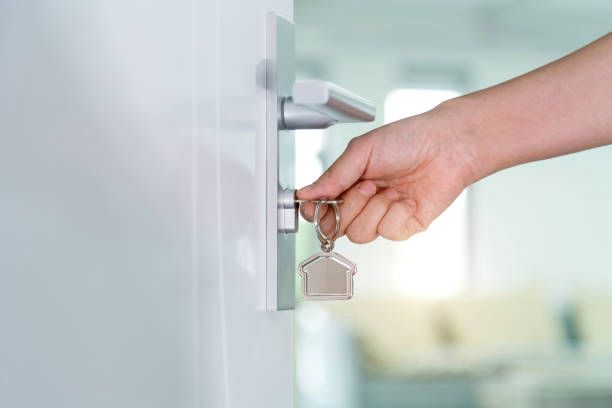
The House That Wasn’t Theirs to Give
The call came on a Tuesday night, the kind of evening that feels suspended between one life and another. I’d just walked through the door of my apartment, still wearing my work coat, one boot half-unlaced, when my phone lit up with the name I’d been trained since childhood to answer immediately: Mom.
I picked up, already feeling that familiar tightness in my chest, that preemptive guilt that children of certain parents learn to carry like a second skeleton.
“Hi, Mom, I’m sorry I haven’t—”
“Vivian.” Just my name. Not a greeting. Not warmth. Just the sound of my own name delivered like a gavel strike.
The silence that followed told me everything before she said another word. This wasn’t a call. This was an announcement.
“We’re on speaker,” she continued, her voice carrying that particular quality she used for difficult conversations—the tone she’d perfected during years of PTA meetings and neighborhood association disputes. Controlled. Rehearsed. Absolute. “Your father’s here with me.”
A throat cleared in the background. Dad’s voice emerged, softer, almost apologetic: “Hi, Viv.”
But before I could respond, Mom reclaimed control of the narrative, as she always did.
“Your sister is coming home. She and Adam are engaged, and we’ve made a decision about the house in Evergreen Heights.” She paused, but not for my input—just for emphasis, the way a lawyer pauses before delivering a verdict. “It’s going to be theirs. Mia’s and Adam’s. They need it more than you do right now.”
For several seconds, my brain refused to process what I’d heard. The words felt scrambled, out of order, like someone had shuffled a deck of cards and was trying to make me believe it was still in sequence. The house. My house. The one I’d spent six years of weekends, holidays, and vacation days restoring. The house I’d learned to drywall in, where I’d taught myself plumbing and electrical work through YouTube videos and stubborn determination. The house where every light switch, every cabinet hinge, every coat of paint carried my fingerprints.
“What?” The word came out smaller than I intended.
“We need you to clear out your things,” Mom continued, steamrolling over my confusion. “We’re giving you five days. That should be plenty of time. We’ll be telling Mia tonight, and she and Adam want to move in this Sunday. So please make sure everything is cleaned up and ready. We want this to be a smooth transition.”
The call ended before I could form a complete sentence. Just like that. A decision made, delivered, and concluded, as if they’d just informed me they were changing the family cell phone plan.
I stood in my small apartment, still holding my phone, still wearing one boot, and stared at the dark screen as if it might offer an explanation. As if the pixels might rearrange themselves into something that made sense.
Then my phone rang again. Mia.
“Oh my god, Viv, did Mom tell you? Isn’t it amazing?” Her voice was bright, breathless, the sound of someone who’d just won something they didn’t even know they were competing for. “We’re so excited! Adam and I have been looking at houses for months, and then Mom suggested Evergreen Heights and it’s just perfect. Way better than anything we could afford on our own.”
I couldn’t speak. My throat had closed around words I didn’t even know how to form yet.
“Anyway,” Mia continued, apparently not noticing—or not caring about—my silence, “can you make sure the master bedroom is really clean? Like, deep cleaned? Adam’s kind of sensitive to dust. Oh, and leave the projector in the living room. We love movie nights. You never used it much anyway, right?”
Something in my chest cracked then. Not broke—cracked. Like ice beginning to split before it shatters.
“Mia,” I managed, my voice sounding distant even to my own ears. “Did Mom tell you who actually—”
“Love you! Gotta go! Adam’s calling!” The line went dead.
I let the phone slip from my hand. It hit the carpet with a muffled thud, and I sank down beside it, sitting cross-legged on my apartment floor like a child trying to solve a puzzle with missing pieces.
That’s when it happened. That’s when the panic that had been building in my chest—that hot, familiar surge of hurt and betrayal—suddenly crystallized into something else entirely.
Clarity.
Because my parents had made one fundamental, catastrophic error in their planning. They’d assumed I was the same person I’d been six years ago. The daughter who said yes automatically, who absorbed their decisions without question, who mistook obedience for love and silence for peace.
They’d forgotten that I’d changed. That the woman who learned to rewire a house had also learned to rewire herself.
And they’d forgotten—or perhaps never knew—one crucial detail about the house they’d just given away.
The Paper Trail
I didn’t cry. I didn’t call them back. I didn’t text Mia to tell her what I was really thinking. Instead, I did what I’d learned to do in my job as a project coordinator for a construction company: I gathered data.
My laptop was still in my work bag. I pulled it out, booted it up, and started searching through six years of emails, texts, and documents. I worked methodically, the way I’d learned to organize construction permits and contractor agreements, creating folders and sub-folders, arranging evidence into a timeline that told a story my parents apparently thought didn’t exist.
The house in Evergreen Heights had belonged to my grandmother—my father’s mother, Helen. She’d bought it in 1967, raised her family there, and lived in it until she moved to assisted living four years ago. When she made that transition, the house had been in terrible shape. Decades of deferred maintenance had left it with a failing roof, outdated electrical systems, plumbing that groaned and leaked, and a kitchen that hadn’t been updated since the Carter administration.
No one in the family wanted to deal with it. Mia was living in Portland, focused on her marketing career and her social life. My parents suggested selling it, but Grandma Helen had been adamant: the house stayed in the family. She just wasn’t specific about which family member.
I’d been the one to volunteer. Twenty-seven years old, recently broken up with my college boyfriend, looking for a project that would fill my weekends and maybe teach me something useful. I’d started small—painting, cleaning, replacing light fixtures. Then I’d gotten ambitious. I’d taken classes at the hardware store. I’d watched hundreds of hours of renovation videos. I’d called in favors from contractors I’d met through work, trading my project coordination skills for their expertise.
Over six years, I’d transformed that house. New roof. Completely rewired electrical system. Updated plumbing. A kitchen that went from avocado-green disaster to something you’d see in a home design magazine. I’d refinished hardwood floors, rebuilt the back deck, landscaped the yard, and installed new windows throughout.
I’d kept meticulous records—receipts, permits, before-and-after photos, contractor invoices where I was listed as the client. Everything organized in cloud storage that I’d set up specifically for this project.
But the financial records were what told the real story.
I’d spent over $140,000 on renovations. Some of it was my own labor, but most of it was materials and professional work for the jobs I couldn’t do myself. I’d taken out a personal loan for part of it. I’d used my savings. I’d worked overtime at my job to fund the larger projects.
My parents had contributed exactly $3,000 total—a check they’d given me three years ago with a note saying “for the house.” I’d used it for new gutters and had the receipt to prove it.
But here’s what made my hands shake as I scrolled through the documents: eighteen months ago, Grandma Helen had updated her will. I’d been there, actually—I’d driven her to her lawyer’s office, waited in the reception area, then taken her to lunch afterward. She’d seemed relieved, lighter somehow, and had squeezed my hand in the restaurant.
“I took care of something important today,” she’d said. “Something I should have done a long time ago.”
I’d assumed she meant her will in general—making sure everything was in order. But now, sitting on my apartment floor at 1:47 in the morning, I realized she’d meant something more specific.
I opened my email and searched for anything from Grandma Helen around that time. There—a message I’d glanced at but hadn’t fully processed, sent two days after that lawyer visit:
“Vivian, dear—I’ve made some changes to my paperwork. Don’t worry about the details now. Just know that I see you. I see everything you’ve done. And I made sure the right person will benefit from all that hard work. Love you, sweetheart. —Grandma”
My heart started pounding. I searched for more. Found another email, this one from three months ago, forwarded by my mother with the subject line “Grandma’s insurance renewal.” I’d skimmed it at the time, filed it away as just more administrative stuff related to the house and Grandma’s care.
But now I opened it and actually read it. Really read it.
The insurance policy listed the property owner. And the name on that line wasn’t Helen Morrison. It wasn’t James and Patricia Morrison—my parents.
It was Vivian Morrison.
I stared at that line until my eyes burned. Then I stared some more.
“No,” I whispered to my empty apartment. “No way.”
But insurance companies don’t make mistakes about ownership. They need accurate information for legal liability. Which meant…
I opened a new browser tab with shaking hands and navigated to the county assessor’s website. I’d looked at this site dozens of times over the years, checking property tax information and permit requirements. But I’d always looked at it as someone working on the house, not as someone questioning who actually owned it.
I typed in the Evergreen Heights address. Hit enter. Watched the page load with agonizing slowness.
And there it was. Property owner of record, updated eighteen months ago: Vivian Grace Morrison.
The house was mine.
Grandma Helen had transferred ownership to me, probably around the same time she’d updated her will. And somehow—either through deliberate concealment or sheer oblivious entitlement—my parents had never bothered to check. They’d simply assumed the house was theirs to distribute, the way they’d assumed everything in our family was theirs to control.
I sat motionless for what might have been minutes or hours, watching that screen, letting this new reality settle into my bones.
My parents had just tried to give away my house. My property. The home I’d rebuilt with my own hands and my own money and six years of my own life.
And they’d done it without asking a single question about ownership. Without consulting a single document. Without considering that I might have a legal claim to a property I’d literally reconstructed from its foundation.
At 2:07 a.m., I picked up my phone and called the one person who would understand exactly what this meant and exactly what I needed to do next.
Tessa answered on the second ring, alert despite the hour. We’d been best friends since college, and she’d become a real estate attorney specifically because she loved the intersection of property law and human drama. If anyone would appreciate this situation, it was her.
“Talk to me,” she said, skipping pleasantries because she knew I wouldn’t call at this hour unless something significant had happened.
“Tessa, I need you to check something for me. And then I need you to tell me what my options are.”
“I’m already at my laptop. What’s the address?”
I gave her the Evergreen Heights house information and waited while she pulled up the same records I’d just been staring at. I heard the soft clicking of her keyboard, then a low whistle.
“Vivian. Holy shit. Your name is on this deed.”
“I know.”
“For eighteen months.”
“I know.”
“And your parents just tried to give your house to your sister?”
“Yes.”
There was a long pause. Then Tessa started laughing—not cruel laughter, but the kind of amazed, delighted sound that lawyers make when they encounter a situation that’s simultaneously absurd and legally perfect.
“Vivian, honey, they can’t do that. They literally, legally cannot give away property they don’t own. This isn’t a family decision. This isn’t about fairness or who deserves what. This is about legal ownership, and you own that house. You. Not them. Not Mia. You.”
“So what do I do?”
“Well, that depends. What do you want to do? Because you have options here. A lot of options. And I’m guessing from the tone of your voice that you’re not interested in just rolling over and letting this happen.”
I looked around my small apartment—the cramped space I’d been living in while I poured money and time into a house I’d thought was family property, a house I’d been improving for some nebulous future benefit that I’d assumed would be shared among all of us.
A house that was actually mine. Had been mine. For a year and a half.
“I want them to show up on Sunday,” I said slowly, feeling each word settle into certainty as I spoke it. “I want them to drive all the way from Seattle with Mia and Adam. I want them to pull up expecting to hand over keys and celebrate. And then I want them to understand exactly what they tried to do.”
Tessa was quiet for a moment. Then: “You want to let them walk into it.”
“Yes.”
“Vivian Morrison, I have never been more proud of you in my entire life. Okay. Here’s what we’re going to do…”
The Five Days
I didn’t call my parents back. I didn’t text Mia. I simply let their assumption stand, let them believe I was complying with their demand, let them think I was the same accommodating daughter who said yes before she finished hearing the question.
But I wasn’t packing. I was preparing.
Wednesday, I took a personal day from work. I drove the three hours from Spokane to the house in Evergreen Heights, using the key I’d never given to anyone else because I’d been the only one actually using the property. The house looked exactly as I’d left it—perfectly maintained, beautifully restored, every detail reflecting the thousands of hours I’d invested.
I walked through each room slowly, cataloging what was mine. The custom shelving I’d built in the living room. The light fixtures I’d installed. The kitchen backsplash I’d tiled myself. The hardwood floors I’d refinished on my hands and knees. The deck I’d rebuilt, board by board, over three weekends last summer.
Then I took photographs. Hundreds of them. Timestamped, geotagged, comprehensive documentation of every room, every detail, every improvement. Tessa had been clear: “If this goes to court, which it probably won’t once they understand the situation, you want evidence that you’ve been the one caring for and improving this property.”
I also gathered documents—every receipt, every permit, every contractor invoice with my name on it. Six years of paper trail proving that I’d been operating as the property owner long before the deed transfer made it official. Tessa had called this “equitable ownership,” explaining that even if my grandmother hadn’t transferred the deed, I’d have had a strong legal claim based on my investment and maintenance of the property.
But the deed transfer made everything simpler, cleaner, indisputable.
Thursday, I met with Tessa in person. She’d drafted several documents: a cease-and-desist letter to my parents, a formal notice that any attempt to enter or claim the property would be considered trespassing, and a more detailed legal memo outlining my rights as the property owner. We reviewed each one, refined the language, made sure everything was airtight.
“Do you want to send these before Sunday?” Tessa asked. “We could head this off right now. Prevent the confrontation.”
I thought about it. Really thought about it. Because that would be easier, wouldn’t it? Less dramatic. More mature, maybe. The kind of thing that would let everyone save face.
But it would also let them off the hook. It would let them avoid the full weight of what they’d tried to do. And maybe, just maybe, they needed to feel that weight. They needed to arrive at that house, expectant and entitled, and have their assumptions shattered in a way they couldn’t explain away or minimize.
“No,” I said. “Let them come.”
Friday, I drove back to the house and did something I’d been putting off for years. I started moving my things in. Real things, not just tools and work supplies. I brought furniture from my apartment, clothes, books, personal belongings. I made up the master bedroom—the one Mia wanted me to deep-clean for Adam’s dust sensitivity—with my own sheets and pillows. I hung my clothes in the closet. I put my toiletries in the bathroom.
I moved in. Fully, completely, officially.
Because it was my house. And I was done pretending otherwise.
Saturday, I cleaned obsessively, not because Mia had demanded it, but because I wanted the house to look perfect. I wanted them to see exactly what they’d tried to take. I wanted every gleaming countertop, every polished fixture, every carefully maintained detail to be evidence of what I’d built.
I also called Grandma Helen. She was 91 now, living in the memory care unit of an assisted living facility, but her mind was still sharp most days. When I explained what had happened, there was a long silence on the line.
“Oh, Vivian,” she finally said, and I could hear tears in her voice. “I’m so sorry. I thought I told your father about the transfer. Or maybe I didn’t. Maybe I was afraid he’d make a fuss. But honey, that house is yours. I made sure of it legally precisely because I was worried something like this might happen. Your father was always more interested in what things were worth than what they meant.”
“Did you tell anyone?” I asked gently.
“I told you, in that email. And I could have sworn I mentioned it to your mother when she visited last spring, but she might not have been listening. She doesn’t always listen, does she?”
No, I thought. She doesn’t.
“Grandma, they’re coming tomorrow. They think they’re moving Mia into the house. I’m going to have to tell them the truth.”
“Good,” she said firmly, with more strength than I expected. “You tell them. You stand your ground. That house isn’t just property, Vivian. It’s six years of your life, your work, your love. Nobody gets to take that from you, not even family. Especially not family.”
We talked for a while longer, and by the time I hung up, I felt something I hadn’t felt since Tuesday night: calm. Not excitement, not dread, just calm certainty. I was doing the right thing. The legally correct thing. The thing that honored my own work and my grandmother’s intentions.
Sunday morning, I woke up in my house—my house—and made coffee in my carefully renovated kitchen. I sat on my rebuilt deck and watched the sunrise. I called Tessa one more time to confirm the plan.
“I’ll be there by noon,” she said. “As your attorney and as your friend. You shouldn’t have to do this alone.”
“Thank you.”
“Vivian? You’re allowed to be angry. You know that, right? You don’t have to be calm and collected and perfectly reasonable. They tried to steal your house.”
“I know. But I think my anger works better cold. Is that weird?”
She laughed. “No. That’s just you learning to protect yourself. It’s actually kind of beautiful.”
At 11:30, Tessa arrived, pulling up in her practical sedan with a leather briefcase that looked expensive and intimidating. We sat on the porch together, drinking coffee, waiting.
At 12:15, I saw them. A caravan of three vehicles: my parents’ SUV, Mia’s sedan, and a U-Haul truck that must have been Adam’s. They’d brought a moving truck. To move into my house.
The audacity of it would have been funny if it weren’t so stunningly presumptuous.
I stood up. Tessa stood beside me, her briefcase in hand, her expression professional and unreadable. And we waited while my family parked and climbed out of their vehicles, all smiles and excitement, already talking about furniture placement and paint colors.
Mia saw me first. “Viv! Perfect timing! Did you finish cleaning? Is everything ready?”
My mother was pulling boxes from her SUV. My father was talking to Adam about the U-Haul logistics. They were all so confident, so certain of their right to be here, that none of them seemed to notice Tessa or wonder why I wasn’t opening the door and welcoming them in.
“Mia,” I said, and something in my voice made everyone stop. Made them actually look at me for the first time. “Why don’t you all come up here on the porch. We need to talk before anyone moves anything.”
My mother frowned. “Vivian, we don’t have time for one of your moods. We have a truck to unload.”
“Mom,” I said, still calm, still measured, “this is not a mood. This is a legal issue. And you’re going to want to hear what I have to say. All of you. Right now.”
The tone must have penetrated, because they approached slowly, uncertainty replacing their earlier confidence. They stood at the base of the porch steps while Tessa and I remained above them, a positioning that felt appropriately symbolic.
“This is Tessa Chen,” I said. “My attorney. She specializes in real estate law.”
That got their attention. My father’s face shifted into confusion. Mia looked between us, trying to figure out if this was some kind of joke.
“Why do you need an attorney, Vivian?” Mom asked, her voice taking on that dangerous edge it got when she felt her control slipping. “This is a family matter.”
“Actually,” Tessa said, her voice professional and cool, “this is a property rights matter. And Ms. Morrison asked me to be here because there seems to be some confusion about ownership of this house.”
“There’s no confusion,” my father said, trying to sound authoritative. “My mother’s house is being transferred to Mia. That’s a family decision.”
“Mr. Morrison,” Tessa continued, “when did your mother own this property?”
“What? She’s owned it since 1967. Everyone knows that.”
“And when did you check the current deed?”
Silence.
“Because if you had checked,” Tessa said, pulling a document from her briefcase, “you would have discovered that Helen Morrison transferred ownership of this property eighteen months ago. The new owner of record, as filed with the county and documented in all relevant legal and insurance paperwork, is Vivian Grace Morrison. Your daughter. The woman standing next to me.”
I watched the information hit them in stages. First confusion, then disbelief, then the slow, creeping realization that they might have made a catastrophic error.
“That’s not possible,” my mother said, but her voice wavered. “Helen would have told us.”
“She tried to,” I said quietly. “She told me, in an email I’m happy to share. She mentioned it to you last spring, Mom, but apparently you weren’t listening. And honestly, would it have mattered? You all assumed the house was yours to distribute without bothering to check a single legal document.”
“Vivian,” Mia started, and I heard the beginning of what would probably be an appeal to family loyalty, to not making things difficult, to just going along with what they wanted.
I held up my hand.
“Mia, you asked me to clean the master bedroom. I did. For myself. Because I live here now. This is my house. Legally, financially, morally—mine. I’ve spent six years and over $140,000 renovating it. I have receipts for every expense, permits for every major renovation, and photographs documenting every improvement. I’ve been operating as the owner long before Grandma made it official. And now it is official.”
“We can contest the transfer,” my father said, grasping at straws. “On grounds of—”
“On grounds of what?” Tessa interrupted. “Helen Morrison was of sound mind when she transferred the property. She did so with legal counsel. The transfer is valid, recorded, and completely enforceable. You have no legal standing to contest it. None. And if you try, you’ll lose, waste a lot of money on legal fees, and damage your relationship with your daughter even further than you already have.”
The silence that followed was thick enough to cut. I watched my family’s faces cycle through emotions—shock, anger, denial, calculation. Mia looked like she might cry. Adam looked deeply uncomfortable, probably wishing he’d stayed in Portland. My father’s jaw worked soundlessly. And my mother…
My mother was staring at me like she was seeing me for the first time. Like she’d just realized that the compliant daughter she’d been ordering around for 33 years had somehow become a stranger.
“This is unbelievable,” she finally said. “After everything we’ve done for you—”
“What have you done for me?” The words came out before I could stop them, and suddenly I wasn’t calm anymore. I was shaking, six years of swallowed frustration rising in my throat. “You gave me $3,000 three years ago. That’s it. That’s your entire contribution to this house. I’ve put in $140,000 and six years of weekends and holidays and vacation days. I learned plumbing. I learned electrical work. I rebuilt this entire property while you did nothing. Nothing. And then you decided to give it to Mia without even asking me, without checking ownership, without considering that I might have earned a say in what happens to it.”
“We’re your parents,” my father said weakly.
“Yes,” I agreed. “And I’m your daughter. The one who just learned that you value Mia’s convenience more than my six years of work. The one who just discovered that you’ll make major decisions about my life without even telling me I have a choice. The one who apparently only matters when you need something from me.”
“Vivian, that’s not fair—” Mia started.
“Fair?” I laughed, and it came out bitter. “You want to talk about fair? You called me excited about getting this house, about how perfect it was, and you told me to deep-clean the bedroom for your fiancé’s dust sensitivity. You told me to leave the projector. You treated me like hired help in my own house. And not once—not once—did any of you ask me what I wanted. Not once did you consider that I might have a claim to this property. You just assumed I’d roll over and accept it because that’s what I’ve always done.”
“So what now?” My mother’s voice was cold. “You’re going to keep the house out of spite? To punish us?”
“No,” I said, and I felt something settle in my chest, heavy and sad but also solid. True. “I’m going to keep the house because it’s mine. Because I earned it. Because Grandma wanted me to have it. And because apparently, I need to start making decisions based on what’s best for me instead of what’s easiest for everyone else.”
Tessa stepped forward, all business. “Mr. and Mrs. Morrison, Ms. Morrison—the younger,” she nodded at Mia, “I’m going to need you to remove your vehicles from this property within the next thirty minutes. This is private property, and you are not the owners. Any attempt to enter the house without permission will be considered trespassing. Any attempt to claim ownership will be met with legal action. Are we clear?”
They were clear. Even in their shock and anger, they understood that this wasn’t negotiable. This wasn’t a family discussion or an emotional appeal. This was law, simple and inflexible.
They left slowly, my mother’s face tight with fury, my father looking older somehow, Mia crying into Adam’s shoulder. The U-Haul pulled away first, then the sedan, then the SUV. And I stood on my porch—the porch I’d rebuilt—and watched them go.
When the last vehicle disappeared around the corner, I sat down hard on the porch steps. Tessa sat beside me, putting a professional hand on my shoulder.
“You okay?” she asked.
“I don’t know,” I admitted. “I feel like I just burned down my entire family.”
“No,” Tessa said firmly. “You set a boundary. A legal, reasonable, completely justified boundary. They’re the ones who tried to take something that wasn’t theirs. You just stood your ground. That’s not destruction. That’s self-preservation.”
“It doesn’t feel like preservation. It feels like ending everything.”
“Maybe it’s ending one version of your family. The version where you don’t get a vote. Where your work doesn’t matter. Where you’re expected to sacrifice without complaint.” She squeezed my shoulder. “But Vivian, that version was never sustainable. It was never fair. And you just did the hardest thing you’ve ever done in your life—you chose yourself. That takes courage.”
Six Months Later
The first month was the hardest. My parents didn’t speak to me at all. Mia sent exactly one text: “I can’t believe you’d do this to me. To us. Over a house.”
I didn’t respond, because what could I say? It wasn’t just a house. It was six years of my life. It was $140,000 of my money. It was every weekend I’d given up, every date I’d postponed, every vacation I’d skipped to make progress on renovations. It was the physical manifestation of my capability, my dedication, my ability to build something lasting and beautiful.
But to them, it was just a house. Just a convenient asset to distribute to the child they preferred.
The second month, my father called. The conversation was awkward, stilted, full of long silences and careful words. He didn’t apologize, exactly, but he did say, “I think we made some assumptions we shouldn’t have made.” It wasn’t much, but it was something.
My mother took longer. It was month four before she called, and even then, it wasn’t to apologize. It was to tell me that Mia and Adam had found a different house, a new construction in a development outside Seattle, and that everyone was moving forward.
“Are you happy now?” she asked, and I could hear the resentment beneath the question.
“I’m not happy about what happened,” I told her honestly. “But I’m glad I stood up for myself. I’m glad I didn’t let you give away something that was mine. And Mom, I’m done pretending that what you did was okay.”
“It was a misunderstanding.”
“No. It was an assumption. You assumed you had the right to make decisions about my property without asking me. You assumed I’d comply because I always have. You assumed wrong.”
She hung up without saying goodbye.
But here’s the thing about standing your ground: it gets easier. Every day I wake up in my house—the house I rebuilt, the house that’s legally and morally mine—I feel a little more solid. A little more certain. A little more like the person I was meant to become instead of the person my family wanted me to be.
I finished the last few renovation projects I’d been putting off. I painted the guest room. I landscaped the front yard. I hosted a housewarming party for friends who’d supported me through the entire ordeal, and Tessa brought champagne and gave a toast to “property rights and self-respect.”
Grandma Helen came to visit in month five, and I wheeled her through every room, showing her every detail. She cried when she saw the kitchen, touching the backsplash I’d installed.
“You made it beautiful,” she said. “You made it yours. That’s exactly what I hoped would happen. I’m sorry it caused such trouble with your parents.”
“I’m not,” I told her, surprising myself. “Because if it hadn’t happened, I’d still be pretending. Still accommodating. Still letting them make decisions about my life without consulting me. This forced me to stand up for myself. And I’m grateful for that, even if it hurt.”
She squeezed my hand. “You’re stronger than your father ever gave you credit for. Stronger than I gave you credit for, honestly. I’m proud of you, sweetheart.”
The relationship with my family is still fractured. We’re speaking again, but carefully, like people navigating around broken glass. Mia and I text occasionally, though the warmth that used to be there has been replaced by something more formal, more distant. My parents invited me to Thanksgiving, and I went, though I left early and the conversation never quite flowed naturally.
Maybe we’ll repair this someday. Maybe enough time and space will let us build something new, something more honest than what we had before.
Or maybe this is just what my family looks like now: distant, complicated, defined more by boundaries than by closeness.
Either way, I have my house. I have my self-respect. And I have the knowledge that when it mattered most, I chose myself.
That’s not nothing. That’s actually everything.
The Letter I Never Sent
There’s a letter in my desk drawer that I wrote in month three but never sent. I re-read it sometimes, reminding myself why I made the choice I did:
Dear Mom, Dad, and Mia,
I want you to understand something. When you called and told me the house was being given to Mia, you didn’t just make a decision about property. You made a decision about value—whose work matters, whose investment counts, whose future is worth protecting.
And you chose Mia. Without discussion. Without consideration. Without even checking the basic legal facts.
I’ve spent six years of my life on that house. I’ve invested over $140,000. I’ve learned skills I never thought I’d need because the house needed someone who cared enough to learn. I’ve given up weekends, holidays, relationships, opportunities—all for a house I thought was family property, a house I thought I was improving for all of us.
But the moment it became convenient to give it to Mia, you didn’t hesitate. You didn’t ask what I’d contributed. You didn’t consider what I’d sacrificed. You just assumed I’d step aside because that’s what I’ve always done.
And maybe that’s my fault. Maybe I taught you to expect my compliance by giving it so freely for so long.
But I’m done now. I’m done being the easy child, the one who doesn’t make waves, the one who sacrifices without complaint because it makes everyone else’s life simpler.
Grandma Helen saw something in me you never did. She saw someone who builds things, who honors commitments, who invests in what she loves. She gave me that house because she knew I’d earned it. Because she knew I’d value it.
And she was right.
I know you’re hurt. I know you feel betrayed. But I need you to understand: you’re not hurt because I took something from you. You’re hurt because I stopped letting you take from me.
Maybe someday we can rebuild our relationship on a foundation of mutual respect instead of my automatic deference. Maybe someday you’ll understand why I had to do this.

Adrian Hawthorne is a celebrated author and dedicated archivist who finds inspiration in the hidden stories of the past. Educated at Oxford, he now works at the National Archives, where preserving history fuels his evocative writing. Balancing archival precision with creative storytelling, Adrian founded the Hawthorne Institute of Literary Arts to mentor emerging writers and honor the timeless art of narrative.