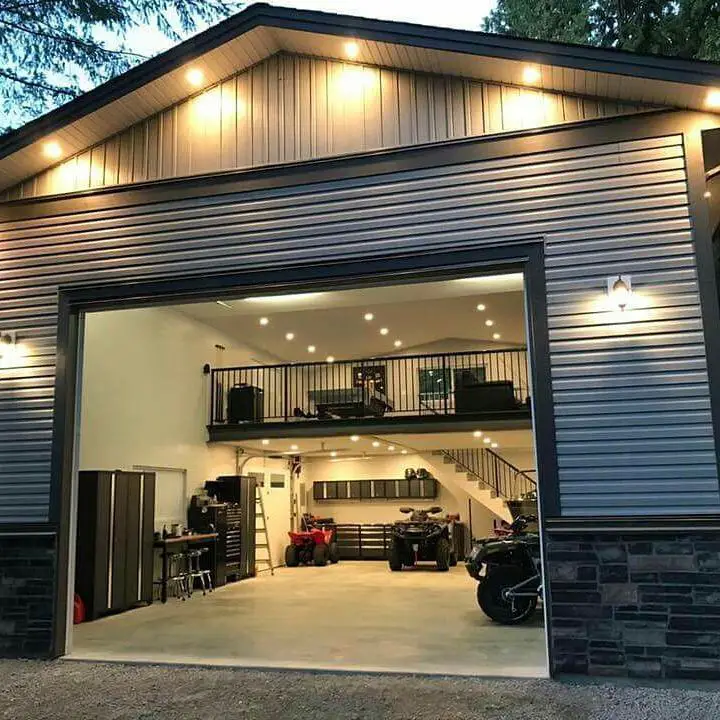
The Garage Secret: How My Son’s Greed Became His Greatest Mistake
The coffee had gone cold in my hands, but I hadn’t noticed. I was too busy watching the morning unfold the way it had for thirty-five years—sunlight catching the dew on my rose bushes, the neighbor’s sprinkler system clicking to life right on schedule, Mrs. Henderson’s tabby cat making its rounds through the hedge that separated our yards.
Seventy-two years old, and I could still predict every sound this neighborhood would make before noon.
At seventy-two, people assume certain things about you. They assume you’re fragile, confused, losing your grip on reality and your finances. They assume you need help, need protecting, need someone younger and sharper to make decisions on your behalf.
My son David had been assuming a lot of things about me lately.
I’m Margaret Walsh, and I’ve lived in this house in suburban Cleveland, Ohio, for thirty-five years. Raised my son here after his father died when David was just seven. Built a life here, a career here, a quiet existence that probably looked unremarkable to anyone passing by. A simple ranch house on a tree-lined street, nothing fancy, nothing that would make you look twice.
But then, that was always the point.
I wasn’t fragile. I still drove myself to the library every Thursday. I still hosted book club once a month, and those women could debate literature with a ferocity that would exhaust people half our age. I still knew exactly which floorboard in the hallway creaked if you stepped too close to the wall, and which door stuck in humid weather, and where I’d hidden Easter eggs thirty years ago that David had never found.
This was my house. My home. The place where I’d built a life after losing my husband, where I’d raised my son alone, where every corner held a memory I’d carefully curated and preserved.
And on that Tuesday in May, my son decided to take it all away.
David’s black BMW rolled up my driveway around ten in the morning, the engine purring in that expensive way that announced its price tag. Christina, his wife of three years, stayed in the passenger seat, her chin lifted at that particular angle wealthy women perfect—the one that says they’re surveying property rather than visiting family.
She was scrolling on her phone, and from the back porch where I stood, I could see her face illuminated by the screen, completely absorbed in whatever digital world was more interesting than her elderly mother-in-law’s home.
My son came to the door with a folder tucked under his arm.
Not a grocery bag with items he thought I might need. Not a container of leftovers from whatever restaurant they’d tried recently. Not even a “Hey Mom, I was in the neighborhood and thought I’d check on you.”
A folder.
The kind that holds documents. Official things. Papers that change lives.
“Mom,” he said when I opened the door, not quite meeting my eyes. “We need to talk.”
There was no hug. No kiss on the cheek. No “how are you feeling” or “you look well” or any of the small kindnesses that usually grease the wheels of family interaction.
Just those four words: We need to talk.
The universal precursor to bad news.
I let him in, of course. What else was I going to do? This was still my house, still my domain, and I was still operating under the delusion that my son had come with concern rather than conquest on his mind.
He sat at my kitchen table—the same table where I’d cut his pancakes into little squares when he was six, where we’d done homework together, where I’d served dinner every night for years after his father died because maintaining routines seemed important when the world had just fallen apart.
He slid documents across that table with the casual confidence of someone who believes they’re doing the right thing.
The papers had that official weight to them, heavy stock with embossed letterheads. The kind that makes your stomach tighten before you even read a word, because you know instinctively that nothing good comes on paper that expensive.
David didn’t ask how I’d been sleeping. Didn’t comment on the roses blooming just outside the kitchen window—roses I’d babied through a brutal winter, roses that were my pride and joy every spring. Didn’t mention the photo on the wall behind him, the one of us at his college graduation where we were both beaming, where I was so proud I thought my heart might burst.
He went straight to the numbers.
“Mom, this house is worth a lot now,” he said, his voice taking on that practiced tone people use when they’ve rehearsed a difficult conversation. “The market’s insane. Your property is worth almost eight hundred thousand dollars.”
He let that number hang in the air like bait.
“That’s too much house for you,” he continued, finally looking at me but not really seeing me. “Too many stairs. Too much upkeep. The property taxes alone are becoming unreasonable. You’re seventy-two. You shouldn’t be dealing with all this.”
Christina finally came in from the car, her heels clicking on my hardwood floors like she was already measuring the space. She wandered from room to room while David talked, trailing her fingers over my curtains, peering into corners, examining my baseboards and light fixtures with the critical eye of someone planning renovations.
She didn’t say hello to me. Didn’t acknowledge my presence at all, really. I was just another fixture in the house, something to be evaluated and relocated.
I watched her disappear into my bedroom, heard her opening my closet, and felt something cold settle in my chest.
Three months earlier, I might have believed this was concern. David had started calling more frequently, asking pointed questions that felt oddly specific: How much were my property taxes? Was my homeowner’s insurance up to date? How much did I have set aside for emergencies? Did I have a will? Who was handling my finances?
I’d told myself it was love. The awkward kind that adult children show when they don’t know how to talk about aging and mortality and all the uncomfortable realities that come with having elderly parents. I’d told myself he was worried about me, that he was trying to help in his clumsy, masculine way.
But then came the unannounced visits.
David would show up without calling, letting himself in with the spare key I’d given him years ago for emergencies. He’d wander through the house, checking things. “Just making sure everything’s working okay,” he’d say. “Just want to make sure you’re safe.”
He’d lift his phone like he was texting, but I’d catch the angle—camera facing my staircase, my kitchen, my living room. Documenting something.
He’d ask questions about my routine with a casualness that didn’t quite land: Did I ever forget to turn off the stove? Had I missed any appointments lately? Did I ever get confused about what day it was?
I’d answered honestly, never thinking he was building a case against me.
And now, finally, the curtain had dropped.
“We’ve thought about this a lot,” David said, tapping the papers with one finger. “And we think the best solution is to sell the house. We’ve already talked to a realtor—great woman, very professional. She thinks we can get top dollar, especially if we list in the next few weeks.”
“And where would I live?” I asked quietly, already knowing the answer from the way Christina was evaluating my garage through the kitchen window.
David had the decency to look slightly uncomfortable.
“You’ll live in the garage,” he said, like he was offering me a guest suite at a resort. “We’ll convert it into a studio apartment. One room, bathroom, small kitchenette. You’ll be on the property, Mom. You’ll still be home. It’s actually very generous when you think about it.”
Generous.
That word hung in the air like a slap.
I stared at my son—this man I’d raised alone, this child I’d sacrificed everything for, this person I’d loved more than my own life—and tried to find some trace of the boy who used to bring me dandelions from the yard and call them flowers.
He was gone. Or maybe he’d never really existed the way I’d imagined.
Christina leaned against my counter now, arms crossed, lips pressed into the faintest smile. The kind of expression people wear when they think a decision is already final, when they’re just waiting for you to accept reality.
“You have twenty-four hours to start packing essentials,” David continued, his voice becoming more businesslike, more detached. “The realtor is coming Friday for photos and measurements. We’ve scheduled an estate sale company for next week—they’ll handle most of your things. Obviously you can keep what fits in the studio.”
When I didn’t immediately respond, when I just sat there trying to process what was happening, his tone sharpened.
“Mom, if you fight this, I’ll do it the legal way.” He leaned forward, and for the first time I saw something hard in his eyes, something calculating. “I’ve already talked to attorneys. Multiple attorneys, actually. I can pursue guardianship. I’ve been documenting things for months. Confusion. Forgetfulness. Potential safety issues. They’ll listen to me. The courts always listen to concerned children when elderly parents are at risk.”
The threat was delivered with the precision of someone who’d practiced it.
And that was the moment something in me went very still.
Not panic. Not tears. Not the helpless despair of an old woman being bullied by her own child.
A clean, cold clarity.
Because while David had been busy taking photos and counting my steps and documenting my supposed decline, while he’d been so focused on my house and my assets and his inheritance, he’d missed something crucial.
He’d never once asked why I spent so many afternoons in the garage.
He’d never wondered what I kept locked away behind my workbench, or why I’d installed such a substantial lock on such an old building.
He’d never questioned why I’d always been so calm about money despite living so simply, or how I’d paid for his entire college education without loans, or how I’d managed to maintain this house for thirty-five years on what he assumed was just his father’s modest life insurance policy.
David thought he knew everything about me. Thought he had me figured out. Thought I was just a confused old woman with valuable real estate and no power to stop him from taking it.
He had no idea who I really was.
I looked from my son to my daughter-in-law, then back to the folder on my table.
And I smiled.
Not because I wasn’t hurt. I was. The betrayal cut so deep I could barely breathe around it.
I smiled because they thought the garage was a punishment, and I knew it was a door.
I smiled because they believed I was cornered, weak, powerless.
And they had no idea I’d been building something—quietly, patiently, strategically—for thirty-five years.
“Twenty-four hours,” I said calmly. “You want me to pack in twenty-four hours.”
“Essentials,” Christina clarified, speaking to me directly for the first time. “We’re not monsters. You can take your clothes, toiletries, maybe a few photos. But the furniture stays. It’s worth more with staging.”
“I see,” I said, still smiling that small, secret smile.
David stood up, clearly relieved that I wasn’t fighting, wasn’t crying, wasn’t making a scene. “I’ll call you tomorrow to check in. The movers will be here Monday.”
They left the way they’d come—Christina first, already on her phone again, probably texting their realtor. David following behind with his folder, not looking back at the house he’d grown up in, the home his mother had built for him.
The BMW pulled out of my driveway, and I watched it disappear around the corner.
Then I stood up, walked to my kitchen window, and looked out at the garage.
That old, ordinary garage that no one ever paid attention to. That David had wandered through a dozen times in the past few months without really seeing it. That Christina had glanced at and dismissed as the perfect place to warehouse an inconvenient elderly woman.
They thought it was just a garage.
They had no idea.
That night, after the neighborhood went dark and the porch lights blinked on one by one down the street, after I was certain no one was watching, I stepped out through the side door and crossed the driveway.
The key to the garage was on a chain around my neck—had been for thirty-five years. I’d never taken it off, not once. It had become part of me, this small piece of brass that held more power than anyone knew.
I unlocked the side door and stepped inside, flipping on the overhead light that illuminated a space most people would find disappointingly normal: concrete floor, workbench along one wall, garden tools hanging neatly, boxes stacked carefully, my late husband’s old fishing equipment collecting dust in the corner.
But I didn’t head for any of those things.
I walked to the back wall, to the section behind the workbench where a pegboard held various tools. I reached up and pressed a specific spot on the board—not pulling a tool, just pressing the wood itself.
The entire section swung inward with a soft click.
Behind it was a door. A real door, steel-reinforced, with a combination lock that only I knew.
I’d installed this thirty-five years ago, right after my husband died, when I first understood exactly what he’d left me and how important it was to keep it secret. I’d hired contractors from three different states, paid them in cash, made sure no one person knew the full scope of what I was building.
I entered the combination—my son’s birthday, ironically enough—and the lock disengaged with a heavy thunk.
The room beyond was climate-controlled, dehumidified, secure. I’d maintained it meticulously for more than three decades, and everything inside was exactly as it should be.
Filing cabinets lined two walls, each drawer labeled and organized with the kind of precision that comes from years of legal training. My late husband Robert had been a patent attorney, one of the best in his field. But what David had never known—what no one except me and Robert’s law partners had known—was what Robert had been doing in his spare time.
Inventing.
Creating.
Innovating.
And filing patents for every single one of his inventions.
Thirty-five years ago, when Robert died suddenly of a heart attack, I’d been devastated. But I’d also been practical. I’d taken his portfolio of patents—some already profitable, most still pending—and I’d managed them. Carefully, quietly, without fanfare or public knowledge.
Over the decades, Robert’s patents had generated substantial licensing fees. A medical device here. A manufacturing process there. A software algorithm that became industry standard. Small streams of income that added up to a river, then a flood.
I’d lived simply, invested wisely, and let the money accumulate.
I opened the first filing cabinet and pulled out a folder—not unlike the one David had brought to my kitchen table, but much, much thicker.
Inside were the current valuations of Robert’s patent portfolio. The active licensing agreements. The royalty statements. The investment accounts I’d built over thirty-five years.
The total was just over twelve million dollars.
Twelve million dollars that my son knew nothing about.
I pulled out another folder—this one containing the deed to my house. The deed that clearly showed my name alone, with no co-signers, no joint ownership, no legal pathway for David to simply sell it out from under me.
Then I pulled out the third folder—the one I’d started building three months ago, when David’s questions started getting too specific and his visits too frequent.
This folder contained screenshots of his text messages to Christina about “the inheritance.” Copies of the guardianship petition his lawyer had drafted but not yet filed. Photos he’d taken of my house that he’d accidentally uploaded to a shared cloud drive. Recordings from my doorbell camera of him going through my mail, my files, my personal papers.
Everything I’d need to prove that he wasn’t a concerned son trying to protect his aging mother.
He was a greedy man trying to steal his mother’s assets.
I gathered everything I’d need, locked the room back up, and returned to my house.
I slept better that night than I had in months.
The next morning, I called my lawyer.
Richard Morrison had been Robert’s law partner, and mine for the past thirty-five years. He was seventy-five now, officially semi-retired, but he still handled my affairs with the same sharp precision that had made him one of the best attorneys in Ohio.
“Margaret,” he said when he picked up, warmth in his voice. “What can I do for you?”
“I need you to file something for me,” I said calmly. “And I need you to do it fast.”
I explained what David had done, what he’d threatened, what he was planning.
Richard was silent for a long moment.
“That son of a bitch,” he finally said, his voice cold in a way I rarely heard. “Excuse my language, Margaret, but that’s what he is.”
“I’m not disagreeing.”
“How do you want to handle this?”
I told him.
He laughed—a sharp, delighted sound. “Oh, Margaret. Robert would be so proud of you.”
“I hope so.”
“Give me two hours. I’ll have everything filed.”
It took Richard three hours, actually, but when he called me back, his voice was practically gleeful.
“Done,” he said. “I’ve filed a protective order preventing anyone from selling or encumbering your property without a court order. I’ve also filed a formal complaint about David’s attempted exploitation of an elderly person—which is a crime in Ohio, by the way. And I’ve sent a very pointed letter to his attorney informing them that if they proceed with any guardianship action, we’ll be countersuing for attempted fraud, elder abuse, and emotional distress.”
“Thank you, Richard.”
“Oh, I’m not done. I’ve also prepared documents that, should you choose to sign them, would transfer your estate into an irrevocable trust with a professional trustee. David would have no legal access to anything. Not now, not ever. Not even after you’re gone.”
I thought about that. About David’s face when he learned he’d get nothing.
“Send them over,” I said. “I’ll sign them today.”
“Consider it done. Oh, and Margaret? One more thing. I took the liberty of emailing David and Christina. Just a friendly note informing them that you’re represented by counsel, that any further contact should go through me, and that we have substantial documentation of their attempted exploitation. I may have also mentioned that we’d be happy to provide said documentation to law enforcement if they’d like to continue down this path.”
I could hear the smile in his voice.
“You’re a good friend, Richard.”
“And you’re a formidable woman, Margaret. Don’t let anyone tell you otherwise.”
David called seventeen times that afternoon. I didn’t answer.
Christina sent texts that ranged from confused to angry to threatening. I blocked her number.
That evening, as the sun was setting and painting my roses gold, David’s BMW pulled into my driveway again.
This time he didn’t come to the door with a folder.
He came with his lawyer—a sharp-suited woman who looked like she’d just realized her client had made a catastrophic mistake.
I didn’t let them in.
Instead, I stood on my porch with my phone in hand, doorbell camera recording, and smiled at them through the screen door.
“Mom,” David said, and his voice was different now. Uncertain. Almost afraid. “We need to talk.”
“Any communication should go through my attorney,” I said pleasantly. “Richard Morrison. I believe he sent you his contact information.”
“Mom, please. There’s been a misunderstanding—”
“There’s been no misunderstanding,” I interrupted, my voice still calm, still pleasant. “You came to my home. You told me you were selling my house. You told me I’d be living in the garage. You threatened me with guardianship. You’ve spent months documenting my supposed incompetence so you could steal my home and my assets. None of that was a misunderstanding, David. That was a choice.”
His lawyer put a hand on his arm, clearly trying to stop him from saying anything else that could be used against him.
“Mrs. Walsh,” she said, stepping forward, “perhaps we could discuss this reasonably—”
“There’s nothing to discuss,” I said. “My attorney has filed all necessary protective orders. I’m not selling my house. I’m not moving into my garage. And if you continue to harass me, I’ll add that to the complaint we’ve already filed with the prosecutor’s office.”
David’s face had gone pale. “Prosecutor’s office?”
“Elder abuse is a crime in Ohio,” I said conversationally. “Richard thought it was worth reporting. They seemed very interested.”
I watched as the implications sank in. The legal trouble. The potential criminal charges. The fact that his scheme had not only failed but potentially destroyed any future relationship with me.
“I raised you better than this,” I said quietly, and finally, finally let some of the hurt show in my voice. “I gave you everything I had. I worked two jobs to put you through college. I sacrificed for years to give you a good life. And you repaid me by trying to steal my home and lock me in a garage like a piece of discarded furniture.”
“Mom, I didn’t—we weren’t—” He was stammering now, desperately trying to find words that could fix this.
“You have five seconds to get off my property,” I said, my voice hardening. “Or I’m calling the police for trespassing. One.”
His lawyer was already backing toward the car.
“Two.”
“Mom, please—”
“Three.”
They left. The BMW peeled out of my driveway fast enough to leave rubber on the concrete.
I stood on my porch and watched them go, my heart pounding but my hands steady.
Then I went inside, locked my door, and poured myself a glass of the good wine I’d been saving.
That weekend, I invited my book club over. Seven women, ages ranging from sixty-eight to eighty-two, all sharp as knives and twice as dangerous when riled up.
I told them everything.
By Monday morning, David’s attempted elder abuse was the talk of the neighborhood. His reputation was in tatters. His law firm—where he worked as a mid-level associate—had started asking pointed questions about his judgment and character.
Christina filed for divorce three weeks later. Apparently she’d married him for his “expected inheritance.” When she learned there wasn’t going to be one—that I was not only keeping everything but actively working to ensure he never got a penny—she cut her losses.
David tried to apologize exactly once, six months later. A letter delivered by regular mail, full of excuses and justifications and requests for forgiveness that rang hollow.
I didn’t respond.
Some betrayals are too fundamental to forgive. Some trust, once broken, can’t be repaired.
He was my son. I’d loved him with every fiber of my being.
But he’d looked at me and seen only dollar signs. He’d looked at my home and seen only profit. He’d been willing to lock me in a garage, steal everything I’d worked for, and destroy my dignity—all for money he didn’t need and hadn’t earned.
That wasn’t love.
That was greed.
And I had no room in my life for greed anymore.
I’m seventy-three now, one year older and infinitely wiser. I still live in my house—the one David tried to steal. I still tend my roses. I still host book club. I still have coffee on the back porch every morning, watching the neighborhood wake up.
But I’ve made some changes.
I’ve set up a scholarship fund at the local community college—full tuition for single mothers trying to better their lives. Named it after Robert.
I’ve started mentoring young women in STEM fields, teaching them about patents and intellectual property and how to protect their inventions.
I’ve rewritten my will. Everything goes to charity now—the patent portfolio, the investments, the house, everything. Carefully distributed to organizations that help people who actually need help.
David gets nothing. Not out of spite, but because he already showed me what he’d do with it.
He’d see it as something he deserved rather than something to be grateful for.
And I didn’t spend thirty-five years building something beautiful just to watch it be consumed by entitlement.
The garage still stands in my backyard, ordinary and unremarkable from the outside. Sometimes I go out there and sit in that secret room, surrounded by Robert’s legacy and my own careful stewardship of it, and I think about how close I came to losing everything.
How close David came to succeeding.
If I’d been weaker, or less prepared, or more willing to believe that family meant unconditional surrender, he would have won.
But I wasn’t weak.
I was strategic.
And when my own son tried to cage me, I simply opened a different door—one he never knew existed—and walked out into freedom.
Some people think the story ends with me kicking David out, with me winning.
But that’s not the end.
The end is me, at seventy-three, finally understanding that I don’t owe anyone access to my life, my money, or my home just because we share DNA.
The end is me choosing peace over obligation.
The end is me watering my roses, hosting my book club, and living well in the house I built and the life I created.
The end is me being free.
And that freedom?
That was worth every secret I kept.
THE END

Sophia Rivers is an experienced News Content Editor with a sharp eye for detail and a passion for delivering accurate and engaging news stories. At TheArchivists, she specializes in curating, editing, and presenting news content that informs and resonates with a global audience.
Sophia holds a degree in Journalism from the University of Toronto, where she developed her skills in news reporting, media ethics, and digital journalism. Her expertise lies in identifying key stories, crafting compelling narratives, and ensuring journalistic integrity in every piece she edits.
Known for her precision and dedication to the truth, Sophia thrives in the fast-paced world of news editing. At TheArchivists, she focuses on producing high-quality news content that keeps readers informed while maintaining a balanced and insightful perspective.
With a commitment to delivering impactful journalism, Sophia is passionate about bringing clarity to complex issues and amplifying voices that matter. Her work reflects her belief in the power of news to shape conversations and inspire change.