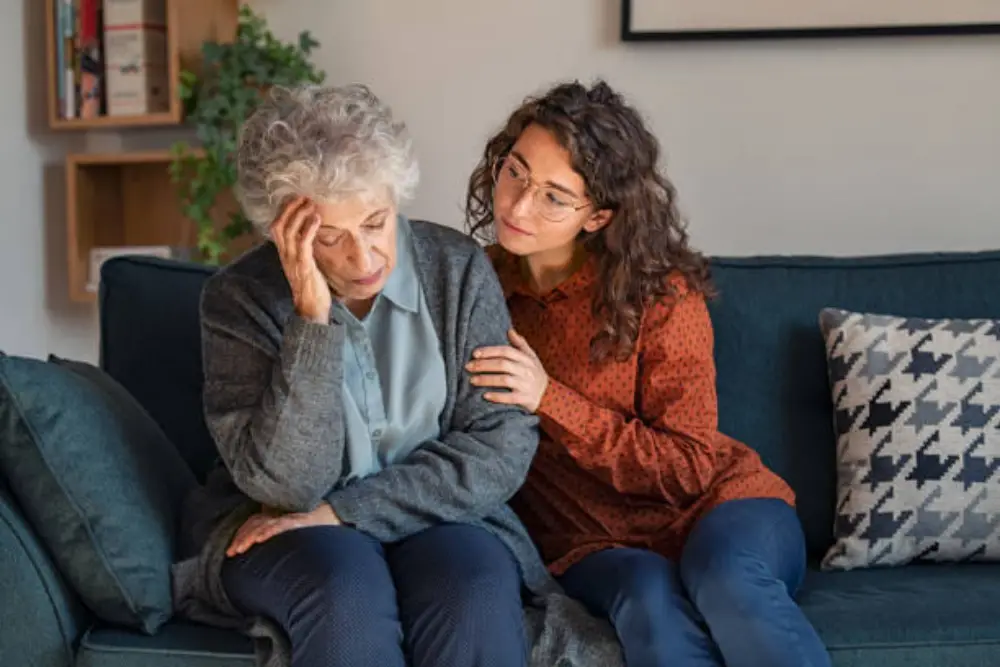
The call came on my second day of retirement, just as I was pouring my first truly leisurely cup of coffee in thirty-five years. I’d imagined this morning so many times during those last exhausting months at Lincoln Elementary—the luxury of sitting by my kitchen window without a lesson plan to review, without parent emails demanding my immediate attention, without the weight of twenty-eight third-graders’ futures pressing on my shoulders.
“Mom, I need you to watch the kids,” my daughter-in-law Brooke announced without preamble, her voice carrying that particular blend of entitlement and dismissiveness I’d come to recognize over the years. “I’m leaving them with you for two weeks. You don’t do anything anymore, so you can watch them while I travel for work.”
I smiled into the silence, though she couldn’t see it. The same smile I’d perfected during countless parent-teacher conferences when mothers like Brooke insisted their precious darlings couldn’t possibly be the problem. “When were you thinking?” I asked mildly.
“Tomorrow morning. Seven sharp. Don’t make Michael late for work by making him drop them off.” She paused, and I could hear her tapping on her phone, already moving to the next item on her agenda. “And Mom, don’t spoil them. They have routines.”
The call ended before I could respond. I set down my coffee and reached for the notebook I’d purchased just yesterday—a beautiful leather-bound journal meant for documenting my retirement adventures. The travel brochures were still spread across my coffee table: Yellowstone, the Grand Canyon, Highway 1 down the California coast. Places I’d promised myself the minute that final bell rang on my last day of teaching.
But as I opened the notebook to a fresh page and wrote “Day One: Reconnaissance” at the top, I felt something I hadn’t felt in the two days since retirement began. Purpose. Because thirty-five years of teaching at Lincoln Elementary had trained me for difficult children, impossible parents, and quiet wars. This one would be my last—and my best.
My name is Helen Miller. I’m sixty-three years old, a widow of eight years, a retired elementary school teacher, and the mother of Michael—a good man with a weak spine when it comes to his wife. I’m also the grandmother of Aiden, Chloe, and Leo: three fundamentally good kids who’d been bent the wrong way by a woman who confused attention with love and control with parenting.
I’d seen it happening for years, watched helplessly as Brooke systematically isolated my son from his family, as she weaponized my grandchildren’s affection, as she built a wall between us one cancelled visit and forgotten birthday at a time. Every teacher knows this type—the parent who’s never wrong, who’s always the victim, who teaches their children that manipulation is a survival skill.
But I’d also learned something in those thirty-five years: every bully has a weakness. You just have to be patient enough to find it.
At seven o’clock the next morning, precisely on schedule, Brooke’s white SUV pulled into my driveway. She emerged in yoga pants and designer sunglasses, already on her phone as she hauled three small suitcases from the trunk. Aiden, Chloe, and Leo trailed behind her like uncertain refugees—eleven, nine, and seven years old respectively, their faces carefully blank in that way children learn when showing emotion becomes dangerous.
“No green vegetables,” Brooke announced as she dumped the suitcases on my front porch without crossing the threshold. “Aiden needs his iPad to sleep. Chloe’s not allowed sugar after six. Leo has to FaceTime me every night at eight sharp.” She thrust a piece of paper at me—a typed list of instructions, rules, and restrictions. “Don’t spoil them. I’ll be back in two weeks.”
No kiss for the children. No eye contact with me. Just a cloud of expensive perfume and the sound of her SUV peeling away, leaving three small figures standing on my porch looking like they’d just been abandoned on a deserted island.
“Well then,” I said, holding open my front door. “Welcome home, my loves.”
They filed past me with the enthusiasm of prisoners entering a cell. Aiden immediately pulled out his phone. Chloe clutched a stuffed unicorn that had seen better days. Leo dragged his suitcase with both hands, the wheels catching on my doorframe.
“Where’s the Wi-Fi password?” Aiden asked, not looking up from his screen.
“Mom says you can’t cook,” Chloe announced, studying my living room with obvious disappointment at its lack of flat-screens and gaming systems.
“I want YouTube,” Leo said.
I smiled the same smile I’d given Brooke on the phone. “The Wi-Fi will be available after breakfast. Speaking of which, who likes pancakes?”
“Mom says pancakes are basically just sugar and chemicals,” Aiden informed me with the condescending certainty of an eleven-year-old who’s been taught what to think rather than how to think.
“How interesting,” I said mildly. “I suppose that’s why your father used to eat five of them every Saturday morning when he was your age.” I moved toward the kitchen. “Aiden, please put your phone in the basket by the door. Chloe, Leo—suitcases stay in the hall for now. Everyone washes hands and comes to the kitchen.”
“You can’t take my phone,” Aiden said, his voice rising with the particular outrage of a child who’s never been told no. “Mom said I could have it whenever I want.”
I turned and looked at him—really looked at him—with the expression that had stopped countless rebellious third-graders in their tracks. Not angry. Not harsh. Just absolutely immovable.
“In this house,” I said quietly, “we have different rules. Devices in the basket. Now, please.”
He stared at me for a long moment, clearly calculating whether resistance was worth it. Then, with exaggerated slowness, he dropped his phone into the woven basket I’d placed by the door. Chloe and Leo followed suit, though Leo’s hand lingered over his tablet before finally releasing it.
In the kitchen, I pulled out flour, eggs, milk, and butter. “Who wants to help?” I asked.
Silence. They arranged themselves at my small kitchen table like a jury.
“Fine. You can watch.” I began mixing ingredients, deliberately making a small show of it—cracking eggs with one hand, whisking with practiced efficiency. Then I pulled out cookie cutters. “Now, do we want dinosaurs, stars, or hearts?”
“Dinosaurs,” Leo said before he could stop himself.
I poured the batter into dinosaur shapes on the griddle, and the smell of butter and vanilla began to fill the kitchen. I saw Chloe’s nose twitch. Aiden’s stomach growled audibly.
When I set the plates down—each pancake a perfect golden dinosaur, with blueberries for eyes and a strawberry smile—they hesitated only a moment before digging in.
“They’re okay,” Leo said with his mouth full. “Not horrible.”
Aiden cut his pancake into precise pieces but cleaned his entire plate. Chloe ate two dinosaurs and asked if there might be one more.
“After we do dishes together,” I said. “In this house, everyone helps clean up.”
“Mom says that’s child labor,” Aiden informed me.
“Mom isn’t here,” I replied simply, handing him a dish towel. “And learning to clean up after yourself isn’t labor. It’s life.”
They grumbled and rolled their eyes, but they did it. And while they washed and dried and put away plates under my direction, I saw the first crack in their carefully constructed armor. They were testing me, yes—seeing how far they could push, what they could get away with. But they were also, underneath all that defensive posturing, relieved.
Children thrive on structure. Every teacher knows this. Brooke had given them chaos disguised as freedom, neglect packaged as independence. In just one morning, they were already responding to what they’d been missing: boundaries, expectations, and an adult who was actually paying attention.
That night, after dinner—homemade spaghetti and meatballs that all three of them devoured despite Aiden’s initial protest that “Mom only makes organic pasta”—I supervised teeth brushing and bedtime routines. No iPads. No phones. Just books from my shelves and the gentle hum of my voice reading Where the Wild Things Are to Leo, then The Secret Garden to Chloe.
I was closing Chloe’s door when I heard it: soft crying, muffled by a pillow.
I pushed the door back open gently. “Sweetheart? What’s wrong?”
For a moment, she didn’t respond. Then: “Mom always leaves.”
I sat on the edge of her bed, my hand resting lightly on her back. “Tell me about that.”
And she did. In halting sentences interrupted by tears, she told me about the trips that got longer and longer. About the “business conferences” that meant weeks away. About the promises that Mom would be back by her birthday, by the school play, by Christmas—promises that dissolved like sugar in water.
“We’re not supposed to talk about it,” Chloe whispered. “Mom says if we tell Dad, he’ll die of sadness. She says he can’t handle stress because of his heart.”
My own heart clenched. Michael had no heart condition. But this was classic Brooke—weaponizing the children’s love for their father, making them complicit in keeping secrets that would destroy their family.
“That’s a heavy burden for a nine-year-old,” I said gently. “Too heavy. Secrets like that aren’t meant for children to carry.”
“If I tell you more, promise you won’t tell Dad?” Chloe’s eyes were wide and frightened in the nightlight’s glow.
“I promise,” I said, “that I will do what’s best for you and your brothers. Always.”
She studied my face, then nodded slowly. Over the next hour, in bits and pieces, she told me everything. About “Uncle Dominic” who was always at the places Mom took them. About the other house, bigger and nicer than theirs, where they sometimes stayed. About the credit cards Mom was always using, and how Dad didn’t know about them. About the fights late at night when Brooke thought they were sleeping.
When Chloe finally drifted off to sleep, I went to my dining room and opened my laptop. I called Martha, an old colleague from Lincoln who’d retired three years before me and now volunteered with child protective services. Then I called Robert Chen, who’d taught seventh grade at our school until his daughter convinced him to go to law school at age fifty—he now practiced family law.
“Martha,” I said when she answered. “I need advice on documentation. And I might need you to make a casual wellness check in about a week.”
“Robert,” I said after. “Hypothetically, if someone discovered evidence of fraud and potential parental alienation, what would be the proper steps?”
By midnight, I had a plan. By one a.m., I had a list of what I needed. By two a.m., I’d set up the first small camera—one of those nanny cams that look like ordinary objects—in my living room, positioned to capture the common areas.
This wasn’t paranoia. This was documentation. Because thirty-five years of teaching had taught me the most important lesson: you don’t argue with liars. You document them.
The next morning brought a breakthrough. After breakfast—more dinosaur pancakes, requested by unanimous vote—I suggested we look at old photo albums. “I want to show you pictures of your dad when he was your age.”
We settled on the couch, the leather album spread across our laps. I pointed out photos of Michael at eight, grinning gap-toothed in his Little League uniform. At ten, covered in mud from a camping trip. At twelve, holding up a fish he’d caught with my late husband.
“Dad never takes us fishing,” Leo said quietly.
“Mom says it’s boring,” Aiden added. “She says Dad’s hobbies are boring.”
I turned the page carefully. “What do you think? Do these look boring?”
“They look fun,” Chloe admitted.
“Dad looks happy,” Leo observed.
I let that sit for a moment. Then, as casually as if asking about the weather: “Which house do you like better? The one you live in with Dad—or Uncle Dominic’s?”
The silence was absolute. Three pairs of eyes went wide. Aiden’s face flushed red. Chloe’s filled with tears. Leo looked like he might be sick.
“I don’t know what you mean,” Aiden said finally, but his voice shook.
“Yes, you do,” I said gently. “And I want you to know something important: whatever you tell me, you’re not in trouble. You didn’t do anything wrong. But secrets that hurt people—those need to see daylight.”
It was Chloe who broke first, tears spilling down her cheeks. “Mom said we couldn’t tell. She said Dad would take us away from her if he knew. She said we’d ruin everything.”
“Uncle Dominic’s house has a pool,” Leo said in a small voice. “Mom says if we’re good and don’t tell, we can go swimming whenever we want.”
And then it all came out, a flood of secrets that had been dammed up for months or maybe years. The other house in Miami where they sometimes stayed. The way Mom acted different around Uncle Dominic—happier, younger, not always on her phone. The credit cards Mom used for “emergencies” that Dad didn’t know about. The times Mom said they were at Grandma’s house—my house—when they weren’t, when they were actually in Florida.
“She uses you as an alibi,” I said, more to myself than to them, but Aiden heard.
“What’s an alibi?”
“It’s when you lie about where you were,” I explained, “and use someone else to back up your lie.”
“That’s what Mom does with you,” Aiden said, understanding dawning. “She tells Dad we’re here, but we’re not always here.”
“How often are you really at Uncle Dominic’s house?” I asked.
They looked at each other, some silent sibling communication passing between them. “A lot,” Chloe finally said. “Like… maybe half the time?”
I kept my expression neutral, but inside, fury was building. Brooke had been using me—my supposed inability to say no, my presumed ignorance—as cover for an affair, for fraud, for systematically betraying my son while making his own children complicit in the deception.
“Okay,” I said, keeping my voice calm and steady. “Here’s what we’re going to do. We’re going to have a truth-telling day. No one’s in trouble. No one’s going to be punished. But we’re going to write down the truth—all of it—so that when the time comes, the truth can protect you.”
“Protect us from what?” Leo asked.
“From being caught in the middle anymore,” I said. “From having to keep secrets that hurt you. From having to lie to protect adults who should be protecting you.”
That afternoon, while they played in my backyard—actually played, without devices, the way children should—I logged into the cloud account that Aiden had casually mentioned during his truth-telling session. Brooke, like many narcissists, believed she was smarter than everyone else. She’d set up a family cloud account for photos and documents but had forgotten that once you give a child access, they can see everything.
Or perhaps she’d simply never imagined that her technologically-challenged mother-in-law might think to check.
What I found was damning. Hundreds of photos from Miami—Brooke with a man who was clearly not my son, lounging by an enormous pool, dining at expensive restaurants. Messages between Brooke and “Dominic” discussing their future together, their plans to “handle the Michael situation” once the children were “old enough to choose.”
Bank statements showing transfers from accounts in Michael’s name to accounts I didn’t recognize. Credit card statements for cards Michael didn’t know existed, racking up charges for furniture, home renovations, and luxury goods—all at an address in Miami.
I printed everything. I organized it into folders: Financial Fraud, Evidence of Affair, Parental Alienation, Falsification of Whereabouts. I created a timeline, cross-referencing the dates Brooke claimed to be at “conferences” with the dates of photos in Miami. The documentation was meticulous, the kind of comprehensive evidence portfolio that would stand up in family court.
Then I called Robert again. “It’s not hypothetical anymore,” I said. “And it’s worse than I thought.”
Day three began at five in the morning with the sound of explosions in my dining room. I ran downstairs to find smoke, the acrid smell of burnt gunpowder, and my three grandchildren holding empty boxes of fireworks—the kind you’re supposed to set off in a field, not inside a house.
“What on earth—” I started, but then I saw their faces. Not mischievous. Not celebratory. Desperate.
“We can’t stay here!” Aiden shouted. “We need to go home!”
Chloe was crying, but not the soft tears of sadness. These were angry tears, furious tears. “This isn’t our home! You’re not our mom!”
Leo had already started tearing photos from my albums, ripping them into pieces with small, shaking hands. “I want my mom! I want my real house!”
In thirty-five years of teaching, I’d seen this before. The emotional explosion that comes after confession, when children who’ve told the truth panic and try to take it back, try to return to the familiar dysfunction because at least it’s familiar.
I didn’t yell. I didn’t grab the photos from Leo’s hands or stop the tantrum. I simply stood there, perfectly still, letting them rage while the small camera I’d hidden in the bookshelf captured everything.
Not to use against them. To protect them. Because what followed rage was exhaustion, and what followed exhaustion was truth, and I needed documentation of that truth for what was coming.
After twenty minutes, the storm passed. Aiden slumped against the wall, crying. Chloe had curled into a ball on the floor. Leo was in my arms, sobbing into my shoulder.
“It’s okay,” I whispered to each of them. “It’s okay to be angry. It’s okay to be confused. It’s okay to love your mother even when she makes bad choices.”
By seven that evening, after we’d spent the day cleaning up the mess together—I’d given each of them a trash bag and told them we clean what we break and speak the truth we’ve been forced to swallow—my son Michael arrived at my kitchen table.
He looked exhausted, still wearing his work clothes, grease on his sleeves from the garage where he worked as a mechanic. “Mom, the kids called me,” he said. “Said there was some kind of incident with fireworks?”
“Sit down,” I said, sliding the folder across the table. The same table where he’d done his homework as a child, where we’d eaten dinner as a family after his father died, where I’d helped him practice his vows before his wedding to Brooke.
He opened the folder. I watched his face as he read—watched confusion turn to disbelief, disbelief to recognition, recognition to grief. Page after page: bank statements, photos, messages, credit card bills, the children’s written statements from our truth-telling day.
When he finally looked up, my strong, capable son looked like a lost boy. “Mom,” he said, his voice breaking. “What do I do?”
“We fight,” I said simply. “We fight with documentation, with truth, and with the law on our side.”
We called Robert, who arrived within an hour with a colleague who specialized in financial fraud. We called Martha, who officially documented her concerns about the children’s well-being. We created a plan: temporary custody modification, restraining orders for financial assets, immediate investigation into the credit fraud.
“She’s going to be back in two weeks,” Michael said. “What do I do until then?”
“Let her come,” I said. “Let her walk into a situation she thinks she controls. Let her think she’s won.”
For the next eleven days, life at my house settled into a rhythm. The children’s devices stayed in the basket except for one hour after homework. We cooked together, read together, worked in the garden together. They called Brooke every night at eight as scheduled, cheerful and noncommittal, saying everything was fine, Grandma was nice, we’re having fun.
They were learning to lie to protect themselves instead of to protect her. It wasn’t ideal, but it was necessary.
Michael came for dinner every night. He played catch with Aiden, braided Chloe’s hair, read to Leo. I watched my son rediscover his children and his children rediscover their father—the man Brooke had been slowly erasing with her constant criticism, her insistence that he was boring, insufficient, disappointing.
On day twelve, Leo drew a picture of our family. He drew himself, his siblings, his father, and me—all holding hands. There was no Brooke in the picture. When I gently asked why, he said simply, “Because she’s never really there anyway.”
Two weeks to the day after Brooke had dropped them off, at exactly seven in the morning, her white SUV pulled into my driveway. I watched from the window as she emerged in different yoga pants and the same designer sunglasses, a fresh tan from Miami sun, already on her phone.
She breezed in through my front door without knocking, dropping her suitcase in the hallway. “Where are the kids? I hope you didn’t spoil them. I have to get them home and back into their routine.”
I stood in the kitchen doorway. “They’re in the living room.”
She moved toward the living room, still scrolling through her phone, not noticing the man sitting at my kitchen table in a suit. Not noticing the folder of documents. Not noticing that my house had changed, that the air itself felt different, charged with something she couldn’t identify.
“Aiden! Chloe! Leo! Let’s go,” she called out. “Mommy missed you so much. Did you have fun with Grandma?”
She still hadn’t looked up from her phone.
Michael stood up from the kitchen table. I heard his footsteps, slow and deliberate, as he walked into the living room behind her.
“Brooke,” he said quietly.
She turned, finally, and her expression shifted from distraction to surprise to calculation in the space of a heartbeat. “Michael? What are you doing here? I thought you were at work.”
“Sit down,” he said.
“I don’t have time for—”
“Sit. Down.”
Something in his voice stopped her. She sat, perching on the edge of my couch, her body language already defensive. “What’s this about? Did she tell you something? Because you know how your mother is, she’s always exaggerating—”
“Mom didn’t tell me anything,” Michael said. “The kids did.”
The silence that followed was deafening. Brooke’s eyes darted to the hallway, where Aiden, Chloe, and Leo stood in a row, holding hands, watching her.
“We know,” Aiden said, his voice shaking but steady. “All of it.”
Brooke’s face went through a series of changes—shock, then anger, then something like fear, before settling into that particular expression of wounded innocence she’d perfected. “Baby, I don’t know what Grandma told you, but—”
“Grandma didn’t tell us anything,” Chloe interrupted. “We told Grandma. About Uncle Dominic. About the house in Miami. About the credit cards. About you using us to lie to Dad.”
“About everything,” Leo added, his small voice carrying more weight than all of Brooke’s protests.
Brooke stood up, her movements jerky. “This is ridiculous. Michael, they’re children. They don’t understand—”
“I understand,” Michael said, and he pulled out his own folder from behind his back. “I understand fraud. I understand adultery. I understand parental alienation. And I understand that as of nine o’clock this morning, you no longer have access to any bank accounts in my name, all credit cards you fraudulently opened have been reported and frozen, and there’s a restraining order preventing you from removing the children from Ohio.”
Brooke’s carefully constructed mask cracked completely. “You can’t do this to me! I’m their mother!”
“You’re a thief,” I said quietly from the kitchen doorway. “You’re a liar. And you used those children as weapons against their own father.”
“This is your doing,” Brooke hissed at me, finally dropping the pretense. “You poisoned them against me. You turned Michael against me. You’re just a bitter old woman who can’t stand seeing someone else happy.”
“Actually,” Robert said, standing up from the kitchen table and walking into the living room, “I’m Jeffrey Morrison, Mrs. Rivers’ attorney. And I have approximately two hundred pages of documentation showing fraud, identity theft, and emotional abuse of minors. Documentation that Mrs. Rivers very carefully compiled over the past two weeks.”
He set a second folder on my coffee table—the comprehensive portfolio of evidence I’d assembled. Bank statements. Screenshots. Photos. The children’s written statements. Phone records. Everything.
“You don’t do anything anymore,” Robert quoted with a slight smile. “I believe those were your words to Mrs. Rivers. Interesting how that assumption worked out for you.”
Brooke looked at the folder, then at Michael, then at the children, then back at me. For the first time, I saw real fear in her eyes. “Michael, please. We can work this out. I made mistakes, but we can fix this—”
“No,” Michael said. “We can’t. The kids and I are moving in with Mom temporarily while I find us a place. You’re moving out of the house—it’s in my name, and you have no legal right to it. You’ll be hearing from my attorney about divorce proceedings and from the county prosecutor about the credit fraud.”
“You’re taking my children from me?” Brooke’s voice rose to a shriek.
“You’re being offered supervised visitation once a week,” Robert said calmly. “Which is generous considering the evidence of your behavior. If you fight this in court, I can promise you’ll get less.”
Brooke looked at the children one last time. I thought she might appeal to them, might try to manipulate their emotions one final time. Instead, she grabbed her suitcase from the hallway and stalked toward the door.
“This isn’t over,” she said.
“Actually,” I said quietly, “it is. You just haven’t accepted it yet.”
She slammed the door hard enough to rattle the windows. We listened to her SUV peel out of the driveway, the engine’s roar fading into the distance.
For a long moment, no one moved. Then Leo ran to Michael and wrapped his arms around his father’s waist. Chloe followed, then Aiden, until my son was surrounded by his children, all of them crying but also, somehow, lighter. Freed.
I stood in the kitchen doorway and watched my family begin to heal.
Six months later, I’m standing in my kitchen making dinosaur pancakes for a full house. Michael and the kids have been living with me while he saves for a place of their own—a process that’s taking longer than expected because he’s also paying off the debt Brooke accumulated and taking the kids to therapy twice a week.
But we’re not in a hurry. The house that felt too big after my husband died now feels perfectly sized for a family of four who are learning to be whole again.
Brooke’s supervised visitations lasted exactly three weeks before she stopped showing up. She moved to Miami permanently to be with Dominic. The divorce was finalized last month. The criminal charges for credit fraud are still pending, but Robert is confident she’ll take a plea deal.
The children are thriving. Aiden just made the honor roll. Chloe joined the school choir and sings constantly around the house. Leo learned to ride a bike without training wheels last week, with Michael running beside him and me cheering from the porch.
My retirement adventures got postponed, but I don’t mind. Those travel brochures are still on my coffee table, and now they have sticky notes attached: “Aiden wants to see the Grand Canyon,” “Chloe says Yellowstone has wolves,” “Leo voted for the beach in California.”
We’ll take those trips together. All of us. A family built not on lies and manipulation, but on truth and boundaries and the hard work of loving each other properly.
This morning, Michael came into the kitchen while I was flipping pancakes. “Mom,” he said, “I don’t know how to thank you for what you did.”
I turned and looked at my son—at the man who’d found his spine again, who’d chosen his children over his comfort, who was rebuilding a life with honesty as its foundation.
“You don’t thank me,” I said. “You just keep being the father they deserve.”
“I will,” he promised. Then he smiled, the first real smile I’d seen from him in years. “You know what Brooke was wrong about?”
“What’s that?”
“She said you don’t do anything anymore.” He gestured around the kitchen—at the children setting the table, at the pancakes shaped like dinosaurs, at the family photos now taped back together and hung on my refrigerator. “Turns out you do everything that matters.”
I served dinosaur pancakes to my grandchildren and my son, and as I watched them eat and laugh and argue about whose turn it was to do dishes, I thought about that phone call two weeks into my retirement. About Brooke’s assumption that a retired teacher was useless, harmless, easily manipulated.
Thirty-five years in a classroom had taught me many things. But the most important lesson was this: underestimate a grandmother at your peril. Because we don’t just teach children how to read and write.
We teach them how to survive.
And when necessary, we teach their parents what it costs to forget that love requires truth, that family requires respect, and that grandmothers who “don’t do anything anymore” might just be building war rooms while you’re not paying attention.

Adrian Hawthorne is a celebrated author and dedicated archivist who finds inspiration in the hidden stories of the past. Educated at Oxford, he now works at the National Archives, where preserving history fuels his evocative writing. Balancing archival precision with creative storytelling, Adrian founded the Hawthorne Institute of Literary Arts to mentor emerging writers and honor the timeless art of narrative.