The Christmas Dinner That Cost Them Everything: How Three Envelopes Ended a Family
I walked into my parents’ house on Christmas Eve expecting the usual performance: awkward small talk that never quite landed, too much food that no one would admit was just a distraction from how little we had to say to each other, and me spending the entire evening pretending everything was fine—for Mia’s sake.
Always for Mia’s sake.
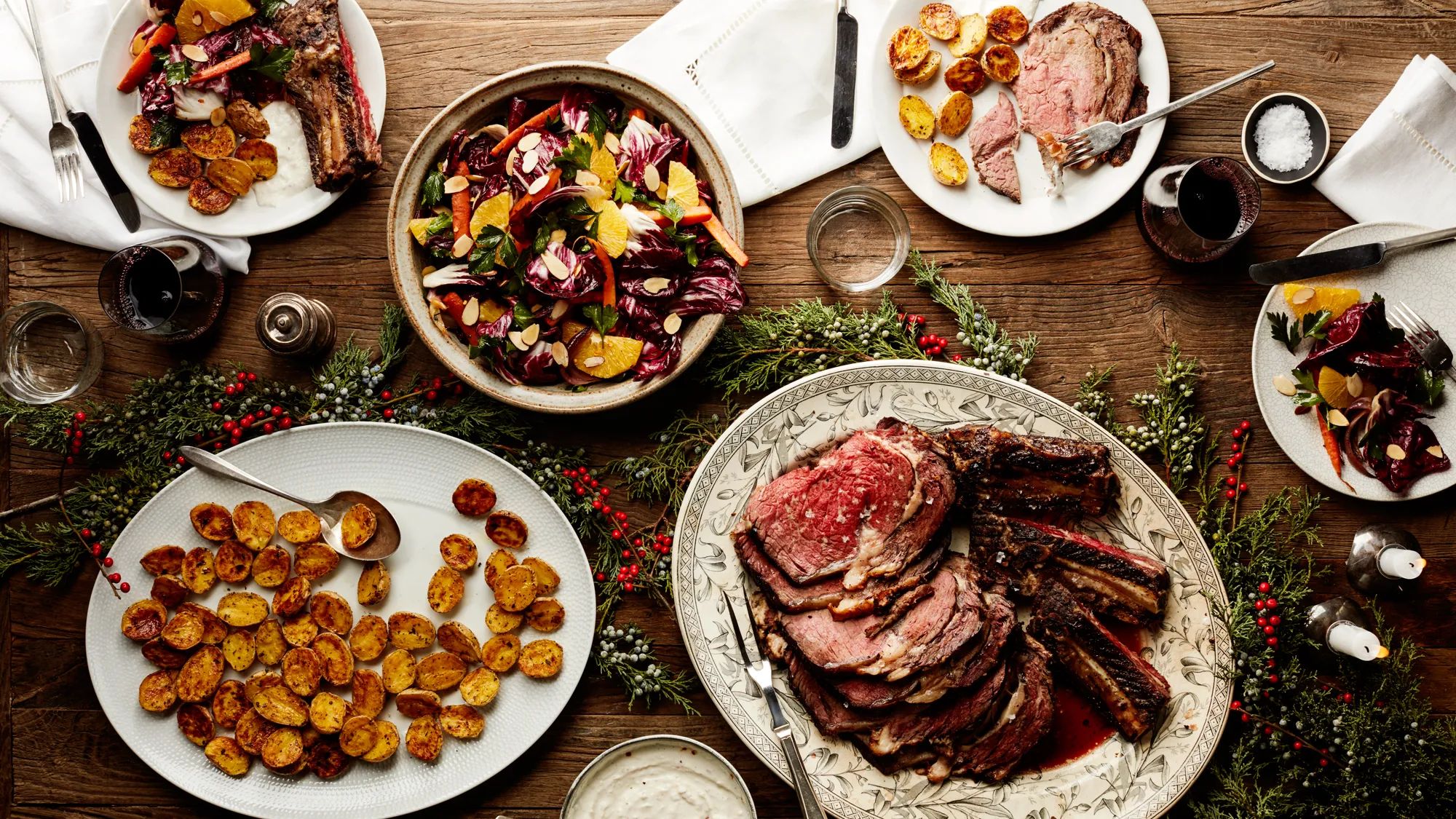
The dining room looked like something torn from a home décor catalog—white twinkle lights wrapped around the banister, deep red cloth napkins folded into perfect triangles at each place setting, a centerpiece of pine boughs and white candles that my sister Eliza would definitely mention at least three times during dinner with that particular tone that meant she wanted everyone to know she’d arranged it herself.
I had gravy pooling on my plate and my fork hovering somewhere between the turkey and my mouth when I felt the mood in the room shift. That particular kind of shift where the whole room gets quiet without anyone actually saying the word “quiet,” where conversations don’t so much end as die mid-sentence.
Something was coming. I could feel it the way you feel weather changing.
At the head of the table, my sister Eliza was glowing in that way she always did when she was about to get exactly what she wanted. Perfect smile. Perfect posture. Perfect tone of voice that suggested she was being reasonable even when she was being cruel. Her twin boys—eight-year-old terrors named Mason and Carter—were being loud, knocking their forks against their plates, arguing about who got more mashed potatoes, and nobody was correcting them because Eliza’s children were never corrected.
Mia sat beside me in the chair she’d chosen specifically because it was as far from the twins as possible, counting peas on her plate like it was a mathematical game she’d invented. Moving them into groups of three, then rearranging them into groups of five. She’s always been good at finding ways to shrink herself when adults get sharp, at disappearing into small tasks that make her less of a target.
She’s seven years old, and she’s already learned that sometimes the safest thing to do is become invisible.
My mom started early, the way she always did—little comments designed to land like paper cuts, small enough that you couldn’t call them out without seeming oversensitive, sharp enough that they drew blood anyway.
“Rachel, you look tired,” she said, her eyes moving over my face with the clinical assessment of someone cataloging failures. “Are you sleeping enough? You really should take better care of yourself.”
Said like exhaustion was something I was doing wrong, like being a single mother working fifty hours a week was a character flaw rather than a necessity.
Eliza glanced at Mia’s dress—a simple blue cotton thing we’d found at Target, the nicest one Mia owned that still fit her growing frame.
“Cute,” Eliza said, her tone suggesting it was anything but. “Very… simple.”
Connor—Eliza’s husband, a man who’d never worked a day in his life thanks to family money and seemed to think that made him superior to everyone who had—smirked from across the table.
“So, Rachel,” he said, drawing out my name like he was savoring it, “how are things? You doing okay? Managing?”
The subtext was clear: Are you still poor? Are you still struggling? Are you still the family embarrassment?
I smiled anyway. I passed the rolls when my father asked for them. I complimented my mother’s turkey even though it was dry. I kept Christmas moving forward because that’s what I’d always done, what I’d been trained to do since I was old enough to understand that my role in this family was to absorb cruelty and pretend it was love.
But the little comments kept coming—small, sharp, designed to make me swallow my dignity along with my dinner.
“This cranberry sauce is homemade,” my mother announced, looking directly at me. “Not the canned kind some people serve.”
“Mason’s reading at a fifth-grade level,” Eliza mentioned casually. “We’re so proud. Of course, we can afford the tutors.”
“I saw your car in the driveway,” Connor added. “Still driving that old thing? Must be, what, fifteen years old now?”
Mia’s shoulders curved inward with each comment, making herself smaller, and I watched my seven-year-old daughter trying to disappear at the Christmas table because she understood—the way children understand these things before they have words for them—that we were being positioned as lesser, as other, as the charity cases who’d been allowed to attend.
Then Eliza set down her fork with that deliberate precision that meant she was about to say something she’d rehearsed, something she’d been building toward all evening.
“We need to talk,” she said, her voice taking on that reasonable, measured quality that I’d learned to fear.
The room went completely silent. Even the twins stopped arguing, sensing something significant was happening.
Eliza leaned back in her chair, her eyes calm and certain, and I knew—absolutely knew—that whatever came next had been discussed, decided, agreed upon before I’d even walked through the door.
“This situation,” she continued, gesturing vaguely in my direction like I was a problem that needed solving rather than her sister, “has been difficult for everyone. Mom and Dad agree.”
I looked at my father, who was suddenly very interested in his plate. At my mother, whose face was carefully neutral. At Connor, who was barely suppressing a smile.
“Eliza,” I said, keeping my voice even despite the way my heart was starting to pound, “what are you doing?”
She tilted her head with that particular expression of false sympathy I’d seen a thousand times.
“Rachel, we’ve all decided it would be best if you left tonight. And honestly, if you didn’t come back. To future holidays, I mean. Family gatherings. It’s just… it’s uncomfortable for everyone. You can understand that, right?”
The words hung in the air like smoke, like something toxic that I couldn’t quite believe I was breathing in.
“You’re asking me to leave,” I said slowly, making sure I understood correctly, “on Christmas Eve. And never come back to family gatherings.”
“We’re not asking,” my mother said softly, as if she were commenting on the weather or the candle scent. “Christmas is so much better without the tension you bring. Eliza’s right—this is best for everyone.”
I looked at my father, giving him one last chance to be the man I’d spent my whole life hoping he might become. The one who would stand up for me, who would say this was wrong, who would remember that I was his daughter too.
He stared at his plate. Said nothing.
Mia’s fork clattered against her plate, the sound loud in the terrible silence. When I looked at her, her eyes were wide and beginning to shine with tears she was trying desperately not to shed, and something in my chest cracked open.
I could’ve begged. Could’ve argued. Could’ve done what I’d done my entire life—tried to earn a seat at a table that never wanted me comfortable, fought to prove I deserved the same love and acceptance they gave Eliza without her having to ask.
But Mia was watching. And I was teaching her, in this moment, what to do when people who are supposed to love you make you feel worthless.
So I set my fork down carefully and kept my voice gentle when I spoke.
“Mia, honey—go grab your coat and your little backpack. We’re leaving.”
She slid out of her chair immediately, like she’d been waiting for permission to escape, and headed toward the front hallway where we’d left our things. No tears now. No questions. Just a quiet, steady “Okay, Mama.”
Eliza crossed her arms, satisfied. “Good. That settles it then.”
Connor sighed like we’d just solved a minor scheduling conflict. “Finally.”
My mother’s mouth tightened into a thin line. “Rachel, don’t make this harder than it has to be. Just go quietly. There’s no need for drama.”
And I surprised myself.
I smiled.
Not a warm smile. Not a sweet or accommodating smile.
The kind of smile you make when you finally stop trying to win approval from people who were never going to give it.
“Okay,” I said simply.
Eliza’s face relaxed further, vindication settling over her features like she’d won something important.
I stood up slowly, deliberately, pushing my chair back with careful control.
“Then you won’t mind me doing this.”
They watched me with varying expressions of confusion and wariness, waiting to see what scene I might make, what emotional outburst they could later describe to friends as evidence of why I was the problem.
I didn’t cry. Didn’t yell. Didn’t give them anything they could use against me later.
Instead, I walked calmly into the kitchen and opened the cabinet above the refrigerator—the one where my mother kept the good serving dishes, the one I knew no one would have looked in.
The cabinet where I’d tucked something away earlier that afternoon, before anyone else had arrived, when I’d come early to “help with preparations” and my mother had been upstairs getting dressed.
Something I’d been carrying with me for weeks, waiting for the right moment.
Turns out the right moment is when someone tells your child she doesn’t belong.
I pulled out three envelopes. Plain manila envelopes, heavy with the weight of the documents inside.
Each one had a name written on the front in my careful handwriting:
Mom.
Dad.
Eliza.
I walked back into the dining room and set them on the table, one in front of each person.
Eliza’s smile flickered. “What is that?”
Connor scoffed. My mother actually laughed—a short, dismissive sound. “Rachel, don’t be ridiculous. What are you doing?”
I didn’t answer.
Instead, I picked up the envelope marked “Mom” and tore it straight down the middle, the sound of ripping paper loud in the suddenly silent room.
My mother’s laugh stopped abruptly. Her face went pale.
I picked up the second envelope—the one marked “Dad”—and tore it slowly, deliberately, making sure everyone could hear the paper separating.
My father finally sat up straight, his eyes sharp and focused for the first time all evening. “Rachel, wait—”
But I was already reaching for the third envelope.
“Stop!” Eliza’s voice was tight now, higher than usual, the confident smugness completely gone. “Rachel, stop. Don’t—”
I tore the third envelope without blinking, without hesitation, and let all the pieces fall to the table like confetti.
And then I saw it happen—saw the moment they understood.
Not anger on their faces. Not smugness or satisfaction or even confusion anymore.
Something closer to panic.
My mother stood up so fast her chair tipped backward. “What did you just do?”
My father was on his feet too, moving toward the torn envelopes, trying to gather the pieces with shaking hands.
Eliza’s face had gone from pink and satisfied to completely white. “Those were… those were the deeds. Rachel, those were the property deeds.”
“Were,” I agreed calmly. “Past tense.”
Six months ago, my grandmother—my mother’s mother—had died. She’d been ninety-three, sharp as a tack until the end, and she’d left a will that caused some significant tension in the family.
She’d left three properties to me. Directly to me, not to be split among her children and grandchildren, not to be divided equally. To me specifically.
A beach house in Delaware that the family had been using for summer vacations for forty years. A rental property in downtown Philadelphia that generated about $4,000 a month in income. And the small cottage in Vermont where she’d spent her final years, the one everyone wanted.
The will had been contested by my mother and Eliza, naturally. They’d argued that Grandma must have been confused at the end, that she hadn’t meant to cut them out, that the properties should be divided equally among all her descendants.
But the will was ironclad. Grandma had been very clear, had used the best estate attorney in the state, had included a letter explaining her reasoning: “Rachel is the only one who visited me in my final years. The only one who called regularly. The only one who cared about me rather than what she might inherit. These properties are hers.”
The lawsuit had dragged on for months, expensive and bitter, until finally, three weeks ago, it had been settled. The properties were legally, undeniably, completely mine.
And two days ago, I had executed a series of carefully planned transactions.
I’d given my parents a gift deed—offered to transfer the Vermont cottage to them, no strings attached. A peace offering, I’d said. An olive branch.
They’d signed immediately, gleefully, convinced they’d won something.
What they didn’t realize was that the cottage came with a massive balloon payment on a second mortgage that Grandma had taken out five years ago to pay for her medical care. A payment that was due in thirty days. $180,000, due in full, or the property would go into foreclosure.
I’d offered Eliza a similar gift—the beach house in Delaware, the one her family had used every summer, the one her boys loved. She’d signed the deed transfer that same day, barely reading the paperwork in her eagerness to claim it.
What she didn’t realize was that the beach house was in a flood zone that now required comprehensive insurance costing $24,000 annually, and there were major structural issues that would cost approximately $150,000 to repair—issues that were documented in inspection reports she’d never bothered to request.
As for the rental property—the one generating actual income—I’d kept that one. Because I wasn’t stupid.
“You gave us properties with massive hidden costs,” my father said, his voice shaking with rage or fear or both. “You gave us financial disasters dressed up as gifts.”
“I gave you exactly what you asked for,” I corrected. “You wanted the properties. You got them. The costs and obligations attached to them were all documented in the paperwork you signed. Not my fault if you didn’t read carefully.”
“This is fraud,” Eliza hissed. “This is deliberate deception. We’ll sue you—”
“With what money?” I asked calmly. “The lawsuits you already filed against Grandma’s estate cost you both a fortune. Connor’s trust fund is nearly tapped out paying for your lifestyle. Mom and Dad remortgaged their house to pay legal fees. You’re all leveraged to the point of financial collapse. And now you have two properties with massive costs and obligations that you can’t afford to maintain or unload.”
My mother sank back into her chair, her hand over her mouth. “You planned this. You’ve been planning this.”
“I’ve been protecting myself,” I corrected. “Grandma left me those properties for a reason. She knew what kind of people you were. She knew you’d come after anything I had, try to take it, try to make me feel guilty for having what you thought you deserved. So she left me properties that looked valuable but came with complications. She gave me a test—to see if I’d be stupid enough to let you take them, or smart enough to let you take yourselves down.”
I picked up my purse, slinging it over my shoulder. Mia appeared in the doorway, coat on, backpack ready, and I held out my hand to her.
“The beach house needs $150,000 in repairs or it’ll be condemned by the county,” I said conversationally as I headed toward the door. “The cottage has that balloon payment due January 15th. Neither property can be sold quickly enough to avoid the financial consequences. You wanted me gone? Congratulations. You’ll never see me again. But you’ll think about me every time you’re scrambling to make payments on properties you couldn’t wait to steal from me.”
“Rachel, wait!” My father was following us, his voice desperate now. “We can work this out. We can make a deal. You can take the properties back—”
“No,” I said simply, opening the front door. “You told me to leave and never come back. So I’m leaving. And I’m never coming back. Enjoy your Christmas.”
“You vindictive bitch,” Eliza spat, her perfect composure completely shattered. “You did this deliberately. You set us up.”
“No,” I corrected, pausing on the front porch with Mia’s hand in mine. “You set yourselves up. I just stopped saving you from the consequences of your own greed.”
We walked to my fifteen-year-old car—the one Connor had mocked earlier—and I buckled Mia into her booster seat. Through the front window of my parents’ house, I could see all of them gathered in a circle, papers in hands, voices raised in what looked like the beginning of a spectacular argument.
“Mama?” Mia said quietly as I started the car. “Are we really never going back?”
“Really never,” I confirmed.
“Good,” she said, and went back to looking out the window.
We drove to the small apartment we rented across town—two bedrooms, modest but clean, paid for with my salary from the teaching job I’d worked so hard to keep while raising Mia alone. We made hot chocolate and watched Christmas movies, just the two of us, and it was the most peaceful Christmas Eve I could remember.
Around midnight, my phone started buzzing. My mother. My father. Eliza. Connor. All of them calling, texting, leaving increasingly frantic messages as they realized the full scope of what they’d signed.
I blocked all their numbers and went to sleep.
That was three years ago.
The cottage went into foreclosure. My parents lost it in February, along with a significant portion of their savings trying to cover the balloon payment they couldn’t afford. Their credit was destroyed. They had to sell their own house to cover debts and moved into a small condo that my mother describes as “humiliating.”
The beach house was condemned by the county in March after Eliza and Connor couldn’t afford the repairs. They tried to sue me for fraud, but the lawsuit was dismissed—all the information about the property’s condition had been available in public records, and they’d signed extensive paperwork acknowledging they’d done their due diligence. The legal fees from that failed lawsuit finished off what was left of Connor’s trust fund. They divorced six months later.
Eliza works retail now. My mother hasn’t spoken to her in two years, blaming her for “causing” the family’s financial collapse by pushing to have me excluded from Christmas.
I still have the rental property. It still generates income. Mia and I bought a small house last year—nothing fancy, but it’s ours. She’s ten now, thriving in school, and hasn’t asked about my family once.
Sometimes I wonder if I should feel guilty. If I should regret letting them destroy themselves with their own greed.
But then I remember Mia’s face at that Christmas table, the way she was trying to make herself invisible, the way she was learning that she wasn’t good enough, wasn’t wanted, wasn’t worth defending.
And I remember that I didn’t destroy my family that night.
I just stopped protecting them from themselves.
They told me to leave, to never come back, that Christmas was better without me.
So I left.
And I took their future with me.
Turns out, three envelopes can cost you everything.
THE END

Lila Hart is a dedicated Digital Archivist and Research Specialist with a keen eye for preserving and curating meaningful content. At TheArchivists, she specializes in organizing and managing digital archives, ensuring that valuable stories and historical moments are accessible for generations to come.
Lila earned her degree in History and Archival Studies from the University of Edinburgh, where she cultivated her passion for documenting the past and preserving cultural heritage. Her expertise lies in combining traditional archival techniques with modern digital tools, allowing her to create comprehensive and engaging collections that resonate with audiences worldwide.
At TheArchivists, Lila is known for her meticulous attention to detail and her ability to uncover hidden gems within extensive archives. Her work is praised for its depth, authenticity, and contribution to the preservation of knowledge in the digital age.
Driven by a commitment to preserving stories that matter, Lila is passionate about exploring the intersection of history and technology. Her goal is to ensure that every piece of content she handles reflects the richness of human experiences and remains a source of inspiration for years to come.