The Reckoning at Raven Creek Farm
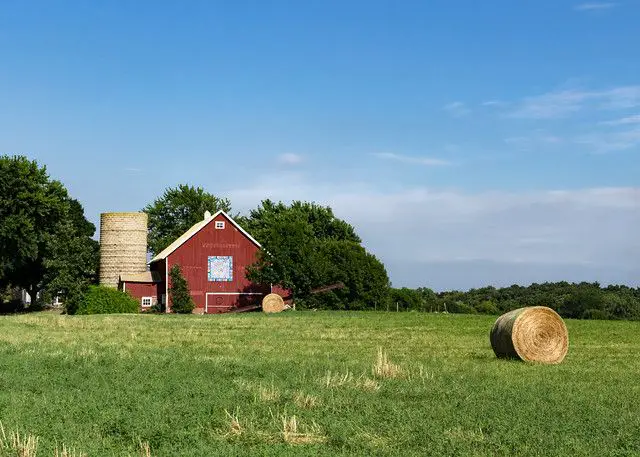
The envelope arrived on a Tuesday morning, slipped through the brass mail slot of my Chicago brownstone with a soft whisper that would change everything. Inside was a single photograph: sixty acres of Montana grassland rolling toward the Rockies like a green ocean frozen mid-wave, a red barn standing proud against an impossibly blue sky, and a white farmhouse that looked like it had been waiting for me my entire life.
I was sixty-seven years old, and I had finally found my way home.
The thing about spending four decades in the same city is that you start to believe the concrete is permanent, that the noise is natural, that the way your chest tightens on the Kennedy Expressway at 7:30 AM is just what breathing feels like. For forty years, I rode the Blue Line downtown to an accounting firm where I managed portfolios for people who never learned my last name. For forty years, I fell asleep to sirens and woke up to garbage trucks, and somewhere in the middle of all that noise, my husband Tom and I would curl up on Sunday mornings with real estate magazines, circling farms and ranches in places we’d never been, whispering about “someday” like it was a prayer we didn’t quite believe would be answered.
Tom died three years before that envelope arrived. Heart attack. Quick and clean, the doctors said, like that was supposed to be a comfort. He went from mowing the tiny patch of grass behind our brownstone to gone in the space between breakfast and lunch. I buried him in Oak Woods Cemetery under a modest stone that said “Beloved Husband and Father,” and I kept going to work because I didn’t know what else to do. I kept riding the Blue Line. I kept hearing sirens. I kept circling farms in magazines that piled up on Tom’s side of the bed because I couldn’t bear to throw them away.
But that photograph changed something. Maybe it was the way the light hit the mountains, or the way the porch seemed to lean slightly toward the sunrise, or maybe it was just that I was finally tired enough of waiting. I called the number on the back of the photo. Three weeks later, I stood on that porch for the first time, breathing air so clean it almost hurt, and I knew with absolute certainty that this was where I was supposed to finish my story.
The previous owner was a widower named Frank Cooperman, eighty-three years old with hands like leather and eyes that had seen every season Montana could throw at a man. He walked me through the property with the slow, deliberate pace of someone who knew every fence post had a story. The barn needed some work, he admitted. The horses—three of them, stubborn as politicians—came with the place if I wanted them. The well was good, the septic was newer, and the nearest grocery store was forty minutes down Route 200 in a town called Lincoln that had exactly one stoplight and a diner that made the best huckleberry pie west of the Mississippi.
“Gets quiet out here,” Frank said, leaning against a fence post that had probably been standing since before I was born. “Real quiet. Some folks can’t handle it.”
I looked out at those sixty acres, at the way the wind moved through the grass like water, at the mountains standing watch in the distance, and I said, “I think I’ll manage.”
I bought Raven Creek Farm—named for the creek that ran along the southern property line and the ravens that nested in the cottonwoods every spring—for less than my Chicago brownstone would have sold for. Frank helped me move in, taught me how to work the old well pump and which floorboards creaked the loudest and where the previous owner’s wife had planted wildflowers that still came up every June like ghosts of something beautiful. Then he packed up his truck, shook my hand with a grip that belied his age, and drove off to live with his daughter in Bozeman, leaving me alone with three horses, one barn cat named Senator, and more silence than I’d heard in forty years.
The first night, I sat on that porch with a cup of tea and listened to absolutely nothing. No sirens. No car alarms. No neighbors arguing through thin walls or bass thumping from passing cars. Just wind, and the distant yip of coyotes, and the low, contented sounds of horses settling in for the night. I cried, right there in my rocking chair, because Tom should have been sitting next to me, and because I was finally, finally home.
My son David was born in Chicago thirty-eight years ago in the middle of a snowstorm that shut down Lake Shore Drive and made his father drive like a maniac to Northwestern Memorial. He grew up in that brownstone, played Little League in Grant Park, went to Whitney Young High School, and graduated from Northwestern with a finance degree and an attitude that made me both proud and exhausted. He was smart, ambitious, and had inherited his father’s head for numbers and his mother’s stubborn refusal to accept defeat.
He was also, I had come to realize in recent years, completely insufferable when it came to understanding lives that didn’t mirror his own.
David moved to Denver after college for a job at some investment firm with a name that sounded like it was generated by a corporate buzzword algorithm. He married Melissa, a marketing executive who wore heels that cost more than my monthly grocery budget and had opinions about “authentic experiences” that she’d collected from Instagram influencers. They lived in a loft in LoDo with exposed brick and floor-to-ceiling windows, and they spent their weekends at rooftop bars and brewery tours, documenting everything for social media like their lives were a product that needed constant advertising.
When I told David I was moving to Montana, he laughed. Actually laughed, like I’d told him a joke I didn’t realize I was making.
“Mom, you’re almost seventy. You can’t just move to the middle of nowhere and play farmer. What if something happens? What if you fall? What if you need help?”
“I have neighbors,” I said calmly. “Real ones, not just people who live in the same building and ignore you in the elevator.”
“Neighbors? Mom, you’ll be forty minutes from the nearest hospital. This is insane. Dad would never have wanted this.”
That was the line that did it. That was the line that made my voice go cold in a way David hadn’t heard since he was sixteen and came home drunk from a party.
“Your father,” I said slowly, “circled that exact farm in a magazine three years before he died. He called it ‘the one.’ So don’t you dare tell me what your father would have wanted when you spent the last ten years of his life too busy climbing your corporate ladder to visit more than twice a year.”
The silence on the other end of the phone was so complete I could hear my own heartbeat. Then David said, “Fine. Do whatever you want. But don’t expect me to drop everything when you realize you’ve made a mistake.”
I hung up without saying goodbye, and I didn’t speak to my son for three months.
The truth is, the first year at Raven Creek Farm nearly broke me. Not because it was too quiet or too lonely, but because it was so much harder than I’d imagined. The horses needed feeding twice a day, every day, no matter if I was tired or sick or if the temperature dropped to ten below and the water troughs froze solid. The barn needed repairs that Frank had kindly described as “minor” but which actually required a new roof and foundation work that cost twice what I’d budgeted. The garden I tried to plant got decimated by deer, then rabbits, then what I’m pretty sure was a very determined badger with a personal vendetta.
But I learned. I learned from my neighbors—the Hendersons, who ran a cattle operation three miles south and treated me like an adopted aunt; the Kowalskis, who owned the feed store in Lincoln and gave me advice that kept me from accidentally poisoning my horses with the wrong kind of hay; and Martha Reeves, a seventy-two-year-old woman who lived alone on a hundred acres to the north and could fix anything with baling wire, duct tape, and creative profanity.
I learned to drive a tractor. I learned to mend fences. I learned which coyotes were just passing through and which ones were eyeing my chickens—yes, I got chickens—with the kind of focus that meant I needed to sleep with the shotgun Tom had bought me years ago for “protection” and which I’d never thought I’d actually use.
I learned that Montana winters are not picturesque Christmas card scenes but actual tests of whether you’re tough enough to deserve spring. I learned that my body, at sixty-seven and then sixty-eight and then sixty-nine, could do more than I’d given it credit for when I was spending eight hours a day behind a desk.
And I learned that I was happier than I’d been in twenty years.
David finally called me about eight months after I’d moved. No apology, just a casual “Hey, Mom, just checking in” like we’d spoken last week. He told me about a promotion. He told me about a vacation to Cabo. He told me that Melissa’s sister was getting married and it was going to be “absolutely insane” because the bride was “kind of a bridezilla.”
He did not ask me a single question about my life.
When he finally paused for breath, I said, “The horses’ names are Buck, Daisy, and Roosevelt. Buck is the troublemaker. I joined the county agricultural extension program. I’m learning to can vegetables. Martha Reeves taught me to shoot, and I’m actually pretty good. Senator the barn cat had kittens. I kept two of them. Life is good, David.”
Another pause. Then: “That’s… great, Mom. Really great. Hey, listen, Melissa and I were thinking maybe we could come visit sometime. You know, see the place. Bring some friends, make a weekend of it.”
Something in his tone made the hair on the back of my neck prickle. This wasn’t an offer. This was a notification.
“A weekend?” I said carefully.
“Yeah, nothing crazy. Just me and Mel, her sisters and their husbands, maybe a couple of friends. You’ve got space, right? I saw the photos you posted. That place is huge.”
“It’s a farmhouse, David, not a resort.”
“Come on, Mom. It’ll be fun. We’ll help out, do the whole farm thing. It’ll be like… what do they call it? Agritourism. You should be excited! We’re finally coming to see your little retirement hobby.”
Retirement hobby.
Those two words landed like rocks in my stomach.
“When were you thinking?” I asked, my voice carefully neutral.
“How about next month? The weekend of the fifteenth? I’ll text you when we’re on the road.”
“David, that’s not really how—”
“Perfect! Thanks, Mom. You’re the best. Gotta run, I have a meeting. Love you!”
He hung up before I could respond.
I sat on my porch, phone in hand, watching the sun sink behind the mountains and paint the sky in shades of gold and crimson that Chicago had never managed to produce. Senator jumped into my lap, purring like a small engine, and I scratched behind his ears while I thought about my son, my farm, and the tone in David’s voice that suggested he viewed my life here as something quaint and temporary, a phase I’d eventually grow out of once I’d gotten it out of my system.
Then I thought about the call I’d received two weeks earlier, when David had been added to the group text by mistake and I’d seen Melissa’s message to her sisters: “Mom’s farm is PERFECT for a group trip. Free lodging, super Instagrammable, we can do the whole rustic chic thing. She’ll love having us LOL.”
I hadn’t mentioned to David that I’d seen that message. I’d simply screenshotted it and saved it, the way you save evidence of something you might need to reference later.
Now, sitting on my porch with the sky turning dark and the first stars appearing like pinpricks in an infinite canvas, I realized that later had arrived.
I called David back the next morning. “About your visit,” I said. “I’m happy to have you, but I need to be clear about a few things. This is a working farm. It’s not a hotel. If you’re coming here, you’ll need to pitch in and help with daily chores. Everyone contributes. That’s how it works out here.”
“Oh, totally!” David said with the enthusiasm of someone agreeing to terms they have no intention of honoring. “We’re all totally up for the authentic farm experience. That’s like, the whole point. Don’t worry, Mom. We’ll take care of everything. You just relax and enjoy having your family around.”
The way he said “relax” made it sound like I was the guest, not him.
“And David,” I added, “This isn’t a vacation rental. This is my home. I expect everyone to treat it with respect.”
“Of course, Mom. Of course. Hey, I gotta run, but we’ll see you in a few weeks. Can’t wait!”
After he hung up, I sat at my kitchen table—the same oak table Frank Cooperman had eaten breakfast at for forty-seven years—and I made a list. At the top of the page, I wrote: “Authentic Farm Experience.”
Then I started planning.
Martha Reeves came over that afternoon, driving her battered Ford pickup up the dirt road with the kind of speed that suggested she viewed traffic laws as polite suggestions rather than actual rules. She found me in the barn, mucking out stalls, and leaned against a post with her arms crossed and a knowing look on her weathered face.
“Your boy coming to visit?” she asked.
“How did you know?”
“You’ve got that look. Same look Helen Martinez had before her daughter-in-law came up from Phoenix and complained about everything for seventy-two straight hours. Same look I had before my nephew thought he could turn my ranch into a ‘wellness retreat.'” Martha spat into the dirt. “City people. They want the Pinterest version of country life. All sunsets and mason jars, none of the work or the reality.”
“David said something on the phone last time we talked,” I admitted, setting down my pitchfork. “He said ‘If you don’t like it, then go back to the city.’ Like I’m just playing pretend out here. Like this isn’t my real life.”
Martha’s eyes narrowed. “He said that to you? To his own mother?”
“Not directly. But the message was clear.”
“And what did you say?”
“Nothing. I didn’t argue. I just said ‘of course, honey’ and hung up.”
Martha studied me for a long moment, then slowly smiled—the kind of smile that suggested she’d raised three sons of her own and knew exactly what a mother was capable of when pushed. “What do you need?”
Over the next two weeks, Martha and I became co-conspirators. The Hendersons joined in when they heard what we were planning. Even Jim Kowalski from the feed store got involved, delivering supplies with a grin that suggested this was the most entertainment he’d had in months.
I walked through my farmhouse, the home I’d built for myself out of grief and hope and sheer determination, and I started preparing for my son’s visit.
The guest bedrooms—two of them, beautifully furnished with quilts I’d bought from a local artisan and curtains I’d sewn myself during the long winter evenings—got redecorated. The luxury mattresses were too nice for people who viewed my life as a “hobby,” so I replaced them with the old camping air mattresses from the barn storage, the ones with the slow leaks that required reinflation every few hours. The beautiful quilts went into my cedar chest. The scratchy wool blankets from the mudroom—the ones that smelled faintly of horses and had been used to wrap fencing posts during installation—took their place.
The thermostat controls in the guest wing had always been a little finicky. I made sure they were extra finicky by adjusting the connections just enough that the heating barely worked and the cooling was stuck on a setting that could charitably be described as “arctic.”
The towels in the guest bathrooms were replaced. Out went the soft, fluffy Egyptian cotton ones I’d bought myself as a housewarming gift. In came the “character-building” towels from my camping supplies—thin, rough, the kind that don’t so much dry you as redistribute the moisture in a mildly abrasive manner.
I removed the coffee maker from the guest area and hid my good coffee. What remained was a tin of instant coffee from 1987 that Frank Cooperman had left behind and which I’d kept as a curiosity. It tasted, I’d discovered during a moment of morbid experimentation, like burned rubber mixed with profound regret.
The Wi-Fi password got changed to something obscure and complicated, written on a small piece of paper that I tucked into a drawer in the mudroom under three pairs of work gloves and a box of roofing nails.
But the pièce de résistance, the centerpiece of my “authentic farm experience,” required Martha’s expertise and the Hendersons’ livestock trailer.
By the Friday afternoon of David’s arrival, everything was ready. I sat on my porch in my rocking chair, boots propped up on the railing, a cup of strong coffee in my hand, and my phone open to the camera app I’d connected to the small security cameras I’d quietly installed at the end of my driveway and around the property. Not for security, really—crime out here meant someone stealing your tractor, and everyone knew whose tractor was whose—but because I wanted to see their faces when they arrived.
The Montana sun beat down from a cloudless sky, the kind of heat that makes mirages shimmer on the gravel roads and makes you understand why the old ranchers wear long sleeves and wide-brimmed hats. In the distance, I could hear the low rumble of the Hendersons’ tractor and the occasional whinny from Buck, who had opinions about his lunch schedule that he felt compelled to share with the entire county.
At 3:47 PM, my phone chimed with a motion alert. I watched the screen as a convoy of vehicles turned off Route 200 onto my private road—two shiny SUVs and a rented black Suburban, all of them immediately caked in Montana dust the moment they left the pavement. I could practically see the vehicle rental agreement being violated in real-time.
They drove slowly, carefully, the way people drive when they’re suddenly aware that they’re far from any kind of help and the road under their wheels is more suggestion than infrastructure. Through the camera at the mailbox—positioned under that little faded American flag Frank Cooperman had left—I watched them pass, and I saw the exact moment when Melissa pointed at something on her phone and realized there was no cell service.
The convoy pulled into my driveway and stopped in a cluster near the barn. Doors opened. City footwear met country dirt. High heels, designer sneakers that had never encountered anything rougher than a sidewalk, sandals that were absolutely inappropriate for any environment containing livestock or common sense.
I counted nine people climbing out of those vehicles: David and Melissa, Melissa’s two sisters (Jennifer and Kate), their husbands (whose names I’d forgotten almost immediately after David told me), and three friends who looked like they’d dressed for a wine tasting, not a working farm.
Through my phone screen, I watched Melissa wrinkle her nose at something in the air. I watched Jennifer tug her rolling suitcase—an expensive hardshell number that was absolutely not designed for gravel—away from a fresh pile of horse manure. I watched David’s smile falter as he looked up at my farmhouse and saw, for the first time, what I’d been trying to tell him: this wasn’t a Hallmark movie set. This was real life.
And real life, as he was about to discover, involved consequences.
They gathered in a cluster at the bottom of my porch steps, squinting up at me like I was some kind of rural oracle they’d traveled to consult. I stayed in my rocking chair, coffee cup in hand, and smiled.
“Welcome to Raven Creek Farm,” I said. “Glad you could make it.”
David climbed the steps first, arms outstretched for a hug I didn’t stand up to receive. He faltered, then bent down to kiss my cheek, and I could smell his cologne—something expensive and completely unsuited to the environment he’d just entered.
“Mom! This place is incredible! Even better than the photos!”
“Photos never tell the whole story,” I said mildly.
Melissa and her entourage climbed the steps, dragging luggage that would have been more appropriate for a European hotel than a Montana farmhouse. I watched them take in the porch, the rocking chairs, the American flag fluttering from its pole, and I saw the exact moment when they realized something was off.
Maybe it was the way I didn’t get up to help with their bags. Maybe it was the complete absence of the welcoming committee they’d expected. Or maybe it was the sounds coming from inside my house—sounds that didn’t belong in any farmhouse they’d imagined.
“Mom,” David said slowly, “what’s that noise?”
I took another sip of coffee. “What noise, honey?”
“That… stomping sound. Is something in there?”
“Oh,” I said cheerfully, “that would be your roommates.”
“Our what?”
I finally stood up, setting down my coffee cup with deliberate care. “You said you wanted an authentic farm experience. You said you wanted to help out. Well, I’ve got a lot of work to do this weekend, and I can’t do it alone. So I made arrangements.”
I walked to my front door and opened it wide.
Standing in my living room—the beautiful living room with its hardwood floors and picture windows and furniture I’d carefully selected over months of estate sales and antique shops—were two full-grown Highland cattle.
Their names were Bonnie and Clyde, on loan from the Hendersons, and they were magnificently, spectacularly disinterested in the humans staring at them from the porch. Bonnie, the larger of the two, had her massive horns pointed at my couch. Clyde was investigating my bookshelf with the intensity of a scholar searching for first editions.
The silence that followed was so complete I could hear the wind moving through the grass half a mile away.
Then Melissa screamed.
Not a little scream. A full-throated, horror-movie-victim scream that startled a flock of ravens from the cottonwoods and made Bonnie turn her massive head to stare at the porch with the kind of judgment only a half-ton Highland cow can muster.
“MOM!” David shouted, “WHY ARE THERE COWS IN YOUR HOUSE?!”
“They’re not cows, honey. They’re cattle. Cows are female cattle that have had calves. Bonnie here is technically a cow, but Clyde is a bull—well, a steer, actually, since he’s been neutered. It’s important to use the correct terminology when you’re learning about farm life.”
“I DON’T CARE ABOUT TERMINOLOGY! GET THEM OUT!”
I smiled the same smile I’d used when David was seven and claimed he’d definitely brushed his teeth despite the toothbrush being completely dry. “That’s actually your job this weekend. You see, Bonnie and Clyde need to be moved from the winter pasture to the summer grazing area up by the northern fence line. It’s about a two-mile walk, and they’re not particularly cooperative. But I’m sure you’ll figure it out. After all, you wanted to help with farm chores, right?”
“You can’t be serious.”
“I’m completely serious. Martha Reeves will be by tomorrow morning at five AM to help you get started. She’s bringing the cattle dogs and some extra fencing tools. You’ll need to wear boots—real boots, not those things you’re wearing—and you’ll want to bring water because it gets hot during cattle drives.”
“Five AM?” Jennifer’s voice was faint.
“That’s when farm work starts, honey. The animals don’t care if you’re on vacation.”
Melissa had her phone out, frantically tapping at the screen. “There’s no signal! I can’t get any bars!”
“Oh, there’s signal,” I said. “It’s just spotty. You have to go up to the ridge by the northern pasture to get consistent coverage. That’s about a forty-five-minute walk. Or you can use my landline in the kitchen, but Bonnie and Clyde are between you and the kitchen right now, so you might want to wait until they’re moved.”
I watched my son’s face cycle through confusion, anger, disbelief, and finally settle on a kind of stunned realization that he had been completely, thoroughly outmaneuvered.
“You did this on purpose,” he said quietly.
“I did exactly what you asked,” I replied. “You wanted to come visit my farm. You wanted the authentic experience. You wanted me to treat this like your vacation destination instead of my home. So here we are. Authentic farm life. Welcome.”
“This is insane! We’re not cattle herders! We don’t know how to do any of this!”
“Then I guess you’ll learn. That’s what I did when I moved here. Nobody gave me a manual. Nobody held my hand. I figured it out because this is my life, David. Not a hobby. Not a phase. Not something I’m doing to annoy you. This is where I live, and this is what living here means.”
One of Melissa’s friends—the one wearing a sundress and sandals—started crying. Jennifer had gone pale. Kate was staring at Clyde like he might charge at any moment, despite the fact that Clyde was the gentlest animal I’d ever met and was currently more interested in the decorative bowl of pinecones on my coffee table than in anything else.
“Now,” I continued, “the guest bedrooms are upstairs. You’ll find everything you need there. Towels are in the bathroom closet. I’m afraid the heating is a bit unreliable, and the mattresses are camping air beds because I lent my regular guest mattresses to Martha when her grandkids visited last month. But you’re all young and hardy. I’m sure you’ll be fine.”
“Where’s the Wi-Fi password?” one of the husbands asked desperately.
“In the mudroom, in a drawer under some work gloves. Feel free to look for it. Dinner is at six—I’m making beef stew, which feels thematically appropriate given our houseguests. If you want to help cook, the kitchen is through the living room, past Bonnie and Clyde. If you don’t want to help, there’s jerky and crackers in the barn. The barn is the big red building you probably photographed seventeen times on your way in.”
I picked up my coffee cup, walked back to my rocking chair, and sat down.
“I’ll be out here if you need me,” I said. “But you might want to get your luggage inside before the sun sets. The coyotes start getting curious after dark, and they have very little respect for designer luggage.”
For a moment, nobody moved. Nine city people stood on my porch, staring at the woman who had raised one of them, the woman they’d all dismissed as playing some kind of retirement fantasy game, the woman who had just proven that she was not to be underestimated.
Then David said, very quietly, “Mom, I’m sorry.”
I looked at my son—really looked at him, for the first time since he’d arrived. I saw the expensive clothes, the carefully maintained appearance, the confidence that came from years of success in a world where success was measured in promotions and portfolios. But I also saw something else: uncertainty. The dawning understanding that maybe his mother knew something he didn’t.
“Sorry for what, David?”
“For… for treating your farm like it wasn’t real. For acting like you were just playing around out here. For not taking you seriously.”
“And?”
He swallowed. “And for saying that thing about you going back to the city if you didn’t like having visitors. That was… that was really disrespectful.”
“Yes,” I said. “It was.”
“Can we start over?”
I let the question hang in the air for a moment, mixing with the sounds of the farm—the wind, the horses, Bonnie’s occasional snort from inside my house, the distant call of a hawk circling above the southern pasture.
“Here’s what’s going to happen,” I said finally. “You’re going to spend this weekend actually helping with farm work. Real work, not Instagram photos of you holding a pitchfork. You’re going to get up at five AM with Martha. You’re going to move those cattle. You’re going to muck stalls, fix fences, and learn what it takes to keep this place running. And at the end of the weekend, if you can honestly tell me that you understand why I chose this life and why I deserve your respect instead of your condescension, then yes, David. We can start over.”
“And if we just want to leave? Go back to Denver right now?”
I smiled. “The choice is yours. It always was. But if you leave, you should know that you’re not invited back until you’re ready to treat my home and my choices with the respect you’d expect me to show yours. I didn’t mock your decision to live in Denver. I didn’t call your career a ‘hobby.’ I raised you to be better than that.”
The sun was starting its slow descent toward the Rockies, painting everything in gold and amber. Senator emerged from the barn, saw the crowd on the porch, and decided he wanted absolutely nothing to do with whatever was happening, disappearing back into the shadows with the wisdom that comes from being a cat who has seen everything.
David looked at his wife. Melissa looked at her sisters. The sisters looked at their husbands. Everyone looked profoundly uncomfortable and uncertain, like they’d suddenly realized they were in a situation that couldn’t be fixed with money or influence or a strongly worded Yelp review.
“Five AM?” David asked finally.
“Five AM,” I confirmed.
“With cattle.”
“With Bonnie and Clyde, yes.”
“And you’re really not going to help us?”
“Oh, I’ll help,” I said. “I’ll help by watching you figure it out. That’s what parents do, David. We watch our children learn to be stronger than they think they are. I did it when you were two and learning to walk. I did it when you were sixteen and got your heart broken. I’m doing it now.”
That night, after they’d all struggled their luggage upstairs and discovered the air mattresses and the character-building towels and the instant coffee from 1987, after they’d navigated past Bonnie and Clyde to get to the kitchen where I served beef stew with fresh bread from the Lincoln bakery, after they’d all tried and failed to find the Wi-Fi password and discovered that cell service was indeed nonexistent unless you walked forty-five minutes uphill, after all of that, I sat alone on my porch and looked at the stars.
They came out here like you couldn’t believe—millions of them, billions of them, so thick across the sky that you could understand why ancient people thought they were holes in the fabric of heaven letting the light shine through. I’d never seen stars like this in Chicago. I’d never known they existed, not really.
From inside the house, I could hear muffled conversation—David and Melissa arguing in whispers, someone crying quietly, someone else laughing in a slightly hysterical way that suggested they’d reached the point where the absurdity of the situation had overwhelmed all other emotions.
I heard footsteps on the stairs and braced myself, but it was just Bonnie, investigating the second floor with the curiosity of a creature who had never encountered stairs before and found them deeply fascinating. There was a shout, some scrambling, and then Martha’s voice calling up—she’d arrived to help get Bonnie and Clyde settled in the barn for the night, as we’d planned all along. The cattle had never been meant to stay in my house overnight. That would have been genuinely insane, and I wasn’t trying to destroy my home, just teach a lesson.
But my guests didn’t need to know that yet.
Martha appeared on the porch a few minutes later, wiping her hands on her jeans and grinning like someone who’d just won the lottery. “Got ’em both in the barn. Your boy looked like he’d seen a ghost when I explained the cattle drive tomorrow. Melissa asked if there was a hotel in town.”
“What did you tell her?”
“That the nearest hotel is in Missoula, ninety minutes west, and they’re booked solid for a wedding convention.”
“Evil.”
“Practical. How you feeling about all this?”
I thought about that question—really thought about it. How did I feel? Vindictive? A little. Satisfied? Absolutely. Guilty? Not even a little bit.
“I feel like I’m teaching my son something he should have learned thirty years ago,” I said finally. “That his mother is a person who deserves respect. That the choices other people make are just as valid as his own. That you can’t just decide someone’s life isn’t important because it doesn’t look like yours.”
“Amen to that,” Martha said. She pulled out a flask from her jacket pocket and took a swig before offering it to me. I accepted, took a drink of what turned out to be excellent whiskey, and handed it back.
“They’re going to hate tomorrow,” I said.
“They’re going to learn tomorrow,” Martha corrected. “There’s a difference.”
At 4:55 AM, Martha arrived with four cattle dogs, two horses, and the kind of smile that suggested she’d been waiting her entire life for this moment. I made strong coffee—real coffee, not the instant sadness from 1987—and together we waited for my houseguests to realize that five AM on a farm means five AM, not five-thirty or whenever you feel like rolling out of bed.
At 5:20, David appeared, looking like death warmed over, wearing jeans and a Northwestern sweatshirt that had never been intended for actual physical labor. Melissa followed five minutes later, followed by her sisters, their husbands, and their friends, all of them moving like zombies and looking like they’d slept about as well as you’d expect on slowly deflating air mattresses under scratchy wool blankets in a room that had been slightly too cold all night.
“Good morning!” Martha announced with vicious cheer. “Hope y’all got your beauty sleep, because we’ve got a long day ahead. Now, who here has worked cattle before?”
Silence.
“Nobody? Perfect! You’re gonna learn. Claire, you want to explain the basics?”
I stood up from my rocking chair, coffee cup in hand, and addressed my miserable audience. “Bonnie and Clyde need to be moved from the southern pasture to the northern grazing area. That’s about two miles, and we’ll be walking the whole way. Martha’s dogs will do most of the actual work, but you’ll need to help guide the cattle, fix any fence breaks we encounter, and generally learn what it means to move livestock across rough terrain.”
“Two miles?” Jennifer sounded like I’d just announced we were walking to California.
“Two miles there, two miles back. You’ll be done by lunchtime if we don’t hit any problems. If we do hit problems—and we probably will, because cattle are unpredictable—then it’ll take longer.”
“What kind of problems?” one of the husbands asked nervously.
Oh, you know. Bonnie decides she doesn’t want to move. Clyde finds something interesting to investigate. The fence is down in a section and they try to wander off. Normal cattle things. That’s why we have dogs and experienced handlers.”
“By experienced handlers, you mean you and Martha?”
“I mean Martha and the dogs. I’ll be supervising from horseback. I’m sixty-nine years old. I did my cattle-herding apprenticeship last year. This is your turn.”
The look on David’s face was almost worth everything.
Almost.
What followed was four hours of the most educational chaos I’d witnessed in years. Bonnie, true to her reputation, decided approximately forty-five minutes into the drive that she was tired of walking and simply stopped moving, no matter how much Martha’s dogs barked or how much David pleaded. Clyde wandered off twice to investigate interesting rocks and had to be retrieved by Kate’s husband, who discovered a talent for cattle wrangling he never knew he possessed.
Melissa twisted her ankle in a gopher hole—not seriously, but enough to require a break and some complaining. Jennifer developed blisters from her “hiking boots” that had clearly never hiked anything more challenging than a mall parking lot. One of the friends had an allergy attack from the grass pollen and had to be given Benadryl from Martha’s first aid kit, which made him sleepy and useless for the rest of the drive.
But they did it. Slowly, with more swearing than I’d heard since Tom tried to assemble an IKEA bookshelf, with multiple breaks and at least one minor emotional breakdown, they got Bonnie and Clyde to the northern pasture. They fixed two fence breaks under Martha’s guidance. They learned how to use come-alongs and fence stretchers and wire cutters. They got dirty and sweaty and exhausted.
And when it was done, when the cattle were safely in their new pasture and everyone was walking back to the farmhouse, I heard Melissa say to David: “Your mom does this? Like, regularly?”
“I don’t know,” David admitted. “I never asked.”
That night at dinner—grilled chicken and vegetables from my garden, served on my porch because nobody wanted to sit inside after twelve hours of outdoor labor—something had shifted. The conversation was quieter, more thoughtful. People asked me questions about the farm, about how I’d learned to do all this, about what winter was like, about whether I ever got lonely.
I answered honestly. Yes, I got lonely sometimes. Yes, the first winter had been brutal. Yes, I’d cried more than once when things broke or died or went wrong. Yes, I’d questioned my decision.
But no, I didn’t regret it. Not for a single moment.
“I spent forty years living a life that was fine,” I told them, watching the sun set over my sixty acres, over the mountains that had become as familiar to me as my own heartbeat. “Fine is not good enough when you’ve only got so many years left. I wanted something more than fine. I wanted something real.”
David was quiet for a long time. Then he said, “I’m sorry I called it a hobby, Mom. I’m sorry I didn’t understand.”
“Do you understand now?”
“I’m starting to.”
The rest of the weekend was better. Not easy—there were still chores to do, and they still had to help, and the air mattresses still leaked and the towels were still terrible. But there was less complaining and more actual engagement. Melissa took photos, yes, but she also helped me weed the garden and admitted it was “kind of meditative, actually.” Jennifer learned to collect eggs from my chickens without screaming every time. The husbands repaired a section of fence that I’d been putting off for weeks.
And David mucked out horse stalls beside me, working in silence for an hour before finally saying, “Dad would have loved this place.”
“Yes,” I said quietly. “He would have.”
“I’m sorry I wasn’t here for you. After he died. I’m sorry I didn’t visit more.”
“You were building your life, David. I understood that.”
“But you needed me.”
“I needed you to let me build my life too. And now you have.”
Sunday afternoon, they packed up their dusty SUVs and said their goodbyes. Melissa hugged me—actually hugged me, not the air-kiss thing she usually did—and said, “Thank you for teaching us. I know we were terrible guests at first.”
“You were exactly the guests you needed to be,” I replied. “And you’re welcome back anytime. But next time, maybe call ahead and ask if I need help instead of announcing you’re coming and expecting me to host.”
David was the last to leave. He stood on my porch, looking out at the property that had seemed so foreign to him three days ago, and I saw something in his face that I hadn’t seen in years: respect.
“I love you, Mom,” he said.
“I love you too, honey.”
“Can I come back in a few months? Just me, no crowd. I want to learn more. I want to… understand what you’ve built here.”
“I’d like that.”
He hugged me hard, the way he used to when he was small and the world was scary and I was the person who made it make sense. Then he climbed into his SUV and drove away, followed by the rest of the convoy, leaving nothing but dust and memories and the faint smell of expensive cologne finally, finally fading into the Montana air.
I stood on my porch and watched them go. Senator appeared from wherever he’d been hiding all weekend and rubbed against my legs, purring his approval. In the pasture, Buck whinnied at nothing in particular. The sun was warm on my face. The mountains stood where they always had, permanent and patient and utterly indifferent to human drama.
This was my life. Not a hobby. Not a phase. Not something to be dismissed or diminished. This was real, and it was mine, and it had been worth every single difficult moment to get here.
I picked up my phone and texted Martha: “They survived. Barely.”
Her reply came back immediately: “Same time next year?”
I laughed out loud, the sound carrying across my sixty acres, mixing with wind and birdsong and all the beautiful noise of a place that had finally, finally become home.
“Same time next year,” I agreed.
Three months later, David came back alone. He stayed for a week, learned to ride Buck, helped me prepare the garden for fall, and didn’t complain once about the early mornings or the hard work or the lack of Wi-Fi. On his last night, we sat on the porch together and watched the stars, and he said, “I get it now, Mom. I finally get it.”
“Get what?”
“Why you’re happier here than you ever were in Chicago. Why this was worth everything.”
I didn’t say anything, just reached over and took his hand the way I used to when he was small and we’d watch fireworks from our brownstone roof, when the future was uncertain and scary and full of possibility.
The future is still uncertain, still scary, still full of possibility. But out here on Raven Creek Farm, with the stars overhead and the mountains as witnesses, I’ve learned that uncertainty is just another word for freedom, and scary is just another word for alive, and possibility is the gift you give yourself when you’re brave enough to start over at sixty-seven years old.
My son learned it too, eventually. And that lesson—that hard, dusty, early-morning lesson involving Highland cattle and character-building towels and a mother who refused to be dismissed—was worth every moment of planning, every carefully removed luxury, every surprise I’d left waiting for them when they arrived expecting a free vacation and found something true instead.
THE END

Ethan Blake is a skilled Creative Content Specialist with a talent for crafting engaging and thought-provoking narratives. With a strong background in storytelling and digital content creation, Ethan brings a unique perspective to his role at TheArchivists, where he curates and produces captivating content for a global audience.
Ethan holds a degree in Communications from Zurich University, where he developed his expertise in storytelling, media strategy, and audience engagement. Known for his ability to blend creativity with analytical precision, he excels at creating content that not only entertains but also connects deeply with readers.
At TheArchivists, Ethan specializes in uncovering compelling stories that reflect a wide range of human experiences. His work is celebrated for its authenticity, creativity, and ability to spark meaningful conversations, earning him recognition among peers and readers alike.
Passionate about the art of storytelling, Ethan enjoys exploring themes of culture, history, and personal growth, aiming to inspire and inform with every piece he creates. Dedicated to making a lasting impact, Ethan continues to push boundaries in the ever-evolving world of digital content.