The Wedding They Watched From Afar
That morning, the house was too quiet.
I should have noticed it sooner—the absence of sound, the way silence can sometimes scream louder than any voice. But I was still caught in that hazy space between sleep and waking, where your mind hasn’t yet caught up to reality, where you still believe the day will unfold the way you’ve imagined it a thousand times.
My wedding day.
The phrase had played in my head like a promise for months. The dress hanging in my closet, carefully wrapped in protective plastic. The guest list reviewed and revised. The flowers ordered in my favorite shades of lavender and cream. The vows I’d written and rewritten until each word felt exactly right. This was supposed to be the beginning of everything beautiful, the day when all the scattered pieces of my life would finally arrange themselves into something whole.
But as I lay there in my childhood bedroom, staring at the ceiling I’d stared at for twenty-eight years, I knew something was wrong.
Not the peaceful kind of quiet that settles in before a celebration, but the hollow kind that makes your skin prickle before your mind can catch up to what your instincts already know. No voices drifting from the hallway. No footsteps overhead. No nervous laughter or the familiar sound of my mother humming while she made coffee. No clinking of cups or silverware. No doors opening and closing. Just stillness, thick and deliberate, like the house itself was holding its breath and waiting for me to understand.
I noticed it the moment I opened my eyes, but I didn’t want to believe it.
For a few seconds—maybe longer, maybe minutes—I lay there staring at the ceiling, listening hard. Waiting for something familiar. Hoping for the sound of my mother’s voice calling my name the way she had on every important morning of my life. Waiting for my father’s distinctive footsteps pacing downstairs, the way he did when he was nervous or excited or both. Listening for Samantha humming off-key the way she always did when she was pretending to be happy for someone else, that slightly strained cheerfulness that meant she was performing emotion rather than feeling it.
None of it came.
The silence remained absolute, oppressive, wrong.
Eventually, I got up.
My legs felt strange beneath me, disconnected somehow, as if my body understood before my mind did that this day had already taken a terrible turn. The floor was cold under my bare feet as I walked down the stairs, my hand trailing along the banister I’d grown up gripping as a child—first learning to walk, then racing up and down as a teenager, then steadying myself through all the years that followed. Every step echoed in the emptiness. The sound seemed to bounce off walls that had witnessed every significant moment of my life.
The kitchen lights were already on when I reached the bottom of the stairs. Sunlight was cutting through the windows in sharp, clean lines, illuminating everything with that particular brightness that comes on late spring mornings. The table was perfectly clear of the breakfast chaos I’d expected to find—no coffee mugs, no half-eaten toast, no scattered sections of newspaper or hastily discarded planning notes.
Except for one thing.
A single white envelope sat in the center of the kitchen table.
It looked impossibly bright against the dark wood, positioned with the kind of deliberate precision that suggested someone had placed it there carefully, had wanted to make absolutely certain I would see it. My name was written across it in careful, familiar handwriting that I would have recognized anywhere.
Denise.
Just my name. Nothing else. No “Dear Denise” or “To our daughter” or any of the softening words that might have cushioned what was coming. Just my name, written in Samantha’s distinctive script, each letter perfectly formed in a way that somehow felt more cold than comforting.
I didn’t touch it right away.
I stood there in my pajamas, in the kitchen where I’d eaten breakfast every morning of my childhood, and I stared at that envelope. I already knew what it was. I knew who it was from. I knew, in that quiet, sinking way you know things long before you’re ready to admit them to yourself, that my family had left. Not just stepped out for an errand or decided to give me space to get ready in peace. They had left. Deliberately. Completely. On the morning of my wedding.
They had done it before, in smaller ways. Missed birthdays because something came up at the last minute. Skipped my high school graduation because Samantha had a piano recital the same weekend in another city. Vanished emotionally whenever things got uncomfortable or inconvenient, retreating behind polite distance until whatever awkwardness had passed and they could return to treating me like a supporting character in the story of their lives. But never like this. Never on the morning of my wedding. Never with such calculated cruelty.
I opened the envelope anyway.
My hands were steadier than I expected as I unfolded the single sheet of paper inside. The message was brief, typed rather than handwritten, as if Samantha couldn’t even be bothered to add the personal touch of her own penmanship to her final blow.
Let’s see how you handle this without us.
No signature. No explanation. No apology. No acknowledgment of what this day was supposed to mean, no recognition of the pain this would cause. Just one clean, cruel sentence, stripped of emotion the way Samantha always did when she wanted to wound without leaving fingerprints. She’d learned long ago how to hurt people while maintaining plausible deniability, how to devastate without being overtly cruel enough to be called out for it.
Something inside me went quiet too.
Not shock, surprisingly. Not even pain, not really—not the sharp, immediate kind that makes you gasp or cry out. It was recognition. The sound of a door closing somewhere deep inside me, a door I hadn’t even realized was still open. I had spent my entire life forgiving, waiting, accommodating, shrinking myself in the hope that one day they would meet me halfway. That one day Samantha would stop competing with me for a prize that didn’t exist. That one day my parents would see me as clearly as they saw her, would value me as much as they valued their golden child.
That morning, standing in that empty kitchen with that cruel note in my hand, Denise Langford stopped waiting.
I moved slowly through the house, my footsteps echoing in rooms that suddenly felt cavernous, confirming what I already knew but needed to see with my own eyes. I climbed the stairs again and pushed open bedroom doors. My parents’ room: empty, the bed neatly made, the surfaces cleared of the personal items they always traveled with. Samantha’s room: the same, though her typical chaos had been tidied into suspiciously neat piles, as if she’d wanted to erase any evidence of her presence before executing her departure.
Closets were stripped of travel clothes. Suitcases that usually lived on the top shelves were gone. The bathroom they shared held none of the toiletries that would have indicated they’d be returning soon. Every sign pointed to a departure that was planned, deliberate, and meant to be permanent—at least for today.
When I opened the front door, still in my pajamas, still trying to process what was happening, the driveway was bare. My father’s car, the one he’d promised would drive me to the ceremony—”I’ll take you myself,” he’d said, his hand on my shoulder, his eyes warm—was gone. He’d looked me in the eye and made that promise, and then he’d left anyway.
I stood on the porch, breathing in the cool morning air, trying to steady myself.
Near the window, I noticed a small side table that usually held my mother’s collection of family photos. The photos had been removed, leaving only one item placed with almost theatrical precision: a boarding pass.
Air France Flight 221. Departure 7:10 a.m. Destination: Paris.
They hadn’t just left. They had planned this. Weeks in advance, probably. Booking international flights, arranging accommodations, coordinating their schedules. Every time my mother had asked me about wedding details over the past few months, every time my father had confirmed he’d be there to walk me down the aisle, every time Samantha had pretended to be excited about her role in the ceremony—all of it had been theater. They’d been planning their grand exit the entire time.
The cruelty of it was breathtaking in its completeness.
I folded the letter once, neatly, refusing to crumple it or tear it up in a display of emotion they wouldn’t even be there to witness, and slid it into my pocket. Outside, Lake Champlain stretched wide and calm in the distance, mist hovering just above the surface in the early morning light. It was going to be a beautiful day. The weather I’d hoped for, prayed for during all those months of planning. Clear skies. Gentle breeze. Perfect temperature.
I stood there for a moment, on the porch of my childhood home, breathing in, breathing out, letting the silence settle around me and into me. Letting myself feel the full weight of this betrayal before I decided how to carry it.
Fine, Sam.
You wanted to see how I’d handle it.
Watch.
My phone buzzed in my pocket.
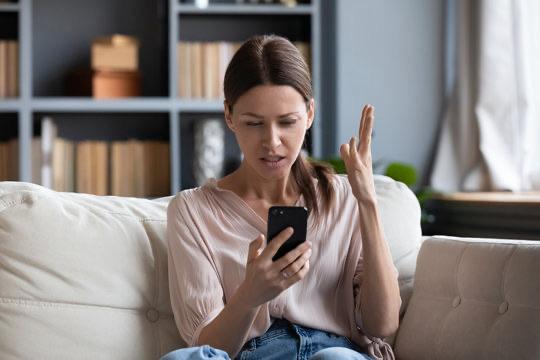
I pulled it out, already knowing who it would be. Samantha never could resist the need to twist the knife, to make sure her victims knew exactly how pleased she was with herself.
Paris looks better without you.
The message was accompanied by a photo of the three of them—my mother, my father, my sister—standing in front of what appeared to be their hotel, champagne glasses raised in a toast. They looked happy. Carefree. As if they’d just arrived at a wonderful vacation destination rather than abandoned their daughter on the most important day of her life.
I stared at the photo for a long moment. My mother’s face, smiling in a way I hadn’t seen her smile at me in years. My father’s arm around Samantha’s shoulders. Samantha’s triumphant expression, the look of someone who’d just won a game she’d been playing alone.
I deleted the message without replying.
And in that small, quiet motion, something permanent reset inside me. The cord that had kept me tethered to them, to the hope of their love and approval, finally snapped. Not with drama or anguish, but with a clean, final click.
The story of how I got here—standing on a porch on my wedding morning, abandoned by my family—didn’t start that day. It had been building for years, maybe for my entire life. But there were specific moments that had crystallized everything, moments when I’d finally seen the truth I’d been avoiding.
Leaving the Air Force should have felt like closure, like a clean break from one chapter of my life to another. Instead, it felt like shedding one skin only to realize another was already cracking underneath. I’d served for six years, flying reconnaissance missions, earning commendations, proving myself over and over in a world where precision and discipline were everything. I traded uniforms for tailored suits, military hangars for glass-walled offices at Lockheed Martin, where those same values—discipline, accountability, logic—supposedly ruled.
Those were things I understood. Things I was good at. Things that made sense to me in a way that family dynamics never had.
But even there, in the world of contracts and clearances and professional accountability, I hadn’t been protected.
Three years ago, an internal investigation had torn through our department like a tornado. A classified jet engine design had been leaked to an international competitor. The kind of leak that ended careers, that brought FBI agents into conference rooms, that made everyone walk around eyeing their colleagues with suspicion. Meetings multiplied. Security badges were checked and rechecked. Backgrounds were investigated. Email accounts were combed through. The entire department lived under a cloud of accusation for weeks.
When my supervisor dropped a thick file onto my desk one morning, his face carefully neutral but his disappointment cutting deeper than anger ever could, I’d thought he was bringing me another assignment. Another puzzle to solve. Instead, he’d brought me the end of everything I’d built.
The signature on the leaked document was mine.
My actual signature, scanned and placed at the bottom of technical specifications that I’d never seen, never approved, never would have approved. I told the truth immediately and completely. I hadn’t done it. I never would. I believed in the work we were doing. I believed in the protocols that kept that work secure. I would never compromise national security for money or recognition or any other reason.
But truth doesn’t matter much when evidence looks clean and intentions can’t be proven.
For two months, my life became a blur of interviews with investigators who looked at me with varying degrees of suspicion and pity. Whispered speculation followed me through hallways. Friends stopped inviting me to lunch. My security clearance was suspended pending investigation. The promotion I’d been working toward for two years vanished overnight. Every morning I woke up in a kind of professional purgatory, unable to do the work I loved, unable to prove my innocence, unable to do anything but wait while strangers picked apart my entire career looking for evidence of betrayal.
When the truth finally surfaced, it didn’t bring the relief I’d imagined.
The forensic investigation of computer logs and timestamps eventually revealed that Samantha—my sister, who’d been visiting me that month, who’d stayed in my apartment, who’d had access to my laptop while I was at work—had used a scanned copy of my signature. She’d submitted the design under my name to an international engineering competition, hoping to win a significant cash prize and professional recognition. When confronted with the evidence, she’d claimed ignorance. Said she’d thought the document was public information, that she hadn’t realized it was classified, that she’d been trying to help my career by entering my work into competitions.
She’d watched in silence while I was dragged through professional purgatory. Never said a word. Never came forward. Let me twist in the wind for two months while my reputation was destroyed and my career hung by a thread.
My suspension was eventually lifted. My security clearance was reinstated. But the promotion I’d been lined up for had gone to someone else. The trust I’d built with colleagues over years of excellent work had been damaged in ways that couldn’t be fully repaired. People looked at me differently after that. Some with sympathy, but many with lingering doubt. Smoke and fire, their expressions said.
Samantha, meanwhile, was praised for her “ambition” and “initiative” by our parents. My mother’s response to the entire situation, after I’d been cleared and tried to explain what Samantha had done to me, was a single sentence delivered with the kind of exhausted patience reserved for people who are overreacting.
“She’s young, Denise. She didn’t mean harm.”
Samantha was twenty-six at the time. Old enough to know exactly what she was doing. Old enough to understand security clearances and classified information and the consequences of stealing someone’s signature to submit their work. But my mother had looked at me like I was being petty and vindictive for being angry about nearly losing my career.
That was the day I stopped expecting fairness from my family.
That was the day I started to understand that Samantha could do almost anything—lie, cheat, steal, sabotage—and our parents would find a way to excuse it. And I could do everything right—serve my country, earn every achievement, follow every rule—and it would never be quite enough to earn the kind of unconditional support they gave her.
During that forced pause, when my career was stalled and my reputation hung in limbo and I was trying to figure out who I was without the structure and purpose that had defined my adult life, I met Michael Holden.
We met at a renewable energy conference I’d attended on a whim, looking for something new, something different, something that felt like building instead of defending. He was giving a presentation on solar panel efficiency in northern climates, and something about the way he talked about the work—not as a path to profit or recognition, but as a genuine attempt to solve real problems—caught my attention.
Afterward, I’d approached him with a technical question. We’d ended up talking for three hours.
He didn’t ask me what had gone wrong in my career. He didn’t probe into why I was at a renewable energy conference when my background was in military aviation. Instead, he asked me something no one else ever had.
“If you weren’t always proving yourself,” he said once we’d moved past small talk and into the kind of real conversation that occasionally happens between strangers, “what would you build?”
The question had stopped me cold. Because I realized, standing there in a hotel conference room with a man I’d just met, that I’d spent my entire life trying to prove I was worthy. Worthy of my parents’ attention. Worthy of recognition in the military. Worthy of respect at Lockheed Martin. I’d built my entire identity around achievement, around being better, around earning a place in rooms where I wasn’t automatically welcomed.
But I’d never asked myself what I actually wanted to build.
That question changed everything.
Over the following months, as Michael and I dated and then fell in love, I started to envision a different kind of life. I left aviation. Left defense contracting. Left the world of classified information and security clearances and military discipline. I moved into renewable energy, into work that created instead of concealed, that built instead of defended. I joined a startup focused on affordable solar solutions for rural communities.
Somewhere along the way, I stopped trying to earn my family’s approval and quietly stepped out of their orbit. I stopped calling as often. Stopped sharing my professional wins with parents who would find a way to minimize them or redirect the conversation to Samantha’s latest achievements. Stopped expecting them to show up for me the way I’d always shown up for them.
A year after leaving Lockheed Martin, they offered me my old position back. A significant promotion. Full reinstatement. An apology, even, from executives who’d reviewed my case and recognized how badly I’d been treated.
I declined with a single sentence.
“I no longer build for people who break what I fix.”
And I’d meant it to apply to Lockheed Martin, to the system that had failed me. But I’d also meant it to apply to my family.
The morning of my wedding, while florists adjusted arrangements at the venue and catering staff moved through with calm efficiency and the photographer set up equipment to capture what should have been the happiest day of my life, my phone buzzed again.
This time it was Jenna, my oldest friend. We’d met in the Air Force, served together, stayed close even after we’d both moved on to civilian life. She was supposed to be my maid of honor. She was probably at the venue already, wondering where I was.
Her message was brief but loaded with meaning.
Your sister’s posting pictures from Paris. Champagne. Eiffel Tower. She tagged your parents.
I opened the social media app with hands that had started to shake slightly, the adrenaline finally catching up to the shock. And there they were. My family. Smiling in that bright, performative way people do when they’re documenting their lives for an audience. Wrapped in designer coats beneath the Eiffel Tower, champagne glasses catching the morning light. My mother looked radiant. My father looked proud. Samantha looked victorious.
The caption read: Some weddings are better watched from afar.
She’d tagged me in it.
She wanted me to see it. Wanted me to know that they weren’t just absent—they were celebrating their absence. Making a public spectacle of abandoning me. Turning my wedding day into a stage for her cruelty.
The ache in my chest wasn’t heartbreak anymore.
It was clarity.
For years, I’d made excuses for them. For Samantha’s competitiveness, for my parents’ favoritism, for the thousand small ways they’d communicated that I was less important than her, less worthy of their time and attention and love. I’d told myself that families were complicated, that parents did their best, that siblings grew out of childhood rivalries.
But this—this calculated cruelty—had stripped away every excuse.
They’d abandoned me on my wedding day and then posted about it on social media to humiliate me.
There was no coming back from this.
Michael knocked once before stepping into the room where I was getting ready. I’d finally left my parents’ empty house and made it to the venue, moving through the morning in a kind of mechanical daze. I was seated at the mirror in the bridal suite, still in my regular clothes, my wedding dress hanging untouched on its stand. My phone was glowing faintly in my hand. Another message from Samantha. Another twist of the knife.
Michael caught my reflection in the mirror, his brow furrowing just enough to show concern but not enough to look panicked. That was one of the things I loved about him—his steadiness, the way he could acknowledge problems without being overwhelmed by them.
“Something wrong?” he asked gently.
I smiled at his reflection. A real smile, surprisingly. Steady. Controlled. The kind of smile you learn to wear when panic won’t help, when falling apart isn’t an option, when the only way forward is through.
“Nothing we can’t handle.”
He moved closer, placing a hand on my shoulder. “Your family?”
“Gone to Paris. Left this morning. Left me a note telling me to figure it out without them.”
I watched his face in the mirror as he processed this information. Anger flashed across his features, followed quickly by protective concern. “Denise—”
“I’m okay,” I said, and I meant it. “I’m actually okay. This is who they are. I just finally believe it.”
Another message came through on my phone. Samantha again, unable to let a single moment pass without ensuring I knew exactly how much she enjoyed my pain.
Don’t embarrass yourself, D. You were never meant for these people.
I turned the screen dark and looked at Michael—really looked at him. The same man Samantha had once dismissed as “basic” and “unambitious” and “temporary” when I’d first started dating him. She’d made jokes about him being just a solar panel salesman, about how I was settling, about how I could do so much better if I just tried a little harder.
She had no idea who she was talking about.
Michael hadn’t told me until two months ago that he wasn’t just working in renewable energy—he was the CEO of Holden Renewables, a company he’d founded five years earlier that had grown into one of the most successful clean energy firms in the country. He’d kept it quiet not out of secrecy, but out of a desire to be loved for who he was rather than what he’d accomplished.
“If people love you for your title,” he’d explained when he finally told me, “they’ll leave the moment you lose it. I needed to know you loved me, not my company.”
Within hours, his name would appear on live television as part of a major announcement about a revolutionary new solar technology his company had developed. The press conference had been scheduled for weeks, timed to coincide with our wedding because Michael’s PR team had thought it would be a nice human interest angle—successful CEO gets married on the same day his company announces a breakthrough.
Samantha had no idea what she’d be watching unfold.
That morning, I stood from the mirror and moved to my wedding dress. Jenna had arrived, alerted by my text that there were complications. She helped me into the gown, zipping up the back with efficient movements, her face tight with anger on my behalf.
“We can postpone,” she said. “We can reschedule for a day when they—”
“No,” I interrupted. “We’re doing this today. Exactly as planned.”
“Without your family?”
“My family,” I said clearly, “is the people who showed up.”
I tightened the waist of my dress and stood tall in front of the mirror. My hands didn’t shake. I wasn’t thinking about revenge, exactly. Not in the vindictive, calculated way that Samantha would have approached it. I was thinking about balance. About truth. About letting the world see what was real instead of the carefully curated image my family had always projected.
By eight o’clock, the morning mist still clung to Lake Champlain in the distance. The garden venue had been transformed overnight exactly as I’d planned it. Lavender lined each aisle, its scent grounding me as I waited behind the trellis, preparing to walk down an aisle without my father beside me. The smell reminded me of the lavender fields we’d visited in Provence years ago, back when I’d still believed in the possibility of family harmony.
Music drifted through the air, soft and deliberate. The string quartet I’d hired was playing the prelude pieces perfectly, filling the space with beauty.
Guests began to arrive. Our friends. Michael’s family. Colleagues from both our careers. People who had actually shown up for us. But the whispers followed inevitably as people noticed the obvious absences.
No parents. No sister. Not even a bridesmaid from my side of the family.
I could see the confusion on faces, the way people leaned toward each other to whisper questions. Some looked sympathetic. Others looked uncomfortable, as if they’d walked into something awkward and weren’t sure how to navigate it.
I lifted my shoulders and held my ground. Let them whisper. Let them wonder. The truth would become clear soon enough.
Then Margaret Holden, Michael’s mother, stepped beside me. She was a woman I’d come to love deeply over the past year—strong, direct, carrying the kind of quiet authority that comes from surviving unthinkable losses. She took my hand and said quietly, her voice carrying the weight of absolute certainty, “Then we’ll stand as your family today.”
I met her eyes and saw understanding there, deep and unspoken and complete. Margaret had buried a daughter in Afghanistan—Michael’s older sister, a Marine who’d died in combat six years earlier. She understood loss in ways most people never would. She understood that family wasn’t always blood, that some losses don’t need explaining, that sometimes the people who matter most are the ones who choose to show up when they don’t have to.
“Thank you,” I managed to say, my voice thick with emotions I was trying very hard to keep under control.
She squeezed my hand once, firmly, and then took her place in the front row where my parents should have been sitting.
I turned toward the aisle, my fingers brushing my veil, preparing myself to walk alone down an aisle I’d imagined walking down with my father since I was a little girl.
Michael appeared beside me then, unexpectedly. He should have been at the altar already, waiting for me. But instead he’d come back, breaking tradition in the way that mattered most.
“I’ll walk with you,” he said simply.
And then he leaned close, his voice low enough that only I could hear, and added: “There’s one thing you should know before we start. They’re filming.”
I glanced back at him, confused.
He smiled—not cruelly, but with the kind of quiet satisfaction that comes from knowing something important that others don’t yet understand.
“The press conference,” he explained softly. “For the new solar technology. It’s being live-streamed. International coverage. And we decided this morning to include footage of the wedding as part of the announcement. Human interest angle. The whole world is watching, Denise. Including Paris.”
I understood immediately.
Samantha and my parents had flown to Paris to avoid my wedding, to humiliate me publicly by their absence. They’d posted about it on social media, making sure everyone knew they’d chosen Paris over their own daughter’s wedding.
And now they would watch—along with millions of others—as I married the CEO of one of the most successful renewable energy companies in the world. They would watch as his family embraced me. They would watch as I stood tall and beautiful and surrounded by people who actually loved me. They would watch the cameras pan across empty seats where they should have been, and everyone would know exactly who had abandoned whom.
“Are you okay with that?” Michael asked, giving me the choice even now.
I thought about Samantha’s message. Let’s see how you handle this without us.
I thought about all the years of being second place, second choice, second thought. All the achievements they’d minimized, all the pain they’d dismissed, all the times I’d shrunk myself hoping it would make them love me more.
I thought about that morning’s cruelty, the calculated timing of their departure, the boarding pass left like a trophy on the table.
“I’m okay with it,” I said.
Michael took my arm. The music shifted to the processional. The guests stood and turned to face us.
And somewhere far away, in a hotel room in Paris, the people who left me behind had no idea what they were about to see.
We walked down the aisle together, Michael and I, partners already before the vows had been spoken. The lavender scent wrapped around us. The lake sparkled in the background. The cameras—discreet but present—captured everything.
I saw friends in the audience with tears in their eyes. I saw Margaret Holden beaming with pride. I saw colleagues from my work standing in solidarity, filling the space where family should have been.
And I saw the empty chairs.
The cameras would show those too. The father-of-the-bride seat, vacant. The mother-of-the-bride seat, empty. The sister-of-the-bride seat, conspicuously unoccupied.
Let the world draw its own conclusions.
The ceremony was beautiful. The vows we’d written were spoken with voices that only trembled slightly. Michael’s best man, his college roommate who’d become a lifelong friend, made a speech that managed to be both funny and deeply moving. Jenna, my maid of honor, spoke about Air Force days and the kind of loyalty that transcends blood.
No one mentioned my family’s absence directly.
They didn’t need to.
As we moved to the reception, my phone—which I’d left with Jenna—began buzzing constantly. Messages pouring in. Not from my family yet, but from extended relatives, from old friends, from people I hadn’t spoken to in years.
Watching the livestream. You look beautiful. We’re so sorry your family isn’t there. What happened?
The press coverage was focusing on Michael’s company, on the breakthrough technology, on the CEO who’d gotten married on the same day as his major announcement. But the human interest angle that was catching everyone’s attention was the obviously absent family, the bride walking down the aisle with her groom instead of her father, the seats that should have been filled.
Social media had already started connecting the dots. Screenshots of Samantha’s Paris posts were circulating, compared against livestream footage of the empty seats. People were putting the timeline together. Left the country the morning of her sister’s wedding. Posted about it publicly. Meanwhile the bride married a CEO.
The narrative was writing itself.
During the reception, as Michael and I had our first dance to a song we’d chosen months ago, my phone finally buzzed with the messages I’d been expecting.
From my mother: Denise, people are calling us asking questions. What did you tell them? Why are they saying we abandoned you?
From my father: We need to talk. This has gotten out of hand. We never meant for things to be taken this way.
From Samantha: You planned this. You set us up. This is manipulative and cruel.
I didn’t respond to any of them.
Instead, I danced with my husband—the word felt new and perfect—and let myself be happy. Actually, genuinely happy in a way I hadn’t been sure I could feel that morning when I’d found their note.
Margaret Holden approached us after the dance, her eyes sparkling. “Your family is calling Michael’s phone now. Demanding to speak to you. I took the liberty of blocking their numbers for the evening. You can deal with them tomorrow if you want to. Tonight is yours.”
I hugged her, this woman who’d chosen to be my family when my own had chosen to leave.
“Thank you,” I whispered. “For everything.”
“You would have done the same for my daughter,” she said simply. “That’s what family does.”
The evening unfolded like a dream I’d forgotten I was allowed to have. Toasts were made. Cake was cut. Music played and people danced and laughed and celebrated love without the shadow of family drama hanging over everything.
The livestream had ended after the ceremony, but the footage was already spreading across the internet. By the time we cut the cake, articles were being published. “CEO Weds as Family Watches from Paris” read one headline. “Solar Tech Breakthrough Announced at Wedding of the Year” read another. And then, more pointedly: “Bride’s Family Skips Wedding for Vacation, Internet Reacts.”
The court of public opinion was not kind to my family.
Comments flooded in under Samantha’s Paris posts. People who’d initially liked the vacation photos were now commenting with increasing anger as they realized the context.
You abandoned your sister on her wedding day for this?
Imagine choosing the Eiffel Tower over your own daughter’s wedding.
The groom is a CEO and you thought she was settling? The joke is on you.
I wasn’t reading them—Jenna was screening my phone and giving me occasional updates—but I’d be lying if I said there wasn’t some satisfaction in knowing that their cruelty had finally been seen clearly by others.
For years, I’d tried to explain to people what my family was like. The favoritism. The manipulation. The way they could make you feel crazy for being hurt by things that were genuinely hurtful. But I’d never been able to make people really understand, because my family was so good at public relations, at presenting a unified, loving front to the world.
Now the world was seeing the truth without me having to say a word.
Late in the evening, as the reception was winding down and Michael and I were preparing to leave for our honeymoon, Jenna pulled me aside.
“Your mom is blowing up my phone now,” she said. “Apparently they’ve blocked her on yours. She’s asking me to convince you to call them. She says this is a misunderstanding, that they thought you wouldn’t mind if they took a trip since you’d be busy with the wedding anyway. She’s saying Samantha’s post was a joke that was taken out of context.”
I looked at Jenna’s phone, at the string of messages from my mother that showed increasing panic as she realized how bad this looked, how unable she was to control the narrative anymore.
“What do you want me to tell her?” Jenna asked.
I thought about it for a long moment. Thought about the note they’d left. Let’s see how you handle this without us. Thought about the boarding pass placed so deliberately. Thought about Samantha’s messages throughout the day, each one designed to maximize my pain.
“Tell her,” I said slowly, “that I handled it.”
Jenna smiled. “That’s it?”
“That’s it.”
She typed out the message and hit send.
Michael appeared then, jacket off, tie loosened, looking happy and tired and ready to start our life together. “Ready to go?”
I looked around the venue one last time. At the lavender that had lined the aisle. At the people who had filled the seats that mattered. At the life I’d built despite my family rather than because of them.
“Yes,” I said. “I’m ready.”
Epilogue:
Three months later, I received a letter.
Not an email or a text, but an actual letter, handwritten on my mother’s expensive stationery, mailed to the address of the home Michael and I had bought together.
I didn’t open it for a week. It sat on my desk in my home office, this physical reminder of people I’d decided to leave behind, and I wasn’t sure I wanted to let them back in even through written words.
But eventually, curiosity won.

Sophia Rivers is an experienced News Content Editor with a sharp eye for detail and a passion for delivering accurate and engaging news stories. At TheArchivists, she specializes in curating, editing, and presenting news content that informs and resonates with a global audience.
Sophia holds a degree in Journalism from the University of Toronto, where she developed her skills in news reporting, media ethics, and digital journalism. Her expertise lies in identifying key stories, crafting compelling narratives, and ensuring journalistic integrity in every piece she edits.
Known for her precision and dedication to the truth, Sophia thrives in the fast-paced world of news editing. At TheArchivists, she focuses on producing high-quality news content that keeps readers informed while maintaining a balanced and insightful perspective.
With a commitment to delivering impactful journalism, Sophia is passionate about bringing clarity to complex issues and amplifying voices that matter. Her work reflects her belief in the power of news to shape conversations and inspire change.