The Gift That Changed Everything
There are moments in life when everything shifts—when a single act of cruelty reveals truths we’ve been too afraid to see, and when unexpected heroes emerge from the most unlikely places. This is the story of one such moment, of a handmade gift that became so much more than fabric and thread, and of how sometimes the quietest voices carry the most powerful messages.
I should start by saying that I’ve never been good with confrontation. I’m the type of person who apologizes when someone else bumps into me at the grocery store. The type who would rather swallow hurt than make a scene. Maybe that’s why what happened at Maggie’s baby shower affected me so deeply—not just because of what she said, but because of how utterly powerless I felt in that moment, surrounded by strangers in designer clothes and forced smiles.
But I’m getting ahead of myself. Let me take you back to where this really began.
The Beginning of Something Beautiful
Three weeks before the shower, I sat in my small craft room—really just the converted closet in our apartment—surrounded by skeins of the softest merino wool I could afford. I’d saved for two months to buy it. The color was called “Morning Mist,” a delicate blend of cream, pale blue, and the faintest hint of lavender that seemed to shift in the light like a cloud at dawn.
My brother David had called me a month earlier with the news. “We’re having a baby,” he’d said, his voice thick with emotion. “Can you believe it? Me, a dad.”
I could hear Maggie in the background, her voice sharp even through the phone. “Tell her about the registry. We’ve already set everything up at three different stores.”
But I’d already known what I wanted to make. I’d been knitting since I was twelve, taught by my grandmother during the last summer before she passed. She used to say that every stitch carried intention, that when you made something with your hands, you wove a little bit of your soul into it. “That’s why handmade gifts are so powerful,” she’d told me, her weathered fingers guiding mine through a complicated cable pattern. “They carry love in a way store-bought things never can.”
The pattern I chose was intricate—a traditional baby blanket design featuring delicate leaf motifs and a scalloped border. It wasn’t the easiest pattern, but I wanted it to be special. I wanted this baby, my niece or nephew, to have something made with intention, with time, with love.
Every evening after work, I’d come home to my tiny apartment, change into comfortable clothes, and settle into my grandmother’s old rocking chair. The rhythmic click of needles became a meditation, each row a prayer for the baby who would someday be wrapped in this warmth. I thought about the child constantly as I worked. Would they have David’s gentle eyes? Maggie’s determination? Would they be the kind of kid who laughed easily or the quiet, thoughtful type?
I imagined reading bedtime stories with this blanket draped over tiny shoulders. I pictured it in strollers and cribs, carried to grandparents’ houses, maybe even kept as an heirloom when the child grew up. These thoughts sustained me through the difficult parts—when I had to unravel an entire section because I’d missed a crucial yarn-over, when my hands cramped from tension, when I stayed up until two in the morning because I was so close to finishing a section that I couldn’t bear to stop.
My boyfriend, Marcus, would sometimes watch me from the doorway. “You’ve been working on that for hours,” he’d say gently. “Come to bed.”
“Just one more row,” I’d tell him, though it was never just one more.
He understood, though. Marcus had seen me knit blankets for other friends who’d had babies, watched me spend weeks on a wedding shawl for a cousin I barely knew. “You have a gift,” he told me once. “Not just for knitting, but for caring. Not everyone knows how to pour that much love into something.”
The blanket grew slowly, inch by careful inch. I worked on it during my lunch breaks at the office, needles clicking quietly at my desk while I ate a sandwich with one hand. I worked on it on the subway, ignoring the curious looks from other passengers. I worked on it during a weekend visit to my parents’ house, my mother watching with misty eyes.
“She’s going to love it,” my mother had said, though there was something uncertain in her voice. “Maggie will see how much work you put into this.”
I’d smiled at her, but even then, I think I knew. My mother had never quite warmed to Maggie, though she tried to hide it for David’s sake. There was something about my sister-in-law that set people on edge—a coldness beneath the polished exterior, a way of making you feel small without saying anything overtly cruel.
David had met Maggie at a charity gala three years ago. She came from old money—the kind of wealth that doesn’t need to announce itself because everyone already knows. Her father, John, owned a chain of successful hotels across the East Coast. Maggie herself had never worked a day in her life, not because she couldn’t, but because she’d never needed to.
The engagement had been quick, the wedding elaborate and expensive. I’d been a bridesmaid, squeezed into a dress that cost more than my monthly rent, standing on a stage at a country club I could never afford to join. Throughout the ceremony, I’d watched my brother’s face, searching for certainty, for joy. I saw love there, yes, but also something else. A kind of anxiety. A need to please.
Maggie changed him. Slowly at first, then more noticeably. The brother who used to show up at my apartment with pizza and bad movies started canceling plans. The brother who’d once worn his favorite ratty college sweatshirt everywhere now dressed in crisp button-downs and expensive loafers. He laughed less. Apologized more.
“She’s just particular,” he’d said once when I gently asked if everything was okay. “She has high standards. It makes me want to be better.”
But better at what? I’d wondered. Better at being someone else?
Still, when the pregnancy was announced, I’d felt genuine happiness. A baby could soften anyone, I thought. Motherhood would bring out Maggie’s gentle side. And I wanted to be part of this new chapter, to be an aunt who mattered, who showed up with homemade gifts and unconditional love.
The Final Touches
The last few days of working on the blanket were the most challenging. The border required absolute concentration—each scallop had to be identical, each point perfectly crisp. I found myself holding my breath during difficult sections, my shoulders tense with focus.
Marcus brought me tea while I worked, setting it quietly beside me. “It’s beautiful,” he said, looking at the nearly finished blanket spread across my lap. “Seriously, that’s museum-quality work.”
I’d laughed, but his words had warmed me. The blanket was beautiful. The Morning Mist yarn had been the perfect choice—it photographed ethereally, seeming to glow from within. The pattern had turned out even better than I’d hoped, the leaves and scallops creating a design that was both intricate and soothing.
On the last night, I wove in the final ends, snipping them carefully and checking each join to make sure nothing would come loose. Then I washed the blanket by hand in the bathtub, using special wool wash and cool water, laying it out on towels to block into shape. The blocking took another full day, each point pinned precisely, the dimensions measured and re-measured.
When it was finally dry, I folded it carefully, tissue paper between each layer, and placed it in a simple white box. I couldn’t afford the fancy wrapping paper I’d seen at the boutique near Maggie’s house, so I’d bought plain brown kraft paper and tied it with a cream-colored ribbon. Simple, but elegant. At least, that’s what I’d told myself.
The Baby Shower
The shower was held at John’s estate—because of course it was. The house sat on five acres of manicured grounds, all white columns and sprawling porches. Cars lined the circular driveway: BMWs, Mercedes, even a Bentley. I pulled up in my ten-year-old Honda Civic, feeling immediately out of place.
Marcus squeezed my hand. “You’ve got this,” he said. “Your gift is the most meaningful thing anyone will bring today.”
I wanted to believe him.
The party was in the back garden, where white tents had been erected and tables draped in pale pink linens. There must have been eighty people there, all of them dressed like they’d stepped out of a fashion magazine. The women wore designer sundresses and statement jewelry. The men, though few, wore blazers despite the warmth.
I’d worn my nicest dress—a simple navy blue shift I’d bought on sale three years ago. Next to these people, I felt like I was wearing a burlap sack.
Maggie held court at the center of it all, resplendent in a white lace maternity dress that probably cost what I made in a month. Her baby bump was still small—she was only five months along—but she kept one hand on it constantly, a queen displaying her crown.
David stood beside her, looking uncomfortable in khakis and a polo shirt. When he saw me, his face brightened. “Hey, sis!” He came over and gave me a hug. “I’m so glad you made it.”
“Wouldn’t miss it,” I said, trying to sound cheerful.
Maggie glanced over, her eyes scanning me from head to toe. I saw her gaze pause on my shoes—comfortable flats I’d bought at Target—and the smallest smirk touched her lips. “Oh, you’re here,” she said, not bothering to come over. “Gifts go on that table.”
She pointed to a table that was already groaning under the weight of elaborate packages. I saw names I recognized from luxury brands: Gucci, Burberry, Tiffany’s. My simple brown-wrapped box looked like a mistake someone had left behind.
I placed it on the table anyway, my hands shaking slightly.
The shower itself was like something out of a movie. There were games with expensive prizes, a elaborate dessert table, a professional photographer capturing every moment. Women whose names I didn’t know made polite conversation, asking what I did for work and where I lived, their smiles never quite reaching their eyes.
I found myself gravitating toward the edges of the party, standing near the drinks table, watching. Marcus had to work and couldn’t come, so I was alone in this sea of wealth and judgment.
John, Maggie’s father, noticed me standing by myself. He came over, a kind smile on his weathered face. “You must be David’s sister,” he said, extending his hand. “I’m John. We met at the wedding, but I’m terrible with remembering faces at big events.”
“I remember,” I said, shaking his hand. “You gave a beautiful toast.”
“Did I?” He chuckled. “I was so nervous I barely remember it.” He looked around at the party, and something complicated crossed his face. “Quite the production, isn’t it?”
“It’s lovely,” I said diplomatically.
“It’s excessive,” he corrected gently. “But Maggie wanted it this way, and…” He trailed off, shrugging. “She’s my daughter. I’ve never been good at telling her no.”
There was something sad in his voice, a weariness I recognized. I wondered how many times he’d thrown parties like this, written checks to make his daughter happy, watched her take and take without ever seeming satisfied.
“The baby will be lucky to have you as a grandfather,” I said.
His smile brightened genuinely this time. “Thank you. That’s kind of you to say.” He paused, looking at me more closely. “David talks about you, you know. Says you’re the kindest person he knows.”
My throat tightened unexpectedly. “He’s pretty great himself.”
“He is,” John agreed. “Though I worry about him sometimes. Maggie can be…” He stopped himself, shaking his head. “I shouldn’t say more. But I’m glad he has you in his life.”
Before I could respond, someone called John away, and I was alone again.
The Moment Everything Changed
Finally, after what felt like hours, it was time for gifts. Maggie seated herself in an ornate wicker chair that looked like a throne, surrounded by her friends. David stood beside her, playing the role of dutiful husband, holding a garbage bag for wrapping paper.
One by one, the gifts were opened. A designer diaper bag that cost more than my monthly car payment. A solid gold rattle from Tiffany’s. A custom-made crib that would be delivered next month. Each gift was greeted with squeals of delight, air kisses, and elaborate thank-yous.
Maggie worked the crowd like a professional, making each gift-giver feel special, making the appropriate impressed faces. But I could see it was performative—her eyes never truly lit up, never showed real joy. This was just what was expected, the proper way to behave at a shower with this many people watching.
My box sat at the bottom of the pile. I both wanted my turn to come and dreaded it in equal measure.
Finally, there were only three gifts left. Then two. Then mine sat alone on the table, looking small and sad.
Maggie picked it up, her perfectly manicured nails drumming on the lid. “Whose is this one?” she asked, looking around.
My hand raised slightly, almost involuntarily. “It’s from me.”
“Oh,” she said, in a tone I couldn’t quite read. She tore off the ribbon—the ribbon I’d spent fifteen minutes tying perfectly—and lifted the lid.
The blanket unfolded in her lap, and for a moment, I saw it through her eyes. The Morning Mist wool caught the afternoon sunlight, seeming to shimmer. The intricate pattern was clearly visible, each stitch even and precise. It was beautiful. I knew it was beautiful.
The crowd had gone quiet, leaning forward to see. I heard a few soft gasps, saw some women exchanging glances.
For one brief, hopeful moment, I thought maybe—maybe—Maggie would see what I’d put into this. The hours, the love, the intention.
Then her nose wrinkled. Actually wrinkled, like she’d smelled something rotten.
“Oh,” she said, her voice flat and cold as winter. “A cheapy-beepy thing.”
The words hit me like a physical blow. My chest tightened, my face flushed hot.
“Homemade,” she continued, holding the blanket between two fingers like it was contaminated. She looked around at her friends, that smirk back on her face. “Why on earth didn’t you buy from the list? I was very specific about what I needed.”
I couldn’t speak. My mouth had gone dry, my hands clenched into fists in my lap.
“Honestly,” Maggie said, dropping the blanket back into the box carelessly, “I’ll probably just throw it out. I don’t want to deal with something falling apart after the first wash. These homemade things never hold up.”
Laughter bubbled up from some of her friends—sharp, cruel laughter that felt like glass cutting into my skin. Not everyone laughed. I saw some uncomfortable faces, some women looking away. But enough laughed that the sound rang in my ears, drowning out everything else.
I wanted to disappear. I wanted to sink into the ground and never surface. My vision blurred with tears I refused to let fall, and I stared at my hands, trying to remember how to breathe.
This was supposed to be a gift of love. This was supposed to matter.
The Thunder
Then I heard it—a chair scraping hard against the patio stones, the sound harsh and deliberate in the awful silence that had fallen after the laughter died.
John stood up. Maggie’s father, this tall, quiet man I’d spoken to only briefly, rose to his full height and his face… his face was like thunder. Like a storm rolling in off the ocean, dark and powerful and undeniable.
“Maggie,” he said, and his voice was calm but it carried across the entire yard like a bell, clear and resonant. Everyone stopped moving. Stopped talking. Stopped breathing.
“Look at me. NOW.”
Maggie’s head snapped up, her smirk faltering. I’d never heard John speak like that. From the look on Maggie’s face, neither had she.
He walked toward her slowly, each step deliberate. The crowd parted without thinking, creating a path. When he reached her chair, he looked down at his daughter with an expression I couldn’t quite name. Disappointment? Sadness? Anger? All three, perhaps, and something more.
“Do you know what you just did?” he asked, his voice quieter now but somehow even more powerful. “Do you have any idea?”
“Daddy, I—” Maggie started, but he held up one hand.
“No. You’re going to listen right now.” He reached into the box and carefully, reverently, lifted out the blanket. He held it up, letting the light shine through it, letting everyone see the intricate pattern, the delicate stitches, the obvious skill required.
“This,” he said, his voice catching slightly, “is made by hand. Do you understand what that means? Every single stitch in this blanket was made by your sister-in-law. How many stitches do you think are in here, Maggie? Thousands? Tens of thousands?”
Maggie didn’t answer. Her face had gone pale.
John continued, his fingers tracing the scalloped edge. “Your aunt—my mother—used to make blankets like this. She made one for you when you were born. Do you remember it? No, probably not. You were too young. But I remember it. She spent months on it. She was sick by then, her hands shaking, but she finished it anyway because she loved you.”
His voice broke on the word “loved,” and I saw tears in his eyes.
“I kept that blanket,” he said. “After you grew out of it, after you decided it wasn’t fancy enough for you anymore, I kept it. It’s in a cedar chest in my bedroom, and sometimes I take it out and hold it because it reminds me of my mother’s love. It reminds me that some things can’t be bought.”
He looked at the blanket in his hands, then at me. His eyes met mine, and in them I saw understanding, apology, and something like kinship.
“This blanket,” he said, turning back to Maggie, “represents fifty hours of your sister-in-law’s life. Fifty hours she’ll never get back, spent making something beautiful for a baby she hasn’t even met yet. Fifty hours of love, Maggie. Of hope. Of family.”
He paused, letting his words sink in.
“And you called it trash.”
The silence was absolute. Even the birds seemed to have stopped singing.
“You threw away fifty hours of someone’s love,” John continued, his voice heavy with disappointment. “You mocked a handmade gift in front of a crowd like some kind of…” He stopped, shaking his head. “I didn’t raise you to be this person. Your mother didn’t raise you to be this person.”
At the mention of her mother—John’s late wife who’d passed when Maggie was in college—something in Maggie’s face crumpled.
“Where did this come from?” John asked, and now his voice was softer, sadder. “When did you become someone who values price tags over people? When did you start measuring worth in dollars instead of love?”
He folded the blanket carefully, smoothing each crease, treating it like the precious thing it was. Then he walked over to where I sat, frozen in my chair, tears finally spilling down my cheeks.
“This is beautiful,” he said to me, his own eyes wet. “This is one of the most beautiful things I’ve ever seen. The work, the skill, the care—it’s extraordinary.”
He placed the blanket gently in my lap. “Don’t let anyone make you feel ashamed of this. This blanket is worth more than everything on that gift table combined, because this blanket has soul.”
Then he did something I never expected. He hugged me. This man I barely knew, this wealthy, powerful man, wrapped his arms around me and held me while I cried.
When he stepped back, he turned to face the crowd. His voice rang out clear and strong.
“I want everyone here to understand something. My daughter is about to become a mother, and I’m terrified. I’m terrified because if this is how she treats genuine love and generosity, how is she going to teach a child about kindness? About gratitude? About what really matters in this world?”
He looked at David, who stood pale and silent beside Maggie’s chair. “David, I’m sorry. You’re a good man, and you deserve better than to watch someone you love be treated like this.”
Then back to Maggie. “And you, my daughter. You have a choice to make right now. You can continue being the person who just humiliated someone for showing love. Or you can be the person your mother hoped you’d become. The person I still hope you can be.”
He walked back to his original seat, but he didn’t sit down. Instead, he started clapping. Slowly, deliberately, his hands coming together in a steady rhythm.
One by one, others joined him. First an older woman I didn’t know, tears streaming down her face. Then another. Then another. Within moments, nearly everyone at the party was standing and applauding, and many were crying—including some of the friends who had laughed at Maggie’s cruel joke.
The sound of their applause felt like healing, like vindication, like being wrapped in warmth after standing too long in the cold.
The Aftermath
Maggie sat in her throne-like chair, her face a mixture of shame, anger, and confusion. She looked at her father, at the crowd, at the blanket in my lap. Her mouth opened and closed, but no words came out.
David finally moved. He left Maggie’s side and walked to me, crouching down beside my chair. “I’m so sorry,” he whispered, his voice thick with emotion. “I’m so, so sorry. That was—” He couldn’t finish, just shook his head, tears in his eyes.
“It’s not your fault,” I managed to say.
“It is, though,” he said. “I’ve watched her treat people like this. I’ve made excuses. I’ve told myself it wasn’t that bad, or that she didn’t mean it, or that I was just being too sensitive. But this—” He looked back at his wife, sitting alone in her chair while everyone else stood and clapped. “This I can’t excuse.”
The applause finally died down, but nobody sat. The party had shifted into something else, something raw and real and uncomfortable. People started gathering their things, making quiet excuses to leave. The photographer had stopped taking pictures. The caterers stood awkwardly by the dessert table.
John spoke again, his voice tired now. “I think it’s time for people to go home. Thank you all for coming.” He didn’t look at Maggie as he said it.
As people filed out, several stopped by my chair. Women I’d never met touched my shoulder, told me the blanket was beautiful, apologized for laughing or for not speaking up. One older woman, elegantly dressed in pearls, took both my hands in hers.
“I knit too,” she said. “I know what goes into something like this. I’m ashamed I didn’t say something sooner. Your work is exquisite.”
By the time everyone had left, only immediate family remained: me, David, Maggie, John, and Maggie’s younger sister Caroline, who’d stayed quiet throughout the entire ordeal.
Maggie still sat in her chair, staring at nothing. David stood beside me, one hand on my shoulder. John had moved to the dessert table, his back to us all.
Finally, Maggie spoke. Her voice was small, childlike. “Daddy?”
John didn’t turn around. “Not now, Margaret.”
The use of her full name, the formality of it, seemed to hit her harder than anything else. Her face crumpled, and suddenly she was crying—really crying, not the delicate tears of a woman worried about mascara, but ugly, gasping sobs.
“I didn’t—” she tried. “I just—”
“You just what?” John turned now, his face weary. “You just wanted to be cruel? You just wanted to show off in front of your friends? You just couldn’t stand that someone gave you something that cost time instead of money?”
“I don’t know!” Maggie wailed. “I don’t know why I said it. I looked at it and I just—it wasn’t what I expected. It wasn’t from the list. It wasn’t—”
“Perfect enough for you?” John finished. “Expensive enough? Impressive enough?”
Maggie buried her face in her hands, her shoulders shaking.
I felt a strange mixture of emotions watching her. Part of me wanted to feel vindicated, to enjoy her discomfort. But mostly I just felt sad. Sad for her, sad for David, sad for the baby who would be born into this mess.
“Maggie,” I said quietly, and everyone looked at me, surprised. I’d barely spoken since John’s speech. “Why do you hate me?”
She looked up, mascara streaking down her face. “I don’t hate you.”
“You treat me like I’m less than you. Like I’m an embarrassment. Like everything about me is wrong—my clothes, my job, my gifts. Why?”
For a long moment, she didn’t answer. When she finally did, her voice was so quiet I almost didn’t hear her.
“Because you’re real,” she said.
The words hung in the air, confusing us all.
“What?” David asked.
Maggie wiped at her face with shaking hands. “You’re real,” she repeated, looking at me. “You make things with your hands. You care about people. You don’t perform or pretend or calculate every word and action based on what people will think. You’re just… yourself. And I—”
She broke off, fresh tears falling.
“I don’t know how to be that,” she whispered. “I don’t know how to be anything except this—this image I’ve built. Perfect house, perfect clothes, perfect friends, perfect life. And when you show up with your homemade gifts and your genuine kindness, it makes me feel like a fraud. So I lash out. I make you feel small so I can feel big.”
It was the most honest thing I’d ever heard her say.
“That’s not an excuse,” John said firmly. “Understanding why you did it doesn’t make it okay.”
“I know,” Maggie said miserably. “I know.”
David moved then, going to his wife and kneeling beside her chair. “Mags,” he said gently, “we need to talk. Really talk. This can’t keep happening.”
She nodded, still crying.
I stood up, clutching the blanket to my chest. “I should go.”
“Wait,” John said. He came over to me, his face serious. “I want you to keep bringing your handmade gifts to this family. I want you to keep being exactly who you are. And if anyone—” he looked pointedly at Maggie “—ever makes you feel unwelcome or less-than again, you call me. Understood?”
I nodded, not trusting my voice.
He pulled out his wallet and extracted a business card, writing something on the back. “My personal cell phone,” he said, handing it to me. “I mean it. Call me.”
Then, to my surprise, he reached back into his wallet and pulled out a check. He wrote quickly, tore it off, and pressed it into my hand along with the card.
“Don’t look at that until you get home,” he said quietly. “It’s not payment for the blanket—that’s priceless. It’s an apology, from a father who failed to raise his daughter better.”
Going Home
I drove home in a daze, the blanket on the passenger seat beside me, John’s card and check in my purse. My phone buzzed constantly with text messages from David, but I couldn’t look at them yet. I needed to process everything that had happened.
When I got home, Marcus was waiting. He took one look at my face and pulled me into his arms, letting me cry into his shoulder until I had no tears left.
“Tell me,” he said simply.
So I did. I told him everything—Maggie’s cruelty, the laughter, John’s speech, the standing ovation, Maggie’s confession. By the time I finished, his face was a mixture of anger and awe.
“John sounds like a good man,” he said finally.
“He is.” I remembered the check then and pulled it from my purse. When I looked at the amount, I gasped. It was for $5,000.
“Marcus,” I breathed, showing him.
His eyes widened. “Wow.”
There was a note written on the memo line: “For your next project. Never stop creating.”
I started crying again, but this time they were different tears. Not tears of humiliation or hurt, but of being seen, being valued, being understood.
That night, I texted John a simple message: “Thank you. For everything.”
His response came quickly: “Thank you for reminding me what really matters. That baby is lucky to have an aunt like you.”
Healing and Moving Forward
The weeks that followed were complicated. David called me almost every day, apologizing repeatedly, telling me about the conversations he was having with Maggie, about the marriage counseling they’d started. Maggie herself sent me a long, handwritten letter—not a text or email, but an actual letter on expensive stationery—apologizing in detail for her behavior and explaining that she was working with a therapist to understand why she’d become so focused on appearance and status.
“I don’t expect you to forgive me right away,” she wrote. “I don’t know if I’d forgive me. But I want you to know that I’m trying to change. For myself, for David, and especially for our baby. I don’t want to raise a child who thinks love can be measured in price tags.”
I didn’t respond immediately. I needed time to heal, to decide what kind of relationship, if any, I wanted with Maggie going forward.
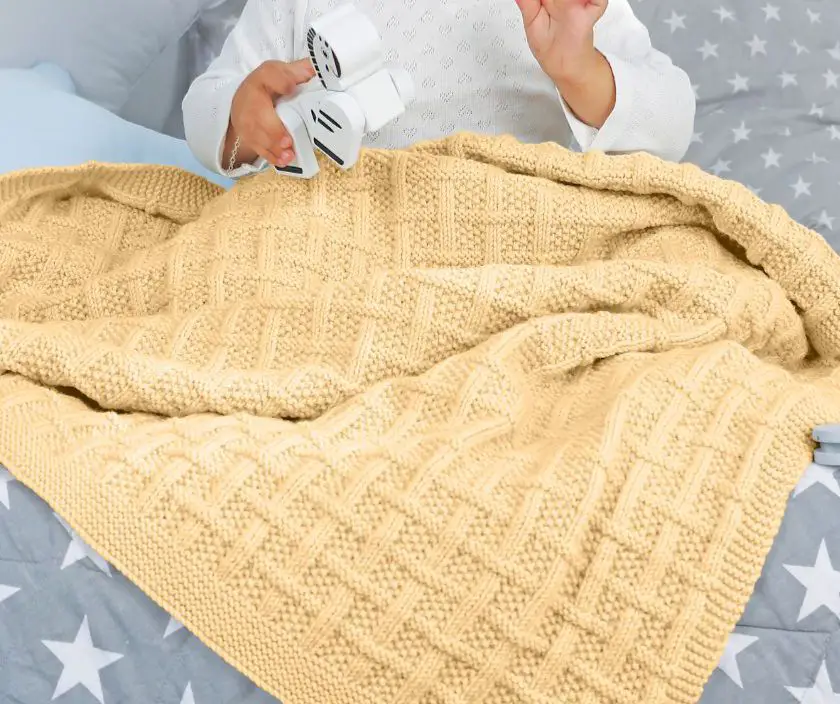
But I did start a new project. Using some of John’s generous gift, I bought yarn in soft yellows and greens—gender-neutral colors—and began another blanket. This one was simpler, with a classic basketweave pattern that would be sturdy and warm. Perfect for everyday use, for being dragged around by a toddler, for being truly loved.
I didn’t know if I’d give it to Maggie or keep it until the baby was older, until they could appreciate what it meant. But making it felt healing, like reclaiming something that had been taken from me.
Marcus watched me work on it one evening, the needles clicking peacefully in our quiet apartment. “You’re an incredible person,” he said out of nowhere.
“Why do you say that?”
“Because after what Maggie did, most people would never want to make anything for that family again. But here you are, creating something beautiful for her baby anyway.”
“It’s not for her,” I said. “It’s for the baby. And maybe for me too. To prove that what I make has value, regardless of what anyone else thinks.”
He kissed the top of my head. “It does have value. You have value.”
The Birth
Three months later, David called me at two in the morning. “She’s here,” he said, his voice full of wonder. “Our daughter is here. Seven pounds, four ounces. Perfect.”
“Congratulations,” I said, genuinely happy for him. “What’s her name?”
“Lily Jane,” he said. “Lily for Maggie’s mom, Jane for our grandmother.”
Tears pricked my eyes at the mention of our grandmother—the one who taught me to knit, who’d impressed upon me the value of handmade things.
“Can I come visit?” I asked tentatively.
“Maggie was hoping you would,” he said. “She’s been asking about you. About whether you’d want to meet Lily.”
Two days later, I stood outside Maggie and David’s home—a different venue than the baby shower, thank goodness—holding both blankets. The Morning Mist one that had caused such pain, carefully rewashed and refolded. And the new one, soft and practical and made with cautious hope.
Maggie answered the door herself. She looked exhausted, her hair in a messy bun, wearing sweatpants and an oversized t-shirt. No makeup, no jewelry, no pretense. She looked more human than I’d ever seen her.
“Hi,” she said quietly. “Thank you for coming.”
“Hi,” I replied, just as quietly.
She led me inside to where Lily slept in a bassinet by the couch. The baby was tiny and perfect, with a dusting of dark hair and miniature fingers curled into fists.
“She’s beautiful,” I whispered.
“She is,” Maggie agreed. Then, “I’m so sorry. I know I said it in my letter, but I need to say it to your face. What I did at the shower was unforgivable. You made something beautiful for my daughter, and I treated it—and you—like garbage. I was cruel and entitled and everything I hate about the person I’d become.”
I looked at her, really looked at her, and saw genuine remorse.
“Thank you,” I said. “For apologizing. For recognizing what you did.”
“Does that mean you forgive me?”
I thought about it, holding the blankets in my arms. “I think it means I’m willing to start over. Not forget, but move forward.”
She nodded, tears in her eyes. “I’ll take that.”
I held out the Morning Mist blanket. “This is still for Lily. If you want it.”
Maggie took it with trembling hands, unfolding it carefully. She held it up to the light the way her father had, seeing it properly for the first time. “It’s extraordinary,” she breathed. “How did you make something so beautiful?”
“Practice,” I said. “And love. Lots of love.”
“I don’t deserve this.”
“No,” I agreed. “But Lily does.”
I held out the second blanket. “And this one is for everyday. For spit-up and messes and being dragged around the house. For being used, not displayed.”
Maggie took it too, and then she was crying. “Thank you. Thank you so much.”
She placed both blankets over Lily, tucking them around her gently. The baby stirred, made a small sound, and settled back to sleep, wrapped in handmade love.
“My father was right,” Maggie said, watching her daughter. “These are worth more than anything on that gift table.”

Adrian Hawthorne is a celebrated author and dedicated archivist who finds inspiration in the hidden stories of the past. Educated at Oxford, he now works at the National Archives, where preserving history fuels his evocative writing. Balancing archival precision with creative storytelling, Adrian founded the Hawthorne Institute of Literary Arts to mentor emerging writers and honor the timeless art of narrative.